Control of Receipts
Navindu Munidasa
MSc Logistics and Supply Chain (UK) (Reading); BSc Operations and Logistics Management (UK); Dip
in Computer Hardware and Networking ; Certificate in Motor Mechanism (CGTTI); Certificate in
Workshop Practices (CGTTI)
Learning Objectives
• Receipt of Supplies
• Full or Partial rejection of supplies
• Documents
• Transfers from other Units
• Return to Store
• Scrap
• Stores Supervision / Management
Introduction
• What is a receipt ?
A receipt is a written acknowledgment that something of value has been
transferred from one party to another
• Why is the control of the receiving process important ?
Preventive cost (Internal cost) is always lower than cost of failure (External cost)
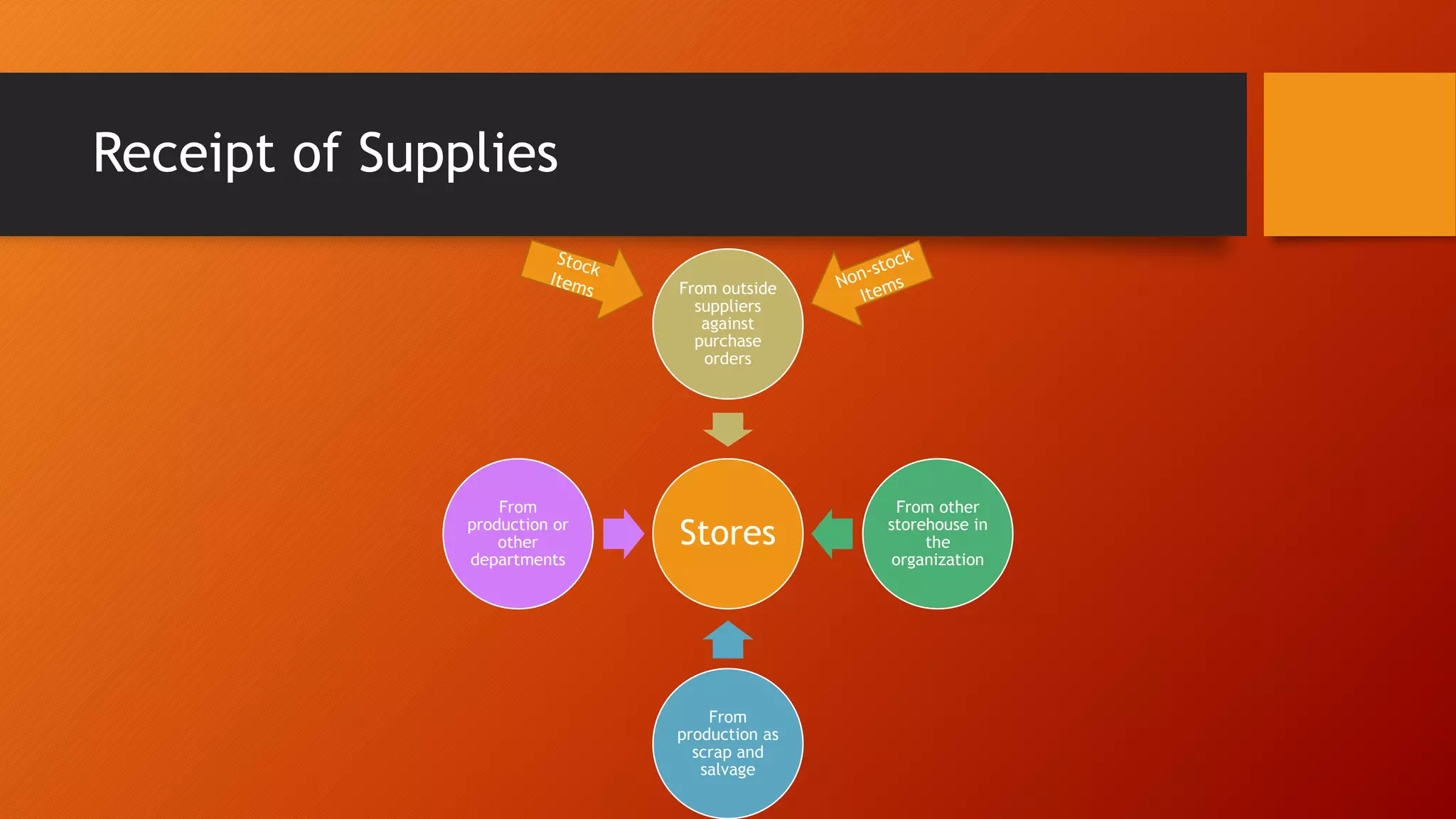
Receipt of Supplies
Stores
From outside
suppliers
against
purchase
orders
From other
storehouse in
the
organization
From
production as
scrap and
salvage
From
production or
other
departments
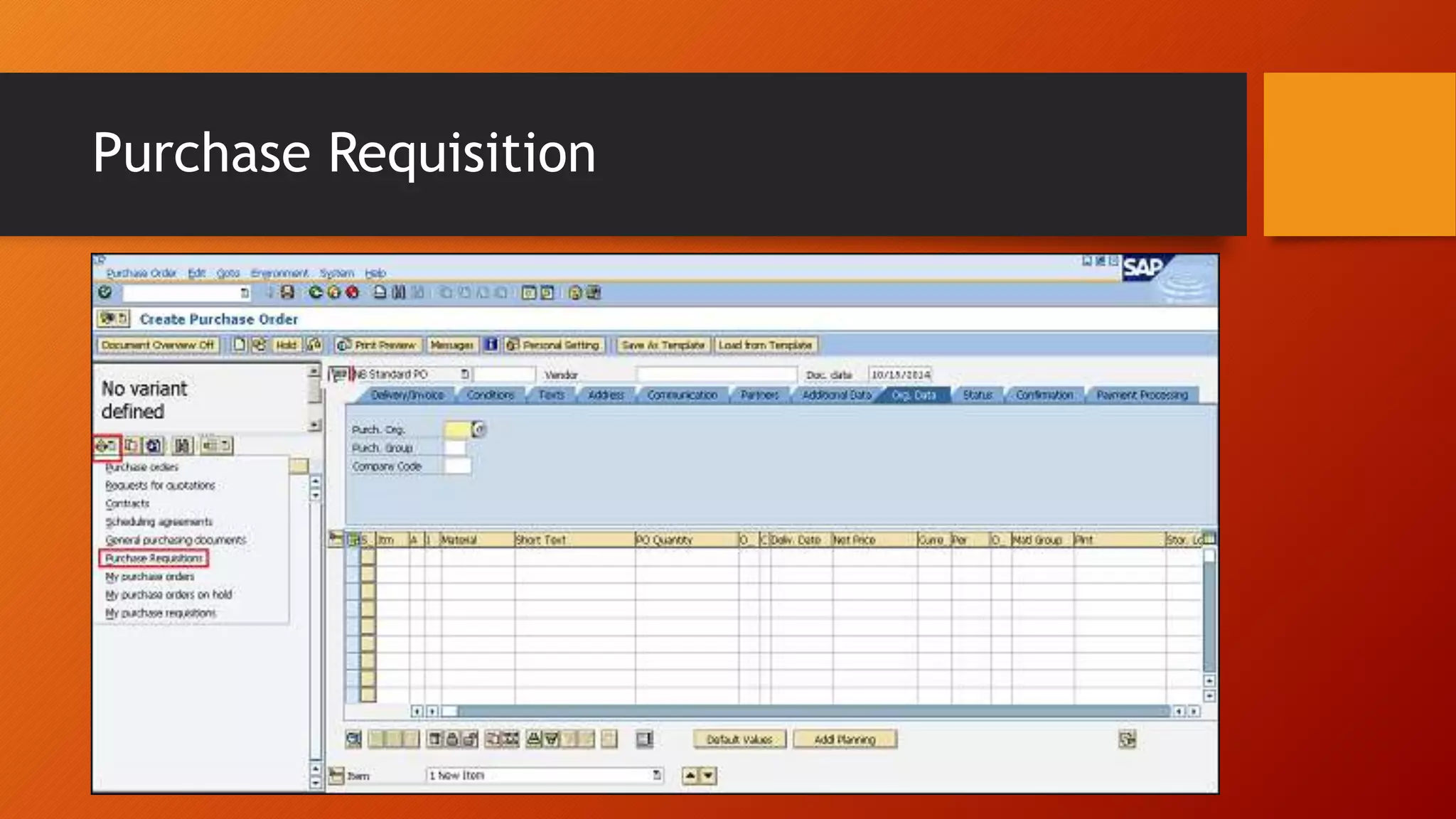
Purchase Requisition
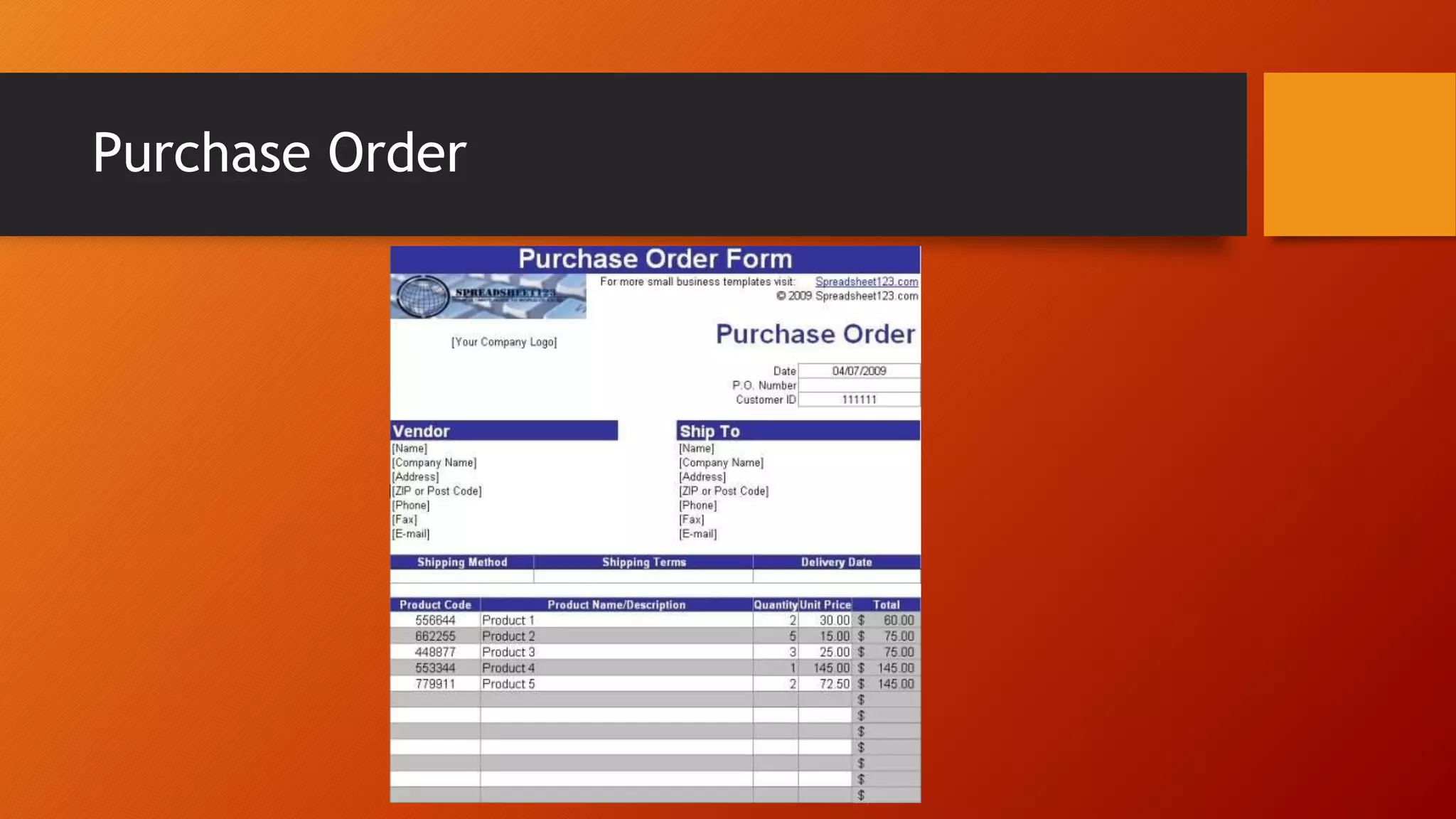
Purchase Order
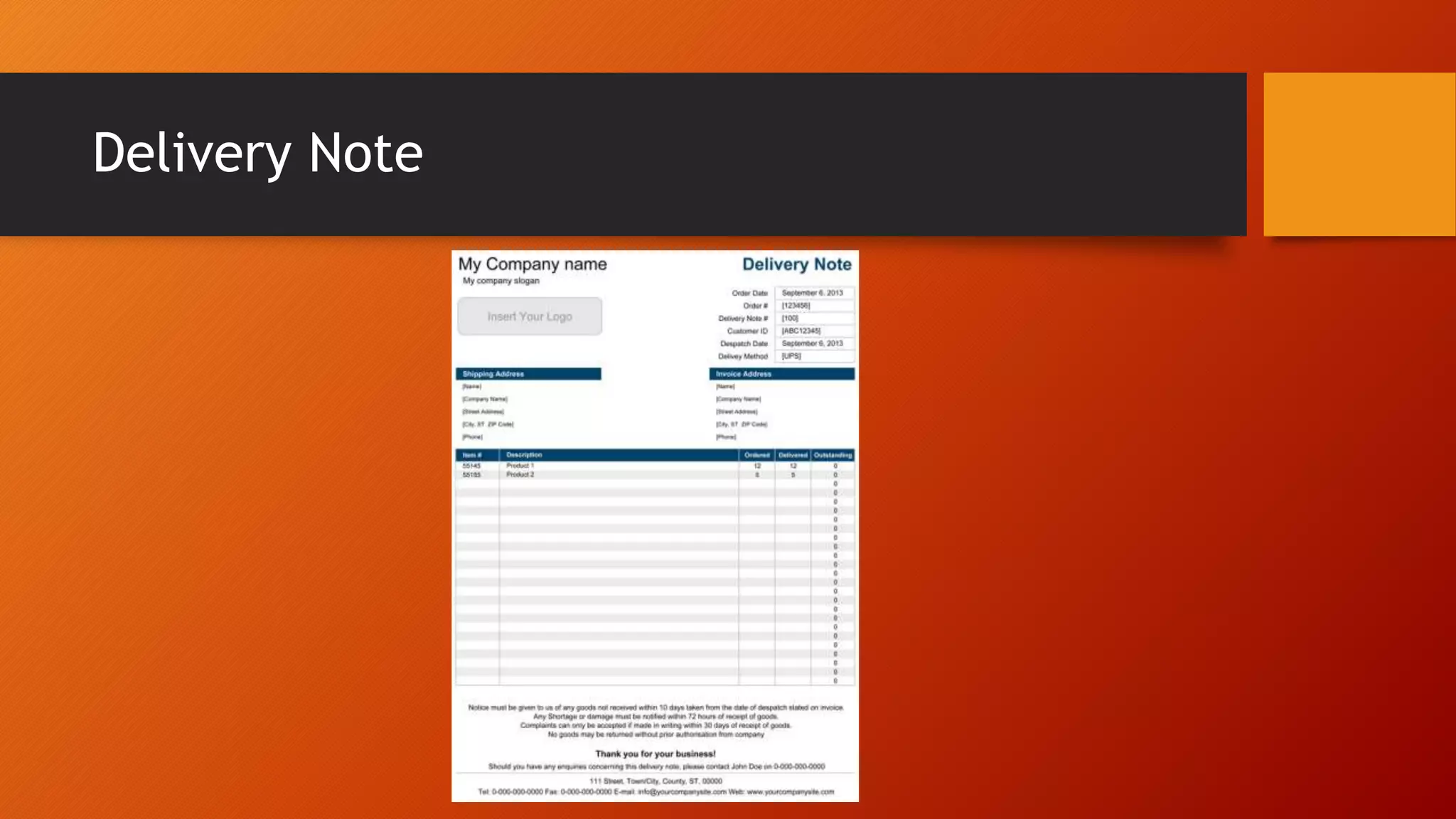
Delivery Note
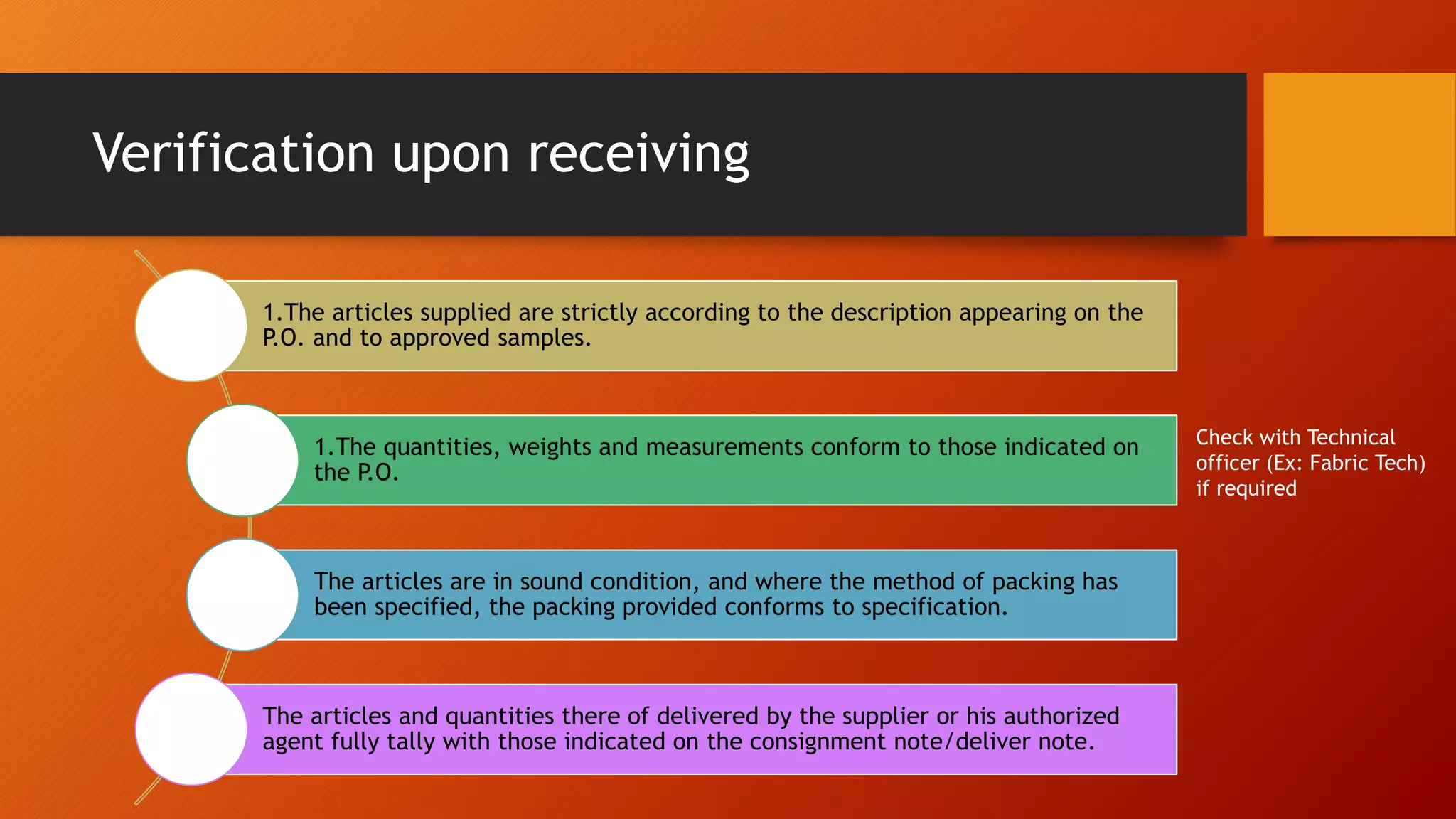
Verification upon receiving
1.The articles supplied are strictly according to the description appearing on the
P.O. and to approved samples.
1.The quantities, weights and measurements conform to those indicated on
the P.O.
The articles are in sound condition, and where the method of packing has
been specified, the packing provided conforms to specification.
The articles and quantities there of delivered by the supplier or his authorized
agent fully tally with those indicated on the consignment note/deliver note.
Check with Technical
officer (Ex: Fabric Tech)
if required
Procedure followed in rejection of supplies
• If supply is not up to specifications or not in accordance with the accepted sample, reject supply and
advise supplier/carrier.
• If part of the supply is in accordance with specification, accept only that part and reject the balance.
• If part of the supply or total supply is damaged, reject for prompt replacement.
• Where faulty articles have been detected in a consignment, arrange for supplier to make 100% check and
sort out defective parts. This could be done alternatively by the purchaser by using the services of his
inspectors (if available) and charging the cost involved on the supplier.
• Where bulk supplies and delivered (e.g. fertilizer, chemical) suppliers should be accepted on approval and
random samples should be drawn there from and tests done in a laboratory before a qualified receipt is
given if the supply satisfied the test. Otherwise the supply should be rejected, or in the alternative, if
deviations from the specifications are slight, the supply could be accepted with a price reduction
determined by the Management.
Documents used in the receiving process
A supplier would cover his
supplies delivered by;
• Advice Note
• Consignment Note
• Delivery Note
• Supplier’s Packing Note
The storekeeper is to
maintain a;
• Goods Inward Register
• Date of receipt
• Name of Consignment
• Method of Transport
• Vehicle & driver
details
• Brief description of
goods
• Goods Received Note
(GRN) Number
The Goods Received Note
(GRN)
• Date of receipt
• Name of supplier
• Order number
• Description of goods
• Quantity received
• Delivery method
• Number of containers
• Supplier’s advice
note/delivery note
number
Internal Transfers
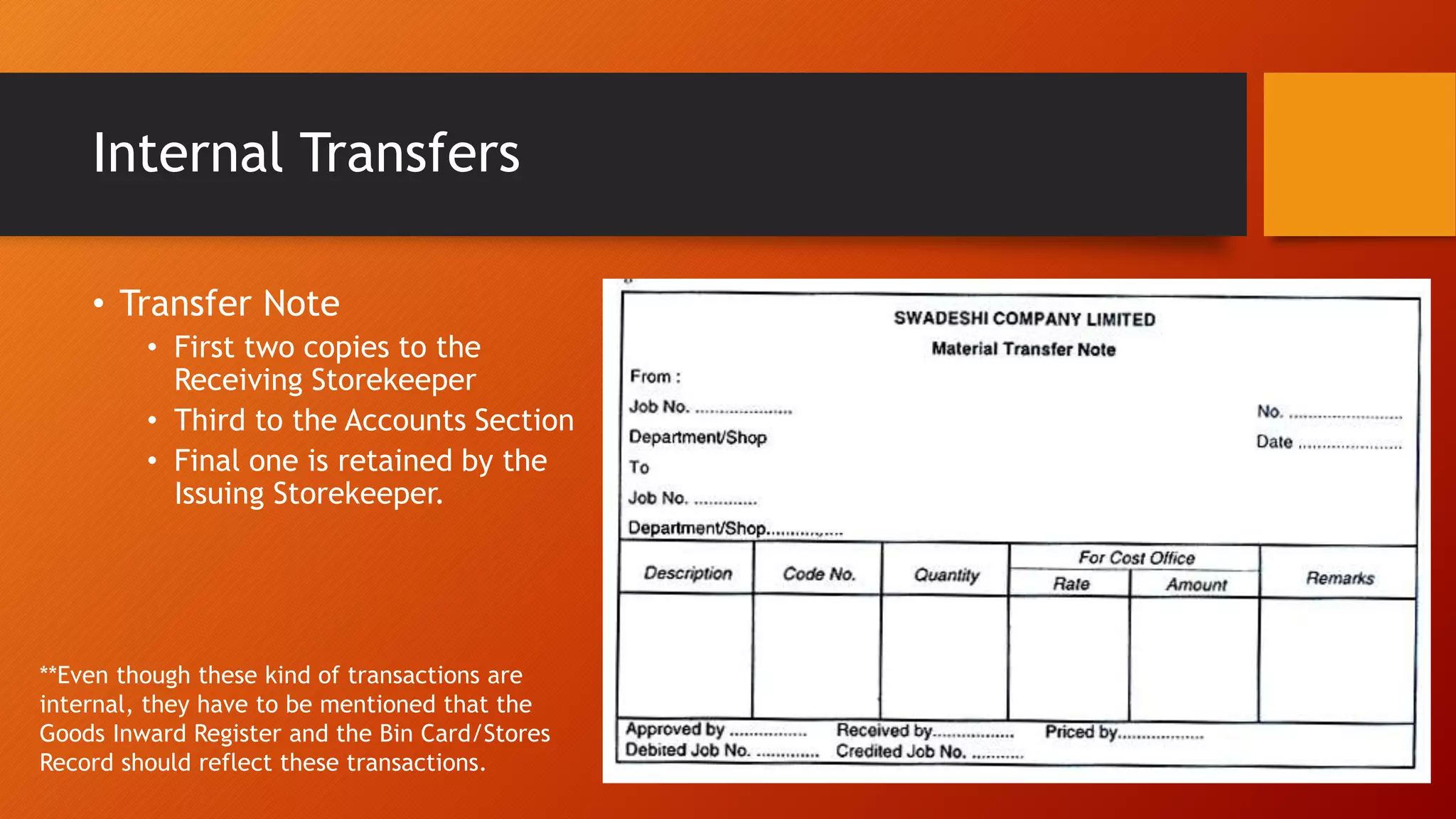
• Transfer Note
• First two copies to the
Receiving Storekeeper
• Third to the Accounts Section
• Final one is retained by the
Issuing Storekeeper.
**Even though these kind of transactions are
internal, they have to be mentioned that the
Goods Inward Register and the Bin Card/Stores
Record should reflect these transactions.
Return to Store / Scrap
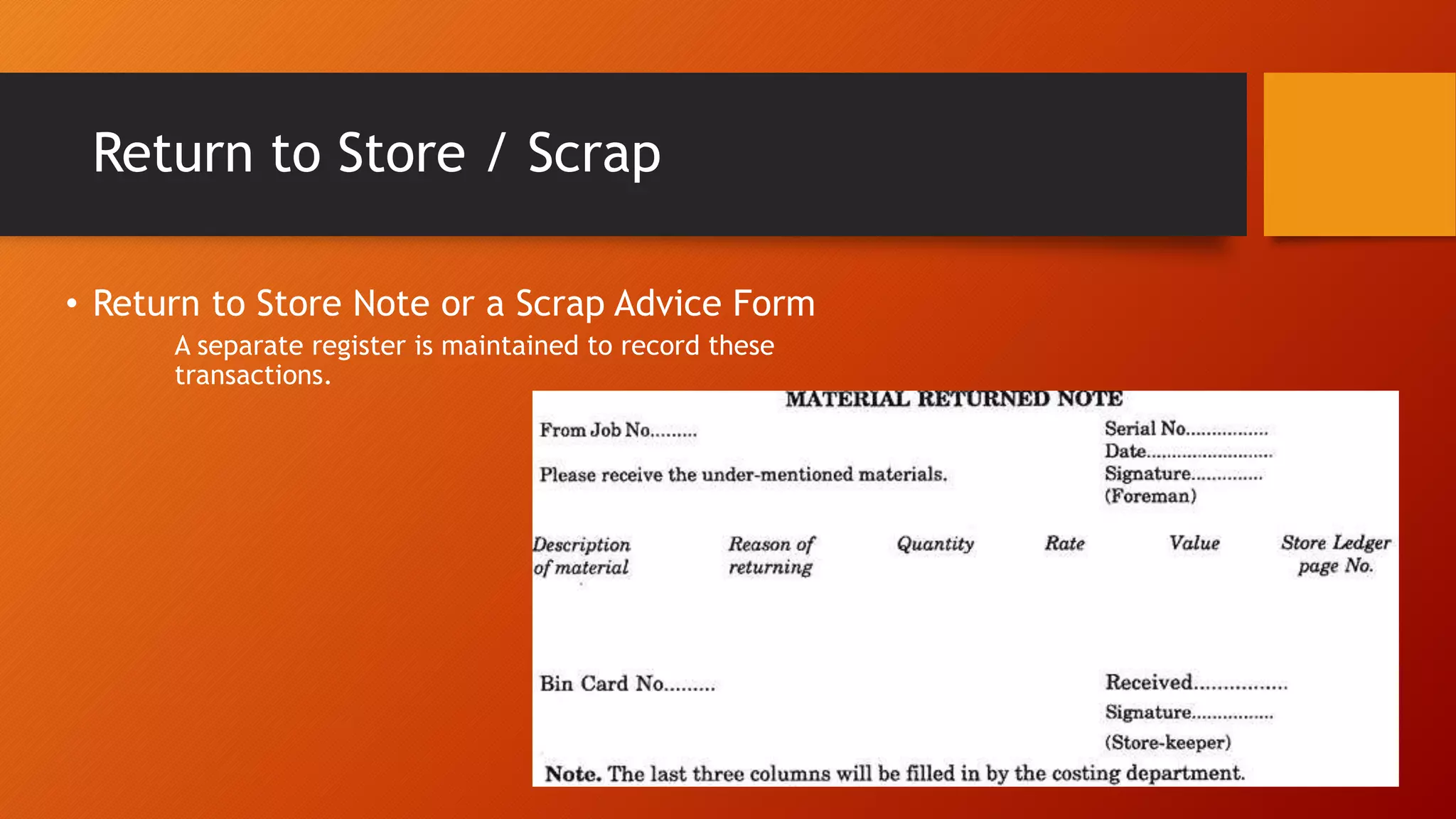
• Return to Store Note or a Scrap Advice Form
A separate register is maintained to record these
transactions.
Stores Supervision / Management
• Providing workers with clear and updated SOP’s (Standard of procedures)
• Frequently doing surprise audits
• The objective of doing such is to reduce the below human errors;
1. Frauds
2. Receiving on required date and time
3. Receiving of exact quality
4. Receiving exact tonnage
5. Over issuing
6. Under issuing
Thank you

Control of Receipts

  • 1.
    Control of Receipts NavinduMunidasa MSc Logistics and Supply Chain (UK) (Reading); BSc Operations and Logistics Management (UK); Dip in Computer Hardware and Networking ; Certificate in Motor Mechanism (CGTTI); Certificate in Workshop Practices (CGTTI)
  • 2.
    Learning Objectives • Receiptof Supplies • Full or Partial rejection of supplies • Documents • Transfers from other Units • Return to Store • Scrap • Stores Supervision / Management
  • 3.
    Introduction • What isa receipt ? A receipt is a written acknowledgment that something of value has been transferred from one party to another • Why is the control of the receiving process important ? Preventive cost (Internal cost) is always lower than cost of failure (External cost)
  • 4.
    Receipt of Supplies Stores Fromoutside suppliers against purchase orders From other storehouse in the organization From production as scrap and salvage From production or other departments
  • 5.
  • 6.
  • 7.
  • 8.
    Verification upon receiving 1.Thearticles supplied are strictly according to the description appearing on the P.O. and to approved samples. 1.The quantities, weights and measurements conform to those indicated on the P.O. The articles are in sound condition, and where the method of packing has been specified, the packing provided conforms to specification. The articles and quantities there of delivered by the supplier or his authorized agent fully tally with those indicated on the consignment note/deliver note. Check with Technical officer (Ex: Fabric Tech) if required
  • 9.
    Procedure followed inrejection of supplies • If supply is not up to specifications or not in accordance with the accepted sample, reject supply and advise supplier/carrier. • If part of the supply is in accordance with specification, accept only that part and reject the balance. • If part of the supply or total supply is damaged, reject for prompt replacement. • Where faulty articles have been detected in a consignment, arrange for supplier to make 100% check and sort out defective parts. This could be done alternatively by the purchaser by using the services of his inspectors (if available) and charging the cost involved on the supplier. • Where bulk supplies and delivered (e.g. fertilizer, chemical) suppliers should be accepted on approval and random samples should be drawn there from and tests done in a laboratory before a qualified receipt is given if the supply satisfied the test. Otherwise the supply should be rejected, or in the alternative, if deviations from the specifications are slight, the supply could be accepted with a price reduction determined by the Management.
  • 10.
    Documents used inthe receiving process A supplier would cover his supplies delivered by; • Advice Note • Consignment Note • Delivery Note • Supplier’s Packing Note The storekeeper is to maintain a; • Goods Inward Register • Date of receipt • Name of Consignment • Method of Transport • Vehicle & driver details • Brief description of goods • Goods Received Note (GRN) Number The Goods Received Note (GRN) • Date of receipt • Name of supplier • Order number • Description of goods • Quantity received • Delivery method • Number of containers • Supplier’s advice note/delivery note number
  • 11.
    Internal Transfers • TransferNote • First two copies to the Receiving Storekeeper • Third to the Accounts Section • Final one is retained by the Issuing Storekeeper. **Even though these kind of transactions are internal, they have to be mentioned that the Goods Inward Register and the Bin Card/Stores Record should reflect these transactions.
  • 12.
    Return to Store/ Scrap • Return to Store Note or a Scrap Advice Form A separate register is maintained to record these transactions.
  • 13.
    Stores Supervision /Management • Providing workers with clear and updated SOP’s (Standard of procedures) • Frequently doing surprise audits • The objective of doing such is to reduce the below human errors; 1. Frauds 2. Receiving on required date and time 3. Receiving of exact quality 4. Receiving exact tonnage 5. Over issuing 6. Under issuing
  • 14.