Content Marketing
By : Lamiaa Ahmed Sayed
What Is The Content Marketing?
Strategic marketing and business process focused on creating and
distributing valuable, relevant, and consistent content to attract and
retain a clearly defined audience, and ultimately, to drive profitable
customer action.
When done correctly,
this helps create
with your audience,
which leads to trust.
What Is The Content Marketing?
Strategic marketing and business process focused on creating and
distributing valuable, relevant, and consistent content to attract and
retain a clearly defined audience, and ultimately, to drive profitable
customer action.
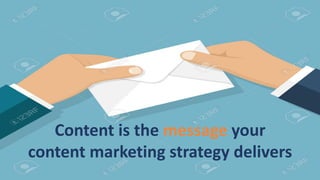
Content is the message your
content marketing strategy delivers
What Is The Content Marketing?
Strategic marketing and business process focused on creating and
distributing valuable, relevant, and consistent content to attract and
retain a clearly defined audience, and ultimately, to drive profitable
customer action.
Without Content, You’d Have
Nothing To Deliver
What Is The Content Marketing?
Strategic marketing and business process focused on creating and
distributing valuable, relevant, and consistent content to attract and
retain a clearly defined audience, and ultimately, to drive profitable
customer action.
Content marketing is really just the art of communicating
with your prospects without having to sell to them.
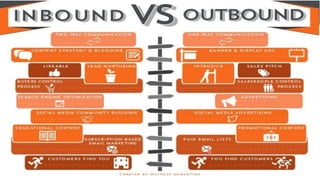
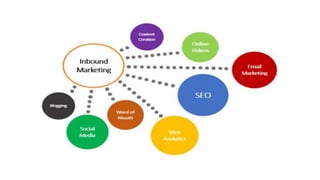
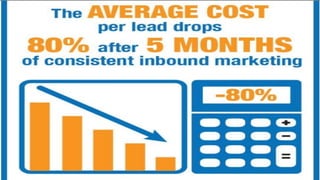
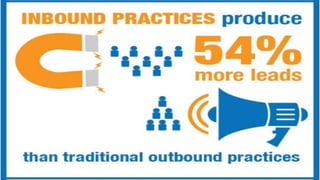
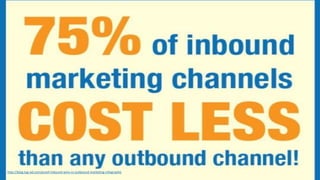
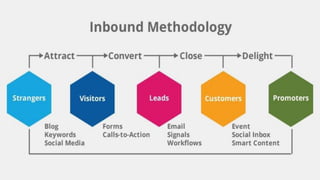
What Is The Inbound marketing ?
Inbound marketing is just one part of a larger movement in
the business world. That movement is inbound.
Inbound is a method of attracting, engaging, and delighting
people to grow a business that provides value and builds
trust.
http://blog.tag-ad.com/proof-inbound-wins-vs-outbound-marketing-infographic
What Is The Content Marketing?
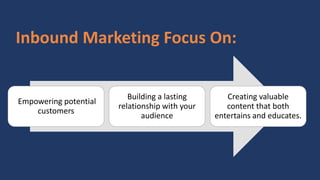
Inbound Marketing Focus On:
Empowering potential
customers
Building a lasting
relationship with your
audience
Creating valuable
content that both
entertains and educates.
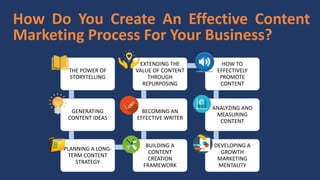
THE POWER OF
STORYTELLING
GENERATING
CONTENT IDEAS
PLANNING A LONG-
TERM CONTENT
STRATEGY
BUILDING A
CONTENT
CREATION
FRAMEWORK
BECOMING AN
EFFECTIVE WRITER
EXTENDING THE
VALUE OF CONTENT
THROUGH
REPURPOSING
HOW TO
EFFECTIVELY
PROMOTE
CONTENT
ANALYZING AND
MEASURING
CONTENT
DEVELOPING A
GROWTH
MARKETING
MENTALITY
How Do You Create An Effective Content
Marketing Process For Your Business?
THE POWER OF STORYTELLING
Your Goal Is To Make A Human Connection. It’s
About Resonating With People, People That Need
Your Help Or Guidance
A story is not just your history. A story is why you’re doing what
you’re doing, and telling it in a way that appeals to your audience
Stories Are How Audiences
Remember
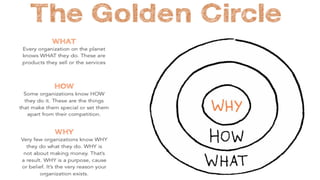
“People don’t buy what you do,
they buy WHY you do it.”
- Simon Sinek
When you talk about the
why and how, you’re
communicating with
feelings and dealing with
human behavior. And
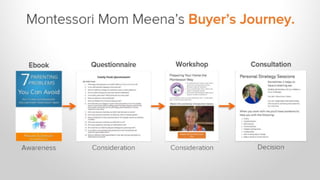
remember, storytelling is
all about making that
connection.
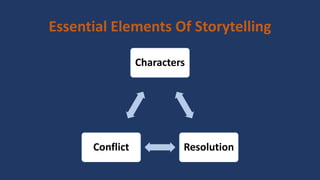
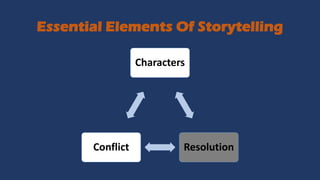
Essential Elements Of Storytelling
Characters
ResolutionConflict
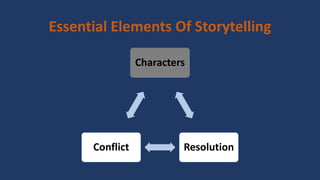
Essential Elements Of Storytelling
Characters
ResolutionConflict
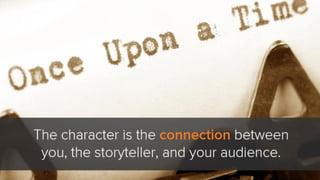
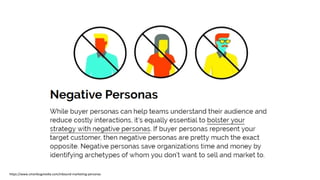
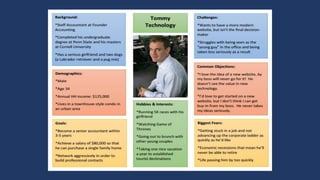
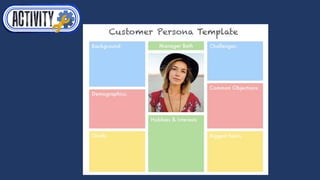
Semi- fictional representations of your ideal customer based on real
data and some educated speculation about customer demographic,
behaviors, patterns, motivations and goals .
Personas help answer the following questions:
• What type of content is most likely to generate a response from a
particular type of customer?
• How does your ideal customer prefer to engage in the sales process?
• What problems do customers need to solve, and how does your
business help them?
Why Using Personas Is Important?
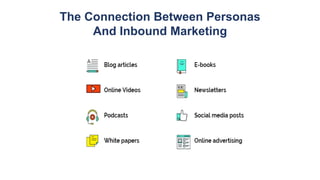
The Connection Between Personas
And Inbound Marketing
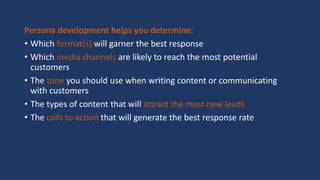
Persona development helps you determine:
• Which format(s) will garner the best response
• Which media channels are likely to reach the most potential
customers
• The tone you should use when writing content or communicating
with customers
• The types of content that will attract the most new leads
• The calls to action that will generate the best response rate
https://www.smartbugmedia.com/inbound-marketing-personas
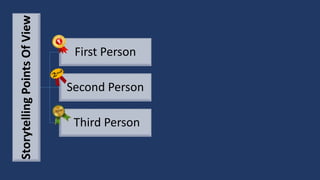
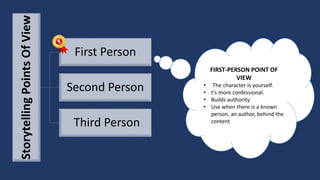
StorytellingPointsOfView
First Person
Second Person
Third Person
StorytellingPointsOfView
First Person
Second Person
Third Person
FIRST-PERSON POINT OF
VIEW
• The character is yourself.
• t’s more confessional.
• Builds authority.
• Use when there is a known
person, an author, behind the
content
StorytellingPointsOfView
First Person
Second Person
Third Person
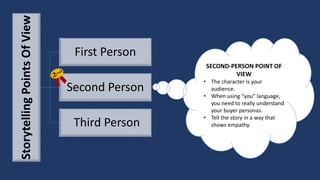
SECOND-PERSON POINT OF
VIEW
• The character is your
audience.
• When using “you” language,
you need to really understand
your buyer personas.
• Tell the story in a way that
shows empathy.
StorytellingPointsOfView
First Person
Second Person
Third Person
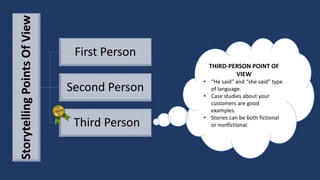
THIRD-PERSON POINT OF
VIEW
• “He said” and “she said” type
of language.
• Case studies about your
customers are good
examples.
• Stories can be both fictional
or nonfictional.
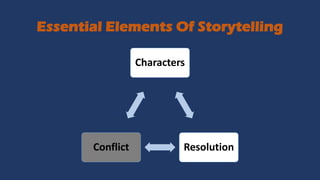
Essential Elements Of Storytelling
Characters
ResolutionConflict
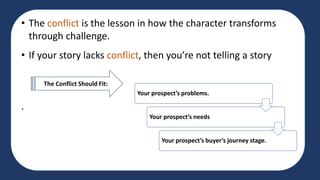
• The conflict is the lesson in how the character transforms
through challenge.
• If your story lacks conflict, then you’re not telling a story
.
Your prospect’s problems.
Your prospect’s needs
Your prospect’s buyer’s journey stage.
The Conflict Should Fit:
Essential Elements Of Storytelling
Characters
ResolutionConflict
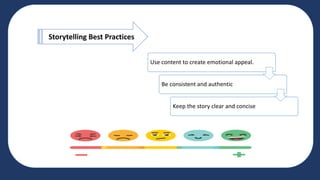
Use content to create emotional appeal.
Be consistent and authentic
Keep the story clear and concise
Storytelling Best Practices
Emotion is what will give your story
power
“Tell the truth, but make it fascinating.”
- David Ogilvy
Everyone can benefit from cutting down
a lengthy story
Create a story and define the segment and the buyer persona
• Individual task
• Duration: 1 days
GENERATING CONTENT IDEAS
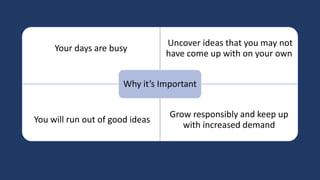
Your days are busy
Uncover ideas that you may not
have come up with on your own
You will run out of good ideas
Grow responsibly and keep up
with increased demand
Why it’s Important
Eventually content fatigue
will set in. You’ll find
yourself looking at the
word processor with
nothing to write
Idea creation isn’t just
about waiting for
inspiration to strike—
there’s a process
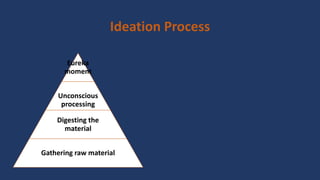
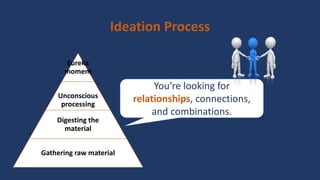
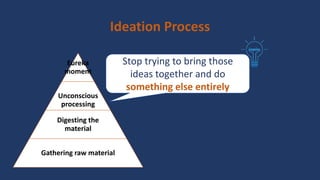
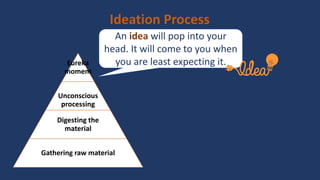
Ideation Process
Eureka
moment
Unconscious
processing
Digesting the
material
Gathering raw material
Ideation Process
Eureka
moment
Unconscious
processing
Digesting the
material
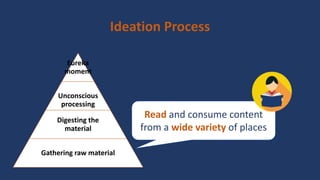
Gathering raw material
Read and consume content
from a wide variety of places
Ideation Process
Eureka
moment
Unconscious
processing
Digesting the
material
Gathering raw material
You’re looking for
relationships, connections,
and combinations.
Ideation Process
Eureka
moment
Unconscious
processing
Digesting the
material
Gathering raw material
Stop trying to bring those
ideas together and do
something else entirely
Ideation Process
Eureka
moment
Unconscious
processing
Digesting the
material
Gathering raw material
An idea will pop into your
head. It will come to you when
you are least expecting it.
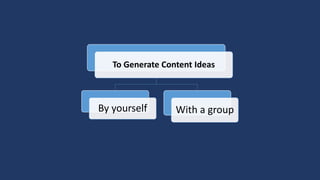
To Generate Content Ideas
By yourself With a group
• What are your buyer personas’ reading habits?
• What are your competitors doing?
• What are people talking about on Quora?
• What can you learn from your search engine optimization efforts?
Keep in mind when generating content ideas on
your own
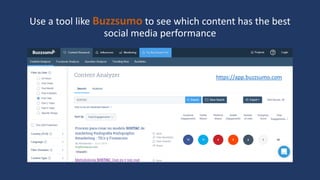
Use a tool like Buzzsumo to see which content has the best
social media performance
https://app.buzzsumo.com
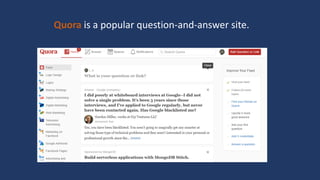
Quora is a popular question-and-answer site.
Google search console provides actual
keywords people are typing in
Autocomplete
Related searches
Autocomplete is when
Google suggests a
query as you type it in
the search bar.
Related searches
appear at the
bottom of the
search results
page.
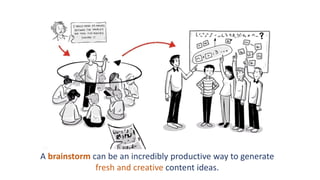
A brainstorm can be an incredibly productive way to generate
fresh and creative content ideas.
• Pick someone to moderate and set a clear agenda.
• Create an atmosphere where people feel comfortable.
• Leverage “braindumps.”
• Use sticky notes, whiteboards, and other visual aids.
• Remember that the main goal is to generate new, unexpected ideas.
Hosting A Brainstorm Best Practices
PLANNING A LONG-TERM CONTENT
STRATEGY
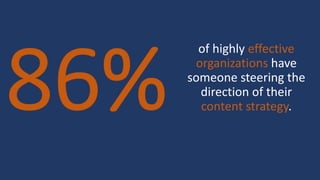
of highly effective
organizations have
someone steering the
direction of their
content strategy.
How Do You Build A Long-term Content
Plan?
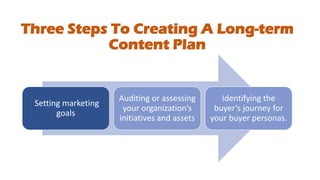
Setting marketing
goals
Auditing or assessing
your organization’s
initiatives and assets
Identifying the
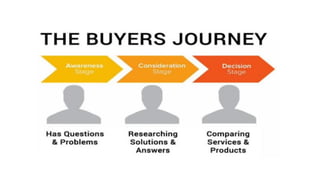
buyer’s journey for
your buyer personas.
Three Steps To Creating A Long-term
Content Plan
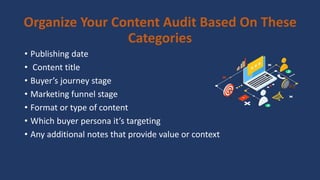
• Publishing date
• Content title
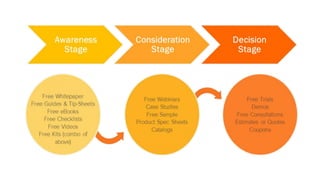
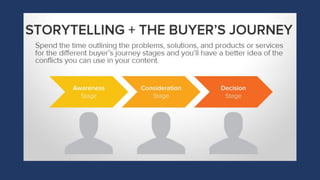
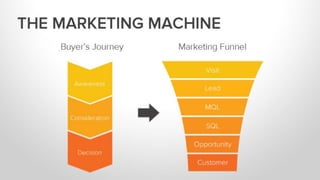
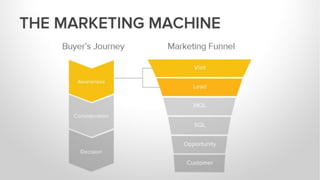
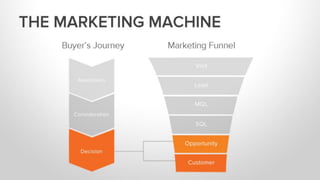
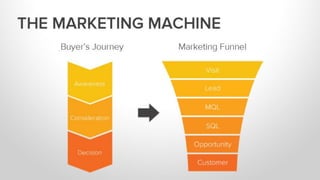
• Buyer’s journey stage
• Marketing funnel stage
• Format or type of content
• Which buyer persona it’s targeting
• Any additional notes that provide value or context
Organize Your Content Audit Based On These
Categories
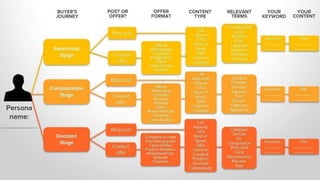
Tie everything together with a series of blog posts
that could lead to a relevant content offer
You’re creating content
that’s meant to attract
and pull your buyer
personas through every
stage of the buyer’s
journey
Your Content Needs To
Be In Real-time
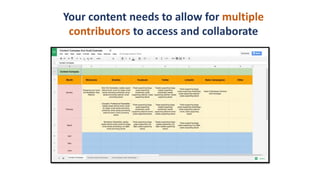
Your content needs to allow for multiple
contributors to access and collaborate
BUILDING A CONTENT CREATION
FRAMEWORK
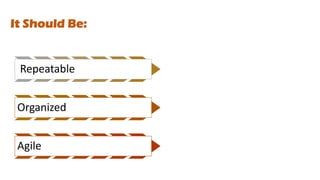
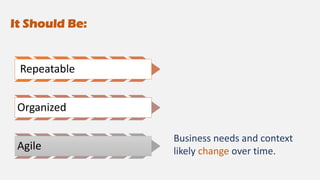
Repeatable
Organized
Agile
It Should Be:
Repeatable
Organized
Agile
It Should Be:
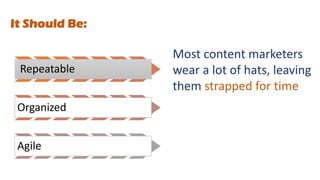
Most content marketers
wear a lot of hats, leaving
them strapped for time
Repeatable
Organized
Agile
It Should Be:
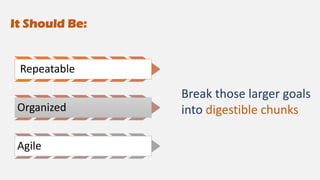
Break those larger goals
into digestible chunks
Repeatable
Organized
Agile
It Should Be:
Business needs and context
likely change over time.
How To Build A Content Creation
Framework ???
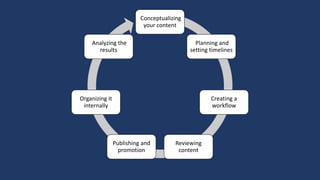
Conceptualizing
your content
Planning and
setting timelines
Creating a
workflow
Reviewing
content
Publishing and
promotion
Organizing it
internally
Analyzing the
results
Conceptualizing
your content
Planning and
setting timelines
Creating a
workflow
Reviewing
content
Publishing and
promotion
Organizing it
internally
Analyzing the
results
Conceptualizing
your content
Planning and
setting timelines
Creating a
workflow
Reviewing
content
Publishing and
promotion
Organizing it
internally
Analyzing the
results
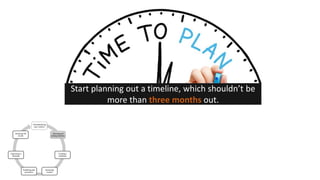
Start planning out a timeline, which shouldn’t be
more than three months out.
Conceptualizing
your content
Planning and
setting timelines
Creating a
workflow
Reviewing
content
Publishing and
promotion
Organizing it
internally
Analyzing the
results
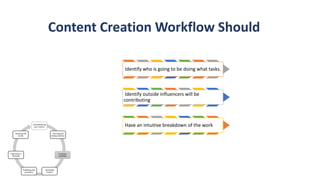
Identify who is going to be doing what tasks.
Identify outside influencers will be
contributing
Have an intuitive breakdown of the work
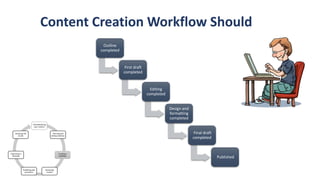
Content Creation Workflow Should
Outline
completed
First draft
completed
Editing
completed
Design and
formatting
completed
Final draft
completed
Published
Conceptualizing
your content
Planning and
setting timelines
Creating a
workflow
Reviewing
content
Publishing and
promotion
Organizing it
internally
Analyzing the
results
Content Creation Workflow Should
• Set clear expectations.
• Determine editing timeline.
• Use a document to track changes, and clearly identify roles in the
reviewal process.
• Allow for multiple rounds of edits
Conceptualizing
your content
Planning and
setting timelines
Creating a
workflow
Reviewing
content
Publishing and
promotion
Organizing it
internally
Analyzing the
results
Reviewing And Editing Content Best
Practices
Conceptualiz
ing your
content
Planning
and setting
timelines
Creating a
workflow
Reviewing
content
Publishing
and
promotion
Organizingit
internally
Analyzing
the results
Your Promotion Strategy Should Always Be Changing
To Reflect Your Business Needs
Conceptuali
zing your
content
Planning
and setting
timelines
Creating a
workflow
Reviewing
content
Publishing
and
promotion
Organizing
it internally
Analyzing
the results
Conceptualizing
your content
Planning and
setting timelines
Creating a
workflow
Reviewing
content
Publishing and
promotion
Organizing it
internally
Analyzing the
results
You need to measure the results to see what insights you can learn.
Conceptualizing
your content
Planning and
setting timelines
Creating a
workflow
Reviewing
content
Publishing and
promotion
Organizing it
internally
Analyzing the
results
Keep on top of industry and best
practices.
Conceptualizing
your content
Planning and
setting timelines
Creating a
workflow
Reviewing
content
Publishing and
promotion
Organizing it
internally
Analyzing the
results
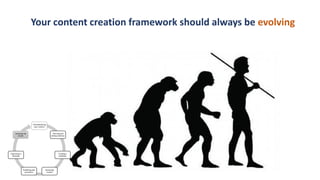
Your content creation framework should always be evolving
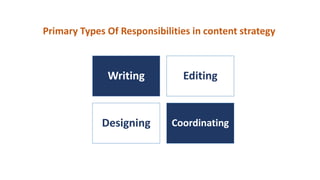
Primary Types Of Responsibilities in content strategy
Writing Editing
Designing Coordinating
CMS
Content
Management
System
Analytics
Planning and
internal
communication
Scheduling
BECOMING AN EFFECTIVE WRITER
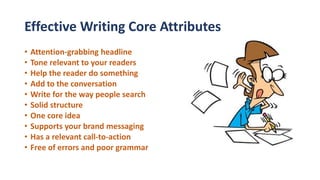
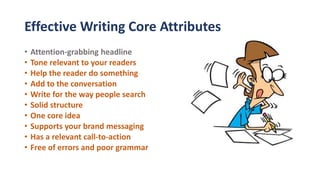
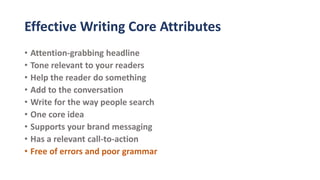
Effective Writing Core Attributes
• Attention-grabbing headline
• Tone relevant to your readers
• Help the reader do something
• Add to the conversation
• Write for the way people search
• Solid structure
• One core idea
• Supports your brand messaging
• Has a relevant call-to-action
• Free of errors and poor grammar
Effective Writing Core Attributes
• Attention-grabbing headline
• Tone relevant to your readers
• Help the reader do something
• Add to the conversation
• Write for the way people search
• Solid structure
• One core idea
• Supports your brand messaging
• Has a relevant call-to-action
• Free of errors and poor grammar
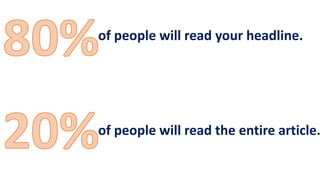
of people will read your headline.
of people will read the entire article.
It’s Always A Good Idea To Get Another Opinion.
“Your First Idea Might Be Your Worst Idea”
• How-To
• List
• Question
• Interesting Data
• Quick Tip
• Negative Angle
• Secret of
• Little known, advice, tips, or tricks
• You Should Know This
Title Formats
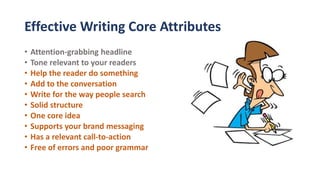
Effective Writing Core Attributes
• Attention-grabbing headline
• Tone relevant to your readers
• Help the reader do something
• Add to the conversation
• Write for the way people search
• Solid structure
• One core idea
• Supports your brand messaging
• Has a relevant call-to-action
• Free of errors and poor grammar
You Want To Match The Attitude Of Your Readers
Effective Writing Core Attributes
• Attention-grabbing headline
• Tone relevant to your readers
• Help the reader do something
• Add to the conversation
• Write for the way people search
• Solid structure
• One core idea
• Supports your brand messaging
• Has a relevant call-to-action
• Free of errors and poor grammar
You First Need To Understand Who Your Ideal Reader Is, Which
Is Also Known As Your Buyer Persona
Effective Writing Core Attributes
• Attention-grabbing headline
• Tone relevant to your readers
• Help the reader do something
• Add to the conversation
• Write for the way people search
• Solid structure
• One core idea
• Supports your brand messaging
• Has a relevant call-to-action
• Free of errors and poor grammar
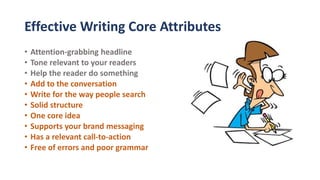
It Needs To Add Something New To The Conversation,
Take a few minutes to research what already exists on
the subject
Effective Writing Core Attributes
• Attention-grabbing headline
• Tone relevant to your readers
• Help the reader do something
• Add to the conversation
• Write for the way people search
• Solid structure
• One core idea
• Supports your brand messaging
• Has a relevant call-to-action
• Free of errors and poor grammar
You should research the words
people actually use to search and
communicate
Effective Writing Core Attributes
• Attention-grabbing headline
• Tone relevant to your readers
• Help the reader do something
• Add to the conversation
• Write for the way people search
• One core idea
• Supports your brand messaging
• Has a relevant call-to-action
• Free of errors and poor grammar
Effective Writing Core Attributes
• Attention-grabbing headline
• Tone relevant to your readers
• Help the reader do something
• Add to the conversation
• Write for the way people search
• One core idea
• Supports your brand messaging
• Has a relevant call-to-action
• Free of errors and poor grammar
Effective Writing Core Attributes
• Attention-grabbing headline
• Tone relevant to your readers
• Help the reader do something
• Add to the conversation
• Write for the way people search
• One core idea
• Supports your brand messaging
• Has a relevant call-to-action
• Free of errors and poor grammar
Effective Writing Core Attributes
• Attention-grabbing headline
• Tone relevant to your readers
• Help the reader do something
• Add to the conversation
• Write for the way people search
• One core idea
• Supports your brand messaging
• Has a relevant call-to-action
• Free of errors and poor grammar
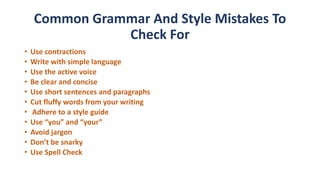
Common Grammar And Style Mistakes To
Check For
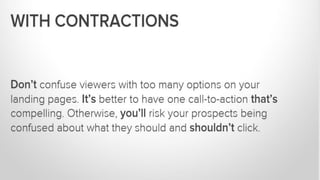
• Use contractions
• Write with simple language
• Use the active voice
• Be clear and concise
• Use short sentences and paragraphs
• Cut fluffy words from your writing
• Adhere to a style guide
• Use “you” and “your”
• Avoid jargon
• Don’t be snarky
• Use Spell Check
EXTENDING THE VALUE OF CONTENT
THROUGH REPURPOSING
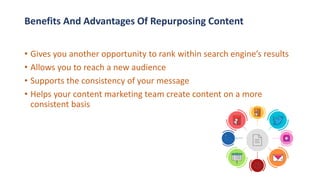
• Gives you another opportunity to rank within search engine’s results
• Allows you to reach a new audience
• Supports the consistency of your message
• Helps your content marketing team create content on a more
consistent basis
Benefits And Advantages Of Repurposing Content
THE RULE OF SEVEN
A Prospect Needs To See Or Hear Your Marketing Message
At Least Seven Times Before They Take Action And Buy
From You.
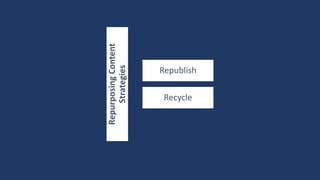
RepurposingContent
Strategies
Republish
Recycle
RepurposingContent
Strategies
Republish
Recycle
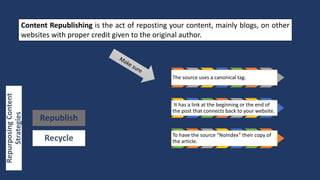
Content Republishing is the act of reposting your content, mainly blogs, on other
websites with proper credit given to the original author.
The source uses a canonical tag.
It has a link at the beginning or the end of
the post that connects back to your website.
To have the source “NoIndex” their copy of
the article.
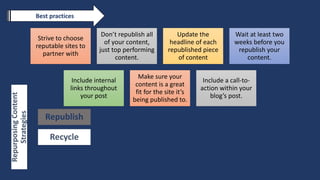
Strive to choose
reputable sites to
partner with
Don’t republish all
of your content,
just top performing
content.
Update the
headline of each
republished piece
of content
Wait at least two
weeks before you
republish your
content.
Include internal
links throughout
your post
Make sure your
content is a great
fit for the site it’s
being published to.
Include a call-to-
action within your
blog’s post.
RepurposingContent
Strategies
Republish
Recycle
Best practices
RepurposingContent
Strategies
Republish
Recycle
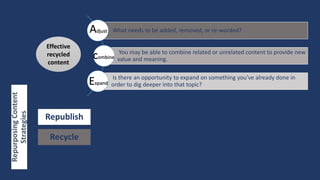
What needs to be added, removed, or re-worded?
You may be able to combine related or unrelated content to provide new
value and meaning.
Is there an opportunity to expand on something you’ve already done in
order to dig deeper into that topic?
Adjust
combine
Expand
Effective
recycled
content
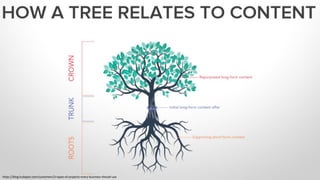
https://blog.hubspot.com/customers/3-types-of-projects-every-business-should-use
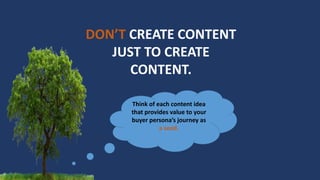
DON’T CREATE CONTENT
JUST TO CREATE
CONTENT.
Think of each content idea
that provides value to your
buyer persona’s journey as
a seed.
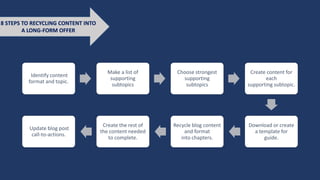
Identify content
format and topic.
Make a list of
supporting
subtopics
Choose strongest
supporting
subtopics
Create content for
each
supporting subtopic.
Download or create
a template for
guide.
Recycle blog content
and format
into chapters.
Create the rest of
the content needed
to complete.
Update blog post
call-to-actions.
8 STEPS TO RECYCLING CONTENT INTO
A LONG-FORM OFFER
Choose any article from any website and follow the steps to recycling it.
• Individual task
• Duration: 1 days
HOW TO EFFECTIVELY PROMOTE
CONTENT
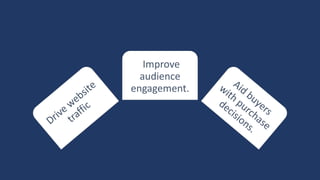
CREATE LESS, PROMOTE MORE
Improve
audience
engagement.
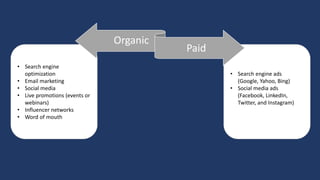
• Search engine
optimization
• Email marketing
• Social media
• Live promotions (events or
webinars)
• Influencer networks
• Word of mouth
• Search engine ads
(Google, Yahoo, Bing)
• Social media ads
(Facebook, LinkedIn,
Twitter, and Instagram)
Organic
Paid
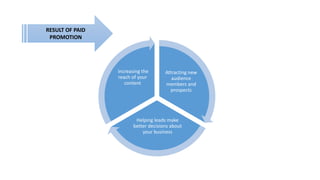
Attracting new
audience
members and
prospects
Helping leads make
better decisions about
your business
Increasing the
reach of your
content
RESULT OF PAID
PROMOTION
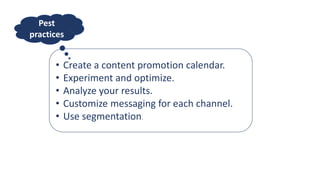
• Create a content promotion calendar.
• Experiment and optimize.
• Analyze your results.
• Customize messaging for each channel.
• Use segmentation.
Pest
practices
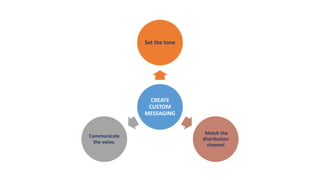
CREATE
CUSTOM
MESSAGING
Set the tone
Match the
distribution
channel
Communicate
the value.
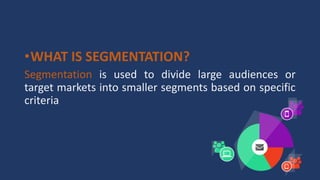
•WHAT IS SEGMENTATION?
Segmentation is used to divide large audiences or
target markets into smaller segments based on specific
criteria
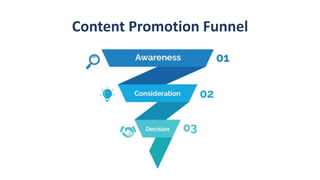
Content Promotion Funnel
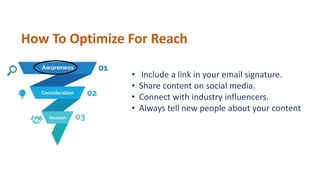
• Include a link in your email signature.
• Share content on social media.
• Connect with industry influencers.
• Always tell new people about your content
How To Optimize For Reach
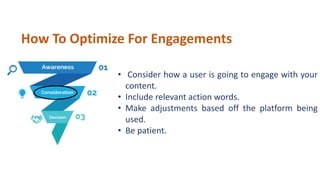
• Consider how a user is going to engage with your
content.
• Include relevant action words.
• Make adjustments based off the platform being
used.
• Be patient.
How To Optimize For Engagements
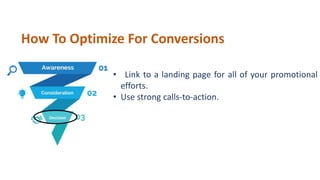
• Link to a landing page for all of your promotional
efforts.
• Use strong calls-to-action.
How To Optimize For Conversions
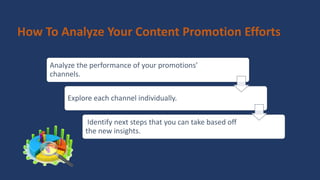
Analyze the performance of your promotions’
channels.
Explore each channel individually.
Identify next steps that you can take based off
the new insights.
How To Analyze Your Content Promotion Efforts
ANALYZING AND MEASURING CONTENT
Reasons To Look At Content
Performance With A Keen Eye
Find if your
marketing efforts
are driving the
needle on sales.
Document and
report on
progress for
future use
cases.
Discover
insights and
determine
where to go
next.
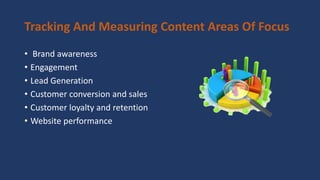
Tracking And Measuring Content Areas Of Focus
• Brand awareness
• Engagement
• Lead Generation
• Customer conversion and sales
• Customer loyalty and retention
• Website performance
Choose A Few Key
Metrics And Stick
To Them
Compare Your Results To The Goals You Set Previously.
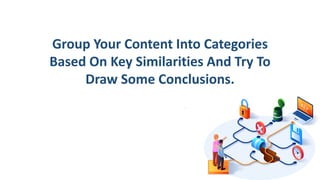
Group Your Content Into Categories
Based On Key Similarities And Try To
Draw Some Conclusions.
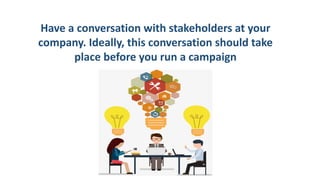
Have a conversation with stakeholders at your
company. Ideally, this conversation should take
place before you run a campaign
Don’t just look at what they tell you to look at.
There may be other metrics you can use to support
your story.
The stakes are different. What they care
about in terms of results is different
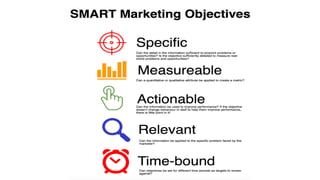
• In the first meeting with stakeholders focus on quantifying her
contents’ efforts and the SMART objectives of the campaigns.
• Discuss what types of reporting the key stakeholders would
find valuable.
• makes sure to set up a dedicated midpoint review meeting
and wrap-up discussion
DEVELOPING A GROWTH MARKETING
MENTALITY
Growth Marketing
An integrated approach to growing your business and optimizing
your content marketing efforts through constant testing across
marketing channels.
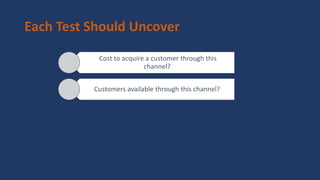
Each Test Should Uncover
Cost to acquire a customer through this
channel?
Customers available through this channel?
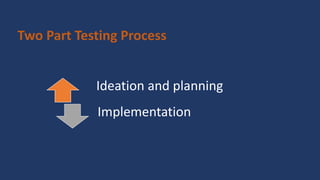
Ideation and planning
Implementation
Two Part Testing Process
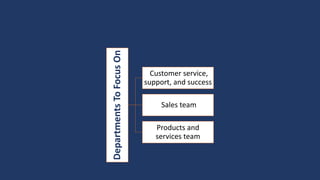
DepartmentsToFocusOn
Customer service,
support, and success
Sales team
Products and
services team
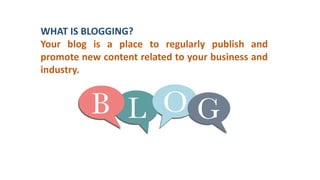
WHAT IS BLOGGING?
Your blog is a place to regularly publish and
promote new content related to your business and
industry.
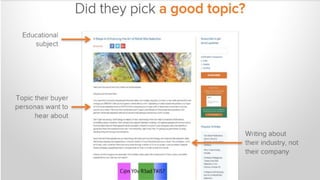
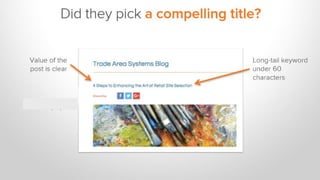
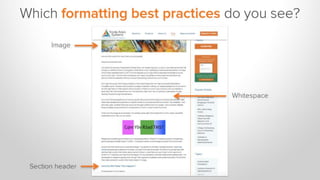
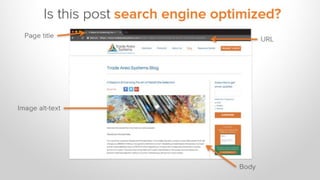
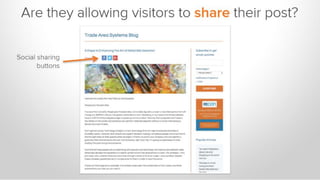
What Does A Successful
Blog Post Look Like?
Create your first article for blogging
• Individual task
• Duration: 1 days
In work teams, create a content plan for a month on the Facebook platform for
any business and determine the main items which should be defined In it
• Maximum 4 members in the team
• Duration: 3 days
lamiaaasayed@gmail.com

Content marketing ITI

  • 1.
    Content Marketing By :Lamiaa Ahmed Sayed
  • 2.
    What Is TheContent Marketing? Strategic marketing and business process focused on creating and distributing valuable, relevant, and consistent content to attract and retain a clearly defined audience, and ultimately, to drive profitable customer action.
  • 3.
    When done correctly, thishelps create with your audience, which leads to trust.
  • 4.
    What Is TheContent Marketing? Strategic marketing and business process focused on creating and distributing valuable, relevant, and consistent content to attract and retain a clearly defined audience, and ultimately, to drive profitable customer action. Content is the message your content marketing strategy delivers
  • 5.
    What Is TheContent Marketing? Strategic marketing and business process focused on creating and distributing valuable, relevant, and consistent content to attract and retain a clearly defined audience, and ultimately, to drive profitable customer action. Without Content, You’d Have Nothing To Deliver
  • 6.
    What Is TheContent Marketing? Strategic marketing and business process focused on creating and distributing valuable, relevant, and consistent content to attract and retain a clearly defined audience, and ultimately, to drive profitable customer action. Content marketing is really just the art of communicating with your prospects without having to sell to them.
  • 8.
    What Is TheInbound marketing ? Inbound marketing is just one part of a larger movement in the business world. That movement is inbound. Inbound is a method of attracting, engaging, and delighting people to grow a business that provides value and builds trust.
  • 17.
  • 18.
    What Is TheContent Marketing?
  • 19.
    Inbound Marketing FocusOn: Empowering potential customers Building a lasting relationship with your audience Creating valuable content that both entertains and educates.
  • 20.
    THE POWER OF STORYTELLING GENERATING CONTENTIDEAS PLANNING A LONG- TERM CONTENT STRATEGY BUILDING A CONTENT CREATION FRAMEWORK BECOMING AN EFFECTIVE WRITER EXTENDING THE VALUE OF CONTENT THROUGH REPURPOSING HOW TO EFFECTIVELY PROMOTE CONTENT ANALYZING AND MEASURING CONTENT DEVELOPING A GROWTH MARKETING MENTALITY How Do You Create An Effective Content Marketing Process For Your Business?
  • 21.
    THE POWER OFSTORYTELLING
  • 23.
    Your Goal IsTo Make A Human Connection. It’s About Resonating With People, People That Need Your Help Or Guidance
  • 25.
    A story isnot just your history. A story is why you’re doing what you’re doing, and telling it in a way that appeals to your audience
  • 26.
    Stories Are HowAudiences Remember
  • 27.
    “People don’t buywhat you do, they buy WHY you do it.” - Simon Sinek
  • 29.
    When you talkabout the why and how, you’re communicating with feelings and dealing with human behavior. And remember, storytelling is all about making that connection.
  • 30.
    Essential Elements OfStorytelling Characters ResolutionConflict
  • 31.
    Essential Elements OfStorytelling Characters ResolutionConflict
  • 34.
    Semi- fictional representationsof your ideal customer based on real data and some educated speculation about customer demographic, behaviors, patterns, motivations and goals .
  • 35.
    Personas help answerthe following questions: • What type of content is most likely to generate a response from a particular type of customer? • How does your ideal customer prefer to engage in the sales process? • What problems do customers need to solve, and how does your business help them?
  • 36.
    Why Using PersonasIs Important?
  • 40.
    The Connection BetweenPersonas And Inbound Marketing
  • 41.
    Persona development helpsyou determine: • Which format(s) will garner the best response • Which media channels are likely to reach the most potential customers • The tone you should use when writing content or communicating with customers • The types of content that will attract the most new leads • The calls to action that will generate the best response rate
  • 44.
  • 47.
  • 48.
    StorytellingPointsOfView First Person Second Person ThirdPerson FIRST-PERSON POINT OF VIEW • The character is yourself. • t’s more confessional. • Builds authority. • Use when there is a known person, an author, behind the content
  • 49.
    StorytellingPointsOfView First Person Second Person ThirdPerson SECOND-PERSON POINT OF VIEW • The character is your audience. • When using “you” language, you need to really understand your buyer personas. • Tell the story in a way that shows empathy.
  • 50.
    StorytellingPointsOfView First Person Second Person ThirdPerson THIRD-PERSON POINT OF VIEW • “He said” and “she said” type of language. • Case studies about your customers are good examples. • Stories can be both fictional or nonfictional.
  • 51.
    Essential Elements OfStorytelling Characters ResolutionConflict
  • 52.
    • The conflictis the lesson in how the character transforms through challenge. • If your story lacks conflict, then you’re not telling a story . Your prospect’s problems. Your prospect’s needs Your prospect’s buyer’s journey stage. The Conflict Should Fit:
  • 54.
    Essential Elements OfStorytelling Characters ResolutionConflict
  • 56.
    Use content tocreate emotional appeal. Be consistent and authentic Keep the story clear and concise Storytelling Best Practices
  • 57.
    Emotion is whatwill give your story power “Tell the truth, but make it fascinating.” - David Ogilvy Everyone can benefit from cutting down a lengthy story
  • 61.
    Create a storyand define the segment and the buyer persona • Individual task • Duration: 1 days
  • 62.
  • 63.
    Your days arebusy Uncover ideas that you may not have come up with on your own You will run out of good ideas Grow responsibly and keep up with increased demand Why it’s Important
  • 64.
    Eventually content fatigue willset in. You’ll find yourself looking at the word processor with nothing to write
  • 65.
    Idea creation isn’tjust about waiting for inspiration to strike— there’s a process
  • 67.
  • 68.
    Ideation Process Eureka moment Unconscious processing Digesting the material Gatheringraw material Read and consume content from a wide variety of places
  • 69.
    Ideation Process Eureka moment Unconscious processing Digesting the material Gatheringraw material You’re looking for relationships, connections, and combinations.
  • 70.
    Ideation Process Eureka moment Unconscious processing Digesting the material Gatheringraw material Stop trying to bring those ideas together and do something else entirely
  • 71.
    Ideation Process Eureka moment Unconscious processing Digesting the material Gatheringraw material An idea will pop into your head. It will come to you when you are least expecting it.
  • 72.
    To Generate ContentIdeas By yourself With a group
  • 73.
    • What areyour buyer personas’ reading habits? • What are your competitors doing? • What are people talking about on Quora? • What can you learn from your search engine optimization efforts? Keep in mind when generating content ideas on your own
  • 74.
    Use a toollike Buzzsumo to see which content has the best social media performance https://app.buzzsumo.com
  • 75.
    Quora is apopular question-and-answer site.
  • 76.
    Google search consoleprovides actual keywords people are typing in Autocomplete Related searches
  • 77.
    Autocomplete is when Googlesuggests a query as you type it in the search bar.
  • 78.
    Related searches appear atthe bottom of the search results page.
  • 79.
    A brainstorm canbe an incredibly productive way to generate fresh and creative content ideas.
  • 80.
    • Pick someoneto moderate and set a clear agenda. • Create an atmosphere where people feel comfortable. • Leverage “braindumps.” • Use sticky notes, whiteboards, and other visual aids. • Remember that the main goal is to generate new, unexpected ideas. Hosting A Brainstorm Best Practices
  • 81.
    PLANNING A LONG-TERMCONTENT STRATEGY
  • 83.
    of highly effective organizationshave someone steering the direction of their content strategy.
  • 84.
    How Do YouBuild A Long-term Content Plan?
  • 90.
    Setting marketing goals Auditing orassessing your organization’s initiatives and assets Identifying the buyer’s journey for your buyer personas. Three Steps To Creating A Long-term Content Plan
  • 92.
    • Publishing date •Content title • Buyer’s journey stage • Marketing funnel stage • Format or type of content • Which buyer persona it’s targeting • Any additional notes that provide value or context Organize Your Content Audit Based On These Categories
  • 94.
    Tie everything togetherwith a series of blog posts that could lead to a relevant content offer
  • 95.
    You’re creating content that’smeant to attract and pull your buyer personas through every stage of the buyer’s journey
  • 104.
    Your Content NeedsTo Be In Real-time
  • 105.
    Your content needsto allow for multiple contributors to access and collaborate
  • 106.
    BUILDING A CONTENTCREATION FRAMEWORK
  • 107.
  • 108.
    Repeatable Organized Agile It Should Be: Mostcontent marketers wear a lot of hats, leaving them strapped for time
  • 109.
    Repeatable Organized Agile It Should Be: Breakthose larger goals into digestible chunks
  • 110.
    Repeatable Organized Agile It Should Be: Businessneeds and context likely change over time.
  • 111.
    How To BuildA Content Creation Framework ???
  • 112.
    Conceptualizing your content Planning and settingtimelines Creating a workflow Reviewing content Publishing and promotion Organizing it internally Analyzing the results
  • 113.
    Conceptualizing your content Planning and settingtimelines Creating a workflow Reviewing content Publishing and promotion Organizing it internally Analyzing the results
  • 114.
    Conceptualizing your content Planning and settingtimelines Creating a workflow Reviewing content Publishing and promotion Organizing it internally Analyzing the results Start planning out a timeline, which shouldn’t be more than three months out.
  • 115.
    Conceptualizing your content Planning and settingtimelines Creating a workflow Reviewing content Publishing and promotion Organizing it internally Analyzing the results Identify who is going to be doing what tasks. Identify outside influencers will be contributing Have an intuitive breakdown of the work Content Creation Workflow Should
  • 116.
    Outline completed First draft completed Editing completed Design and formatting completed Finaldraft completed Published Conceptualizing your content Planning and setting timelines Creating a workflow Reviewing content Publishing and promotion Organizing it internally Analyzing the results Content Creation Workflow Should
  • 117.
    • Set clearexpectations. • Determine editing timeline. • Use a document to track changes, and clearly identify roles in the reviewal process. • Allow for multiple rounds of edits Conceptualizing your content Planning and setting timelines Creating a workflow Reviewing content Publishing and promotion Organizing it internally Analyzing the results Reviewing And Editing Content Best Practices
  • 118.
    Conceptualiz ing your content Planning and setting timelines Creatinga workflow Reviewing content Publishing and promotion Organizingit internally Analyzing the results Your Promotion Strategy Should Always Be Changing To Reflect Your Business Needs
  • 119.
    Conceptuali zing your content Planning and setting timelines Creatinga workflow Reviewing content Publishing and promotion Organizing it internally Analyzing the results
  • 120.
    Conceptualizing your content Planning and settingtimelines Creating a workflow Reviewing content Publishing and promotion Organizing it internally Analyzing the results You need to measure the results to see what insights you can learn.
  • 121.
    Conceptualizing your content Planning and settingtimelines Creating a workflow Reviewing content Publishing and promotion Organizing it internally Analyzing the results Keep on top of industry and best practices.
  • 122.
    Conceptualizing your content Planning and settingtimelines Creating a workflow Reviewing content Publishing and promotion Organizing it internally Analyzing the results Your content creation framework should always be evolving
  • 123.
    Primary Types OfResponsibilities in content strategy Writing Editing Designing Coordinating
  • 125.
  • 126.
  • 127.
  • 128.
  • 129.
  • 130.
    Effective Writing CoreAttributes • Attention-grabbing headline • Tone relevant to your readers • Help the reader do something • Add to the conversation • Write for the way people search • Solid structure • One core idea • Supports your brand messaging • Has a relevant call-to-action • Free of errors and poor grammar
  • 131.
    Effective Writing CoreAttributes • Attention-grabbing headline • Tone relevant to your readers • Help the reader do something • Add to the conversation • Write for the way people search • Solid structure • One core idea • Supports your brand messaging • Has a relevant call-to-action • Free of errors and poor grammar
  • 132.
    of people willread your headline. of people will read the entire article.
  • 133.
    It’s Always AGood Idea To Get Another Opinion.
  • 134.
    “Your First IdeaMight Be Your Worst Idea”
  • 135.
    • How-To • List •Question • Interesting Data • Quick Tip • Negative Angle • Secret of • Little known, advice, tips, or tricks • You Should Know This Title Formats
  • 136.
    Effective Writing CoreAttributes • Attention-grabbing headline • Tone relevant to your readers • Help the reader do something • Add to the conversation • Write for the way people search • Solid structure • One core idea • Supports your brand messaging • Has a relevant call-to-action • Free of errors and poor grammar
  • 137.
    You Want ToMatch The Attitude Of Your Readers
  • 138.
    Effective Writing CoreAttributes • Attention-grabbing headline • Tone relevant to your readers • Help the reader do something • Add to the conversation • Write for the way people search • Solid structure • One core idea • Supports your brand messaging • Has a relevant call-to-action • Free of errors and poor grammar
  • 139.
    You First NeedTo Understand Who Your Ideal Reader Is, Which Is Also Known As Your Buyer Persona
  • 140.
    Effective Writing CoreAttributes • Attention-grabbing headline • Tone relevant to your readers • Help the reader do something • Add to the conversation • Write for the way people search • Solid structure • One core idea • Supports your brand messaging • Has a relevant call-to-action • Free of errors and poor grammar
  • 141.
    It Needs ToAdd Something New To The Conversation, Take a few minutes to research what already exists on the subject
  • 142.
    Effective Writing CoreAttributes • Attention-grabbing headline • Tone relevant to your readers • Help the reader do something • Add to the conversation • Write for the way people search • Solid structure • One core idea • Supports your brand messaging • Has a relevant call-to-action • Free of errors and poor grammar
  • 143.
    You should researchthe words people actually use to search and communicate
  • 144.
    Effective Writing CoreAttributes • Attention-grabbing headline • Tone relevant to your readers • Help the reader do something • Add to the conversation • Write for the way people search • One core idea • Supports your brand messaging • Has a relevant call-to-action • Free of errors and poor grammar
  • 146.
    Effective Writing CoreAttributes • Attention-grabbing headline • Tone relevant to your readers • Help the reader do something • Add to the conversation • Write for the way people search • One core idea • Supports your brand messaging • Has a relevant call-to-action • Free of errors and poor grammar
  • 148.
    Effective Writing CoreAttributes • Attention-grabbing headline • Tone relevant to your readers • Help the reader do something • Add to the conversation • Write for the way people search • One core idea • Supports your brand messaging • Has a relevant call-to-action • Free of errors and poor grammar
  • 150.
    Effective Writing CoreAttributes • Attention-grabbing headline • Tone relevant to your readers • Help the reader do something • Add to the conversation • Write for the way people search • One core idea • Supports your brand messaging • Has a relevant call-to-action • Free of errors and poor grammar
  • 152.
    Common Grammar AndStyle Mistakes To Check For • Use contractions • Write with simple language • Use the active voice • Be clear and concise • Use short sentences and paragraphs • Cut fluffy words from your writing • Adhere to a style guide • Use “you” and “your” • Avoid jargon • Don’t be snarky • Use Spell Check
  • 155.
    EXTENDING THE VALUEOF CONTENT THROUGH REPURPOSING
  • 156.
    • Gives youanother opportunity to rank within search engine’s results • Allows you to reach a new audience • Supports the consistency of your message • Helps your content marketing team create content on a more consistent basis Benefits And Advantages Of Repurposing Content
  • 157.
    THE RULE OFSEVEN A Prospect Needs To See Or Hear Your Marketing Message At Least Seven Times Before They Take Action And Buy From You.
  • 158.
  • 159.
    RepurposingContent Strategies Republish Recycle Content Republishing isthe act of reposting your content, mainly blogs, on other websites with proper credit given to the original author. The source uses a canonical tag. It has a link at the beginning or the end of the post that connects back to your website. To have the source “NoIndex” their copy of the article.
  • 160.
    Strive to choose reputablesites to partner with Don’t republish all of your content, just top performing content. Update the headline of each republished piece of content Wait at least two weeks before you republish your content. Include internal links throughout your post Make sure your content is a great fit for the site it’s being published to. Include a call-to- action within your blog’s post. RepurposingContent Strategies Republish Recycle Best practices
  • 161.
    RepurposingContent Strategies Republish Recycle What needs tobe added, removed, or re-worded? You may be able to combine related or unrelated content to provide new value and meaning. Is there an opportunity to expand on something you’ve already done in order to dig deeper into that topic? Adjust combine Expand Effective recycled content
  • 162.
  • 163.
    DON’T CREATE CONTENT JUSTTO CREATE CONTENT. Think of each content idea that provides value to your buyer persona’s journey as a seed.
  • 164.
    Identify content format andtopic. Make a list of supporting subtopics Choose strongest supporting subtopics Create content for each supporting subtopic. Download or create a template for guide. Recycle blog content and format into chapters. Create the rest of the content needed to complete. Update blog post call-to-actions. 8 STEPS TO RECYCLING CONTENT INTO A LONG-FORM OFFER
  • 165.
    Choose any articlefrom any website and follow the steps to recycling it. • Individual task • Duration: 1 days
  • 166.
    HOW TO EFFECTIVELYPROMOTE CONTENT
  • 169.
  • 170.
  • 171.
    • Search engine optimization •Email marketing • Social media • Live promotions (events or webinars) • Influencer networks • Word of mouth • Search engine ads (Google, Yahoo, Bing) • Social media ads (Facebook, LinkedIn, Twitter, and Instagram) Organic Paid
  • 174.
    Attracting new audience members and prospects Helpingleads make better decisions about your business Increasing the reach of your content RESULT OF PAID PROMOTION
  • 175.
    • Create acontent promotion calendar. • Experiment and optimize. • Analyze your results. • Customize messaging for each channel. • Use segmentation. Pest practices
  • 176.
    CREATE CUSTOM MESSAGING Set the tone Matchthe distribution channel Communicate the value.
  • 180.
    •WHAT IS SEGMENTATION? Segmentationis used to divide large audiences or target markets into smaller segments based on specific criteria
  • 181.
  • 182.
    • Include alink in your email signature. • Share content on social media. • Connect with industry influencers. • Always tell new people about your content How To Optimize For Reach
  • 183.
    • Consider howa user is going to engage with your content. • Include relevant action words. • Make adjustments based off the platform being used. • Be patient. How To Optimize For Engagements
  • 184.
    • Link toa landing page for all of your promotional efforts. • Use strong calls-to-action. How To Optimize For Conversions
  • 185.
    Analyze the performanceof your promotions’ channels. Explore each channel individually. Identify next steps that you can take based off the new insights. How To Analyze Your Content Promotion Efforts
  • 186.
  • 187.
    Reasons To LookAt Content Performance With A Keen Eye Find if your marketing efforts are driving the needle on sales. Document and report on progress for future use cases. Discover insights and determine where to go next.
  • 188.
    Tracking And MeasuringContent Areas Of Focus • Brand awareness • Engagement • Lead Generation • Customer conversion and sales • Customer loyalty and retention • Website performance
  • 189.
    Choose A FewKey Metrics And Stick To Them
  • 190.
    Compare Your ResultsTo The Goals You Set Previously.
  • 191.
    Group Your ContentInto Categories Based On Key Similarities And Try To Draw Some Conclusions.
  • 192.
    Have a conversationwith stakeholders at your company. Ideally, this conversation should take place before you run a campaign
  • 193.
    Don’t just lookat what they tell you to look at. There may be other metrics you can use to support your story.
  • 194.
    The stakes aredifferent. What they care about in terms of results is different
  • 195.
    • In thefirst meeting with stakeholders focus on quantifying her contents’ efforts and the SMART objectives of the campaigns. • Discuss what types of reporting the key stakeholders would find valuable. • makes sure to set up a dedicated midpoint review meeting and wrap-up discussion
  • 196.
    DEVELOPING A GROWTHMARKETING MENTALITY
  • 197.
    Growth Marketing An integratedapproach to growing your business and optimizing your content marketing efforts through constant testing across marketing channels.
  • 204.
    Each Test ShouldUncover Cost to acquire a customer through this channel? Customers available through this channel?
  • 205.
  • 206.
    DepartmentsToFocusOn Customer service, support, andsuccess Sales team Products and services team
  • 209.
    WHAT IS BLOGGING? Yourblog is a place to regularly publish and promote new content related to your business and industry.
  • 210.
    What Does ASuccessful Blog Post Look Like?
  • 217.
    Create your firstarticle for blogging • Individual task • Duration: 1 days
  • 218.
    In work teams,create a content plan for a month on the Facebook platform for any business and determine the main items which should be defined In it • Maximum 4 members in the team • Duration: 3 days
  • 219.