Downloaded 113 times

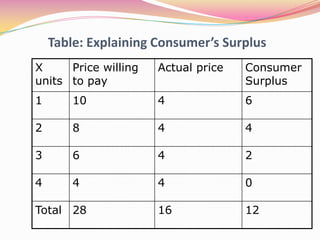
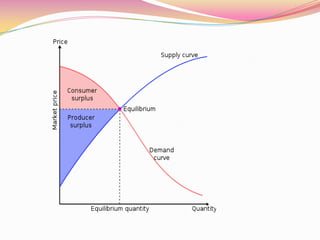

This document defines and provides examples of consumer surplus. Consumer surplus is the difference between how much a consumer is willing to pay for a good or service and the actual amount they pay. It measures the satisfaction consumers get when they pay less than the maximum they would be willing to spend. The document gives daily examples like salt, newspapers, and matches. It also provides a numerical example in a table to illustrate how consumer surplus is calculated for different units of a product.


