Download to read offline

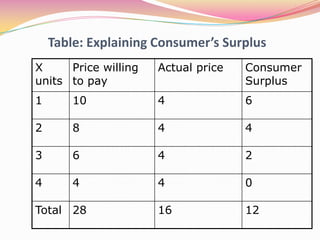


Consumer surplus refers to the difference between how much a consumer is willing to pay for a good or service and the actual amount they pay, representing the extra satisfaction or benefit they receive. It is measured as the amount consumers save when they purchase items for less than what they would be willing to spend. Examples of consumer surplus include paying less than willing amounts for daily items like salt, newspapers, or matches.


