Downloaded 25 times


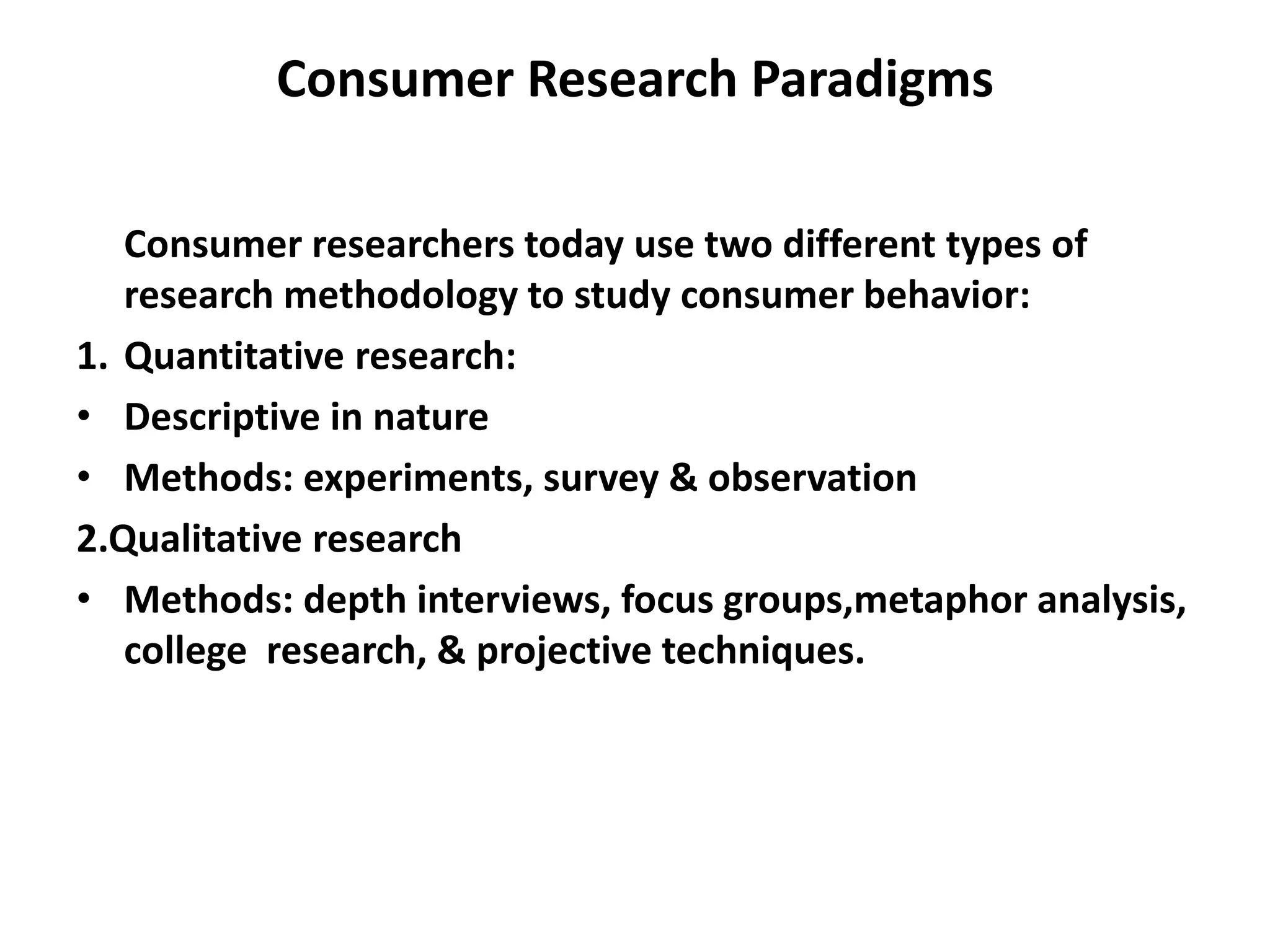
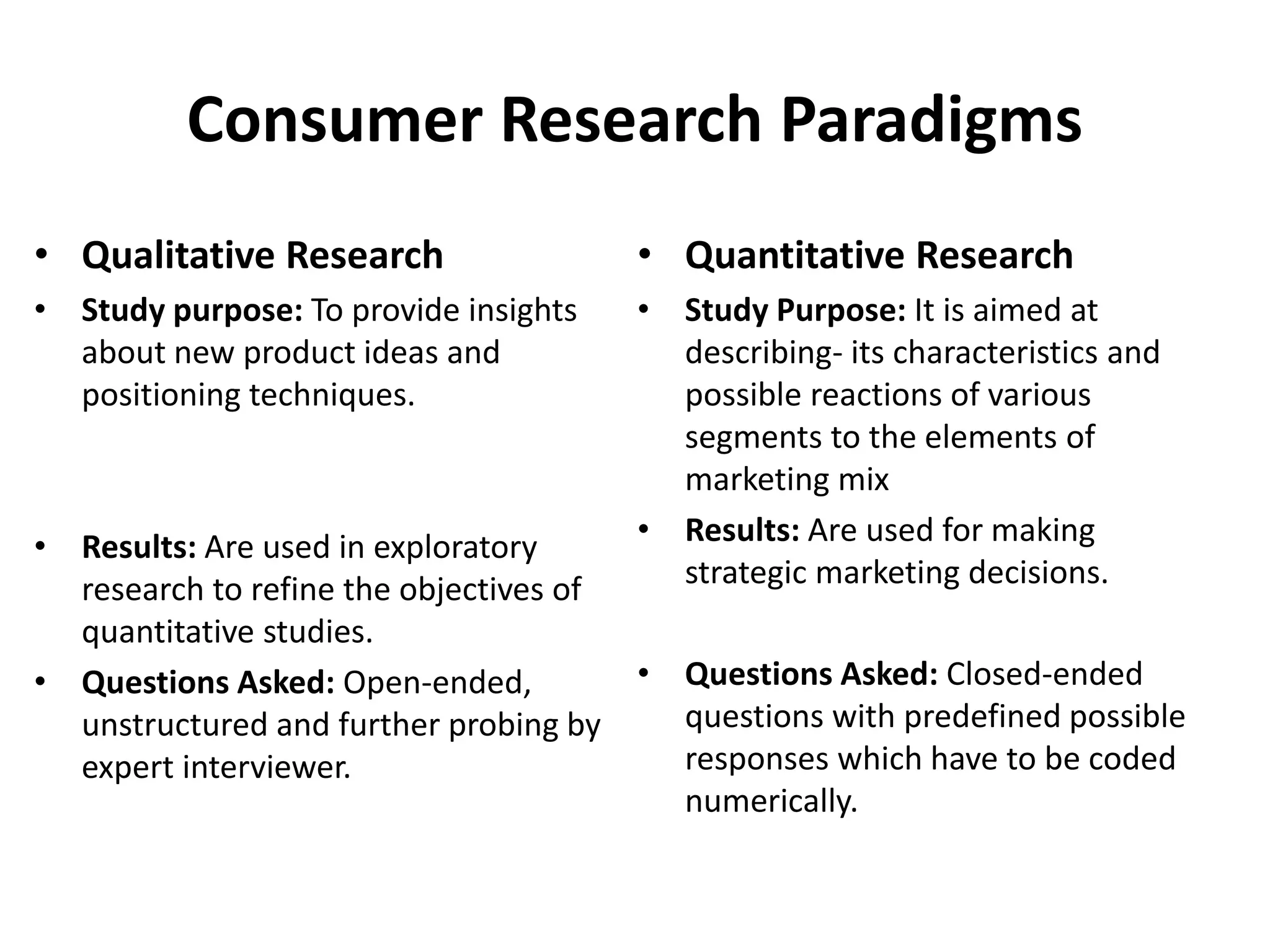
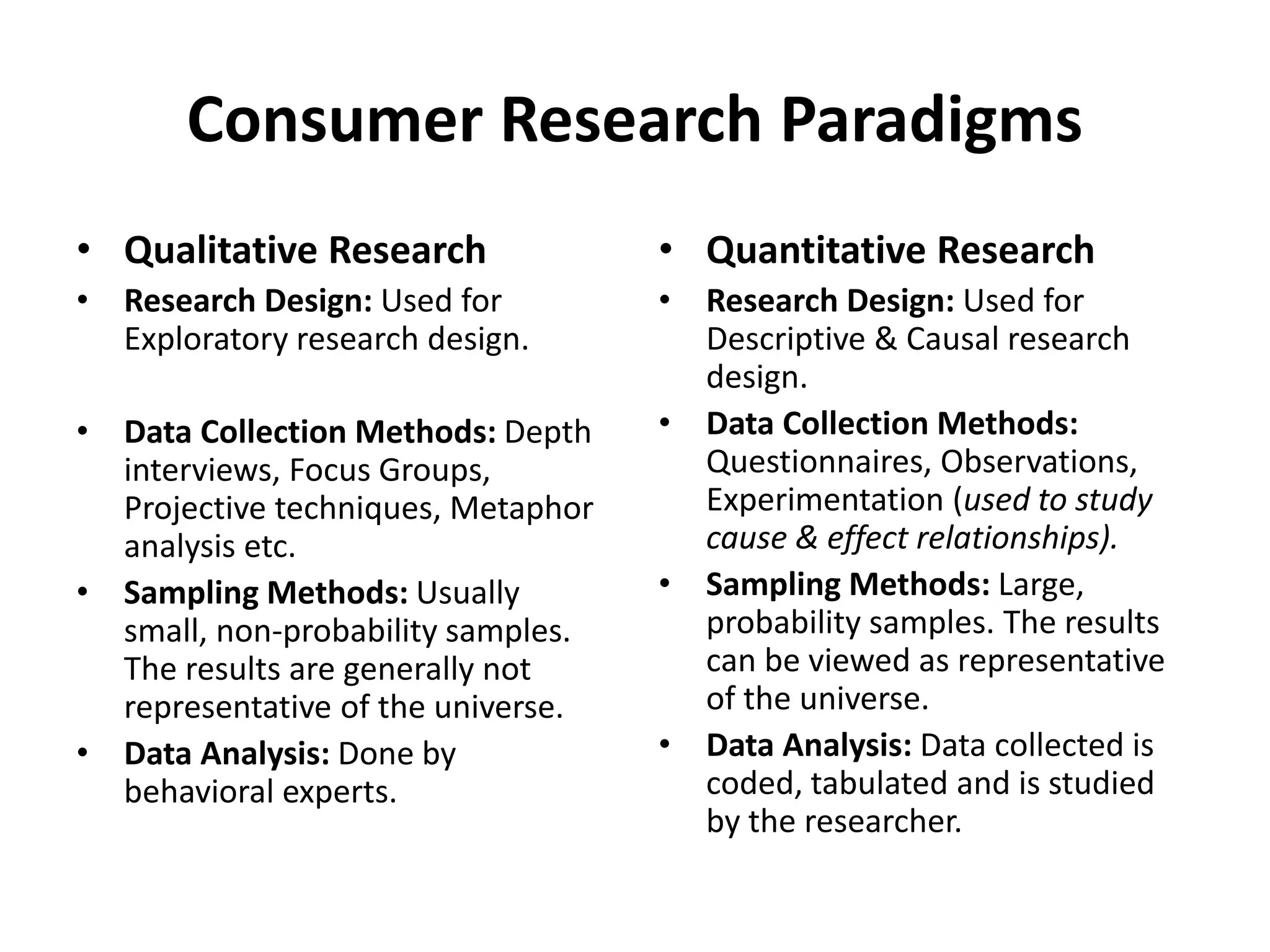
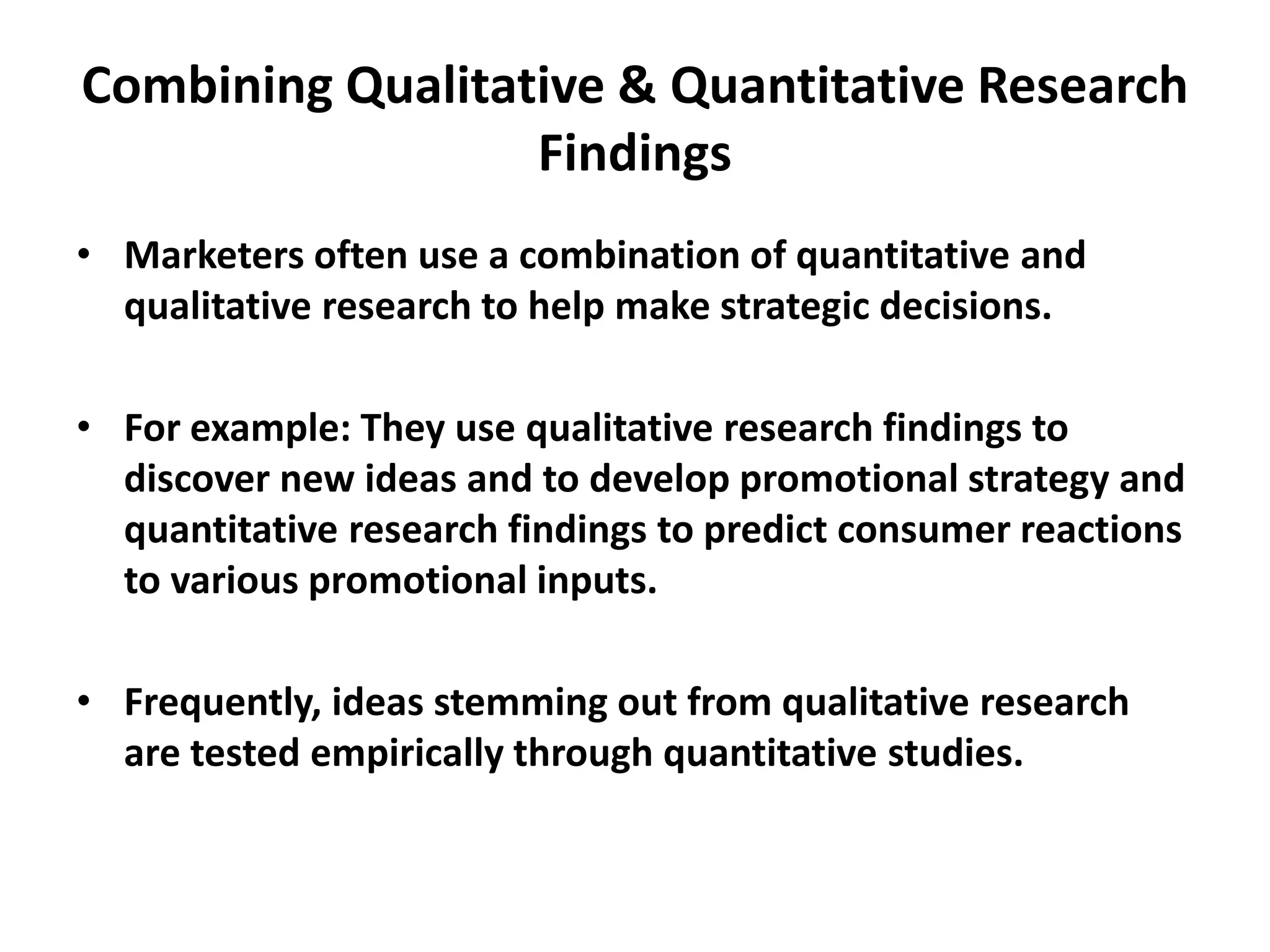


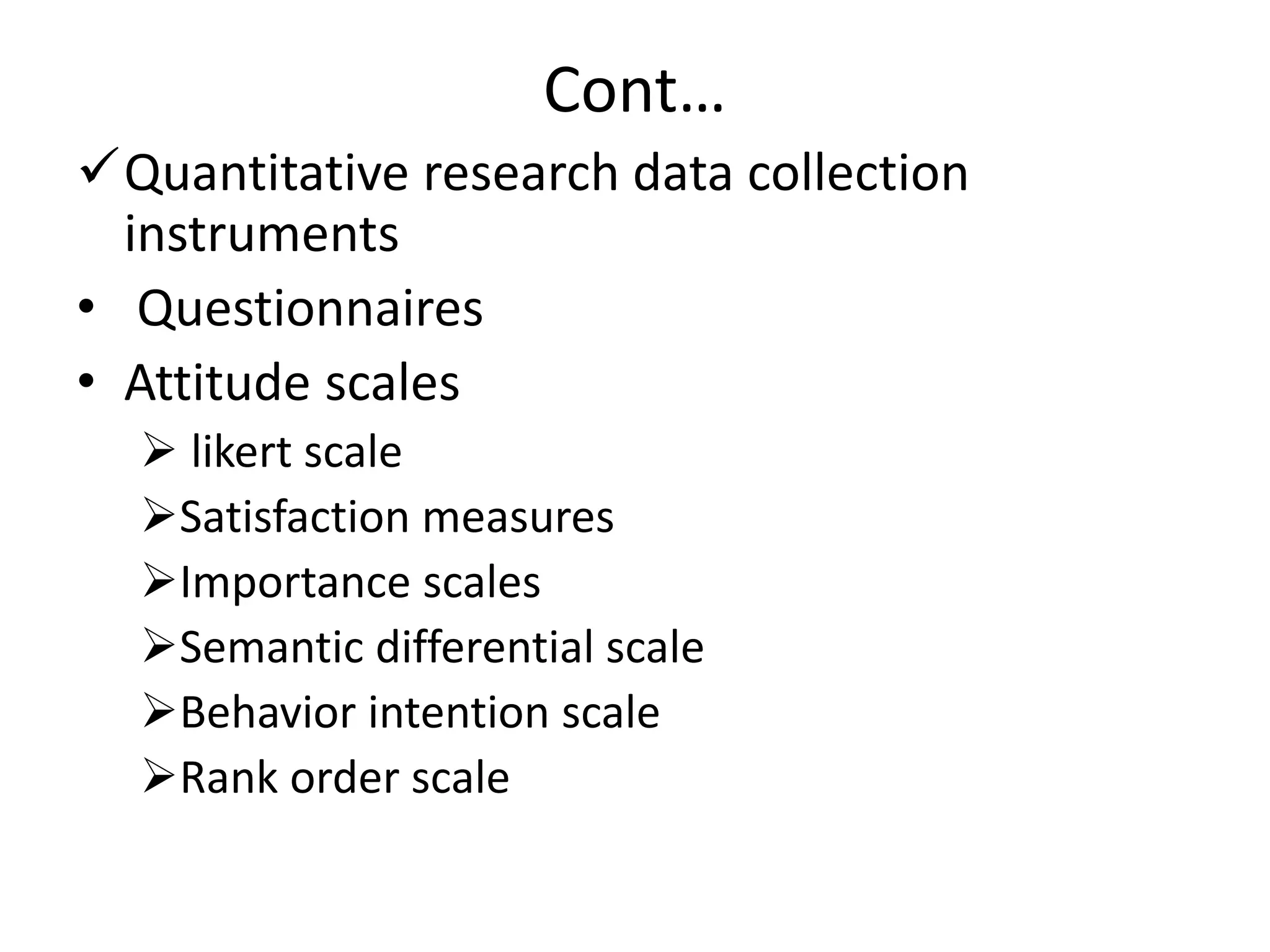


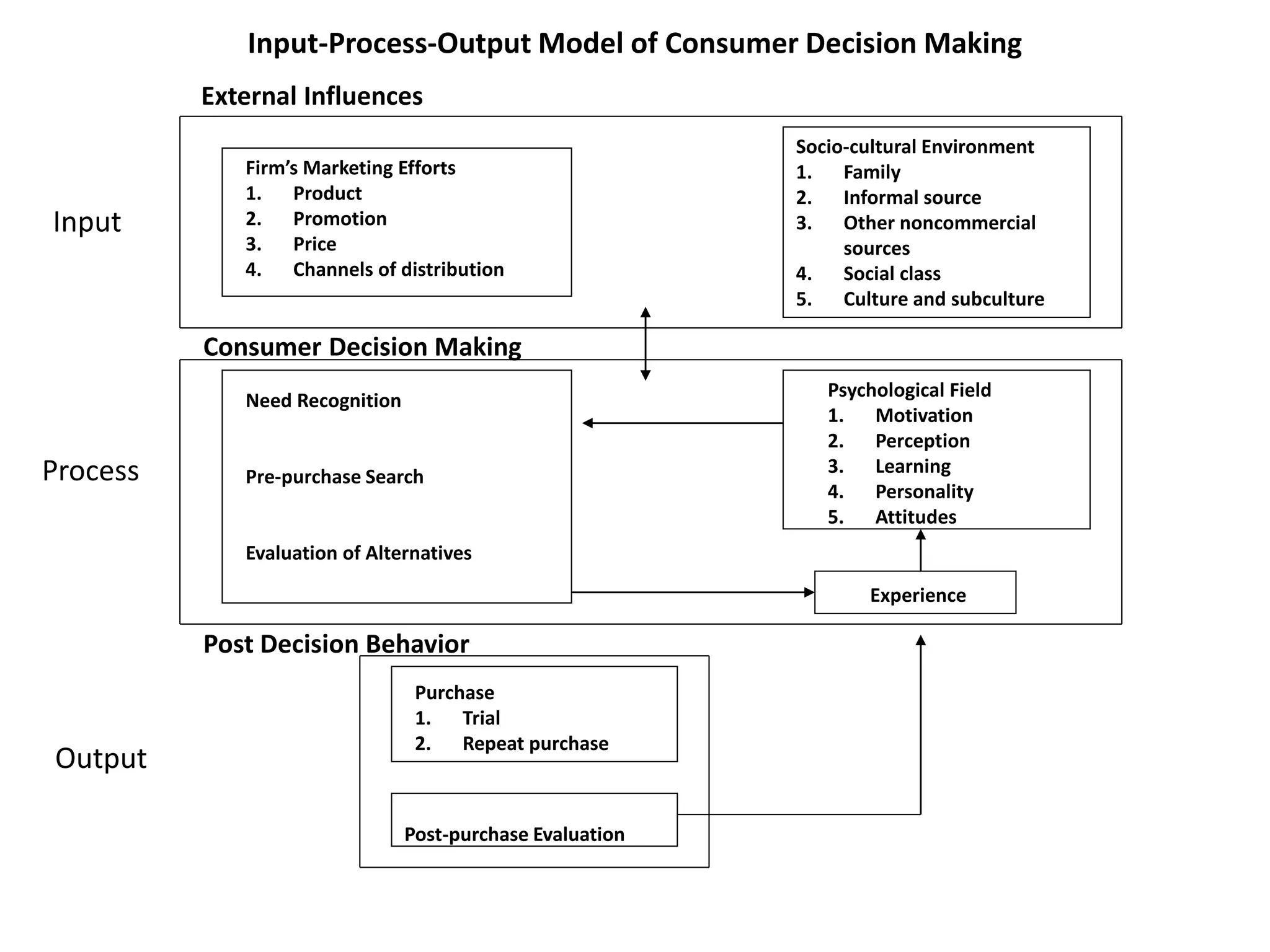




Consumer research paradigms have evolved over time. Early research did not consider emotions, but later researchers realized consumers were not always consciously aware of their motivations. Researchers now use qualitative and quantitative methods. Qualitative research uses depth interviews and focus groups to provide insights, while quantitative research uses surveys and experiments to describe characteristics and predict reactions. Researchers combine these methods to inform strategic marketing decisions. The consumer research process involves defining objectives, collecting secondary data, designing primary studies, collecting and analyzing data, and preparing reports. Models of consumer behavior consider internal influences like motivation and external influences like culture. Decision making can be complex, low involvement, or routine. [/SUMMARY]


