Prepared By:
Roll no 15007
Shaista Raza
4th M.B.A(3.5)
Consumer
Behavior
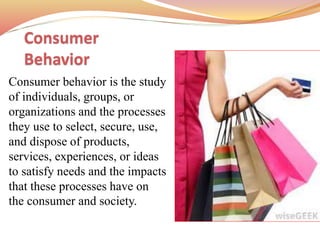
Consumer behavior is the study
of individuals, groups, or
organizations and the processes
they use to select, secure, use,
and dispose of products,
services, experiences, or ideas
to satisfy needs and the impacts
that these processes have on
the consumer and society.
Customers vs. Consumers
Customer: customer means who purchases the product
from the marketer or from the retailer or from the
wholesaler. Here we don’t bother about who uses the
product.
Consumer: Consumer means who uses the product of
course purchased by the customer. Here we consider
finally who is going to use the product we call them as
consumer.
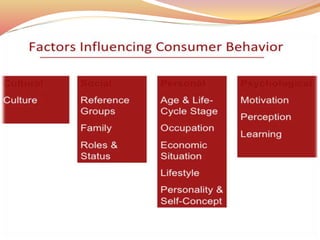
Consumer behavior has been always of great interest to
marketers.
The knowledge of consumer behavior helps the
marketer to understand how consumers think, feel and
select from alternatives like products, brands and the like
and how the consumers are influenced by their
environment, the reference groups, family, and
salespersons and so on.
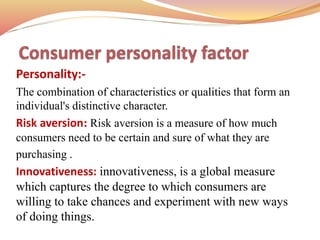
Personality:-
The combination of characteristics or qualities that form an
individual's distinctive character.
Risk aversion: Risk aversion is a measure of how much
consumers need to be certain and sure of what they are
purchasing .
Innovativeness: innovativeness, is a global measure
which captures the degree to which consumers are
willing to take chances and experiment with new ways
of doing things.
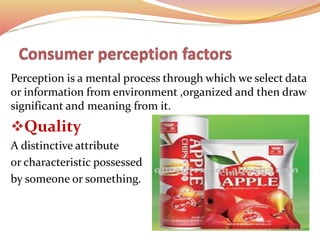
Perception is a mental process through which we select data
or information from environment ,organized and then draw
significant and meaning from it.
Quality
A distinctive attribute
or characteristic possessed
by someone or something.
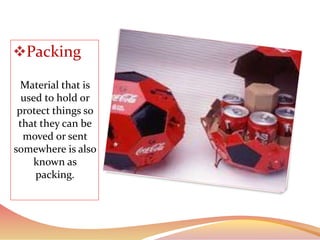
Packing
Material that is
used to hold or
protect things so
that they can be
moved or sent
somewhere is also
known as
packing.
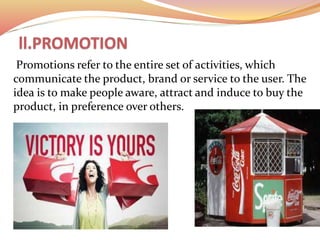
Promotions refer to the entire set of activities, which
communicate the product, brand or service to the user. The
idea is to make people aware, attract and induce to buy the
product, in preference over others.
This section outlines the perspectives that emerged
during the traditional-positivist era in consumer
research.
These are the behavioral, cognitive, trait, motivational,
attitudinal, and situational viewpoints.
That is, they are built on the common foundations of
“rationalism” and share allegiance to the principles of a
single traditional, positivist-based approach to consumer
research.
Economic theory holds that purchasing decisions are
the result of largely “rational” and conscious economic
calculations.
 Thus, the individual buyer seeks to spend his income
on those goods that will deliver the most utility
(satisfaction) according to his tastes and relative prices.
 In contrast to the economic view which underscore the
importance of internal mental processes in consumer
decision making as;
 behavioral perspective emphasizes the role of external
environmental factors in the process of learning, which it
is argued causes behavior.
 The behavioral perspective focuses on external
environmental cues (such as advertising) that stimulate
consumer response.
The cognitive perspective stresses the role of
information processing in consumer decision
making.
 This perspective views people as problem solvers
who actively use information from the world around
them to master their environment.
However, much debate surrounds the issue of
whether or when people are actually aware of these
learning processes.
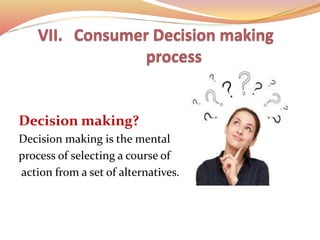
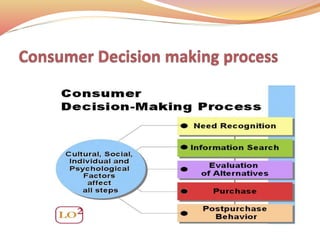
Decision making?
Decision making is the mental
process of selecting a course of
action from a set of alternatives.
Personality:-
The combination of characteristics or qualities that form
an individual's distinctive character.
Personality perspective:-
Psychoanalytic: importance of unconscious and childhood
experiences.
Humanistic: importance of self and fulfillment of potential.
Social cognitive: importance of beliefs about self.
Trait: description and measurement of personality
differences.
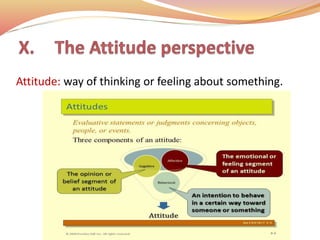
Attitude: way of thinking or feeling about something.
The traditional positivist approach is established on
the premise that consumers are largely rational, stable,
and knowable entities.
The positivist philosophical stance is characterized by
an emphasis on scientific observation and testing.
The objective of this type of research is therefore, to
observe empirical facts and to establish generalizable
laws that can used to predict and control behavior.
It is the contrast of traditional perspectives in which
interpretive perspectives of consumer behavior relates
consumers with the capacity to proactively assign to
represent their environments.
 The non-positivist perspective criticizes
modernism on philosophical, cultural and empirical
grounds and acknowledges social, complex and
irrational nature of consumer behavior.
Conditions of competition are changing rapidly today and companies
that strategize and react to these changes promptly and quickly are the
most successful.
 Due to technological developments, physical differences of products
have decreased.
Differentiation should be made on the meanings products bear
instead of on their physical features.
A successful brand differentiation can be possible by building
personality. Thanks to brand personality, consumer sees brand as
friend since it provides him with emotional benefits.
Overall, it is argued that the study of consumer behavior is rapidly
evolving as researchers recognize
and implement new techniques and trans disciplinary perspectives to
understand the nature of purchase and consumption behavior.
consumer Buying Behaviour

consumer Buying Behaviour

  • 2.
    Prepared By: Roll no15007 Shaista Raza 4th M.B.A(3.5)
  • 3.
    Consumer Behavior Consumer behavior isthe study of individuals, groups, or organizations and the processes they use to select, secure, use, and dispose of products, services, experiences, or ideas to satisfy needs and the impacts that these processes have on the consumer and society.
  • 4.
    Customers vs. Consumers Customer:customer means who purchases the product from the marketer or from the retailer or from the wholesaler. Here we don’t bother about who uses the product. Consumer: Consumer means who uses the product of course purchased by the customer. Here we consider finally who is going to use the product we call them as consumer.
  • 5.
    Consumer behavior hasbeen always of great interest to marketers. The knowledge of consumer behavior helps the marketer to understand how consumers think, feel and select from alternatives like products, brands and the like and how the consumers are influenced by their environment, the reference groups, family, and salespersons and so on.
  • 8.
    Personality:- The combination ofcharacteristics or qualities that form an individual's distinctive character. Risk aversion: Risk aversion is a measure of how much consumers need to be certain and sure of what they are purchasing . Innovativeness: innovativeness, is a global measure which captures the degree to which consumers are willing to take chances and experiment with new ways of doing things.
  • 9.
    Perception is amental process through which we select data or information from environment ,organized and then draw significant and meaning from it. Quality A distinctive attribute or characteristic possessed by someone or something.
  • 10.
    Packing Material that is usedto hold or protect things so that they can be moved or sent somewhere is also known as packing.
  • 11.
    Promotions refer tothe entire set of activities, which communicate the product, brand or service to the user. The idea is to make people aware, attract and induce to buy the product, in preference over others.
  • 12.
    This section outlinesthe perspectives that emerged during the traditional-positivist era in consumer research. These are the behavioral, cognitive, trait, motivational, attitudinal, and situational viewpoints. That is, they are built on the common foundations of “rationalism” and share allegiance to the principles of a single traditional, positivist-based approach to consumer research.
  • 13.
    Economic theory holdsthat purchasing decisions are the result of largely “rational” and conscious economic calculations.  Thus, the individual buyer seeks to spend his income on those goods that will deliver the most utility (satisfaction) according to his tastes and relative prices.
  • 14.
     In contrastto the economic view which underscore the importance of internal mental processes in consumer decision making as;  behavioral perspective emphasizes the role of external environmental factors in the process of learning, which it is argued causes behavior.  The behavioral perspective focuses on external environmental cues (such as advertising) that stimulate consumer response.
  • 15.
    The cognitive perspectivestresses the role of information processing in consumer decision making.  This perspective views people as problem solvers who actively use information from the world around them to master their environment. However, much debate surrounds the issue of whether or when people are actually aware of these learning processes.
  • 16.
    Decision making? Decision makingis the mental process of selecting a course of action from a set of alternatives.
  • 18.
    Personality:- The combination ofcharacteristics or qualities that form an individual's distinctive character. Personality perspective:- Psychoanalytic: importance of unconscious and childhood experiences. Humanistic: importance of self and fulfillment of potential. Social cognitive: importance of beliefs about self. Trait: description and measurement of personality differences.
  • 19.
    Attitude: way ofthinking or feeling about something.
  • 20.
    The traditional positivistapproach is established on the premise that consumers are largely rational, stable, and knowable entities. The positivist philosophical stance is characterized by an emphasis on scientific observation and testing. The objective of this type of research is therefore, to observe empirical facts and to establish generalizable laws that can used to predict and control behavior.
  • 21.
    It is thecontrast of traditional perspectives in which interpretive perspectives of consumer behavior relates consumers with the capacity to proactively assign to represent their environments.  The non-positivist perspective criticizes modernism on philosophical, cultural and empirical grounds and acknowledges social, complex and irrational nature of consumer behavior.
  • 22.
    Conditions of competitionare changing rapidly today and companies that strategize and react to these changes promptly and quickly are the most successful.  Due to technological developments, physical differences of products have decreased. Differentiation should be made on the meanings products bear instead of on their physical features. A successful brand differentiation can be possible by building personality. Thanks to brand personality, consumer sees brand as friend since it provides him with emotional benefits. Overall, it is argued that the study of consumer behavior is rapidly evolving as researchers recognize and implement new techniques and trans disciplinary perspectives to understand the nature of purchase and consumption behavior.