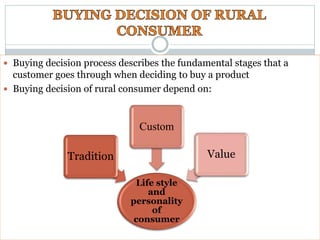
 Buying decision process describes the fundamental stages that a
customer goes through when deciding to buy a product
 Buying decision of rural consumer depend on:
Life style
and
personality
of
consumer
Tradition
Custom
Value
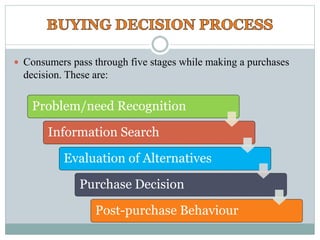
 Consumers pass through five stages while making a purchases
decision. These are:
Problem/need Recognition
Information Search
Evaluation of Alternatives
Purchase Decision
Post-purchase Behaviour
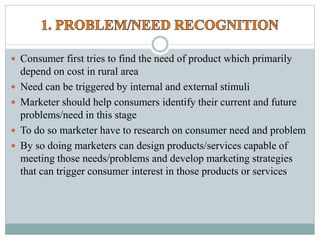
 Consumer first tries to find the need of product which primarily
depend on cost in rural area
 Need can be triggered by internal and external stimuli
 Marketer should help consumers identify their current and future
problems/need in this stage
 To do so marketer have to research on consumer need and problem
 By so doing marketers can design products/services capable of
meeting those needs/problems and develop marketing strategies
that can trigger consumer interest in those products or services
 Consumer try to find information pertaining to their want satisfying
product to make the right choices
 consumer searches for internal or external information.
 Information gathering may be passive or active
 Passive information gathering occurs when an individual or group
simply becomes more attentive to a recognised solution to a given
need
 In Active information search the person looks for reading material,
phones friends and engages in other activities to know more about
product
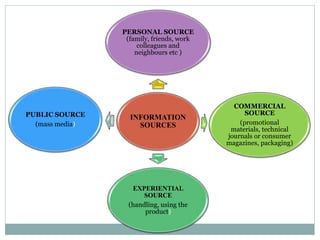
INFORMATION
SOURCES
PERSONAL SOURCE
(family, friends, work
colleagues and
neighbours etc )
COMMERCIAL
SOURCE
(promotional
materials, technical
journals or consumer
magazines, packaging)
EXPERIENTIAL
SOURCE
(handling, using the
product)
PUBLIC SOURCE
(mass media)
 At this time the consumer compares the brands and products
that are in their evoked set.
 The process of evaluating alternatives depend on consumer and
the buying situation of an individual
 customers evaluate product attributes and features that are most
relevant to their needs
 Models used for evaluation:
o Expectancy model
o Conjunctive model
o Disjunctive model
o Lexicographic model
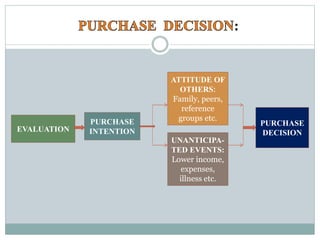
 Evaluation process lead to purchase intention
(A plan to purchase a particular good or service in the future)
 Two factors can intervene between the intention and the purchase
decision:
 The attitude of others
 Unanticipated events
 Three possibilities of purchase decision:
 From whom to buy (policy, sales, past experience)
 When to buy (time, atmosphere)
 Don’t buy
EVALUATION
PURCHASE
INTENTION
ATTITUDE OF
OTHERS:
Family, peers,
reference
groups etc.
UNANTICIPA-
TED EVENTS:
Lower income,
expenses,
illness etc.
PURCHASE
DECISION
:
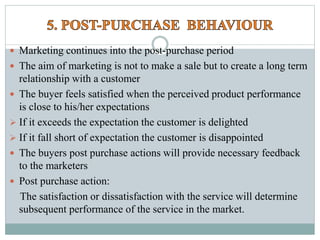
 Marketing continues into the post-purchase period
 The aim of marketing is not to make a sale but to create a long term
relationship with a customer
 The buyer feels satisfied when the perceived product performance
is close to his/her expectations
 If it exceeds the expectation the customer is delighted
 If it fall short of expectation the customer is disappointed
 The buyers post purchase actions will provide necessary feedback
to the marketers
 Post purchase action:
The satisfaction or dissatisfaction with the service will determine
subsequent performance of the service in the market.
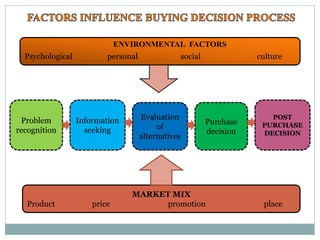
PERSONAL & ENVIRONMENTAL FACTORS
MARKETING FACTORS
Psychological personal social culture
Problem
recognition
Information
seeking
Evaluation
of
alternatives
Purchase
decision
POST
PURCHASE
DECISION
MARKET MIX
Product price promotion place
ENVIRONMENTAL FACTORS
Buying decision process in rural marketing

Buying decision process in rural marketing

  • 2.
     Buying decisionprocess describes the fundamental stages that a customer goes through when deciding to buy a product  Buying decision of rural consumer depend on: Life style and personality of consumer Tradition Custom Value
  • 3.
     Consumers passthrough five stages while making a purchases decision. These are: Problem/need Recognition Information Search Evaluation of Alternatives Purchase Decision Post-purchase Behaviour
  • 4.
     Consumer firsttries to find the need of product which primarily depend on cost in rural area  Need can be triggered by internal and external stimuli  Marketer should help consumers identify their current and future problems/need in this stage  To do so marketer have to research on consumer need and problem  By so doing marketers can design products/services capable of meeting those needs/problems and develop marketing strategies that can trigger consumer interest in those products or services
  • 5.
     Consumer tryto find information pertaining to their want satisfying product to make the right choices  consumer searches for internal or external information.  Information gathering may be passive or active  Passive information gathering occurs when an individual or group simply becomes more attentive to a recognised solution to a given need  In Active information search the person looks for reading material, phones friends and engages in other activities to know more about product
  • 6.
    INFORMATION SOURCES PERSONAL SOURCE (family, friends,work colleagues and neighbours etc ) COMMERCIAL SOURCE (promotional materials, technical journals or consumer magazines, packaging) EXPERIENTIAL SOURCE (handling, using the product) PUBLIC SOURCE (mass media)
  • 7.
     At thistime the consumer compares the brands and products that are in their evoked set.  The process of evaluating alternatives depend on consumer and the buying situation of an individual  customers evaluate product attributes and features that are most relevant to their needs  Models used for evaluation: o Expectancy model o Conjunctive model o Disjunctive model o Lexicographic model
  • 8.
     Evaluation processlead to purchase intention (A plan to purchase a particular good or service in the future)  Two factors can intervene between the intention and the purchase decision:  The attitude of others  Unanticipated events  Three possibilities of purchase decision:  From whom to buy (policy, sales, past experience)  When to buy (time, atmosphere)  Don’t buy
  • 9.
    EVALUATION PURCHASE INTENTION ATTITUDE OF OTHERS: Family, peers, reference groupsetc. UNANTICIPA- TED EVENTS: Lower income, expenses, illness etc. PURCHASE DECISION :
  • 10.
     Marketing continuesinto the post-purchase period  The aim of marketing is not to make a sale but to create a long term relationship with a customer  The buyer feels satisfied when the perceived product performance is close to his/her expectations  If it exceeds the expectation the customer is delighted  If it fall short of expectation the customer is disappointed  The buyers post purchase actions will provide necessary feedback to the marketers  Post purchase action: The satisfaction or dissatisfaction with the service will determine subsequent performance of the service in the market.
  • 13.
    PERSONAL & ENVIRONMENTALFACTORS MARKETING FACTORS Psychological personal social culture Problem recognition Information seeking Evaluation of alternatives Purchase decision POST PURCHASE DECISION MARKET MIX Product price promotion place ENVIRONMENTAL FACTORS