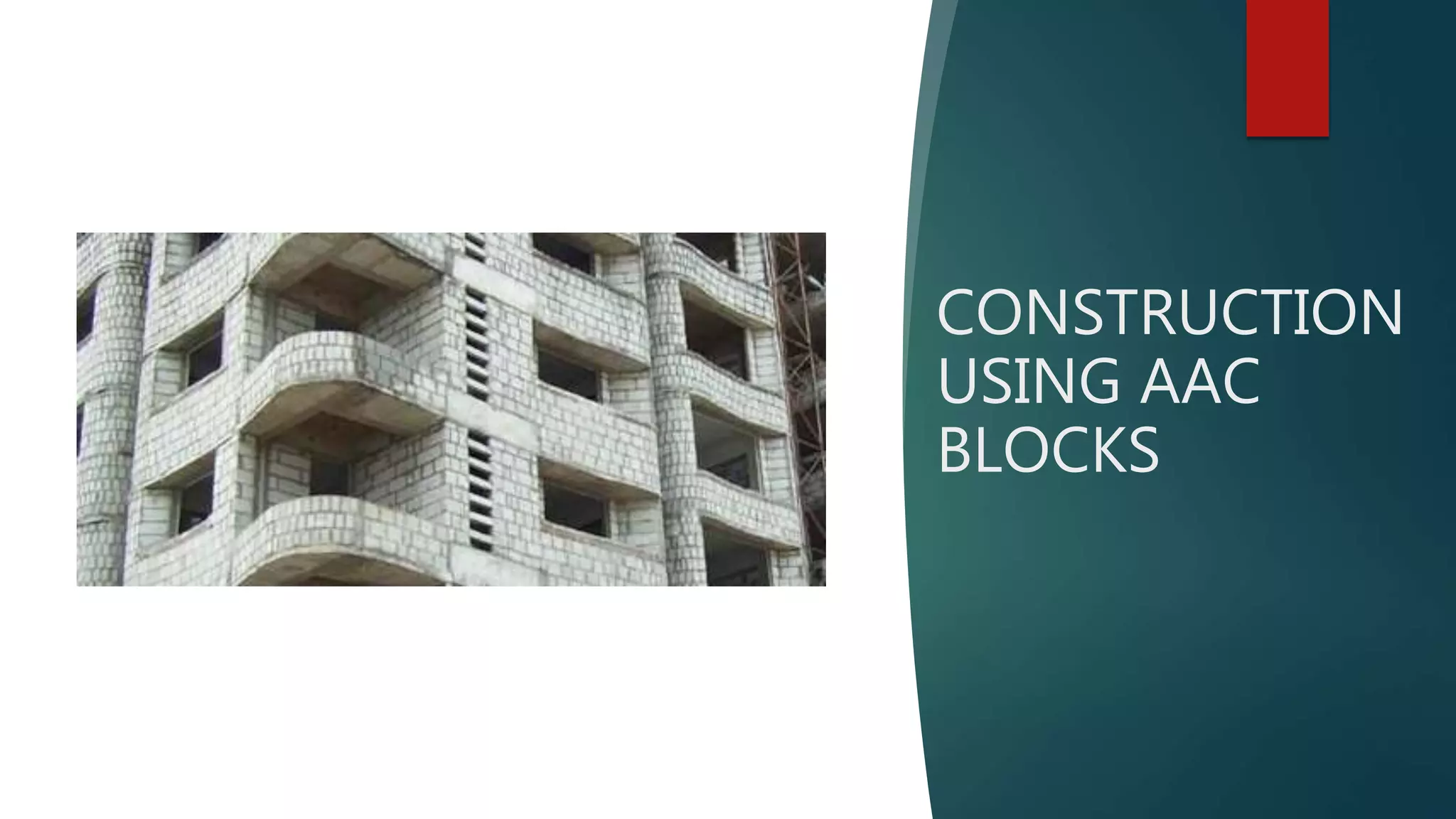
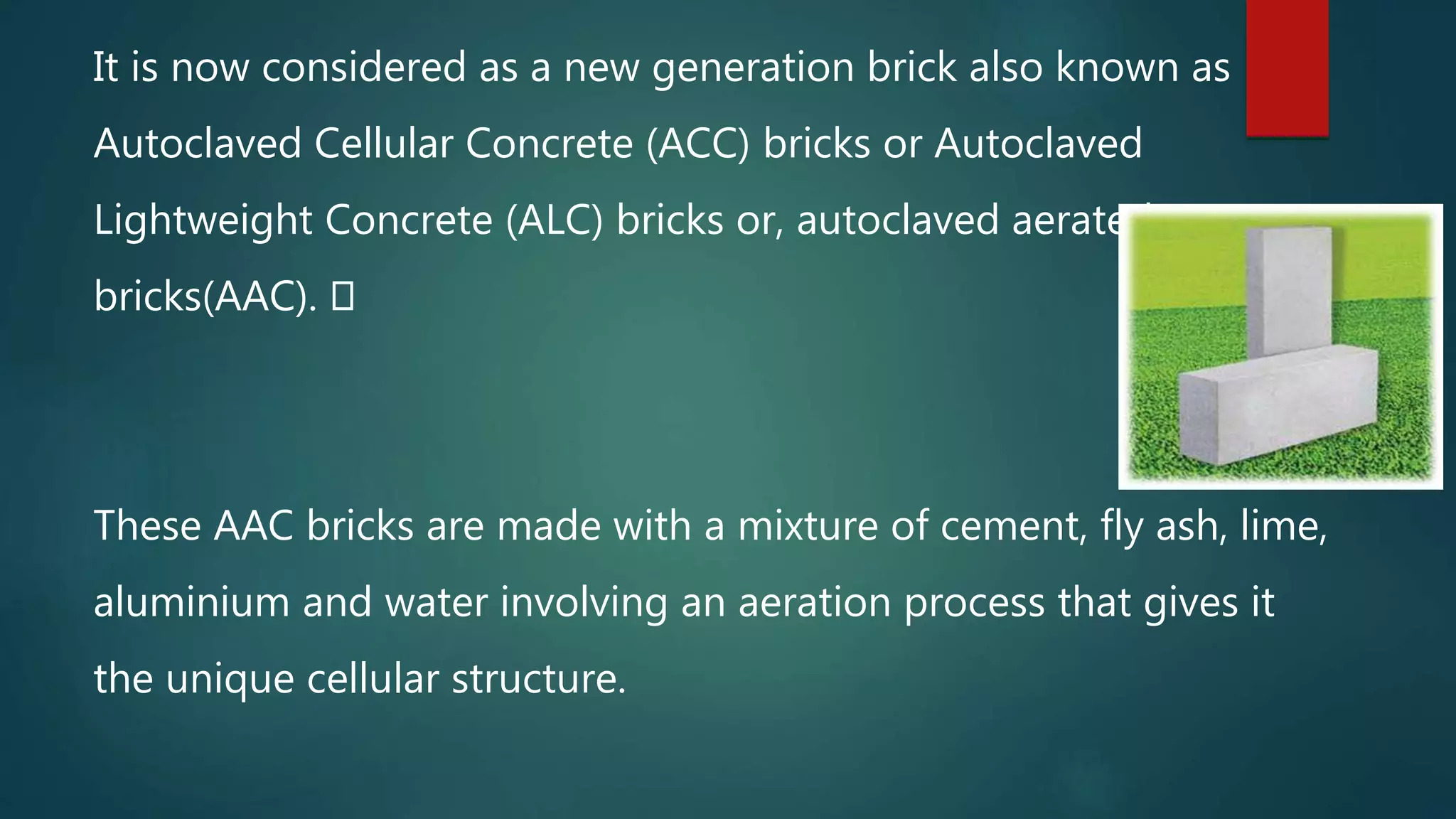
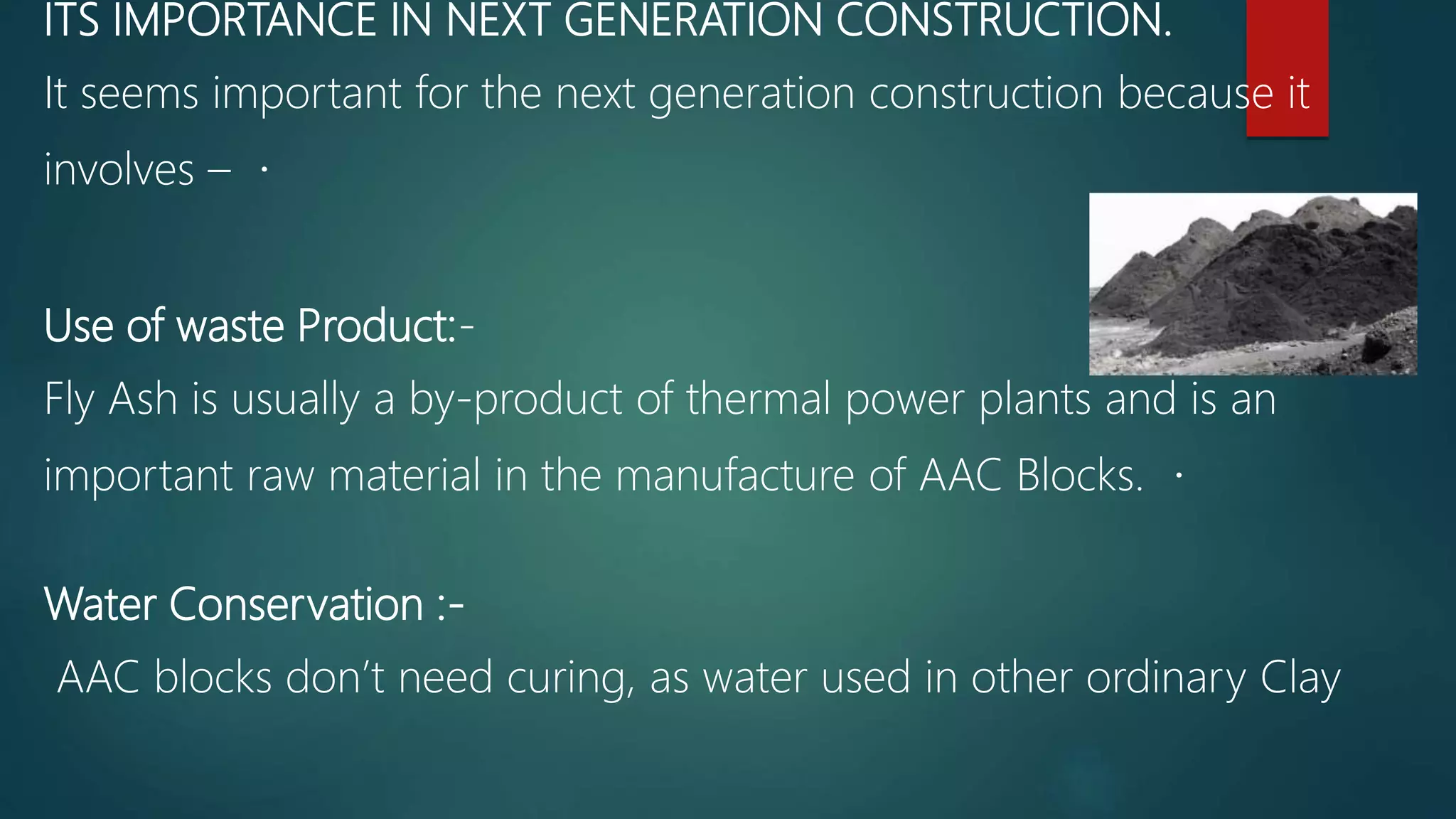
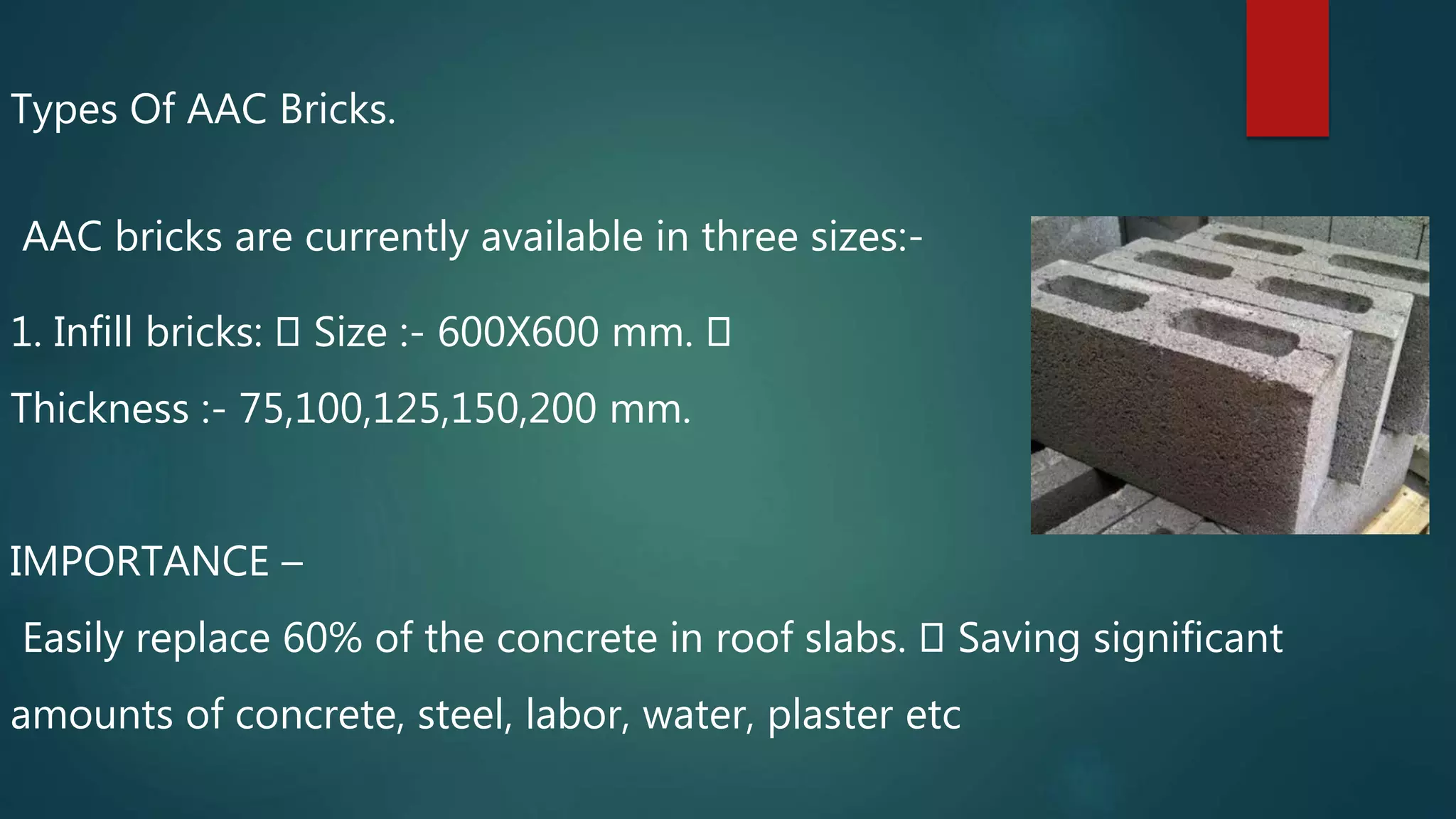
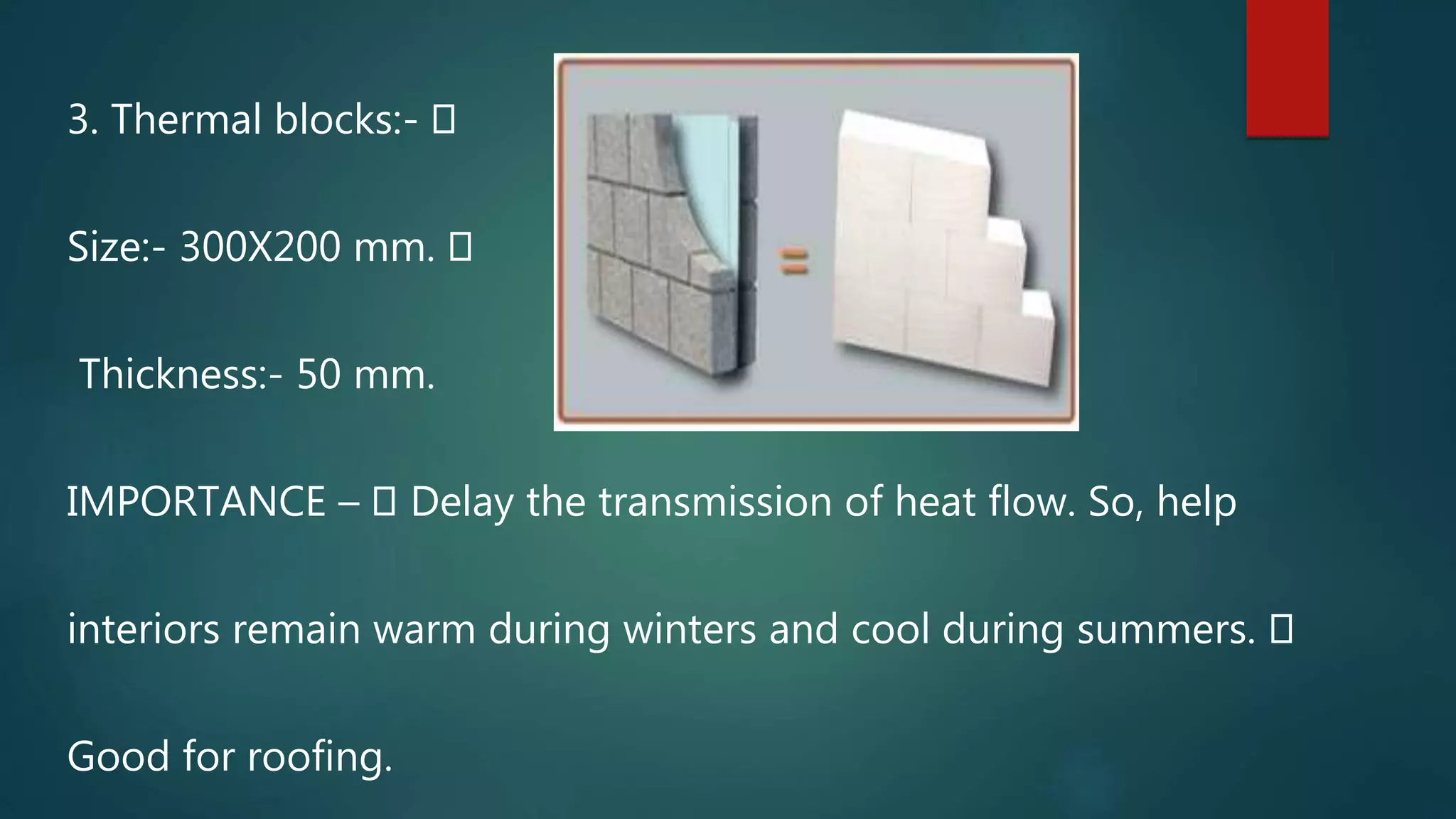
This document discusses autoclaved aerated concrete (AAC) blocks, an alternative building material invented in 1923 as a more sustainable replacement for clay bricks. AAC blocks are made from fly ash, lime, cement, aluminum, and water, which creates a lightweight cellular structure through an aeration process. Key advantages of AAC blocks over clay bricks include using waste materials like fly ash, requiring less water and labor during construction, providing better insulation, durability, and fire resistance. The document outlines the manufacturing process and types of AAC blocks available before concluding that AAC blocks are recommended over clay bricks due to cost savings and reduced environmental and social impacts.