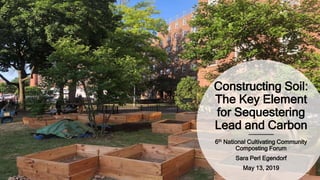
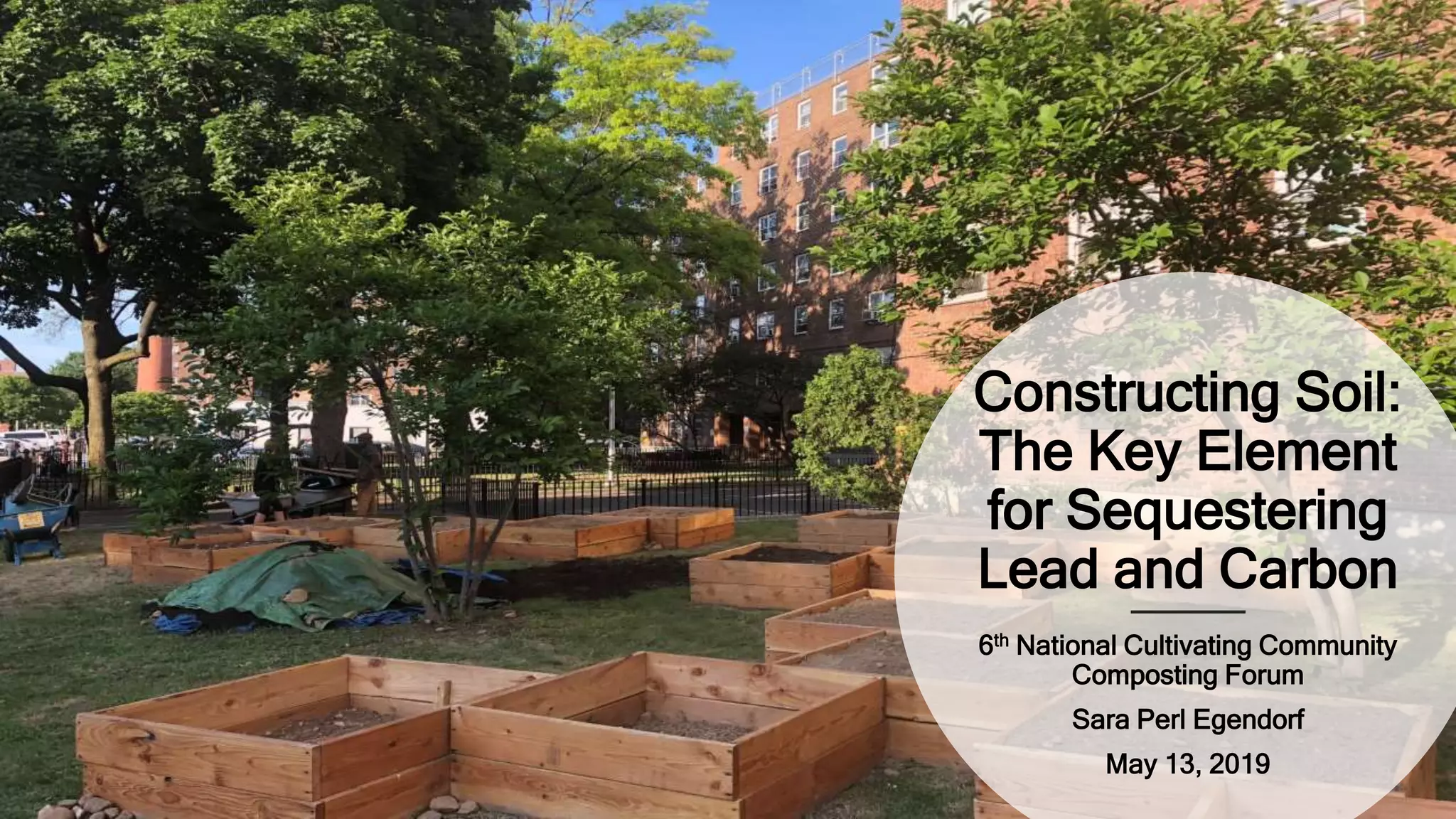
Constructing Soil:
The Key Element
for Sequestering
Lead and Carbon
6th National Cultivating Community
Composting Forum
Sara Perl Egendorf
May 13, 2019
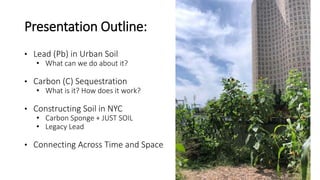
Presentation Outline:
• Lead (Pb) in Urban Soil
• What can we do about it?
• Carbon (C) Sequestration
• What is it? How does it work?
• Constructing Soil in NYC
• Carbon Sponge + JUST SOIL
• Legacy Lead
• Connecting Across Time and Space
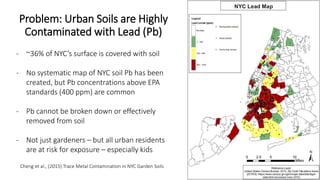
Problem: Urban Soils are Highly
Contaminated with Lead (Pb)
- ~36% of NYC’s surface is covered with soil
- No systematic map of NYC soil Pb has been
created, but Pb concentrations above EPA
standards (400 ppm) are common
- Pb cannot be broken down or effectively
removed from soil
- Not just gardeners – but all urban residents
are at risk for exposure – especially kids
Cheng et al., (2015) Trace Metal Contamination in NYC Garden Soils
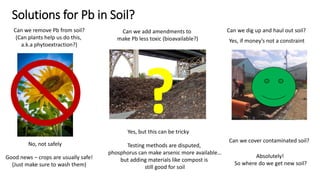
Solutions for Pb in Soil?
Can we remove Pb from soil?
(Can plants help us do this,
a.k.a phytoextraction?)
No, not safely
Good news – crops are usually safe!
(Just make sure to wash them)
Can we add amendments to
make Pb less toxic (bioavailable?)
Yes, but this can be tricky
Testing methods are disputed,
phosphorus can make arsenic more available…
but adding materials like compost is
still good for soil
Can we dig up and haul out soil?
Yes, if money’s not a constraint
Can we cover contaminated soil?
Absolutely!
So where do we get new soil?
?
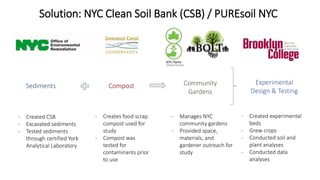
Solution: NYC Clean Soil Bank (CSB) / PUREsoil NYC
- Created CSB
- Excavated sediments
- Tested sediments
through certified York
Analytical Laboratory
- Creates food scrap
compost used for
study
- Compost was
tested for
contaminants prior
to use
- Manages NYC
community gardens
- Provided space,
materials, and
gardener outreach for
study
- Created experimental
beds
- Grew crops
- Conducted soil and
plant analyses
- Conducted data
analyses
Sediments Community
Gardens
Experimental
Design & Testing
Compost
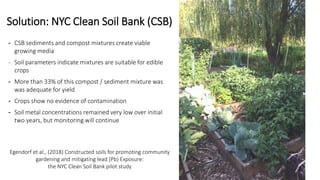
Solution: NYC Clean Soil Bank (CSB)
- CSB sediments and compost mixtures create viable
growing media
- Soil parameters indicate mixtures are suitable for edible
crops
- More than 33% of this compost / sediment mixture was
was adequate for yield
- Crops show no evidence of contamination
- Soil metal concentrations remained very low over initial
two years, but monitoring will continue
Egendorf et al., (2018) Constructed soils for promoting community
gardening and mitigating lead (Pb) Exposure:
the NYC Clean Soil Bank pilot study
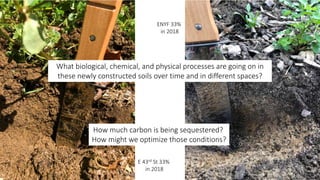
ENYF 33%
in 2018
E 43rd St 33%
in 2018
What biological, chemical, and physical processes are going on in
these newly constructed soils over time and in different spaces?
How much carbon is being sequestered?
How might we optimize those conditions?
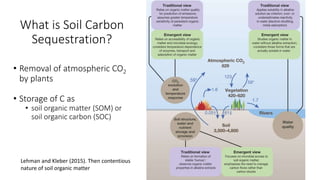
What is Soil Carbon
Sequestration?
• Removal of atmospheric CO2
by plants
• Storage of C as
• soil organic matter (SOM) or
soil organic carbon (SOC)
Lehman and Kleber (2015). Then contentious
nature of soil organic matter
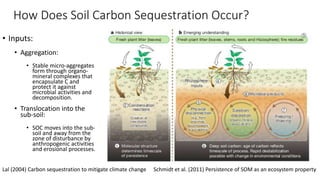
How Does Soil Carbon Sequestration Occur?
• Inputs:
• Aggregation:
• Stable micro-aggregates
form through organo-
mineral complexes that
encapsulate C and
protect it against
microbial activities and
decomposition.
• Translocation into the
sub-soil:
• SOC moves into the sub-
soil and away from the
zone of disturbance by
anthropogenic activities
and erosional processes.
Lal (2004) Carbon sequestration to mitigate climate change Schmidt et al. (2011) Persistence of SOM as an ecosystem property
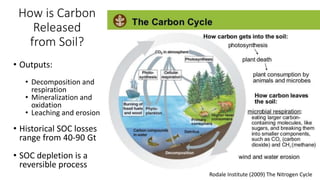
• Outputs:
• Decomposition and
respiration
• Mineralization and
oxidation
• Leaching and erosion
• Historical SOC losses
range from 40-90 Gt
• SOC depletion is a
reversible process
How is Carbon
Released
from Soil?
Rodale Institute (2009) The Nitrogen Cycle
Big Ideas on Soil
Carbon Sequestration
• C sequestration is dependent on environmental
factors and soil structure
• How do we manage and support soil
aggregating conditions, particularly in the urban
environment?
• Increases in C storage occur quickly with C depleted
sediments
• We have a very large supply of subsoil / glacial
sediments with the Clean Soil Bank (CSB) /
PUREsoil NYC
• What conditions optimize C increases over
time?
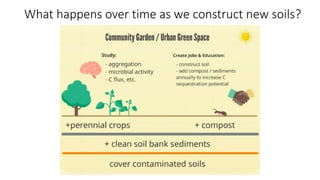
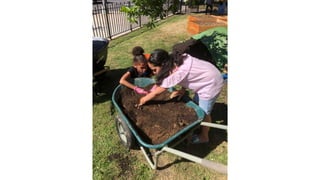
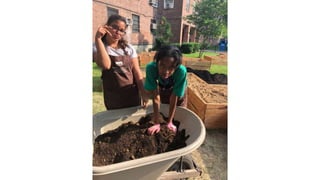
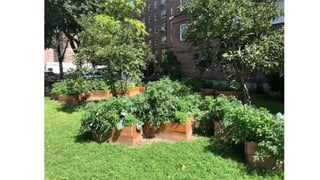
What happens over time as we construct new soils?
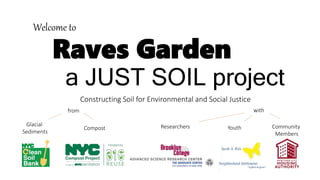
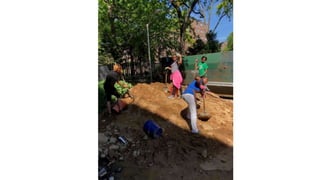
Raves Garden
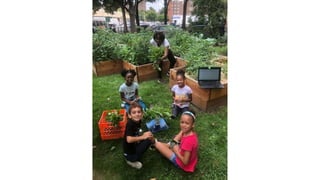
Constructing Soil for Environmental and Social Justice
Glacial
Sediments
Compost Researchers Youth Community
Members
from with
Welcome to
a JUST SOIL project
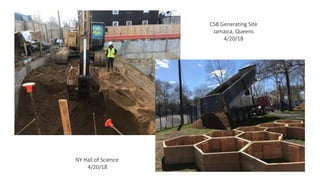
CSB Generating Site
Jamaica, Queens
4/20/18
NY Hall of Science
4/20/18
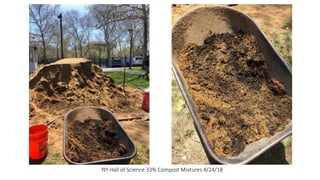
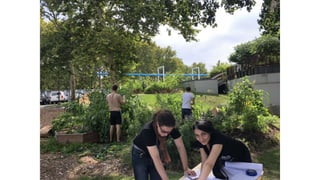
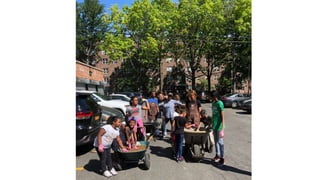
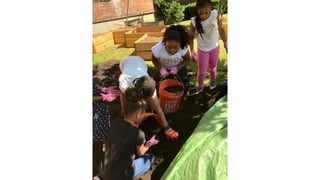
NY Hall of Science 33% Compost Mixtures 4/24/18
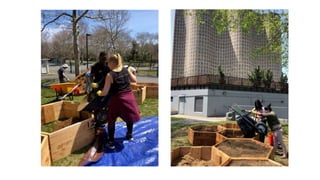
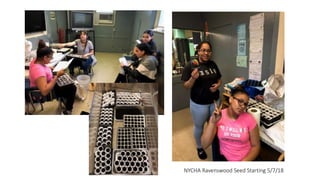
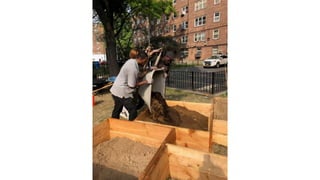
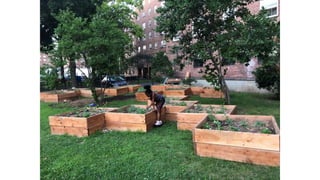
NYCHA Ravenswood Seed Starting 5/7/18
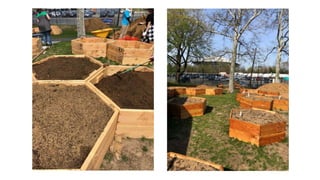
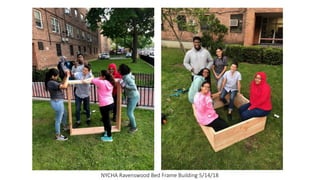
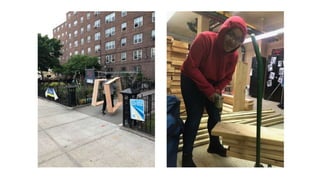
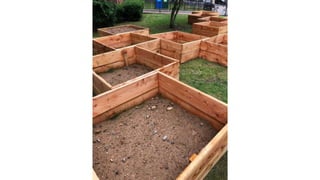
NYCHA Ravenswood Bed Frame Building 5/14/18
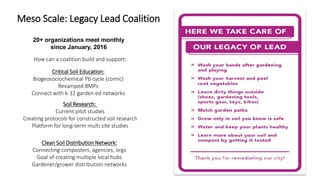
Meso Scale: Legacy Lead Coalition
20+ organizations meet monthly
since January, 2016
How can a coalition build and support:
Clean Soil Distribution Network:
Connecting composters, agencies, orgs
Goal of creating multiple local hubs
Gardener/grower distribution networks
Critical Soil Education:
Biogeosociochemical Pb cycle (comic)
Revamped BMPs
Connect with k-12 garden ed networks
Soil Research:
Current pilot studies
Creating protocols for constructed soil research
Platform for long-term multi site studies
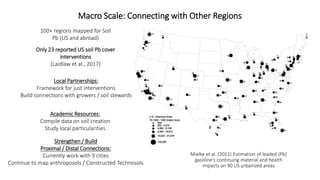
Macro Scale: Connecting with Other Regions
Mielke et al. (2011) Estimation of leaded (Pb)
gasoline’s continuing material and health
impacts on 90 US urbanized areas
100+ regions mapped for Soil
Pb (US and abroad)
Only 23 reported US soil Pb cover
interventions
(Laidlaw et al., 2017)
Strengthen / Build
Proximal / Distal Connections:
Currently work with 9 cities
Continue to map anthroposols / Constructed Technosols
Local Partnerships:
Framework for just interventions
Build connections with growers / soil stewards
Academic Resources:
Compile data on soil creation
Study local particularities
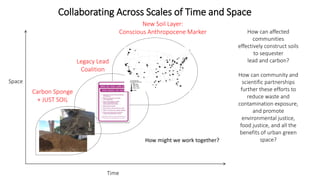
Collaborating Across Scales of Time and Space
Time
Space
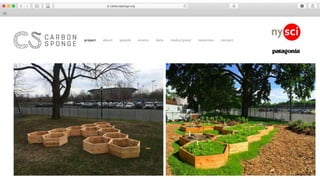
Carbon Sponge
+ JUST SOIL
Legacy Lead
Coalition
New Soil Layer:
Conscious Anthropocene Marker How can affected
communities
effectively construct soils
to sequester
lead and carbon?
How can community and
scientific partnerships
further these efforts to
reduce waste and
contamination exposure,
and promote
environmental justice,
food justice, and all the
benefits of urban green
space?How might we work together?
Constructing Soil:
The Key Element
for Sequestering
Lead and Carbon
6th National Cultivating Community
Composting Forum
Sara Perl Egendorf
May 13, 2019
Thank you for your attention!
segendorf@gradcenter.cuny.edu
IG @just_soil / Twitter @justsoilnyc

Constructing Soil: The Key Element for Sequestering Lead and Carbon

  • 1.
    Constructing Soil: The KeyElement for Sequestering Lead and Carbon 6th National Cultivating Community Composting Forum Sara Perl Egendorf May 13, 2019
  • 2.
    Presentation Outline: • Lead(Pb) in Urban Soil • What can we do about it? • Carbon (C) Sequestration • What is it? How does it work? • Constructing Soil in NYC • Carbon Sponge + JUST SOIL • Legacy Lead • Connecting Across Time and Space
  • 3.
    Problem: Urban Soilsare Highly Contaminated with Lead (Pb) - ~36% of NYC’s surface is covered with soil - No systematic map of NYC soil Pb has been created, but Pb concentrations above EPA standards (400 ppm) are common - Pb cannot be broken down or effectively removed from soil - Not just gardeners – but all urban residents are at risk for exposure – especially kids Cheng et al., (2015) Trace Metal Contamination in NYC Garden Soils
  • 4.
    Solutions for Pbin Soil? Can we remove Pb from soil? (Can plants help us do this, a.k.a phytoextraction?) No, not safely Good news – crops are usually safe! (Just make sure to wash them) Can we add amendments to make Pb less toxic (bioavailable?) Yes, but this can be tricky Testing methods are disputed, phosphorus can make arsenic more available… but adding materials like compost is still good for soil Can we dig up and haul out soil? Yes, if money’s not a constraint Can we cover contaminated soil? Absolutely! So where do we get new soil? ?
  • 5.
    Solution: NYC CleanSoil Bank (CSB) / PUREsoil NYC - Created CSB - Excavated sediments - Tested sediments through certified York Analytical Laboratory - Creates food scrap compost used for study - Compost was tested for contaminants prior to use - Manages NYC community gardens - Provided space, materials, and gardener outreach for study - Created experimental beds - Grew crops - Conducted soil and plant analyses - Conducted data analyses Sediments Community Gardens Experimental Design & Testing Compost
  • 6.
    Solution: NYC CleanSoil Bank (CSB) - CSB sediments and compost mixtures create viable growing media - Soil parameters indicate mixtures are suitable for edible crops - More than 33% of this compost / sediment mixture was was adequate for yield - Crops show no evidence of contamination - Soil metal concentrations remained very low over initial two years, but monitoring will continue Egendorf et al., (2018) Constructed soils for promoting community gardening and mitigating lead (Pb) Exposure: the NYC Clean Soil Bank pilot study
  • 7.
    ENYF 33% in 2018 E43rd St 33% in 2018 What biological, chemical, and physical processes are going on in these newly constructed soils over time and in different spaces? How much carbon is being sequestered? How might we optimize those conditions?
  • 8.
    What is SoilCarbon Sequestration? • Removal of atmospheric CO2 by plants • Storage of C as • soil organic matter (SOM) or soil organic carbon (SOC) Lehman and Kleber (2015). Then contentious nature of soil organic matter
  • 9.
    How Does SoilCarbon Sequestration Occur? • Inputs: • Aggregation: • Stable micro-aggregates form through organo- mineral complexes that encapsulate C and protect it against microbial activities and decomposition. • Translocation into the sub-soil: • SOC moves into the sub- soil and away from the zone of disturbance by anthropogenic activities and erosional processes. Lal (2004) Carbon sequestration to mitigate climate change Schmidt et al. (2011) Persistence of SOM as an ecosystem property
  • 10.
    • Outputs: • Decompositionand respiration • Mineralization and oxidation • Leaching and erosion • Historical SOC losses range from 40-90 Gt • SOC depletion is a reversible process How is Carbon Released from Soil? Rodale Institute (2009) The Nitrogen Cycle
  • 11.
    Big Ideas onSoil Carbon Sequestration • C sequestration is dependent on environmental factors and soil structure • How do we manage and support soil aggregating conditions, particularly in the urban environment? • Increases in C storage occur quickly with C depleted sediments • We have a very large supply of subsoil / glacial sediments with the Clean Soil Bank (CSB) / PUREsoil NYC • What conditions optimize C increases over time?
  • 12.
    What happens overtime as we construct new soils?
  • 15.
    Raves Garden Constructing Soilfor Environmental and Social Justice Glacial Sediments Compost Researchers Youth Community Members from with Welcome to a JUST SOIL project
  • 16.
    CSB Generating Site Jamaica,Queens 4/20/18 NY Hall of Science 4/20/18
  • 17.
    NY Hall ofScience 33% Compost Mixtures 4/24/18
  • 21.
    NYCHA Ravenswood SeedStarting 5/7/18
  • 22.
    NYCHA Ravenswood BedFrame Building 5/14/18
  • 37.
    Meso Scale: LegacyLead Coalition 20+ organizations meet monthly since January, 2016 How can a coalition build and support: Clean Soil Distribution Network: Connecting composters, agencies, orgs Goal of creating multiple local hubs Gardener/grower distribution networks Critical Soil Education: Biogeosociochemical Pb cycle (comic) Revamped BMPs Connect with k-12 garden ed networks Soil Research: Current pilot studies Creating protocols for constructed soil research Platform for long-term multi site studies
  • 38.
    Macro Scale: Connectingwith Other Regions Mielke et al. (2011) Estimation of leaded (Pb) gasoline’s continuing material and health impacts on 90 US urbanized areas 100+ regions mapped for Soil Pb (US and abroad) Only 23 reported US soil Pb cover interventions (Laidlaw et al., 2017) Strengthen / Build Proximal / Distal Connections: Currently work with 9 cities Continue to map anthroposols / Constructed Technosols Local Partnerships: Framework for just interventions Build connections with growers / soil stewards Academic Resources: Compile data on soil creation Study local particularities
  • 39.
    Collaborating Across Scalesof Time and Space Time Space Carbon Sponge + JUST SOIL Legacy Lead Coalition New Soil Layer: Conscious Anthropocene Marker How can affected communities effectively construct soils to sequester lead and carbon? How can community and scientific partnerships further these efforts to reduce waste and contamination exposure, and promote environmental justice, food justice, and all the benefits of urban green space?How might we work together?
  • 40.
    Constructing Soil: The KeyElement for Sequestering Lead and Carbon 6th National Cultivating Community Composting Forum Sara Perl Egendorf May 13, 2019 Thank you for your attention! segendorf@gradcenter.cuny.edu IG @just_soil / Twitter @justsoilnyc

Editor's Notes

  • #9 Petagram of carbon (Pg), also known as a Gigaton (Gt), is equal to 10^15 grams or one billion tonnes. A tonne, also known as a metric ton, is equal to one thousand kilograms (1,000 kg).