R
a t
I p m
Preventing and Managing
Rats in Compost
Community Composting Best Management Practices
May 14, 2019
Outline for today
• What do rats need to survive?
• How do you Prevent rats?
• What to do when you have a rat problem
in your compost?
• What to do with the compost once rats
have been in it?
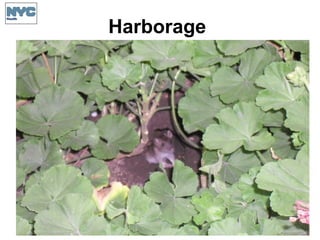
Harborage
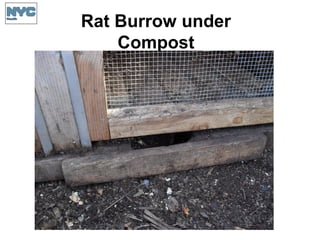
Rat Burrow under
Compost
Planning for Compost
• Compost generates heat which may
attract rodents and any other vertebrates
or invertebrates
– Inspect frequently and monitor for activity
• Compost will not serve as a huge
attractant IF you only put garden and
vegetable scraps in it
– Food scraps should ONLY be introduced with
a strong rat management plan in place.
Pest-proofing compost
• Rodent-resistant compost bins
– All food waste should be containerized
– Containers can be solid plastic or steel, wood is easy for them to gnaw through
– Make sure the bin has a tightly fitted lid
• Using stainless steel mesh around bins
– If your bin is placed on the soil, install the mesh between the soil and the bottom
of the bin.
– Add a vertical screen (stainless steel, 6 to 8 inches into the ground) around the
perimeter of the bin.
• Managing material to prevent nesting and monitoring for
activity
• Using a raised platform with concrete, gravel fill below
• Site the compost area away from any other harborage
and keep the area clutter free
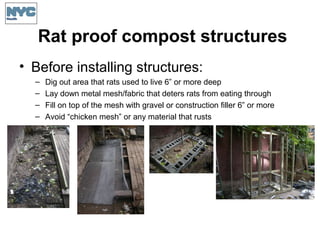
Rat proof compost structures
• Before installing structures:
– Dig out area that rats used to live 6” or more deep
– Lay down metal mesh/fabric that deters rats from eating through
– Fill on top of the mesh with gravel or construction filler 6” or more
– Avoid “chicken mesh” or any material that rusts
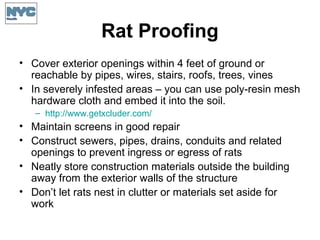
Rat Proofing
• Cover exterior openings within 4 feet of ground or
reachable by pipes, wires, stairs, roofs, trees, vines
• In severely infested areas – you can use poly-resin mesh
hardware cloth and embed it into the soil.
– http://www.getxcluder.com/
• Maintain screens in good repair
• Construct sewers, pipes, drains, conduits and related
openings to prevent ingress or egress of rats
• Neatly store construction materials outside the building
away from the exterior walls of the structure
• Don’t let rats nest in clutter or materials set aside for
work
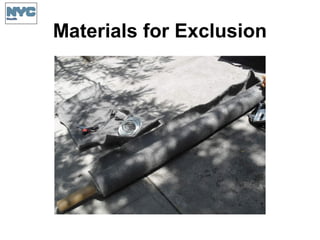
Materials for Exclusion
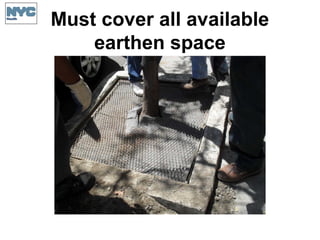
Must cover all available
earthen space
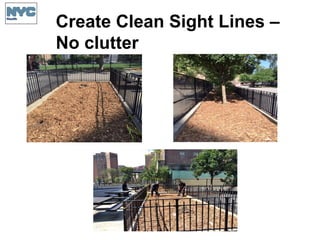
Create Clean Sight Lines –
No clutter
Choose knock-down
methods carefully
• If you like to DIY –
you can use snap
traps.
• Trapping is for those
tough folks.
• You must check them
every day.
• You can and should
re-use your traps.
• Set traps along the
lines that rats travel.
• Make sure the trigger
side faces wall.
• Do not set traps first
couple of nights, let
them get used to your
trap.
• Use a tiny bit of bait –
not too much!
Rat Ice Treatment
Dry ice is the solid form of carbon
dioxide. As it melts, it turns into carbon
dioxide gas, which fills the burrow,
asphyxiating any rats inside. This method
eliminates secondary poisoning towards
birds of prey, pets, and wildlife.
Due to our successful pilot in 2016 it has
now been approved for use by the EPA in
New York State under the trade name
“Rat Ice”.
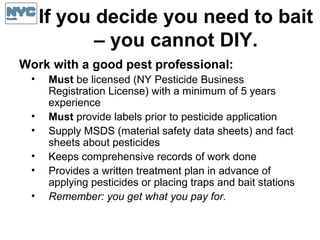
If you decide you need to bait
– you cannot DIY.
Work with a good pest professional:
• Must be licensed (NY Pesticide Business
Registration License) with a minimum of 5 years
experience
• Must provide labels prior to pesticide application
• Supply MSDS (material safety data sheets) and fact
sheets about pesticides
• Keeps comprehensive records of work done
• Provides a written treatment plan in advance of
applying pesticides or placing traps and bait stations
• Remember: you get what you pay for.
17
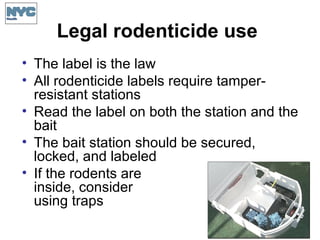
Legal rodenticide use
• The label is the law
• All rodenticide labels require tamper-
resistant stations
• Read the label on both the station and the
bait
• The bait station should be secured,
locked, and labeled
• If the rodents are
inside, consider
using traps
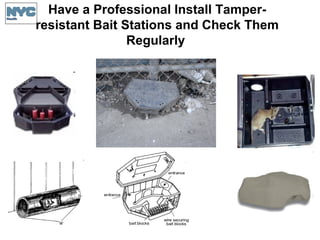
Have a Professional Install Tamper-
resistant Bait Stations and Check Them
Regularly
Supervise your pest control
contractors
If you pay someone to treat your garden, supervise their
every move, make sure they:
• Check entire perimeter of area
• Place bait stations in likely pest areas and remove old
or unused bait stations
• Provide you information on the level of infestation
• Follow-up every 2 weeks for the first two months
following initial treatment and then inspect site once
per month
• Submit completed forms at every visit
• Provide notice when infestation has been eliminated
1. Look for Active Rat Signs and Monitor the site daily
2. Have a Pest Log
3. Wash away droppings/rubmarks
4. Get rid of all clutter and weeds (weed so you can see the ground)
5. Trim under shrubs to eliminate homes for rodents, avoid dense
planting
6. Keep food waste in sealed containers
7. Use roof cement to seal cracks and holes
8. Close burrows every day
9. Cover drains with heavy-duty metal screening secured with nails
or cement
10. Install traps in paths that rats travel
Ten Things You Can Do To Prevent
Rats in Gardens
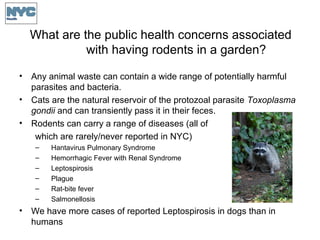
What are the public health concerns associated
with having rodents in a garden?
• Any animal waste can contain a wide range of potentially harmful
parasites and bacteria.
• Cats are the natural reservoir of the protozoal parasite Toxoplasma
gondii and can transiently pass it in their feces.
• Rodents can carry a range of diseases (all of
which are rarely/never reported in NYC)
– Hantavirus Pulmonary Syndrome
– Hemorrhagic Fever with Renal Syndrome
– Leptospirosis
– Plague
– Rat-bite fever
– Salmonellosis
• We have more cases of reported Leptospirosis in dogs than in
humans
How Dire is the Threat?
• Not dire – rodent borne disease is rarely
reported in metro New York
• Most “rat bites” reported are actually
interior mouse bites
• Good hygiene practices can prevent most
risks – wash hands thoroughly after
handling soil and wash all produce prior to
ingesting
THANK YOU!

Preventing and Managing Rats in Compost

  • 1.
    R a t I pm Preventing and Managing Rats in Compost Community Composting Best Management Practices May 14, 2019
  • 2.
    Outline for today •What do rats need to survive? • How do you Prevent rats? • What to do when you have a rat problem in your compost? • What to do with the compost once rats have been in it?
  • 5.
  • 6.
  • 7.
    Planning for Compost •Compost generates heat which may attract rodents and any other vertebrates or invertebrates – Inspect frequently and monitor for activity • Compost will not serve as a huge attractant IF you only put garden and vegetable scraps in it – Food scraps should ONLY be introduced with a strong rat management plan in place.
  • 8.
    Pest-proofing compost • Rodent-resistantcompost bins – All food waste should be containerized – Containers can be solid plastic or steel, wood is easy for them to gnaw through – Make sure the bin has a tightly fitted lid • Using stainless steel mesh around bins – If your bin is placed on the soil, install the mesh between the soil and the bottom of the bin. – Add a vertical screen (stainless steel, 6 to 8 inches into the ground) around the perimeter of the bin. • Managing material to prevent nesting and monitoring for activity • Using a raised platform with concrete, gravel fill below • Site the compost area away from any other harborage and keep the area clutter free
  • 9.
    Rat proof compoststructures • Before installing structures: – Dig out area that rats used to live 6” or more deep – Lay down metal mesh/fabric that deters rats from eating through – Fill on top of the mesh with gravel or construction filler 6” or more – Avoid “chicken mesh” or any material that rusts
  • 10.
    Rat Proofing • Coverexterior openings within 4 feet of ground or reachable by pipes, wires, stairs, roofs, trees, vines • In severely infested areas – you can use poly-resin mesh hardware cloth and embed it into the soil. – http://www.getxcluder.com/ • Maintain screens in good repair • Construct sewers, pipes, drains, conduits and related openings to prevent ingress or egress of rats • Neatly store construction materials outside the building away from the exterior walls of the structure • Don’t let rats nest in clutter or materials set aside for work
  • 11.
  • 12.
    Must cover allavailable earthen space
  • 13.
    Create Clean SightLines – No clutter
  • 14.
    Choose knock-down methods carefully •If you like to DIY – you can use snap traps. • Trapping is for those tough folks. • You must check them every day. • You can and should re-use your traps. • Set traps along the lines that rats travel. • Make sure the trigger side faces wall. • Do not set traps first couple of nights, let them get used to your trap. • Use a tiny bit of bait – not too much!
  • 15.
    Rat Ice Treatment Dryice is the solid form of carbon dioxide. As it melts, it turns into carbon dioxide gas, which fills the burrow, asphyxiating any rats inside. This method eliminates secondary poisoning towards birds of prey, pets, and wildlife. Due to our successful pilot in 2016 it has now been approved for use by the EPA in New York State under the trade name “Rat Ice”.
  • 16.
    If you decideyou need to bait – you cannot DIY. Work with a good pest professional: • Must be licensed (NY Pesticide Business Registration License) with a minimum of 5 years experience • Must provide labels prior to pesticide application • Supply MSDS (material safety data sheets) and fact sheets about pesticides • Keeps comprehensive records of work done • Provides a written treatment plan in advance of applying pesticides or placing traps and bait stations • Remember: you get what you pay for.
  • 17.
    17 Legal rodenticide use •The label is the law • All rodenticide labels require tamper- resistant stations • Read the label on both the station and the bait • The bait station should be secured, locked, and labeled • If the rodents are inside, consider using traps
  • 18.
    Have a ProfessionalInstall Tamper- resistant Bait Stations and Check Them Regularly
  • 19.
    Supervise your pestcontrol contractors If you pay someone to treat your garden, supervise their every move, make sure they: • Check entire perimeter of area • Place bait stations in likely pest areas and remove old or unused bait stations • Provide you information on the level of infestation • Follow-up every 2 weeks for the first two months following initial treatment and then inspect site once per month • Submit completed forms at every visit • Provide notice when infestation has been eliminated
  • 20.
    1. Look forActive Rat Signs and Monitor the site daily 2. Have a Pest Log 3. Wash away droppings/rubmarks 4. Get rid of all clutter and weeds (weed so you can see the ground) 5. Trim under shrubs to eliminate homes for rodents, avoid dense planting 6. Keep food waste in sealed containers 7. Use roof cement to seal cracks and holes 8. Close burrows every day 9. Cover drains with heavy-duty metal screening secured with nails or cement 10. Install traps in paths that rats travel Ten Things You Can Do To Prevent Rats in Gardens
  • 21.
    What are thepublic health concerns associated with having rodents in a garden? • Any animal waste can contain a wide range of potentially harmful parasites and bacteria. • Cats are the natural reservoir of the protozoal parasite Toxoplasma gondii and can transiently pass it in their feces. • Rodents can carry a range of diseases (all of which are rarely/never reported in NYC) – Hantavirus Pulmonary Syndrome – Hemorrhagic Fever with Renal Syndrome – Leptospirosis – Plague – Rat-bite fever – Salmonellosis • We have more cases of reported Leptospirosis in dogs than in humans
  • 22.
    How Dire isthe Threat? • Not dire – rodent borne disease is rarely reported in metro New York • Most “rat bites” reported are actually interior mouse bites • Good hygiene practices can prevent most risks – wash hands thoroughly after handling soil and wash all produce prior to ingesting
  • 23.

Editor's Notes

  • #18 Rodenticides can be dangerous to non target mammals. Many make rodents bleed internally. Some are designed to kill after a week, but it takes only a little bit to kill them. It is important to know where all bait is placed and to check it often to make sure no pets or children are able to get to it. For reference, the recent changes to EPA regulations on rodenticides: Consumer size products (products containing less than or equal to 1 pound of bait) May not contain brodifacoum, difethialone, bromadiolone, or difenacoum (the second-generation anticoagulants). Loose bait forms such as pellets are prohibited. Each retail unit must include a pre-loaded bait station. Bait refills may be sold with pre-loaded bait stations in a single retail unit. Second-generation anticoagulant products for use around agricultural buildings Products must contain at least eight pounds of bait. Bait stations are required for all outdoor, above-ground placements of second-generation anticoagulant products. Bait stations are required indoors if exposure to children, pets, or non target animals is possible. Product labels must indicate that the product is for use only in and around agricultural buildings and that use in residential use sites is prohibited. Distribution to and sales in "consumer" stores including grocery stores, drug stores, hardware stores, and club stores will be prohibited. Second-generation anticoagulant products for professional applicators Products must contain at least 16 pounds of bait. Bait stations are required for all outdoor, above-ground placements of second-generation anticoagulants. Bait stations are required indoors if exposure to children, pets, or non target animals is possible. Distribution to and sales in "consumer" stores, including grocery stores, drug stores, hardware stores, club stores, will be prohibited. Don’t present a bias. Give trainees the facts about the regulations and let them discuss and draw conclusions for themselves. References at http://www.epa.gov/oppsrrd1/reregistration/rodenticides/