Asif Awan
Wastewater Engineering
NED University of Engineering and Technology
Constructed Wetlands
1
Table of Contents
2
 Introduction
 Classification of Wetlands
 Important Components of Constructed Wetland
 Types and Working Principle of Constructed Wetlands
 Advantages and Limitations
 Research findings with reference to Pakistan
 References
What is Wetland?
 A wetland is a distinct ecosystem that
is flooded by water, either permanently or seasonally.
 The primary factor that distinguishes wetlands from
other land forms or water bodies is the
characteristic vegetation of aquatic plants.
 Wetlands include marshes, estuaries, mangroves,
mudflats, mires, ponds, fens, swamps, deltas, coral reefs,
billabongs, lagoons, shallow seas, bogs, lakes, and
floodplains, to name just a few!
3
Mangroves Ecosystem in Port Qasim Area, IUCN Asia
Wetlands and its classification
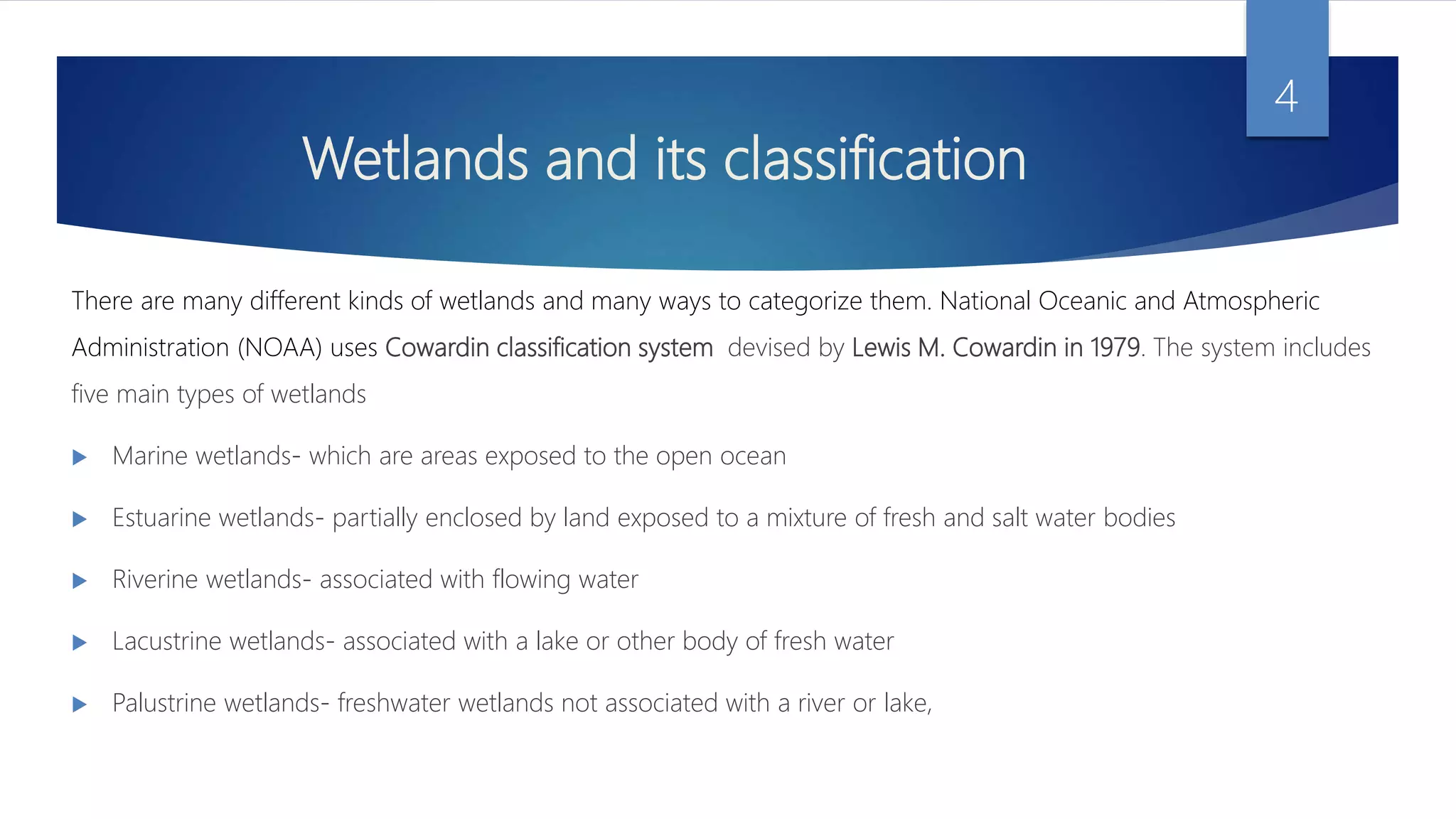
There are many different kinds of wetlands and many ways to categorize them. National Oceanic and Atmospheric
Administration (NOAA) uses Cowardin classification system devised by Lewis M. Cowardin in 1979. The system includes
five main types of wetlands
 Marine wetlands- which are areas exposed to the open ocean
 Estuarine wetlands- partially enclosed by land exposed to a mixture of fresh and salt water bodies
 Riverine wetlands- associated with flowing water
 Lacustrine wetlands- associated with a lake or other body of fresh water
 Palustrine wetlands- freshwater wetlands not associated with a river or lake,
4
Constructed Wetlands
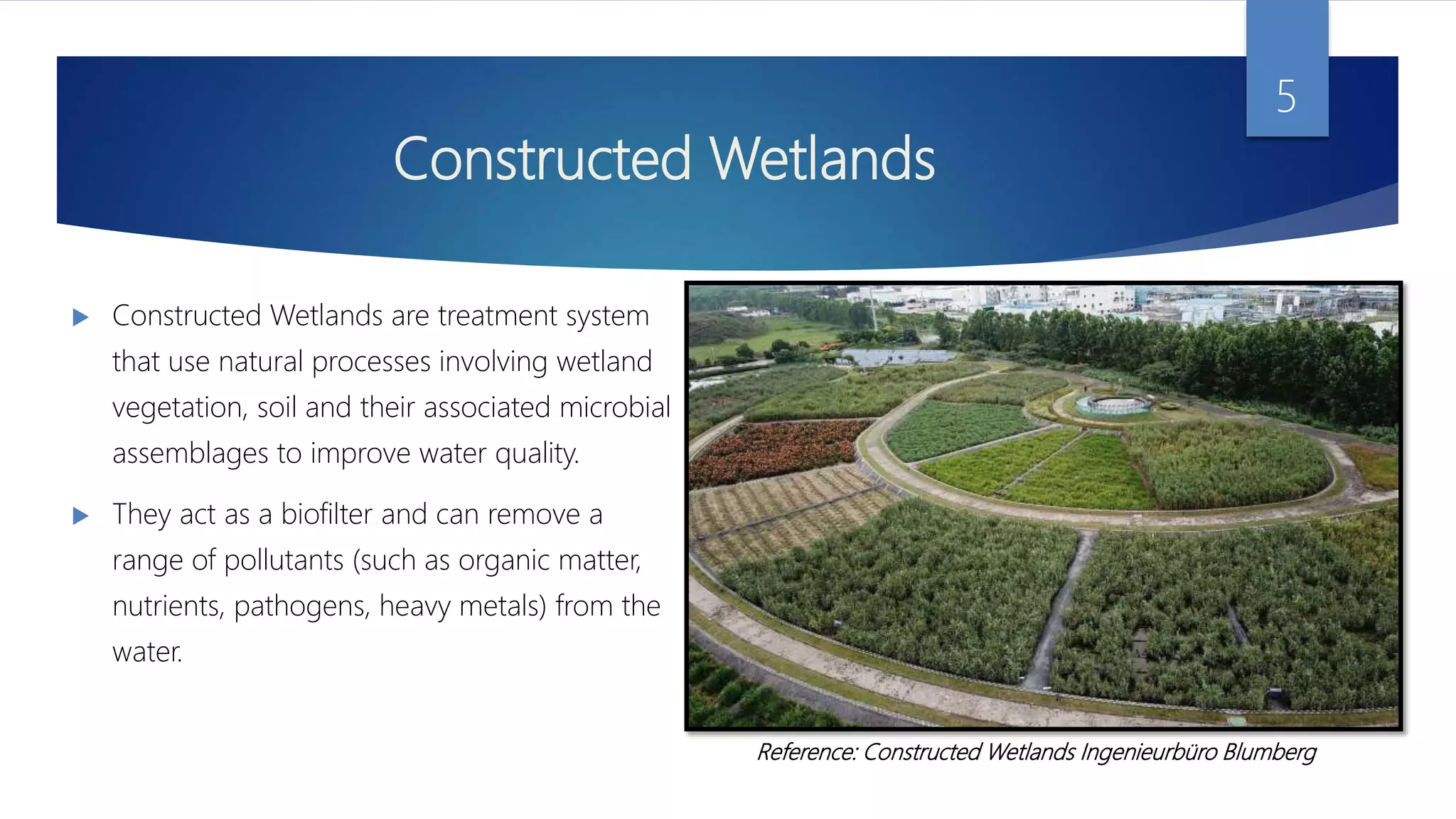
 Constructed Wetlands are treatment system
that use natural processes involving wetland
vegetation, soil and their associated microbial
assemblages to improve water quality.
 They act as a biofilter and can remove a
range of pollutants (such as organic matter,
nutrients, pathogens, heavy metals) from the
water.
5
Reference: Constructed Wetlands Ingenieurbüro Blumberg
6
Types Of Constructed Wetlands
Reference: International Journal of Environment Research and Public Health
Components of Constructed Wetland
The constructed wetland has three primary
components:
 an impermeable layer (generally clay),
The impermeable layer prevents
infiltration of wastes down into lower
aquifers.
 an above-surface vegetation zone. The
above ground vegetative layer contains
the plant material.
7
Components of Constructed Wetland
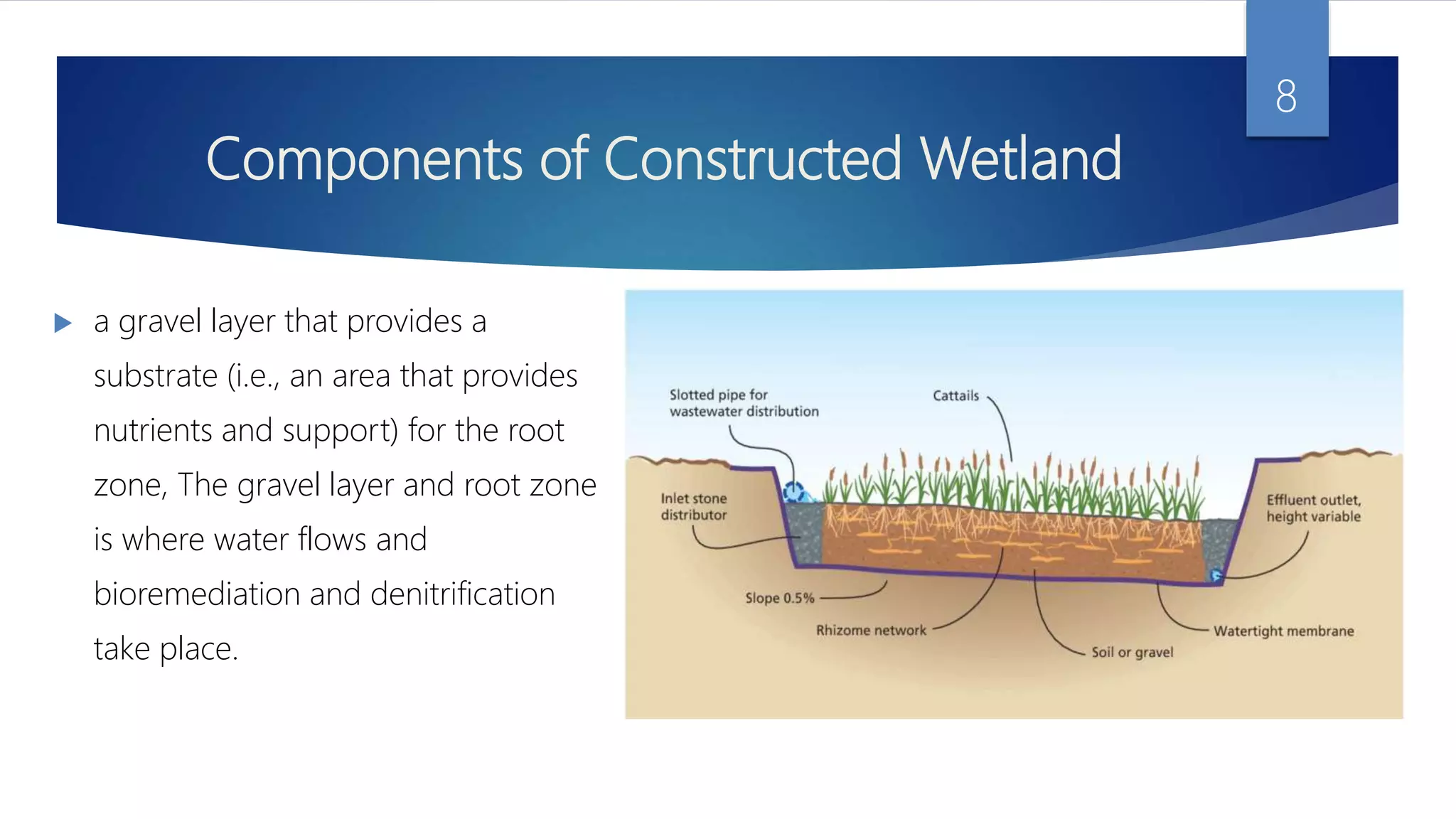
 a gravel layer that provides a
substrate (i.e., an area that provides
nutrients and support) for the root
zone, The gravel layer and root zone
is where water flows and
bioremediation and denitrification
take place.
8
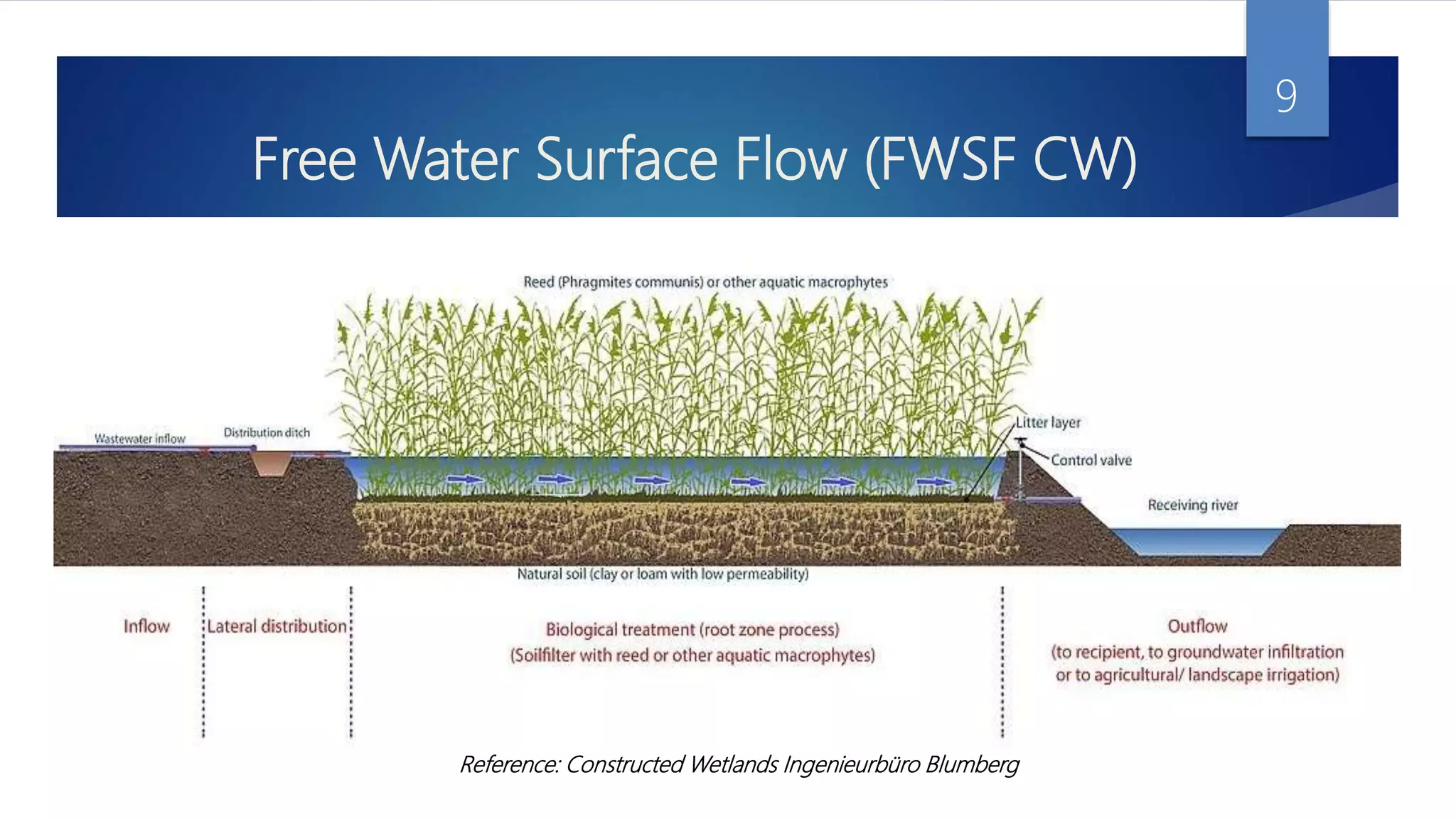
Free Water Surface Flow (FWSF CW)
9
Reference: Constructed Wetlands Ingenieurbüro Blumberg
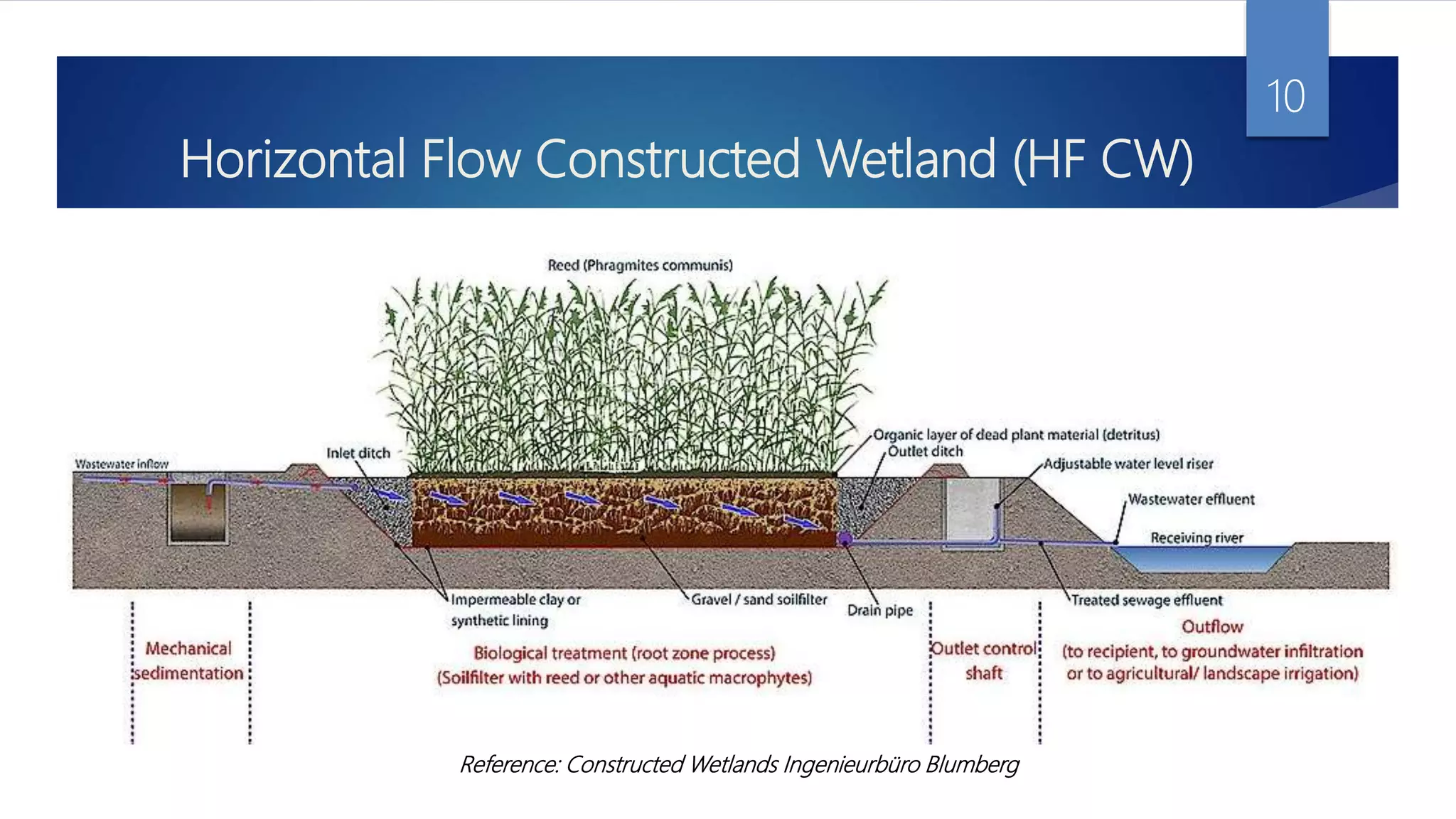
Horizontal Flow Constructed Wetland (HF CW)
10
Reference: Constructed Wetlands Ingenieurbüro Blumberg
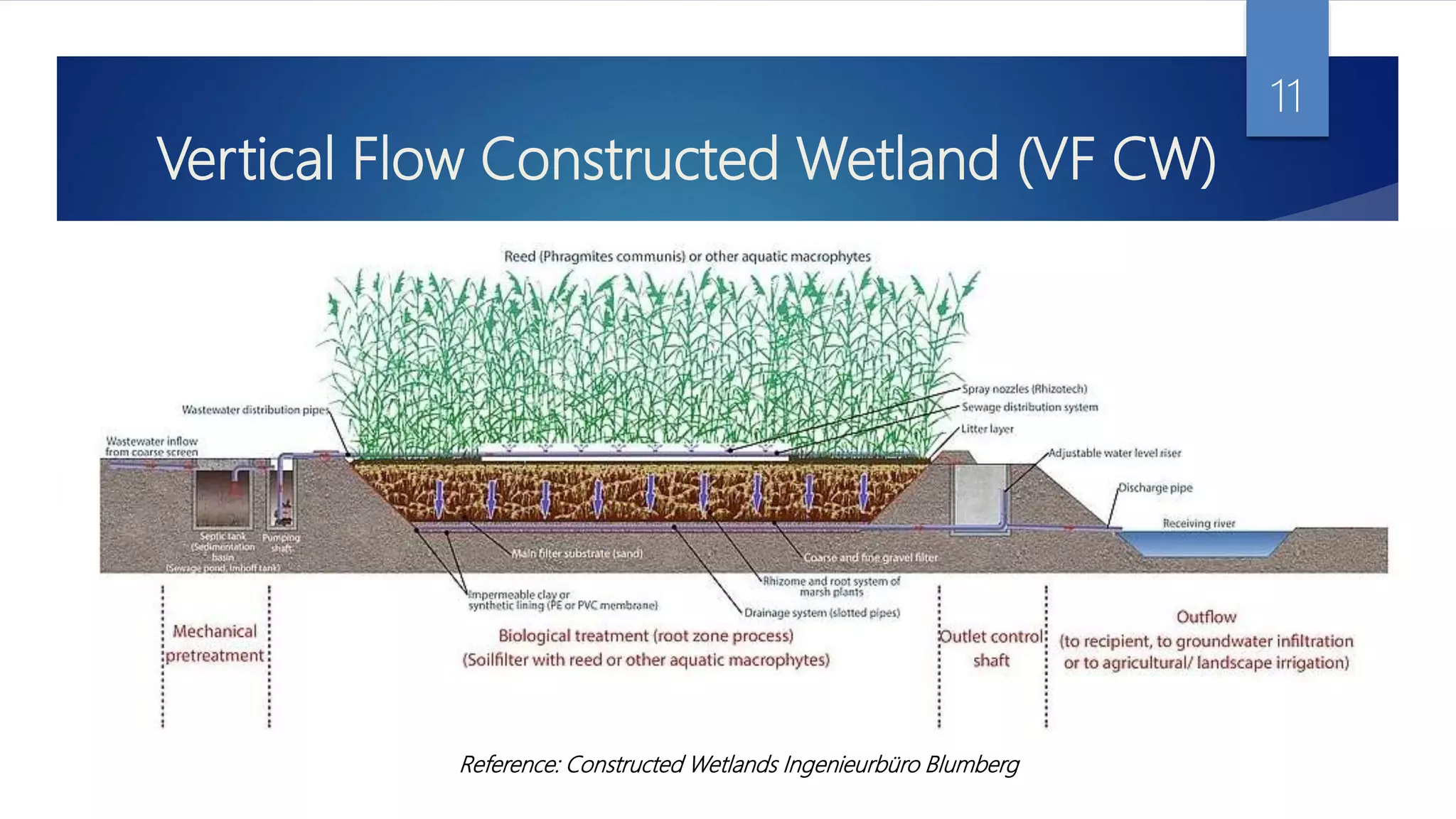
Vertical Flow Constructed Wetland (VF CW)
11
Reference: Constructed Wetlands Ingenieurbüro Blumberg
Treatment Processes - Constructed Wetland
Treatment Principles
Constructed wetland treatment systems offer many different mechanisms of action ranging from physical,
biological, biochemical and chemical processes and a variety of these mechanisms may be active in any
one bed. A list of the principal removal mechanisms is given below.
Biological
 Microbiological degradation through catabolism and anabolism (breakdown and combination of
complex molecules to form a simple one together with release of energy)
 Protozoic predation and digestion
 Plant uptake and storage
12
Treatment Processes - Constructed Wetlands
Chemical
 Ion exchange occurs as metals in the water contact humic or other organic substances in the wetlands.
 Oxidation and reduction reactions catalyzed by bacteria that occur in the aerobic and anaerobic zones
respectively play a major role in precipitating metals as hydroxides and sulphides. Precipitated and
adsorbed metals settle in quiescent ponds or are filtered out as water percolates through the medium
of the plants.
Physical
 Settlement: Larger organisms such as protozoan ocysts and helminth eggs can settle by gravity in a free
water surface flow constructed wetland.
 Filtration
13
Advantages of Constructed Wetlands
 Wetlands are important source of food supply (leafy plants source of vegetables, production of rice and
seeweeds)
 They act as habitat for a wide range of plant and animals. They provide oxygen through the respiration of
plants and algae.
 They filter the water running into the stream, river or ocean, cleaning it of toxins that could cause pollution in
major waterways.
 They provide protection against storms, flood control, stabilization of shorelines and maintain surface water
flow during dry periods.
 They are important for the landscape point of view and attract the tourists (recreational opportunities).
14
Advantages of Constructed Wetlands
15
Reference: Weiliu Wetland Park, China
Limitations of Constructed Wetlands
 The long-term effectiveness of constructed wetlands to contain or treat some contaminants is not well
known. Wetland aging may contribute to a decrease in contaminant removal rates over time.
 Weather events, wildlife, and contaminant concentrations may be problematic in establishing the
systems. For example at one demonstration, a hailstorm decimated one of the few plants able to
reestablish itself; a tadpole infestation severely defoliated the plants within two months of planting.
 High contaminant concentrations with low permissible effluent concentrations require long retention
times, hence large wetland areas.
 In cases where metals are the key contaminant, constructed wetlands do not destroy the metals; they
restrict their mobility through sorption.
16
Limitations of Constructed Wetlands
 During operation of the constructed wetland, wildlife may be adversely affected by the presence of
metals that have accumulated in plants.
 After the pumping of contaminated water ceases, the artificial wetland ecosystem changes. This could
severely affect the plant and animal life that depends on the wetland, and it may leave a waste
byproduct contaminated with metals and other contaminants.
 The biological components are sensitive to toxic chemicals
 When developing a constructed wetland, exotic and invasive species should not be used, and a plan
should be prepared to remove these species if they appear.
 Performance of constructed wetlands are usually less efficient than conventional treatments
17
Research Trends with reference to Pakistan
 Research paper “A full-scale comparison of two hybrid constructed wetlands treating domestic
wastewater in Pakistan” presents results from two hybrid CW using wastewater originating from the
residential colony of Quaid-i-Azam University in Islamabad.
 System-I comprises Vertical Subsurface-Flow Constructed Wetland (VSSF-CW) and Free-Water-Surface
Constructed Wetland (FWS-CW).
 System-II consists of a Horizontal Subsurface-Flow Constructed Wetland (HSSF-CW) followed by a
collecting pond and Free-Water- Surface Constructed Wetland (FWS-CW).
 Maximum reduction of COD was 80 and 78%, for BOD was 81 and 82% and for TSS was 79 and 89%
for was achieved in Systems I and II respectively.
18
Research Trends with reference to Pakistan
 Thesis “Exploring Sustainable Solutions for Wastewater Treatment: A case of Lyari River” proposed by
the students of Architecture and Planning at NED University analyzed the impacts of untreated
wastewater and proposed a viable hybrid constructed wetland project for wastewater treatment.
 Proposed design includes 10 wetland, an artificial pond for storing of water, 40% water will be
discharged again into Lyari River while 2-acres of land will be used for recreational and agricultural
space. This complete project will cost 480 million rupees (approx.).
 From this project, we can treat up to 150 MGD of wastewater and revive recreation opportunities and
livelihood opportunities.
19
Research Trends with reference to Pakistan
 In research paper “Constructed Wetland for Wastewater Treatment and Reuse: A Case Study of
Developing Country”, performance of a pilot-scale constructed wetland (CW) commissioned at NED
University was analyzed for 8 months.
 The design selection of CW was horizontal surface flow (HSF) and study showed that constructed
wetland reduced concentrations of all contaminants present in the pretreated wastewater.
 Results indicated good mean removal efficiencies; biochemical oxygen demand (50%), chemical oxygen
demand (44%), total suspended solids (78%), ammonia-nitrogen (49%), ortho-phosphate (52%), total
coliforms (93%) and faecal coliforms (98%).
20
References
21
 Constructed Wetlands for Sustainable Wastewater Treatment in Hot and Arid Climates: Opportunities, Challenges
and Case Studies in the Middle East by Alexandros I. Stefanakis
 Design, Operation and Optimization of Constructed Wetland for Removal of Pollutant by Md Ekhlasur Rahman,
Khairil Mahmud , Mohd Yunus Abd Shukor ,
 Treatment Wetlands - Constructed Wetlands by Global Wetland Technology
 A full-scale comparison of two hybrid constructed wetlands treating domestic wastewater in Pakistan by Mahwish Ali,
Diederik P
.L. Rousseau , Safia Ahmed
 Constructed Wetland for Wastewater Treatment and Reuse: A Case Study of Developing Country, Dr. Atif Mustafa
 Removal Mechanisms in Constructed Wastewater Wetlands by Stephen Norton
 Constructed Wetlands For Wastewater Treatment: https://www.blumberg-
engineers.com/en/ecotechnologies/constructed-wetlands
 National Oceanic and Atmospheric Administration: https://oceanservice.noaa.gov/facts/wetland.html
Thank You
22

Constructed Wetlands

  • 1.
    Asif Awan Wastewater Engineering NEDUniversity of Engineering and Technology Constructed Wetlands 1
  • 2.
    Table of Contents 2 Introduction  Classification of Wetlands  Important Components of Constructed Wetland  Types and Working Principle of Constructed Wetlands  Advantages and Limitations  Research findings with reference to Pakistan  References
  • 3.
    What is Wetland? A wetland is a distinct ecosystem that is flooded by water, either permanently or seasonally.  The primary factor that distinguishes wetlands from other land forms or water bodies is the characteristic vegetation of aquatic plants.  Wetlands include marshes, estuaries, mangroves, mudflats, mires, ponds, fens, swamps, deltas, coral reefs, billabongs, lagoons, shallow seas, bogs, lakes, and floodplains, to name just a few! 3 Mangroves Ecosystem in Port Qasim Area, IUCN Asia
  • 4.
    Wetlands and itsclassification There are many different kinds of wetlands and many ways to categorize them. National Oceanic and Atmospheric Administration (NOAA) uses Cowardin classification system devised by Lewis M. Cowardin in 1979. The system includes five main types of wetlands  Marine wetlands- which are areas exposed to the open ocean  Estuarine wetlands- partially enclosed by land exposed to a mixture of fresh and salt water bodies  Riverine wetlands- associated with flowing water  Lacustrine wetlands- associated with a lake or other body of fresh water  Palustrine wetlands- freshwater wetlands not associated with a river or lake, 4
  • 5.
    Constructed Wetlands  ConstructedWetlands are treatment system that use natural processes involving wetland vegetation, soil and their associated microbial assemblages to improve water quality.  They act as a biofilter and can remove a range of pollutants (such as organic matter, nutrients, pathogens, heavy metals) from the water. 5 Reference: Constructed Wetlands Ingenieurbüro Blumberg
  • 6.
    6 Types Of ConstructedWetlands Reference: International Journal of Environment Research and Public Health
  • 7.
    Components of ConstructedWetland The constructed wetland has three primary components:  an impermeable layer (generally clay), The impermeable layer prevents infiltration of wastes down into lower aquifers.  an above-surface vegetation zone. The above ground vegetative layer contains the plant material. 7
  • 8.
    Components of ConstructedWetland  a gravel layer that provides a substrate (i.e., an area that provides nutrients and support) for the root zone, The gravel layer and root zone is where water flows and bioremediation and denitrification take place. 8
  • 9.
    Free Water SurfaceFlow (FWSF CW) 9 Reference: Constructed Wetlands Ingenieurbüro Blumberg
  • 10.
    Horizontal Flow ConstructedWetland (HF CW) 10 Reference: Constructed Wetlands Ingenieurbüro Blumberg
  • 11.
    Vertical Flow ConstructedWetland (VF CW) 11 Reference: Constructed Wetlands Ingenieurbüro Blumberg
  • 12.
    Treatment Processes -Constructed Wetland Treatment Principles Constructed wetland treatment systems offer many different mechanisms of action ranging from physical, biological, biochemical and chemical processes and a variety of these mechanisms may be active in any one bed. A list of the principal removal mechanisms is given below. Biological  Microbiological degradation through catabolism and anabolism (breakdown and combination of complex molecules to form a simple one together with release of energy)  Protozoic predation and digestion  Plant uptake and storage 12
  • 13.
    Treatment Processes -Constructed Wetlands Chemical  Ion exchange occurs as metals in the water contact humic or other organic substances in the wetlands.  Oxidation and reduction reactions catalyzed by bacteria that occur in the aerobic and anaerobic zones respectively play a major role in precipitating metals as hydroxides and sulphides. Precipitated and adsorbed metals settle in quiescent ponds or are filtered out as water percolates through the medium of the plants. Physical  Settlement: Larger organisms such as protozoan ocysts and helminth eggs can settle by gravity in a free water surface flow constructed wetland.  Filtration 13
  • 14.
    Advantages of ConstructedWetlands  Wetlands are important source of food supply (leafy plants source of vegetables, production of rice and seeweeds)  They act as habitat for a wide range of plant and animals. They provide oxygen through the respiration of plants and algae.  They filter the water running into the stream, river or ocean, cleaning it of toxins that could cause pollution in major waterways.  They provide protection against storms, flood control, stabilization of shorelines and maintain surface water flow during dry periods.  They are important for the landscape point of view and attract the tourists (recreational opportunities). 14
  • 15.
    Advantages of ConstructedWetlands 15 Reference: Weiliu Wetland Park, China
  • 16.
    Limitations of ConstructedWetlands  The long-term effectiveness of constructed wetlands to contain or treat some contaminants is not well known. Wetland aging may contribute to a decrease in contaminant removal rates over time.  Weather events, wildlife, and contaminant concentrations may be problematic in establishing the systems. For example at one demonstration, a hailstorm decimated one of the few plants able to reestablish itself; a tadpole infestation severely defoliated the plants within two months of planting.  High contaminant concentrations with low permissible effluent concentrations require long retention times, hence large wetland areas.  In cases where metals are the key contaminant, constructed wetlands do not destroy the metals; they restrict their mobility through sorption. 16
  • 17.
    Limitations of ConstructedWetlands  During operation of the constructed wetland, wildlife may be adversely affected by the presence of metals that have accumulated in plants.  After the pumping of contaminated water ceases, the artificial wetland ecosystem changes. This could severely affect the plant and animal life that depends on the wetland, and it may leave a waste byproduct contaminated with metals and other contaminants.  The biological components are sensitive to toxic chemicals  When developing a constructed wetland, exotic and invasive species should not be used, and a plan should be prepared to remove these species if they appear.  Performance of constructed wetlands are usually less efficient than conventional treatments 17
  • 18.
    Research Trends withreference to Pakistan  Research paper “A full-scale comparison of two hybrid constructed wetlands treating domestic wastewater in Pakistan” presents results from two hybrid CW using wastewater originating from the residential colony of Quaid-i-Azam University in Islamabad.  System-I comprises Vertical Subsurface-Flow Constructed Wetland (VSSF-CW) and Free-Water-Surface Constructed Wetland (FWS-CW).  System-II consists of a Horizontal Subsurface-Flow Constructed Wetland (HSSF-CW) followed by a collecting pond and Free-Water- Surface Constructed Wetland (FWS-CW).  Maximum reduction of COD was 80 and 78%, for BOD was 81 and 82% and for TSS was 79 and 89% for was achieved in Systems I and II respectively. 18
  • 19.
    Research Trends withreference to Pakistan  Thesis “Exploring Sustainable Solutions for Wastewater Treatment: A case of Lyari River” proposed by the students of Architecture and Planning at NED University analyzed the impacts of untreated wastewater and proposed a viable hybrid constructed wetland project for wastewater treatment.  Proposed design includes 10 wetland, an artificial pond for storing of water, 40% water will be discharged again into Lyari River while 2-acres of land will be used for recreational and agricultural space. This complete project will cost 480 million rupees (approx.).  From this project, we can treat up to 150 MGD of wastewater and revive recreation opportunities and livelihood opportunities. 19
  • 20.
    Research Trends withreference to Pakistan  In research paper “Constructed Wetland for Wastewater Treatment and Reuse: A Case Study of Developing Country”, performance of a pilot-scale constructed wetland (CW) commissioned at NED University was analyzed for 8 months.  The design selection of CW was horizontal surface flow (HSF) and study showed that constructed wetland reduced concentrations of all contaminants present in the pretreated wastewater.  Results indicated good mean removal efficiencies; biochemical oxygen demand (50%), chemical oxygen demand (44%), total suspended solids (78%), ammonia-nitrogen (49%), ortho-phosphate (52%), total coliforms (93%) and faecal coliforms (98%). 20
  • 21.
    References 21  Constructed Wetlandsfor Sustainable Wastewater Treatment in Hot and Arid Climates: Opportunities, Challenges and Case Studies in the Middle East by Alexandros I. Stefanakis  Design, Operation and Optimization of Constructed Wetland for Removal of Pollutant by Md Ekhlasur Rahman, Khairil Mahmud , Mohd Yunus Abd Shukor ,  Treatment Wetlands - Constructed Wetlands by Global Wetland Technology  A full-scale comparison of two hybrid constructed wetlands treating domestic wastewater in Pakistan by Mahwish Ali, Diederik P .L. Rousseau , Safia Ahmed  Constructed Wetland for Wastewater Treatment and Reuse: A Case Study of Developing Country, Dr. Atif Mustafa  Removal Mechanisms in Constructed Wastewater Wetlands by Stephen Norton  Constructed Wetlands For Wastewater Treatment: https://www.blumberg- engineers.com/en/ecotechnologies/constructed-wetlands  National Oceanic and Atmospheric Administration: https://oceanservice.noaa.gov/facts/wetland.html
  • 22.