Downloaded 298 times


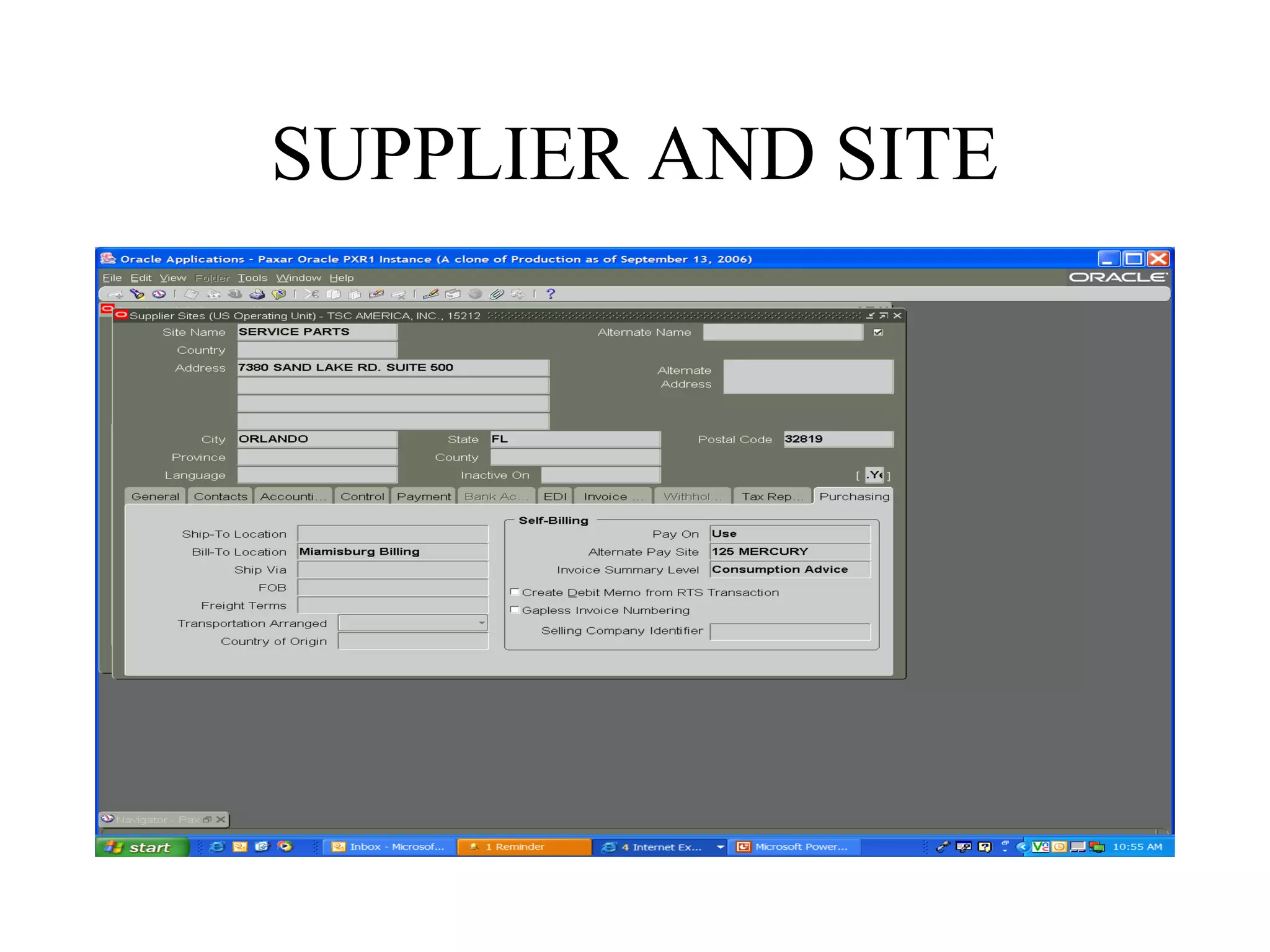




- Consignment inventory allows a supplier to retain ownership of goods stored at a customer's location until consumption, when ownership is transferred. - Key steps include setting up a subinventory for consigned goods, defining consigned items and approved suppliers, creating blanket purchase agreements, receiving goods into consigned inventory without accounting events, and defining consumption transaction rules to trigger ownership transfers. - Transactions like sales orders will implicitly consume consigned goods, generating transfers to regular inventory, while explicit consumption uses consigned transactions to manually change ownership.


