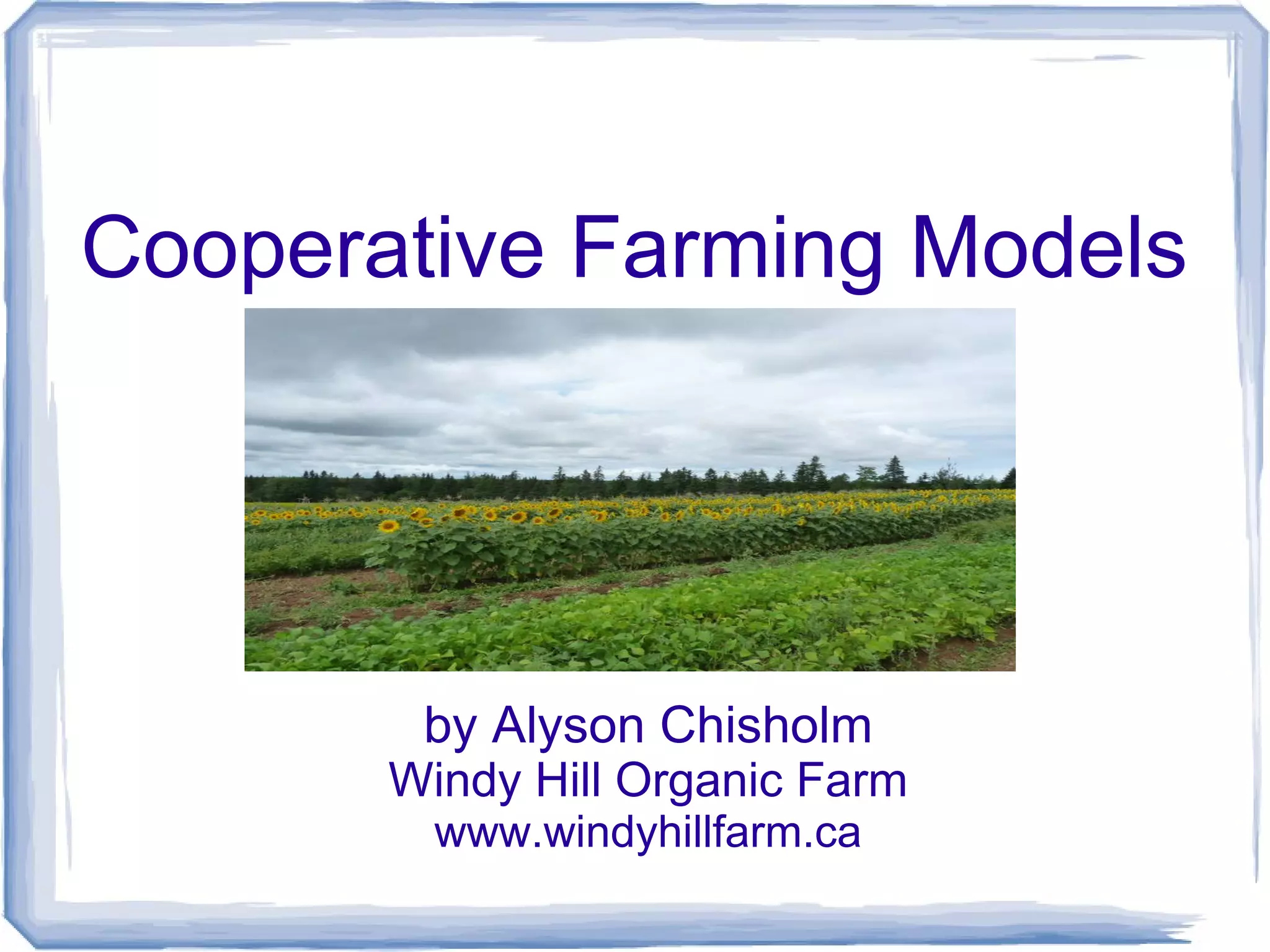
Cooperative Farming Models
by Alyson Chisholm
Windy Hill Organic Farm
www.windyhillfarm.ca
Outline
1. Co-ops defined and different types
2. Benefits and challenges
3. Personal experiences with different types of co-ops:
a) land ownership
b) equipment sharing/shared purchasing
c) marketing
d) promotion
4. Incorporation – benefits and challenges
5. Trouble shooting – issues that have arisen and how we've dealt
with them
6. Resources and models
7. Questions
Cooperation is defined as:
The process of working together for
the same end
A cooperative is a business, society
or enterprise based on cooperation.
● Voluntary and open membership – define the parameters of your
membership
● Democratic member control – one person = one vote rather than
more shares = more control
● Member economic participation – buy share (s) to become a
member
● Autonomy and independence – create your own rules of
operation (by-laws) though they must include certain legal
provisions
● Education, training, and information sharing
● Co-operation among co-operatives – eg. Cooperative farmer
buying group will prioritize purchasing from other co-op
businesses
● Concern for community – can pay dividends to members but “put
people and planet above profits” - profit generation is not their
primary purpose
Benefits
● working together makes you greater than the sum of
your parts
● build leadership and management skills
● access larger markets for a longer season by selling
cooperatively
● Save money through bulk buying and equipment sharing
● benefits of community: friendship, co-learning, help and
support, potlucks
● make a greater impact as a larger entity than as an
individual
● access funding for projects that are only available to
registered groups
Challenges
● lots of work required to “cooperate”
● people don't always see eye to eye on everything: how to
effectively reach decisions
● incorporation is a steep learning curve, lots of work and
can be expensive
● accommodating everyone can be hard work and
sometimes expensive
● Burnout issue: usually a small number of people end up
doing a large proportion of the work
● Giving over control is difficult – learning how to
compromise
GVOFC Mission and Goals
Mission
● Co-operatively preserving and stewarding organic
farmland to support farmers in growing quality food for
local communities.
Goals
● provide access to certified organic food for shareholders
and the local community;
● own and operate the farm co-operatively;
● steward the entire farm for the mutual benefit of the land,
wildlife and people;
● be a model of sustainable living;
● create opportunities to learn about sustainability.
GVOFC Structure
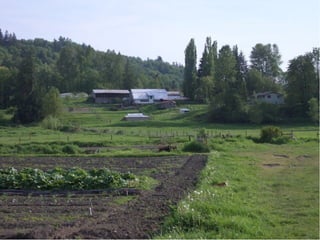
Co-op owns land, buildings, some equipment, pays
taxes, maintenance, insurance, electricity and
charges rent to farmers.
Co-op manages its business through committees
made up of shareholders.
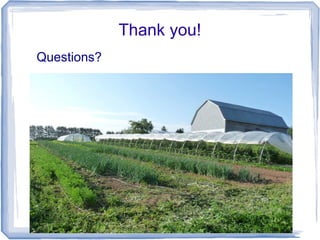
Farmers are all shareholders who rent land,
buildings and equipment from the co-op and run
their own businesses.
Farmers share workspaces, equipment and
markets with one another.
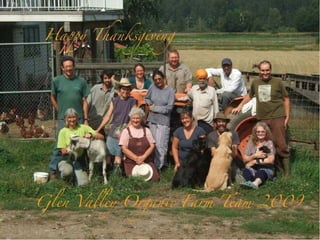
Lots of potlucks!
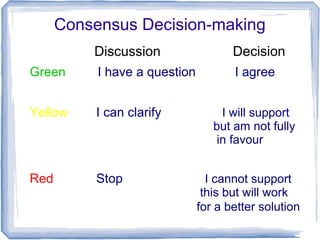
Consensus Decision-making
Discussion Decision
Green I have a question I agree
Yellow I can clarify I will support
but am not fully
in favour
Red Stop I cannot support
this but will work
for a better solution
Cooperative Farming Benefits
● Shared cost of land when land is very expensive
- “how did you get all those people to buy you a
farm?”
● Share tools and equipment
● Share marketing
● Mentoring value with farmers of different
experience level
● Requiring proposals makes you think things
through very well before embarking on plans
Equipment sharing/bulk buying
● Where to store equipment
● Who maintains, services, repairs
● Cost includes running, maintenance,
depreciation, replacement
● Keep good records of measurable quantities:
eg. hours, litres, pounds
● Bulk purchasing: set dates for purchases
● Plan how to calculate share of shipping cost
Marketing Co-ops
Langley Organic Growers
● Larger more diverse market stalls
● Set priorities in the winter
● Buy from farmers at wholesale and mark up 50%
to sell at farmer's markets
● Markup covers marketing costs: labour,
transportation, stall fees, supplies and equipment
● End of season surplus pays for following year's
startup, donations, distributed to member farms
based on their percent of total sales
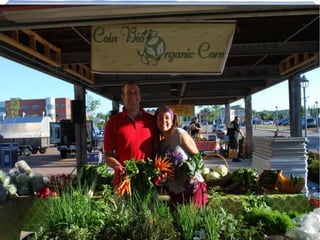
Coin Bio/Organic Corner Co-op
First model
● Two farms take turns doing the market
● The marketing farm gets priority on produce sold
● Marketing farm also pays all costs: labour, stall
fee, transportation
● Both farms share the cost of equipment and
supplies (co-own infrastructure and use own
scales)
● Any other participating farms who choose not to go
to market pay 20% to cover marketing costs
Coin Bio/Organic Corner Co-op
Current system
● We are now incorporated
● Four farms participate though the same two are
doing the marketing
● Everyone pays 20% of their total sales and this
covers all marketing costs
● Marketing committee proposes the amount CB
pays for wages and mileage and brings to
members for approval
● Our first season is almost complete and we will
meet and decide what worked/what didn't
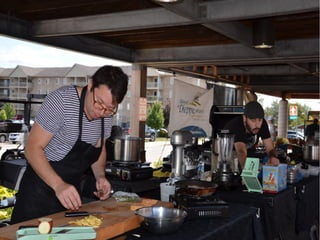
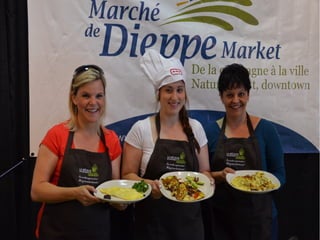
La Recolte de Chez Nous/Really Local
Harvest Co-op
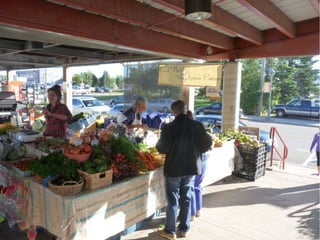
● Runs the Dieppe Farmer's Market
● Manages website and social media to promote
local food and local farms
● Gave rise to Terroir Food & Agrimarketing, an
organization supplying schools with local food in
SE NB
● Lots of great events that call attention to foods of
the season: harvest festival, competitive “cook-
offs”, food preservation workshops
● Run by a board made up of farmers and a paid
executive director
Incorporation
Benefits:
● you are now a legal entity and are governed by laws and
rules that help guide you in developing your structure and
require you to keep good records
● The process requires you to think and plan ahead and
prepare for issues rather than reacting to them when they
happen
● as an entity you are eligible to apply for credit, grants and
other types of funding
● You can generate revenue through the sale of shares
Challenges
● incorporation is complicated and requires lots of
reading of dry legal stuff
● you can hire someone to do it for you but it is
expensive
● you are now bound by rules and laws and have
to file annual reports, keep good records and
follow certain procedures
Start small ...
● keep good meeting minutes
● keep good financial records
● define your group's vision, mission and goals
● develop some process in meetings whether it is
following Robert's Rules or running your
meetings by consensus
Troubleshooting
● working together – start with people who are
already in alignment with regards to guiding
principles, beliefs, work habits and standards and
who are committed to working cooperatively.
● trust – keep really good written records, ensure
everyone signs off on them and refer to them
regularly
● decision-making – find a method of reaching
decisions that works for you and dedicate
yourselves to following it. “Trust the process, not
the person”
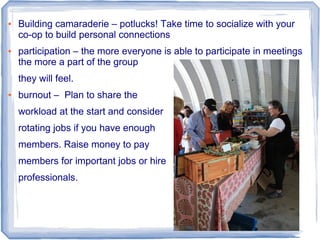
● Building camaraderie – potlucks! Take time to socialize with your
co-op to build personal connections
● participation – the more everyone is able to participate in meetings
the more a part of the group
they will feel.
● burnout – Plan to share the
workload at the start and consider
rotating jobs if you have enough
members. Raise money to pay
members for important jobs or hire
professionals.
Resources and Models
● Information on co-ops and help with incorporation:
Cooperative Enterprise Council of NB www.cecnb.ca
● Rules of incorporation, documents and other legal
information: Financial and Consumer Services Commission
http://www2.gnb.ca/content/gnb/en/services/services_renderer.
631.Co-operative_%28Co-ops%29_Incorporation.html
● Co-ops: La Recolte de Chez Nous/Really Local Harvest Co-
op https://recoltedecheznous.com
Glen Valley Organic Farm Cooperative
http://www.glenvalleyorganicfarm.org/gvwp/
Coin Bio/Organic Corner Co-op – no website yet but see us at
the Dieppe Farmer's Market every Saturday starting in May!
Thank you!
Questions?

Considerations for Cooperation: Cooperative Farming Models

  • 1.
    Cooperative Farming Models byAlyson Chisholm Windy Hill Organic Farm www.windyhillfarm.ca
  • 2.
    Outline 1. Co-ops definedand different types 2. Benefits and challenges 3. Personal experiences with different types of co-ops: a) land ownership b) equipment sharing/shared purchasing c) marketing d) promotion 4. Incorporation – benefits and challenges 5. Trouble shooting – issues that have arisen and how we've dealt with them 6. Resources and models 7. Questions
  • 3.
    Cooperation is definedas: The process of working together for the same end A cooperative is a business, society or enterprise based on cooperation.
  • 4.
    ● Voluntary andopen membership – define the parameters of your membership ● Democratic member control – one person = one vote rather than more shares = more control ● Member economic participation – buy share (s) to become a member ● Autonomy and independence – create your own rules of operation (by-laws) though they must include certain legal provisions ● Education, training, and information sharing ● Co-operation among co-operatives – eg. Cooperative farmer buying group will prioritize purchasing from other co-op businesses ● Concern for community – can pay dividends to members but “put people and planet above profits” - profit generation is not their primary purpose
  • 5.
    Benefits ● working togethermakes you greater than the sum of your parts ● build leadership and management skills ● access larger markets for a longer season by selling cooperatively ● Save money through bulk buying and equipment sharing ● benefits of community: friendship, co-learning, help and support, potlucks ● make a greater impact as a larger entity than as an individual ● access funding for projects that are only available to registered groups
  • 6.
    Challenges ● lots ofwork required to “cooperate” ● people don't always see eye to eye on everything: how to effectively reach decisions ● incorporation is a steep learning curve, lots of work and can be expensive ● accommodating everyone can be hard work and sometimes expensive ● Burnout issue: usually a small number of people end up doing a large proportion of the work ● Giving over control is difficult – learning how to compromise
  • 9.
    GVOFC Mission andGoals Mission ● Co-operatively preserving and stewarding organic farmland to support farmers in growing quality food for local communities. Goals ● provide access to certified organic food for shareholders and the local community; ● own and operate the farm co-operatively; ● steward the entire farm for the mutual benefit of the land, wildlife and people; ● be a model of sustainable living; ● create opportunities to learn about sustainability.
  • 11.
    GVOFC Structure Co-op ownsland, buildings, some equipment, pays taxes, maintenance, insurance, electricity and charges rent to farmers. Co-op manages its business through committees made up of shareholders. Farmers are all shareholders who rent land, buildings and equipment from the co-op and run their own businesses. Farmers share workspaces, equipment and markets with one another. Lots of potlucks!
  • 12.
    Consensus Decision-making Discussion Decision GreenI have a question I agree Yellow I can clarify I will support but am not fully in favour Red Stop I cannot support this but will work for a better solution
  • 13.
    Cooperative Farming Benefits ●Shared cost of land when land is very expensive - “how did you get all those people to buy you a farm?” ● Share tools and equipment ● Share marketing ● Mentoring value with farmers of different experience level ● Requiring proposals makes you think things through very well before embarking on plans
  • 14.
    Equipment sharing/bulk buying ●Where to store equipment ● Who maintains, services, repairs ● Cost includes running, maintenance, depreciation, replacement ● Keep good records of measurable quantities: eg. hours, litres, pounds ● Bulk purchasing: set dates for purchases ● Plan how to calculate share of shipping cost
  • 16.
    Marketing Co-ops Langley OrganicGrowers ● Larger more diverse market stalls ● Set priorities in the winter ● Buy from farmers at wholesale and mark up 50% to sell at farmer's markets ● Markup covers marketing costs: labour, transportation, stall fees, supplies and equipment ● End of season surplus pays for following year's startup, donations, distributed to member farms based on their percent of total sales
  • 18.
    Coin Bio/Organic CornerCo-op First model ● Two farms take turns doing the market ● The marketing farm gets priority on produce sold ● Marketing farm also pays all costs: labour, stall fee, transportation ● Both farms share the cost of equipment and supplies (co-own infrastructure and use own scales) ● Any other participating farms who choose not to go to market pay 20% to cover marketing costs
  • 21.
    Coin Bio/Organic CornerCo-op Current system ● We are now incorporated ● Four farms participate though the same two are doing the marketing ● Everyone pays 20% of their total sales and this covers all marketing costs ● Marketing committee proposes the amount CB pays for wages and mileage and brings to members for approval ● Our first season is almost complete and we will meet and decide what worked/what didn't
  • 23.
    La Recolte deChez Nous/Really Local Harvest Co-op ● Runs the Dieppe Farmer's Market ● Manages website and social media to promote local food and local farms ● Gave rise to Terroir Food & Agrimarketing, an organization supplying schools with local food in SE NB ● Lots of great events that call attention to foods of the season: harvest festival, competitive “cook- offs”, food preservation workshops ● Run by a board made up of farmers and a paid executive director
  • 26.
    Incorporation Benefits: ● you arenow a legal entity and are governed by laws and rules that help guide you in developing your structure and require you to keep good records ● The process requires you to think and plan ahead and prepare for issues rather than reacting to them when they happen ● as an entity you are eligible to apply for credit, grants and other types of funding ● You can generate revenue through the sale of shares
  • 28.
    Challenges ● incorporation iscomplicated and requires lots of reading of dry legal stuff ● you can hire someone to do it for you but it is expensive ● you are now bound by rules and laws and have to file annual reports, keep good records and follow certain procedures
  • 29.
    Start small ... ●keep good meeting minutes ● keep good financial records ● define your group's vision, mission and goals ● develop some process in meetings whether it is following Robert's Rules or running your meetings by consensus
  • 30.
    Troubleshooting ● working together– start with people who are already in alignment with regards to guiding principles, beliefs, work habits and standards and who are committed to working cooperatively. ● trust – keep really good written records, ensure everyone signs off on them and refer to them regularly ● decision-making – find a method of reaching decisions that works for you and dedicate yourselves to following it. “Trust the process, not the person”
  • 31.
    ● Building camaraderie– potlucks! Take time to socialize with your co-op to build personal connections ● participation – the more everyone is able to participate in meetings the more a part of the group they will feel. ● burnout – Plan to share the workload at the start and consider rotating jobs if you have enough members. Raise money to pay members for important jobs or hire professionals.
  • 33.
    Resources and Models ●Information on co-ops and help with incorporation: Cooperative Enterprise Council of NB www.cecnb.ca ● Rules of incorporation, documents and other legal information: Financial and Consumer Services Commission http://www2.gnb.ca/content/gnb/en/services/services_renderer. 631.Co-operative_%28Co-ops%29_Incorporation.html ● Co-ops: La Recolte de Chez Nous/Really Local Harvest Co- op https://recoltedecheznous.com Glen Valley Organic Farm Cooperative http://www.glenvalleyorganicfarm.org/gvwp/ Coin Bio/Organic Corner Co-op – no website yet but see us at the Dieppe Farmer's Market every Saturday starting in May!
  • 34.