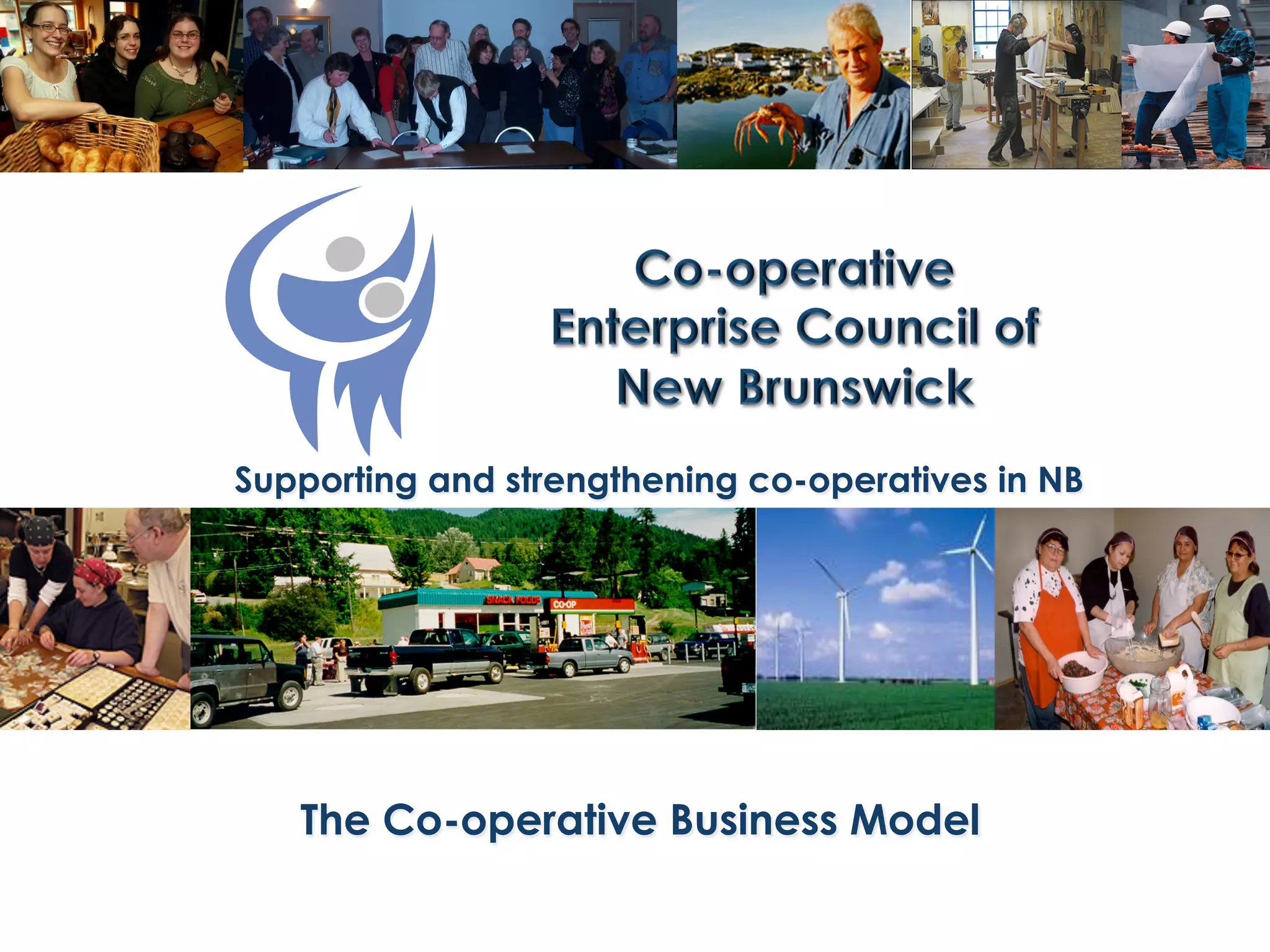
Supporting and strengthening co-operatives in NB

The Co-operative Business Model
LEARNING	
  OBJECTIVES	
  
  To	
  understand	
  the	
  co-­‐opera=ve	
  business	
  model	
  and	
  its	
  

difference	
  from	
  other	
  business	
  models	
  
  To	
  iden=fy	
  the	
  different	
  types	
  of	
  CSA	
  and	
  direct	
  
marke=ng	
  co-­‐ops	
  in	
  North	
  America	
  
  To	
  understand	
  the	
  steps	
  involved	
  in	
  star=ng	
  a	
  co-­‐op	


AGENDA	
  
  Intro	
  
  What	
  is	
  a	
  co-­‐opera=ve?	
  
  How	
  is	
  a	
  co-­‐opera=ve	
  different	
  from	
  other	
  business	
  

models?	
  
  Examples	
  of	
  CSA	
  and	
  direct	
  marke=ng	
  co-­‐ops	
  
  How	
  to	
  start	
  a	
  co-­‐op.	
  
  Ques=ons	
  
GETTING	
  TO	
  KNOW	
  THE	
  ROOM	
  
  Who	
  is	
  currently	
  a	
  member	
  of	
  a	
  producer	
  or	
  food	
  

related	
  co-­‐op?	
  
  Who	
  is	
  currently	
  on	
  a	
  board	
  of	
  a	
  co-­‐op?	
  
  Who	
  is	
  interested	
  in	
  star=ng	
  a	
  co-­‐op?	
  
  Who	
  is	
  curious	
  about	
  what	
  a	
  co-­‐op	
  is?	
  
WHAT	
  DO	
  YOU	
  THINK	
  OF	
  WHEN	
  YOU	
  HEAR	
  THE	
  WORD	
  
CO-­‐OP?	
  
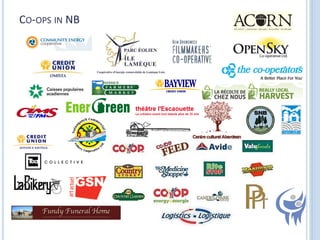
CO-­‐OPS	
  IN	
  NB	
  
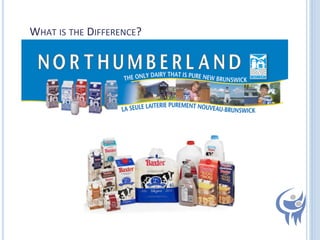
WHAT	
  IS	
  THE	
  DIFFERENCE?	
  
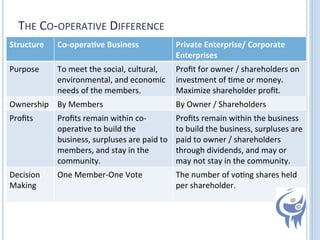
THE	
  CO-­‐OPERATIVE	
  DIFFERENCE	
  
Structure	
  

Co-­‐opera-ve	
  Business	
  

Private	
  Enterprise/	
  Corporate	
  
Enterprises	
  

Purpose	
  

To	
  meet	
  the	
  social,	
  cultural,	
  
Profit	
  for	
  owner	
  /	
  shareholders	
  on	
  
environmental,	
  and	
  economic	
   investment	
  of	
  =me	
  or	
  money.	
  
needs	
  of	
  the	
  members.	
  
Maximize	
  shareholder	
  profit.	
  

Ownership	
   By	
  Members	
  

By	
  Owner	
  /	
  Shareholders	
  

Profits	
  

Profits	
  remain	
  within	
  co-­‐
opera=ve	
  to	
  build	
  the	
  
business,	
  surpluses	
  are	
  paid	
  to	
  
members,	
  and	
  stay	
  in	
  the	
  
community.	
  

Profits	
  remain	
  within	
  the	
  business	
  
to	
  build	
  the	
  business,	
  surpluses	
  are	
  
paid	
  to	
  owner	
  /	
  shareholders	
  
through	
  dividends,	
  and	
  may	
  or	
  
may	
  not	
  stay	
  in	
  the	
  community.	
  

Decision	
  
Making	
  

One	
  Member-­‐One	
  Vote	
  

The	
  number	
  of	
  vo=ng	
  shares	
  held	
  
per	
  shareholder.	
  
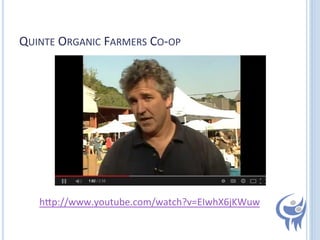
QUINTE	
  ORGANIC	
  FARMERS	
  CO-­‐OP	
  

hZp://www.youtube.com/watch?v=EIwhX6jKWuw
	
  
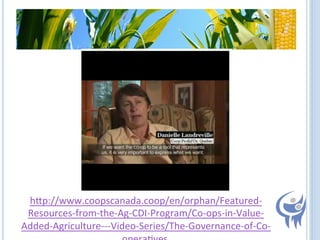
hZp://www.coopscanada.coop/en/orphan/Featured-­‐
Resources-­‐from-­‐the-­‐Ag-­‐CDI-­‐Program/Co-­‐ops-­‐in-­‐Value-­‐
Added-­‐Agriculture-­‐-­‐-­‐Video-­‐Series/The-­‐Governance-­‐of-­‐Co-­‐
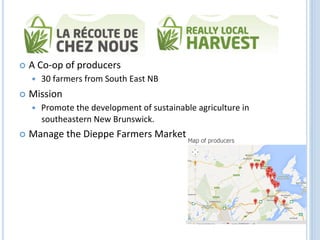
  A	
  Co-­‐op	
  of	
  producers	
  
 

30	
  farmers	
  from	
  South	
  East	
  NB	
  

  Mission	
  
 

Promote	
  the	
  development	
  of	
  sustainable	
  agriculture	
  in	
  
southeastern	
  New	
  Brunswick.	
  

  Manage	
  the	
  Dieppe	
  Farmers	
  Market	
  
JUST	
  US!	
  	
  COFFEE	
  ROASTERS	
  
  Wolfville,	
  NS	
  
  Worker	
  Co-­‐op	
  Coffee	
  Roasters	
  
  Cafés	
  
  CEDIF	
  
From CSA to Multifarm CSA:
The Story of Local Harvest
I don’t think we could have skipped over those hard early
years. The only way to get around that is to have a single
leader who makes all the decisions. That would not have
been a true cooperative. So, looking back, I’m glad that we
spent a year coming up with the paperwork and making rough
plans, and also feel that the first three or four years of
“discussion” have paid off. Now, we have all agreed and
bought into the system that we have created, and we all have
a sense of ownership. That has been the glue that has held
us together.
—Dave Trumble
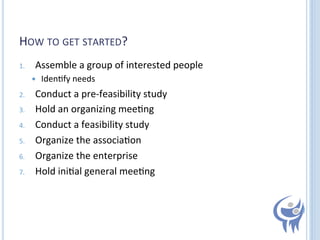
HOW	
  TO	
  GET	
  STARTED?	
  
1. 

Assemble	
  a	
  group	
  of	
  interested	
  people	
  
 

2. 
3. 
4. 
5. 
6. 
7. 


Iden=fy	
  needs	
  

Conduct	
  a	
  pre-­‐feasibility	
  study	
  
Hold	
  an	
  organizing	
  mee=ng	
  
Conduct	
  a	
  feasibility	
  study	
  
Organize	
  the	
  associa=on	
  
Organize	
  the	
  enterprise	
  
Hold	
  ini=al	
  general	
  mee=ng	
  
RESOURCES	
  
  hZp://www.coopscanada.coop/assets/firefly/files/files/

The_Lay_of_the_Land_Final_June_16_2009.pdf	
  
  Looking	
  at	
  CSA	
  from	
  a	
  co-­‐opera=ve	
  prospec=ve	
  
hZp://agmarke=ng.extension.psu.edu/ComFarmMkt/
PDFs/local_harvest_csa.pdf	
  
  BC	
  Co-­‐op	
  Associa=on	
  –	
  Food	
  Hub	
  Co-­‐ops	
  
hZp://bcca.coop/foodhub	
  
  Family	
  Farm	
  based	
  marke=ng	
  co-­‐ops	
  
hZp://beyondfactoryfarming.org/build-­‐alterna=ves/
distribu=on/family-­‐farm-­‐based-­‐marke=ng-­‐co-­‐opera=ves	
  
QUESTIONS?	
  

Hachey Powerpoint

  • 1.
    Supporting and strengtheningco-operatives in NB The Co-operative Business Model
  • 2.
    LEARNING  OBJECTIVES    To  understand  the  co-­‐opera=ve  business  model  and  its   difference  from  other  business  models     To  iden=fy  the  different  types  of  CSA  and  direct   marke=ng  co-­‐ops  in  North  America     To  understand  the  steps  involved  in  star=ng  a  co-­‐op    
  • 3.
    AGENDA     Intro     What  is  a  co-­‐opera=ve?     How  is  a  co-­‐opera=ve  different  from  other  business   models?     Examples  of  CSA  and  direct  marke=ng  co-­‐ops     How  to  start  a  co-­‐op.     Ques=ons  
  • 4.
    GETTING  TO  KNOW  THE  ROOM     Who  is  currently  a  member  of  a  producer  or  food   related  co-­‐op?     Who  is  currently  on  a  board  of  a  co-­‐op?     Who  is  interested  in  star=ng  a  co-­‐op?     Who  is  curious  about  what  a  co-­‐op  is?  
  • 5.
    WHAT  DO  YOU  THINK  OF  WHEN  YOU  HEAR  THE  WORD   CO-­‐OP?  
  • 6.
  • 7.
    WHAT  IS  THE  DIFFERENCE?  
  • 8.
    THE  CO-­‐OPERATIVE  DIFFERENCE   Structure   Co-­‐opera-ve  Business   Private  Enterprise/  Corporate   Enterprises   Purpose   To  meet  the  social,  cultural,   Profit  for  owner  /  shareholders  on   environmental,  and  economic   investment  of  =me  or  money.   needs  of  the  members.   Maximize  shareholder  profit.   Ownership   By  Members   By  Owner  /  Shareholders   Profits   Profits  remain  within  co-­‐ opera=ve  to  build  the   business,  surpluses  are  paid  to   members,  and  stay  in  the   community.   Profits  remain  within  the  business   to  build  the  business,  surpluses  are   paid  to  owner  /  shareholders   through  dividends,  and  may  or   may  not  stay  in  the  community.   Decision   Making   One  Member-­‐One  Vote   The  number  of  vo=ng  shares  held   per  shareholder.  
  • 9.
    QUINTE  ORGANIC  FARMERS  CO-­‐OP   hZp://www.youtube.com/watch?v=EIwhX6jKWuw  
  • 10.
  • 11.
      A  Co-­‐op  of  producers     30  farmers  from  South  East  NB     Mission     Promote  the  development  of  sustainable  agriculture  in   southeastern  New  Brunswick.     Manage  the  Dieppe  Farmers  Market  
  • 12.
    JUST  US!    COFFEE  ROASTERS     Wolfville,  NS     Worker  Co-­‐op  Coffee  Roasters     Cafés     CEDIF  
  • 13.
    From CSA toMultifarm CSA: The Story of Local Harvest I don’t think we could have skipped over those hard early years. The only way to get around that is to have a single leader who makes all the decisions. That would not have been a true cooperative. So, looking back, I’m glad that we spent a year coming up with the paperwork and making rough plans, and also feel that the first three or four years of “discussion” have paid off. Now, we have all agreed and bought into the system that we have created, and we all have a sense of ownership. That has been the glue that has held us together. —Dave Trumble
  • 14.
    HOW  TO  GET  STARTED?   1.  Assemble  a  group  of  interested  people     2.  3.  4.  5.  6.  7.    Iden=fy  needs   Conduct  a  pre-­‐feasibility  study   Hold  an  organizing  mee=ng   Conduct  a  feasibility  study   Organize  the  associa=on   Organize  the  enterprise   Hold  ini=al  general  mee=ng  
  • 15.
    RESOURCES     hZp://www.coopscanada.coop/assets/firefly/files/files/ The_Lay_of_the_Land_Final_June_16_2009.pdf     Looking  at  CSA  from  a  co-­‐opera=ve  prospec=ve   hZp://agmarke=ng.extension.psu.edu/ComFarmMkt/ PDFs/local_harvest_csa.pdf     BC  Co-­‐op  Associa=on  –  Food  Hub  Co-­‐ops   hZp://bcca.coop/foodhub     Family  Farm  based  marke=ng  co-­‐ops   hZp://beyondfactoryfarming.org/build-­‐alterna=ves/ distribu=on/family-­‐farm-­‐based-­‐marke=ng-­‐co-­‐opera=ves  
  • 16.