The Future is
Co-operative
*2019 data based on Neighboring Food Co-op Association member
survey.
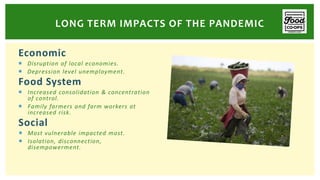
Economic
 Disruption of local economies.
 Depression level unemployment.
Food System
 Increased consolidation & concentration
of control.
 Family farmers and farm workers at
increased risk.
Social
 Most vulnerable impacted most.
 Isolation, disconnection,
disempowerment.
LONG TERM IMPACTS OF THE PANDEMIC
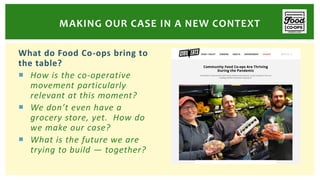
What do Food Co-ops bring to
the table?
 How is the co-operative
movement particularly
relevant at this moment?
 We don’t even have a
grocery store, yet. How do
we make our case?
 What is the future we are
trying to build — together?
MAKING OUR CASE IN A NEW CONTEXT
How Do Food Co-ops Help Build a Better Future?
 Build on Local Skills & Assets
 Pool Limited Resources for Scale & Impact
 Build an Inclusive Economy through Community Ownership
 Focus on Meeting Needs, Rather than Financial Return
 Maintain Good, Local Jobs
 Grow a Sustainable Food System & Economy
 Build Community Infrastructure for the Long-Term
 Anchor Wealth in the Community
LET’S REBUILD RESILIENTLY
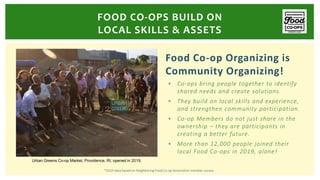
Food Co-op Organizing is
Community Organizing!
 Co-ops bring people together to identify
shared needs and create solutions.
 They build on local skills and experience,
and strengthen community participation.
 Co-op Members do not just share in the
ownership – they are participants in
creating a better future.
 More than 12,000 people joined their
local Food Co-ops in 2019, alone!
FOOD CO-OPS BUILD ON
LOCAL SKILLS & ASSETS
Urban Greens Co-op Market, Providence, RI, opened in 2019.
*2019 data based on Neighboring Food Co-op Association member survey.
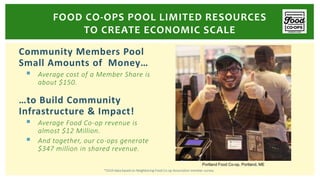
Community Members Pool
Small Amounts of Money…
 Average cost of a Member Share is
about $150.
…to Build Community
Infrastructure & Impact!
 Average Food Co-op revenue is
almost $12 Million.
 And together, our co-ops generate
$347 million in shared revenue.
FOOD CO-OPS POOL LIMITED RESOURCES
TO CREATE ECONOMIC SCALE
Portland Food Co-op, Portland, ME
*2019 data based on Neighboring Food Co-op Association member survey.
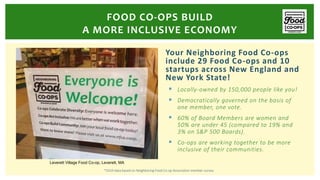
Your Neighboring Food Co-ops
include 29 Food Co-ops and 10
startups across New England and
New York State!
 Locally-owned by 150,000 people like you!
 Democratically governed on the basis of
one member, one vote.
 60% of Board Members are women and
50% are under 45 (compared to 19% and
3% on S&P 500 Boards).
 Co-ops are working together to be more
inclusive of their communities.
*2019 data based on Neighboring Food Co-op Association member survey.
FOOD CO-OPS BUILD
A MORE INCLUSIVE ECONOMY
Leverett Village Food Co-op, Leverett, MA
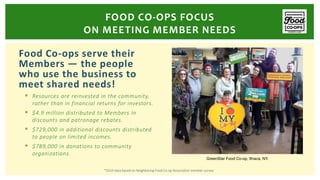
Food Co-ops serve their
Members — the people
who use the business to
meet shared needs!
 Resources are reinvested in the community,
rather than in financial returns for investors.
 $4.9 million distributed to Members in
discounts and patronage rebates.
 $729,000 in additional discounts distributed
to people on limited incomes.
 $789,000 in donations to community
organizations.
FOOD CO-OPS FOCUS
ON MEETING MEMBER NEEDS
GreenStar Food Co-op, Ithaca, NY.
*2019 data based on Neighboring Food Co-op Association member survey.
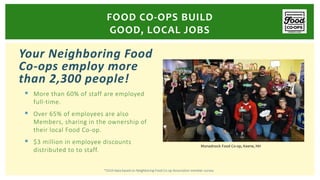
Your Neighboring Food
Co-ops employ more
than 2,300 people!
 More than 60% of staff are employed
full-time.
 Over 65% of employees are also
Members, sharing in the ownership of
their local Food Co-op.
 $3 million in employee discounts
distributed to to staff.
FOOD CO-OPS BUILD
GOOD, LOCAL JOBS
Monadnock Food Co-op, Keene, NH
*2019 data based on Neighboring Food Co-op Association member survey.
$93+ Million in Local Product Sales
 The average Food Co-op purchases from 250
local suppliers with local sales comprising
29% of annual revenue.
$97+ Million in Organic Products
 Supporting community health and combating
climate change.
$18 Million in Co-op Products
 Working with other co-operatives to build a
more sustainable & inclusive economy.
$14 Million in Fair Trade Products
 Supporting community empowerment and
economic justice around the world.
FOOD CO-OPS BUILD A
SUSTAINABLE FOOD SYSTEM & ECONOMY
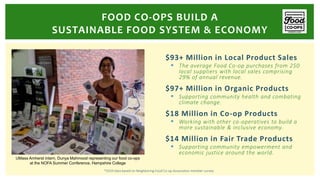
UMass Amherst intern, Dunya Mahmood representing our food co-ops
at the NOFA Summer Conference, Hampshire College
*2019 data based on Neighboring Food Co-op Association member survey.
The average Food Co-op
has been in business for
more than 30 years!
 10 years or less: 5 Co-ops
 10+ years: 24 Food Co-ops
 30+ years: 17 Food Co-ops
 80+ years: 2 Food Co-ops
FOOD CO-OPS BUILD
COMMUNITY INFRASTRUCTURE
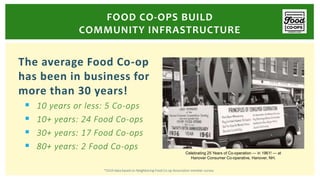
Celebrating 25 Years of Co-operation — in 1961! — at
Hanover Consumer Co-operative, Hanover, NH.
*2019 data based on Neighboring Food Co-op Association member survey.
Food Co-ops are
Community-Owned!
 Because they are rooted in the
community, Food Co-ops will not
leave in search of higher profits.
 Co-ops are democratically
governed and therefore very
difficult to buy out.
 Your local Food Co-op is a
community asset, owned by and
accountable to the community!
*2019 data based on Neighboring Food Co-op Association member survey.
FOOD CO-OPS
ANCHOR WEALTH IN THE COMMUNITY
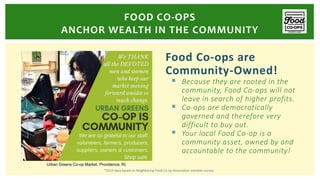
Urban Greens Co-op Market, Providence, RI.
 4,700 members of 9 startups.
 More than 600 people joined
our startup co-ops last year.
 3 new jobs for startup
project/outreach managers.
 1 new food co-op opened in
2019 (Urban Greens Co-op
Market, Providence, RI!).
 2 co-ops in negotiations for their
store
*2019 data based on Neighboring Food Co-op Association member survey.
FOOD CO-OP STARTUPS:
ALREADY MAKING AN IMPACT!
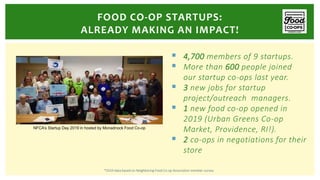
NFCA’s Startup Day 2019 in hosted by Monadnock Food Co-op
WE LOVE OUR CO-OPS!

The Future is Co-operative: NFCA Food Co-op Impact Presentation

  • 1.
    The Future is Co-operative *2019data based on Neighboring Food Co-op Association member survey.
  • 2.
    Economic  Disruption oflocal economies.  Depression level unemployment. Food System  Increased consolidation & concentration of control.  Family farmers and farm workers at increased risk. Social  Most vulnerable impacted most.  Isolation, disconnection, disempowerment. LONG TERM IMPACTS OF THE PANDEMIC
  • 3.
    What do FoodCo-ops bring to the table?  How is the co-operative movement particularly relevant at this moment?  We don’t even have a grocery store, yet. How do we make our case?  What is the future we are trying to build — together? MAKING OUR CASE IN A NEW CONTEXT
  • 4.
    How Do FoodCo-ops Help Build a Better Future?  Build on Local Skills & Assets  Pool Limited Resources for Scale & Impact  Build an Inclusive Economy through Community Ownership  Focus on Meeting Needs, Rather than Financial Return  Maintain Good, Local Jobs  Grow a Sustainable Food System & Economy  Build Community Infrastructure for the Long-Term  Anchor Wealth in the Community LET’S REBUILD RESILIENTLY
  • 5.
    Food Co-op Organizingis Community Organizing!  Co-ops bring people together to identify shared needs and create solutions.  They build on local skills and experience, and strengthen community participation.  Co-op Members do not just share in the ownership – they are participants in creating a better future.  More than 12,000 people joined their local Food Co-ops in 2019, alone! FOOD CO-OPS BUILD ON LOCAL SKILLS & ASSETS Urban Greens Co-op Market, Providence, RI, opened in 2019. *2019 data based on Neighboring Food Co-op Association member survey.
  • 6.
    Community Members Pool SmallAmounts of Money…  Average cost of a Member Share is about $150. …to Build Community Infrastructure & Impact!  Average Food Co-op revenue is almost $12 Million.  And together, our co-ops generate $347 million in shared revenue. FOOD CO-OPS POOL LIMITED RESOURCES TO CREATE ECONOMIC SCALE Portland Food Co-op, Portland, ME *2019 data based on Neighboring Food Co-op Association member survey.
  • 7.
    Your Neighboring FoodCo-ops include 29 Food Co-ops and 10 startups across New England and New York State!  Locally-owned by 150,000 people like you!  Democratically governed on the basis of one member, one vote.  60% of Board Members are women and 50% are under 45 (compared to 19% and 3% on S&P 500 Boards).  Co-ops are working together to be more inclusive of their communities. *2019 data based on Neighboring Food Co-op Association member survey. FOOD CO-OPS BUILD A MORE INCLUSIVE ECONOMY Leverett Village Food Co-op, Leverett, MA
  • 8.
    Food Co-ops servetheir Members — the people who use the business to meet shared needs!  Resources are reinvested in the community, rather than in financial returns for investors.  $4.9 million distributed to Members in discounts and patronage rebates.  $729,000 in additional discounts distributed to people on limited incomes.  $789,000 in donations to community organizations. FOOD CO-OPS FOCUS ON MEETING MEMBER NEEDS GreenStar Food Co-op, Ithaca, NY. *2019 data based on Neighboring Food Co-op Association member survey.
  • 9.
    Your Neighboring Food Co-opsemploy more than 2,300 people!  More than 60% of staff are employed full-time.  Over 65% of employees are also Members, sharing in the ownership of their local Food Co-op.  $3 million in employee discounts distributed to to staff. FOOD CO-OPS BUILD GOOD, LOCAL JOBS Monadnock Food Co-op, Keene, NH *2019 data based on Neighboring Food Co-op Association member survey.
  • 10.
    $93+ Million inLocal Product Sales  The average Food Co-op purchases from 250 local suppliers with local sales comprising 29% of annual revenue. $97+ Million in Organic Products  Supporting community health and combating climate change. $18 Million in Co-op Products  Working with other co-operatives to build a more sustainable & inclusive economy. $14 Million in Fair Trade Products  Supporting community empowerment and economic justice around the world. FOOD CO-OPS BUILD A SUSTAINABLE FOOD SYSTEM & ECONOMY UMass Amherst intern, Dunya Mahmood representing our food co-ops at the NOFA Summer Conference, Hampshire College *2019 data based on Neighboring Food Co-op Association member survey.
  • 11.
    The average FoodCo-op has been in business for more than 30 years!  10 years or less: 5 Co-ops  10+ years: 24 Food Co-ops  30+ years: 17 Food Co-ops  80+ years: 2 Food Co-ops FOOD CO-OPS BUILD COMMUNITY INFRASTRUCTURE Celebrating 25 Years of Co-operation — in 1961! — at Hanover Consumer Co-operative, Hanover, NH. *2019 data based on Neighboring Food Co-op Association member survey.
  • 12.
    Food Co-ops are Community-Owned! Because they are rooted in the community, Food Co-ops will not leave in search of higher profits.  Co-ops are democratically governed and therefore very difficult to buy out.  Your local Food Co-op is a community asset, owned by and accountable to the community! *2019 data based on Neighboring Food Co-op Association member survey. FOOD CO-OPS ANCHOR WEALTH IN THE COMMUNITY Urban Greens Co-op Market, Providence, RI.
  • 13.
     4,700 membersof 9 startups.  More than 600 people joined our startup co-ops last year.  3 new jobs for startup project/outreach managers.  1 new food co-op opened in 2019 (Urban Greens Co-op Market, Providence, RI!).  2 co-ops in negotiations for their store *2019 data based on Neighboring Food Co-op Association member survey. FOOD CO-OP STARTUPS: ALREADY MAKING AN IMPACT! NFCA’s Startup Day 2019 in hosted by Monadnock Food Co-op
  • 14.
    WE LOVE OURCO-OPS!