Members sell products directly to the market
Grade product to obtain best price
Fair weighing without damage or waste
Produce best product – processing
Educating members:1-Fair trading practices
2-Marketing
3-Stopping manipulation of
prices
FUNCTIONS & PROGRESS
 Marketing

of produce
 Distribution of :1- fertilizers
2- seeds
3- agricultural machinery
 Processing activities
 Storage facilities
 Financial assistance
BECAUSE!!!!
Supplies quality goods to consumers
 Avails grading and transportation
facilities
 Acts as a part of govt.:procurement & implementation of
price support policy
 encourage self-help
 Links marketing with credit

Collective

bargaining
Storage facilities
Standardization & grading
Market infrastructure
Supply inputs & consumer goods
Fair Weighing
No illegal deductions
Links credit, farming &
processing
Reduce

cost & improved services
Improves marketability:- - reduces undefined & undesirable market
changes
Awares regarding costs & input devices
Gives credit
Processing
Storage
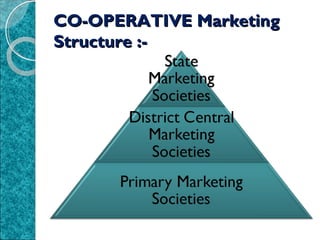
CO-OPERATIVE Marketing
Structure :-
STRUCTURE OF MARKETING
CO-OPERATIVES :
National

agricultural co-operative
marketing federation(NAFED)
Established 1958
OBJECTIVES :
• co-ordinate & promote marketing
• Undertake & promote inter-state, intrastate & international trade
• Supplies agricultural inputs like-
STATE LEVEL MARKETING :
Apex

institution for all co-operative
marketing in the state
FUNCTIONS :
• Credit & other facilities to DMS
• Buy & sell products of DMS
• Distribution of:
District Level Marketing SocietiesCentral Marketing Societies
Deal

with primary marketing societies at
village level
Purchase and sell agricultural Produce
Supply agricultural Inputs to farmers
through PMS
PRIMARY MARKETING SOCIETY :
Deal

in single commodity or many
commodities
Collect & standardize produce
Advance loans to their members
EVALUATION :
Less

cost of marketing
Quality goods
Help in growth of better crops
Credit facilities at low interest
Fair prices to costumers
Stabilization of prices
Surplus distribution
Help govt. in programmes for rural
development
REASONS :
Unplanned

setup
Malpractices
Lack of initiative by members, only govt.
initiative is observed
Less no. of regulated markets
Competition from credit societies ,
middlemen etc.
Lack of co-ordination
Lack of audit & supervision
STILL CONTINUING :
Illiterate

farmers & less marketable

surplus
Lack of warehousing & transport facilities
Defective loan policies
Untrained persons
No incentives to marketing societies
MEASURES FOR IMPROVEMENT :
Proper

storage facilities
Grading & standardization
Large area of operation
Bring down cost of management
Specialized knowledge & techniques
Better co-ordination b/w credit societies
& marketing societies
Trained & experienced staff
Cooperative farming

Cooperative farming

  • 4.
    Members sell productsdirectly to the market Grade product to obtain best price Fair weighing without damage or waste Produce best product – processing Educating members:1-Fair trading practices 2-Marketing 3-Stopping manipulation of prices
  • 5.
    FUNCTIONS & PROGRESS Marketing of produce  Distribution of :1- fertilizers 2- seeds 3- agricultural machinery  Processing activities  Storage facilities  Financial assistance
  • 7.
    BECAUSE!!!! Supplies quality goodsto consumers  Avails grading and transportation facilities  Acts as a part of govt.:procurement & implementation of price support policy  encourage self-help  Links marketing with credit 
  • 9.
    Collective bargaining Storage facilities Standardization &grading Market infrastructure Supply inputs & consumer goods Fair Weighing No illegal deductions Links credit, farming & processing
  • 11.
    Reduce cost & improvedservices Improves marketability:- - reduces undefined & undesirable market changes Awares regarding costs & input devices Gives credit Processing Storage
  • 12.
  • 13.
    STRUCTURE OF MARKETING CO-OPERATIVES: National agricultural co-operative marketing federation(NAFED) Established 1958 OBJECTIVES : • co-ordinate & promote marketing • Undertake & promote inter-state, intrastate & international trade • Supplies agricultural inputs like-
  • 14.
    STATE LEVEL MARKETING: Apex institution for all co-operative marketing in the state FUNCTIONS : • Credit & other facilities to DMS • Buy & sell products of DMS • Distribution of:
  • 15.
    District Level MarketingSocietiesCentral Marketing Societies Deal with primary marketing societies at village level Purchase and sell agricultural Produce Supply agricultural Inputs to farmers through PMS
  • 16.
    PRIMARY MARKETING SOCIETY: Deal in single commodity or many commodities Collect & standardize produce Advance loans to their members
  • 17.
    EVALUATION : Less cost ofmarketing Quality goods Help in growth of better crops Credit facilities at low interest Fair prices to costumers Stabilization of prices Surplus distribution Help govt. in programmes for rural development
  • 19.
    REASONS : Unplanned setup Malpractices Lack ofinitiative by members, only govt. initiative is observed Less no. of regulated markets Competition from credit societies , middlemen etc. Lack of co-ordination Lack of audit & supervision
  • 20.
    STILL CONTINUING : Illiterate farmers& less marketable surplus Lack of warehousing & transport facilities Defective loan policies Untrained persons No incentives to marketing societies
  • 21.
    MEASURES FOR IMPROVEMENT: Proper storage facilities Grading & standardization Large area of operation Bring down cost of management Specialized knowledge & techniques Better co-ordination b/w credit societies & marketing societies Trained & experienced staff

Editor's Notes