CONNECT:
COLLEGE
READING
Chapter 1
Connecting to the Reading
Process
“People with goals succeed because they now
where they’re going. It’s that simple.”
– Earl Nightingale






Is having a plan critical to success?
How has having a plan help you succeed in
meeting a goal?
Skim through the headings and images in
Chapter 1. What will we be discussing?
Getting Motivated to Read
(Interaction 1-1, p. 4)


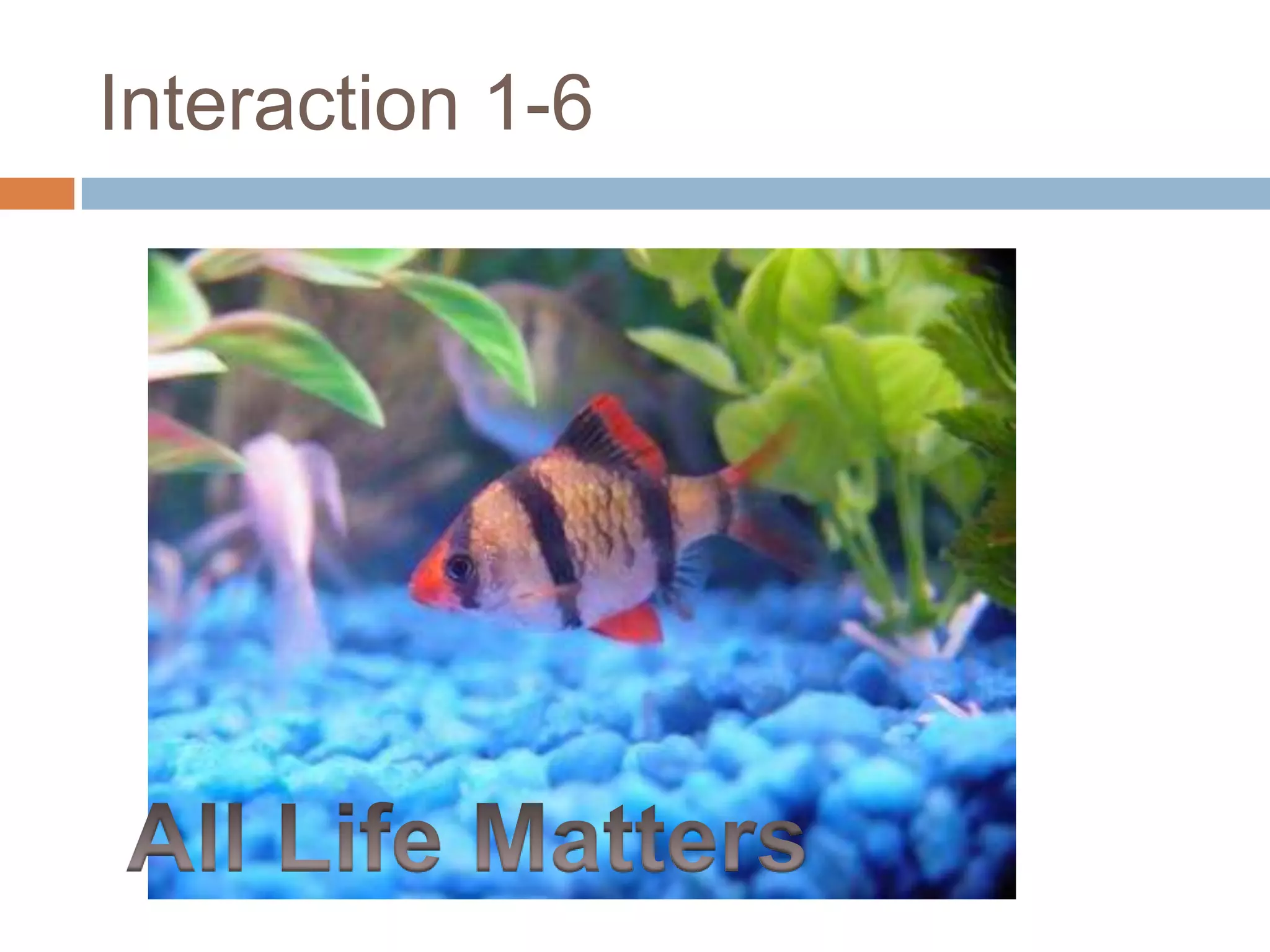
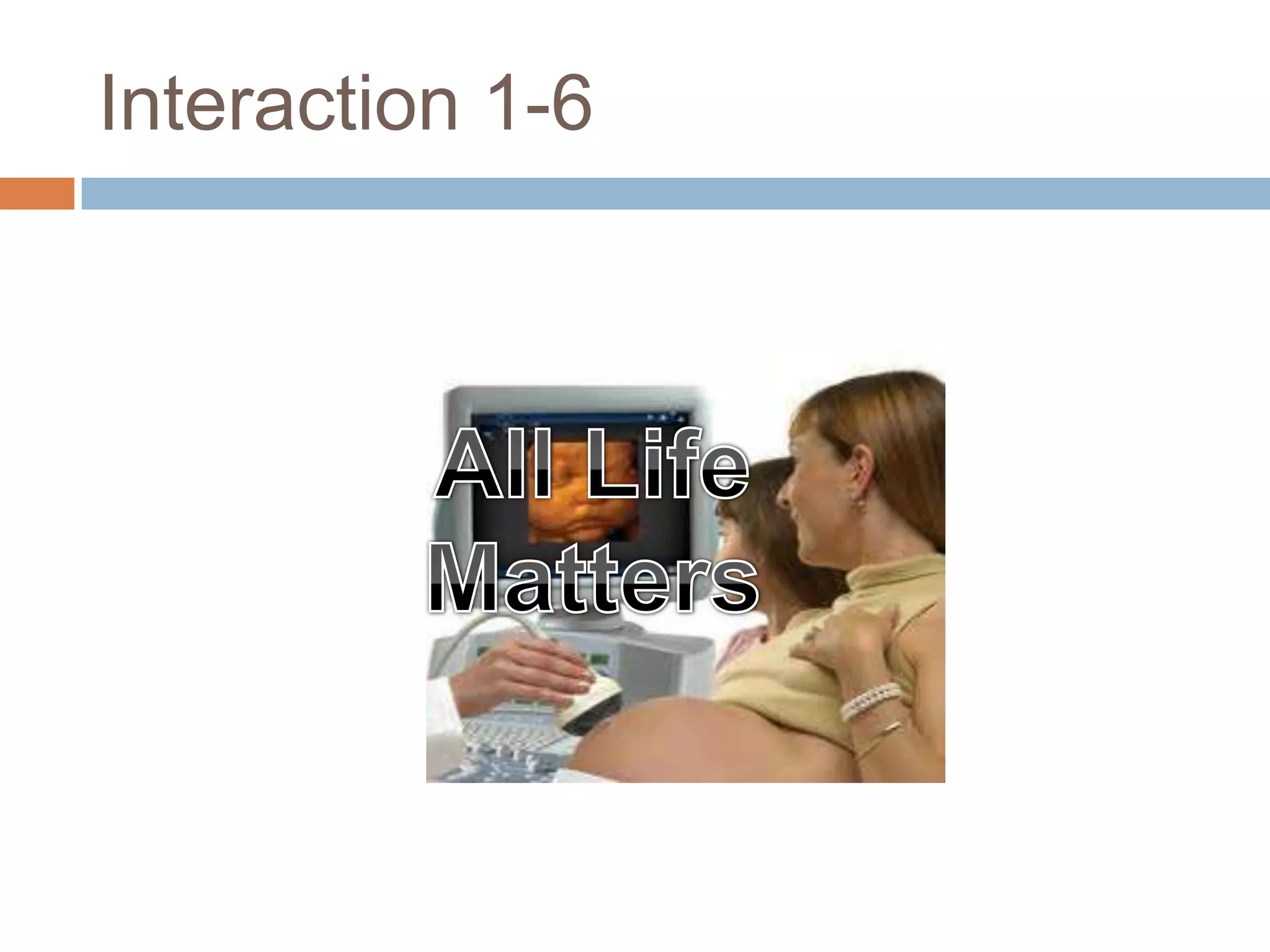
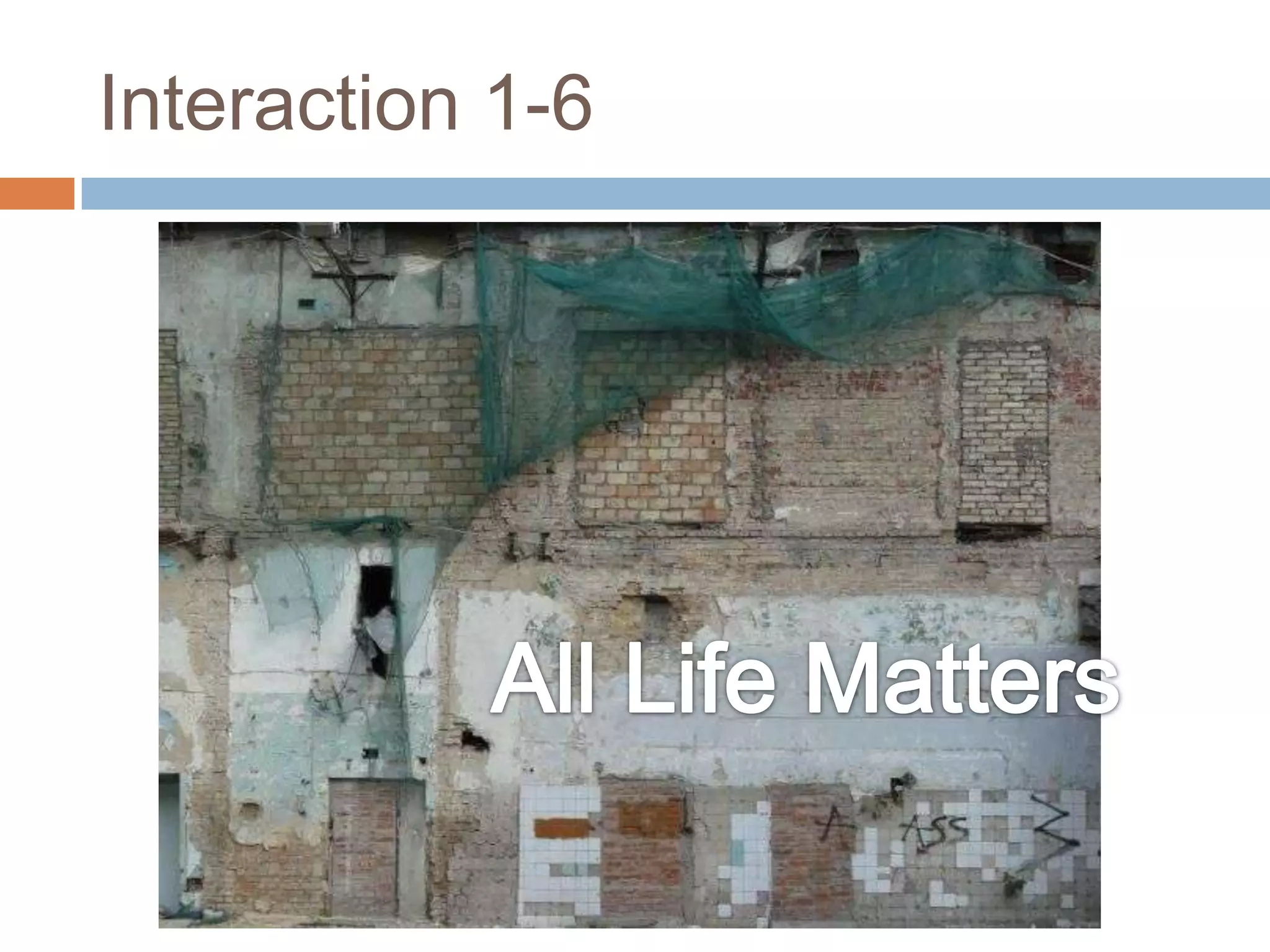






What do you want to do when you get out of
school? What career are you thinking of
pursuing?
Why do you want to earn this degree, or what
interests you about this career?
What is the minimum degree requirement to
be competitive in this field?
Name some specific classes or types of
classes that are needed to pursue this
career/degree.
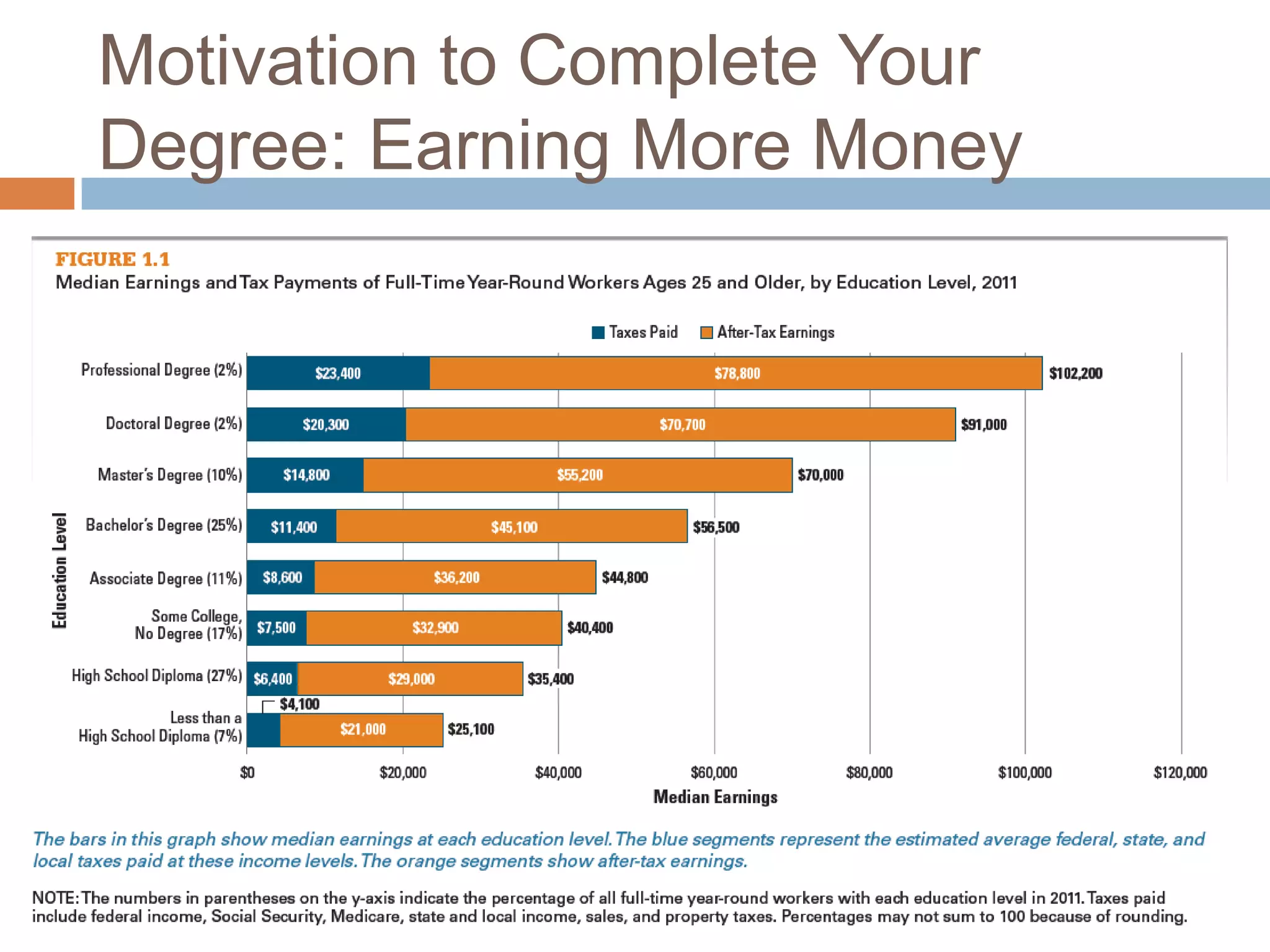
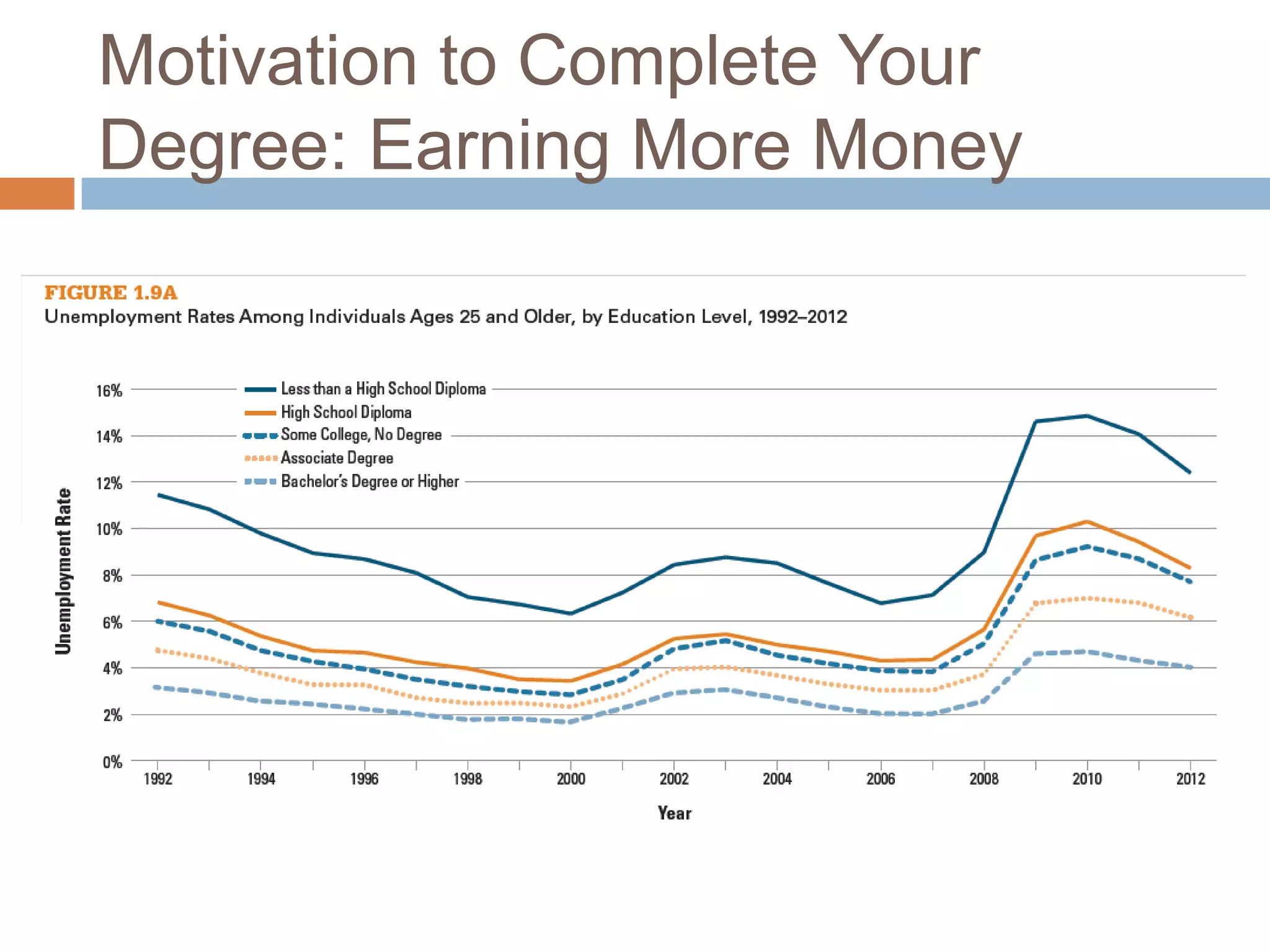
Motivation to Complete Your
Degree: Earning More Money
Motivation to Complete Your
Degree: Earning More Money
Money isn’t Everything:
Other Reasons to Read








The more you read, the better you become at
understanding other points of view.
This understanding will help enrich your
connections to other people…
…and enhance your life by showing you all the
possibilities that are available to you in the
world.
Seeing clearly what you want to achieve will
help you stay motivated.
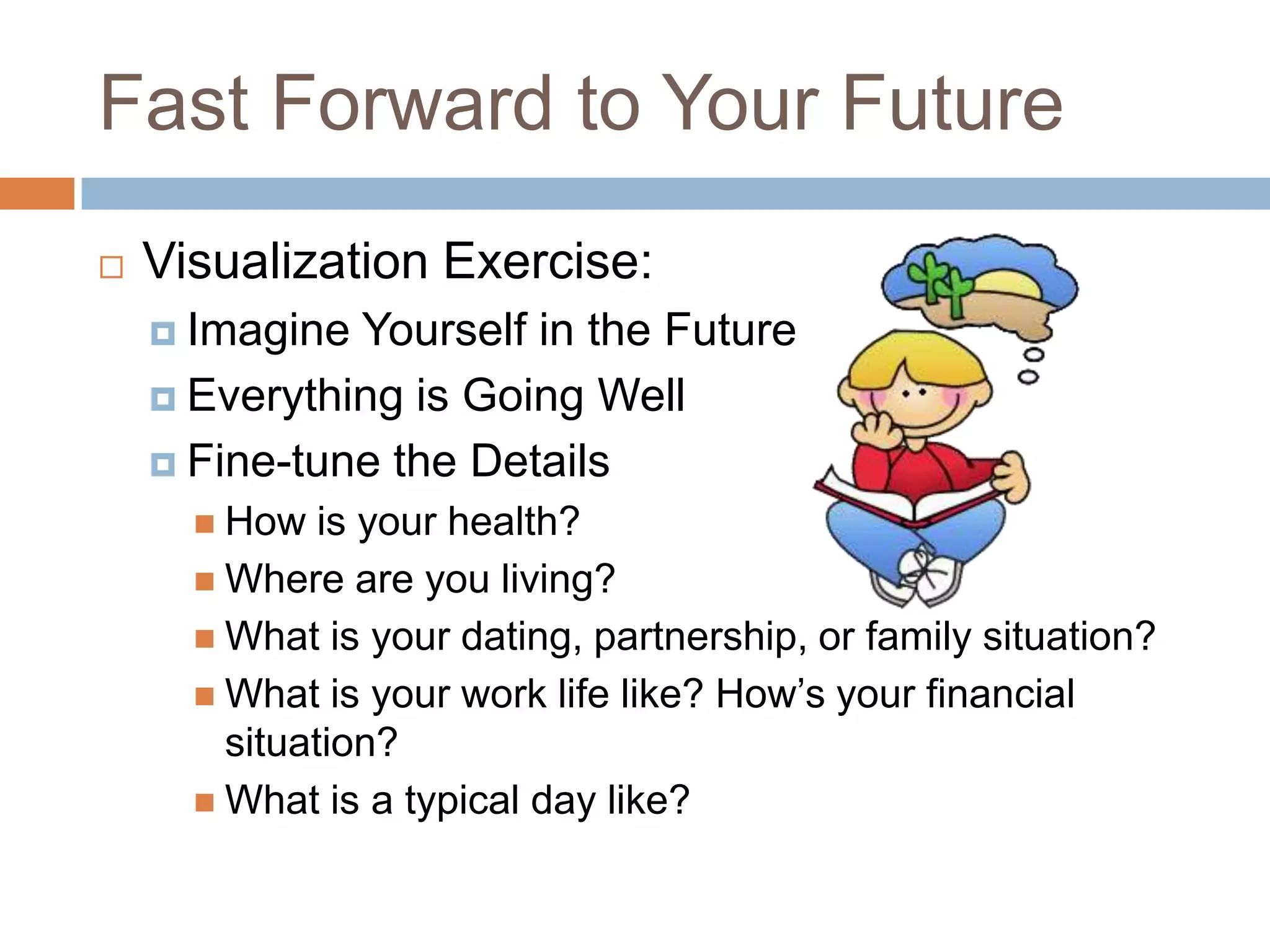
Fast Forward to Your Future


Visualization Exercise:
 Imagine

Yourself in the Future
 Everything is Going Well
 Fine-tune the Details
 How

is your health?
 Where are you living?
 What is your dating, partnership, or family situation?
 What is your work life like? How’s your financial
situation?
 What is a typical day like?
Fast Forward to Your Future


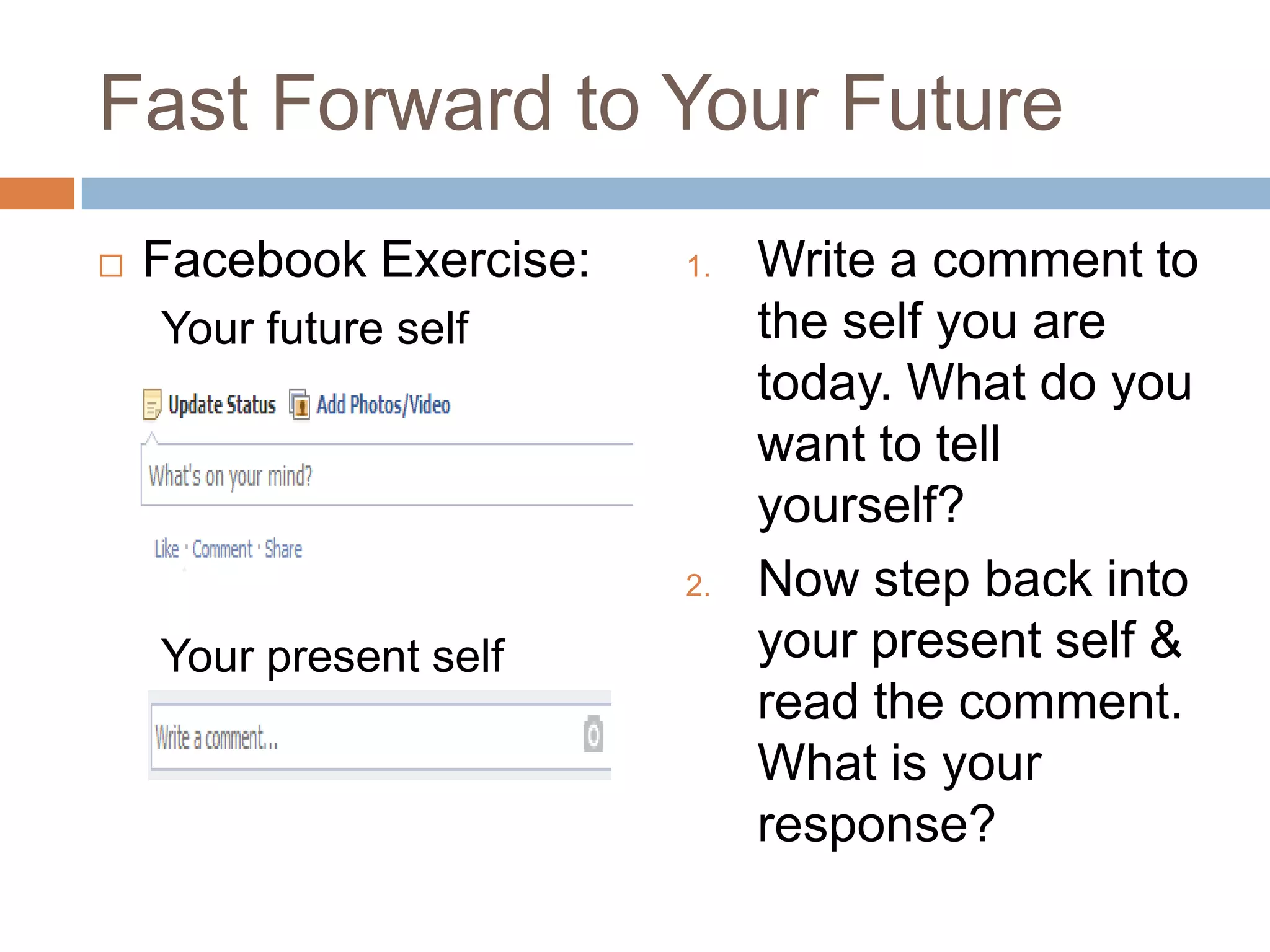
Facebook Exercise:

1.

Your future self

2.

Your present self

Write a comment to
the self you are
today. What do you
want to tell
yourself?
Now step back into
your present self &
read the comment.
What is your
response?
Make the Future Happen




What can you do to make the future you’ve
imagined happen?
I can make this future happen by…
 1.
 2.
 3.
 4.
Consider the Value of Reading




How does reading at the college level fit into
the picture you have just painted of your
future?
Group Exercise
 Life

context
 Reading benefits this context by…

NOTE: Later in class, we will come back to your vision
of the future and write about it individually.
“Read and Talk” Selections






Help you prepare your mind for the ideas in
the chapter and reading selections.
Give you something to talk about in class
discussions.
Very Important Fact! When you have reading
assignments in college classes, reading the
material is just the beginning!
Talking about Reading








If you were to respond to MadV’s video request to
share your hopes or dreams with the world, what
would your message be? (Remember, it has to fit
on the palm of your hand.)
If you were asked to describe this past week in
three words, which words would you use?
If you put your words with an image, what would
the image be? Why?
How many different scenes can you imagine
where “I am sorry” or “I love you” or “How are
you?” can be used?
Reading is an Interaction




Reading is an active process. You cannot be
passive when you read and expect to be
successful!
Use your imagination
 Interactivity:

When you read you have a better
chance of understanding the text if you have
interact with it.
 What are some ways of interacting with a text?
Reading is an Interaction


Use your Body
 Keep

a pencil/pen/highlighter in your hand while
reading.
 And use it! (Annotation)


Practice
1.
2.
3.

Something important
Something you don’t understand
Something you agree/disagree with
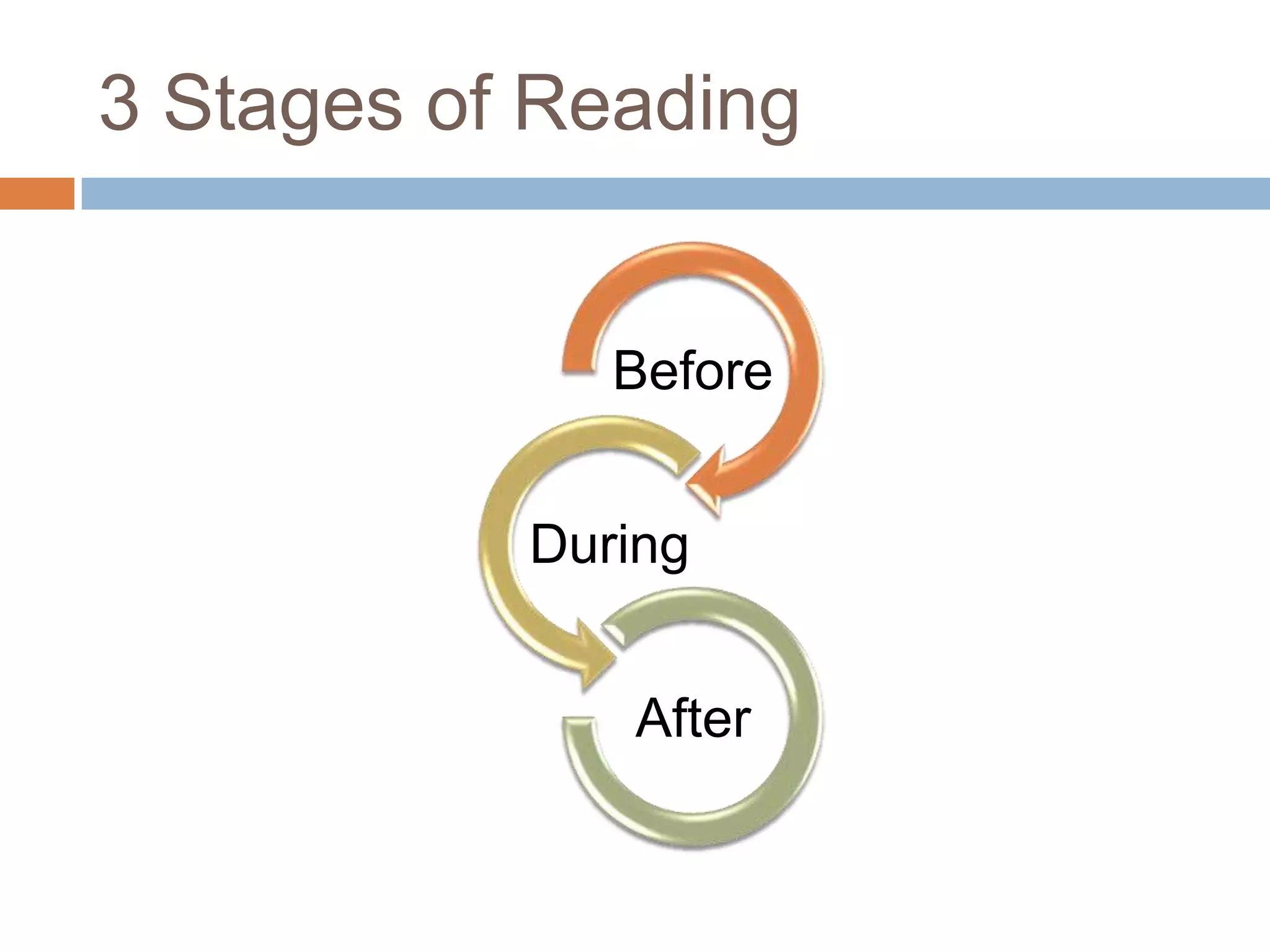
3 Stages of Reading

Before
During
After
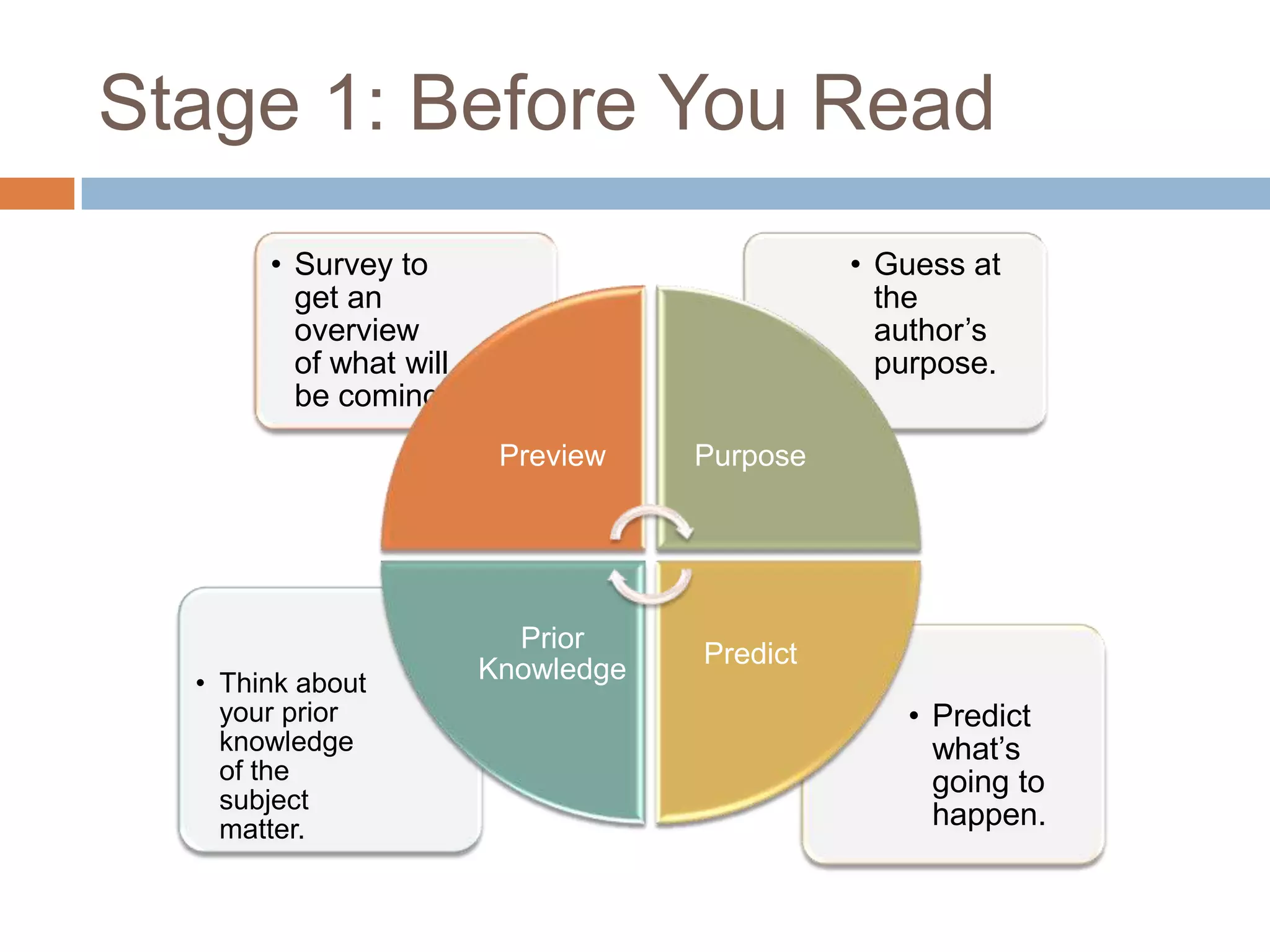
Stage 1: Before You Read
• Survey to
get an
overview
of what will
be coming.

• Guess at
the
author’s
purpose.
Preview

• Think about
your prior
knowledge
of the
subject
matter.

Purpose

Prior
Knowledge

Predict

• Predict
what’s
going to
happen.
Before You Read

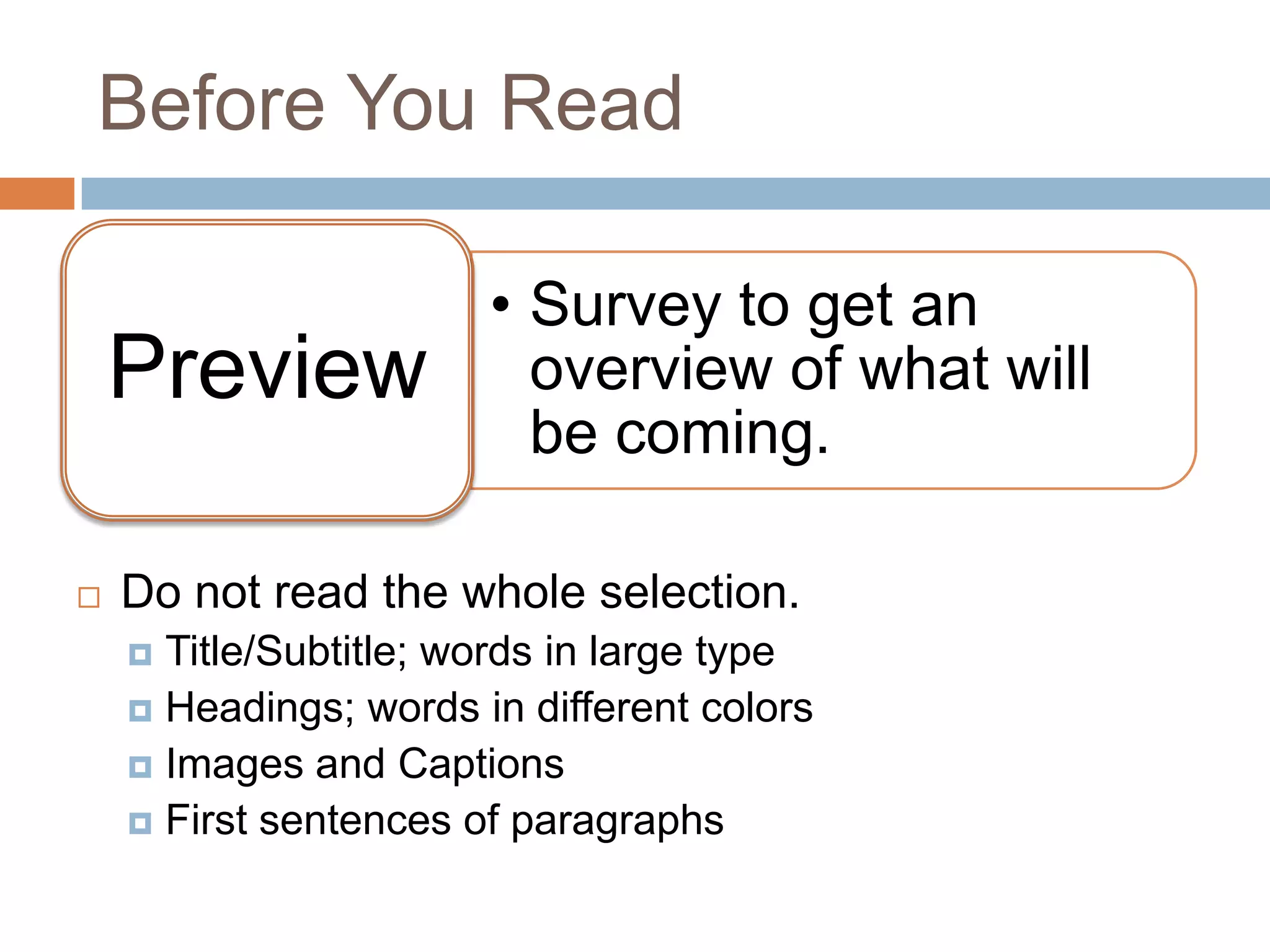
Preview


• Survey to get an
overview of what will
be coming.

Do not read the whole selection.
Title/Subtitle; words in large type
 Headings; words in different colors
 Images and Captions
 First sentences of paragraphs

Before You Read

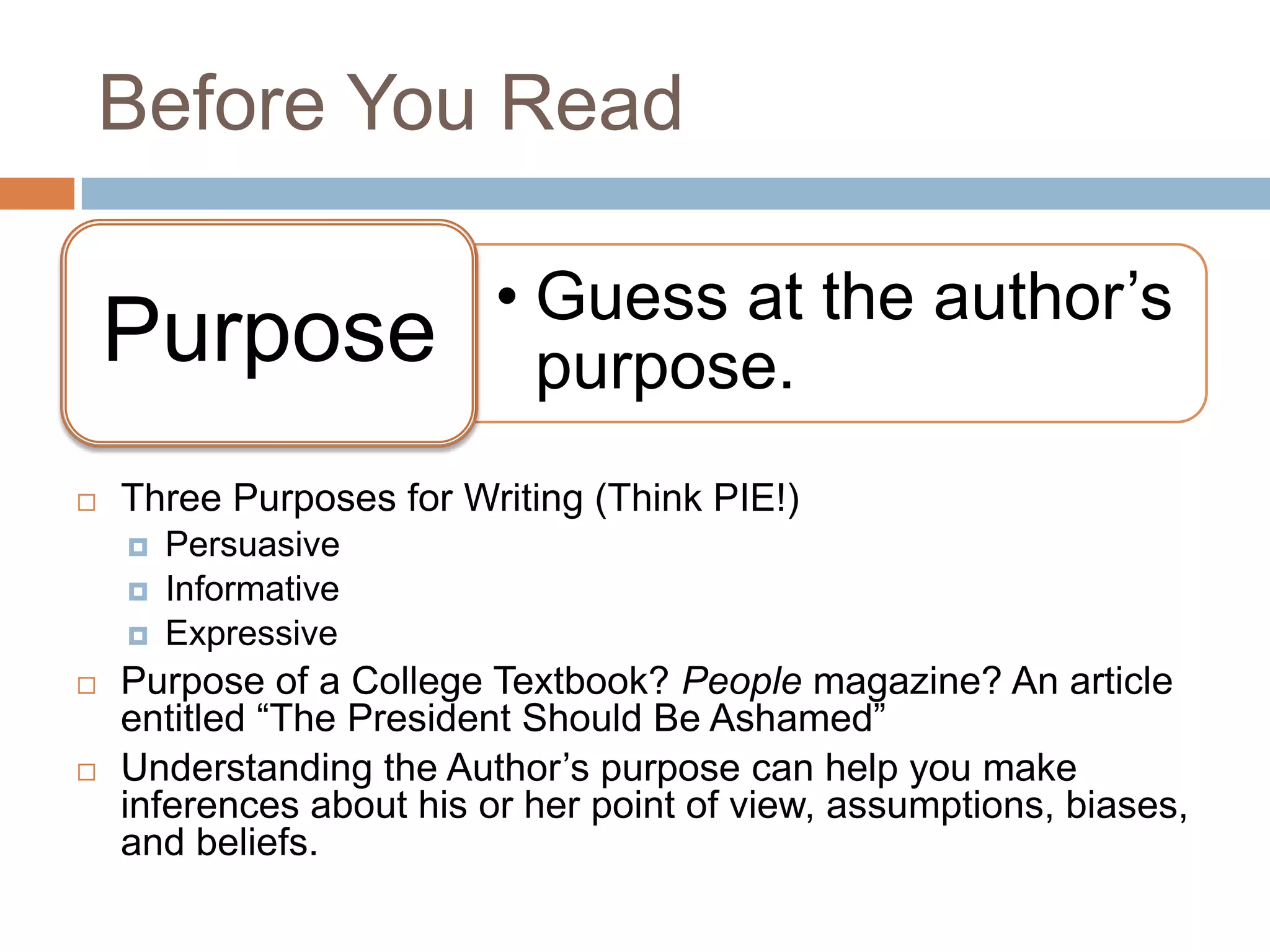
Purpose


Three Purposes for Writing (Think PIE!)








• Guess at the author’s
purpose.

Persuasive
Informative
Expressive

Purpose of a College Textbook? People magazine? An article
entitled “The President Should Be Ashamed”
Understanding the Author’s purpose can help you make
inferences about his or her point of view, assumptions, biases,
and beliefs.
Before You Read

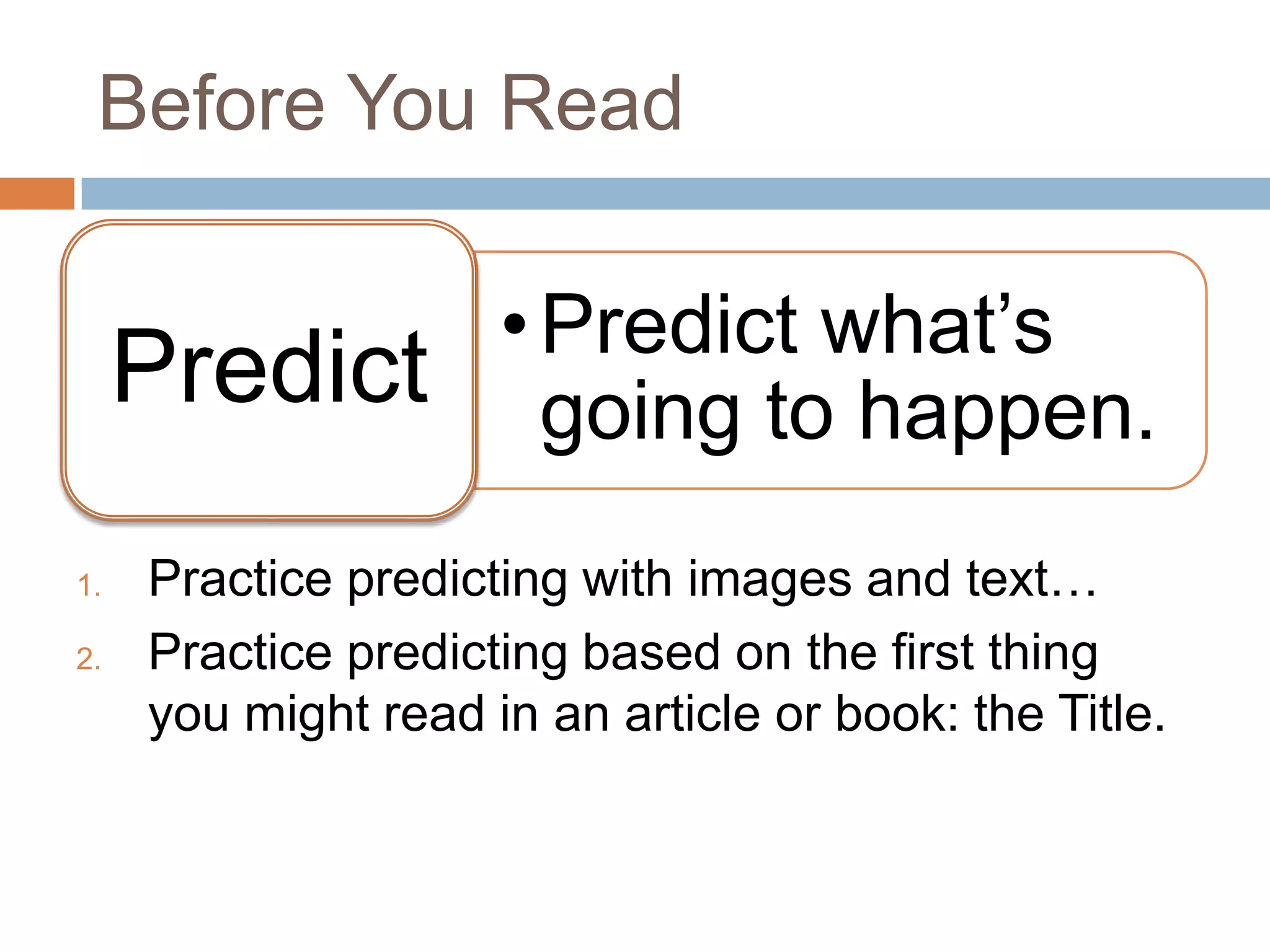
Predict
1.
2.

• Predict what’s
going to happen.

Practice predicting with images and text…
Practice predicting based on the first thing
you might read in an article or book: the Title.
Interaction 1-6
Interaction 1-6
Interaction 1-6
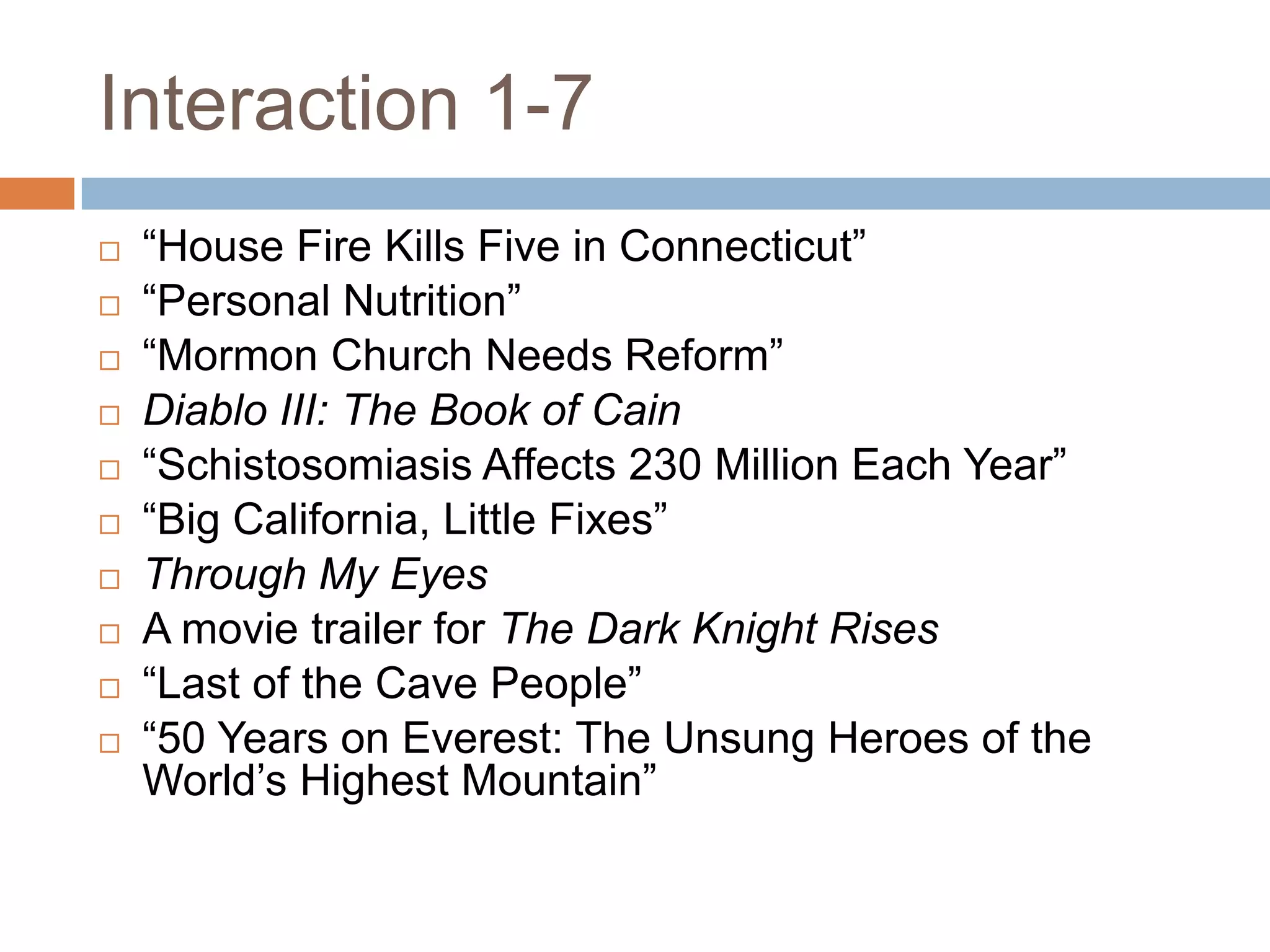
Interaction 1-7











“House Fire Kills Five in Connecticut”
“Personal Nutrition”
“Mormon Church Needs Reform”
Diablo III: The Book of Cain
“Schistosomiasis Affects 230 Million Each Year”
“Big California, Little Fixes”
Through My Eyes
A movie trailer for The Dark Knight Rises
“Last of the Cave People”
“50 Years on Everest: The Unsung Heroes of the
World’s Highest Mountain”
Before You Read
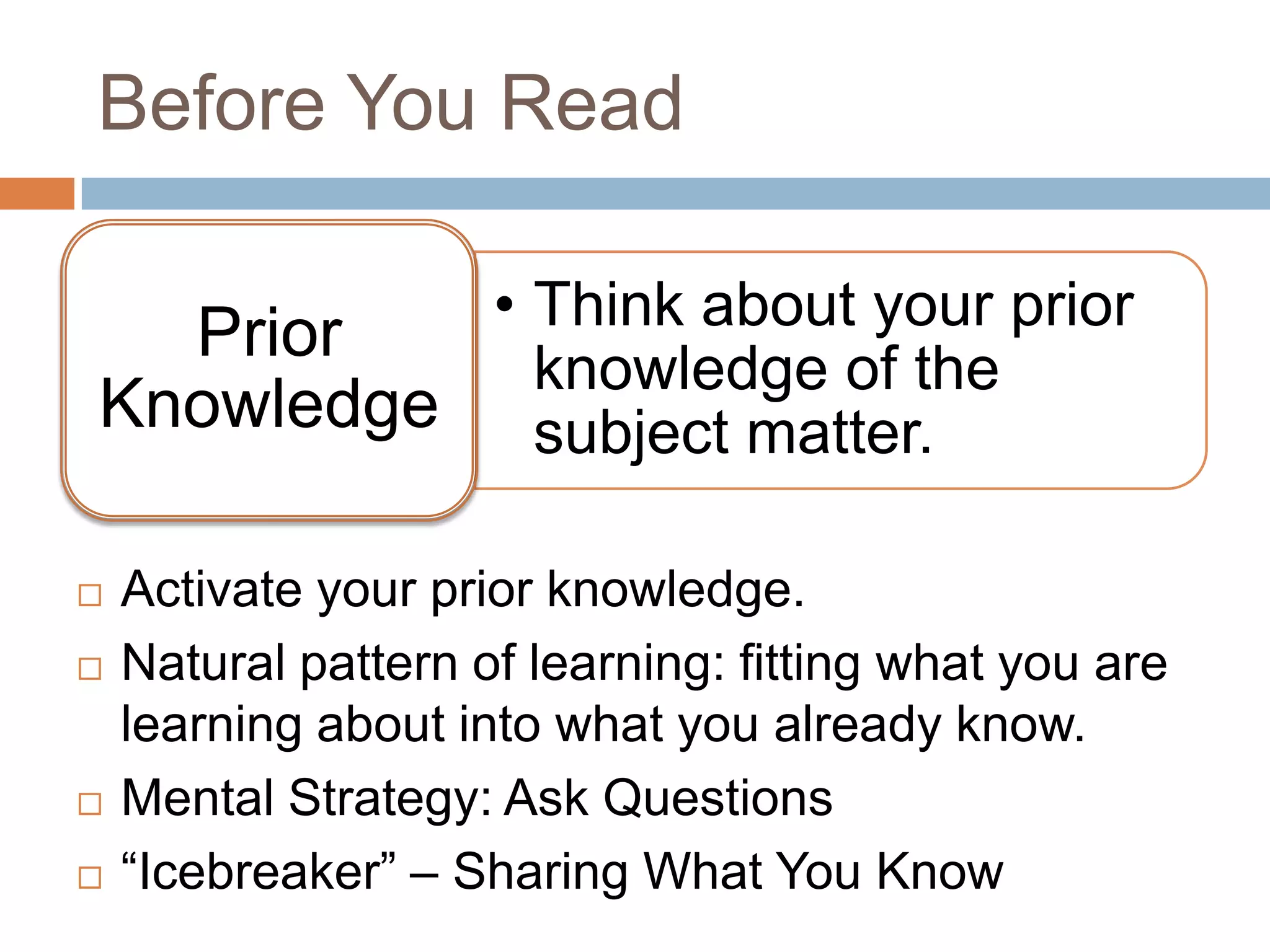
• Think about your prior
Prior
knowledge of the
Knowledge subject matter.






Activate your prior knowledge.
Natural pattern of learning: fitting what you are
learning about into what you already know.
Mental Strategy: Ask Questions
“Icebreaker” – Sharing What You Know
Stage 2: While You are Reading




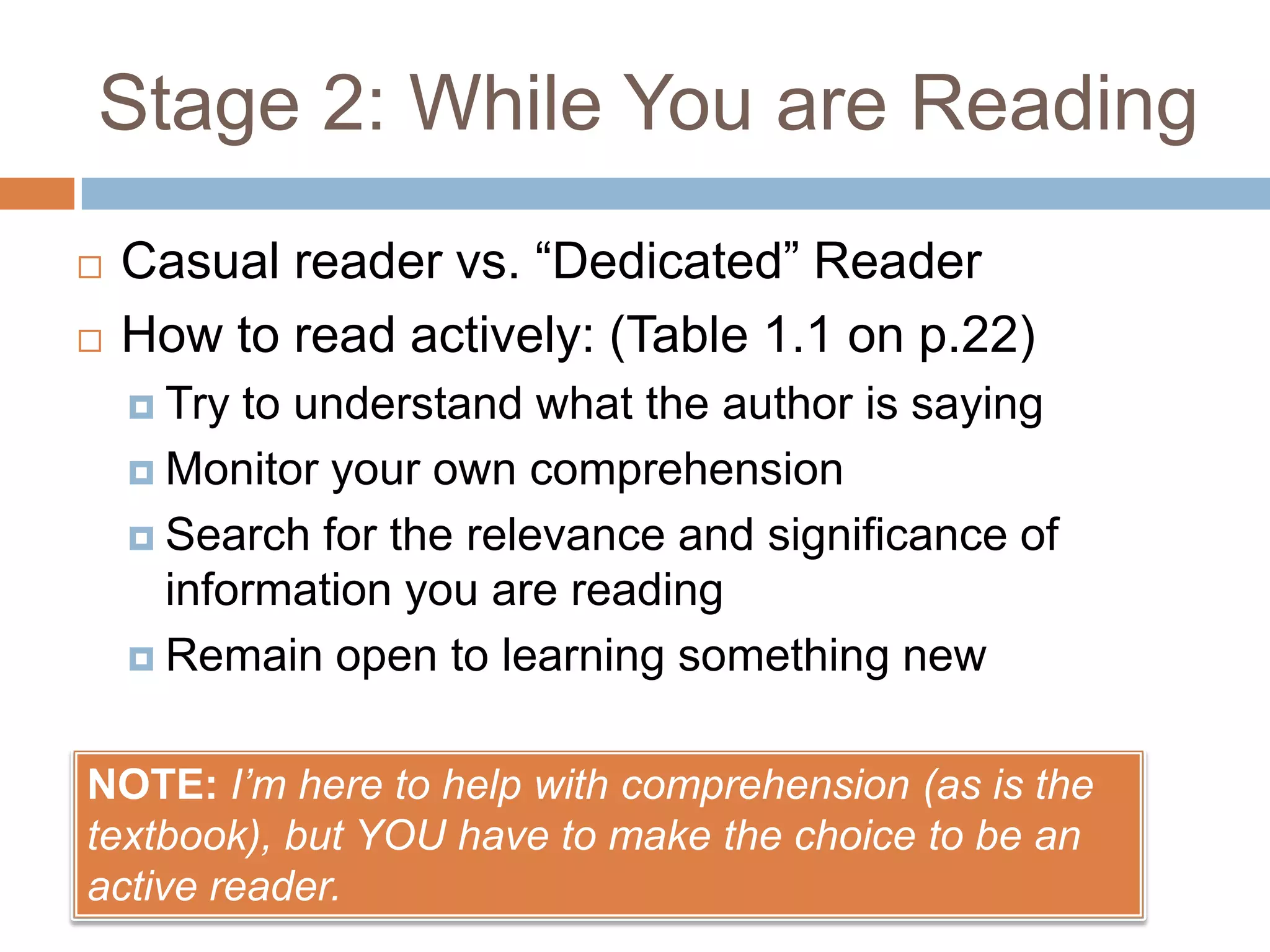
Casual reader vs. “Dedicated” Reader
How to read actively: (Table 1.1 on p.22)
 Try

to understand what the author is saying
 Monitor your own comprehension
 Search for the relevance and significance of
information you are reading
 Remain open to learning something new
NOTE: I’m here to help with comprehension (as is the
textbook), but YOU have to make the choice to be an
active reader.
Stage 3: After You Read


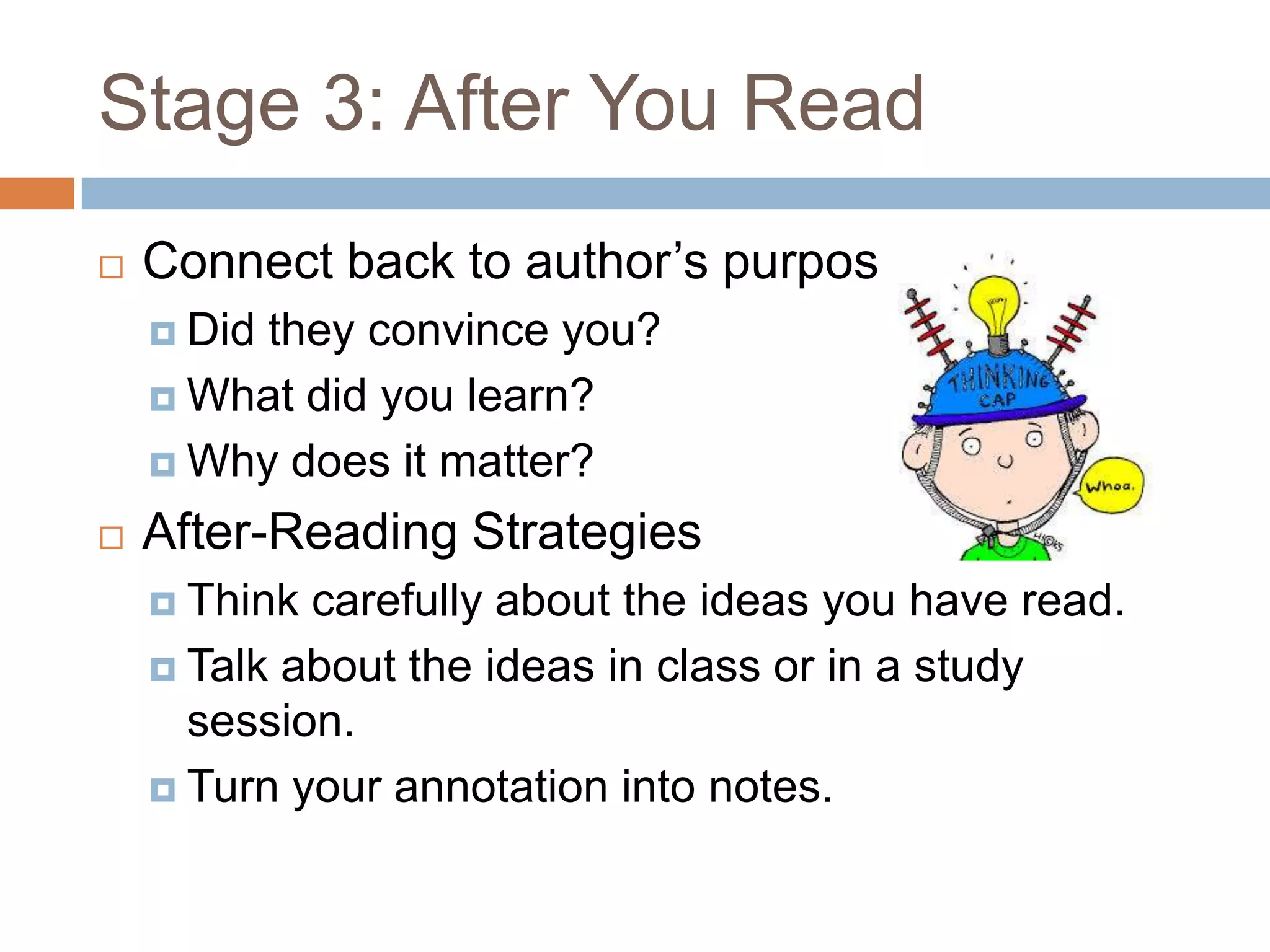
Connect back to author’s purpose
 Did

they convince you?
 What did you learn?
 Why does it matter?


After-Reading Strategies
 Think

carefully about the ideas you have read.
 Talk about the ideas in class or in a study
session.
 Turn your annotation into notes.
Final Thought: Common
Knowledge








When author & reader share prior knowledge,
reading becomes easier and comprehension
improves.
Understanding background knowledge of
author = Cultural Literacy
“Common Knowledge” box in Textbook – what
the writers assume you already know.
The more you read, the more knowledge you
will hold in common with others!
Schedule for Rest of Class








Group Activity – Plan for
Success
5 Minute Break
Individual Writing – Future
Dreams
“Quiz”
Wrap-Up/Homework
Homework 







**Get Textbook**
Page 6 – Interaction 1-2
Page 11, questions 1-4 - “Talking about Reading”
(handout)
Page 23-25 – Interaction 1-9
Make flashcards:
3 purposes for writing
 4 things to do before reading
 Key Terms: Interactivity, Purpose, Active Reader,
Common Knowledge, Comprehension (write a
definition in your own words!)




Read Chapter 2, pages 57-87 – Just read, and
think! (Don’t do any writing.)

Connect: College Reading (Chapter 1)

  • 1.
  • 2.
    Connecting to theReading Process “People with goals succeed because they now where they’re going. It’s that simple.” – Earl Nightingale    Is having a plan critical to success? How has having a plan help you succeed in meeting a goal? Skim through the headings and images in Chapter 1. What will we be discussing?
  • 3.
    Getting Motivated toRead (Interaction 1-1, p. 4)     What do you want to do when you get out of school? What career are you thinking of pursuing? Why do you want to earn this degree, or what interests you about this career? What is the minimum degree requirement to be competitive in this field? Name some specific classes or types of classes that are needed to pursue this career/degree.
  • 4.
    Motivation to CompleteYour Degree: Earning More Money
  • 5.
    Motivation to CompleteYour Degree: Earning More Money
  • 7.
    Money isn’t Everything: OtherReasons to Read     The more you read, the better you become at understanding other points of view. This understanding will help enrich your connections to other people… …and enhance your life by showing you all the possibilities that are available to you in the world. Seeing clearly what you want to achieve will help you stay motivated.
  • 8.
    Fast Forward toYour Future  Visualization Exercise:  Imagine Yourself in the Future  Everything is Going Well  Fine-tune the Details  How is your health?  Where are you living?  What is your dating, partnership, or family situation?  What is your work life like? How’s your financial situation?  What is a typical day like?
  • 9.
    Fast Forward toYour Future  Facebook Exercise: 1. Your future self 2. Your present self Write a comment to the self you are today. What do you want to tell yourself? Now step back into your present self & read the comment. What is your response?
  • 10.
    Make the FutureHappen   What can you do to make the future you’ve imagined happen? I can make this future happen by…  1.  2.  3.  4.
  • 11.
    Consider the Valueof Reading   How does reading at the college level fit into the picture you have just painted of your future? Group Exercise  Life context  Reading benefits this context by… NOTE: Later in class, we will come back to your vision of the future and write about it individually.
  • 12.
    “Read and Talk”Selections    Help you prepare your mind for the ideas in the chapter and reading selections. Give you something to talk about in class discussions. Very Important Fact! When you have reading assignments in college classes, reading the material is just the beginning!
  • 13.
    Talking about Reading     Ifyou were to respond to MadV’s video request to share your hopes or dreams with the world, what would your message be? (Remember, it has to fit on the palm of your hand.) If you were asked to describe this past week in three words, which words would you use? If you put your words with an image, what would the image be? Why? How many different scenes can you imagine where “I am sorry” or “I love you” or “How are you?” can be used?
  • 14.
    Reading is anInteraction   Reading is an active process. You cannot be passive when you read and expect to be successful! Use your imagination  Interactivity: When you read you have a better chance of understanding the text if you have interact with it.  What are some ways of interacting with a text?
  • 15.
    Reading is anInteraction  Use your Body  Keep a pencil/pen/highlighter in your hand while reading.  And use it! (Annotation)  Practice 1. 2. 3. Something important Something you don’t understand Something you agree/disagree with
  • 16.
    3 Stages ofReading Before During After
  • 17.
    Stage 1: BeforeYou Read • Survey to get an overview of what will be coming. • Guess at the author’s purpose. Preview • Think about your prior knowledge of the subject matter. Purpose Prior Knowledge Predict • Predict what’s going to happen.
  • 18.
    Before You Read Preview  •Survey to get an overview of what will be coming. Do not read the whole selection. Title/Subtitle; words in large type  Headings; words in different colors  Images and Captions  First sentences of paragraphs 
  • 19.
    Before You Read Purpose  ThreePurposes for Writing (Think PIE!)      • Guess at the author’s purpose. Persuasive Informative Expressive Purpose of a College Textbook? People magazine? An article entitled “The President Should Be Ashamed” Understanding the Author’s purpose can help you make inferences about his or her point of view, assumptions, biases, and beliefs.
  • 20.
    Before You Read Predict 1. 2. •Predict what’s going to happen. Practice predicting with images and text… Practice predicting based on the first thing you might read in an article or book: the Title.
  • 21.
  • 22.
  • 23.
  • 24.
    Interaction 1-7           “House FireKills Five in Connecticut” “Personal Nutrition” “Mormon Church Needs Reform” Diablo III: The Book of Cain “Schistosomiasis Affects 230 Million Each Year” “Big California, Little Fixes” Through My Eyes A movie trailer for The Dark Knight Rises “Last of the Cave People” “50 Years on Everest: The Unsung Heroes of the World’s Highest Mountain”
  • 25.
    Before You Read •Think about your prior Prior knowledge of the Knowledge subject matter.     Activate your prior knowledge. Natural pattern of learning: fitting what you are learning about into what you already know. Mental Strategy: Ask Questions “Icebreaker” – Sharing What You Know
  • 26.
    Stage 2: WhileYou are Reading   Casual reader vs. “Dedicated” Reader How to read actively: (Table 1.1 on p.22)  Try to understand what the author is saying  Monitor your own comprehension  Search for the relevance and significance of information you are reading  Remain open to learning something new NOTE: I’m here to help with comprehension (as is the textbook), but YOU have to make the choice to be an active reader.
  • 27.
    Stage 3: AfterYou Read  Connect back to author’s purpose  Did they convince you?  What did you learn?  Why does it matter?  After-Reading Strategies  Think carefully about the ideas you have read.  Talk about the ideas in class or in a study session.  Turn your annotation into notes.
  • 28.
    Final Thought: Common Knowledge     Whenauthor & reader share prior knowledge, reading becomes easier and comprehension improves. Understanding background knowledge of author = Cultural Literacy “Common Knowledge” box in Textbook – what the writers assume you already know. The more you read, the more knowledge you will hold in common with others!
  • 29.
    Schedule for Restof Class      Group Activity – Plan for Success 5 Minute Break Individual Writing – Future Dreams “Quiz” Wrap-Up/Homework
  • 30.
    Homework       **Get Textbook** Page6 – Interaction 1-2 Page 11, questions 1-4 - “Talking about Reading” (handout) Page 23-25 – Interaction 1-9 Make flashcards: 3 purposes for writing  4 things to do before reading  Key Terms: Interactivity, Purpose, Active Reader, Common Knowledge, Comprehension (write a definition in your own words!)   Read Chapter 2, pages 57-87 – Just read, and think! (Don’t do any writing.)