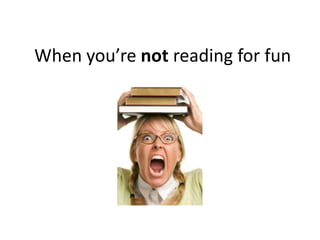
When you’re not reading for fun
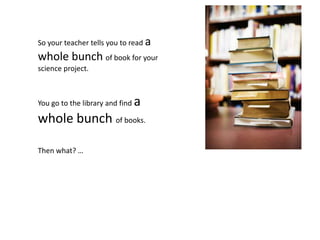
So your teacher tells you to read a
whole bunch of book for your
science project.


You go to the library and find   a
whole bunch of books.

Then what? …
What kind of   reader are you?
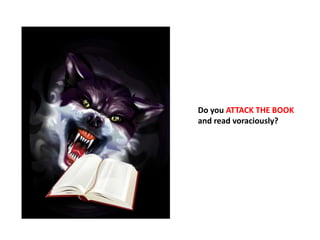
Do you ATTACK THE BOOK
and read voraciously?
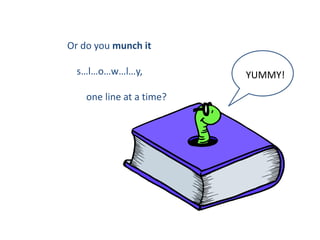
Or do you munch it

  s…l…o…w…l…y,            YUMMY!

    one line at a time?
Wolf or Worm, it doesn’t matter.
            We can
          teach you
              the:
Strategies
…that the world’s best readers use
               and
       that you can use too!
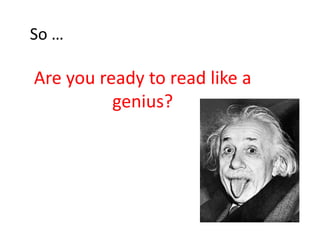
So …

Are you ready to read like a
          genius?
Reading Strategies for nonfiction

 (or) How to get information
              from the book
                to your brain
               with no pain.
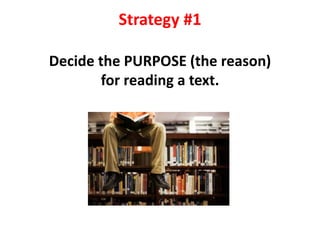
Strategy #1

Decide the PURPOSE (the reason)
        for reading a text.
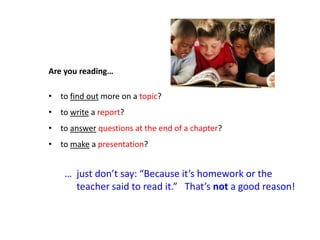
Are you reading…

• to find out more on a topic?
• to write a report?
• to answer questions at the end of a chapter?
• to make a presentation?


    … just don’t say: “Because it’s homework or the
      teacher said to read it.” That’s not a good reason!
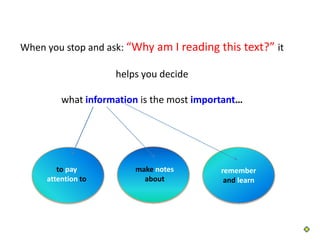
When you stop and ask: “Why am I reading this text?” it

                    helps you decide

         what information is the most important…


        to pay          make notes         remember
     attention to         about             and learn
Strategy #2
Think about what you ALREADY
    know about the topic!
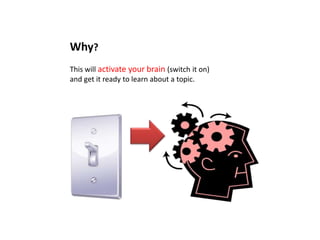
Why?
This will activate your brain (switch it on)
and get it ready to learn about a topic.
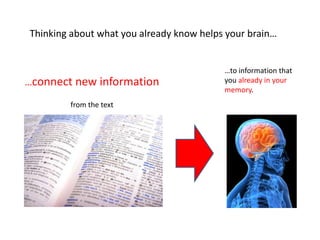
Thinking about what you already know helps your brain…


                                          …to information that
…connect new information                  you already in your
                                          memory.
        from the text
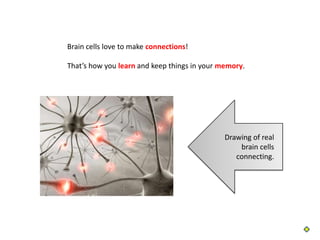
Brain cells love to make connections!

That’s how you learn and keep things in your memory.


                                              Drawing of real
                                                  brain cells
                                                 connecting.
Strategy #3

          PREVIEW the text.


Pre = before          View = look at
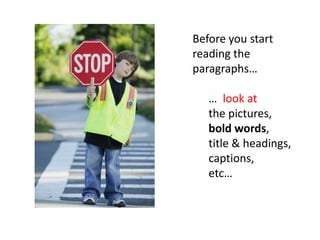
Before you start
reading the
paragraphs…

   … look at
   the pictures,
   bold words,
   title & headings,
   captions,
   etc…
WHY?


Previewing prepares your brain!

       It tells your brain
    what kind of information
     you are about to read.
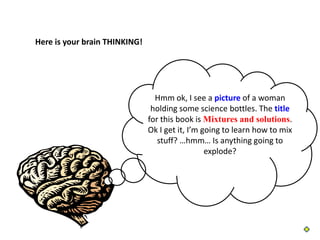
Here is your brain THINKING!


                                 Hmm ok, I see a picture of a woman
                                holding some science bottles. The title
                               for this book is Mixtures and solutions.
                               Ok I get it, I’m going to learn how to mix
                                  stuff? …hmm… Is anything going to
                                                 explode?
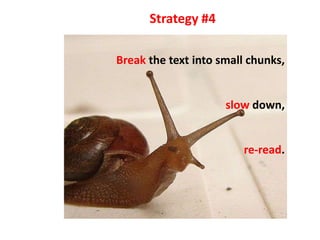
Strategy #4

Break the text into small chunks,


                     slow down,


                        re-read.
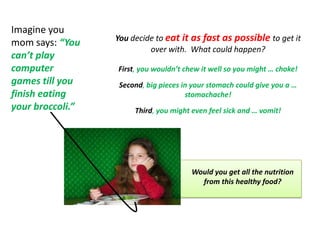
Imagine you
                  You decide to eat it as fast as possible to get it
mom says: “You
                           over with. What could happen?
can’t play
computer          First, you wouldn’t chew it well so you might … choke!
games till you     Second, big pieces in your stomach could give you a …
finish eating                          stomachache!
your broccoli.”        Third, you might even feel sick and … vomit!


                                        Would you get all the nutrition
                                          from this healthy food?
Non-fiction books are like a big bowl of broccoli.
    They have lots of facts and ideas on a few pages.
They can give your brain a brain-ache. They’re difficult and
                  discouraging at times.

Breaking up the text,
                                                    I get it!
       Slowing down,
            Re-reading …


will dramatically increase your understanding.
Strategy #5


Make sure you…

      understand,
            and remember what you read.


                          HOW?
The 2nd time you read the
text, take down notes!

You can keep good notes by…
    • writing…
    • drawing
    • making charts
Finally:
Don't accept nonsense!


   If it doesn’t make sense…

   DO SOMETHING ABOUT IT!

Non-fiction reading strategies

  • 1.
    When you’re notreading for fun
  • 2.
    So your teachertells you to read a whole bunch of book for your science project. You go to the library and find a whole bunch of books. Then what? …
  • 3.
    What kind of reader are you?
  • 4.
    Do you ATTACKTHE BOOK and read voraciously?
  • 5.
    Or do youmunch it s…l…o…w…l…y, YUMMY! one line at a time?
  • 6.
    Wolf or Worm,it doesn’t matter. We can teach you the:
  • 7.
    Strategies …that the world’sbest readers use and that you can use too!
  • 8.
    So … Are youready to read like a genius?
  • 9.
    Reading Strategies fornonfiction (or) How to get information from the book to your brain with no pain.
  • 10.
    Strategy #1 Decide thePURPOSE (the reason) for reading a text.
  • 11.
    Are you reading… •to find out more on a topic? • to write a report? • to answer questions at the end of a chapter? • to make a presentation? … just don’t say: “Because it’s homework or the teacher said to read it.” That’s not a good reason!
  • 12.
    When you stopand ask: “Why am I reading this text?” it helps you decide what information is the most important… to pay make notes remember attention to about and learn
  • 13.
    Strategy #2 Think aboutwhat you ALREADY know about the topic!
  • 14.
    Why? This will activateyour brain (switch it on) and get it ready to learn about a topic.
  • 15.
    Thinking about whatyou already know helps your brain… …to information that …connect new information you already in your memory. from the text
  • 16.
    Brain cells loveto make connections! That’s how you learn and keep things in your memory. Drawing of real brain cells connecting.
  • 17.
    Strategy #3 PREVIEW the text. Pre = before View = look at
  • 18.
    Before you start readingthe paragraphs… … look at the pictures, bold words, title & headings, captions, etc…
  • 19.
    WHY? Previewing prepares yourbrain! It tells your brain what kind of information you are about to read.
  • 20.
    Here is yourbrain THINKING! Hmm ok, I see a picture of a woman holding some science bottles. The title for this book is Mixtures and solutions. Ok I get it, I’m going to learn how to mix stuff? …hmm… Is anything going to explode?
  • 21.
    Strategy #4 Break thetext into small chunks, slow down, re-read.
  • 22.
    Imagine you You decide to eat it as fast as possible to get it mom says: “You over with. What could happen? can’t play computer First, you wouldn’t chew it well so you might … choke! games till you Second, big pieces in your stomach could give you a … finish eating stomachache! your broccoli.” Third, you might even feel sick and … vomit! Would you get all the nutrition from this healthy food?
  • 23.
    Non-fiction books arelike a big bowl of broccoli. They have lots of facts and ideas on a few pages. They can give your brain a brain-ache. They’re difficult and discouraging at times. Breaking up the text, I get it! Slowing down, Re-reading … will dramatically increase your understanding.
  • 24.
    Strategy #5 Make sureyou… understand, and remember what you read. HOW?
  • 25.
    The 2nd timeyou read the text, take down notes! You can keep good notes by… • writing… • drawing • making charts
  • 26.
    Finally: Don't accept nonsense! If it doesn’t make sense… DO SOMETHING ABOUT IT!