F O R N O N - F I C T I O N B Y L A U R E N H A L L I D A Y
Reading Strategies
Before Reading
Before you begin to read there are a
few steps to take. The steps you can
take prior to reading is going to
help you read the text with more
understanding and awareness of
what you may be reading about and
why.
1. Make Observations
 Read the title
 Look at text features
 Is there a table of contents?
 Is there a glossary or index
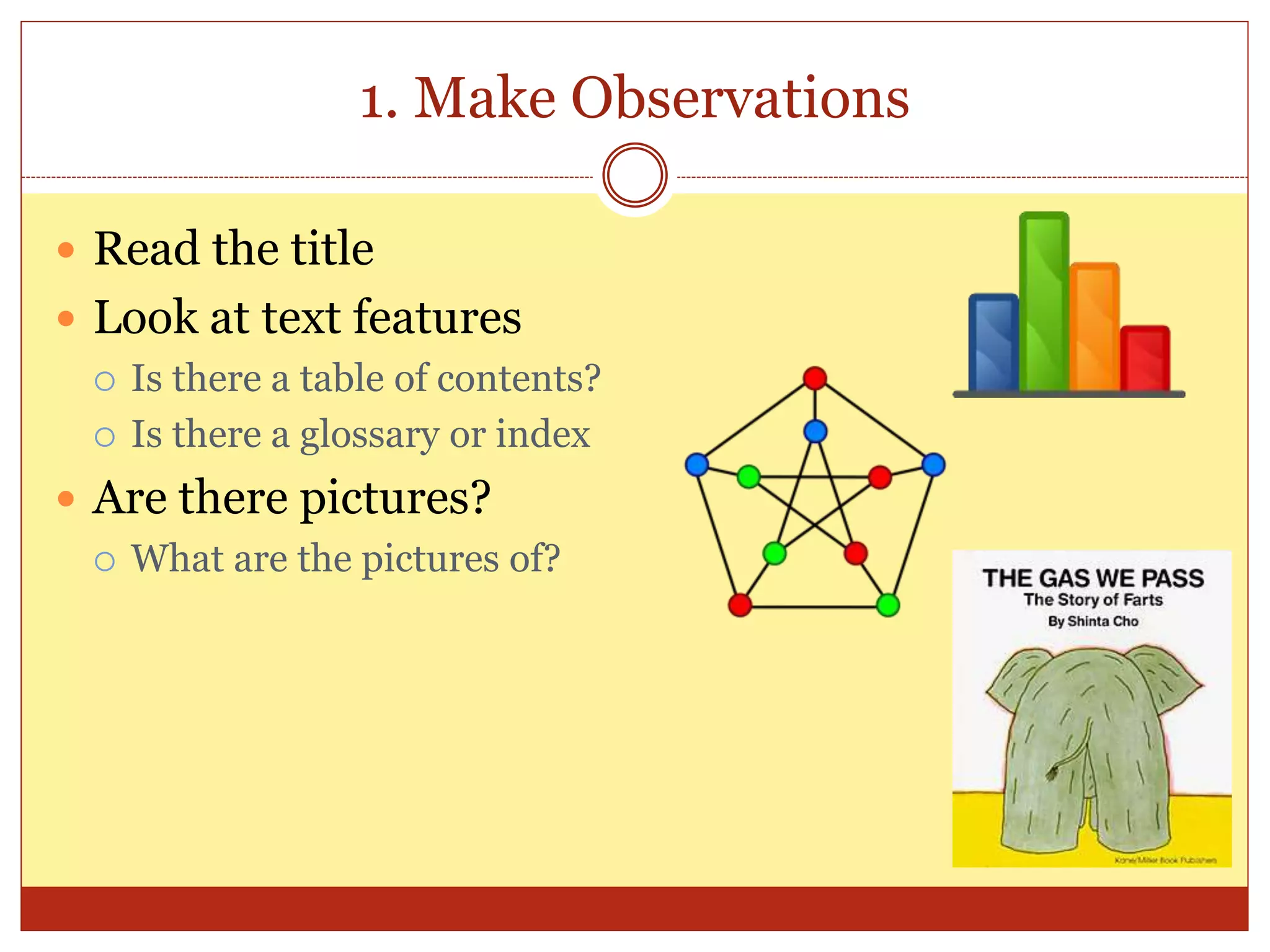
 Are there pictures?
 What are the pictures of?
2. Prior Knowledge
 Have you learned about this topic before?
 What do you already know about this topic?
 Can you make any connections about this topic to
your life?
3. Make Predictions
 By looking at the pictures can you determine what
you will be reading about?
 Does the title determine what you are going to be
reading about?
 Write down what you would like to learn about this
topic.
 Create questions you want to know the answer to after reading.
 Make predictions to the questions you have created.
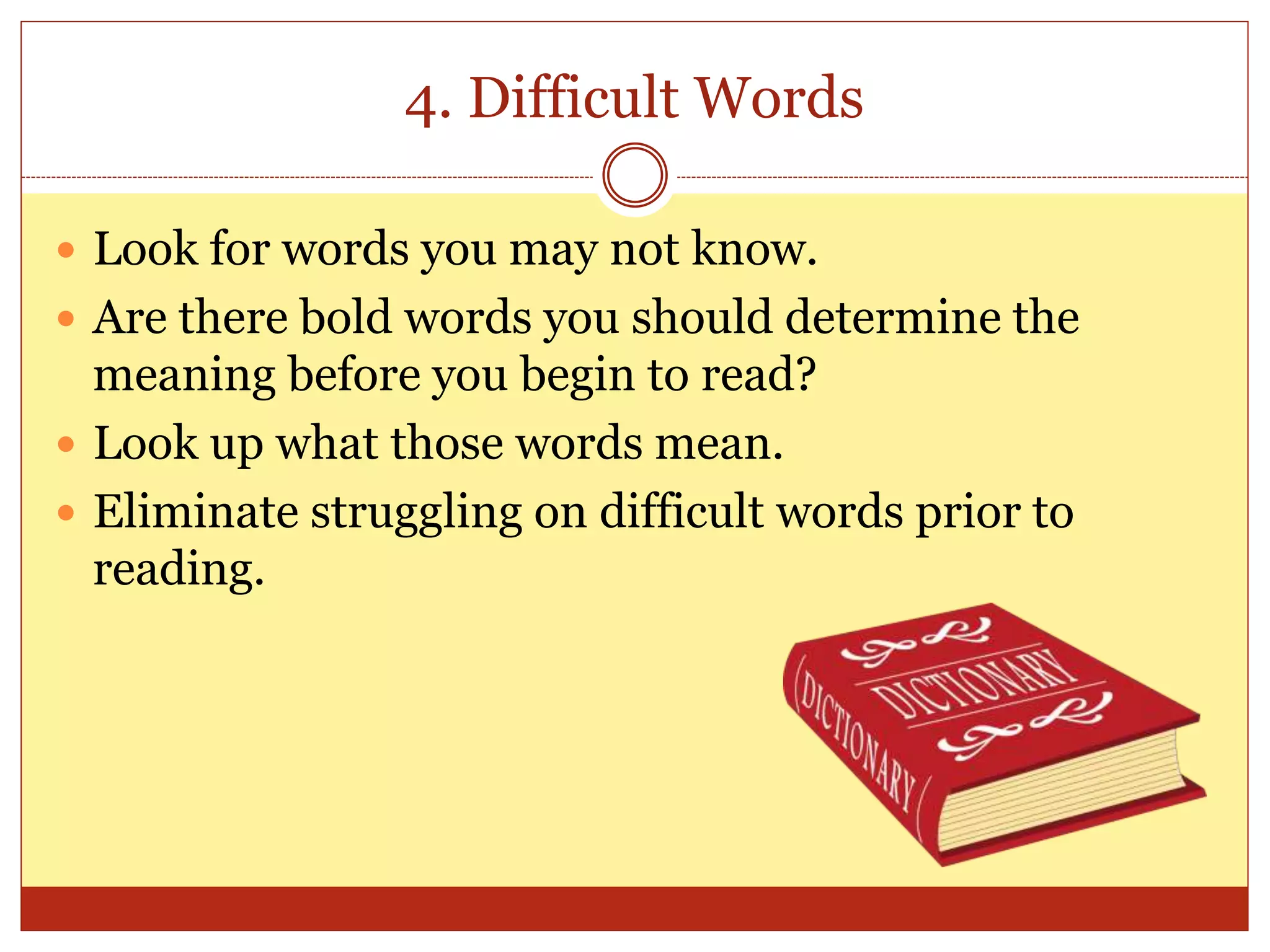
4. Difficult Words
 Look for words you may not know.
 Are there bold words you should determine the
meaning before you begin to read?
 Look up what those words mean.
 Eliminate struggling on difficult words prior to
reading.
5. What’s the Purpose?
 What are you reading and why are you reading it?
 Ask what you are learning by reading this
information.
 Are you reading to learn information?
 Are you reading to help you make a decision?
 Are you reading to help you make something?
How is this information going to benefit you?
During Reading
“READING IS THINKING”
Use these strategies as you read to
help you understand as you read a
piece of text. It is important to
understand what you are reading as
you are reading!
1. Clarify the Unknowns
 As you are reading are you understanding what you
are reading?
 Look at the text features and pictures as you read.
 Are there things you are learning as you read?
 Take moments to realize what you are reading about.
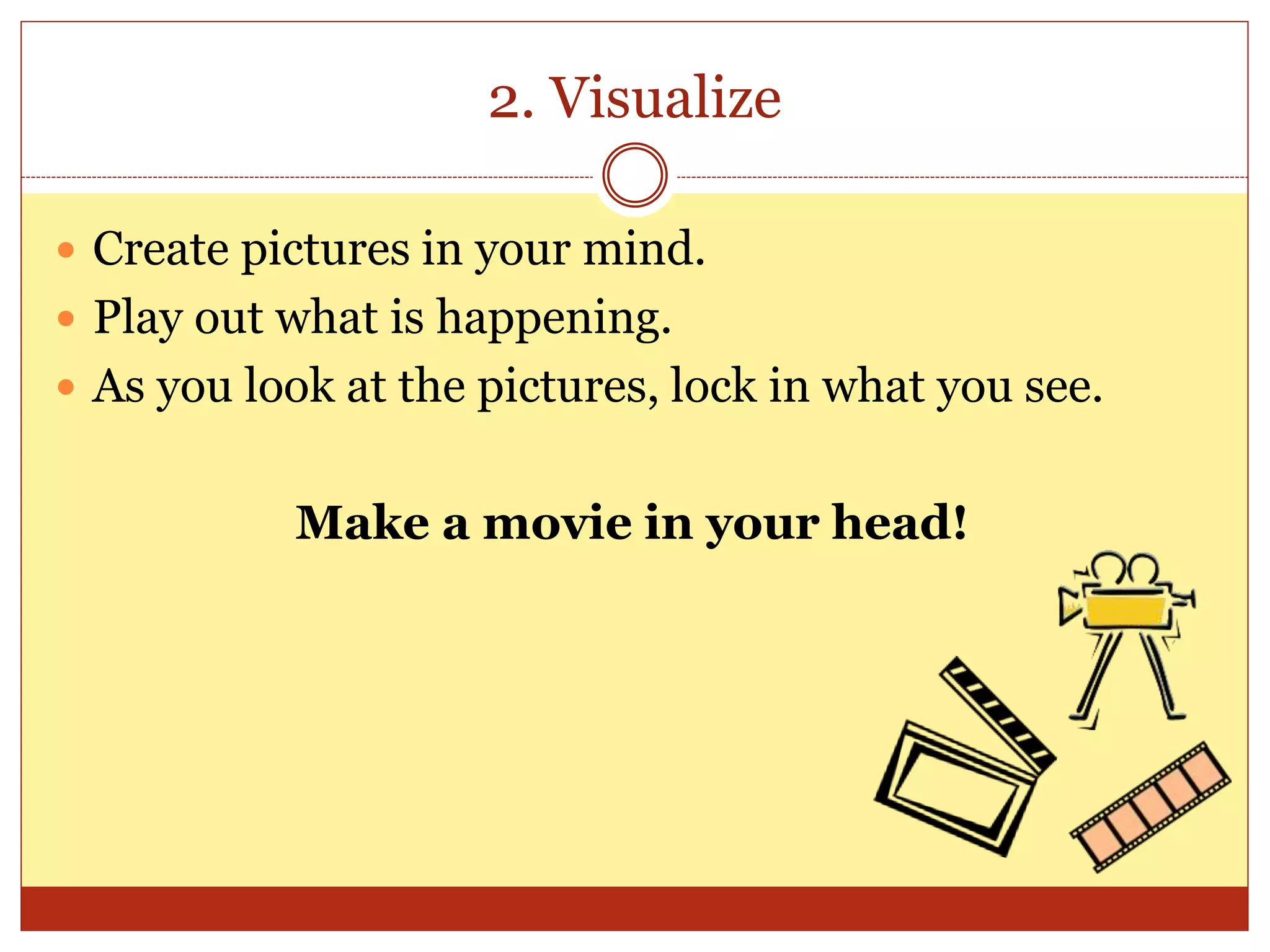
2. Visualize
 Create pictures in your mind.
 Play out what is happening.
 As you look at the pictures, lock in what you see.
Make a movie in your head!
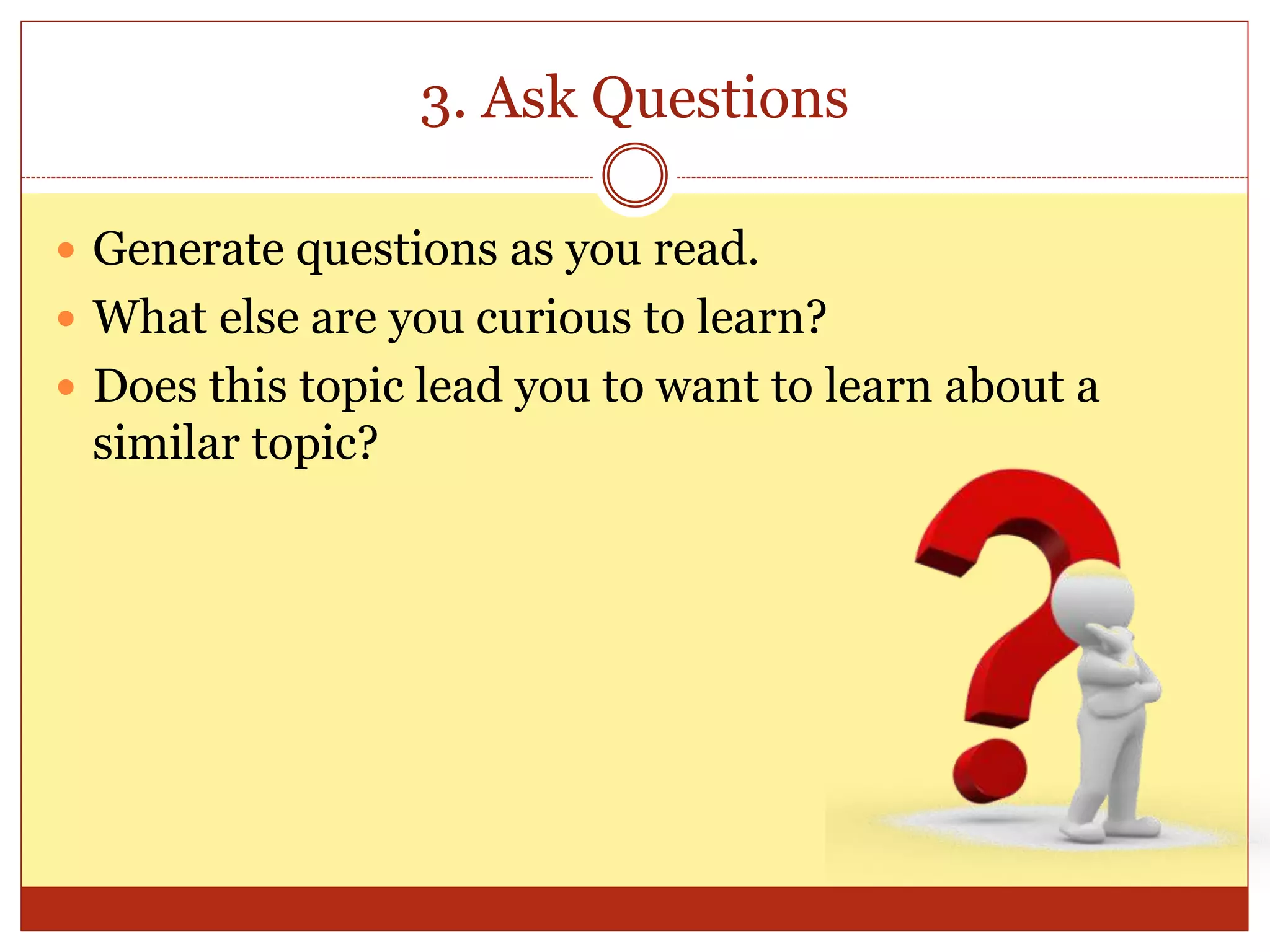
3. Ask Questions
 Generate questions as you read.
 What else are you curious to learn?
 Does this topic lead you to want to learn about a
similar topic?
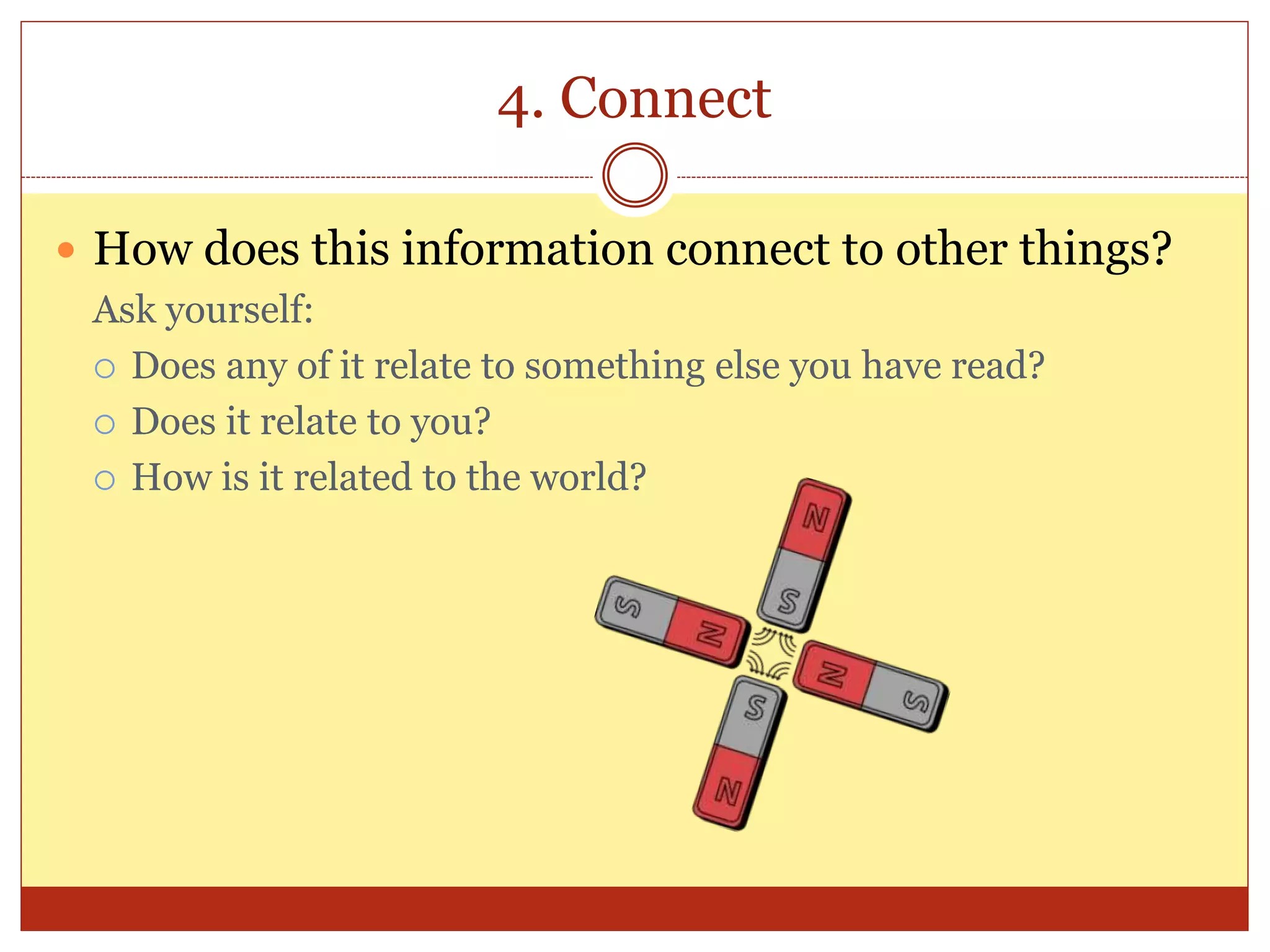
4. Connect
 How does this information connect to other things?
Ask yourself:
 Does any of it relate to something else you have read?
 Does it relate to you?
 How is it related to the world?
5. Inferring
 What can you determine about this text from what
the author has written and your own knowledge?
 Determine what you think may happen next.
 Does the text “make sense”?
 Are there things you are connecting on your own to
make things “make sense”?
 What is the author wanting you to learn about?
After Reading
After you read it is important that
you understood what you read. Ask
yourself, “What was the purpose of
me reading this?” Why did you read
it? Reflect on what you just read by
using these strategies.
1. Reflect
 What did you read about?
 What did you learn?
 Did the text answer any questions you had?
 Do you still have more questions?
 Were your predictions right? Were they
wrong?
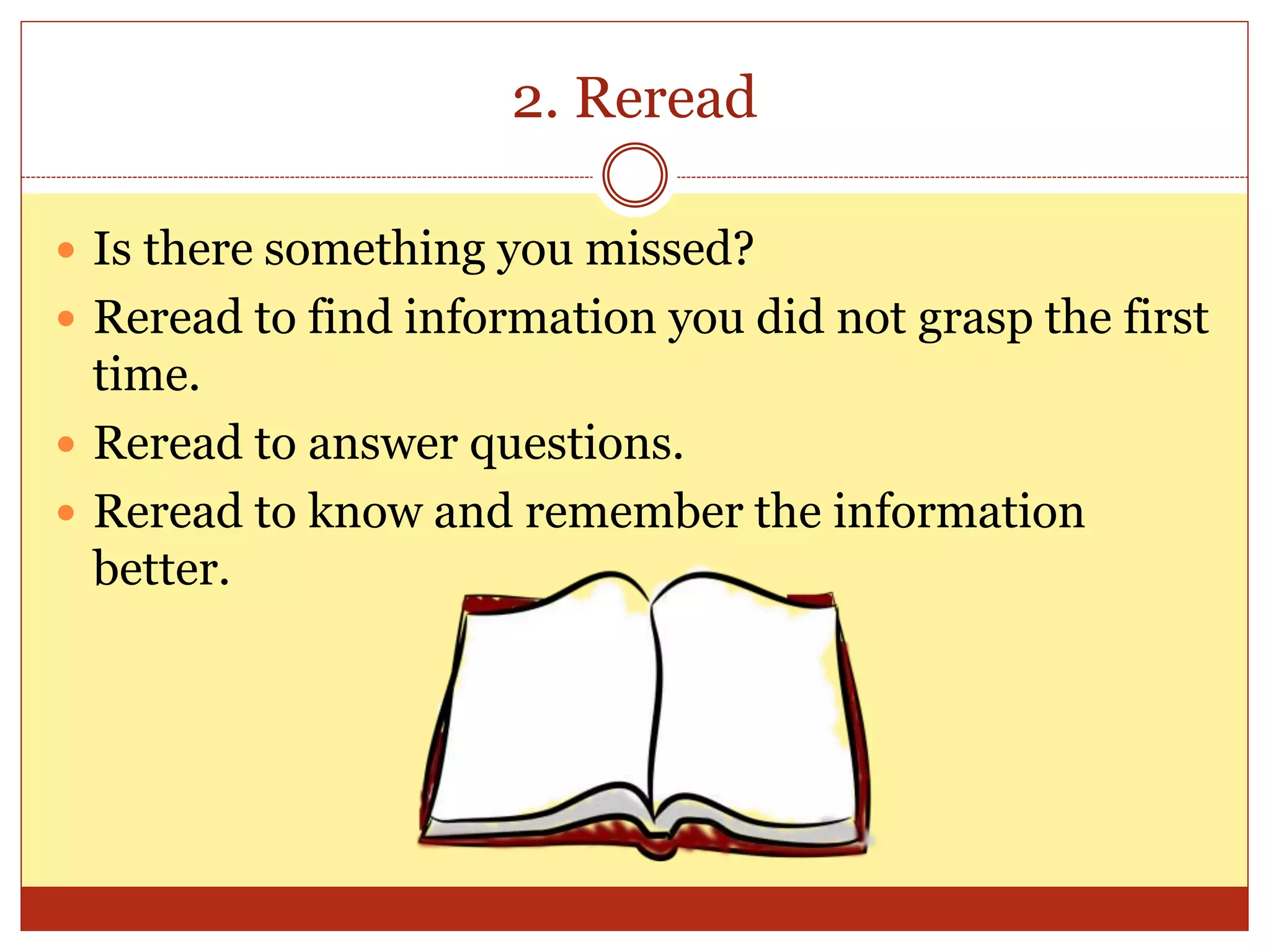
2. Reread
 Is there something you missed?
 Reread to find information you did not grasp the first
time.
 Reread to answer questions.
 Reread to know and remember the information
better.
3. Review
 After rereading, do you understand now what you
did not before?
 Review what you did and did not have to reread.
 Determine what information was harder for you to
understand.
4. Summarize
 Tell what you read about in your own words.
 Explain what you learned.
5. Evaluate
 Did you learn new information?
 Is the information you learned useful?
 Could you make any connections?
 Do you need to reread?
Remember what you
have read and put it
to use!
References
 Bursuck, W., & Damer, M. (2011). Phonemic
Awareness. In Teaching reading to students who are
at risk or have disabilities: A multi-tier
approach .2nd ed. Upper Saddle River, N.J.:
Pearson.
 Yandley, B. (2012, July 27). Reading Strategies.
Retrieved November 19, 2015, from
http://www.slideshare.net/libraryyard/reading-
strategies-13782096?from_search=2#btnNext

Reading strategies

  • 1.
    F O RN O N - F I C T I O N B Y L A U R E N H A L L I D A Y Reading Strategies
  • 2.
    Before Reading Before youbegin to read there are a few steps to take. The steps you can take prior to reading is going to help you read the text with more understanding and awareness of what you may be reading about and why.
  • 3.
    1. Make Observations Read the title  Look at text features  Is there a table of contents?  Is there a glossary or index  Are there pictures?  What are the pictures of?
  • 4.
    2. Prior Knowledge Have you learned about this topic before?  What do you already know about this topic?  Can you make any connections about this topic to your life?
  • 5.
    3. Make Predictions By looking at the pictures can you determine what you will be reading about?  Does the title determine what you are going to be reading about?  Write down what you would like to learn about this topic.  Create questions you want to know the answer to after reading.  Make predictions to the questions you have created.
  • 6.
    4. Difficult Words Look for words you may not know.  Are there bold words you should determine the meaning before you begin to read?  Look up what those words mean.  Eliminate struggling on difficult words prior to reading.
  • 7.
    5. What’s thePurpose?  What are you reading and why are you reading it?  Ask what you are learning by reading this information.  Are you reading to learn information?  Are you reading to help you make a decision?  Are you reading to help you make something? How is this information going to benefit you?
  • 8.
    During Reading “READING ISTHINKING” Use these strategies as you read to help you understand as you read a piece of text. It is important to understand what you are reading as you are reading!
  • 9.
    1. Clarify theUnknowns  As you are reading are you understanding what you are reading?  Look at the text features and pictures as you read.  Are there things you are learning as you read?  Take moments to realize what you are reading about.
  • 10.
    2. Visualize  Createpictures in your mind.  Play out what is happening.  As you look at the pictures, lock in what you see. Make a movie in your head!
  • 11.
    3. Ask Questions Generate questions as you read.  What else are you curious to learn?  Does this topic lead you to want to learn about a similar topic?
  • 12.
    4. Connect  Howdoes this information connect to other things? Ask yourself:  Does any of it relate to something else you have read?  Does it relate to you?  How is it related to the world?
  • 13.
    5. Inferring  Whatcan you determine about this text from what the author has written and your own knowledge?  Determine what you think may happen next.  Does the text “make sense”?  Are there things you are connecting on your own to make things “make sense”?  What is the author wanting you to learn about?
  • 14.
    After Reading After youread it is important that you understood what you read. Ask yourself, “What was the purpose of me reading this?” Why did you read it? Reflect on what you just read by using these strategies.
  • 15.
    1. Reflect  Whatdid you read about?  What did you learn?  Did the text answer any questions you had?  Do you still have more questions?  Were your predictions right? Were they wrong?
  • 16.
    2. Reread  Isthere something you missed?  Reread to find information you did not grasp the first time.  Reread to answer questions.  Reread to know and remember the information better.
  • 17.
    3. Review  Afterrereading, do you understand now what you did not before?  Review what you did and did not have to reread.  Determine what information was harder for you to understand.
  • 18.
    4. Summarize  Tellwhat you read about in your own words.  Explain what you learned.
  • 19.
    5. Evaluate  Didyou learn new information?  Is the information you learned useful?  Could you make any connections?  Do you need to reread?
  • 20.
    Remember what you haveread and put it to use!
  • 21.
    References  Bursuck, W.,& Damer, M. (2011). Phonemic Awareness. In Teaching reading to students who are at risk or have disabilities: A multi-tier approach .2nd ed. Upper Saddle River, N.J.: Pearson.  Yandley, B. (2012, July 27). Reading Strategies. Retrieved November 19, 2015, from http://www.slideshare.net/libraryyard/reading- strategies-13782096?from_search=2#btnNext