• Subhead 
Headaches in Ophthalmology 
HEADLINE TO GO HERE 
Dr Paula Berdoukas 
General Ophthalmologist
symptoms for the optometrist 
• Pain concentrated around the eye 
• Headache with any associated ophthalmic symptom 
– blur, double vision, redness, photophobia, visual aura 
2
aim of assessment 
• Diagnose and treat ophthalmic causes of headache 
• Recognise benign headache patterns with ophthalmic feature 
• Recognise ophthalmic symptoms or signs of intracranial or 
systemic cause of headache 
• Know when to refer 
3
assessment 
• VA 
• Refraction 
– under corrected hypermetropia, overcorrected myopia, 
presbyopia 
• Slit Lamp examination 
• IOP 
• Neurologic assessment 
– VF, EOM, Cranial Nerves, Pupils 
• Skin/Scalp 
– rash, temporal A 
4
ophthalmic causes of headache 
• Visible 
– corneal abrasion/ infection, iritis, scleritis 
• Refractive error 
– mild frontal headache, worse with prolonged visual task 
• Heterophoria/ Heterotropia 
– mild frontal headache, intermittent blur or double vision 
• Angle Closure Glaucoma 
– Severe pain around eye, haloes, loss of vision, redness 
• Pigment dispersion Syndrome 
– intermittent blur, haloes and eye pain after exercise or pupil dilation 
• Herpes Zoster Ophthalmicus 
– pain, hyperesthesia, rash or vesicles in Vi +/- ocular inflammation 
5
benign headache patterns 
• Migraine 
– +/- aura, nausea, vomiting, photophobia, phonophobia 
• Cluster Headache 
– tearing, rhinorrhoea, sweating, ptosis +/- miosis 
• Tension headache 
• Sinus disease 
6
What not to miss: 
headache with an intracranial origin 
• Causes 
– tumors, inflammation, infection (meninges or paranasal sinuses), arterial 
dissection or aneurysm, benign intracranial hypertension 
• History 
– recent onset or increasing severity, constant, worse with coughing, straining 
or lying down 
– normal vision, transient obscurations of vision, visual field defects 
•Examination 
– anisocoria, ptosis, disc swelling, cranial nerve palsy 
7
Pupil Involving IIIrd nerve Palsy 
• IIIn function 
– EOM: MR, IR, IO, SR, Levator 
– PARA to iris sphincter and ciliary mm 
• Symptoms 
– Acute headache, double vision, nausea, neck stiffness 
• Signs 
– Ptosis, EOM limitation (SO and LR work unopposed), pupil dilated 
• Dx: Post Communicating A aneurysm 
– DDx: vasculopathic, GCA, demyelination, stroke, metastasis, trauma 
8
“Down and out” 
9 
Image courtesy of www.aao.org: 4 Neuro Conditions Not to Be Missed 
By Marianne Doran, Miriam Karmel, and Annie Stuart
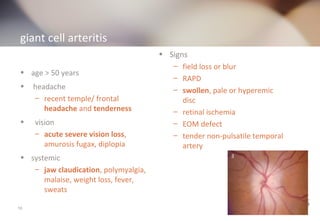
giant cell arteritis 
• age > 50 years 
• headache 
– recent temple/ frontal 
headache and tenderness 
• vision 
– acute severe vision loss, 
amurosis fugax, diplopia 
• systemic 
– jaw claudication, polymyalgia, 
malaise, weight loss, fever, 
sweats 
• Signs 
– field loss or blur 
– RAPD 
– swollen, pale or hyperemic 
disc 
– retinal ischemia 
– EOM defect 
– tender non-pulsatile temporal 
artery 
10
Mr SN 
• 58 yr old 
• 1 week of headaches and right ear ache 
• 1 year of shoulder pain and cervical spine spurs, sees 
chiropractor. 
• On his most recent visit, prior to any manipulation, 
chiropractor noted L pupil was dilated and R lid droopy: 
referred to optom who referred to ophthl. 
11
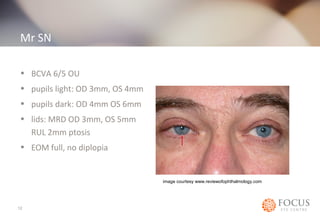
Mr SN 
• BCVA 6/5 OU 
• pupils light: OD 3mm, OS 4mm 
• pupils dark: OD 4mm OS 6mm 
• lids: MRD OD 3mm, OS 5mm 
RUL 2mm ptosis 
• EOM full, no diplopia 
12 
image courtesy www.reviewofophthalmology.com
Provisional Diagnosis: Horners Syndrome secondary 
to ICA dissection 
DDx: Malignancy, stroke, aneurysm, 
Image courtesy of younglivingforum.com 13
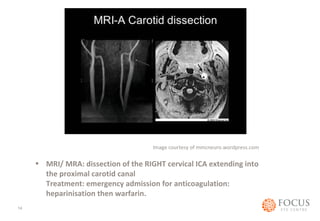
Image courtesy of mmcneuro.wordpress.com 
• MRI/ MRA: dissection of the RIGHT cervical ICA extending into 
the proximal carotid canal 
Treatment: emergency admission for anticoagulation: 
heparinisation then warfarin. 
14

Headaches in Ophthalmology

  • 1.
    • Subhead Headachesin Ophthalmology HEADLINE TO GO HERE Dr Paula Berdoukas General Ophthalmologist
  • 2.
    symptoms for theoptometrist • Pain concentrated around the eye • Headache with any associated ophthalmic symptom – blur, double vision, redness, photophobia, visual aura 2
  • 3.
    aim of assessment • Diagnose and treat ophthalmic causes of headache • Recognise benign headache patterns with ophthalmic feature • Recognise ophthalmic symptoms or signs of intracranial or systemic cause of headache • Know when to refer 3
  • 4.
    assessment • VA • Refraction – under corrected hypermetropia, overcorrected myopia, presbyopia • Slit Lamp examination • IOP • Neurologic assessment – VF, EOM, Cranial Nerves, Pupils • Skin/Scalp – rash, temporal A 4
  • 5.
    ophthalmic causes ofheadache • Visible – corneal abrasion/ infection, iritis, scleritis • Refractive error – mild frontal headache, worse with prolonged visual task • Heterophoria/ Heterotropia – mild frontal headache, intermittent blur or double vision • Angle Closure Glaucoma – Severe pain around eye, haloes, loss of vision, redness • Pigment dispersion Syndrome – intermittent blur, haloes and eye pain after exercise or pupil dilation • Herpes Zoster Ophthalmicus – pain, hyperesthesia, rash or vesicles in Vi +/- ocular inflammation 5
  • 6.
    benign headache patterns • Migraine – +/- aura, nausea, vomiting, photophobia, phonophobia • Cluster Headache – tearing, rhinorrhoea, sweating, ptosis +/- miosis • Tension headache • Sinus disease 6
  • 7.
    What not tomiss: headache with an intracranial origin • Causes – tumors, inflammation, infection (meninges or paranasal sinuses), arterial dissection or aneurysm, benign intracranial hypertension • History – recent onset or increasing severity, constant, worse with coughing, straining or lying down – normal vision, transient obscurations of vision, visual field defects •Examination – anisocoria, ptosis, disc swelling, cranial nerve palsy 7
  • 8.
    Pupil Involving IIIrdnerve Palsy • IIIn function – EOM: MR, IR, IO, SR, Levator – PARA to iris sphincter and ciliary mm • Symptoms – Acute headache, double vision, nausea, neck stiffness • Signs – Ptosis, EOM limitation (SO and LR work unopposed), pupil dilated • Dx: Post Communicating A aneurysm – DDx: vasculopathic, GCA, demyelination, stroke, metastasis, trauma 8
  • 9.
    “Down and out” 9 Image courtesy of www.aao.org: 4 Neuro Conditions Not to Be Missed By Marianne Doran, Miriam Karmel, and Annie Stuart
  • 10.
    giant cell arteritis • age > 50 years • headache – recent temple/ frontal headache and tenderness • vision – acute severe vision loss, amurosis fugax, diplopia • systemic – jaw claudication, polymyalgia, malaise, weight loss, fever, sweats • Signs – field loss or blur – RAPD – swollen, pale or hyperemic disc – retinal ischemia – EOM defect – tender non-pulsatile temporal artery 10
  • 11.
    Mr SN •58 yr old • 1 week of headaches and right ear ache • 1 year of shoulder pain and cervical spine spurs, sees chiropractor. • On his most recent visit, prior to any manipulation, chiropractor noted L pupil was dilated and R lid droopy: referred to optom who referred to ophthl. 11
  • 12.
    Mr SN •BCVA 6/5 OU • pupils light: OD 3mm, OS 4mm • pupils dark: OD 4mm OS 6mm • lids: MRD OD 3mm, OS 5mm RUL 2mm ptosis • EOM full, no diplopia 12 image courtesy www.reviewofophthalmology.com
  • 13.
    Provisional Diagnosis: HornersSyndrome secondary to ICA dissection DDx: Malignancy, stroke, aneurysm, Image courtesy of younglivingforum.com 13
  • 14.
    Image courtesy ofmmcneuro.wordpress.com • MRI/ MRA: dissection of the RIGHT cervical ICA extending into the proximal carotid canal Treatment: emergency admission for anticoagulation: heparinisation then warfarin. 14

Editor's Notes

  • #3 General History: associated neurological symptoms, nausea, vomiting, GCA symptoms, BP, medications
  • #6 Refractive error: mild frontal/ ocular ache. Absent on waking. Precipitated by prolonged visual tasks. Should respond well to glasses Heterophoria/ Heterotropia: mild frontal headache, intermittent blur or double vision. Difficulty adjusting focus. Worsens through the day. Angle Closure Glaucoma: may be intermittent. Severe pain around eye, haloes, loss of vision, reddness, Elevated IOP and shallow angle Herpes Zoster Ophthalmicus: pain or hyperesthesia in Trigeminal distribution. Rash or vesicles. Ocular inflammation: conjunctivitis, keratitis, iritis, elevated IOP