spiritual philosophy
       social ethic
   political ideology
   scholarly tradition


CONFUCIANISM
ORIGINS DEVELOPMENT
 Began in China
  around sixth to
  fifth century BCE by
  Confucius.
 Has been followed
  by the people of
  China for over two
  millennia.
ORIGINS &
         DEVELOPMENT
 A major part of the belief system is its
   emphasis on learning and as a source of
   values.

 Confucius lived in a time of political violence,
   so the stage was set for a teacher to emerge
   with a philosophy promoting social and ethical
   calm and who saw perfection in all people.
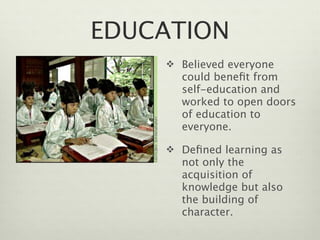
EDUCATION
     Believed everyone
      could benefit from
      self-education and
      worked to open doors
      of education to
      everyone.

     Defined learning as
      not only the
      acquisition of
      knowledge but also
      the building of
      character.
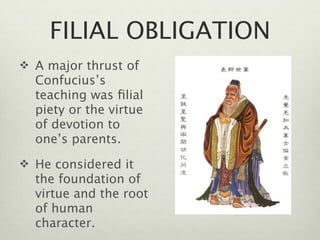
FILIAL OBLIGATION
 A major thrust of
  Confucius’s
  teaching was filial
  piety or the virtue
  of devotion to
  one’s parents.
 He considered it
  the foundation of
  virtue and the root
  of human
  character.
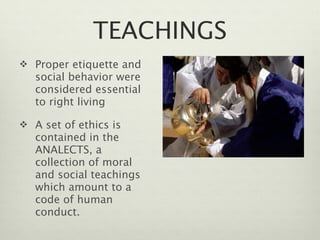
TEACHINGS
 Proper etiquette and
   social behavior were
   considered essential
   to right living

 A set of ethics is
   contained in the
   ANALECTS, a
   collection of moral
   and social teachings
   which amount to a
   code of human
   conduct.
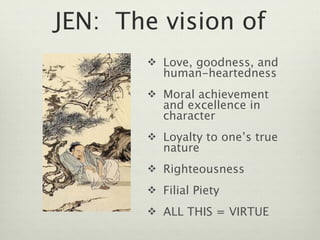
JEN: The vision of
        Love, goodness, and
          human-heartedness
        Moral achievement
          and excellence in
          character
        Loyalty to one’s true
          nature
        Righteousness

        Filial Piety

        ALL THIS = VIRTUE
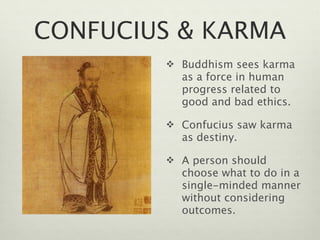
CONFUCIUS & KARMA
         Buddhism sees karma
          as a force in human
          progress related to
          good and bad ethics.

         Confucius saw karma
          as destiny.

         A person should
          choose what to do in a
          single-minded manner
          without considering
          outcomes.
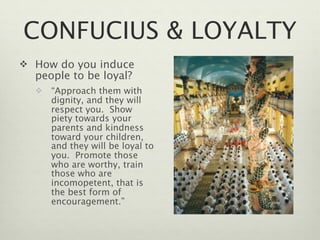
CONFUCIUS & LOYALTY
 How do you induce
  people to be loyal?
     “Approach them with
      dignity, and they will
      respect you. Show
      piety towards your
      parents and kindness
      toward your children,
      and they will be loyal to
      you. Promote those
      who are worthy, train
      those who are
      incomopetent, that is
      the best form of
      encouragement.”
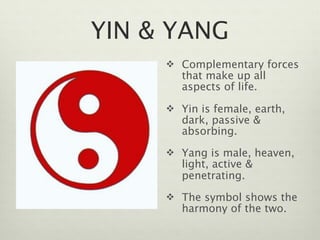
YIN & YANG
      Complementary forces
        that make up all
        aspects of life.

      Yin is female, earth,
        dark, passive &
        absorbing.
      Yang is male, heaven,
        light, active &
        penetrating.
      The symbol shows the
        harmony of the two.

Humanities Confucianism

  • 1.
    spiritual philosophy social ethic political ideology scholarly tradition CONFUCIANISM
  • 2.
    ORIGINS DEVELOPMENT  Beganin China around sixth to fifth century BCE by Confucius.  Has been followed by the people of China for over two millennia.
  • 3.
    ORIGINS & DEVELOPMENT  A major part of the belief system is its emphasis on learning and as a source of values.  Confucius lived in a time of political violence, so the stage was set for a teacher to emerge with a philosophy promoting social and ethical calm and who saw perfection in all people.
  • 4.
    EDUCATION  Believed everyone could benefit from self-education and worked to open doors of education to everyone.  Defined learning as not only the acquisition of knowledge but also the building of character.
  • 5.
    FILIAL OBLIGATION  Amajor thrust of Confucius’s teaching was filial piety or the virtue of devotion to one’s parents.  He considered it the foundation of virtue and the root of human character.
  • 6.
    TEACHINGS  Proper etiquetteand social behavior were considered essential to right living  A set of ethics is contained in the ANALECTS, a collection of moral and social teachings which amount to a code of human conduct.
  • 7.
    JEN: The visionof  Love, goodness, and human-heartedness  Moral achievement and excellence in character  Loyalty to one’s true nature  Righteousness  Filial Piety  ALL THIS = VIRTUE
  • 8.
    CONFUCIUS & KARMA  Buddhism sees karma as a force in human progress related to good and bad ethics.  Confucius saw karma as destiny.  A person should choose what to do in a single-minded manner without considering outcomes.
  • 9.
    CONFUCIUS & LOYALTY How do you induce people to be loyal?  “Approach them with dignity, and they will respect you. Show piety towards your parents and kindness toward your children, and they will be loyal to you. Promote those who are worthy, train those who are incomopetent, that is the best form of encouragement.”
  • 10.
    YIN & YANG  Complementary forces that make up all aspects of life.  Yin is female, earth, dark, passive & absorbing.  Yang is male, heaven, light, active & penetrating.  The symbol shows the harmony of the two.

Editor's Notes