





“Confrontation”
Presenting By: Tahreem Mehmood (M02)
“Confrontation”
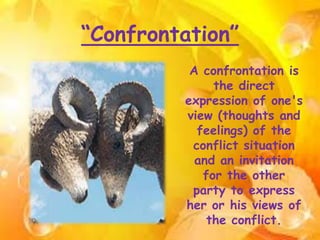
A confrontation is
the direct
expression of one's
view (thoughts and
feelings) of the
conflict situation
and an invitation
for the other
party to express
her or his views of
the conflict.
Helps to:
 Couple confrontation with an empathy
statement.
 Encourage self-confrontation and self-
exploration.
 Maintain relationship of trust and good will.
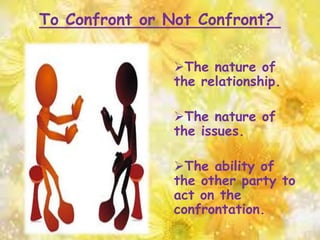
To Confront or Not Confront?
The nature of
the relationship.
The nature of
the issues.
The ability of
the other party to
act on the
confrontation.
“Confrontation Guidelines”
Do not "hit and run."
Communicate openly and directly
Do not demand change
Invite the other person to confront
you
“Confrontation Skills”
A confrontation about actions should be specific and timely.
 Personal statements or "I" messages. "I am concerned
about", "I am confused by", "My worry is", "I am
frustrated by" are all personal statements.
 Relationship statements. These are "I" messages about
some aspect of the relationship. "I appreciate your
consulting with me on . . ." is a relationship statement.
 Perception checks. Communicate what you perceive the
other person to be feeling or thinking.
 Provide and invite concrete feedback.
“Self-Confrontation”
The primary emphasis is on examining every aspect
of your own life.
Self-Confrontation starts with the basics of
salvation, examines the root of problems in our daily
walks, and then applies principles to specific problem
areas ranging from anger and relationship problems
to fear & worry, depression, and life-dominating
practices.
“Benefits of Confrontation”
 Preserving love
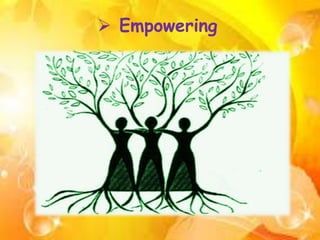
 Empowering
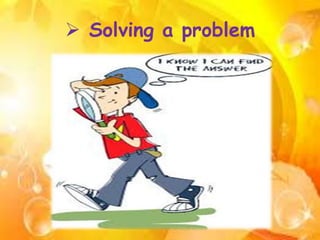
 Solving a problem
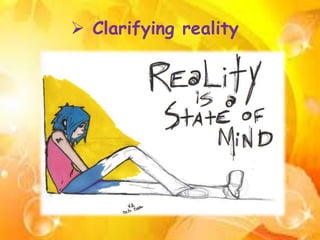
 Clarifying reality
“Overcome Your Fear of Confrontation”
If you have the conversation once in your
head, don't worry about it. If it comes
back and you have it again, perhaps start
thinking about holding a real conversation.
By the third "in your head"
confrontation, you need to start planning
how you will deal with the real
confrontation, because it looks as if you
are going to need to do that.
 How to Hold a Real, Necessary
Conflict or Confrontation
Assume you want to confront your coworker
for taking all of the credit for the work
that the two of you did together on a
project. Instead of saying, "You took all
the credit, blah, blah, blah...“
Say instead, "It looks as if I played no role
in the Johnson account. My name does not
appear anywhere on the document, nor I
have been given credit anywhere that I can
see."
 Make your initial statement
and stop talking
When the person you are confronting
responds, allow them to respond. It's a
human tendency, but don't make the
mistake of adding to your initial
statement, to further justify the
statement.
 Avoid arguing during the
confrontation
Confrontation does not mean fight.
Many time it actually ends right there.
Do you need to prove the other person
right or wrong?
Does someone have to take blame?
Get your frustration off your chest, and
move on.
Focus on the real issue of the
confrontation
• The other party will either agree or
disagree. Negotiate, but don't fight.
• The issue is you aren't receiving credit,
and you want your name on the
documentation. That's it. It isn't about
blame, about who is right or wrong or
anything other than your desired resolution.
If you can't stand up for
yourself, who will?
Conclusion &
Recommendations
I believe resolution can normally be
found with conflicts where there is a
sincere desire to do so. Turning the other
cheek, compromise, forgiveness, compassi
on, empathy, finding common
ground, being an active listener, service
above self, and numerous other
approaches will always allow one to be
successful in building rapport if the
underlying desire is strong enough.
However, when all else fails and positional
gaps cannot be closed, resolve the issue
not by playing favorites, but by doing the
right thing.
If you desire to make a
difference in the world,
You must be different from the
world…
“Dalton”
“Thank You”

Confrontation

  • 1.
  • 3.
    “Confrontation” A confrontation is thedirect expression of one's view (thoughts and feelings) of the conflict situation and an invitation for the other party to express her or his views of the conflict.
  • 4.
    Helps to:  Coupleconfrontation with an empathy statement.  Encourage self-confrontation and self- exploration.  Maintain relationship of trust and good will.
  • 5.
    To Confront orNot Confront? The nature of the relationship. The nature of the issues. The ability of the other party to act on the confrontation.
  • 7.
    “Confrontation Guidelines” Do not"hit and run." Communicate openly and directly Do not demand change Invite the other person to confront you
  • 8.
    “Confrontation Skills” A confrontationabout actions should be specific and timely.  Personal statements or "I" messages. "I am concerned about", "I am confused by", "My worry is", "I am frustrated by" are all personal statements.  Relationship statements. These are "I" messages about some aspect of the relationship. "I appreciate your consulting with me on . . ." is a relationship statement.  Perception checks. Communicate what you perceive the other person to be feeling or thinking.  Provide and invite concrete feedback.
  • 9.
    “Self-Confrontation” The primary emphasisis on examining every aspect of your own life. Self-Confrontation starts with the basics of salvation, examines the root of problems in our daily walks, and then applies principles to specific problem areas ranging from anger and relationship problems to fear & worry, depression, and life-dominating practices.
  • 10.
  • 11.
  • 12.
  • 13.
  • 14.
  • 15.
    “Overcome Your Fearof Confrontation” If you have the conversation once in your head, don't worry about it. If it comes back and you have it again, perhaps start thinking about holding a real conversation. By the third "in your head" confrontation, you need to start planning how you will deal with the real confrontation, because it looks as if you are going to need to do that.
  • 16.
     How toHold a Real, Necessary Conflict or Confrontation Assume you want to confront your coworker for taking all of the credit for the work that the two of you did together on a project. Instead of saying, "You took all the credit, blah, blah, blah...“ Say instead, "It looks as if I played no role in the Johnson account. My name does not appear anywhere on the document, nor I have been given credit anywhere that I can see."
  • 17.
     Make yourinitial statement and stop talking When the person you are confronting responds, allow them to respond. It's a human tendency, but don't make the mistake of adding to your initial statement, to further justify the statement.
  • 18.
     Avoid arguingduring the confrontation Confrontation does not mean fight. Many time it actually ends right there. Do you need to prove the other person right or wrong? Does someone have to take blame? Get your frustration off your chest, and move on.
  • 19.
    Focus on thereal issue of the confrontation • The other party will either agree or disagree. Negotiate, but don't fight. • The issue is you aren't receiving credit, and you want your name on the documentation. That's it. It isn't about blame, about who is right or wrong or anything other than your desired resolution.
  • 20.
    If you can'tstand up for yourself, who will?
  • 21.
    Conclusion & Recommendations I believeresolution can normally be found with conflicts where there is a sincere desire to do so. Turning the other cheek, compromise, forgiveness, compassi on, empathy, finding common ground, being an active listener, service above self, and numerous other approaches will always allow one to be successful in building rapport if the underlying desire is strong enough. However, when all else fails and positional gaps cannot be closed, resolve the issue not by playing favorites, but by doing the right thing.
  • 22.
    If you desireto make a difference in the world, You must be different from the world… “Dalton”
  • 23.