Conducting
ONLINE SURVEYS
          Valerie M. Sue, Ph.D.
3.   Sampling
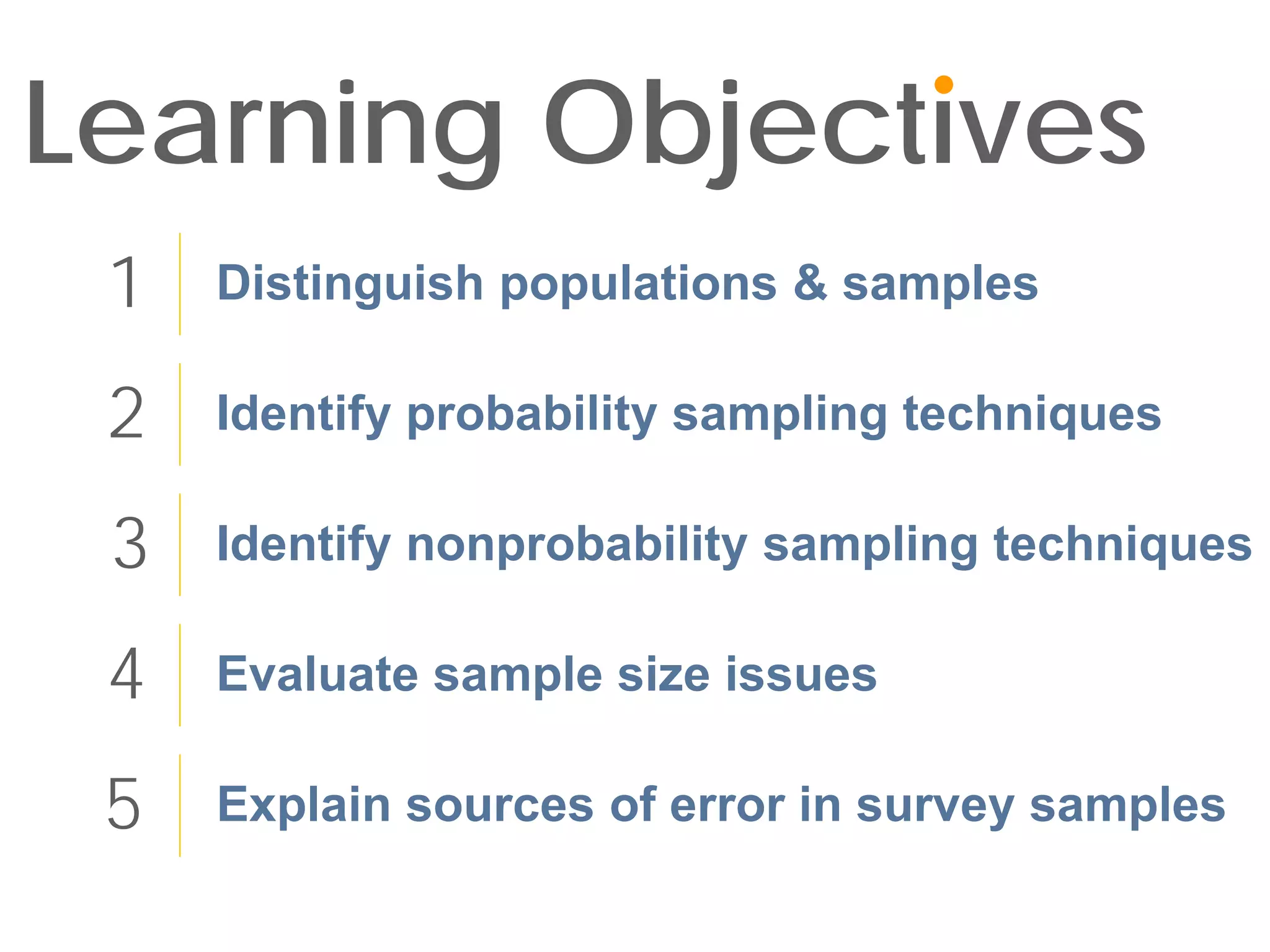
Learning Objectives
 1   Distinguish populations & samples

 2   Identify probability sampling techniques

 3   Identify nonprobability sampling techniques

 4   Evaluate sample size issues

 5   Explain sources of error in survey samples
Populations
& Samples
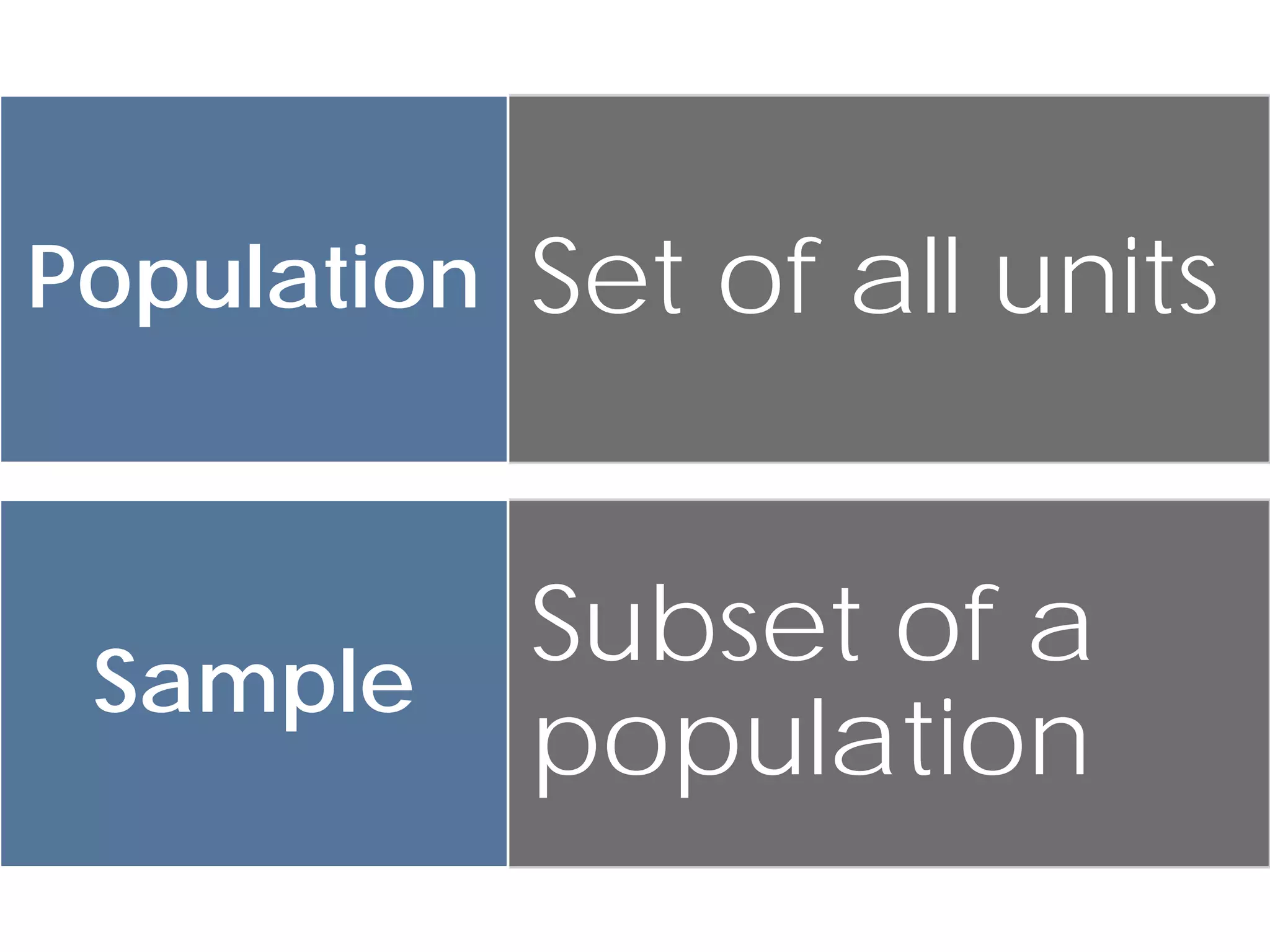
Population Set of all units


 Sample
           Subset of a
           population
6
7
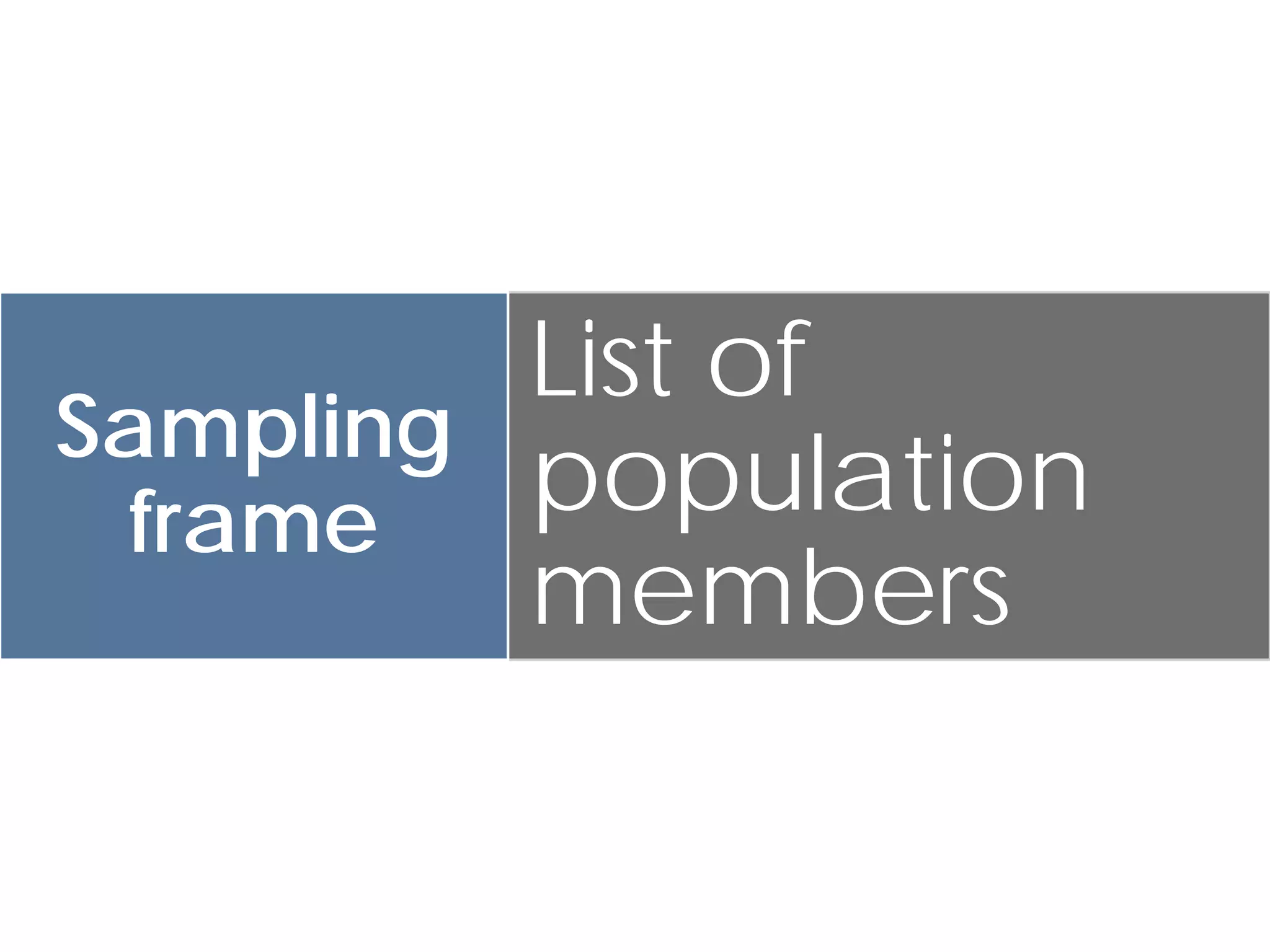
List of
Sampling
 frame   population
         members
Sampling
Techniques
Saturation Sampling:
survey everyone (census)
Probability
Sampling
Participants are
randomly selected
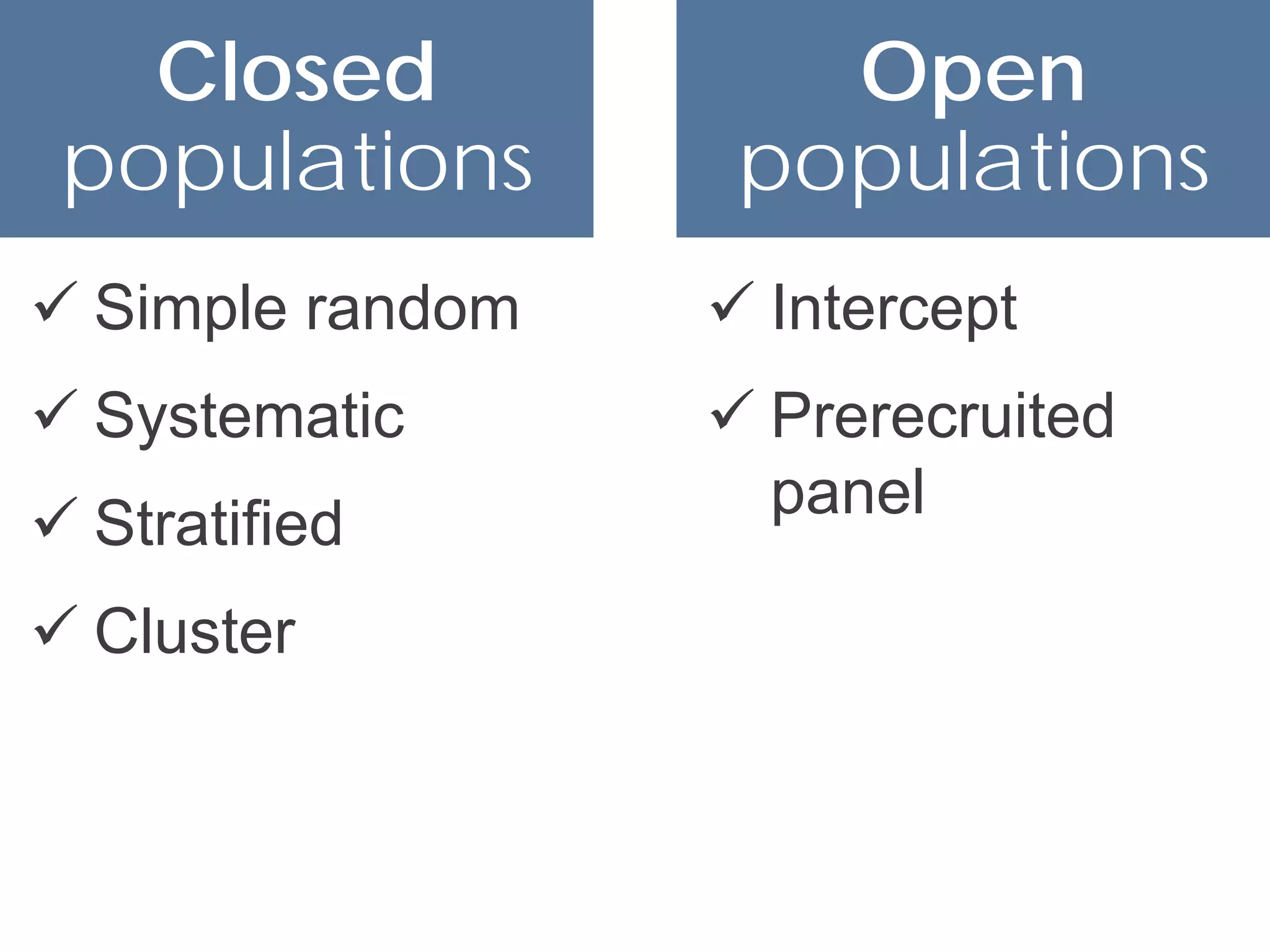
Closed            Open
                                   12


 populations       populations
 Simple random    Intercept
 Systematic       Prerecruited
                    panel
 Stratified
 Cluster
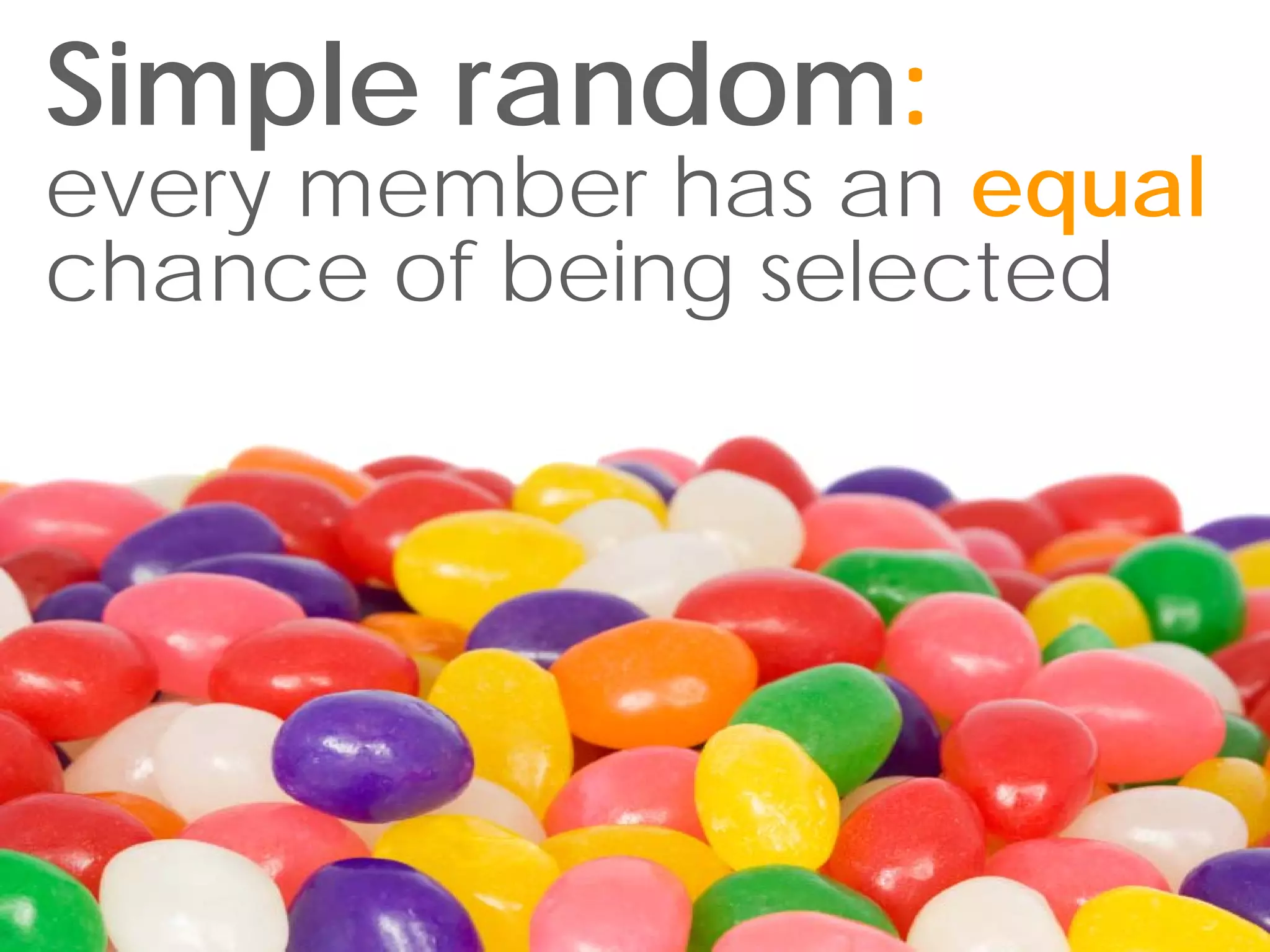
Simple random:
every member has an equal
chance of being selected
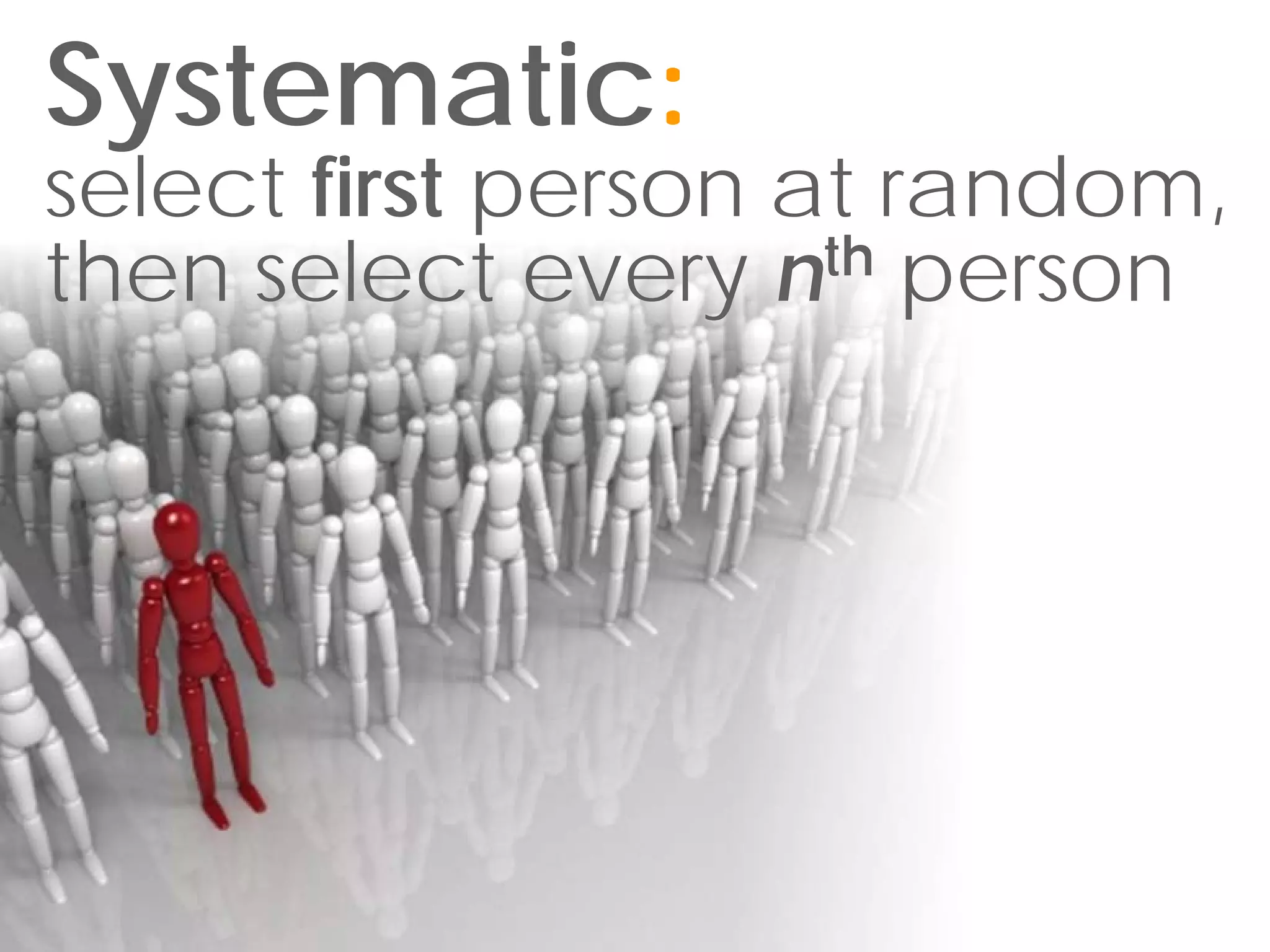
Systematic:
select first person at random,
then select every nth person
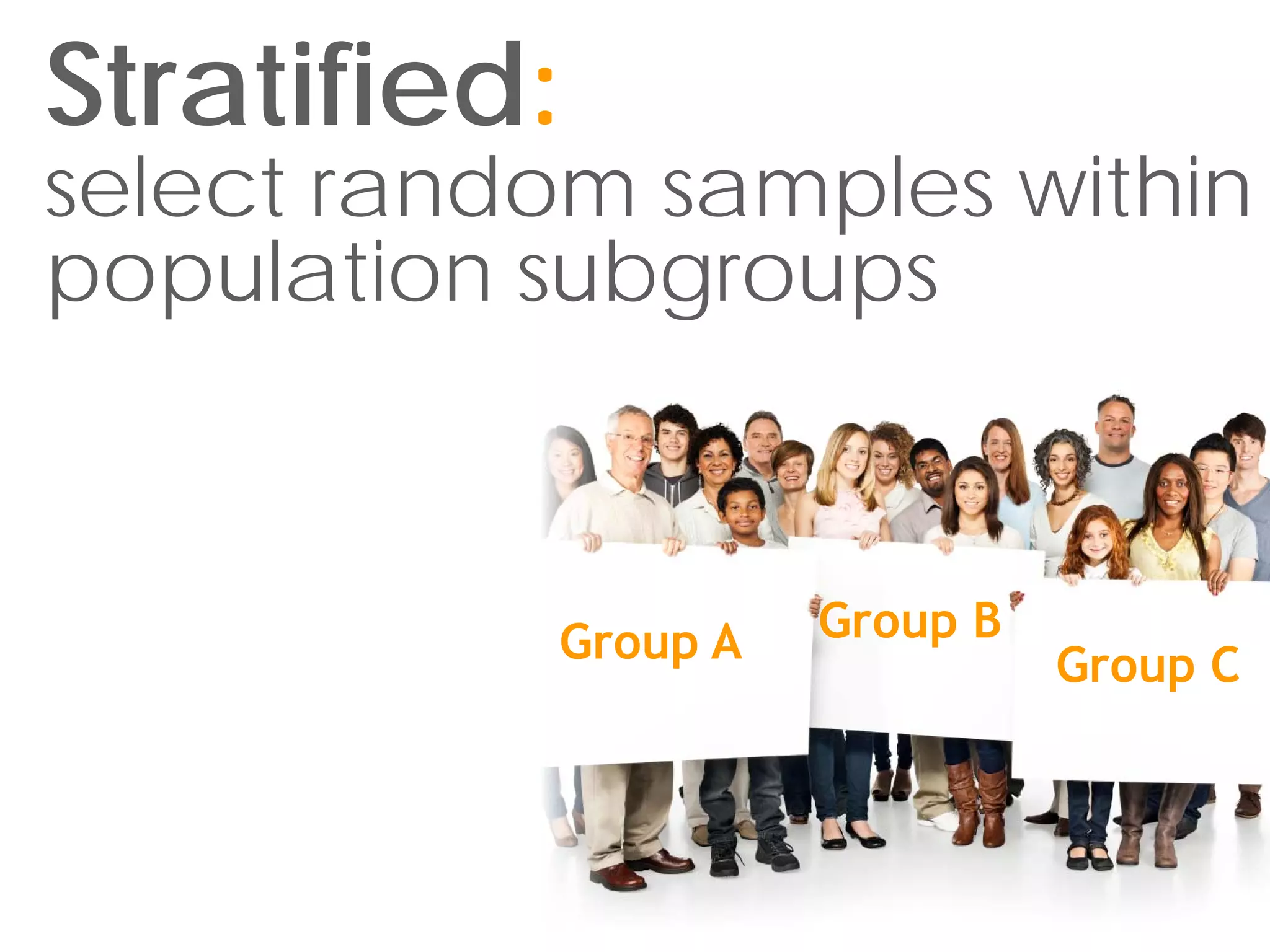
Stratified:
select random samples within
population subgroups


           Group A   Group B
                               Group C
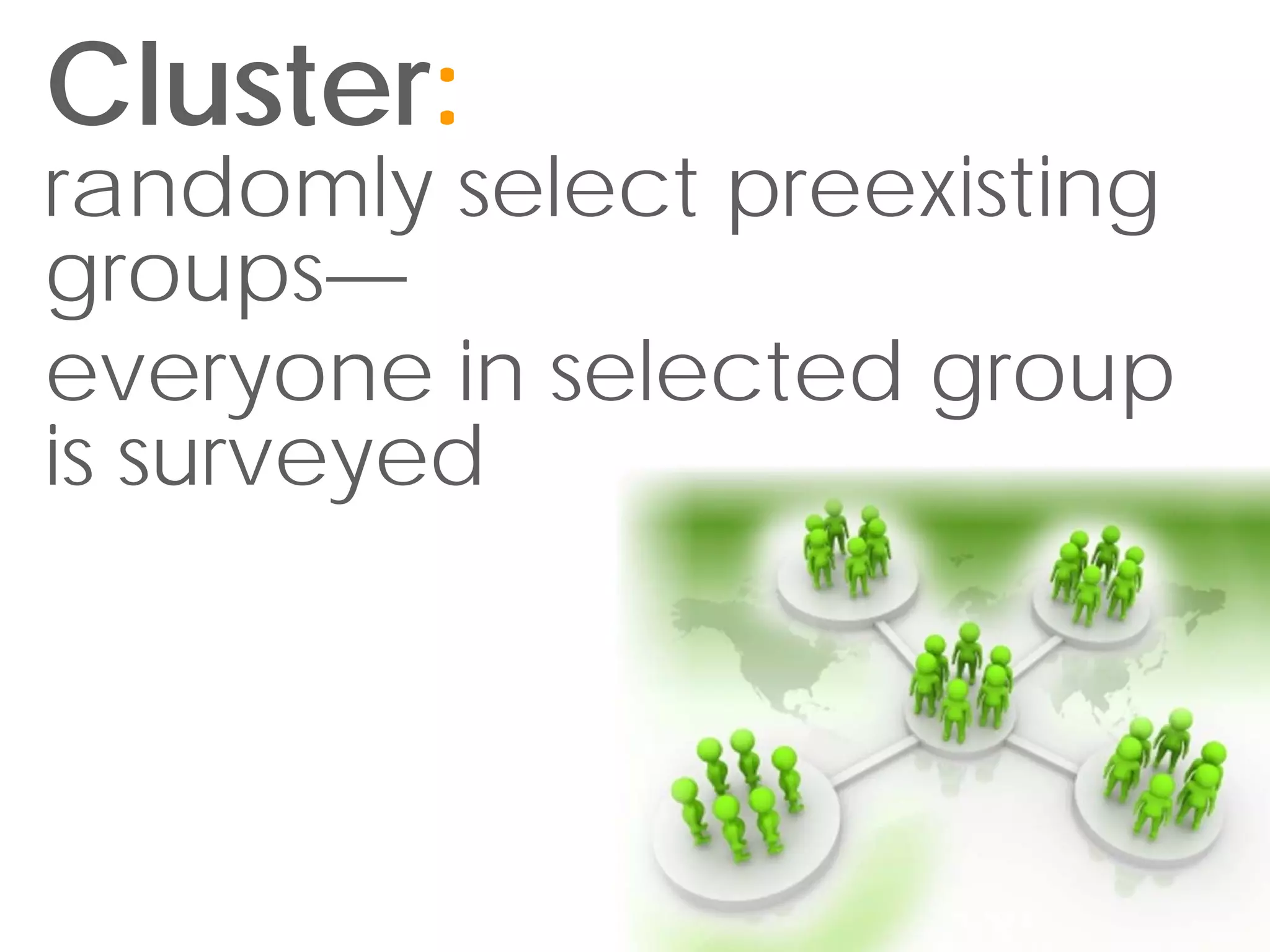
Cluster:
randomly select preexisting
groups—
everyone in selected group
is surveyed
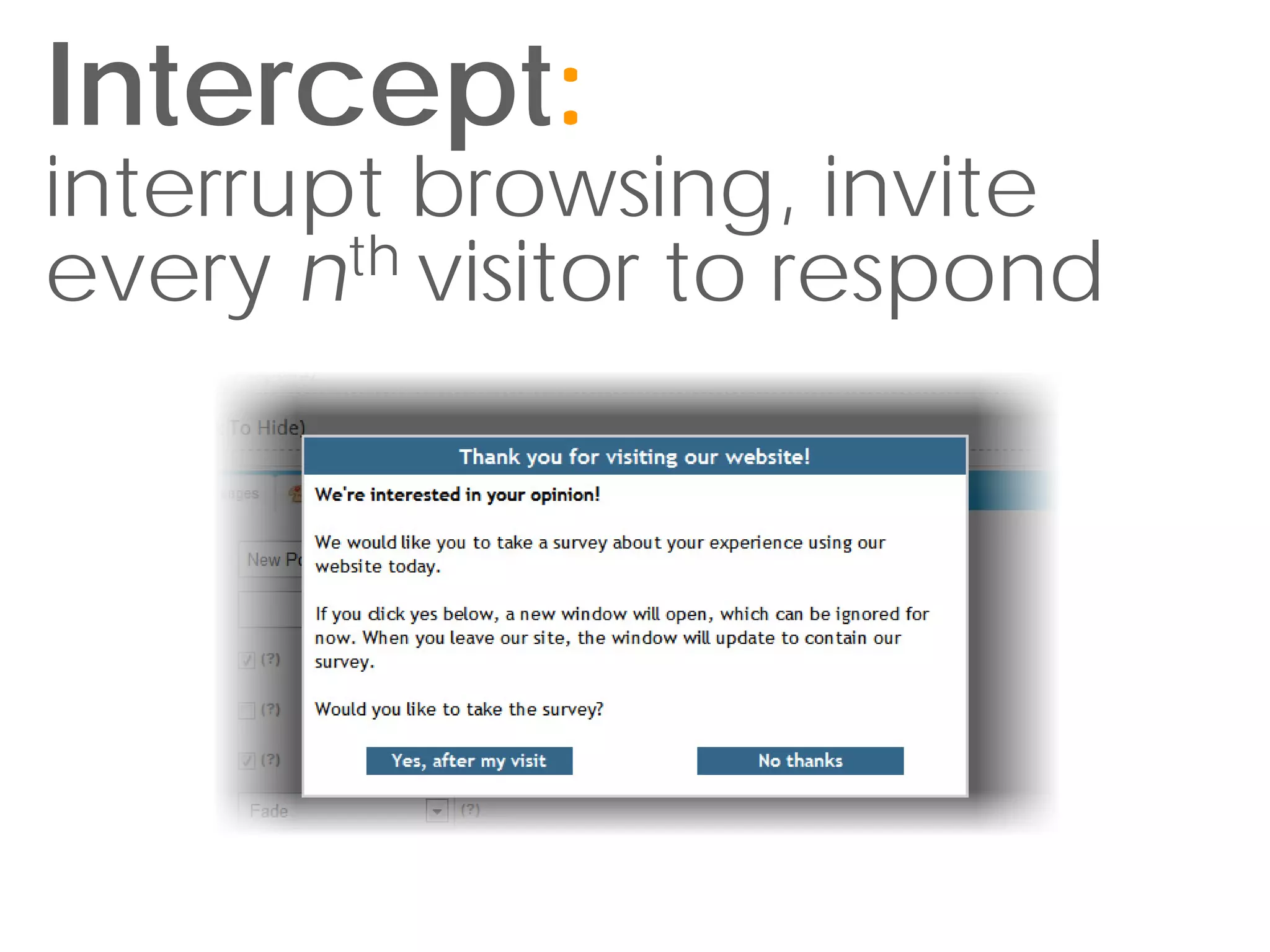
Intercept:
interrupt browsing, invite
every nth visitor to respond
Prerecrutited panel:
randomly select members
who have previously agreed
to participate
Nonprobability
Sampling
Participants are NOT
randomly selected
Convenience:
                           20


surveyor selects handy group
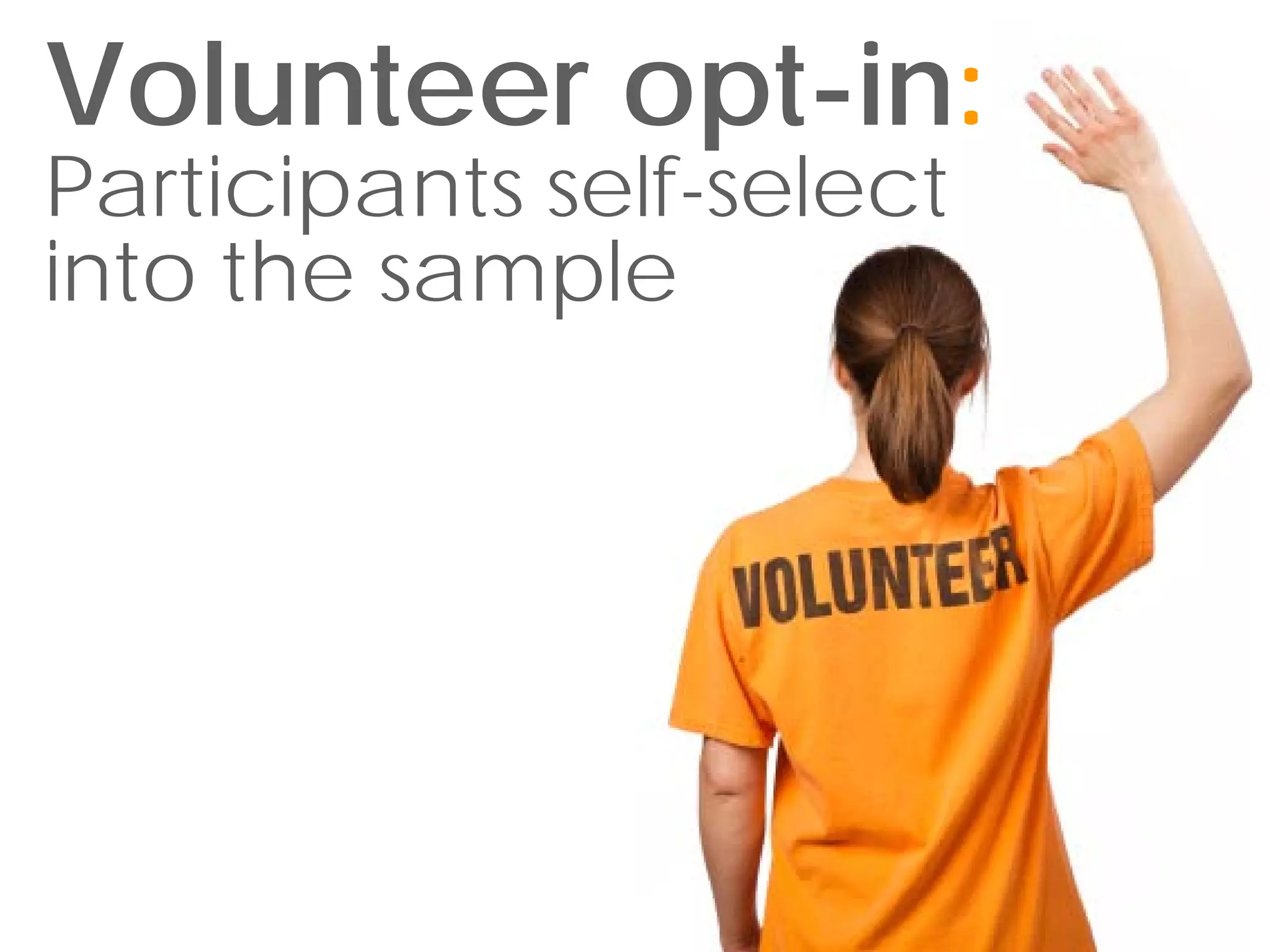
Volunteer opt-in:
                           21


Participants self-select
into the sample
Snowball:
participants refer associates
How large should
the sample be
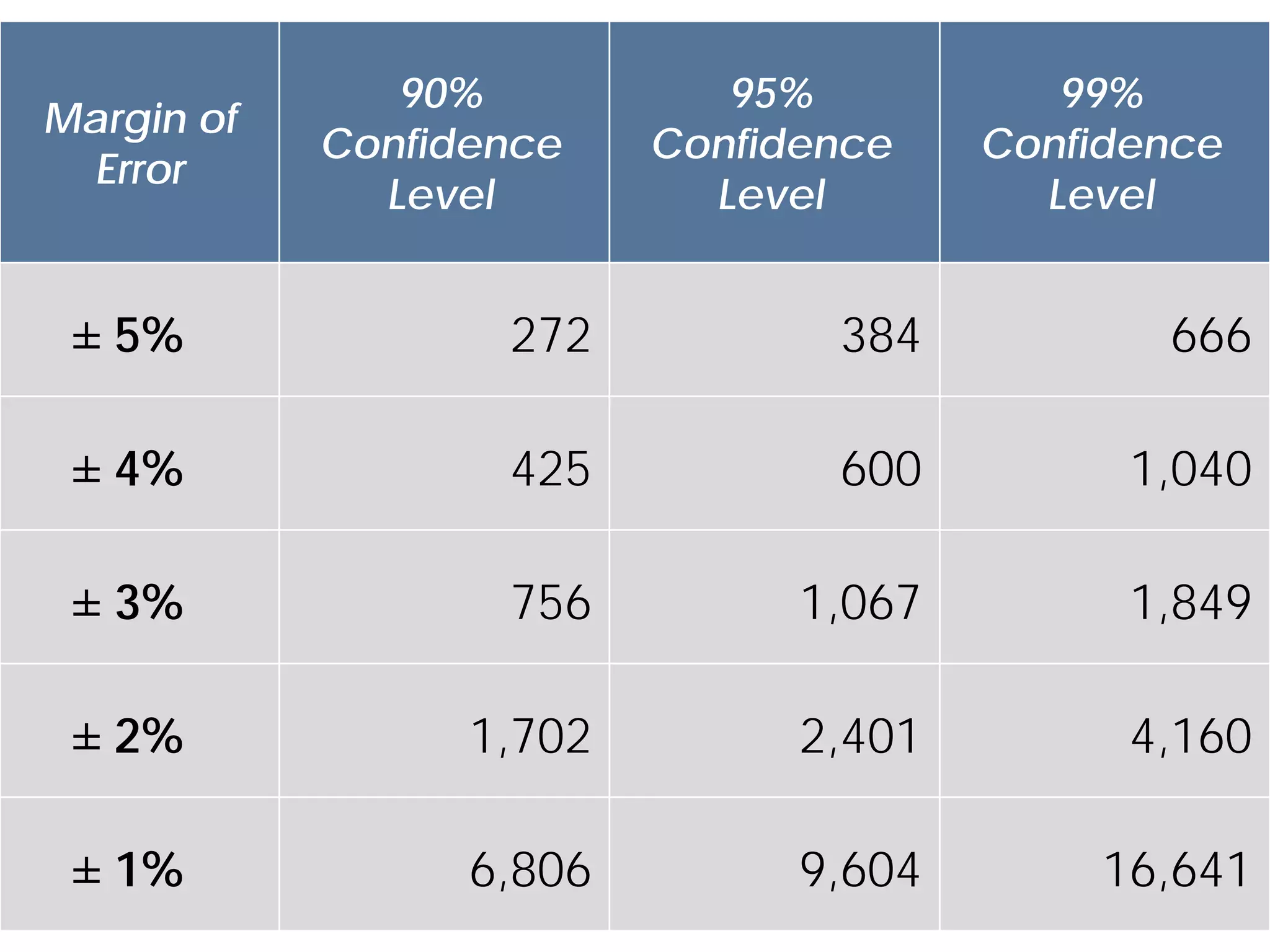
When using
simple random
   samples
90%           95%           99%
Margin of
            Confidence    Confidence    Confidence
 Error
              Level         Level         Level


 ± 5%              272           384           666

 ± 4%              425           600          1,040

 ± 3%              756          1,067         1,849

 ± 2%             1,702         2,401         4,160

 ± 1%             6,806         9,604        16,641
When using
nonprobability
  samples
Rules of thumb
  30 to 500

  About 10% of population

  Enough for subsample analysis

  10 times more than the number of variables

  As large as budget allows
Sources of
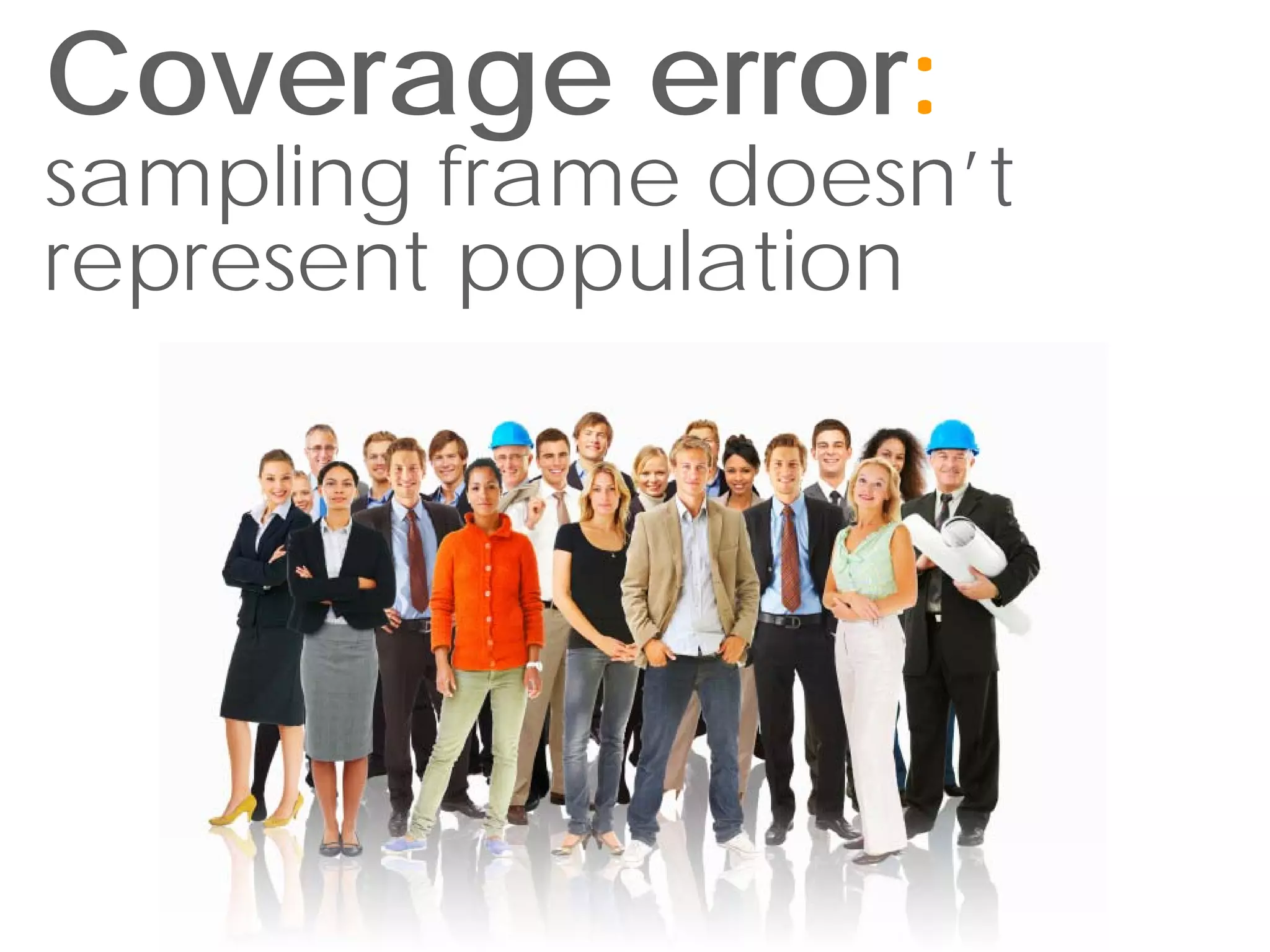
Coverage error:
sampling frame doesn’t
represent population
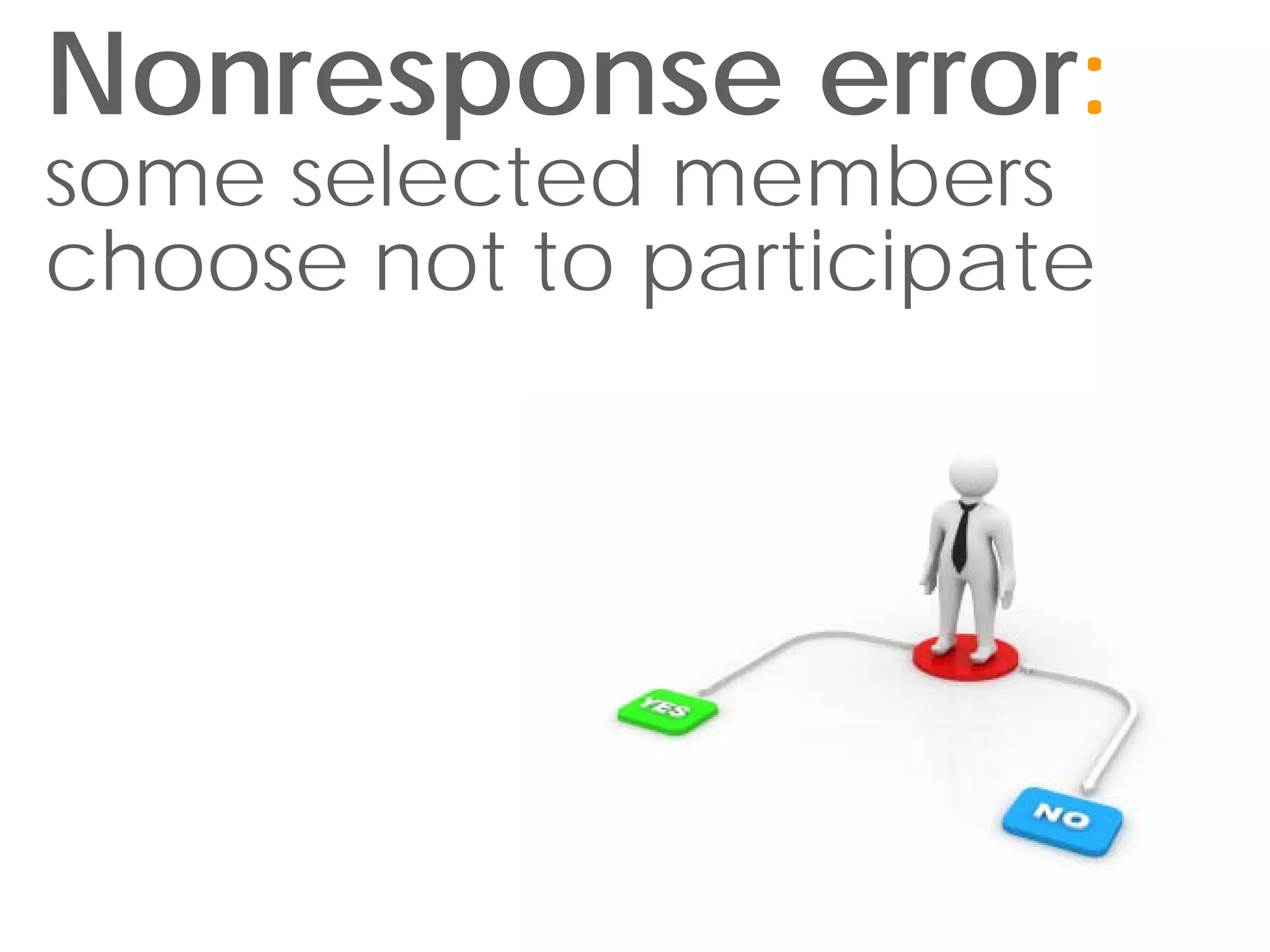
Nonresponse error:
some selected members
choose not to participate
Sampling error:
difference (due to chance)
between sample statistic and
population parameter
Summary
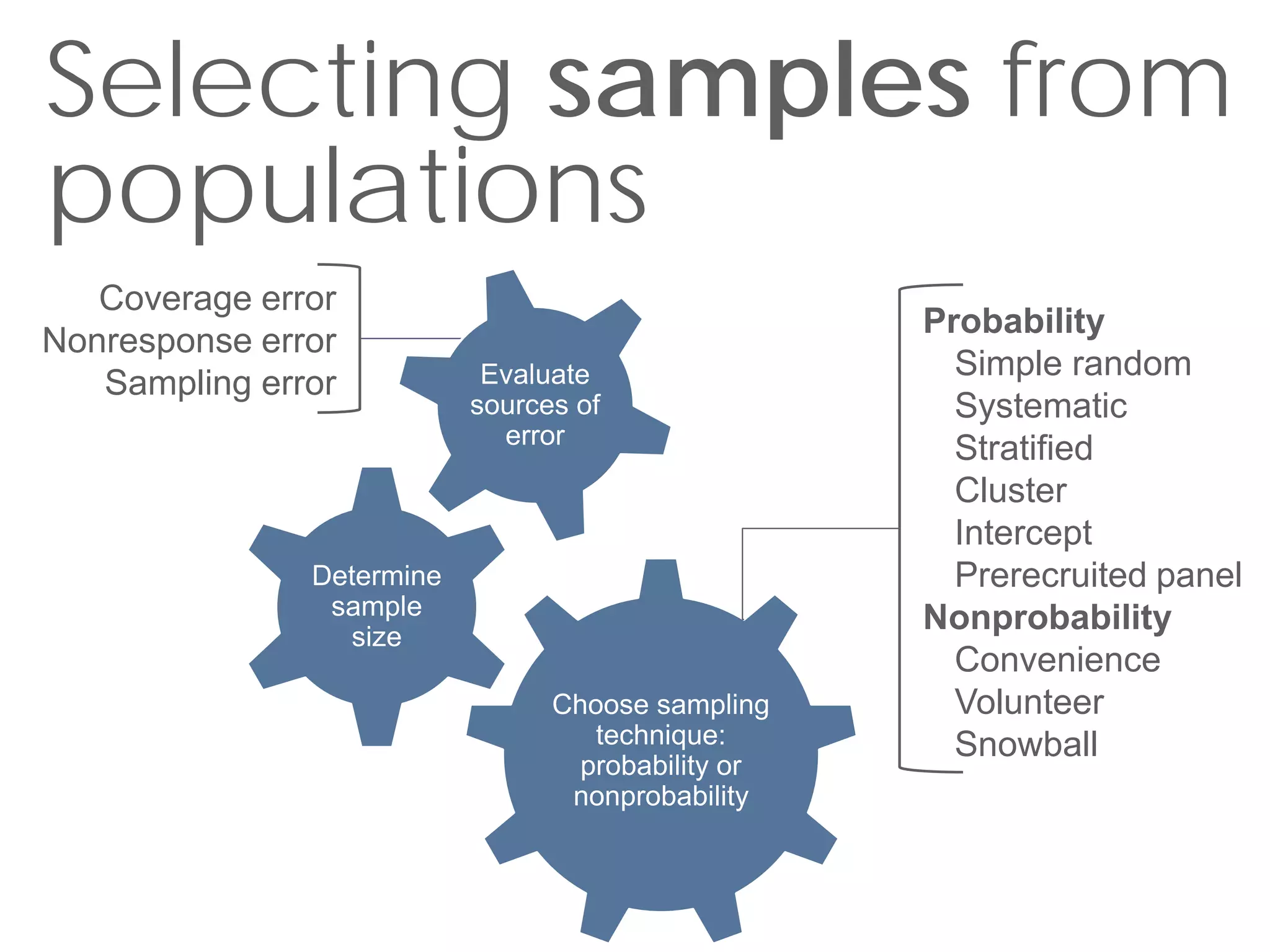
Selecting samples from
                                                                      33


populations
   Coverage error
                                                    Probability
Nonresponse error
                            Evaluate                  Simple random
   Sampling error
                           sources of                 Systematic
                             error
                                                      Stratified
                                                      Cluster
                                                      Intercept
               Determine                              Prerecruited panel
                sample                              Nonprobability
                 size
                                                      Convenience
                                 Choose sampling      Volunteer
                                    technique:        Snowball
                                   probability or
                                  nonprobability

ConductingOnlineSurveys_Sue_ch3