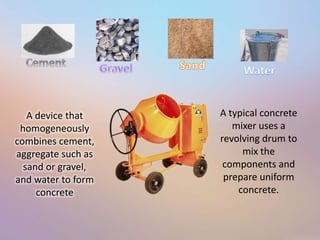
A typical concrete 
mixer uses a 
revolving drum to 
mix the 
components and 
prepare uniform 
concrete. 
A device that 
homogeneously 
combines cement, 
aggregate such as 
sand or gravel, 
and water to form 
concrete
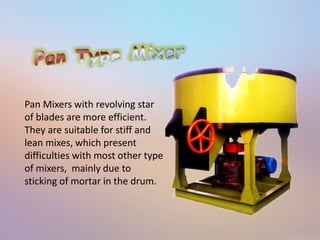
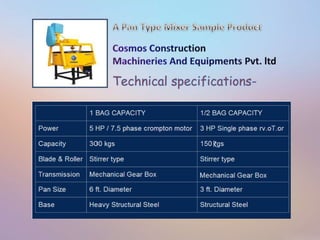
Pan Mixers with revolving star 
of blades are more efficient. 
They are suitable for stiff and 
lean mixes, which present 
difficulties with most other type 
of mixers, mainly due to 
sticking of mortar in the drum.
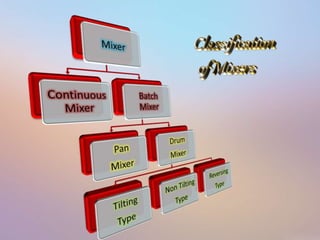
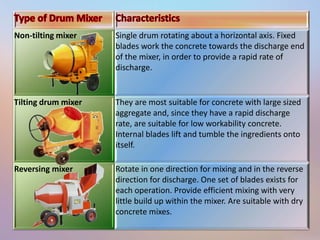
Non-tilting mixer Single drum rotating about a horizontal axis. Fixed 
blades work the concrete towards the discharge end 
of the mixer, in order to provide a rapid rate of 
discharge. 
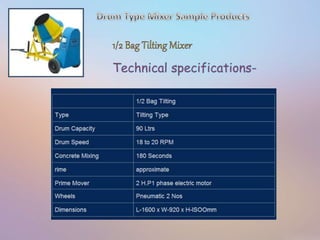
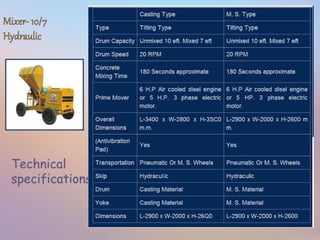
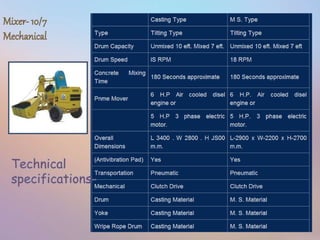
Tilting drum mixer They are most suitable for concrete with large sized 
aggregate and, since they have a rapid discharge 
rate, are suitable for low workability concrete. 
Internal blades lift and tumble the ingredients onto 
itself. 
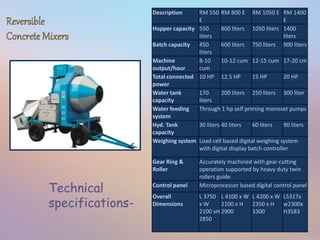
Reversing mixer Rotate in one direction for mixing and in the reverse 
direction for discharge. One set of blades exists for 
each operation. Provide efficient mixing with very 
little build up within the mixer. Are suitable with dry 
concrete mixes.
Description RM 550 
E 
RM 800 E RM 1050 E RM 1400 
E 
Hopper capacity 550 
liters 
800 liters 1050 liters 1400 
liters 
Batch capacity 450 
liters 
600 liters 750 liters 900 liters 
Machine 
output/hour 
8-10 
cum 
10-12 cum 12-15 cum 17-20 cm 
Total connected 
power 
10 HP 12.5 HP 15 HP 20 HP 
Water tank 
capacity 
170 
liters 
200 liters 250 liters 300 liter 
Water feeding 
system 
Through 1 hp self priming monoset pumps 
Hyd. Tank 
capacity 
30 liters 40 liters 60 liters 90 liters 
Weighing system Load cell based digital weighing system 
with digital display batch controller 
Gear Ring & 
Roller 
Accurately machined with gear cutting 
operation supported by heavy duty twin 
rollers guide 
Control panel Microprocessor based digital control panel 
Overall 
Dimensions 
L 3750 
x W 
2100 xH 
2850 
L 4100 x W 
2100 x H 
2900 
L 4200 x W 
2350 x H 
3300 
L5317x 
w2300x 
H3583
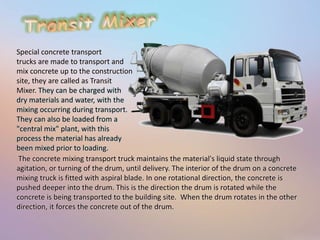
Special concrete transport 
trucks are made to transport and 
mix concrete up to the construction 
site, they are called as Transit 
Mixer. They can be charged with 
dry materials and water, with the 
mixing occurring during transport. 
They can also be loaded from a 
"central mix" plant, with this 
process the material has already 
been mixed prior to loading. 
The concrete mixing transport truck maintains the material's liquid state through 
agitation, or turning of the drum, until delivery. The interior of the drum on a concrete 
mixing truck is fitted with aspiral blade. In one rotational direction, the concrete is 
pushed deeper into the drum. This is the direction the drum is rotated while the 
concrete is being transported to the building site. When the drum rotates in the other 
direction, it forces the concrete out of the drum.
That’s 
it 
Thanks 
about 
Mixers 
For Watching

Concrete Mixers - Types, Suitability & Specifications

  • 2.
    A typical concrete mixer uses a revolving drum to mix the components and prepare uniform concrete. A device that homogeneously combines cement, aggregate such as sand or gravel, and water to form concrete
  • 7.
    Pan Mixers withrevolving star of blades are more efficient. They are suitable for stiff and lean mixes, which present difficulties with most other type of mixers, mainly due to sticking of mortar in the drum.
  • 9.
    Non-tilting mixer Singledrum rotating about a horizontal axis. Fixed blades work the concrete towards the discharge end of the mixer, in order to provide a rapid rate of discharge. Tilting drum mixer They are most suitable for concrete with large sized aggregate and, since they have a rapid discharge rate, are suitable for low workability concrete. Internal blades lift and tumble the ingredients onto itself. Reversing mixer Rotate in one direction for mixing and in the reverse direction for discharge. One set of blades exists for each operation. Provide efficient mixing with very little build up within the mixer. Are suitable with dry concrete mixes.
  • 15.
    Description RM 550 E RM 800 E RM 1050 E RM 1400 E Hopper capacity 550 liters 800 liters 1050 liters 1400 liters Batch capacity 450 liters 600 liters 750 liters 900 liters Machine output/hour 8-10 cum 10-12 cum 12-15 cum 17-20 cm Total connected power 10 HP 12.5 HP 15 HP 20 HP Water tank capacity 170 liters 200 liters 250 liters 300 liter Water feeding system Through 1 hp self priming monoset pumps Hyd. Tank capacity 30 liters 40 liters 60 liters 90 liters Weighing system Load cell based digital weighing system with digital display batch controller Gear Ring & Roller Accurately machined with gear cutting operation supported by heavy duty twin rollers guide Control panel Microprocessor based digital control panel Overall Dimensions L 3750 x W 2100 xH 2850 L 4100 x W 2100 x H 2900 L 4200 x W 2350 x H 3300 L5317x w2300x H3583
  • 18.
    Special concrete transport trucks are made to transport and mix concrete up to the construction site, they are called as Transit Mixer. They can be charged with dry materials and water, with the mixing occurring during transport. They can also be loaded from a "central mix" plant, with this process the material has already been mixed prior to loading. The concrete mixing transport truck maintains the material's liquid state through agitation, or turning of the drum, until delivery. The interior of the drum on a concrete mixing truck is fitted with aspiral blade. In one rotational direction, the concrete is pushed deeper into the drum. This is the direction the drum is rotated while the concrete is being transported to the building site. When the drum rotates in the other direction, it forces the concrete out of the drum.
  • 20.
    That’s it Thanks about Mixers For Watching