BATCHING
PLANT
Presented By
Abhijeet Kumar ray
Index
1.) Batching Plant
2.)Types of Batching Plant
3.)Dry Batching Plant
4.)Wet Batching Plant
5.)Batching Process
6.)Components of Batching plant
7.)Mobile Concrete Batching Plant
8.) Batching
9.) Plant Capacity
BATCHING
PLANT
A concrete plant, also known as a batch
plant or batching plant or a concrete
batching plant, is equipment that combines
various ingredients to form concrete .
Some of these inputs includes
water, air, admixtures, sand, aggregates
(rocks, gravel, etc.), fly ash, silica
fume, slag, and cement.
TYPES OF BATCHING
PLANT
• Dry mix plant
• Wet mix plant
Dry
Batching
Plant
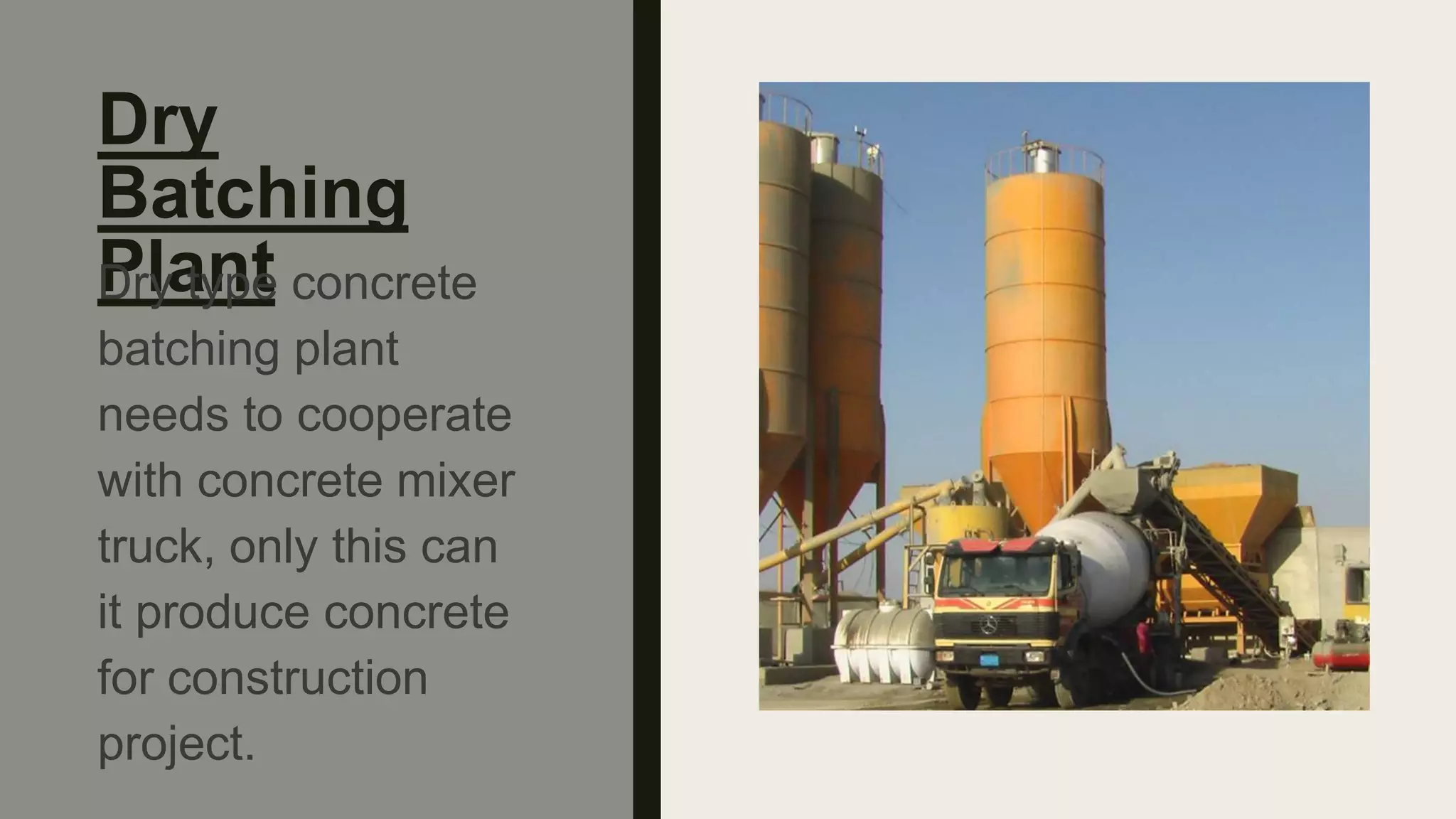
Dry type concrete
batching plant
needs to cooperate
with concrete mixer
truck, only this can
it produce concrete
for construction
project.
Wet Bathing
Plant
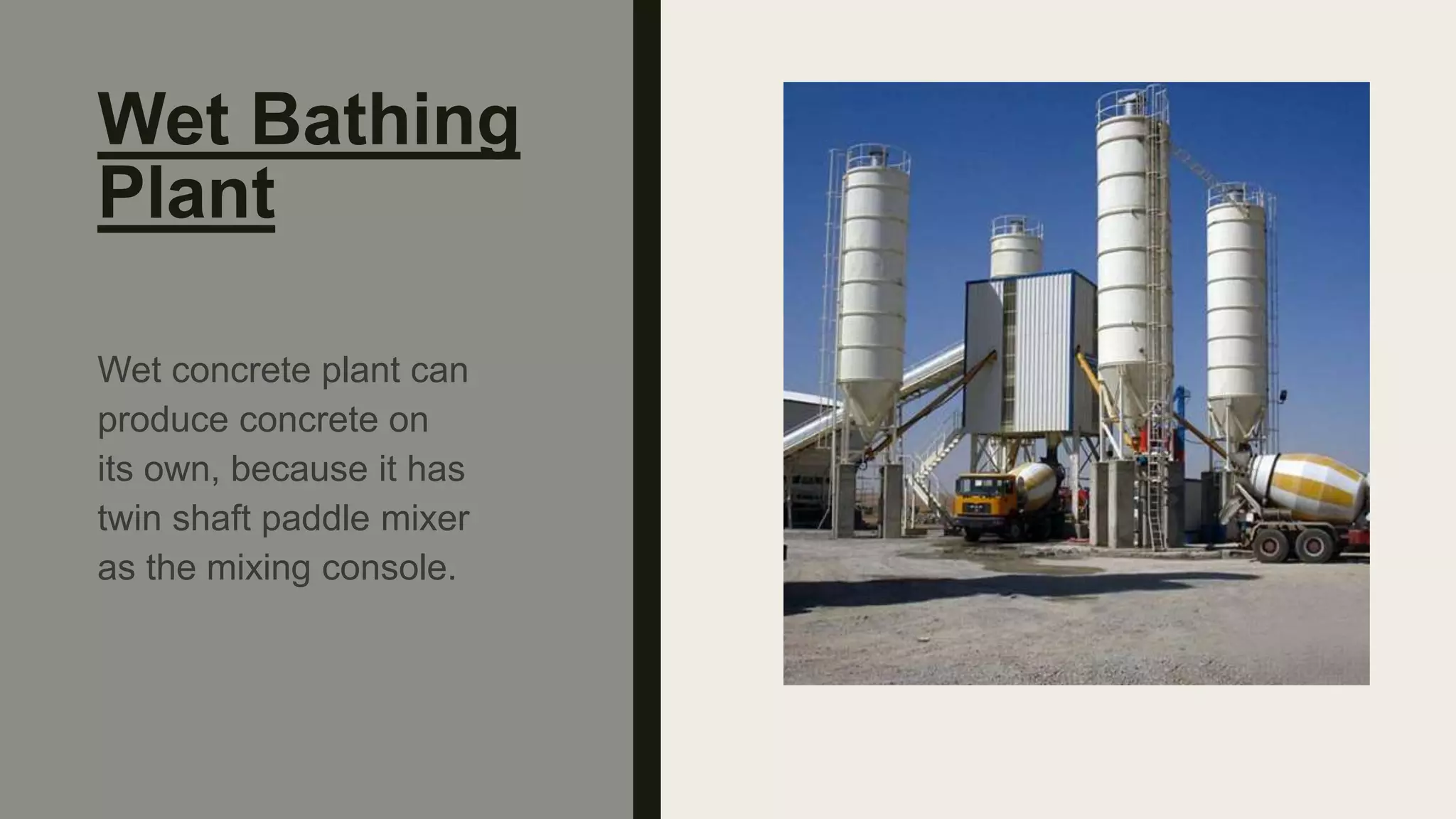
Wet concrete plant can
produce concrete on
its own, because it has
twin shaft paddle mixer
as the mixing console.
Batching Process:-
1.}Volumetric batching .
 Not desirable except for small non engineered jobs
‰
2.}Weigh Batching (Mass basis, IS456:2000)
Volumetric Batching:-
-Batching by mass (weights) as reproducibility of loose volume is inadequate
and is not economical .
Batching Process:-
-Control and storage of materials Aggregate bins for storing aggregate. Silos for storing
cement and cementitious materials.
Mobile
concrete
batching plant
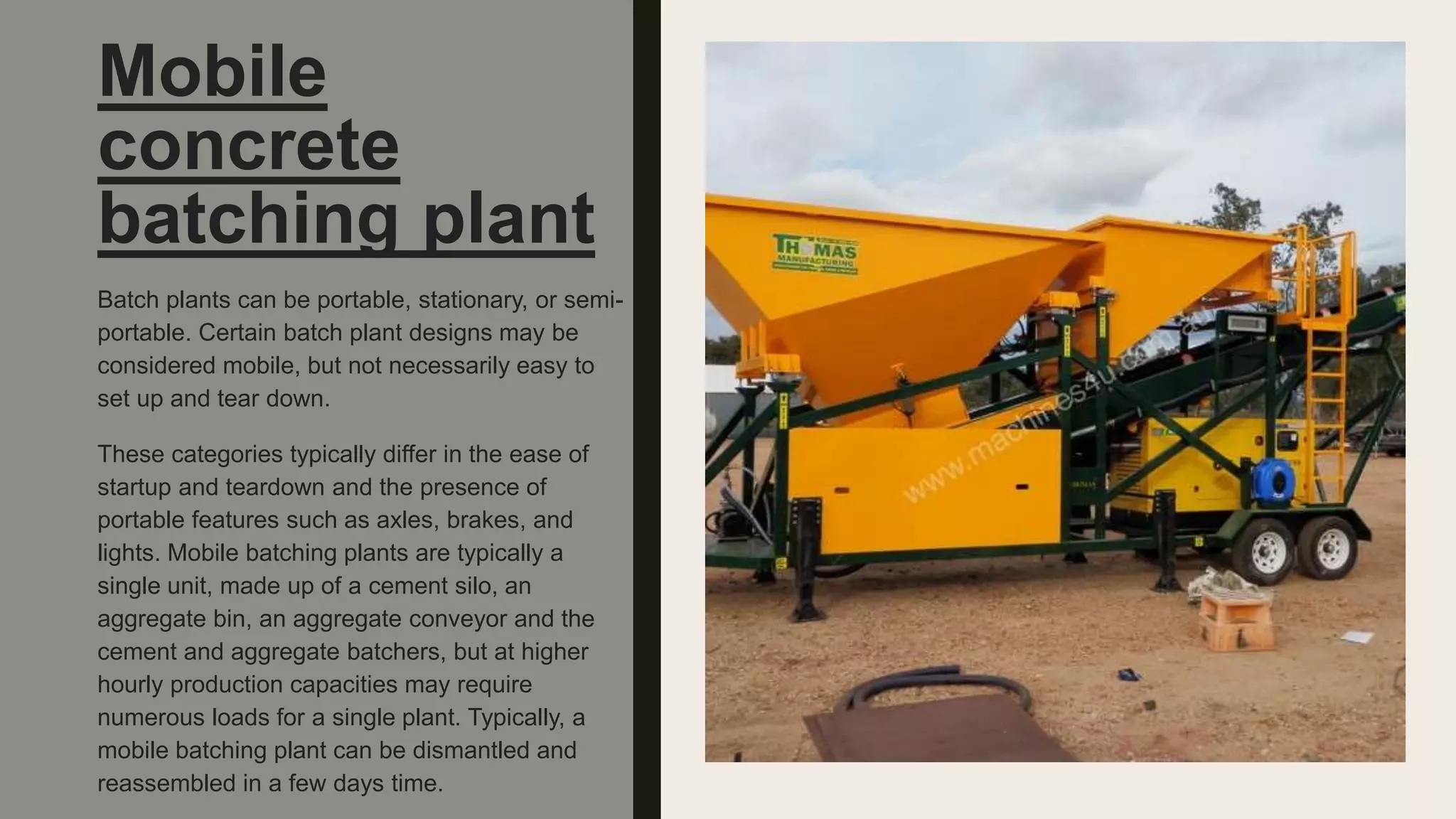
Batch plants can be portable, stationary, or semi-
portable. Certain batch plant designs may be
considered mobile, but not necessarily easy to
set up and tear down.
These categories typically differ in the ease of
startup and teardown and the presence of
portable features such as axles, brakes, and
lights. Mobile batching plants are typically a
single unit, made up of a cement silo, an
aggregate bin, an aggregate conveyor and the
cement and aggregate batchers, but at higher
hourly production capacities may require
numerous loads for a single plant. Typically, a
mobile batching plant can be dismantled and
reassembled in a few days time.
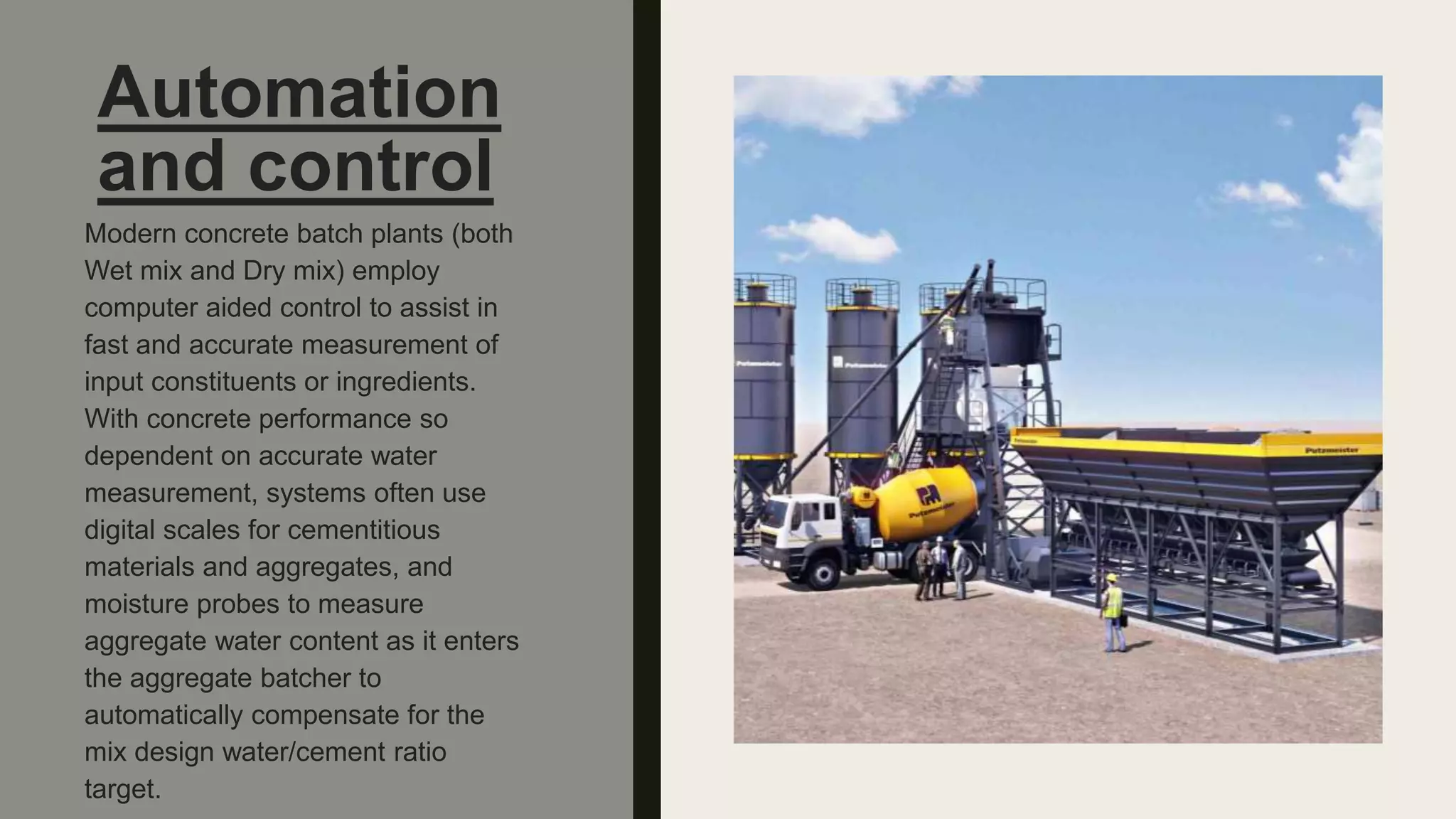
Automation
and control
Modern concrete batch plants (both
Wet mix and Dry mix) employ
computer aided control to assist in
fast and accurate measurement of
input constituents or ingredients.
With concrete performance so
dependent on accurate water
measurement, systems often use
digital scales for cementitious
materials and aggregates, and
moisture probes to measure
aggregate water content as it enters
the aggregate batcher to
automatically compensate for the
mix design water/cement ratio
target.
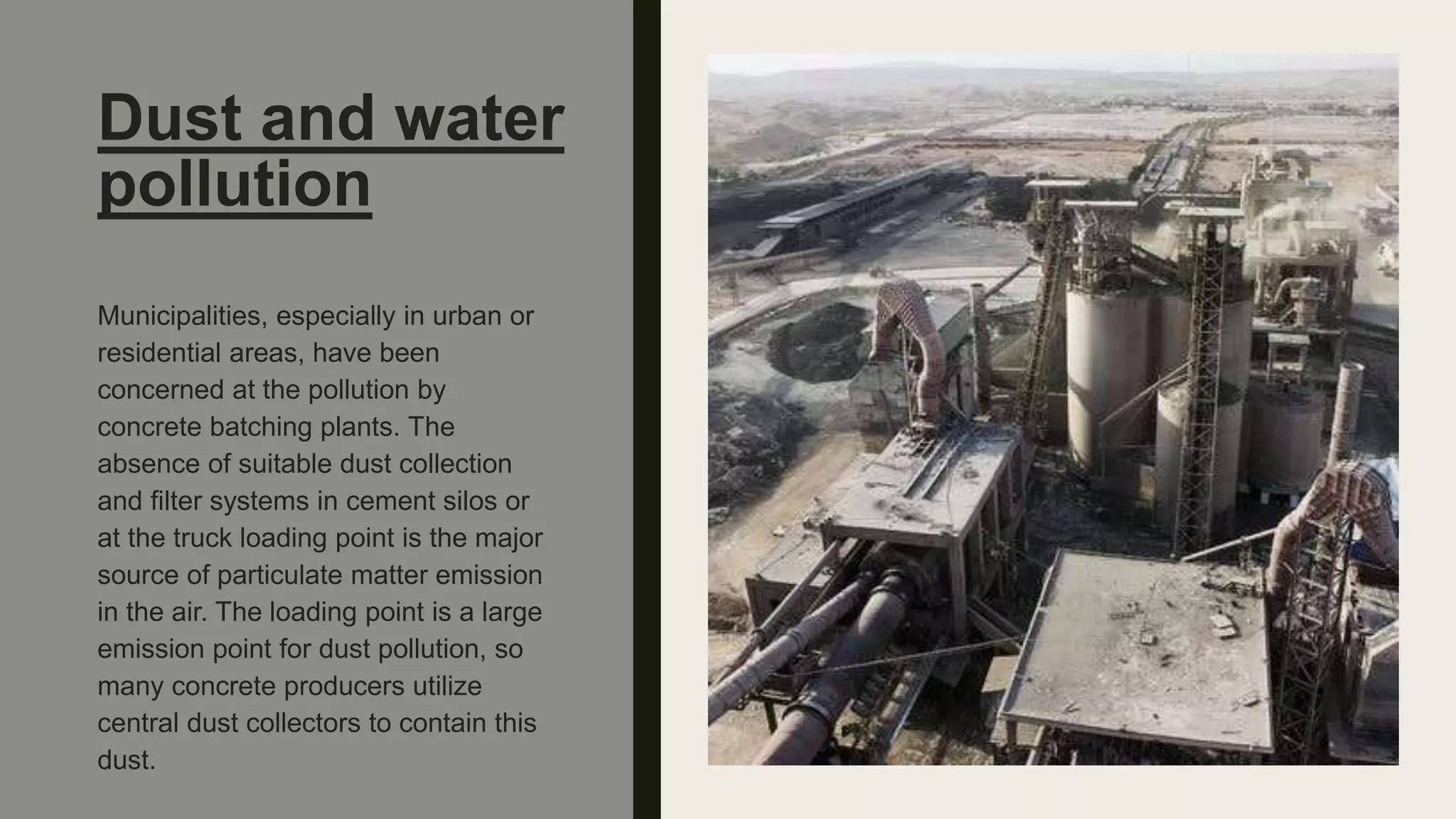
Dust and water
pollution
Municipalities, especially in urban or
residential areas, have been
concerned at the pollution by
concrete batching plants. The
absence of suitable dust collection
and filter systems in cement silos or
at the truck loading point is the major
source of particulate matter emission
in the air. The loading point is a large
emission point for dust pollution, so
many concrete producers utilize
central dust collectors to contain this
dust.
Components of a
Batching Plant:-
–A) Aggregate bins for various types of
aggregates.
– B) Feeding mechanisms such as
scrappers, conveyors or hoists etc. to
transfer aggregate to scales (balances).
– C) Balance and measuring system.
–D) Cement silos and a conveyor screw or
bucket conveyor .
– E) The storage tank for water and water
measuring system .
– F) Dispenser for chemical (liquid)
admixture.
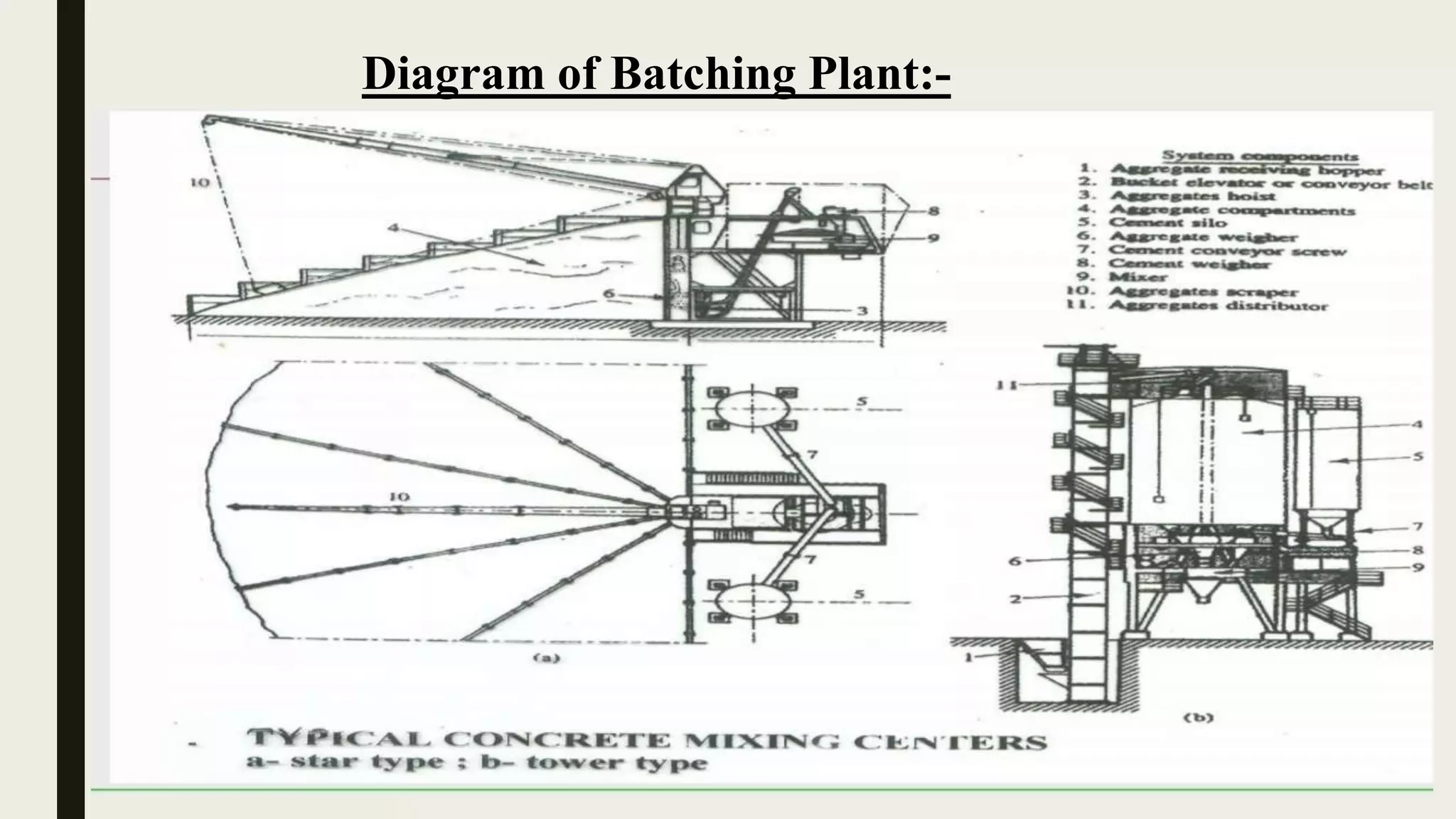
Diagram of Batching Plant:-
BATCHING:-
– Plant Type can be cyclic or continuous.
– Plant Type can be automatic or manual
– Accuracy:
Recommendation of IS 456 is ±2% for the
quantity of cement measured and ±3% for
the quantity of aggregate, water and
admixture being measured.
Plant Capacity:-
– Capacity depends on
1) size of the job;
2) required production rate; and
3) required standard of batching
performance.
*Capacity of the material handling system,
bin size, batcher size and; mixture size
and number controls the capacity
Q=min(Q1, Q2, Q3, Q4…..)
THANK YOU

Batching plant PPT for civil engineering presentation

  • 1.
  • 2.
    Index 1.) Batching Plant 2.)Typesof Batching Plant 3.)Dry Batching Plant 4.)Wet Batching Plant 5.)Batching Process 6.)Components of Batching plant 7.)Mobile Concrete Batching Plant 8.) Batching 9.) Plant Capacity
  • 3.
    BATCHING PLANT A concrete plant,also known as a batch plant or batching plant or a concrete batching plant, is equipment that combines various ingredients to form concrete . Some of these inputs includes water, air, admixtures, sand, aggregates (rocks, gravel, etc.), fly ash, silica fume, slag, and cement.
  • 4.
    TYPES OF BATCHING PLANT •Dry mix plant • Wet mix plant
  • 5.
    Dry Batching Plant Dry type concrete batchingplant needs to cooperate with concrete mixer truck, only this can it produce concrete for construction project.
  • 6.
    Wet Bathing Plant Wet concreteplant can produce concrete on its own, because it has twin shaft paddle mixer as the mixing console.
  • 7.
    Batching Process:- 1.}Volumetric batching.  Not desirable except for small non engineered jobs ‰ 2.}Weigh Batching (Mass basis, IS456:2000)
  • 8.
    Volumetric Batching:- -Batching bymass (weights) as reproducibility of loose volume is inadequate and is not economical . Batching Process:- -Control and storage of materials Aggregate bins for storing aggregate. Silos for storing cement and cementitious materials.
  • 9.
    Mobile concrete batching plant Batch plantscan be portable, stationary, or semi- portable. Certain batch plant designs may be considered mobile, but not necessarily easy to set up and tear down. These categories typically differ in the ease of startup and teardown and the presence of portable features such as axles, brakes, and lights. Mobile batching plants are typically a single unit, made up of a cement silo, an aggregate bin, an aggregate conveyor and the cement and aggregate batchers, but at higher hourly production capacities may require numerous loads for a single plant. Typically, a mobile batching plant can be dismantled and reassembled in a few days time.
  • 10.
    Automation and control Modern concretebatch plants (both Wet mix and Dry mix) employ computer aided control to assist in fast and accurate measurement of input constituents or ingredients. With concrete performance so dependent on accurate water measurement, systems often use digital scales for cementitious materials and aggregates, and moisture probes to measure aggregate water content as it enters the aggregate batcher to automatically compensate for the mix design water/cement ratio target.
  • 11.
    Dust and water pollution Municipalities,especially in urban or residential areas, have been concerned at the pollution by concrete batching plants. The absence of suitable dust collection and filter systems in cement silos or at the truck loading point is the major source of particulate matter emission in the air. The loading point is a large emission point for dust pollution, so many concrete producers utilize central dust collectors to contain this dust.
  • 12.
    Components of a BatchingPlant:- –A) Aggregate bins for various types of aggregates. – B) Feeding mechanisms such as scrappers, conveyors or hoists etc. to transfer aggregate to scales (balances). – C) Balance and measuring system. –D) Cement silos and a conveyor screw or bucket conveyor . – E) The storage tank for water and water measuring system . – F) Dispenser for chemical (liquid) admixture.
  • 13.
  • 16.
    BATCHING:- – Plant Typecan be cyclic or continuous. – Plant Type can be automatic or manual – Accuracy: Recommendation of IS 456 is ±2% for the quantity of cement measured and ±3% for the quantity of aggregate, water and admixture being measured.
  • 17.
    Plant Capacity:- – Capacitydepends on 1) size of the job; 2) required production rate; and 3) required standard of batching performance. *Capacity of the material handling system, bin size, batcher size and; mixture size and number controls the capacity Q=min(Q1, Q2, Q3, Q4…..)
  • 18.