
BLOOD VESSELS
INTRODUCTION
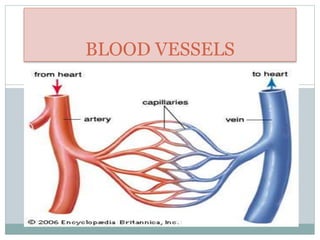
 The blood vessels are the part of the circulatory
system that transports
blood throughout the human body.
 There are three major types of blood vessels
 Arteries, which carry the blood away from the heart
 capillaries which enable the actual exchange of water
and chemicals between the blood and the tissues
 veins which carry blood from the capillaries back
toward the heart.
LAYERS OF BLOOD VESSELS
 Tunica intima thinnest layers
 Tunica media thickest layer of the arteries
 Tunica adventitia thickest layer of the vein
 Capillaries consist of little more than a layer
of endothelium and occasional connective tissue.
 When blood vessels connect to form a region of
diffuse vascular supply it is called an anastomosis
 Anastomoses provide critical alternative routes for
blood to flow in case of blockages.
TYPES OF BLOOD VESSELS
 Arteries
 Elastic arteries
 Distributing arteries
 Arterioles
 Capillaries (the smallest blood vessels)
 Venules
 Veins
 Atherosclerosis is a disease in which plaque builds
up inside your arteries.
 Bypass grafting is also known as coronary artery
bypass grafting
 Is a type of surgery that improves blood flow to the
heart
 Aortic aneurysm is a stretched and bulging section in
the wall of the aorta.
ICD-10-CM GUIDELINES
 Atherosclerosis-i70
 Aortic aneurysm and dissection-i71
 Other aneurysm-i72
 Other peripheral vascular diseases-i73
 Arterial embolism and thrombosis-i74
 Atheroembolism-i75
 Septic arterial embolism-i76
 Other disorders of arteries and arterioles-i77
 Diseases of capillaries-i78
 Disorders of arteries,arterioles and capillaries in
diseases classified elsewhere-i79
 https://www.medesunglobal.com
THANK
YOU

Blood vessels

  • 1.
  • 2.
    INTRODUCTION  The bloodvessels are the part of the circulatory system that transports blood throughout the human body.  There are three major types of blood vessels  Arteries, which carry the blood away from the heart
  • 3.
     capillaries whichenable the actual exchange of water and chemicals between the blood and the tissues  veins which carry blood from the capillaries back toward the heart.
  • 4.
    LAYERS OF BLOODVESSELS  Tunica intima thinnest layers  Tunica media thickest layer of the arteries  Tunica adventitia thickest layer of the vein  Capillaries consist of little more than a layer of endothelium and occasional connective tissue.
  • 5.
     When bloodvessels connect to form a region of diffuse vascular supply it is called an anastomosis  Anastomoses provide critical alternative routes for blood to flow in case of blockages.
  • 6.
    TYPES OF BLOODVESSELS  Arteries  Elastic arteries  Distributing arteries  Arterioles  Capillaries (the smallest blood vessels)  Venules  Veins
  • 7.
     Atherosclerosis isa disease in which plaque builds up inside your arteries.  Bypass grafting is also known as coronary artery bypass grafting  Is a type of surgery that improves blood flow to the heart  Aortic aneurysm is a stretched and bulging section in the wall of the aorta.
  • 8.
    ICD-10-CM GUIDELINES  Atherosclerosis-i70 Aortic aneurysm and dissection-i71  Other aneurysm-i72  Other peripheral vascular diseases-i73  Arterial embolism and thrombosis-i74
  • 9.
     Atheroembolism-i75  Septicarterial embolism-i76  Other disorders of arteries and arterioles-i77  Diseases of capillaries-i78  Disorders of arteries,arterioles and capillaries in diseases classified elsewhere-i79  https://www.medesunglobal.com
  • 10.