Computer
The electronic device which accept the
data, process the data, transform in to
information and give us information as
output
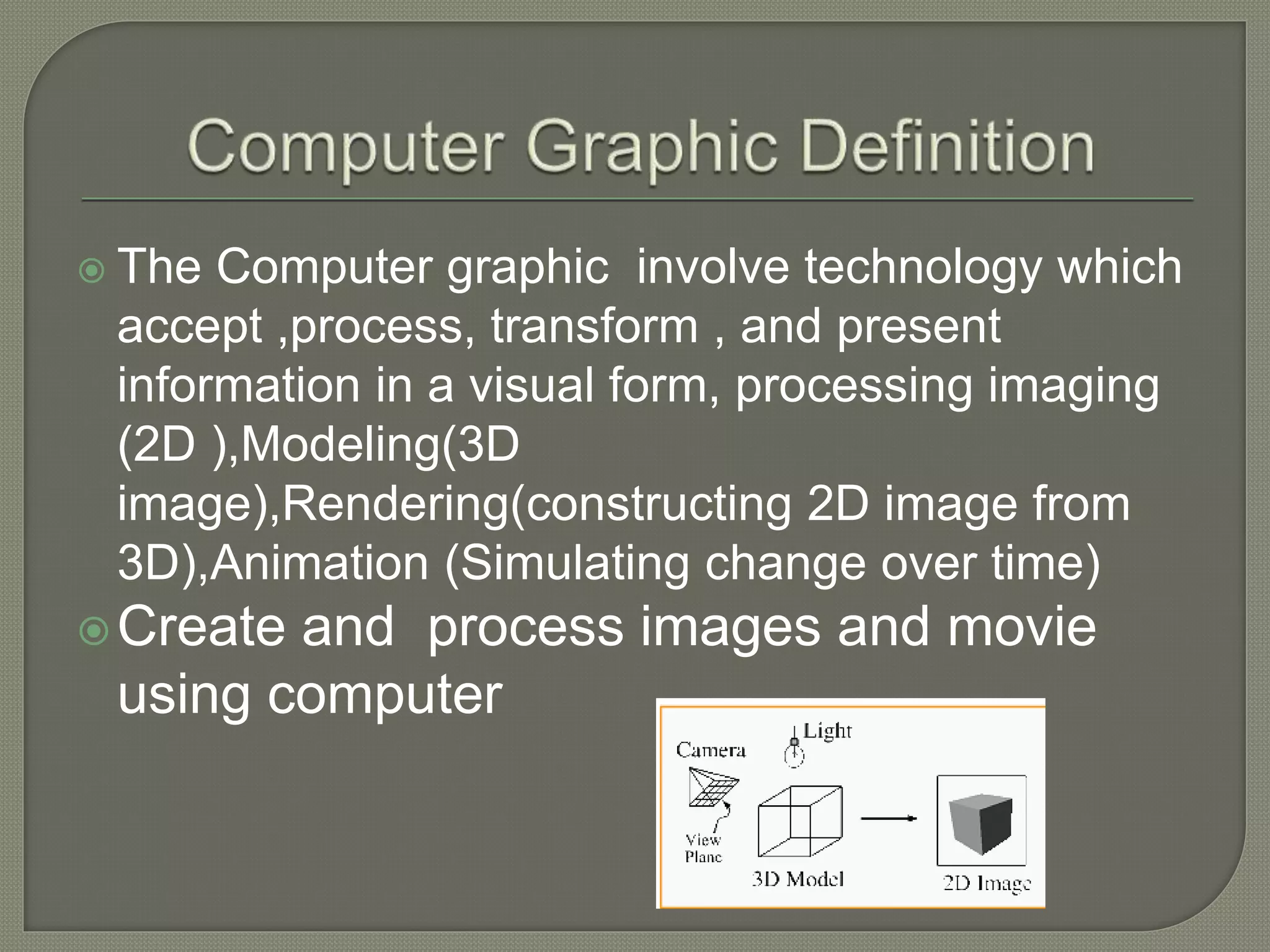
 The Computer graphic involve technology which
accept ,process, transform , and present
information in a visual form, processing imaging
(2D ),Modeling(3D
image),Rendering(constructing 2D image from
3D),Animation (Simulating change over time)
Create and process images and movie
using computer
Visualization –Displaying processed
information
Imaging –processing images 2D
Rendering –conversion of images
Animation-simulating , motion capture
Modeling-representing of 3d view ,solid
view
Representing-object present graphically
interface
 Entertainment-movies ,game simulation
 Computer-aided design-Design of object ,place, building
with the help of Computer graphic
 Scientific visualization-Human body structure, medicine
and virtual surgery
 Training-Rules for driving simulation, flight simulation
etc .
 Education-graphical view of organism ,analysis of
decease
 E-commerce-virtual views ,architecture simulation
 Computer art-design Art, and historical images
 User interface; interacting devices with user graphically
 Science
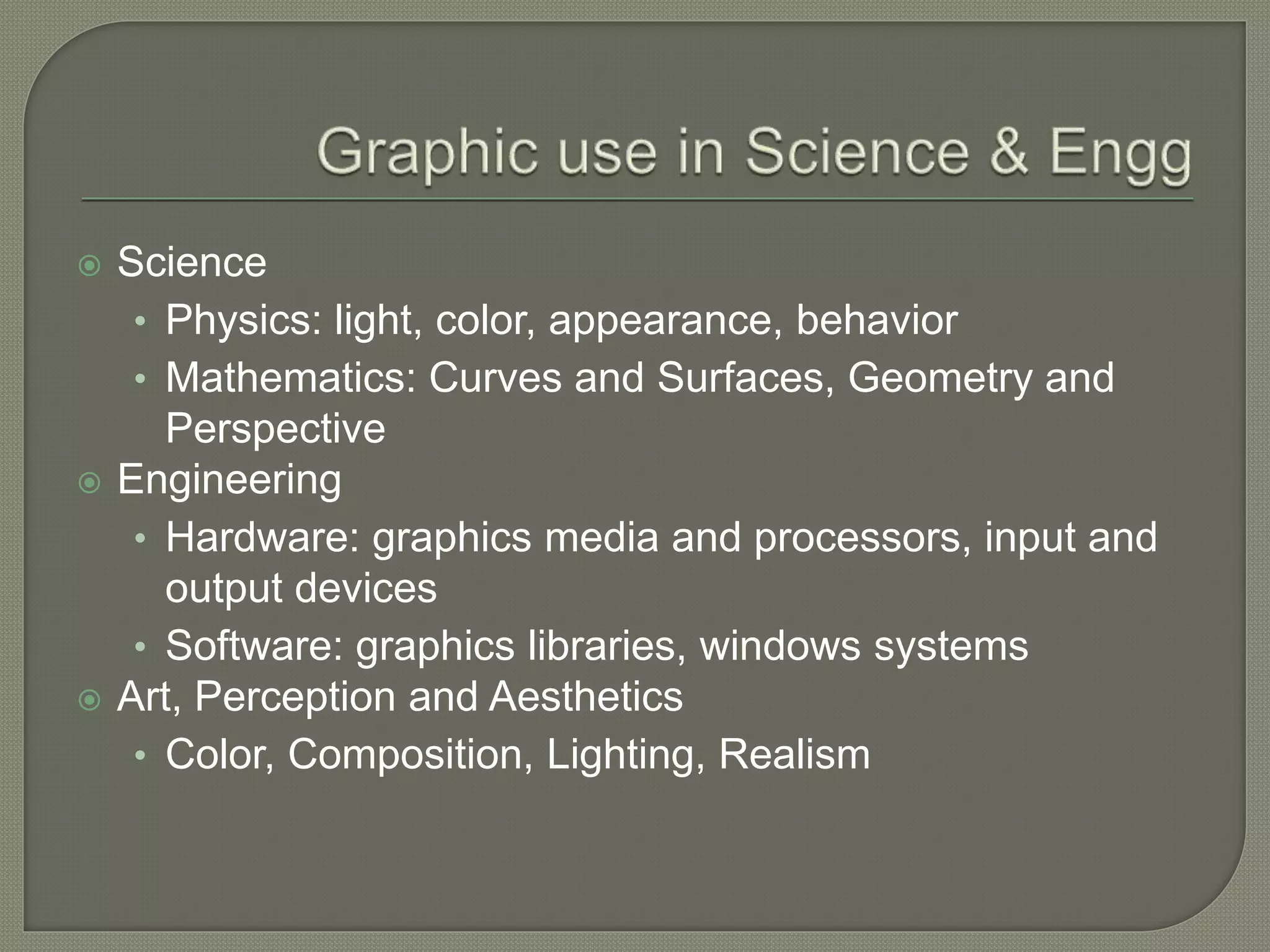
• Physics: light, color, appearance, behavior
• Mathematics: Curves and Surfaces, Geometry and
Perspective
 Engineering
• Hardware: graphics media and processors, input and
output devices
• Software: graphics libraries, windows systems
 Art, Perception and Aesthetics
• Color, Composition, Lighting, Realism
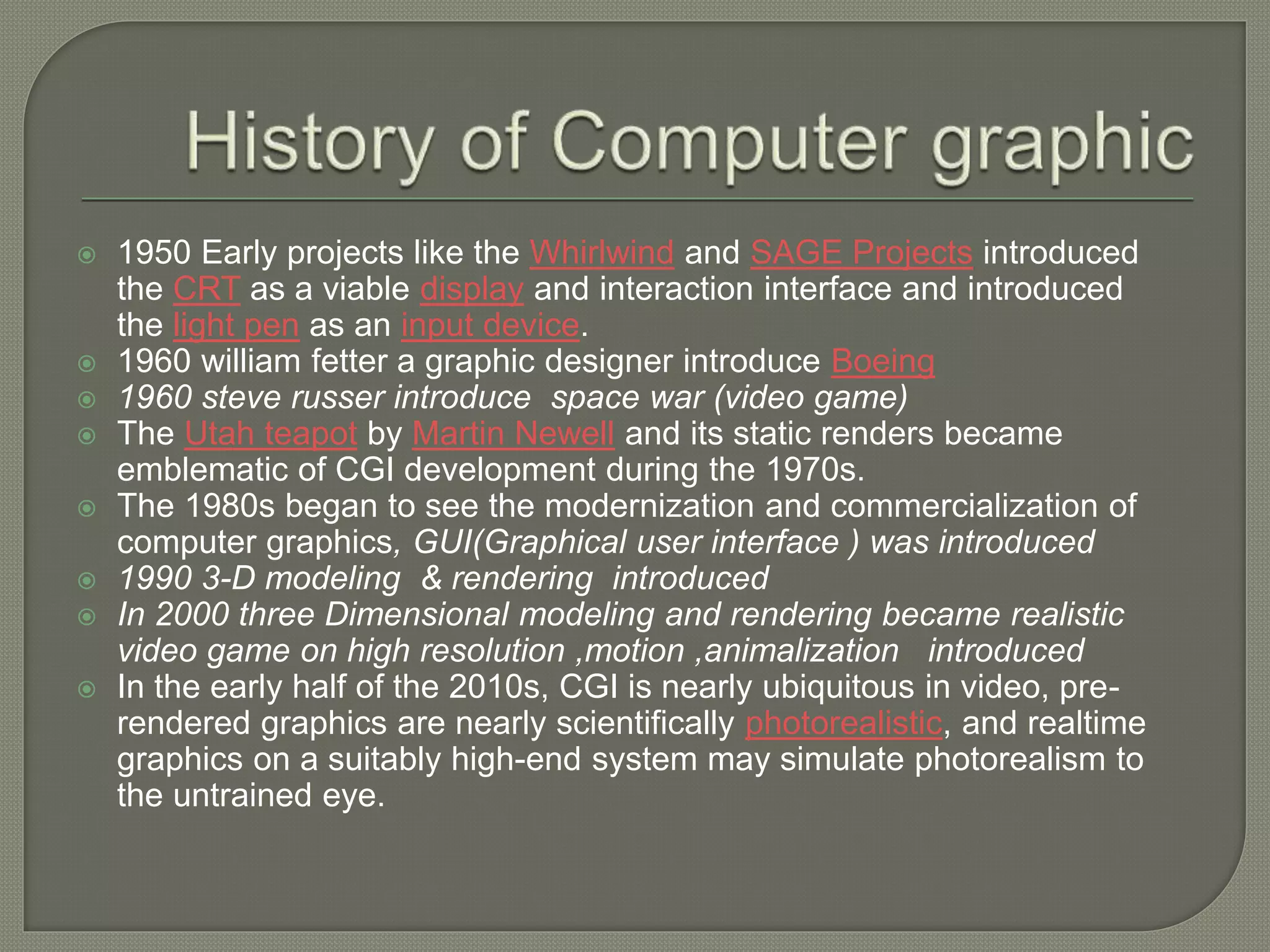
 1950 Early projects like the Whirlwind and SAGE Projects introduced
the CRT as a viable display and interaction interface and introduced
the light pen as an input device.
 1960 william fetter a graphic designer introduce Boeing
 1960 steve russer introduce space war (video game)
 The Utah teapot by Martin Newell and its static renders became
emblematic of CGI development during the 1970s.
 The 1980s began to see the modernization and commercialization of
computer graphics, GUI(Graphical user interface ) was introduced
 1990 3-D modeling & rendering introduced
 In 2000 three Dimensional modeling and rendering became realistic
video game on high resolution ,motion ,animalization introduced
 In the early half of the 2010s, CGI is nearly ubiquitous in video, pre-
rendered graphics are nearly scientifically photorealistic, and realtime
graphics on a suitably high-end system may simulate photorealism to
the untrained eye.

Computer graphics

  • 1.
    Computer The electronic devicewhich accept the data, process the data, transform in to information and give us information as output
  • 2.
     The Computergraphic involve technology which accept ,process, transform , and present information in a visual form, processing imaging (2D ),Modeling(3D image),Rendering(constructing 2D image from 3D),Animation (Simulating change over time) Create and process images and movie using computer
  • 3.
    Visualization –Displaying processed information Imaging–processing images 2D Rendering –conversion of images Animation-simulating , motion capture Modeling-representing of 3d view ,solid view Representing-object present graphically interface
  • 4.
     Entertainment-movies ,gamesimulation  Computer-aided design-Design of object ,place, building with the help of Computer graphic  Scientific visualization-Human body structure, medicine and virtual surgery  Training-Rules for driving simulation, flight simulation etc .  Education-graphical view of organism ,analysis of decease  E-commerce-virtual views ,architecture simulation  Computer art-design Art, and historical images  User interface; interacting devices with user graphically
  • 5.
     Science • Physics:light, color, appearance, behavior • Mathematics: Curves and Surfaces, Geometry and Perspective  Engineering • Hardware: graphics media and processors, input and output devices • Software: graphics libraries, windows systems  Art, Perception and Aesthetics • Color, Composition, Lighting, Realism
  • 6.
     1950 Earlyprojects like the Whirlwind and SAGE Projects introduced the CRT as a viable display and interaction interface and introduced the light pen as an input device.  1960 william fetter a graphic designer introduce Boeing  1960 steve russer introduce space war (video game)  The Utah teapot by Martin Newell and its static renders became emblematic of CGI development during the 1970s.  The 1980s began to see the modernization and commercialization of computer graphics, GUI(Graphical user interface ) was introduced  1990 3-D modeling & rendering introduced  In 2000 three Dimensional modeling and rendering became realistic video game on high resolution ,motion ,animalization introduced  In the early half of the 2010s, CGI is nearly ubiquitous in video, pre- rendered graphics are nearly scientifically photorealistic, and realtime graphics on a suitably high-end system may simulate photorealism to the untrained eye.

Editor's Notes

  • #2 ARK Computer Graphics