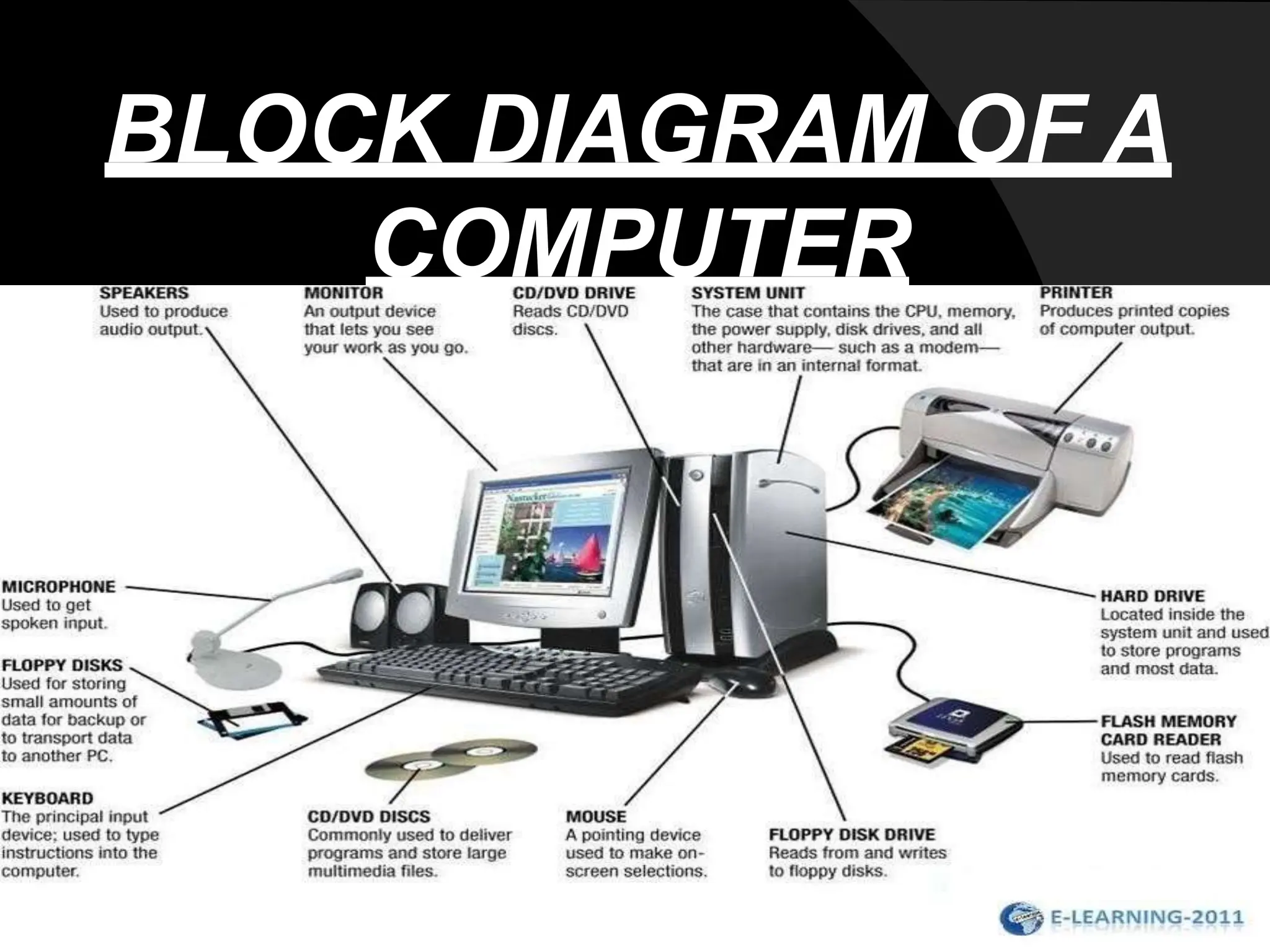
BLOCK DIAGRAM OF A
COMPUTER
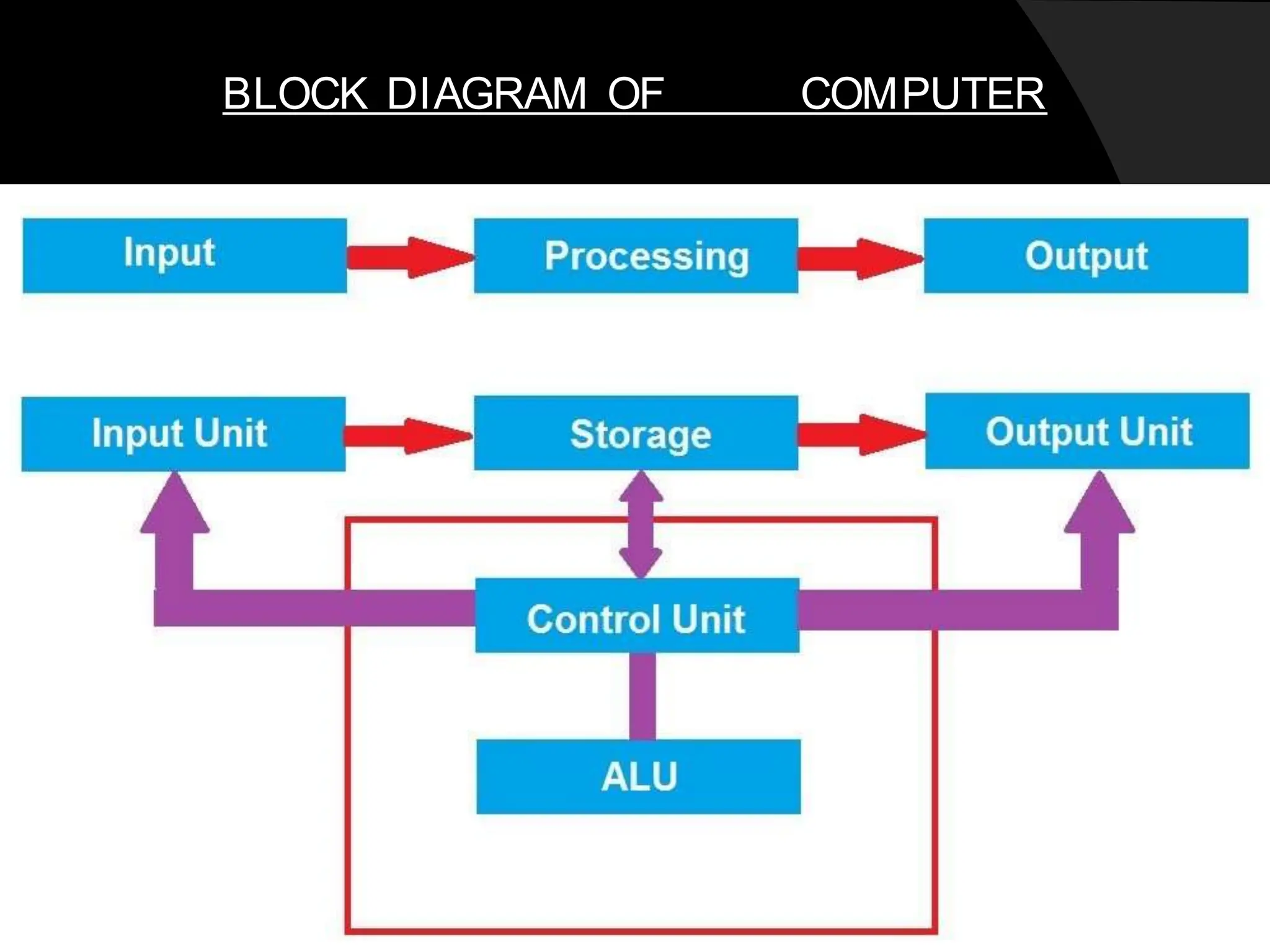
BLOCK DIAGRAM OF COMPUTER
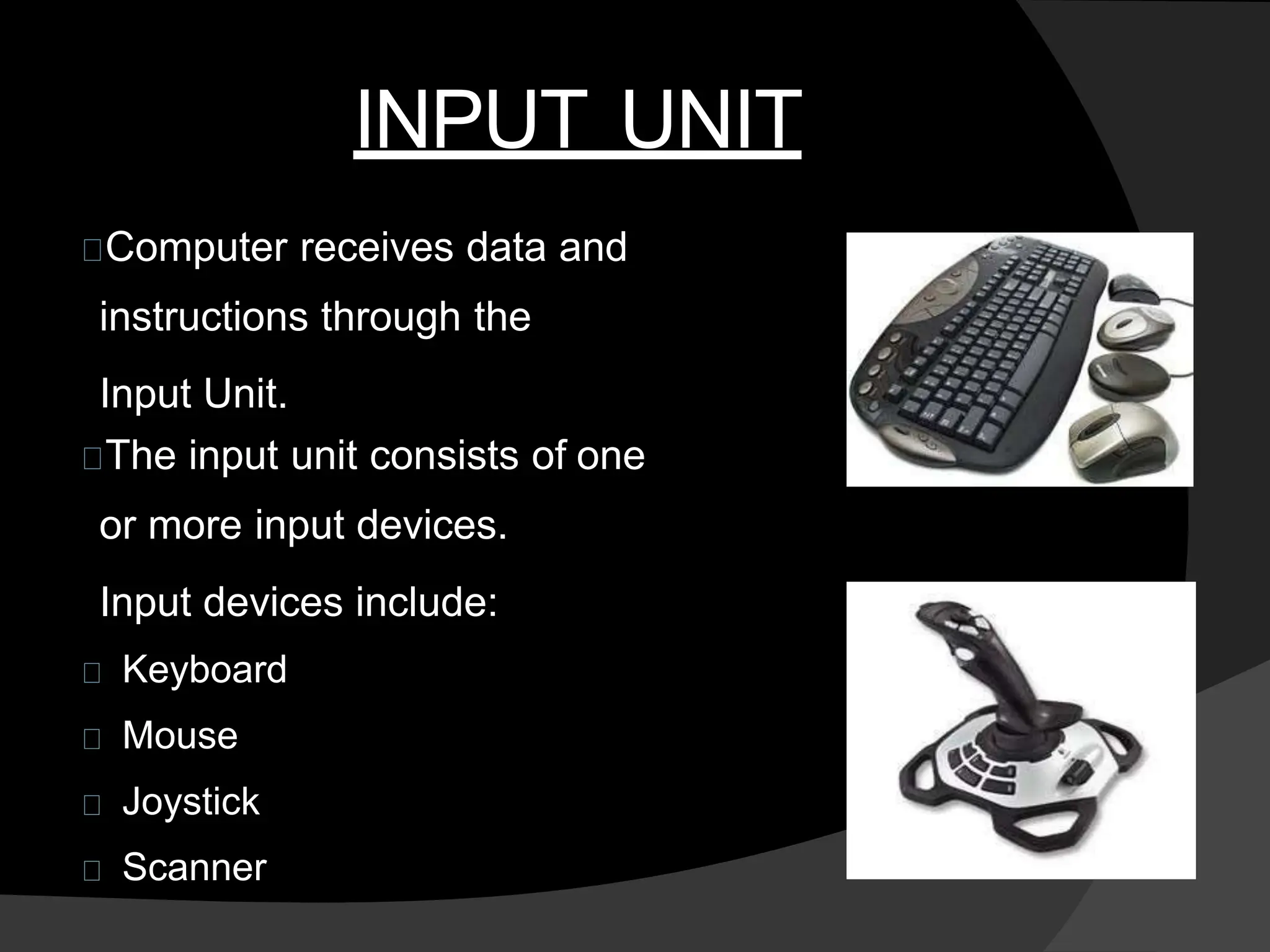
INPUT UNIT
Computer receives data and
instructions through the
Input Unit.
The input unit consists of one
or more input devices.
Input devices include:
Keyboard
Mouse
Joystick
Scanner
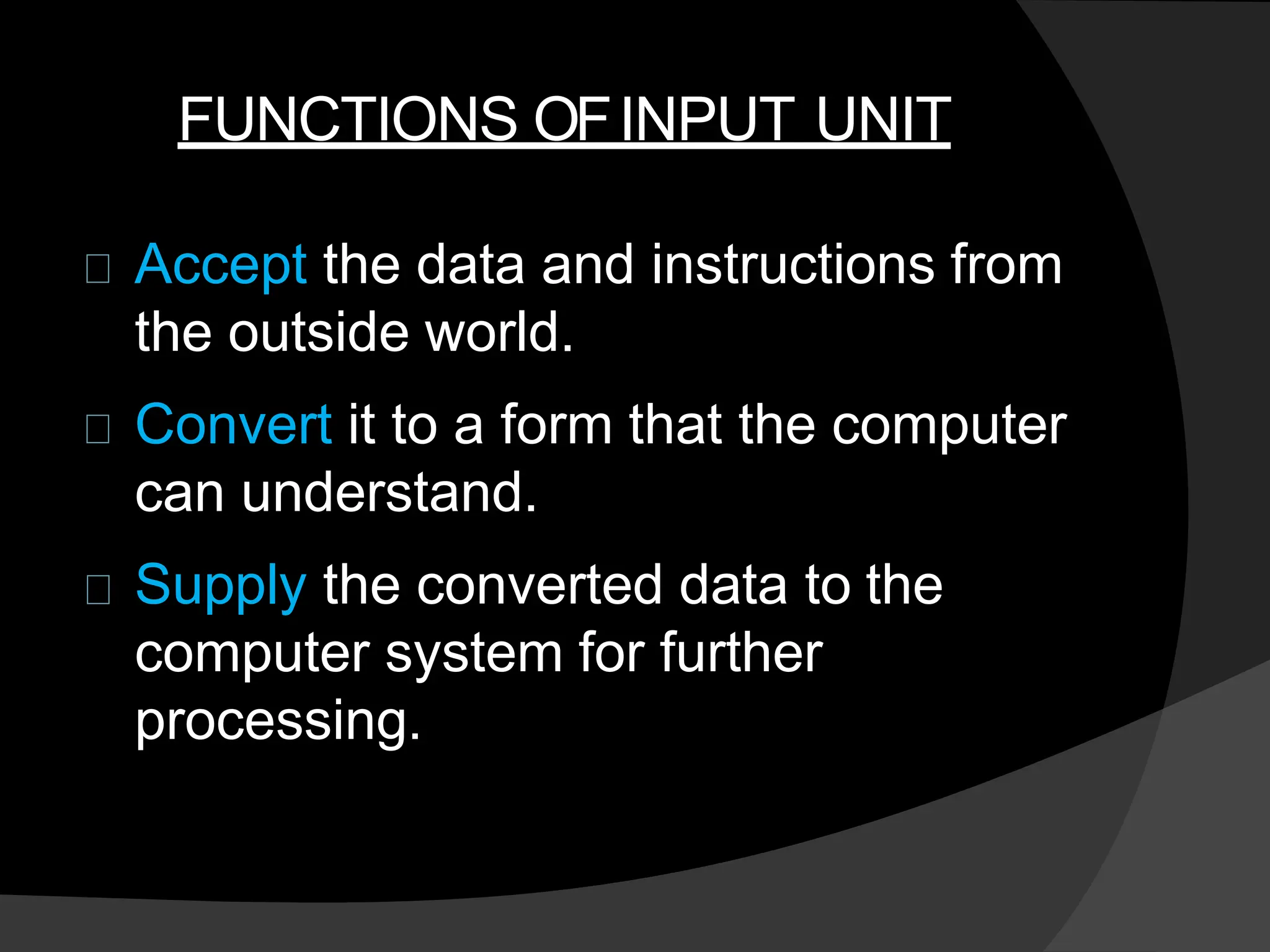
FUNCTIONS OFINPUT UNIT
Accept the data and instructions from
the outside world.
Convert it to a form that the computer
can understand.
Supply the converted data to the
computer system for further
processing.
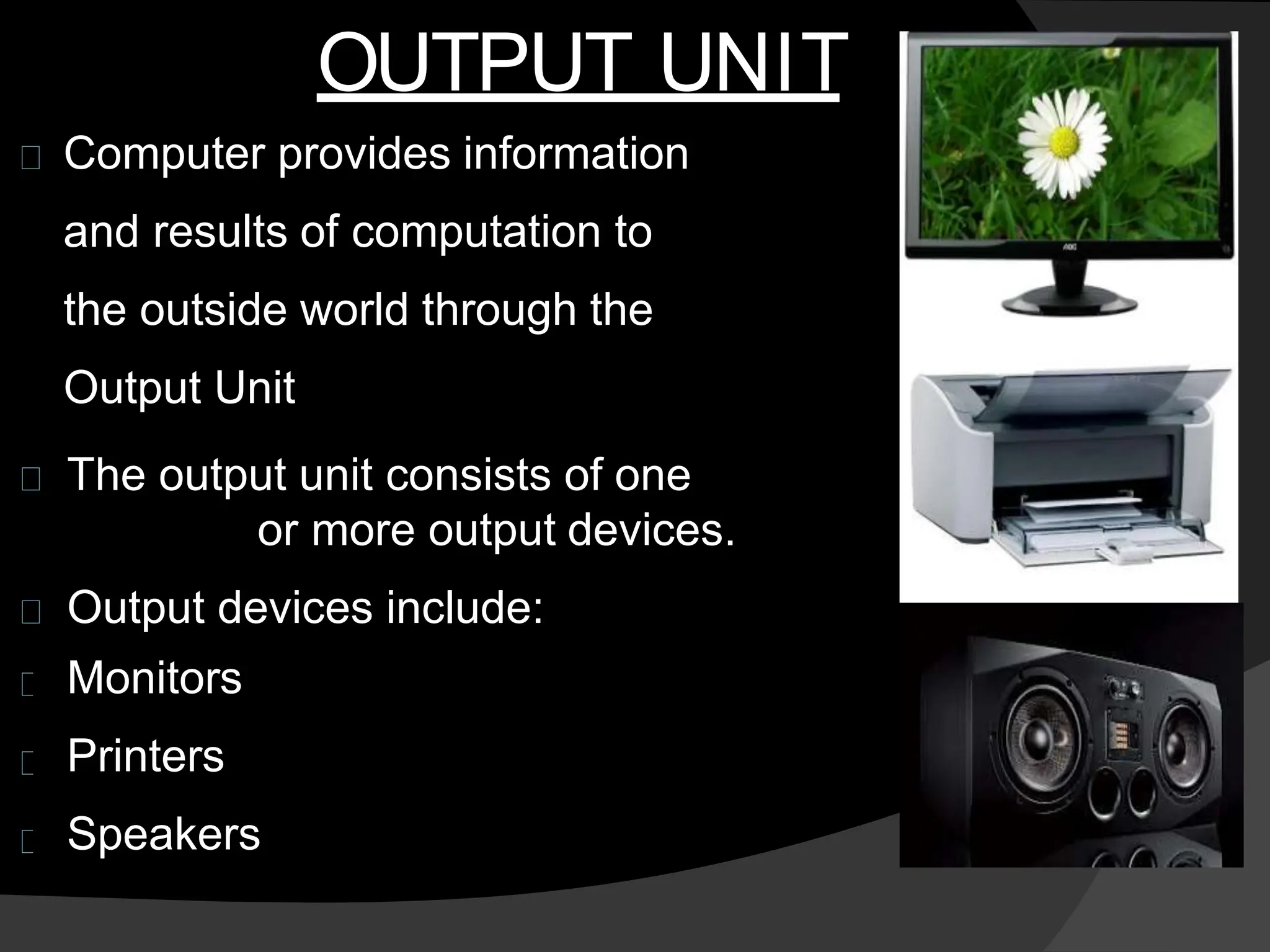
OUTPUT UNIT
Computer provides information
and results of computation to
the outside world through the
Output Unit
The output unit consists of one
or more output devices.
Output devices include:
Monitors
Printers
Speakers
FUNCTIONS OFOUTPUT UNIT
Accept the results produced by the
computer. (These are in a coded
form.)
Convert it to a form that the outside
world can understand. (OR, Converts
it into human readable form.)
Supply the converted results to the
outside world.
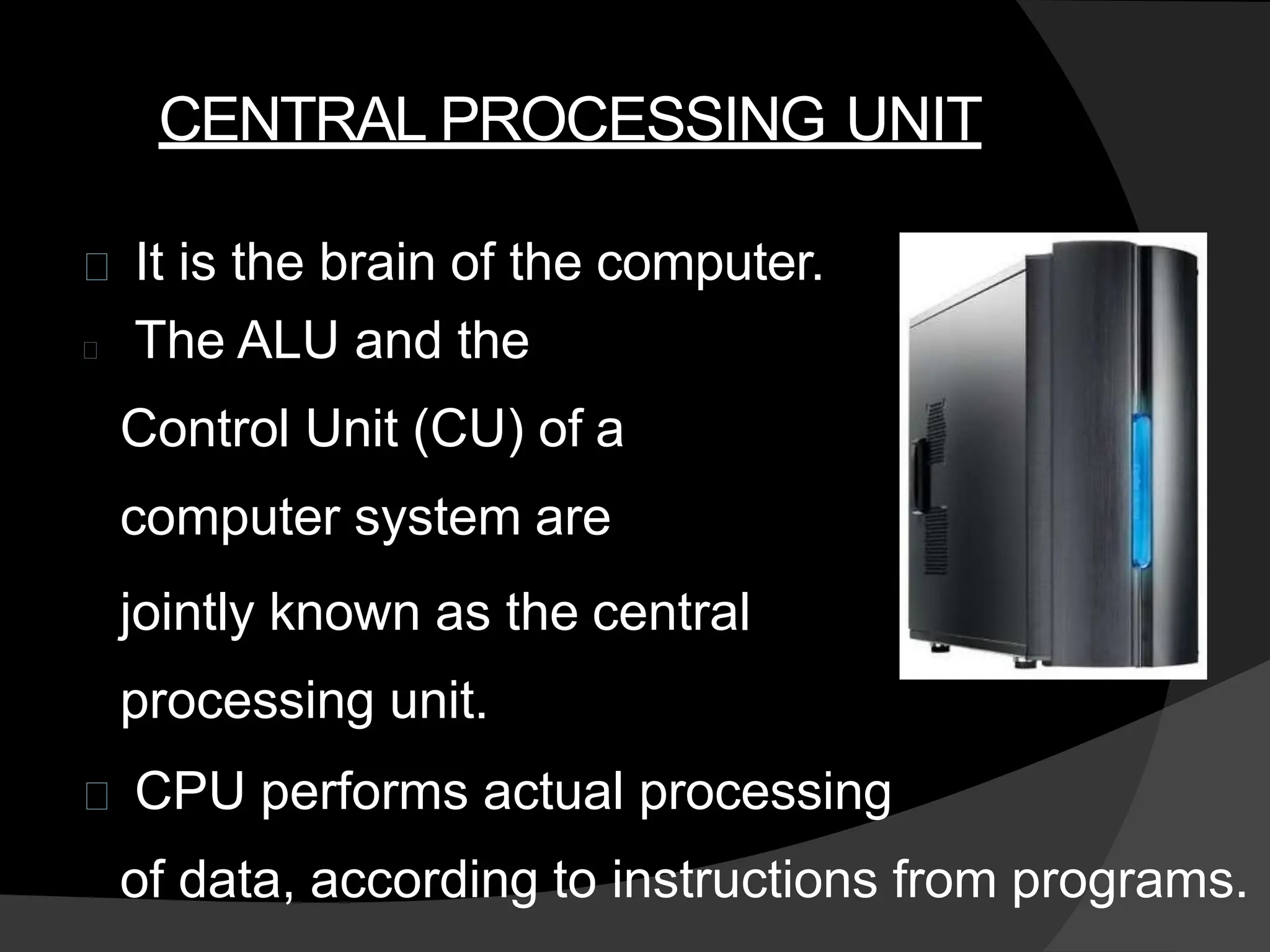
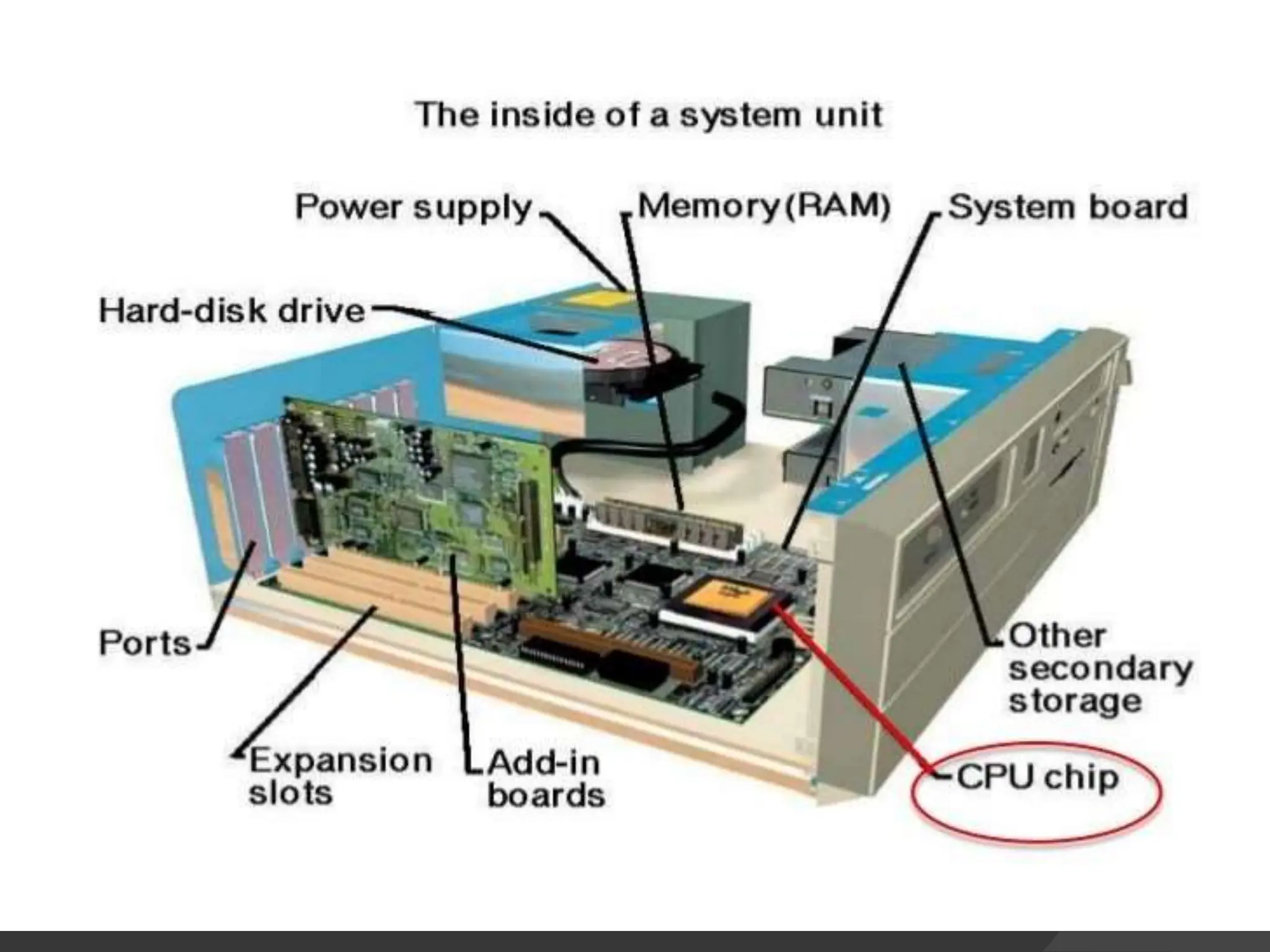
CENTRAL PROCESSING UNIT
It is the brain of the computer.
The ALU and the
Control Unit (CU) of a
computer system are
jointly known as the central
processing unit.
CPU performs actual processing
of data, according to instructions from programs.
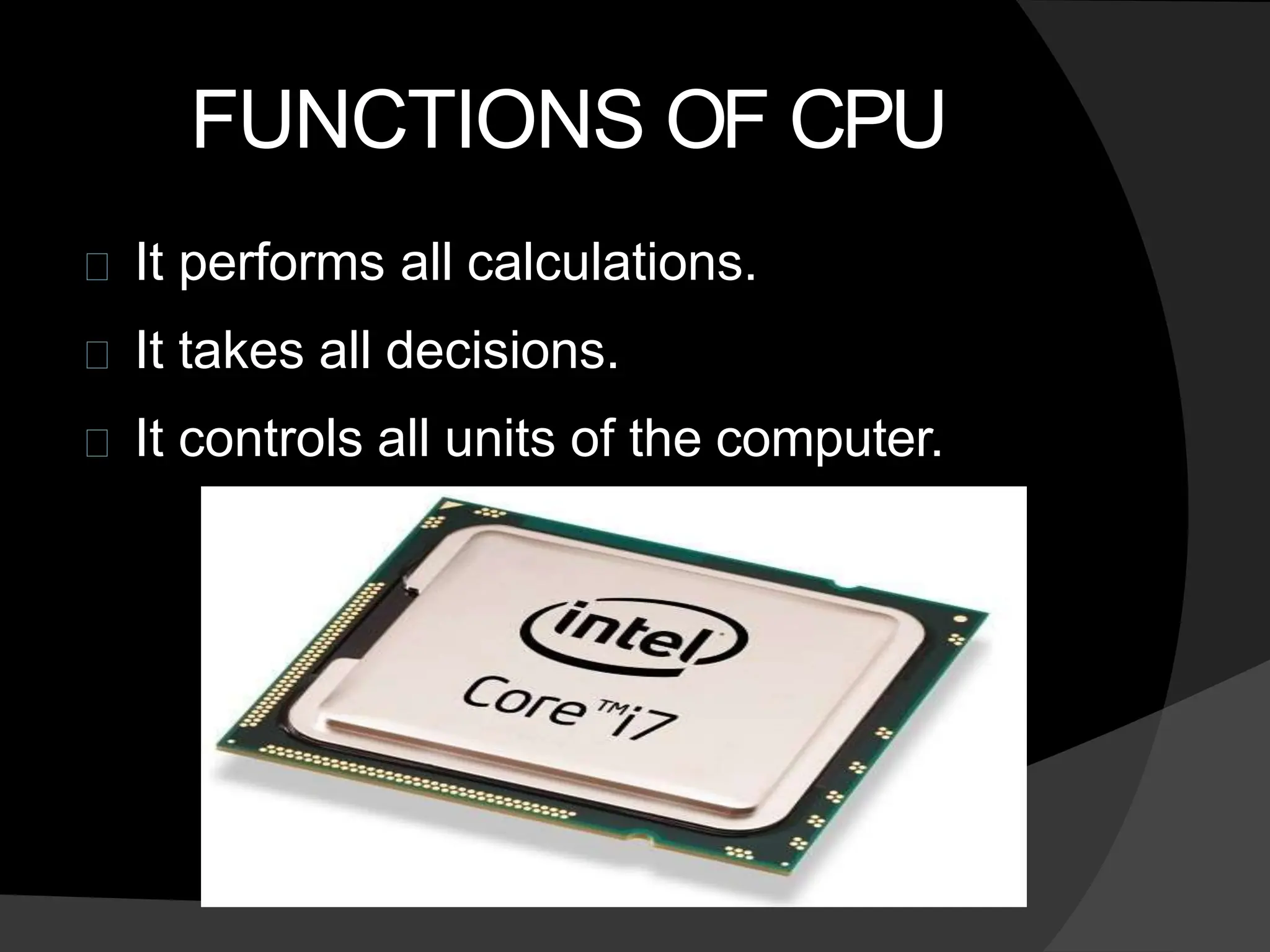
FUNCTIONS OF CPU
It performs all calculations.
It takes all decisions.
It controls all units of the computer.
CONTROL UNIT
It controls all other units in the computer.
It is the central nervous system of the
computer that controls and synchronizes
its working.
FUNCTIONS OF CONTROL UNIT
It instructs the input unit, where to store
the data after receiving it from the user.
It controls the flow of data and instructions
from the storage unit to ALU.
ARITHMETIC LOGIC UNIT
All calculations are performed in the Arithmetic
Logic Unit (ALU) of the computer.
FUNCTIONS OF ALU
It performs all arithmetic operations (addition,
subtraction, multiplication, and division).
It performs all logic operations.
It does comparison and takes decision.
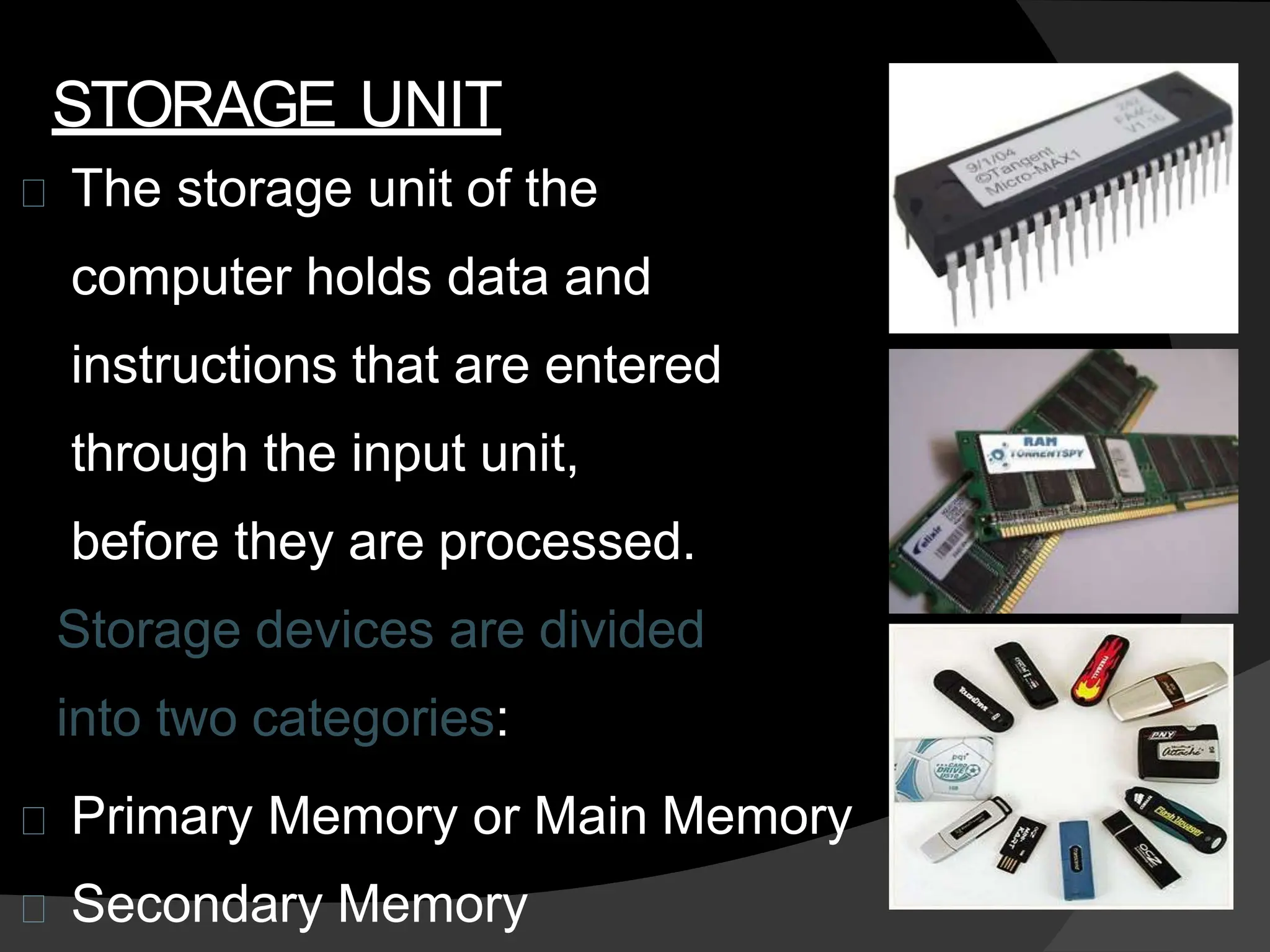
STORAGE UNIT
The storage unit of the
computer holds data and
instructions that are entered
through the input unit,
before they are processed.
Storage devices are divided
into two categories:
Primary Memory or Main Memory
Secondary Memory
FUNCTIONS OFSTORAGE UNIT
It received the data and instructions
required for processing from the input
unit.
It stores the intermediate results.• It
stores the final results before these
results are released to the output unit.
It saves data for later use.
THANK YOU

COMPUTER ENGINEERING WORKSHOP MATERIALS UNIT-1

  • 1.
    BLOCK DIAGRAM OFA COMPUTER
  • 2.
  • 3.
    INPUT UNIT Computer receivesdata and instructions through the Input Unit. The input unit consists of one or more input devices. Input devices include: Keyboard Mouse Joystick Scanner
  • 4.
    FUNCTIONS OFINPUT UNIT Acceptthe data and instructions from the outside world. Convert it to a form that the computer can understand. Supply the converted data to the computer system for further processing.
  • 5.
    OUTPUT UNIT Computer providesinformation and results of computation to the outside world through the Output Unit The output unit consists of one or more output devices. Output devices include: Monitors Printers Speakers
  • 6.
    FUNCTIONS OFOUTPUT UNIT Acceptthe results produced by the computer. (These are in a coded form.) Convert it to a form that the outside world can understand. (OR, Converts it into human readable form.) Supply the converted results to the outside world.
  • 7.
    CENTRAL PROCESSING UNIT Itis the brain of the computer. The ALU and the Control Unit (CU) of a computer system are jointly known as the central processing unit. CPU performs actual processing of data, according to instructions from programs.
  • 8.
    FUNCTIONS OF CPU Itperforms all calculations. It takes all decisions. It controls all units of the computer.
  • 10.
    CONTROL UNIT It controlsall other units in the computer. It is the central nervous system of the computer that controls and synchronizes its working. FUNCTIONS OF CONTROL UNIT It instructs the input unit, where to store the data after receiving it from the user. It controls the flow of data and instructions from the storage unit to ALU.
  • 11.
    ARITHMETIC LOGIC UNIT Allcalculations are performed in the Arithmetic Logic Unit (ALU) of the computer. FUNCTIONS OF ALU It performs all arithmetic operations (addition, subtraction, multiplication, and division). It performs all logic operations. It does comparison and takes decision.
  • 12.
    STORAGE UNIT The storageunit of the computer holds data and instructions that are entered through the input unit, before they are processed. Storage devices are divided into two categories: Primary Memory or Main Memory Secondary Memory
  • 13.
    FUNCTIONS OFSTORAGE UNIT Itreceived the data and instructions required for processing from the input unit. It stores the intermediate results.• It stores the final results before these results are released to the output unit. It saves data for later use.
  • 14.