Poster Analysis
Using posters we research to inform ideas about
genre and narrative. Evaluating and analysing posters
for semantic and syntactic content.
Video guide – basic poster analysis
BORDWELL & THOMPSON
"The term plot is used to describe everything visible and
audibly present in the film before us" (Bordwell and
Thompson)
"The set of all the events in a narrative, both the ones
explicitly presented and those the viewer infers,
composes the story" (Bordwell and Thompson)
In other words, the story is the combination of the entire
sequence of events that is shown as well as everything
that we conclude has happened but is not shown.
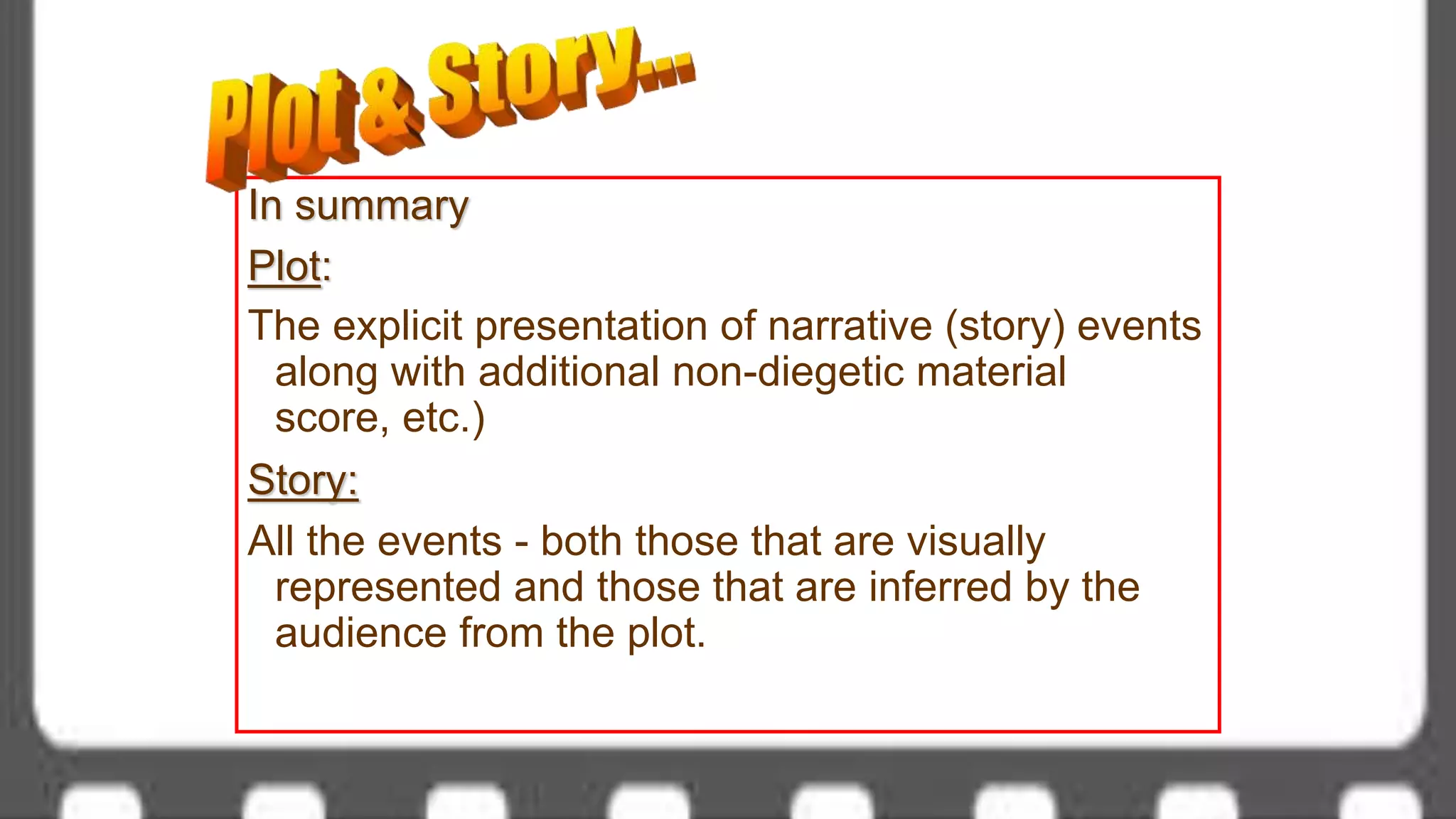
In summary
Plot:
The explicit presentation of narrative (story) events
along with additional non-diegetic material
score, etc.)
Story:
All the events - both those that are visually
represented and those that are inferred by the
audience from the plot.
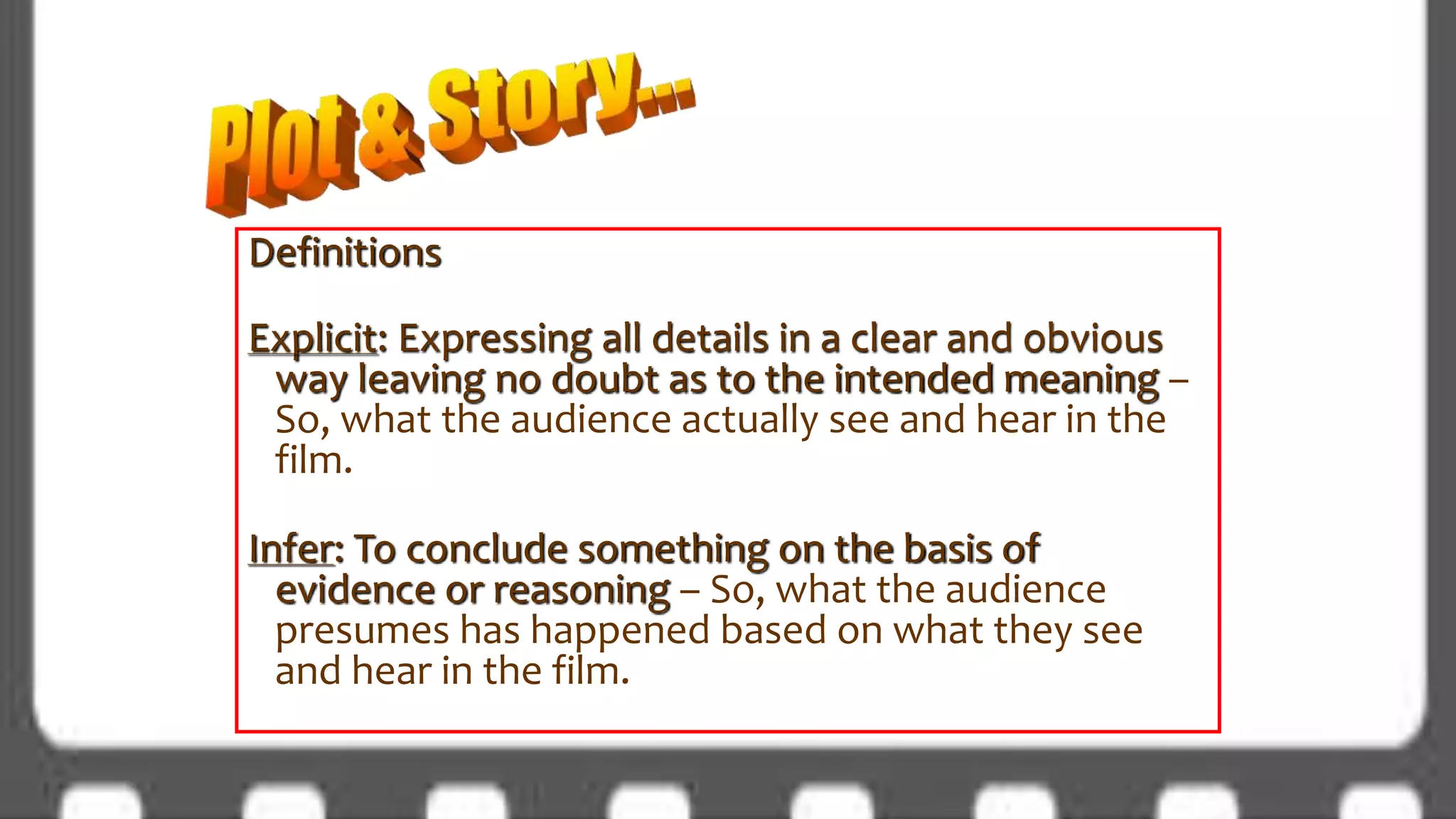
Definitions
Explicit: Expressing all details in a clear and obvious
way leaving no doubt as to the intended meaning –
So, what the audience actually see and hear in the
film.
Infer: To conclude something on the basis of
evidence or reasoning – So, what the audience
presumes has happened based on what they see
and hear in the film.
Narrative, therefore, is. . .
The way the story is communicated to the audience through
semantic and syntactic codes.
Does this mean a still image, such as a poster, can be said to
have a narrative?
Narrative, therefore, is. . .
The way the story is communicated to the audience through
semantic and syntactic codes.
Does this mean a still image, such as a poster, can be said to
have a narrative?
The answer is yes, but we need another
theory to help us describe this:
Action Codes: Images or sequences which work
as a form of a Visual Shorthand making complex
Ideas immediately apparent and carrying the
story forward.
Enigma Codes: Images/sequences which control
how much we know in the story, engaging and
holding audience interest. They present puzzles
which demand to be solved.
And The Action/Enigma Codes
More on the Enigma Code
An enigma code works to keep setting up little
puzzles to be solved (and not only at the beginning
of a story), to delay the story’s ending pleasurably:
e.g. how will Cary Grant get out of this
predicament?
Enigma codes can be described as minor or major.
Film posters operate on this basis as they convey
the basic information, but leave the audience
guessing.
Apply his ideas to the example text
What elements of the North By Northwest poster
act as enigma codes (or clues) that leave the
audience with questions or
puzzles to solve?
Draw and fill in the table below:
What are the codes (or clues)? What questions do they leave the
audience with?
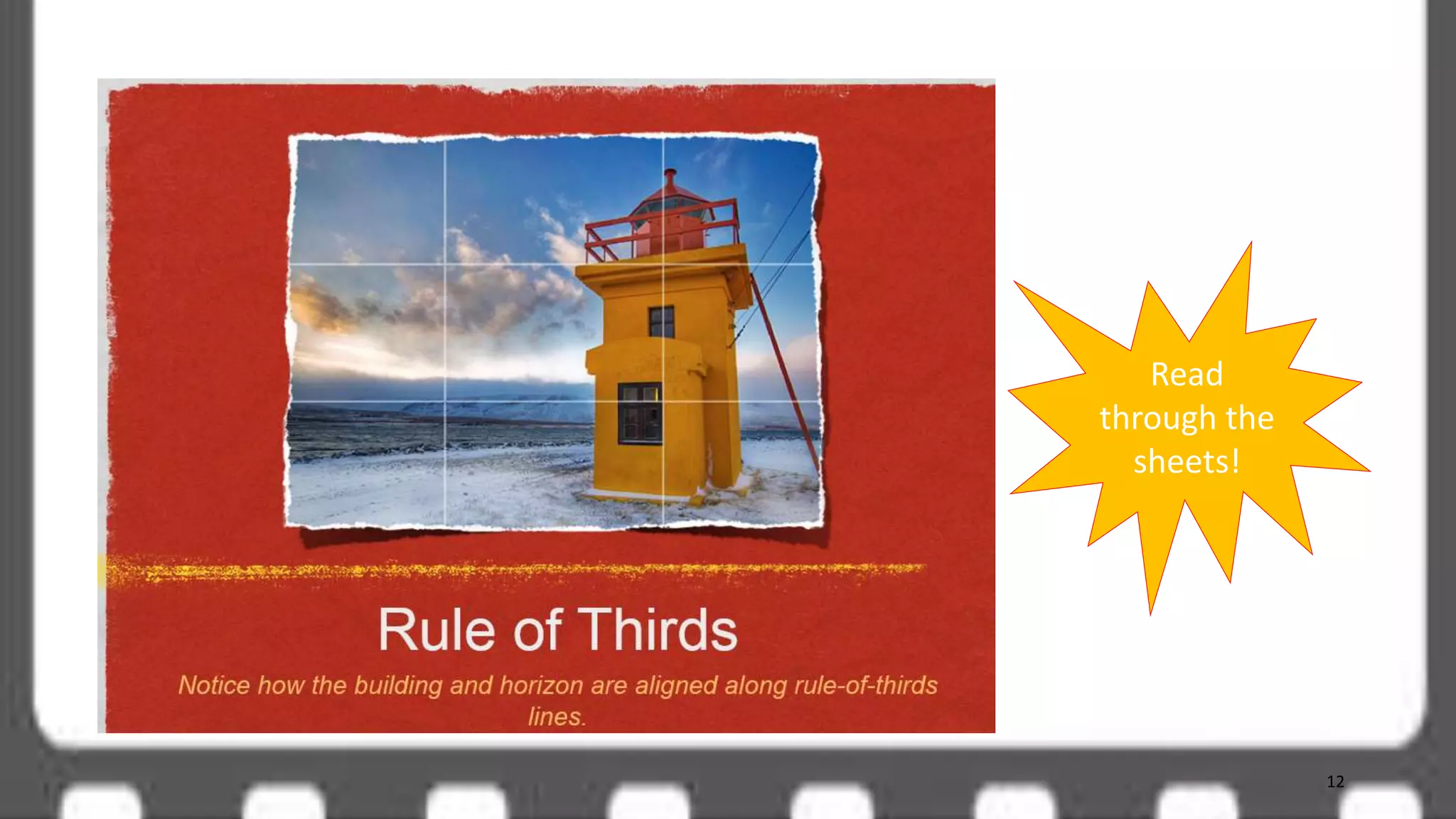
Composition and narrative
• The following our the basic composition techniques used in both
photography and cinematography. You might have learned these at
GCSE.
• The point of going over them is to consider how the technique can
have an impact on the audience’s grasp of the narrative.
12
Read
through the
sheets!
13
Read
through the
sheets!
14
Read
through the
sheets!
15
Read
through the
sheets!
16
Read
through the
sheets!
17
How does the
use of thirds
affect our
ideas about
the narrative?
How does it affect
our view of the
character’s
situation/feelings?
What other
composition
techniques
have been
used?
BONUS – how
does the
composition
reveal the genre?
Other Semantic elements
So far, we have looked at how syntactic elements are embedded in a media
text, but we also need to think about the semantic:
• Shot type/camera angle (see sheet)
• Dominant colours
• Mise-en-scene
• Lighting design
In groups, take an element each and explore the ideas in the poster. Try to
link semantic codes to:
• Meaning
• Narrative
• Genre codes and conventions
Homework – due on blogs 21st September
Write up your ideas about North By Northwest as your first piece of
poster analysis.
Refer to enigma and at least one genre theory.
Focus on exploring the narrative of the poster and identifying genre
conventions, alongside a discussion of basic meaning.
You will need to discuss the marketing/organisational aspects of the
poster (as seen in the video), as well as the image.
Keep things clear and simple, aiming for max. 400 words/2 hours work.

Composition and Movie Posters

  • 1.
    Poster Analysis Using posterswe research to inform ideas about genre and narrative. Evaluating and analysing posters for semantic and syntactic content.
  • 2.
    Video guide –basic poster analysis
  • 3.
    BORDWELL & THOMPSON "Theterm plot is used to describe everything visible and audibly present in the film before us" (Bordwell and Thompson) "The set of all the events in a narrative, both the ones explicitly presented and those the viewer infers, composes the story" (Bordwell and Thompson) In other words, the story is the combination of the entire sequence of events that is shown as well as everything that we conclude has happened but is not shown.
  • 4.
    In summary Plot: The explicitpresentation of narrative (story) events along with additional non-diegetic material score, etc.) Story: All the events - both those that are visually represented and those that are inferred by the audience from the plot.
  • 5.
    Definitions Explicit: Expressing alldetails in a clear and obvious way leaving no doubt as to the intended meaning – So, what the audience actually see and hear in the film. Infer: To conclude something on the basis of evidence or reasoning – So, what the audience presumes has happened based on what they see and hear in the film.
  • 6.
    Narrative, therefore, is.. . The way the story is communicated to the audience through semantic and syntactic codes. Does this mean a still image, such as a poster, can be said to have a narrative?
  • 7.
    Narrative, therefore, is.. . The way the story is communicated to the audience through semantic and syntactic codes. Does this mean a still image, such as a poster, can be said to have a narrative? The answer is yes, but we need another theory to help us describe this:
  • 8.
    Action Codes: Imagesor sequences which work as a form of a Visual Shorthand making complex Ideas immediately apparent and carrying the story forward. Enigma Codes: Images/sequences which control how much we know in the story, engaging and holding audience interest. They present puzzles which demand to be solved. And The Action/Enigma Codes
  • 9.
    More on theEnigma Code An enigma code works to keep setting up little puzzles to be solved (and not only at the beginning of a story), to delay the story’s ending pleasurably: e.g. how will Cary Grant get out of this predicament? Enigma codes can be described as minor or major. Film posters operate on this basis as they convey the basic information, but leave the audience guessing.
  • 10.
    Apply his ideasto the example text What elements of the North By Northwest poster act as enigma codes (or clues) that leave the audience with questions or puzzles to solve? Draw and fill in the table below: What are the codes (or clues)? What questions do they leave the audience with?
  • 11.
    Composition and narrative •The following our the basic composition techniques used in both photography and cinematography. You might have learned these at GCSE. • The point of going over them is to consider how the technique can have an impact on the audience’s grasp of the narrative.
  • 12.
  • 13.
  • 14.
  • 15.
  • 16.
  • 17.
    17 How does the useof thirds affect our ideas about the narrative? How does it affect our view of the character’s situation/feelings? What other composition techniques have been used? BONUS – how does the composition reveal the genre?
  • 18.
    Other Semantic elements Sofar, we have looked at how syntactic elements are embedded in a media text, but we also need to think about the semantic: • Shot type/camera angle (see sheet) • Dominant colours • Mise-en-scene • Lighting design In groups, take an element each and explore the ideas in the poster. Try to link semantic codes to: • Meaning • Narrative • Genre codes and conventions
  • 19.
    Homework – dueon blogs 21st September Write up your ideas about North By Northwest as your first piece of poster analysis. Refer to enigma and at least one genre theory. Focus on exploring the narrative of the poster and identifying genre conventions, alongside a discussion of basic meaning. You will need to discuss the marketing/organisational aspects of the poster (as seen in the video), as well as the image. Keep things clear and simple, aiming for max. 400 words/2 hours work.