Compliance with the Clean Air Act: Remove Retrofit or Replace?
                                         RE POWER Initiative
                                            November 15, 2012
RE POWER™ Summary
   Fuel economics, generation technology, energy efficiency and
    more stringent regulations are changing the U.S. generating fleet.
   Gas turbine plants are winning in the power supply auctions
    and gaining market share from coal and oil fired steam plants.
   Re Power ™ - Retire, Retrofit or Replace
   Retirements are estimated at 60 GW of coal plant closures of
    a total of 340 GW, or approximately 500 boiler/turbine units.
   Retrofits are estimated to be 103 GW of a total of 340 GW,
    or about 200 fuel switch or scrubber projects on larger plants.
   Replacements with combined cycle gas turbine plants are estimated
    at 35 GW, or 70 GTs at 500 MW per plant in PJM, MISO and SERC ISOs.
   Forecast capital spend is $70 – 100 billion.
      CONFIDENTIAL
                                                                         2
Do We Need to Replace All Closed Plants?
Regional reserve margin estimates and targets for summer2012


                                                               3
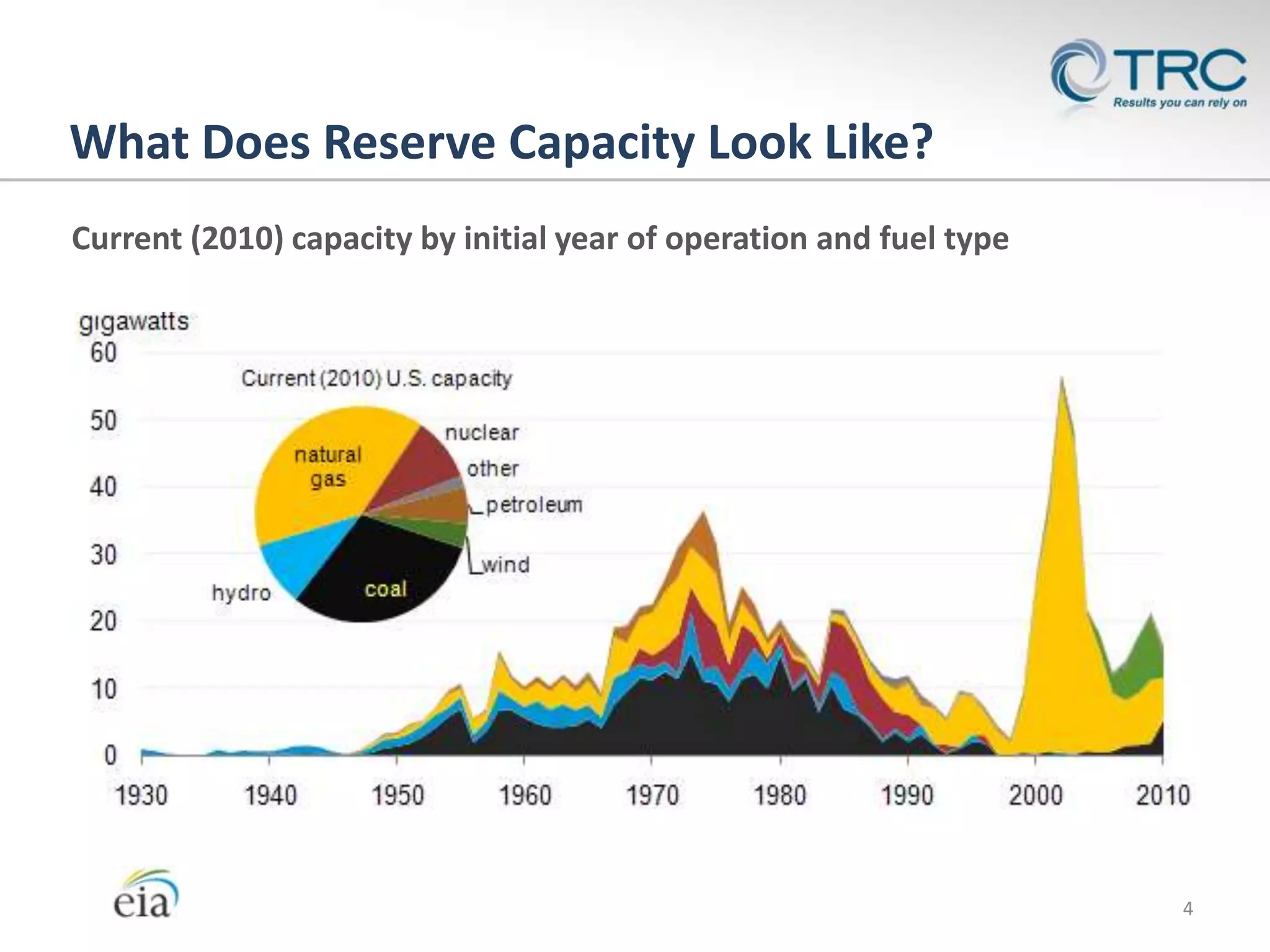
What Does Reserve Capacity Look Like?
Current (2010) capacity by initial year of operation and fuel type


                                                                     4
What Coal Plants are Retiring?
Announced coal plant capacity retirements 2011-2020


                As of June 10, 2011   Source: SNL Energy   Map credit: J. Bellavance, C. Kerr
     CONFIDENTIAL
                                                                                                5
Where are the Retrofit Projects?
SO2 emissions by coal plant, 2010
Short tons


Each of these red dots will likely turn green or go away.

        CONFIDENTIAL
                                                            6
What about New Build?
                         Forecast new build is 35 GWs
                         of combined cycle gas turbine
                         from 2015 - 2020.
                          PJM 9 GW
                          MISO 8W
                          SERC 20 GW
                         Timing is from 2015 – 2020.
                         CALISO, ERCOT and NYISO will
                         likely need new build, subject
                         to permitting and rate issues.


                                                        7
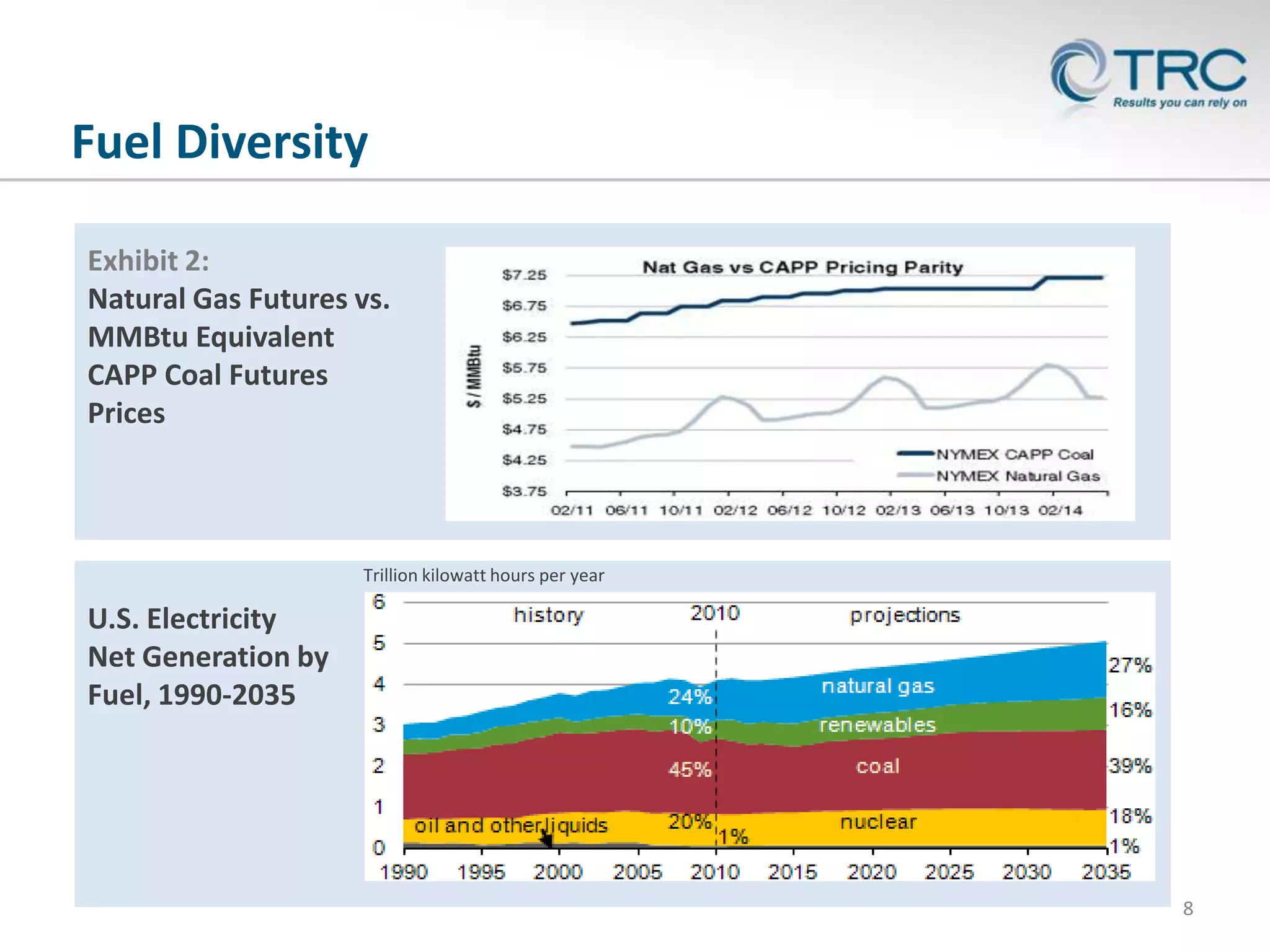
Fuel Diversity

Exhibit 2:
Natural Gas Futures vs.
MMBtu Equivalent
CAPP Coal Futures
Prices


                    Trillion kilowatt hours per year

U.S. Electricity
Net Generation by
Fuel, 1990-2035


                                                       8
Economic Market Drivers
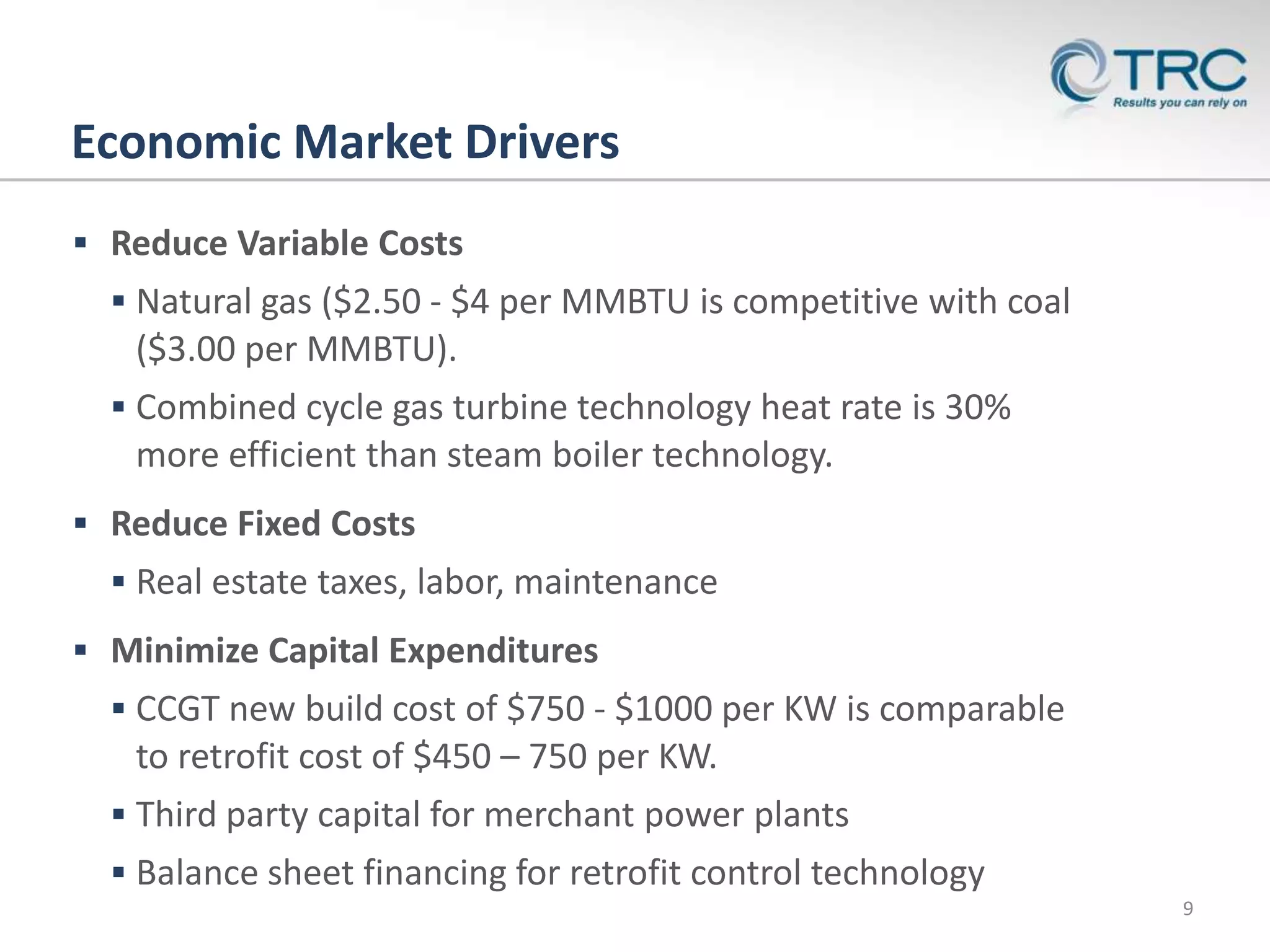
 Reduce Variable Costs
   Natural gas ($2.50 - $4 per MMBTU is competitive with coal
   ($3.00 per MMBTU).
   Combined cycle gas turbine technology heat rate is 30%
   more efficient than steam boiler technology.
 Reduce Fixed Costs
   Real estate taxes, labor, maintenance
 Minimize Capital Expenditures
   CCGT new build cost of $750 - $1000 per KW is comparable
   to retrofit cost of $450 – 750 per KW.
   Third party capital for merchant power plants
   Balance sheet financing for retrofit control technology
    CONFIDENTIAL
                                                                 9
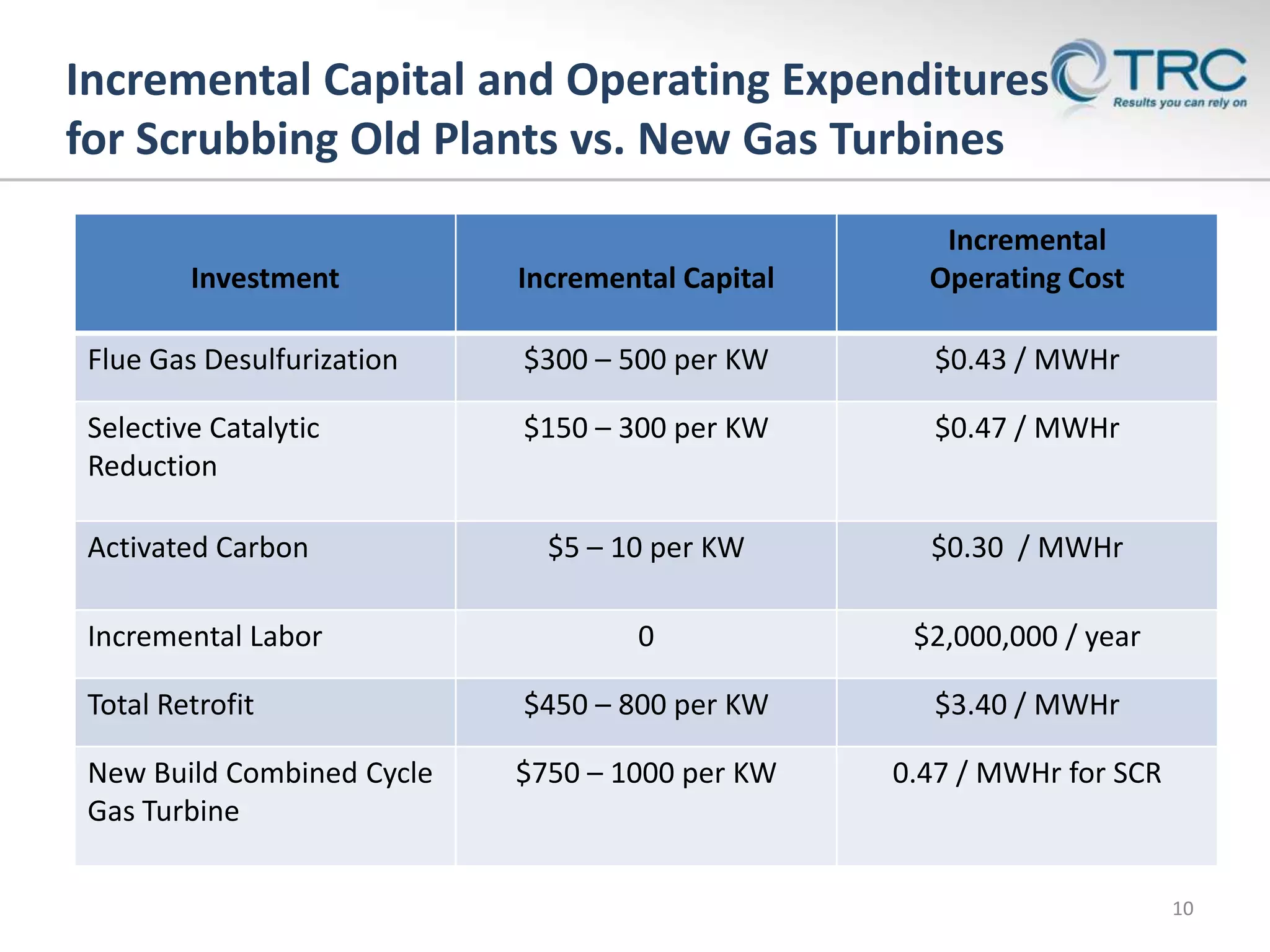
Incremental Capital and Operating Expenditures
for Scrubbing Old Plants vs. New Gas Turbines
                                                     Incremental
         Investment         Incremental Capital     Operating Cost

 Flue Gas Desulfurization   $300 – 500 per KW       $0.43 / MWHr

 Selective Catalytic        $150 – 300 per KW       $0.47 / MWHr
 Reduction

 Activated Carbon             $5 – 10 per KW        $0.30 / MWHr

 Incremental Labor                  0              $2,000,000 / year

 Total Retrofit             $450 – 800 per KW       $3.40 / MWHr

 New Build Combined Cycle   $750 – 1000 per KW    0.47 / MWHr for SCR
 Gas Turbine

                                                                        10
RE POWER Regulatory Drivers
 Utility MACT Compliance
 Final 1 Hour NAAQS Rule for SO2 and NOx
 Mercury and Toxic Substances Rule (“MATS”) Issued November
  2011 – Three Year Compliance Period
 Best Technology available for cooling water intake structures§316(B)
 Coal Combustion Residue Management (rules pending).


                                                                    11
Making the Right Decision - Playbooks
 Business Objective for Deregulated Generators
   Maximizing shareholder return
   Positive cash flow and IRR > cost of capital
 Economic Growth
   Revenue potential in particular market
   Competitive cost profile
 Environmental Excellence
   Compliance with current rules
   Compliance with pending or likely rules
 Corporate Responsibility
   Generating reliable power at competitive rates


                                                     12
Retirements – Sell It or Demolish?
 Engineering During Decommissioning
   Pre-demolition surveys for asbestos, hazardous materials,
    structures, utility relocations, asset and real estate valuation,
    permitting and future use
   Contract plans and specifications

 Abatement, Decommissioning and Demolition
   Pre-qualified bidders, procurement and construction support

 Remediation and Restoration to Suit Future Use

 As-is, where is sales
   May involve substantial cash plus the plant
   Watch out for the boomerang!

                                                                        13
Retrofits
 Fuel Switching
   Coal to low-sulfur coal and coal to gas
    switching are popular options.
   May address SOx, but not NOx
   Cooling Water 316(b) issue remains
 Tweaking Existing Scrubbers
   May address MATS but not SOx and NOx
 Scrubbing Old Coal Plants
    Hard to justify investing up to $700/KW in
     50 year old coal fired steam turbine plants
     with high heat rates
    2,651 MW of clean coal plants were
     recently sold for $400,000,000 or $151/KW.
                                                   14
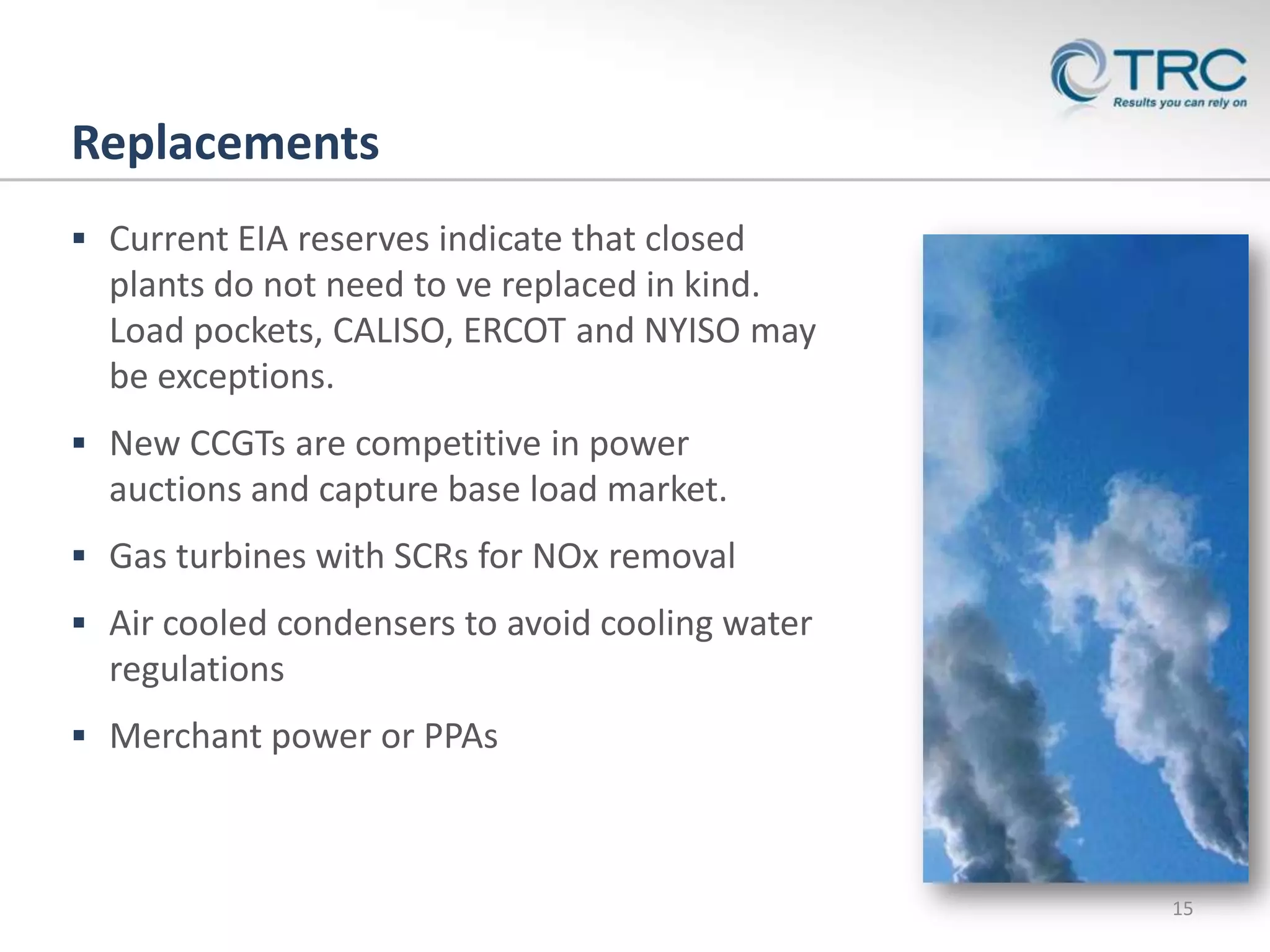
Replacements
 Current EIA reserves indicate that closed
  plants do not need to ve replaced in kind.
  Load pockets, CALISO, ERCOT and NYISO may
  be exceptions.
 New CCGTs are competitive in power
  auctions and capture base load market.
 Gas turbines with SCRs for NOx removal
 Air cooled condensers to avoid cooling water
  regulations
 Merchant power or PPAs


                                                 15
Waterside Station


                    16
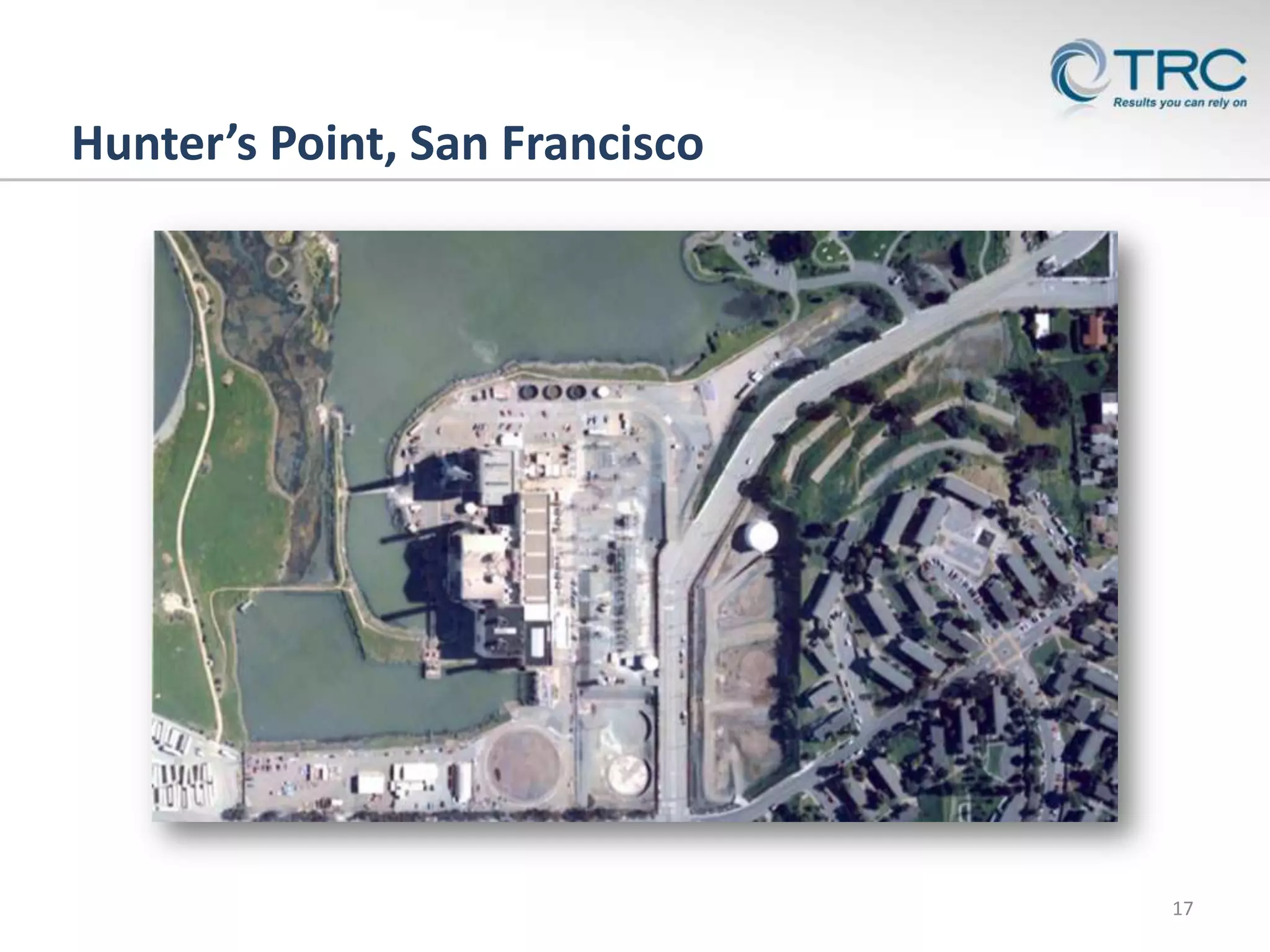
Hunter’s Point, San Francisco


                                17
Austin Energy Holly Street


                             18
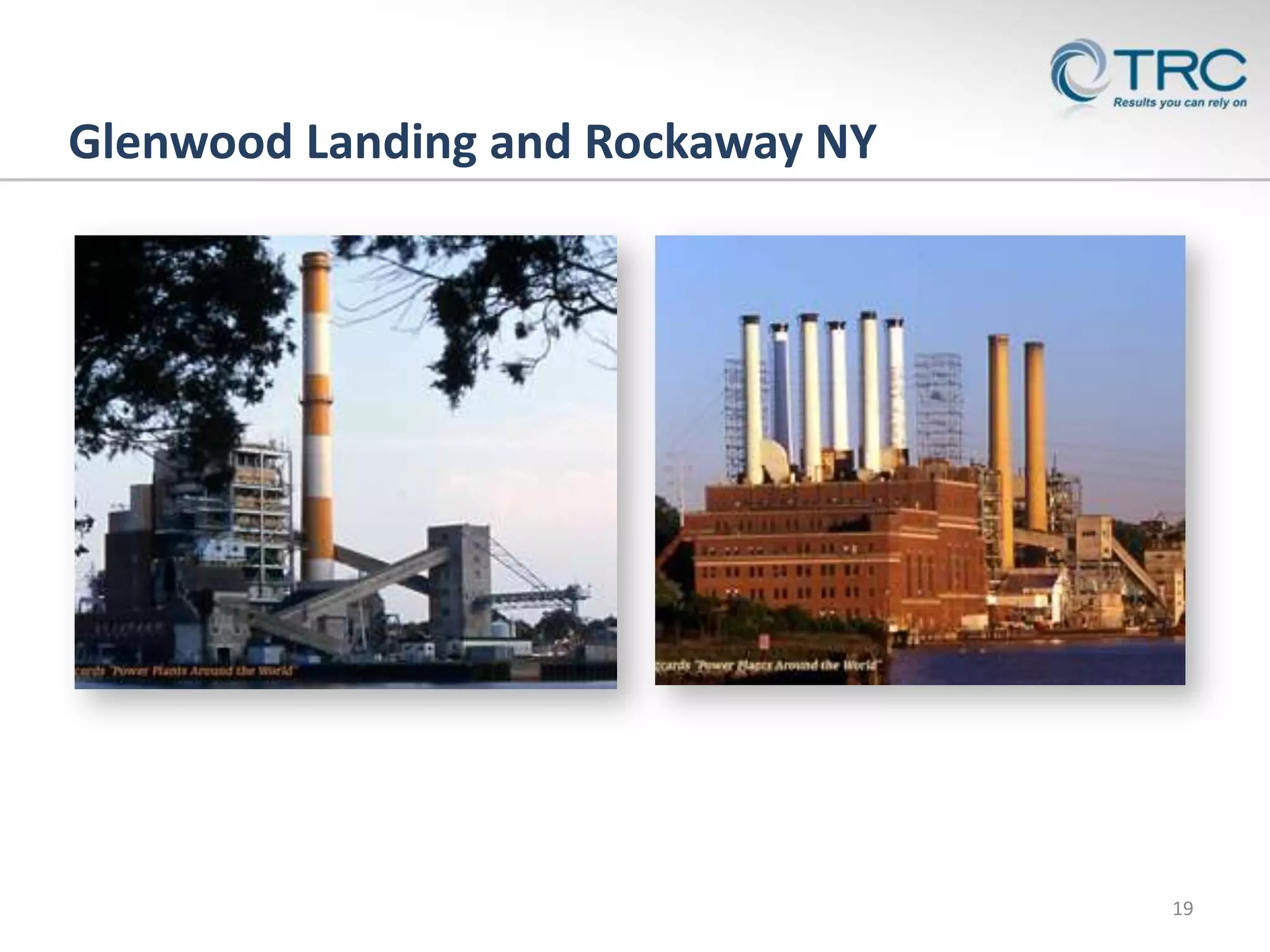
Glenwood Landing and Rockaway NY


                                   19
Astoria Energy Center, New York City
 Permitting of the old NYPA
  Poletti and the new NYPA
  500 MW Plants
 NYPA Poletti – Engineering
  During Decommissioning
 Astoria Energy I & II Siting,
  Licensing and Permitting
 Astoria Energy II (Suez and
  SNC Lavalin) Environmental
  Oversight


                                       20
Questions?
Ed Malley
P: 646.522.6488 | E: emalley@trcsolutions.com
www.trcsolutions.com

Compliance with the Clean Air Act: Remove, Retrofit or Replace

  • 1.
    Compliance with theClean Air Act: Remove Retrofit or Replace? RE POWER Initiative November 15, 2012
  • 2.
    RE POWER™ Summary  Fuel economics, generation technology, energy efficiency and more stringent regulations are changing the U.S. generating fleet.  Gas turbine plants are winning in the power supply auctions and gaining market share from coal and oil fired steam plants.  Re Power ™ - Retire, Retrofit or Replace  Retirements are estimated at 60 GW of coal plant closures of a total of 340 GW, or approximately 500 boiler/turbine units.  Retrofits are estimated to be 103 GW of a total of 340 GW, or about 200 fuel switch or scrubber projects on larger plants.  Replacements with combined cycle gas turbine plants are estimated at 35 GW, or 70 GTs at 500 MW per plant in PJM, MISO and SERC ISOs.  Forecast capital spend is $70 – 100 billion. CONFIDENTIAL 2
  • 3.
    Do We Needto Replace All Closed Plants? Regional reserve margin estimates and targets for summer2012 3
  • 4.
    What Does ReserveCapacity Look Like? Current (2010) capacity by initial year of operation and fuel type 4
  • 5.
    What Coal Plantsare Retiring? Announced coal plant capacity retirements 2011-2020 As of June 10, 2011 Source: SNL Energy Map credit: J. Bellavance, C. Kerr CONFIDENTIAL 5
  • 6.
    Where are theRetrofit Projects? SO2 emissions by coal plant, 2010 Short tons Each of these red dots will likely turn green or go away. CONFIDENTIAL 6
  • 7.
    What about NewBuild?  Forecast new build is 35 GWs of combined cycle gas turbine from 2015 - 2020.  PJM 9 GW  MISO 8W  SERC 20 GW  Timing is from 2015 – 2020.  CALISO, ERCOT and NYISO will likely need new build, subject to permitting and rate issues. 7
  • 8.
    Fuel Diversity Exhibit 2: NaturalGas Futures vs. MMBtu Equivalent CAPP Coal Futures Prices Trillion kilowatt hours per year U.S. Electricity Net Generation by Fuel, 1990-2035 8
  • 9.
    Economic Market Drivers Reduce Variable Costs  Natural gas ($2.50 - $4 per MMBTU is competitive with coal ($3.00 per MMBTU).  Combined cycle gas turbine technology heat rate is 30% more efficient than steam boiler technology.  Reduce Fixed Costs  Real estate taxes, labor, maintenance  Minimize Capital Expenditures  CCGT new build cost of $750 - $1000 per KW is comparable to retrofit cost of $450 – 750 per KW.  Third party capital for merchant power plants  Balance sheet financing for retrofit control technology CONFIDENTIAL 9
  • 10.
    Incremental Capital andOperating Expenditures for Scrubbing Old Plants vs. New Gas Turbines Incremental Investment Incremental Capital Operating Cost Flue Gas Desulfurization $300 – 500 per KW $0.43 / MWHr Selective Catalytic $150 – 300 per KW $0.47 / MWHr Reduction Activated Carbon $5 – 10 per KW $0.30 / MWHr Incremental Labor 0 $2,000,000 / year Total Retrofit $450 – 800 per KW $3.40 / MWHr New Build Combined Cycle $750 – 1000 per KW 0.47 / MWHr for SCR Gas Turbine 10
  • 11.
    RE POWER RegulatoryDrivers  Utility MACT Compliance  Final 1 Hour NAAQS Rule for SO2 and NOx  Mercury and Toxic Substances Rule (“MATS”) Issued November 2011 – Three Year Compliance Period  Best Technology available for cooling water intake structures§316(B)  Coal Combustion Residue Management (rules pending). 11
  • 12.
    Making the RightDecision - Playbooks  Business Objective for Deregulated Generators  Maximizing shareholder return  Positive cash flow and IRR > cost of capital  Economic Growth  Revenue potential in particular market  Competitive cost profile  Environmental Excellence  Compliance with current rules  Compliance with pending or likely rules  Corporate Responsibility  Generating reliable power at competitive rates 12
  • 13.
    Retirements – SellIt or Demolish?  Engineering During Decommissioning  Pre-demolition surveys for asbestos, hazardous materials, structures, utility relocations, asset and real estate valuation, permitting and future use  Contract plans and specifications  Abatement, Decommissioning and Demolition  Pre-qualified bidders, procurement and construction support  Remediation and Restoration to Suit Future Use  As-is, where is sales  May involve substantial cash plus the plant  Watch out for the boomerang! 13
  • 14.
    Retrofits  Fuel Switching  Coal to low-sulfur coal and coal to gas switching are popular options.  May address SOx, but not NOx  Cooling Water 316(b) issue remains  Tweaking Existing Scrubbers  May address MATS but not SOx and NOx  Scrubbing Old Coal Plants  Hard to justify investing up to $700/KW in 50 year old coal fired steam turbine plants with high heat rates  2,651 MW of clean coal plants were recently sold for $400,000,000 or $151/KW. 14
  • 15.
    Replacements  Current EIAreserves indicate that closed plants do not need to ve replaced in kind. Load pockets, CALISO, ERCOT and NYISO may be exceptions.  New CCGTs are competitive in power auctions and capture base load market.  Gas turbines with SCRs for NOx removal  Air cooled condensers to avoid cooling water regulations  Merchant power or PPAs 15
  • 16.
  • 17.
  • 18.
  • 19.
    Glenwood Landing andRockaway NY 19
  • 20.
    Astoria Energy Center,New York City  Permitting of the old NYPA Poletti and the new NYPA 500 MW Plants  NYPA Poletti – Engineering During Decommissioning  Astoria Energy I & II Siting, Licensing and Permitting  Astoria Energy II (Suez and SNC Lavalin) Environmental Oversight 20
  • 21.
    Questions? Ed Malley P: 646.522.6488| E: emalley@trcsolutions.com www.trcsolutions.com