Are You Prepared to Close Your Ash Ponds? 
R. Kent Nilsson, P.E. 
Senior Consulting Engineer 
TRC Environmental Corporation
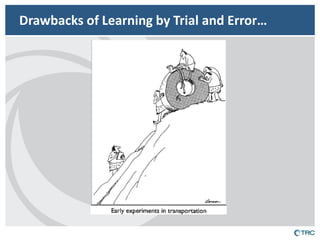
Drawbacks of Learning by Trial and Error…
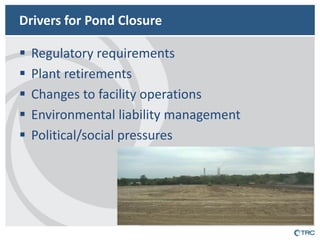
Drivers for Pond Closure 
Regulatory requirements 
Plant retirements 
Changes to facility operations 
Environmental liability management 
Political/social pressures
Regulatory Requirements 
EPA has agreed to take final action on Coal Combustion Residuals (CCR) by December 19, 2014 
Revised RCRA Subtitle “D” standards are the most likely outcome 
Likely to be implemented at state level 
Closure also affected by Effluent Limitation Guidelines (ELGs) 
Recent developments may influence outcome 
Final rule likely to be litigated
Regulatory Requirements – Ash Ponds 
Anticipated RCRA Subtitle “D” requirements: 
Rule effective 6 months after promulgation 
Ponds not meeting liner requirements must stop accepting waste within 5 years of finalization of rules 
Groundwater monitoring required within 1 year after effective date 
Ponds must be closed within 2 years of last receiving waste
Strategy 
Mapping out a strategic plan must consider the questions: 
Close now or later? 
Future end use of property? 
Close in-place or remove the residuals? 
What are the costs?
Strategy 
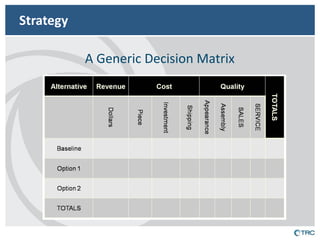
A Generic Decision Matrix
Strategy – Close Now or Later? 
Dictated by: 
Regulatory framework and its timing 
Short and long-term risk profile 
Retiring plant or continuing to operate 
Changes to facility operating requirements (e.g. wet ash v. dry ash handling) 
Costs and funding
Strategy – Close Now or Later? 
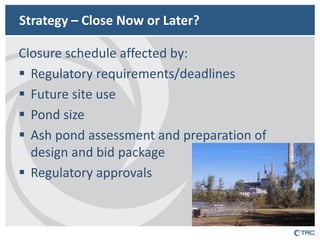
Closure schedule affected by: 
Regulatory requirements/deadlines 
Future site use 
Pond size 
Ash pond assessment and preparation of design and bid package 
Regulatory approvals
Strategy – Future End Use of Property? 
Retiring plants need to clearly define 
Prime redevelopment locations may require stricter clean-up 
Site specific conditions (e.g., wetlands) 
Ash geotechnical properties
Strategy – Close In-place or Remove the Residuals? 
Viable market for pond material? 
Long-term obligations? 
Long-term environmental liabilities? 
Future land use? 
Sufficient on-site borrow material? 
Construct on-site landfill? 
Staffing demands/outside resources? 
Political/social pressures? 
Cost?
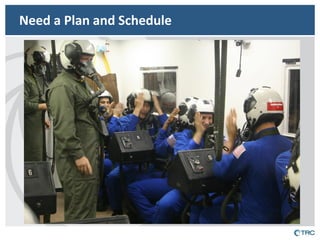
Need a Plan and Schedule
Risk Considerations 
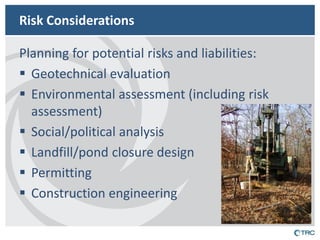
Planning for potential risks and liabilities: 
Geotechnical evaluation 
Environmental assessment (including risk assessment) 
Social/political analysis 
Landfill/pond closure design 
Permitting 
Construction engineering
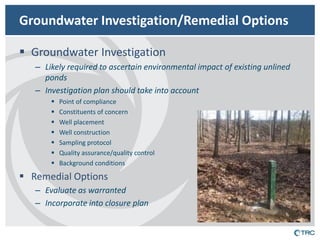
Groundwater Investigation/Remedial Options 
Groundwater Investigation 
–Likely required to ascertain environmental impact of existing unlined ponds 
–Investigation plan should take into account 
Point of compliance 
Constituents of concern 
Well placement 
Well construction 
Sampling protocol 
Quality assurance/quality control 
Background conditions 
Remedial Options 
–Evaluate as warranted 
–Incorporate into closure plan
Closure Considerations 
Pond size 
Dewatering requirements/methods 
Final use considerations 
Remediation integration 
Constructability concerns 
Health and safety 
Site configuration constraints 
Long-term maintenance
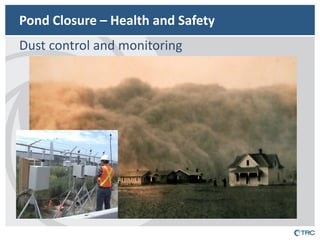
Pond Closure – Health and Safety 
Dust control and monitoring
In-place Closure 
Pros: 
Generally less expensive than relocation to a lined landfill 
Approach keeps haul vehicles off of public roads and highways 
Proximate to existing facilities 
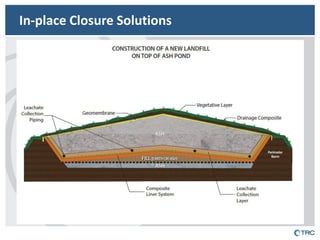
If space-constrained, can be used as landfill base
In-place Closure 
Cons: 
Perceived “unknowns” in the final storage conditions 
Increased social/political opposition to in-place closure, especially in environmentally sensitive areas
In-place Closure 
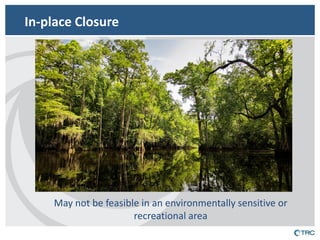
May not be feasible in an environmentally sensitive or recreational area
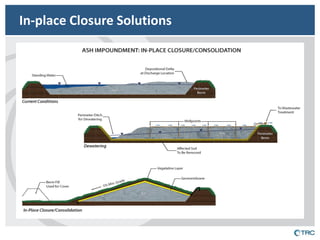
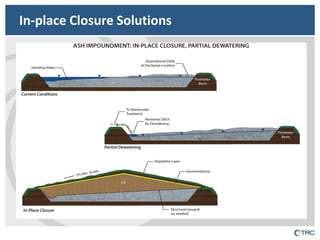
In-place Closure Solutions
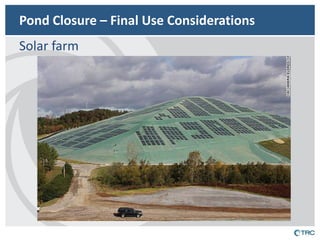
Pond Closure – Final Use Considerations 
Solar farm
Closure by Removal Considerations 
Beneficial reuse 
Disposal in off-site Subtitle “D” landfill 
Disposal in on-site Subtitle “D” landfill 
Consolidation with ash in existing lined pond
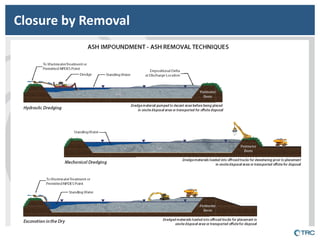
Closure by Removal 
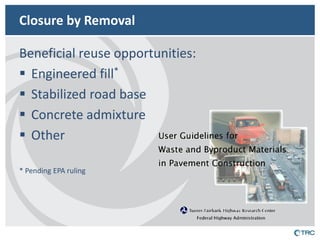
Beneficial reuse opportunities: 
Engineered fill* 
Stabilized road base 
Concrete admixture 
Other 
* Pending EPA ruling
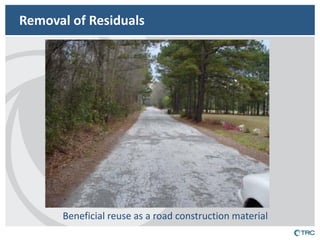
Removal of Residuals 
Beneficial reuse as a road construction material
Closure by Removal
Closure by Removal
Closure by Removal
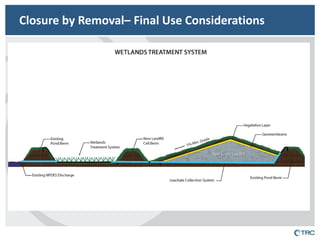
Closure by Removal– Final Use Considerations
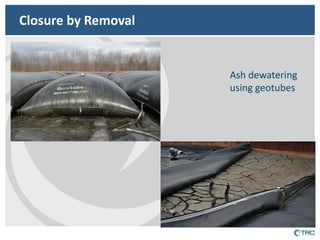
Closure by Removal 
Ash dewatering using geotubes
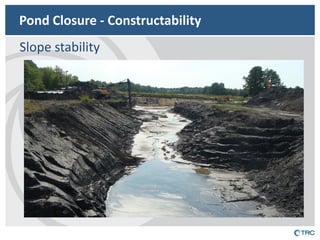
Pond Closure - Constructability 
Slope stability
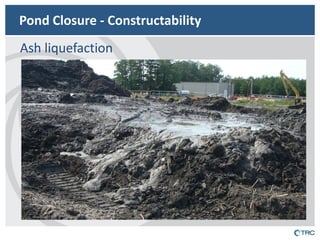
Pond Closure - Constructability 
Ash liquefaction
Construction costs 
Ash volumes–actual conditions v. designed 
Moisture content – don’t pay to haul water 
Haul distances – keep them short 
Double handling of material 
Synthetic construction materials 
Long-term monitoring 
On-site landfill v. off-site commercial landfill 
Leachate management
Questions/Comments?

EUCI Presentation: "Are You Prepared to Close Your Ash Ponds?" by Kent Nilsson

  • 1.
    Are You Preparedto Close Your Ash Ponds? R. Kent Nilsson, P.E. Senior Consulting Engineer TRC Environmental Corporation
  • 2.
    Drawbacks of Learningby Trial and Error…
  • 3.
    Drivers for PondClosure Regulatory requirements Plant retirements Changes to facility operations Environmental liability management Political/social pressures
  • 4.
    Regulatory Requirements EPAhas agreed to take final action on Coal Combustion Residuals (CCR) by December 19, 2014 Revised RCRA Subtitle “D” standards are the most likely outcome Likely to be implemented at state level Closure also affected by Effluent Limitation Guidelines (ELGs) Recent developments may influence outcome Final rule likely to be litigated
  • 5.
    Regulatory Requirements –Ash Ponds Anticipated RCRA Subtitle “D” requirements: Rule effective 6 months after promulgation Ponds not meeting liner requirements must stop accepting waste within 5 years of finalization of rules Groundwater monitoring required within 1 year after effective date Ponds must be closed within 2 years of last receiving waste
  • 6.
    Strategy Mapping outa strategic plan must consider the questions: Close now or later? Future end use of property? Close in-place or remove the residuals? What are the costs?
  • 7.
    Strategy A GenericDecision Matrix
  • 8.
    Strategy – CloseNow or Later? Dictated by: Regulatory framework and its timing Short and long-term risk profile Retiring plant or continuing to operate Changes to facility operating requirements (e.g. wet ash v. dry ash handling) Costs and funding
  • 9.
    Strategy – CloseNow or Later? Closure schedule affected by: Regulatory requirements/deadlines Future site use Pond size Ash pond assessment and preparation of design and bid package Regulatory approvals
  • 10.
    Strategy – FutureEnd Use of Property? Retiring plants need to clearly define Prime redevelopment locations may require stricter clean-up Site specific conditions (e.g., wetlands) Ash geotechnical properties
  • 11.
    Strategy – CloseIn-place or Remove the Residuals? Viable market for pond material? Long-term obligations? Long-term environmental liabilities? Future land use? Sufficient on-site borrow material? Construct on-site landfill? Staffing demands/outside resources? Political/social pressures? Cost?
  • 12.
    Need a Planand Schedule
  • 13.
    Risk Considerations Planningfor potential risks and liabilities: Geotechnical evaluation Environmental assessment (including risk assessment) Social/political analysis Landfill/pond closure design Permitting Construction engineering
  • 14.
    Groundwater Investigation/Remedial Options Groundwater Investigation –Likely required to ascertain environmental impact of existing unlined ponds –Investigation plan should take into account Point of compliance Constituents of concern Well placement Well construction Sampling protocol Quality assurance/quality control Background conditions Remedial Options –Evaluate as warranted –Incorporate into closure plan
  • 15.
    Closure Considerations Pondsize Dewatering requirements/methods Final use considerations Remediation integration Constructability concerns Health and safety Site configuration constraints Long-term maintenance
  • 16.
    Pond Closure –Health and Safety Dust control and monitoring
  • 17.
    In-place Closure Pros: Generally less expensive than relocation to a lined landfill Approach keeps haul vehicles off of public roads and highways Proximate to existing facilities If space-constrained, can be used as landfill base
  • 18.
    In-place Closure Cons: Perceived “unknowns” in the final storage conditions Increased social/political opposition to in-place closure, especially in environmentally sensitive areas
  • 19.
    In-place Closure Maynot be feasible in an environmentally sensitive or recreational area
  • 20.
  • 21.
  • 22.
  • 23.
    Pond Closure –Final Use Considerations Solar farm
  • 24.
    Closure by RemovalConsiderations Beneficial reuse Disposal in off-site Subtitle “D” landfill Disposal in on-site Subtitle “D” landfill Consolidation with ash in existing lined pond
  • 25.
    Closure by Removal Beneficial reuse opportunities: Engineered fill* Stabilized road base Concrete admixture Other * Pending EPA ruling
  • 26.
    Removal of Residuals Beneficial reuse as a road construction material
  • 27.
  • 28.
  • 29.
  • 30.
    Closure by Removal–Final Use Considerations
  • 31.
    Closure by Removal Ash dewatering using geotubes
  • 32.
    Pond Closure -Constructability Slope stability
  • 33.
    Pond Closure -Constructability Ash liquefaction
  • 34.
    Construction costs Ashvolumes–actual conditions v. designed Moisture content – don’t pay to haul water Haul distances – keep them short Double handling of material Synthetic construction materials Long-term monitoring On-site landfill v. off-site commercial landfill Leachate management
  • 35.