Competitive strategies 
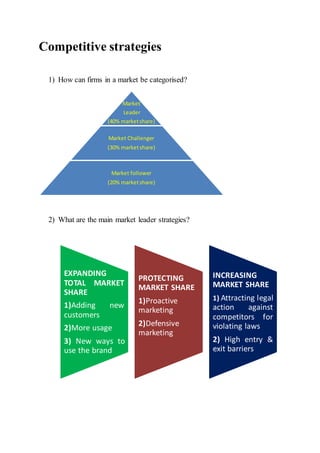
1) How can firms in a market be categorised? 
Market 
Leader 
(40% market share) 
Market Challenger 
(30% market share) 
Market follower 
(20% market share) 
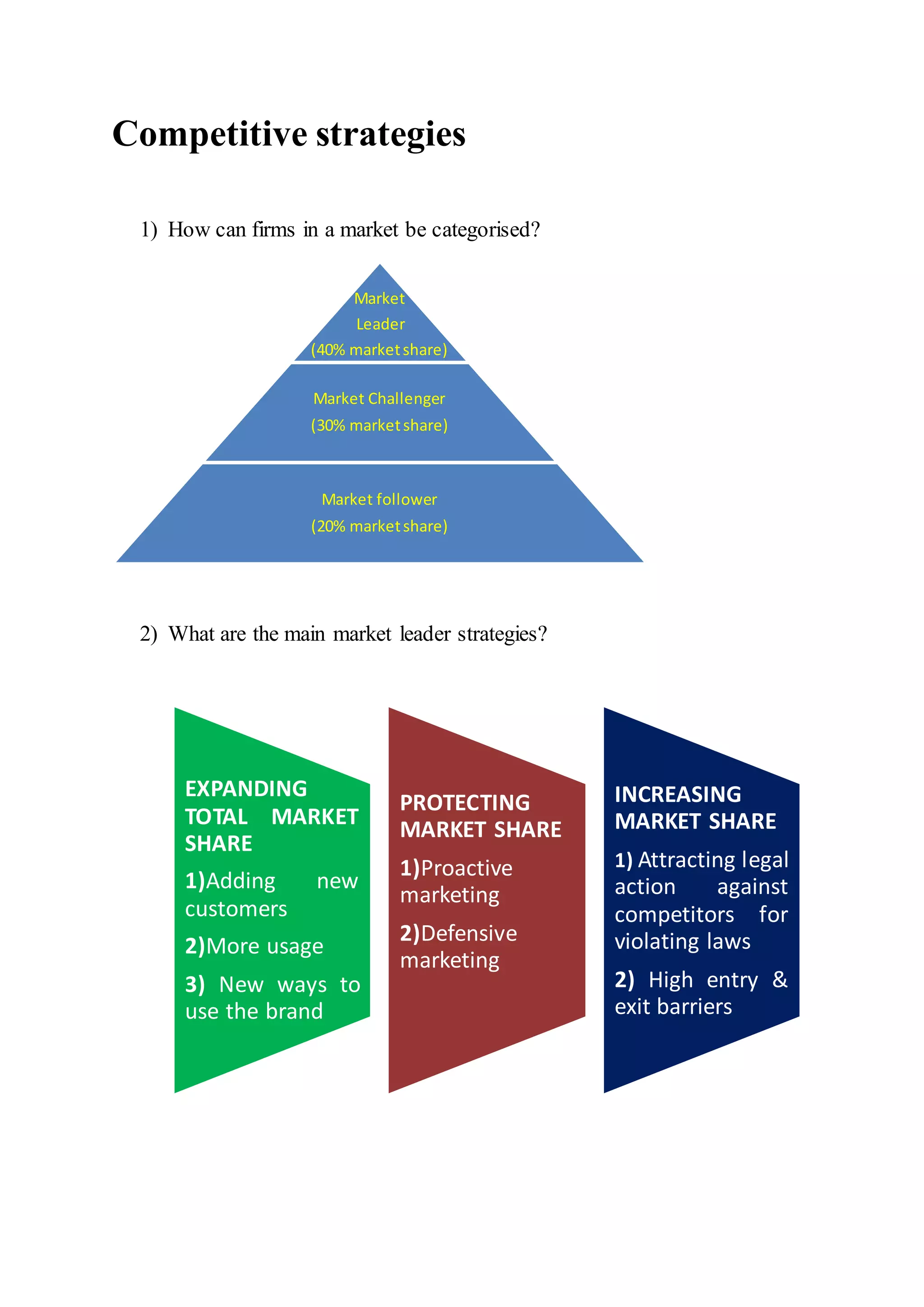
2) What are the main market leader strategies? 
EXPANDING 
TOTAL MARKET 
SHARE 
1)Adding new 
customers 
2)More usage 
3) New ways to 
use the brand 
PROTECTING 
MARKET SHARE 
1)Proactive 
marketing 
2)Defensive 
marketing 
INCREASING 
MARKET SHARE 
1) Attracting legal 
action against 
competitors for 
violating laws 
2) High entry & 
exit barriers
3) What are the various proactive & defensive marketing strategies for the 
market leader for protecting its market share? 
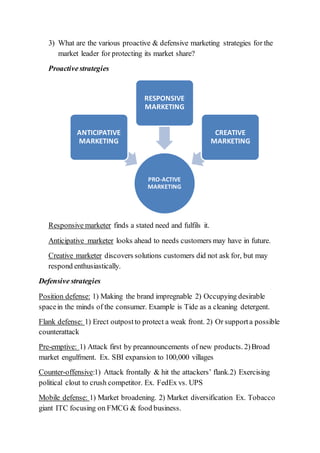
Proactive strategies 
RESPONSIVE 
MARKETING 
PRO-ACTIVE 
MARKETING 
ANTICIPATIVE 
MARKETING 
Responsive marketer finds a stated need and fulfils it. 
CREATIVE 
MARKETING 
Anticipative marketer looks ahead to needs customers may have in future. 
Creative marketer discovers solutions customers did not ask for, but may 
respond enthusiastically. 
Defensive strategies 
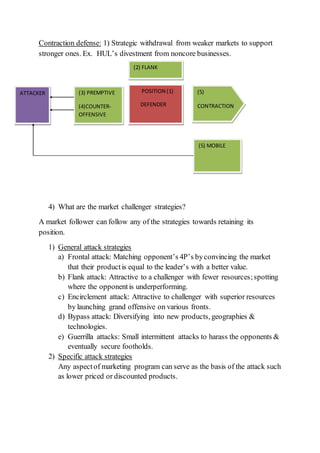
Position defense: 1) Making the brand impregnable 2) Occupying desirable 
space in the minds of the consumer. Example is Tide as a cleaning detergent. 
Flank defense: 1) Erect outpost to protect a weak front. 2) Or support a possible 
counterattack 
Pre-emptive: 1) Attack first by preannouncements of new products. 2) Broad 
market engulfment. Ex. SBI expansion to 100,000 villages 
Counter-offensive:1) Attack frontally & hit the attackers’ flank.2) Exercising 
political clout to crush competitor. Ex. FedEx vs. UPS 
Mobile defense: 1) Market broadening. 2) Market diversification Ex. Tobacco 
giant ITC focusing on FMCG & food business.
Contraction defense: 1) Strategic withdrawal from weaker markets to support 
stronger ones. Ex. HUL’s divestment from noncore businesses. 
(2) FLANK 
POSITION (1) 
DEFENDER 
(3) PREMPTIVE 
(4)COUNTER-OFFENSIVE 
4) What are the market challenger strategies? 
(5) 
CONTRACTION 
(5) MOBILE 
A market follower can follow any of the strategies towards retaining its 
position. 
1) General attack strategies 
a) Frontal attack: Matching opponent’s 4P’s by convincing the market 
that their product is equal to the leader’s with a better value. 
b) Flank attack: Attractive to a challenger with fewer resources; spotting 
where the opponent is underperforming. 
c) Encirclement attack: Attractive to challenger with superior resources 
by launching grand offensive on various fronts. 
d) Bypass attack: Diversifying into new products, geographies & 
technologies. 
e) Guerrilla attacks: Small intermittent attacks to harass the opponents & 
eventually secure footholds. 
2) Specific attack strategies 
Any aspect of marketing program can serve as the basis of the attack such 
as lower priced or discounted products. 
ATTACKER
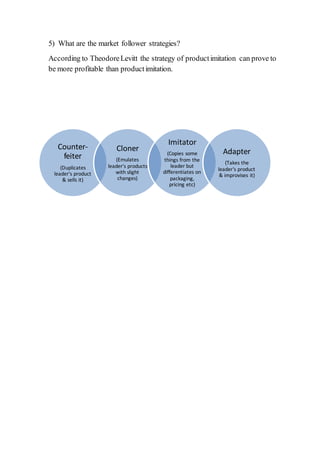
5) What are the market follower strategies? 
According to Theodore Levitt the strategy of product imitation can prove to 
be more profitable than product imitation. 
Counter-feiter 
(Duplicates 
leader's product 
& sells it) 
Cloner 
(Emulates 
leader's products 
with slight 
changes) 
Imitator 
(Copies some 
things from the 
leader but 
differentiates on 
packaging, 
pricing etc) 
Adapter 
(Takes the 
leader's product 
& improvises it)

Competitive strategies

  • 1.
    Competitive strategies 1)How can firms in a market be categorised? Market Leader (40% market share) Market Challenger (30% market share) Market follower (20% market share) 2) What are the main market leader strategies? EXPANDING TOTAL MARKET SHARE 1)Adding new customers 2)More usage 3) New ways to use the brand PROTECTING MARKET SHARE 1)Proactive marketing 2)Defensive marketing INCREASING MARKET SHARE 1) Attracting legal action against competitors for violating laws 2) High entry & exit barriers
  • 2.
    3) What arethe various proactive & defensive marketing strategies for the market leader for protecting its market share? Proactive strategies RESPONSIVE MARKETING PRO-ACTIVE MARKETING ANTICIPATIVE MARKETING Responsive marketer finds a stated need and fulfils it. CREATIVE MARKETING Anticipative marketer looks ahead to needs customers may have in future. Creative marketer discovers solutions customers did not ask for, but may respond enthusiastically. Defensive strategies Position defense: 1) Making the brand impregnable 2) Occupying desirable space in the minds of the consumer. Example is Tide as a cleaning detergent. Flank defense: 1) Erect outpost to protect a weak front. 2) Or support a possible counterattack Pre-emptive: 1) Attack first by preannouncements of new products. 2) Broad market engulfment. Ex. SBI expansion to 100,000 villages Counter-offensive:1) Attack frontally & hit the attackers’ flank.2) Exercising political clout to crush competitor. Ex. FedEx vs. UPS Mobile defense: 1) Market broadening. 2) Market diversification Ex. Tobacco giant ITC focusing on FMCG & food business.
  • 3.
    Contraction defense: 1)Strategic withdrawal from weaker markets to support stronger ones. Ex. HUL’s divestment from noncore businesses. (2) FLANK POSITION (1) DEFENDER (3) PREMPTIVE (4)COUNTER-OFFENSIVE 4) What are the market challenger strategies? (5) CONTRACTION (5) MOBILE A market follower can follow any of the strategies towards retaining its position. 1) General attack strategies a) Frontal attack: Matching opponent’s 4P’s by convincing the market that their product is equal to the leader’s with a better value. b) Flank attack: Attractive to a challenger with fewer resources; spotting where the opponent is underperforming. c) Encirclement attack: Attractive to challenger with superior resources by launching grand offensive on various fronts. d) Bypass attack: Diversifying into new products, geographies & technologies. e) Guerrilla attacks: Small intermittent attacks to harass the opponents & eventually secure footholds. 2) Specific attack strategies Any aspect of marketing program can serve as the basis of the attack such as lower priced or discounted products. ATTACKER
  • 4.
    5) What arethe market follower strategies? According to Theodore Levitt the strategy of product imitation can prove to be more profitable than product imitation. Counter-feiter (Duplicates leader's product & sells it) Cloner (Emulates leader's products with slight changes) Imitator (Copies some things from the leader but differentiates on packaging, pricing etc) Adapter (Takes the leader's product & improvises it)