


Competitive
intelligence
B E N C H M A R K I N G
Competitive
intelligence
system
Permanent process
- Collection
- Accumulation
- Structuring
- Analysis of data about
internal and external environ of
company
- Provision to high management
information
0 2
0 3
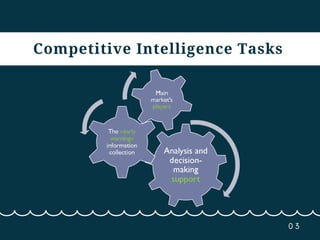
Competitive Intelligence Tasks
0 4
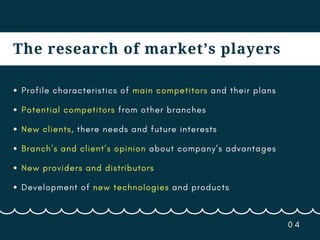
The research of market’s players
Profile characteristics of main competitors and their plans
Potential competitors from other branches
New clients, there needs and future interests
Branch’s and client’s opinion about company’s advantages
New providers and distributors
Development of new technologies and products
0 5
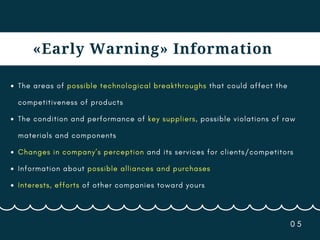
«Early Warning» Information
The areas of possible technological breakthroughs that could affect the
competitiveness of products
The condition and performance of key suppliers, possible violations of raw
materials and components
Changes in company’s perception and its services for clients/competitors
Information about possible alliances and purchases
Interests, efforts of other companies toward yours
0 6
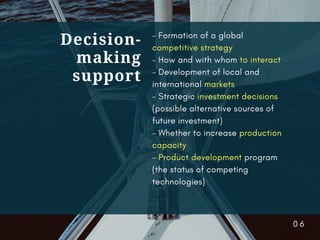
Decision-
making
support
- Formation of a global
competitive strategy
- How and with whom to interact
- Development of local and
international markets
- Strategic investment decisions
(possible alternative sources of
future investment)
- Whether to increase production
capacity
- Product development program
(the status of competing
technologies)
SCIP – Strategic and Competitive
Intelligence Professionals
- A l l i s I n f o r m a t i o n
M a n a g e m e n t ( A I M )
- A l p h a S e n s e
- B l u e o c e a n M a r k e t
I n t e l l i g e n c e
- C i p h e r S y s t e m s
- C o m i n t e l l i
0 7
SOLUTION
PROVIDER
0 8
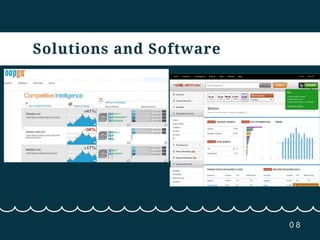
Solutions and Software
0 9
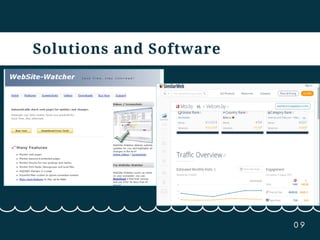
Solutions and Software
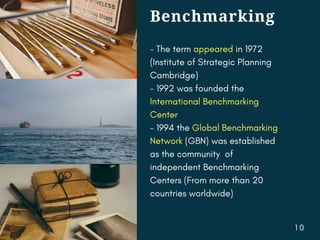
Benchmarking
- The term appeared in 1972
(Institute of Strategic Planning
Cambridge)
- 1992 was founded the
International Benchmarking
Center
- 1994 the Global Benchmarking
Network (GBN) was established
as the community of
independent Benchmarking
Centers (From more than 20
countries worldwide)
1 0
1 1
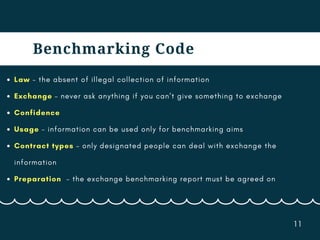
Benchmarking Code
Law – the absent of illegal collection of information
Exchange – never ask anything if you can’t give something to exchange
Confidence
Usage – information can be used only for benchmarking aims
Contract types – only designated people can deal with exchange the
information
Preparation – the exchange benchmarking report must be agreed on
1 2
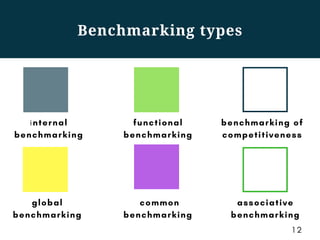
Benchmarking types
i n t e r n a l
b e n c h m a r k i n g
g l o b a l
b e n c h m a r k i n g
c o m m o n
b e n c h m a r k i n g
f u n c t i o n a l
b e n c h m a r k i n g
a s s o c i a t i v e
b e n c h m a r k i n g
b e n c h m a r k i n g o f
c o m p e t i t i v e n e s s
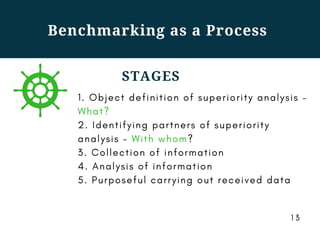
Benchmarking as a Process
1 . O b j e c t d e f i n i t i o n o f s u p e r i o r i t y a n a l y s i s –
W h a t ?
2 . I d e n t i f y i n g p a r t n e r s o f s u p e r i o r i t y
a n a l y s i s – W i t h w h o m ?
3 . C o l l e c t i o n o f i n f o r m a t i o n
4 . A n a l y s i s o f i n f o r m a t i o n
5 . P u r p o s e f u l c a r r y i n g o u t r e c e i v e d d a t a
1 3
STAGES
1 4
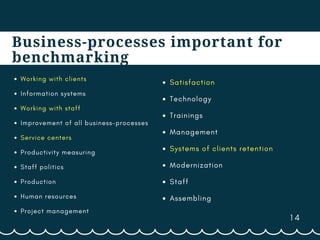
Business-processes important for
benchmarking
Working with clients
Information systems
Working with staff
Improvement of all business-processes
Service centers
Productivity measuring
Staff politics
Production
Human resources
Project management
Satisfaction
Technology
Trainings
Management
Systems of clients retention
Modernization
Staff
Assembling
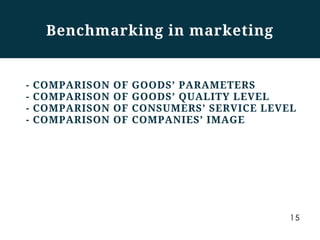
Benchmarking in marketing
1 5
- COMPARISON OF GOODS’ PARAMETERS
- COMPARISON OF GOODS’ QUALITY LEVEL
- COMPARISON OF CONSUMERS’ SERVICE LEVEL
- COMPARISON OF COMPANIES’ IMAGE
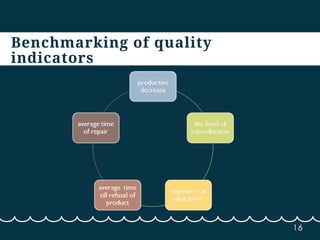
1 6
Benchmarking of quality
indicators
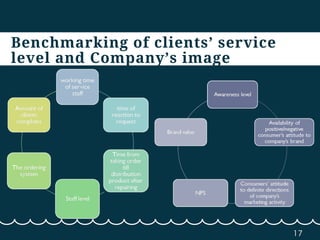
1 7
Benchmarking of clients’ service
level and Company’s image
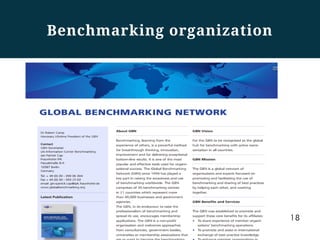
Benchmarking organization
1 8

Competitive intelligence and Benchmarking

  • 1.
  • 2.
    Competitive intelligence system Permanent process - Collection -Accumulation - Structuring - Analysis of data about internal and external environ of company - Provision to high management information 0 2
  • 3.
  • 4.
    0 4 The researchof market’s players Profile characteristics of main competitors and their plans Potential competitors from other branches New clients, there needs and future interests Branch’s and client’s opinion about company’s advantages New providers and distributors Development of new technologies and products
  • 5.
    0 5 «Early Warning»Information The areas of possible technological breakthroughs that could affect the competitiveness of products The condition and performance of key suppliers, possible violations of raw materials and components Changes in company’s perception and its services for clients/competitors Information about possible alliances and purchases Interests, efforts of other companies toward yours
  • 6.
    0 6 Decision- making support - Formationof a global competitive strategy - How and with whom to interact - Development of local and international markets - Strategic investment decisions (possible alternative sources of future investment) - Whether to increase production capacity - Product development program (the status of competing technologies)
  • 7.
    SCIP – Strategicand Competitive Intelligence Professionals - A l l i s I n f o r m a t i o n M a n a g e m e n t ( A I M ) - A l p h a S e n s e - B l u e o c e a n M a r k e t I n t e l l i g e n c e - C i p h e r S y s t e m s - C o m i n t e l l i 0 7 SOLUTION PROVIDER
  • 8.
  • 9.
  • 10.
    Benchmarking - The termappeared in 1972 (Institute of Strategic Planning Cambridge) - 1992 was founded the International Benchmarking Center - 1994 the Global Benchmarking Network (GBN) was established as the community of independent Benchmarking Centers (From more than 20 countries worldwide) 1 0
  • 11.
    1 1 Benchmarking Code Law– the absent of illegal collection of information Exchange – never ask anything if you can’t give something to exchange Confidence Usage – information can be used only for benchmarking aims Contract types – only designated people can deal with exchange the information Preparation – the exchange benchmarking report must be agreed on
  • 12.
    1 2 Benchmarking types in t e r n a l b e n c h m a r k i n g g l o b a l b e n c h m a r k i n g c o m m o n b e n c h m a r k i n g f u n c t i o n a l b e n c h m a r k i n g a s s o c i a t i v e b e n c h m a r k i n g b e n c h m a r k i n g o f c o m p e t i t i v e n e s s
  • 13.
    Benchmarking as aProcess 1 . O b j e c t d e f i n i t i o n o f s u p e r i o r i t y a n a l y s i s – W h a t ? 2 . I d e n t i f y i n g p a r t n e r s o f s u p e r i o r i t y a n a l y s i s – W i t h w h o m ? 3 . C o l l e c t i o n o f i n f o r m a t i o n 4 . A n a l y s i s o f i n f o r m a t i o n 5 . P u r p o s e f u l c a r r y i n g o u t r e c e i v e d d a t a 1 3 STAGES
  • 14.
    1 4 Business-processes importantfor benchmarking Working with clients Information systems Working with staff Improvement of all business-processes Service centers Productivity measuring Staff politics Production Human resources Project management Satisfaction Technology Trainings Management Systems of clients retention Modernization Staff Assembling
  • 15.
    Benchmarking in marketing 15 - COMPARISON OF GOODS’ PARAMETERS - COMPARISON OF GOODS’ QUALITY LEVEL - COMPARISON OF CONSUMERS’ SERVICE LEVEL - COMPARISON OF COMPANIES’ IMAGE
  • 16.
    1 6 Benchmarking ofquality indicators
  • 17.
    1 7 Benchmarking ofclients’ service level and Company’s image
  • 18.