COMPETENCY-BASED
EDUCATION CURRICULUM
Competencies are define as the
knowledge, skills and attitudes necessary
  to be competitive in the 21st century
               workforce.

It is a real and demonstrated capability.

  Students today need to learn how to
     participate appropriately in an
  increasingly diverse society, use new
   technologies and face with rapidly
         changing workplaces.
COMPETENCIES:
 Lifelong learning

  Problem solving

 Self-management

    Teamwork
CONSTRUCTION OF A PROFESSIONAL
            PROFILE
Production dimension: problems arising from
              the preparation.

   Organizational dimension: problems
  originating from organizational choices.

 Social dimension: problems resulting from
  social interaction with others within the
 context of a profession, like team members
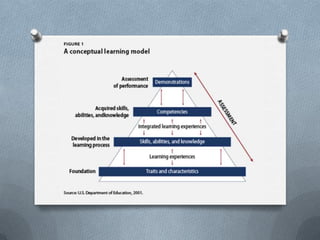
COMPETENCY-BASED ASSESSMENT


Learning processes are very much guided
     by the way tests are organized.

  Systematic use of individual and group
    assignments, the qualifications are
determined needed for a particular worker.

 Professors should carry out four tasks:
 observe, register, classify and evaluate.
Levels of Competence

   Level 1: Competence which involves the application of
                       knowledge.

   Level 2: Competence which involves the application of
knowledge in a significant range of work activities, with some
            individual responsibility or autonomy.

   Level 3: Competence which involves the application of
     knowledge in a broad range of varied work activities
performed in a wide variety of contexts. There is considerable
  responsibility and autonomy and control or guidance of
                  others is often required.
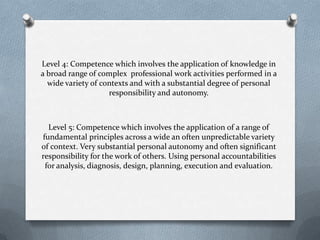
Level 4: Competence which involves the application of knowledge in
a broad range of complex professional work activities performed in a
  wide variety of contexts and with a substantial degree of personal
                    responsibility and autonomy.


  Level 5: Competence which involves the application of a range of
fundamental principles across a wide an often unpredictable variety
of context. Very substantial personal autonomy and often significant
responsibility for the work of others. Using personal accountabilities
 for analysis, diagnosis, design, planning, execution and evaluation.
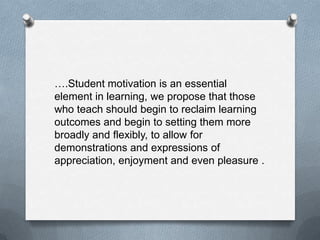
….Student motivation is an essential
element in learning, we propose that those
who teach should begin to reclaim learning
outcomes and begin to setting them more
broadly and flexibly, to allow for
demonstrations and expressions of
appreciation, enjoyment and even pleasure .

Competency based education curriculum

  • 1.
  • 2.
    Competencies are defineas the knowledge, skills and attitudes necessary to be competitive in the 21st century workforce. It is a real and demonstrated capability. Students today need to learn how to participate appropriately in an increasingly diverse society, use new technologies and face with rapidly changing workplaces.
  • 3.
    COMPETENCIES: Lifelong learning Problem solving Self-management Teamwork
  • 4.
    CONSTRUCTION OF APROFESSIONAL PROFILE Production dimension: problems arising from the preparation. Organizational dimension: problems originating from organizational choices. Social dimension: problems resulting from social interaction with others within the context of a profession, like team members
  • 5.
    COMPETENCY-BASED ASSESSMENT Learning processesare very much guided by the way tests are organized. Systematic use of individual and group assignments, the qualifications are determined needed for a particular worker. Professors should carry out four tasks: observe, register, classify and evaluate.
  • 7.
    Levels of Competence Level 1: Competence which involves the application of knowledge. Level 2: Competence which involves the application of knowledge in a significant range of work activities, with some individual responsibility or autonomy. Level 3: Competence which involves the application of knowledge in a broad range of varied work activities performed in a wide variety of contexts. There is considerable responsibility and autonomy and control or guidance of others is often required.
  • 8.
    Level 4: Competencewhich involves the application of knowledge in a broad range of complex professional work activities performed in a wide variety of contexts and with a substantial degree of personal responsibility and autonomy. Level 5: Competence which involves the application of a range of fundamental principles across a wide an often unpredictable variety of context. Very substantial personal autonomy and often significant responsibility for the work of others. Using personal accountabilities for analysis, diagnosis, design, planning, execution and evaluation.
  • 9.
    ….Student motivation isan essential element in learning, we propose that those who teach should begin to reclaim learning outcomes and begin to setting them more broadly and flexibly, to allow for demonstrations and expressions of appreciation, enjoyment and even pleasure .