Unit 4:
Compensation and Reward
Management
• Concept & Objectives
• Importance of Compensation Management
• Process of Compensation Plan
• Wage/Salary differentials
• Components of Salary
• Incentives and Benefits- Need
• Financial and Nonfinancial Incentives
• Employee Separation- VRS
• Retirement
• Golden Handshake
• Termination
• Suspension.
Compensation and Reward
Management
• Compensation and reward management is a crucial
aspect of human resource management (HRM) that
deals with designing, implementing, and maintaining
fair and effective pay and benefits programs for
employees.
• It encompasses both direct financial rewards (wages,
salaries, bonuses) and indirect non-financial rewards
(benefits, recognition, opportunities).
Objectives:
• Attract and retain top talent:
• Motivate employees:
• Improve employee satisfaction:
• External Competitiveness :
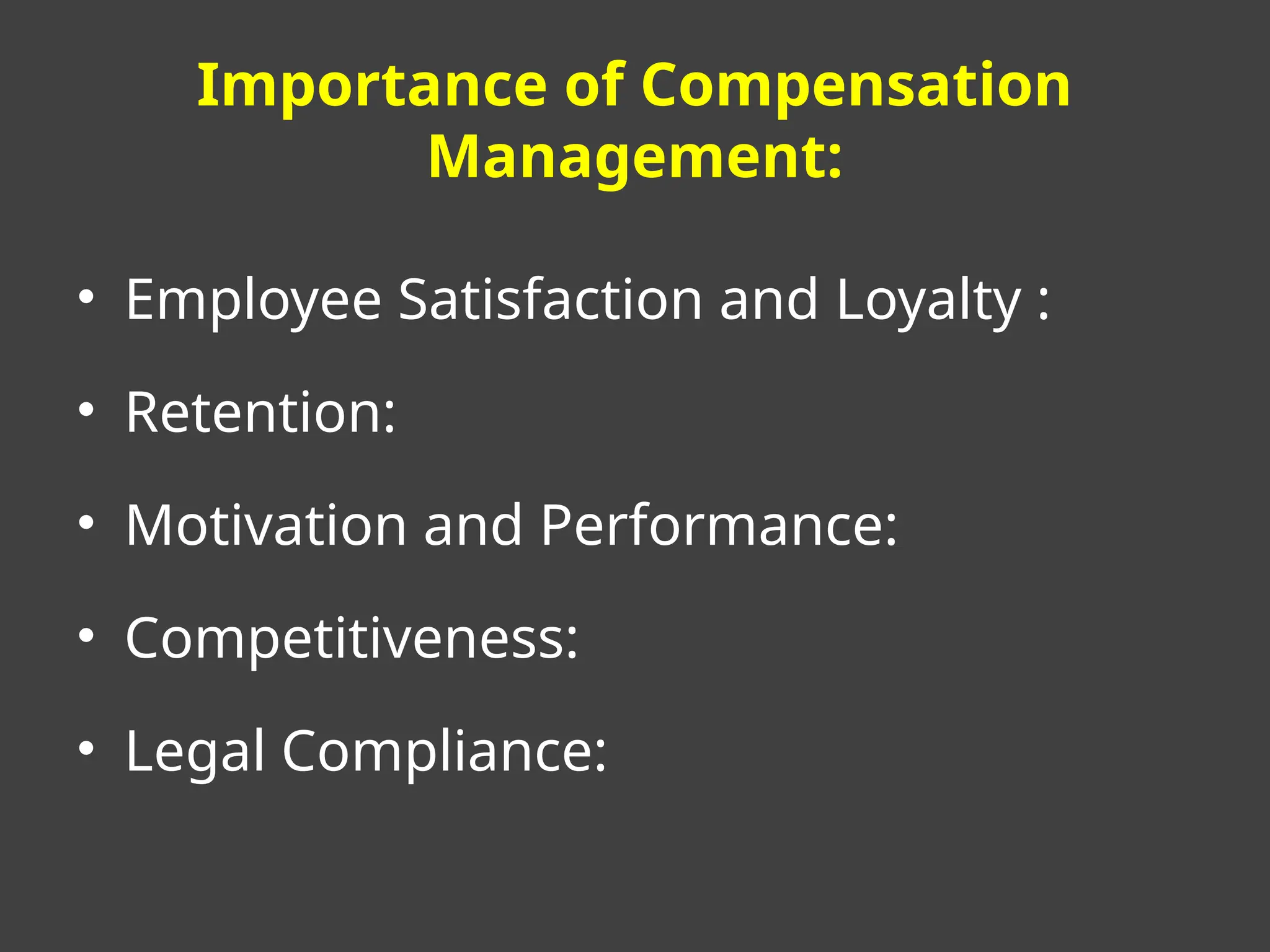
Importance of Compensation
Management:
• Employee Satisfaction and Loyalty :
• Retention:
• Motivation and Performance:
• Competitiveness:
• Legal Compliance:
Process of Compensation Plan:
• Job analysis and evaluation:
• Market research:
• Salary structure development:
• Compensation policy formulation:
• Communication and implementation:
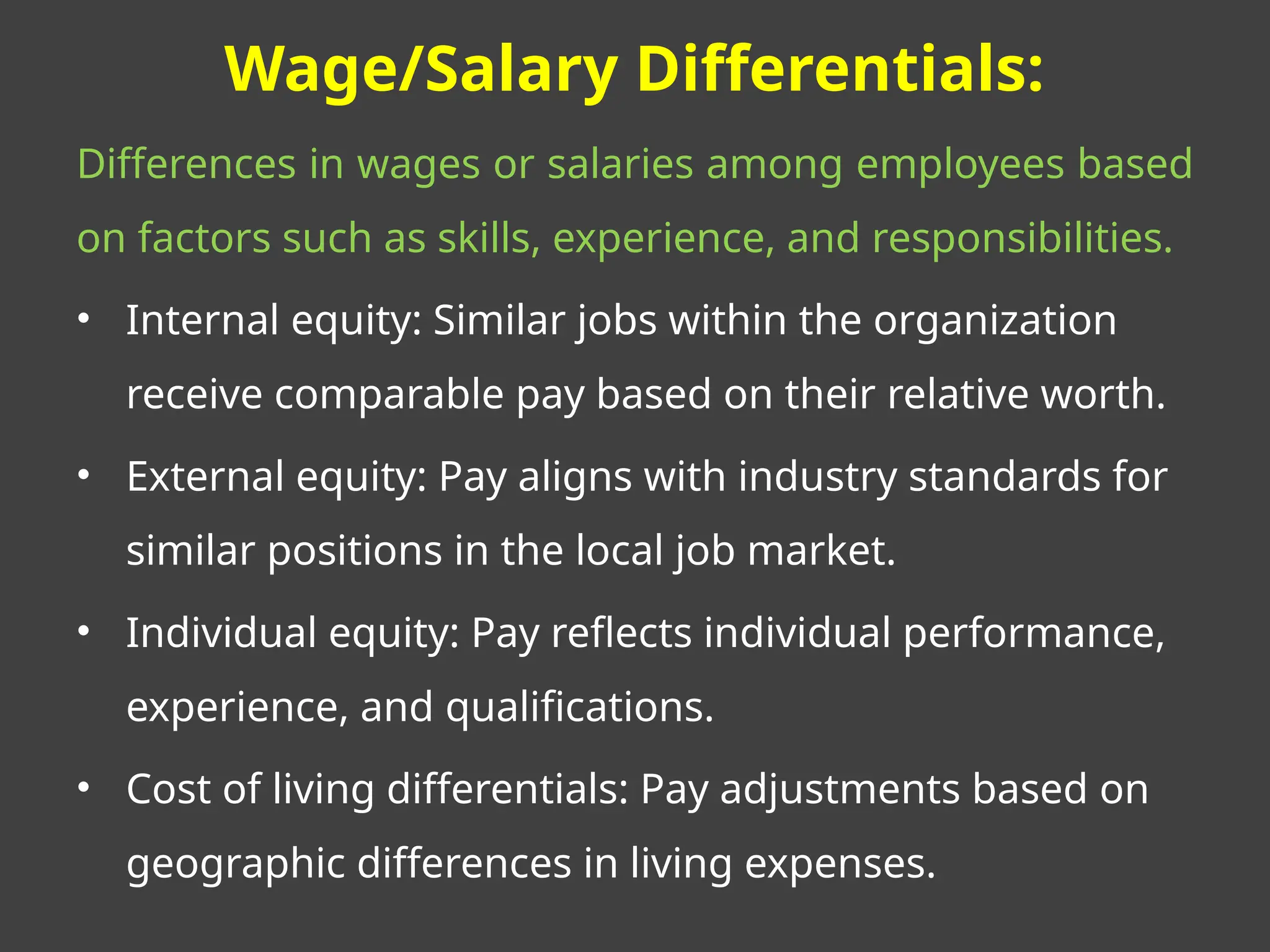
Wage/Salary Differentials:
Differences in wages or salaries among employees based
on factors such as skills, experience, and responsibilities.
• Internal equity: Similar jobs within the organization
receive comparable pay based on their relative worth.
• External equity: Pay aligns with industry standards for
similar positions in the local job market.
• Individual equity: Pay reflects individual performance,
experience, and qualifications.
• Cost of living differentials: Pay adjustments based on
geographic differences in living expenses.
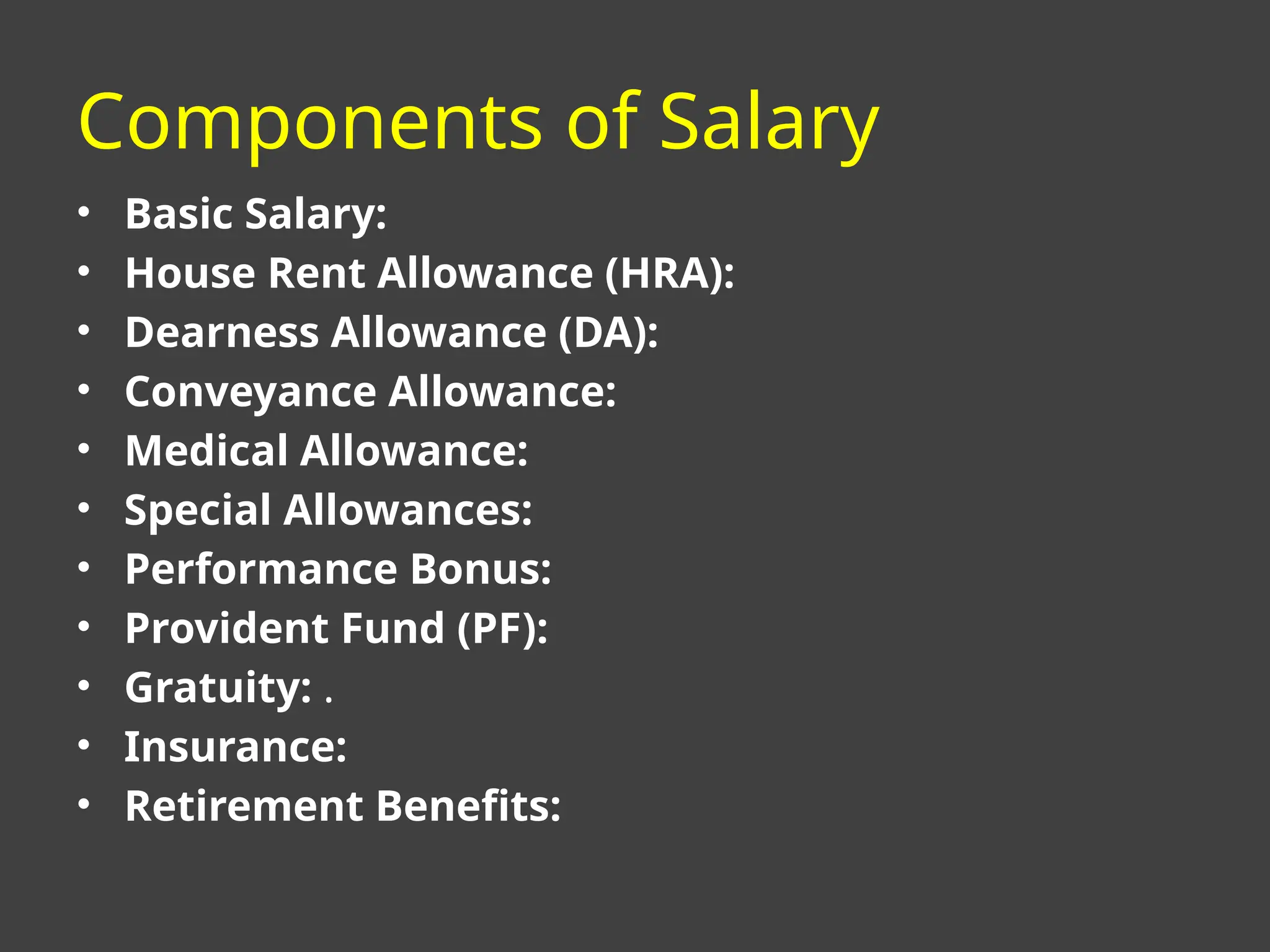
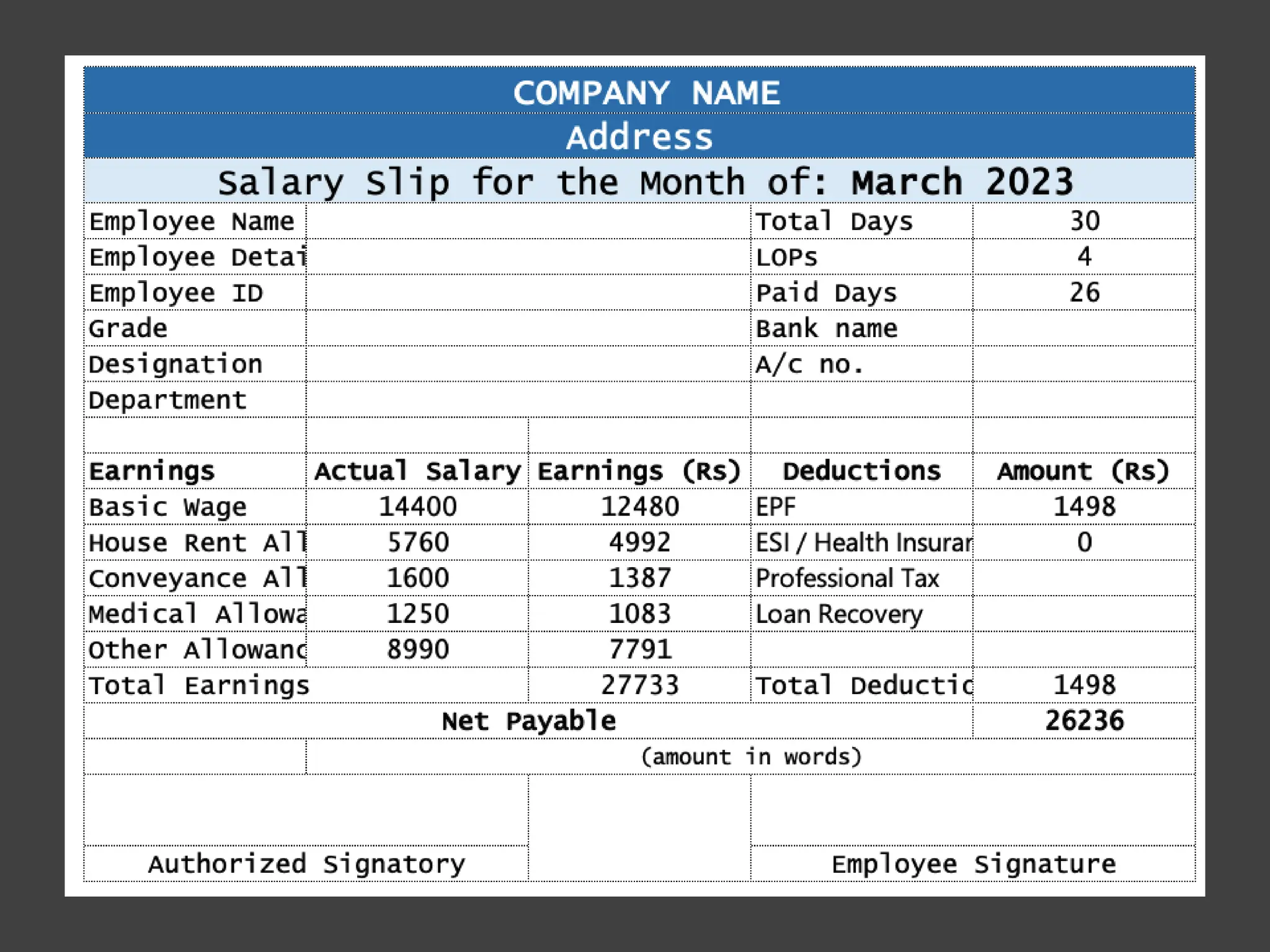
Components of Salary
• Basic Salary:
• House Rent Allowance (HRA):
• Dearness Allowance (DA):
• Conveyance Allowance:
• Medical Allowance:
• Special Allowances:
• Performance Bonus:
• Provident Fund (PF):
• Gratuity: .
• Insurance:
• Retirement Benefits:
Incentives and Benefits
• Incentives refer to rewards or stimuli designed to
motivate employees and drive desired behaviors,
performance, or outcomes within an organization.
• These rewards are typically tied to individual or group
achievements and are aimed at recognizing and
reinforcing positive contributions.
• Incentives can take various forms, including financial
and nonfinancial rewards.
Financial Incentives:
• Bonuses: Performance-based rewards tied
to specific goals or achievements.
• Commissions: Sales-based incentives linked
to individual or team sales performance.
• Profit-sharing: Sharing a portion of
company profits with employees.
• Stock options: Granting employees the
right to purchase company stock at a
predetermined price.
Non-financial Incentives:
• Recognition and awards: Publicly recognizing and
appreciating employee contributions.
• Training and development opportunities: Investing in
employee growth and skill development.
• Flexible work arrangements: Offering options like
remote work, flexible hours, or compressed
workweeks.
• Employee wellness programs: Supporting employee
physical and mental well-being.
Benefits:
• Employee benefits are non-wage compensations
provided by employers in addition to employees'
salaries.
• These benefits contribute to the overall compensation
package and aim to enhance the well-being, job
satisfaction, and work-life balance of employees.
• Benefits can be classified into both Mandatory and
Discretionary categories.
• Mandatory Benefits:
• Health Insurance:
• Retirement Plans:
• Social Security Contributions:
• Discretionary Benefits:
• Paid Time Off (PTO): Vacation days, sick leave, and
holidays.
• Parental leave:
• Life Insurance:
• Dental and Vision Insurance:
• Wellness Programs: physical and mental well-
being, such as gym memberships or wellness
Importance of Incentives and Benefits:
• Employee Motivation:
• Talent Attraction and Retention:
• Job Satisfaction:
• Organizational Performance:
• Employee Well-being:
Employee Separation & Golden Handshake
Employee separation
• Employee separation refers to the process of an employee
leaving an organization, either voluntarily or involuntarily.
• It encompasses various scenarios such as resignation,
retirement, termination, or layoffs.
• Managing employee separation effectively is crucial for
both the departing employee and the organization to
ensure a smooth transition and maintain a positive work
environment.
Resignation:
When an employee voluntarily decides to leave the
organization, they typically submit a resignation letter.
The organization may conduct an exit interview to
understand the reasons for the departure and gather
feedback on the employee's experience.
Retirement:
Employees reaching the age of retirement may choose
to retire from their positions.
Organizations often have specific procedures for
handling retirements, including pension or retirement
Termination:
In cases where an employee's performance or
conduct is not meeting expectations, termination
may occur.
Employers should follow legal and ethical
procedures, providing clear reasons for
termination and ensuring due process.
Layoffs:
Organizations may implement layoffs due to
restructuring, downsizing, or financial challenges.
This involves terminating employees based on
business needs rather than individual
Notice Period:
In many cases, there is a notice period during which the
departing employee continues to work or is paid in lieu
of notice.
The notice period allows the organization to find a
replacement or redistribute the workload.
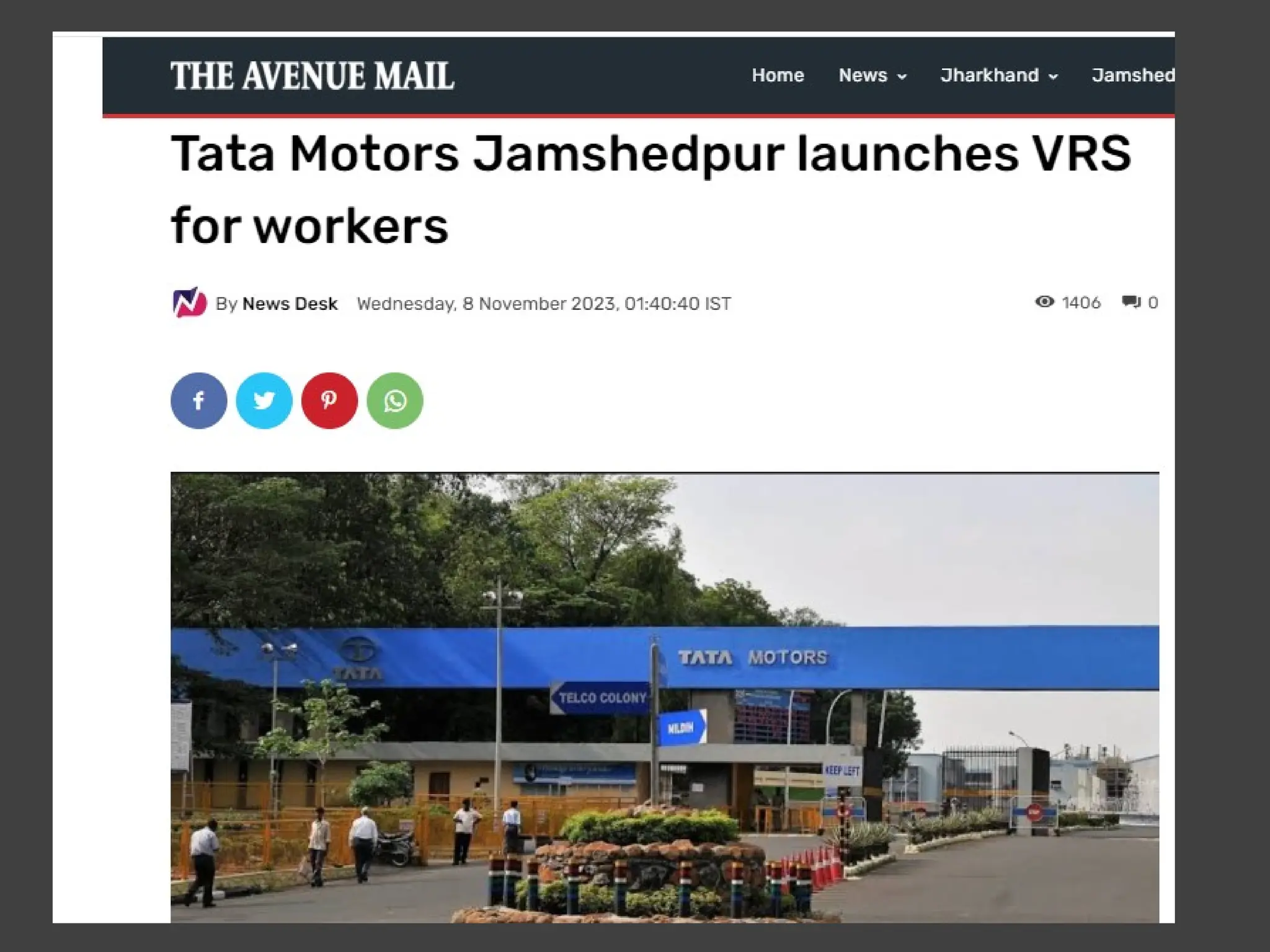
Voluntary Retirement Scheme (VRS) :
It is a program offered by organizations to encourage
employees to voluntarily retire before their official
retirement age.
Employees who opt for VRS typically receive certain
financial incentives or benefits as an encouragement to
Golden Handshake
Financial incentive offered by employers to employees during
voluntary separation.
Importance of Golden Handshake in corporate scenarios:
During times of organizational restructuring, downsizing, or mergers,
Golden Handshakes are crucial to encourage employees to leave the
company voluntarily, often with more favorable terms than standard
severance packages.
Purpose of Golden Handshake
 To facilitate a smoother workforce transition during
organizational changes.
 To maintain a positive corporate image and
employee morale.
where Golden Handshakes are commonly used:
 Mergers and acquisitions.
 Corporate downsizing or restructuring.
Key Features of Golden Handshake
 Lump-sum payment:
one-time financial incentive provided to employees.
 Extended benefits:
additional perks, such as continued health benefits or
outplacement services.
 Tax implications:
tax considerations for employees receiving Golden
Handshakes.
Advantages for Employers
Maintaining a positive corporate image:
Golden Handshakes can contribute to a company's reputation by
showing a commitment to fair treatment of employees.
Smoother workforce transition during organizational changes:
By incentivizing voluntary departures, companies can potentially
avoid the negative impacts of mass layoffs and maintain a more
positive working atmosphere.
Advantages for Employees
Financial security during transition periods:
Golden Handshakes provide employees with a financial
cushion during the transitional phase between jobs.
Enhanced severance benefits compared to standard
packages:
Employees receive more favorable terms compared to
standard severance packages.
Considerations for Implementing Golden Handshakes
Legal considerations
Communication.
Video Resources
• https://
www.youtube.com/watch?v=igh6Z-64JGE
• What do you mean by compensations? What are the types of reward given under
compensations?
• What are the components of direct and indirect compensations?
• Write an note on Compensation philosophy
• Explain different objectives of compensation philosophy
• What are different factors affecting on compensation plan? Explain internal factors in
detail.
• What are different components of pay structure. Explain any TWO

Compensation and Reward Management in HRM

  • 1.
    Unit 4: Compensation andReward Management
  • 2.
    • Concept &Objectives • Importance of Compensation Management • Process of Compensation Plan • Wage/Salary differentials • Components of Salary • Incentives and Benefits- Need • Financial and Nonfinancial Incentives • Employee Separation- VRS • Retirement • Golden Handshake • Termination • Suspension.
  • 3.
    Compensation and Reward Management •Compensation and reward management is a crucial aspect of human resource management (HRM) that deals with designing, implementing, and maintaining fair and effective pay and benefits programs for employees. • It encompasses both direct financial rewards (wages, salaries, bonuses) and indirect non-financial rewards (benefits, recognition, opportunities).
  • 4.
    Objectives: • Attract andretain top talent: • Motivate employees: • Improve employee satisfaction: • External Competitiveness :
  • 5.
    Importance of Compensation Management: •Employee Satisfaction and Loyalty : • Retention: • Motivation and Performance: • Competitiveness: • Legal Compliance:
  • 6.
    Process of CompensationPlan: • Job analysis and evaluation: • Market research: • Salary structure development: • Compensation policy formulation: • Communication and implementation:
  • 7.
    Wage/Salary Differentials: Differences inwages or salaries among employees based on factors such as skills, experience, and responsibilities. • Internal equity: Similar jobs within the organization receive comparable pay based on their relative worth. • External equity: Pay aligns with industry standards for similar positions in the local job market. • Individual equity: Pay reflects individual performance, experience, and qualifications. • Cost of living differentials: Pay adjustments based on geographic differences in living expenses.
  • 9.
    Components of Salary •Basic Salary: • House Rent Allowance (HRA): • Dearness Allowance (DA): • Conveyance Allowance: • Medical Allowance: • Special Allowances: • Performance Bonus: • Provident Fund (PF): • Gratuity: . • Insurance: • Retirement Benefits:
  • 11.
    Incentives and Benefits •Incentives refer to rewards or stimuli designed to motivate employees and drive desired behaviors, performance, or outcomes within an organization. • These rewards are typically tied to individual or group achievements and are aimed at recognizing and reinforcing positive contributions. • Incentives can take various forms, including financial and nonfinancial rewards.
  • 12.
    Financial Incentives: • Bonuses:Performance-based rewards tied to specific goals or achievements. • Commissions: Sales-based incentives linked to individual or team sales performance. • Profit-sharing: Sharing a portion of company profits with employees. • Stock options: Granting employees the right to purchase company stock at a predetermined price.
  • 13.
    Non-financial Incentives: • Recognitionand awards: Publicly recognizing and appreciating employee contributions. • Training and development opportunities: Investing in employee growth and skill development. • Flexible work arrangements: Offering options like remote work, flexible hours, or compressed workweeks. • Employee wellness programs: Supporting employee physical and mental well-being.
  • 14.
    Benefits: • Employee benefitsare non-wage compensations provided by employers in addition to employees' salaries. • These benefits contribute to the overall compensation package and aim to enhance the well-being, job satisfaction, and work-life balance of employees. • Benefits can be classified into both Mandatory and Discretionary categories.
  • 15.
    • Mandatory Benefits: •Health Insurance: • Retirement Plans: • Social Security Contributions: • Discretionary Benefits: • Paid Time Off (PTO): Vacation days, sick leave, and holidays. • Parental leave: • Life Insurance: • Dental and Vision Insurance: • Wellness Programs: physical and mental well- being, such as gym memberships or wellness
  • 16.
    Importance of Incentivesand Benefits: • Employee Motivation: • Talent Attraction and Retention: • Job Satisfaction: • Organizational Performance: • Employee Well-being:
  • 17.
    Employee Separation &Golden Handshake
  • 18.
    Employee separation • Employeeseparation refers to the process of an employee leaving an organization, either voluntarily or involuntarily. • It encompasses various scenarios such as resignation, retirement, termination, or layoffs. • Managing employee separation effectively is crucial for both the departing employee and the organization to ensure a smooth transition and maintain a positive work environment.
  • 19.
    Resignation: When an employeevoluntarily decides to leave the organization, they typically submit a resignation letter. The organization may conduct an exit interview to understand the reasons for the departure and gather feedback on the employee's experience. Retirement: Employees reaching the age of retirement may choose to retire from their positions. Organizations often have specific procedures for handling retirements, including pension or retirement
  • 20.
    Termination: In cases wherean employee's performance or conduct is not meeting expectations, termination may occur. Employers should follow legal and ethical procedures, providing clear reasons for termination and ensuring due process. Layoffs: Organizations may implement layoffs due to restructuring, downsizing, or financial challenges. This involves terminating employees based on business needs rather than individual
  • 21.
    Notice Period: In manycases, there is a notice period during which the departing employee continues to work or is paid in lieu of notice. The notice period allows the organization to find a replacement or redistribute the workload. Voluntary Retirement Scheme (VRS) : It is a program offered by organizations to encourage employees to voluntarily retire before their official retirement age. Employees who opt for VRS typically receive certain financial incentives or benefits as an encouragement to
  • 23.
    Golden Handshake Financial incentiveoffered by employers to employees during voluntary separation. Importance of Golden Handshake in corporate scenarios: During times of organizational restructuring, downsizing, or mergers, Golden Handshakes are crucial to encourage employees to leave the company voluntarily, often with more favorable terms than standard severance packages.
  • 24.
    Purpose of GoldenHandshake  To facilitate a smoother workforce transition during organizational changes.  To maintain a positive corporate image and employee morale. where Golden Handshakes are commonly used:  Mergers and acquisitions.  Corporate downsizing or restructuring.
  • 25.
    Key Features ofGolden Handshake  Lump-sum payment: one-time financial incentive provided to employees.  Extended benefits: additional perks, such as continued health benefits or outplacement services.  Tax implications: tax considerations for employees receiving Golden Handshakes.
  • 26.
    Advantages for Employers Maintaininga positive corporate image: Golden Handshakes can contribute to a company's reputation by showing a commitment to fair treatment of employees. Smoother workforce transition during organizational changes: By incentivizing voluntary departures, companies can potentially avoid the negative impacts of mass layoffs and maintain a more positive working atmosphere.
  • 27.
    Advantages for Employees Financialsecurity during transition periods: Golden Handshakes provide employees with a financial cushion during the transitional phase between jobs. Enhanced severance benefits compared to standard packages: Employees receive more favorable terms compared to standard severance packages.
  • 28.
    Considerations for ImplementingGolden Handshakes Legal considerations Communication.
  • 29.
    Video Resources • https:// www.youtube.com/watch?v=igh6Z-64JGE •What do you mean by compensations? What are the types of reward given under compensations? • What are the components of direct and indirect compensations? • Write an note on Compensation philosophy • Explain different objectives of compensation philosophy • What are different factors affecting on compensation plan? Explain internal factors in detail. • What are different components of pay structure. Explain any TWO