The 3-P Compensation Concept

Dr. G C Mohanta, BE(Mech), MSc(Engg), MBA, PhD(Mgt)
                   Professor
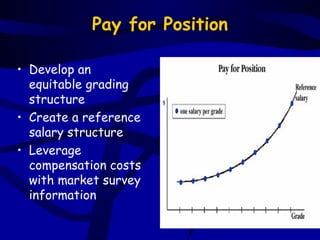
Pay for Position

• Develop an
  equitable grading
  structure
• Create a reference
  salary structure
• Leverage
  compensation costs
  with market survey
  information
Pay for Position

• Employee compensation is set in broadband based
  on qualifications, education, training & experience.
• Through broad banding, narrowly structured pay
  grades determined through job evaluation, are
  replaced by fewer and wider bands.
• Employees progress up through broad band if
  their performance ratings are good, rather than
  through steps based on time in the grade.
• It reduces different compensation categories to
  broad compensation bands, grouping jobs together
  by common characteristic.
 
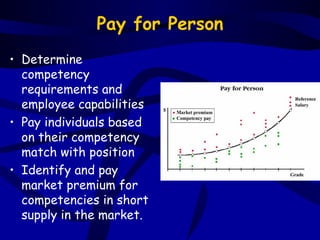
Pay for Person
• Determine
  competency
  requirements and
  employee capabilities
• Pay individuals based
  on their competency
  match with position
• Identify and pay
  market premium for
  competencies in short
  supply in the market.
Pay for Person
• Pay for person takes into account a
  person’s capabilities and experience in
  setting a pay level that is both equitable
  and competitive.
• It considers the market demand of a
  person’s unique skills and experience.
• Pay for person is associated with
  competency based pay.
• It also incorporates market based pay
  approach.
Pay for Performance
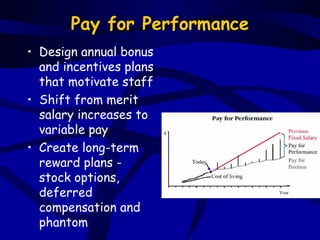
• Design annual bonus
  and incentives plans
  that motivate staff
• Shift from merit
  salary increases to
  variable pay
• Create long-term
  reward plans -
  stock options,
  deferred
  compensation and
  phantom
Pay for Performance

• An individual’s performance is
  managed through a performance
  contract, comprising role
  clarification, objectives setting and
  review of performance.
• As an outcome a measure of
  performance at corporate, unit and
  individual level becomes the basis for
  setting the performance pay.
Thank you

The 3 p compensation concept

  • 1.
    The 3-P CompensationConcept Dr. G C Mohanta, BE(Mech), MSc(Engg), MBA, PhD(Mgt) Professor
  • 2.
    Pay for Position •Develop an equitable grading structure • Create a reference salary structure • Leverage compensation costs with market survey information
  • 3.
    Pay for Position •Employee compensation is set in broadband based on qualifications, education, training & experience. • Through broad banding, narrowly structured pay grades determined through job evaluation, are replaced by fewer and wider bands. • Employees progress up through broad band if their performance ratings are good, rather than through steps based on time in the grade. • It reduces different compensation categories to broad compensation bands, grouping jobs together by common characteristic.  
  • 4.
    Pay for Person •Determine competency requirements and employee capabilities • Pay individuals based on their competency match with position • Identify and pay market premium for competencies in short supply in the market.
  • 5.
    Pay for Person •Pay for person takes into account a person’s capabilities and experience in setting a pay level that is both equitable and competitive. • It considers the market demand of a person’s unique skills and experience. • Pay for person is associated with competency based pay. • It also incorporates market based pay approach.
  • 6.
    Pay for Performance •Design annual bonus and incentives plans that motivate staff • Shift from merit salary increases to variable pay • Create long-term reward plans - stock options, deferred compensation and phantom
  • 7.
    Pay for Performance •An individual’s performance is managed through a performance contract, comprising role clarification, objectives setting and review of performance. • As an outcome a measure of performance at corporate, unit and individual level becomes the basis for setting the performance pay.
  • 8.