Comparatives and
Superlatives: Uses
Comparatives and
       Superlatives: Uses
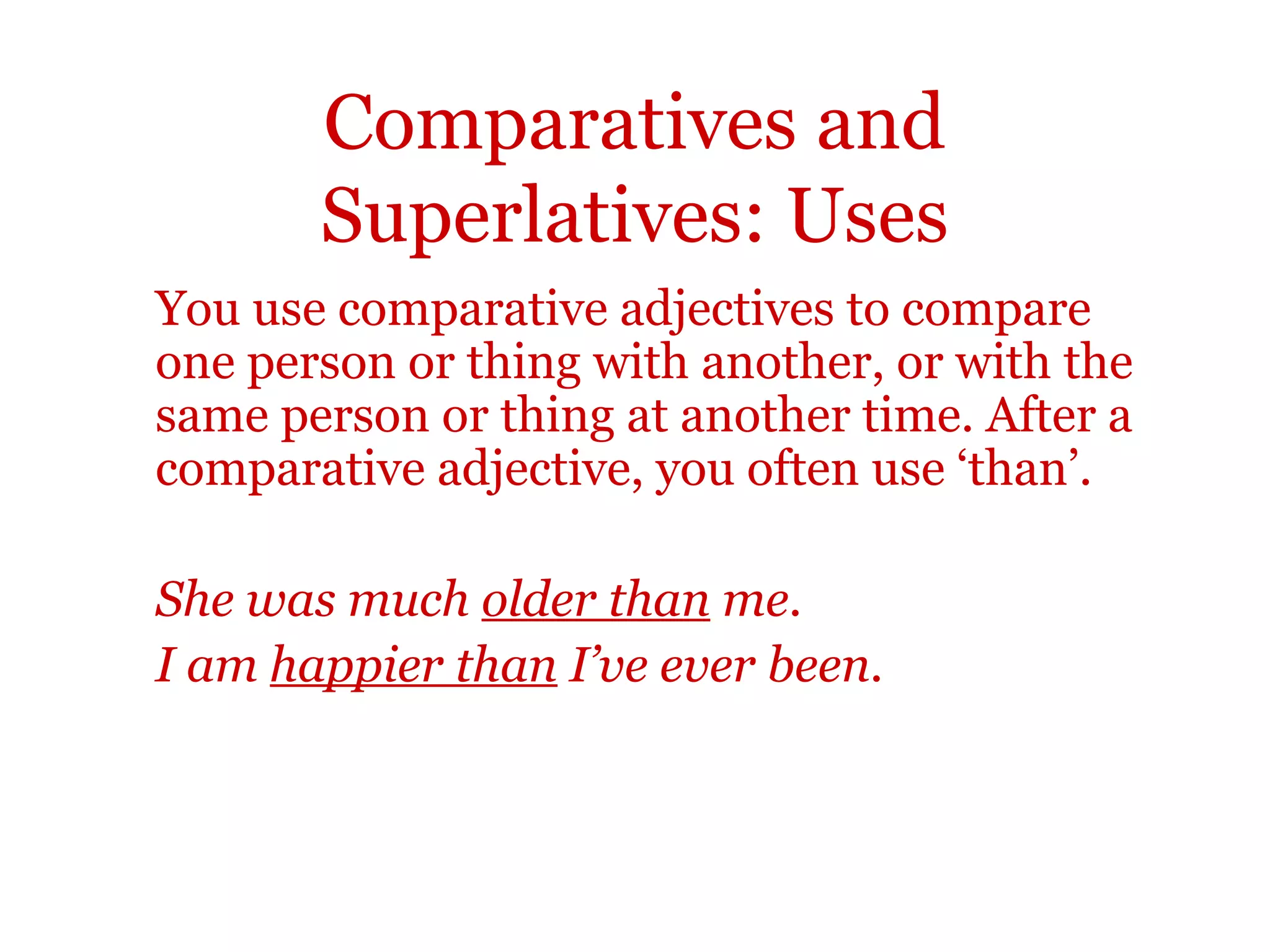
You use comparative adjectives to compare
one person or thing with another, or with the
same person or thing at another time. After a
comparative adjective, you often use ‘than’.

She was much older than me.
I am happier than I’ve ever been.
Comparatives and
       Superlatives: Uses
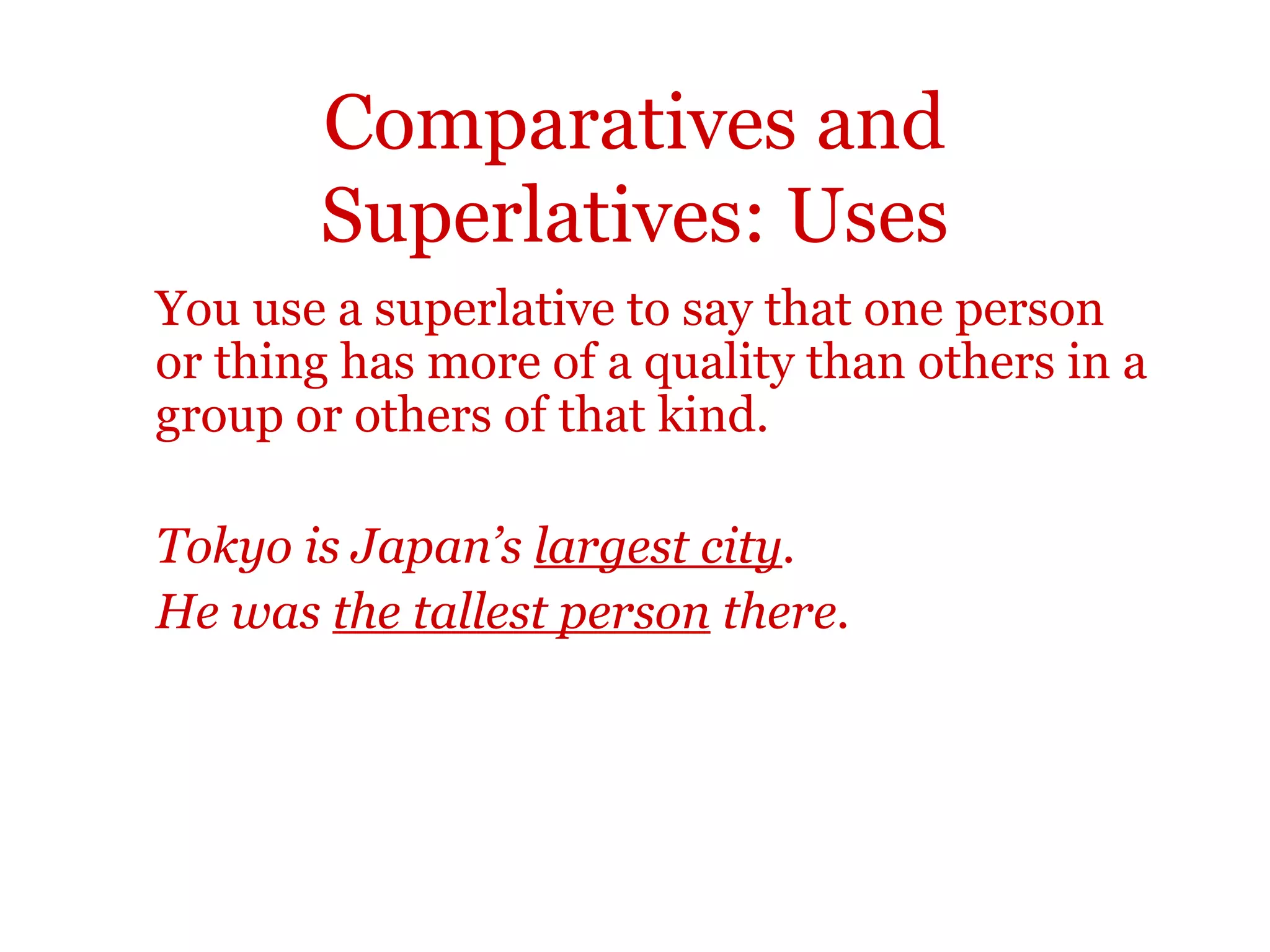
You use a superlative to say that one person
or thing has more of a quality than others in a
group or others of that kind.

Tokyo is Japan’s largest city.
He was the tallest person there.
Comparatives and
       Superlatives: Uses
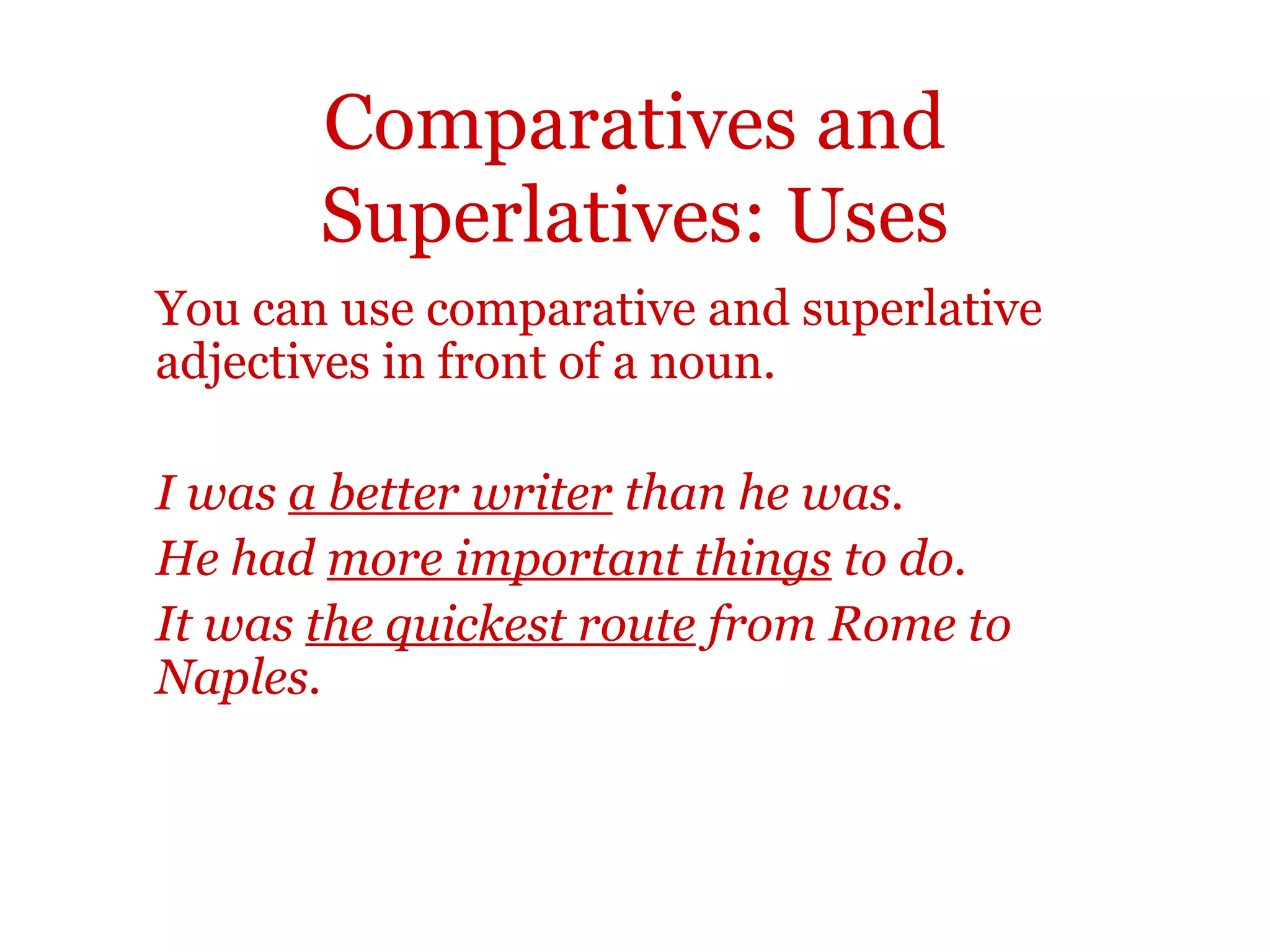
You can use comparative and superlative
adjectives in front of a noun.

I was a better writer than he was.
He had more important things to do.
It was the quickest route from Rome to
Naples.
Comparatives and
       Superlatives: Uses
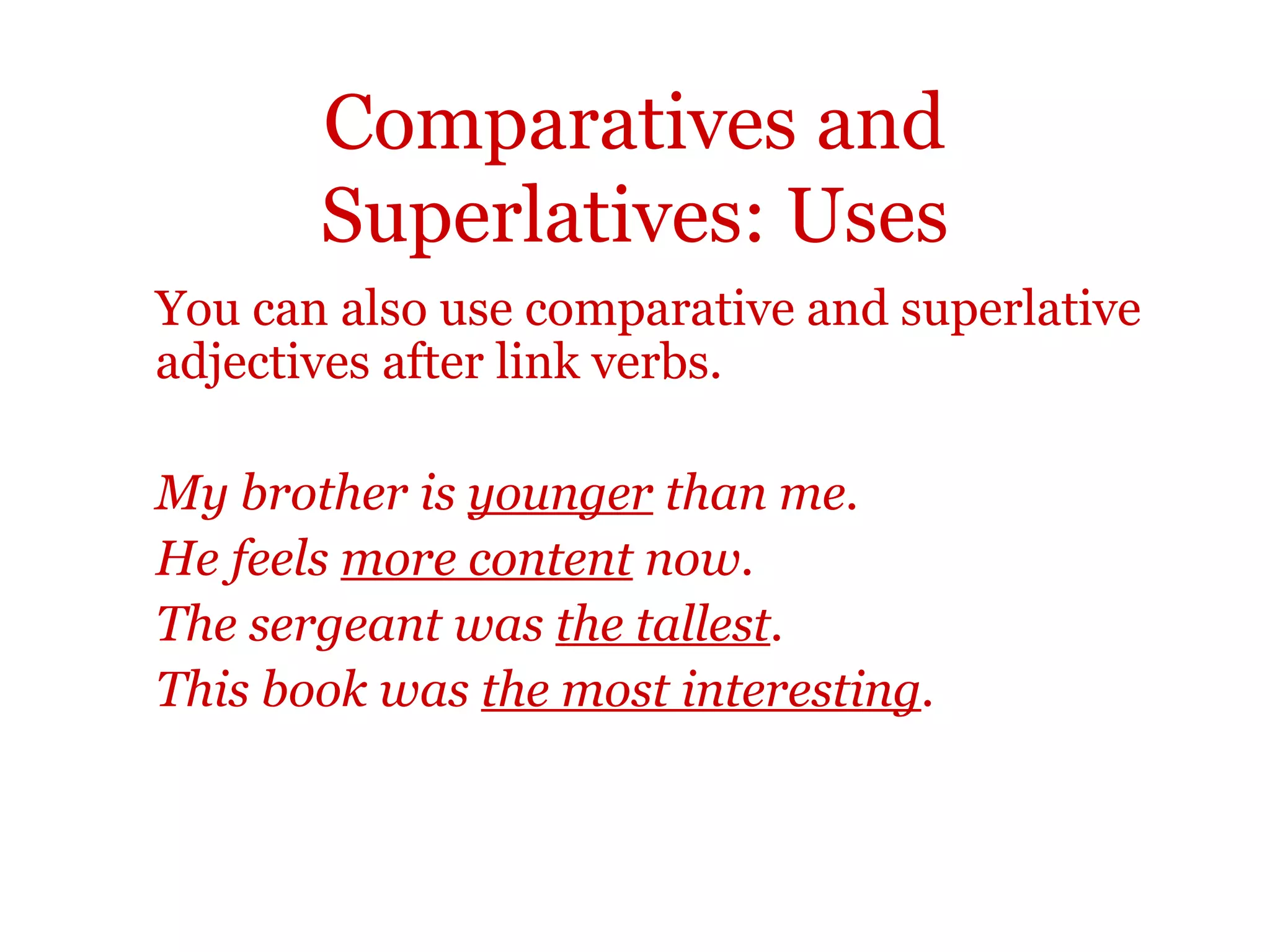
You can also use comparative and superlative
adjectives after link verbs.

My brother is younger than me.
He feels more content now.
The sergeant was the tallest.
This book was the most interesting.
Comparatives and
           Superlatives: Uses
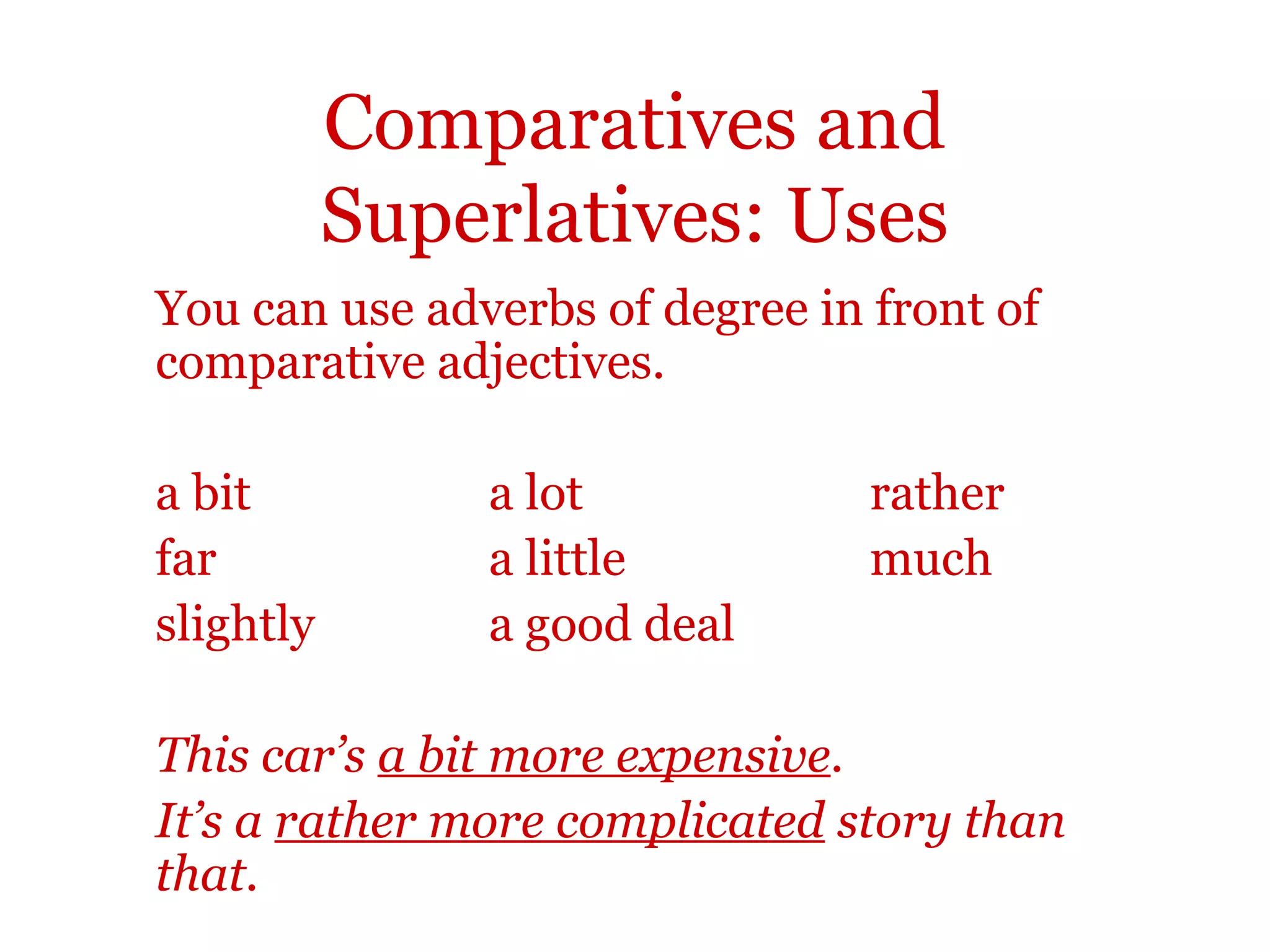
You can use adverbs of degree in front of
comparative adjectives.

a bit          a lot             rather
far            a little          much
slightly       a good deal

This car’s a bit more expensive.
It’s a rather more complicated story than
that.
Comparatives and
        Superlatives: Uses
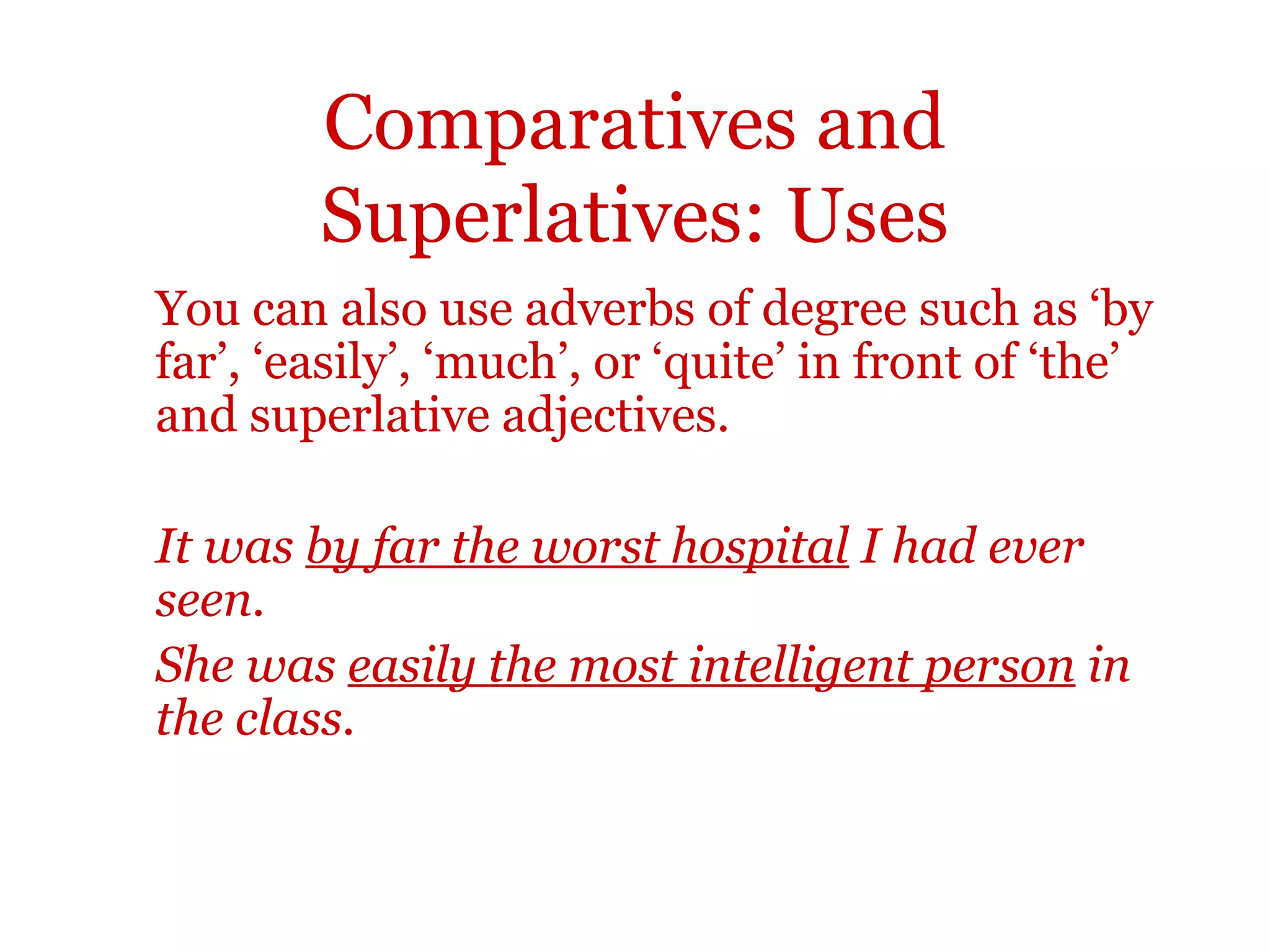
You can also use adverbs of degree such as ‘by
far’, ‘easily’, ‘much’, or ‘quite’ in front of ‘the’
and superlative adjectives.

It was by far the worst hospital I had ever
seen.
She was easily the most intelligent person in
the class.
Comparatives and
       Superlatives: Uses
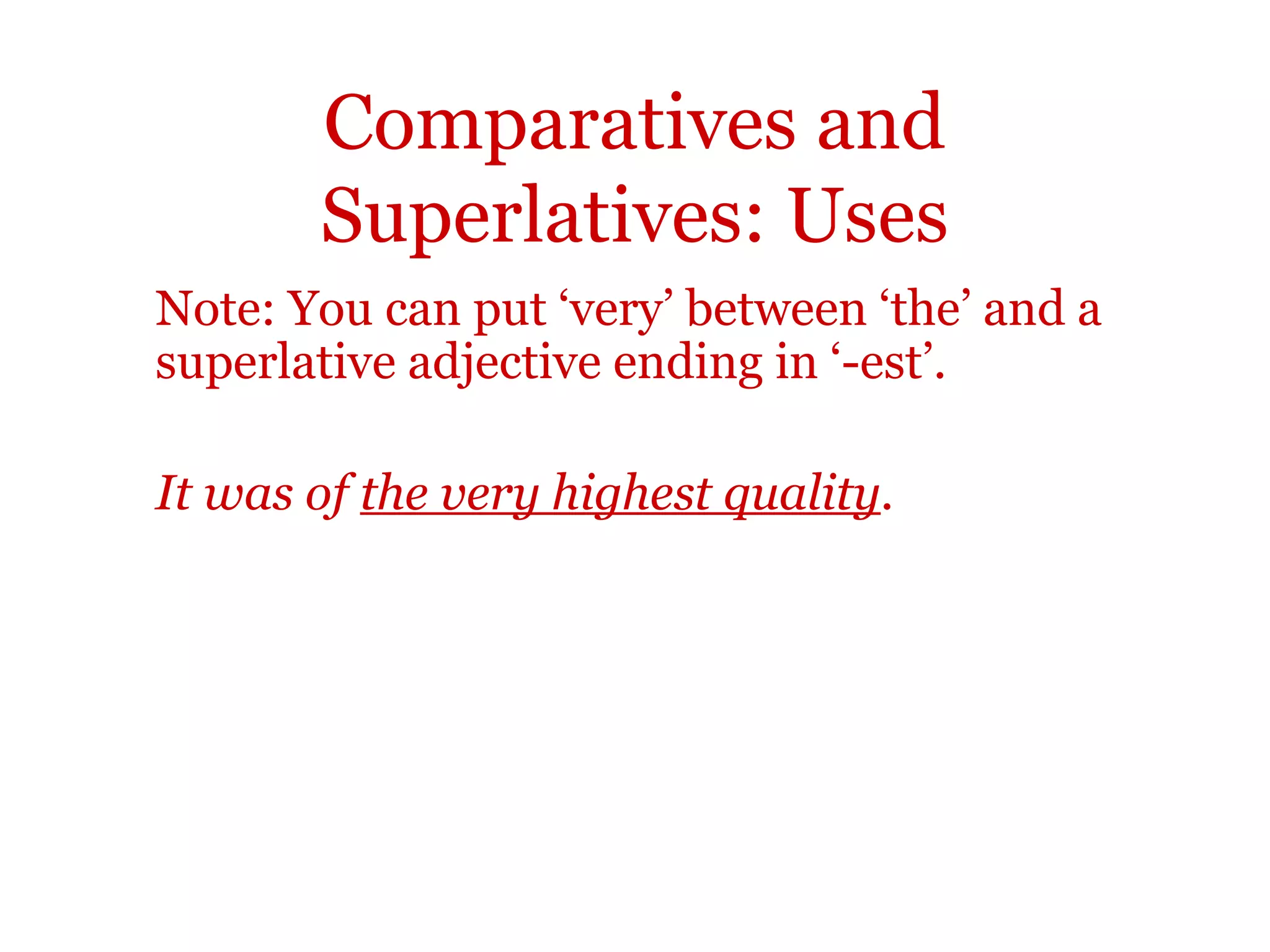
Note: You can put ‘very’ between ‘the’ and a
superlative adjective ending in ‘-est’.

It was of the very highest quality.
Comparatives and
       Superlatives: Uses
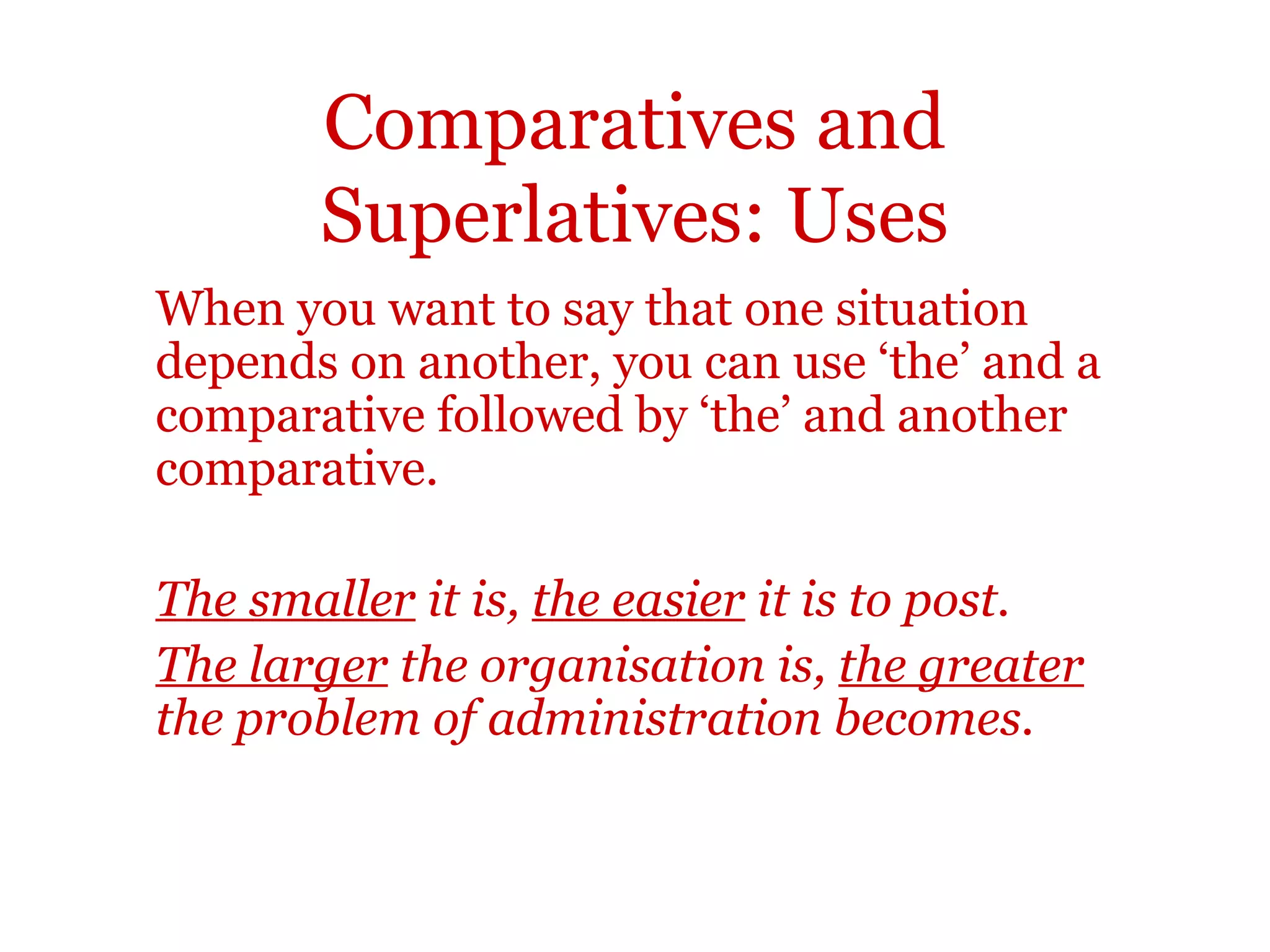
When you want to say that one situation
depends on another, you can use ‘the’ and a
comparative followed by ‘the’ and another
comparative.

The smaller it is, the easier it is to post.
The larger the organisation is, the greater
the problem of administration becomes.
Comparatives and
       Superlatives: Uses
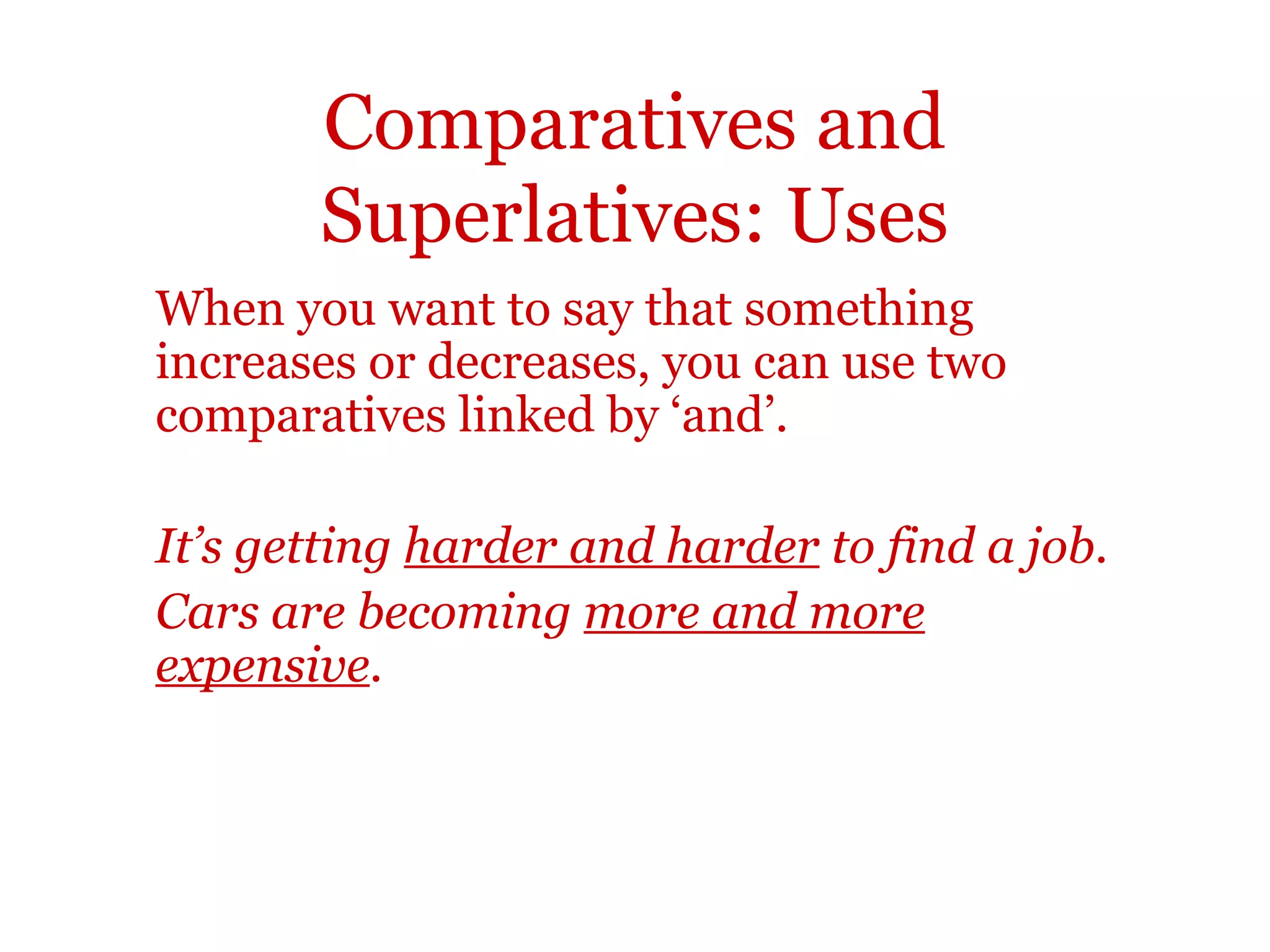
When you want to say that something
increases or decreases, you can use two
comparatives linked by ‘and’.

It’s getting harder and harder to find a job.
Cars are becoming more and more
expensive.
Comparatives and
       Superlatives: Uses
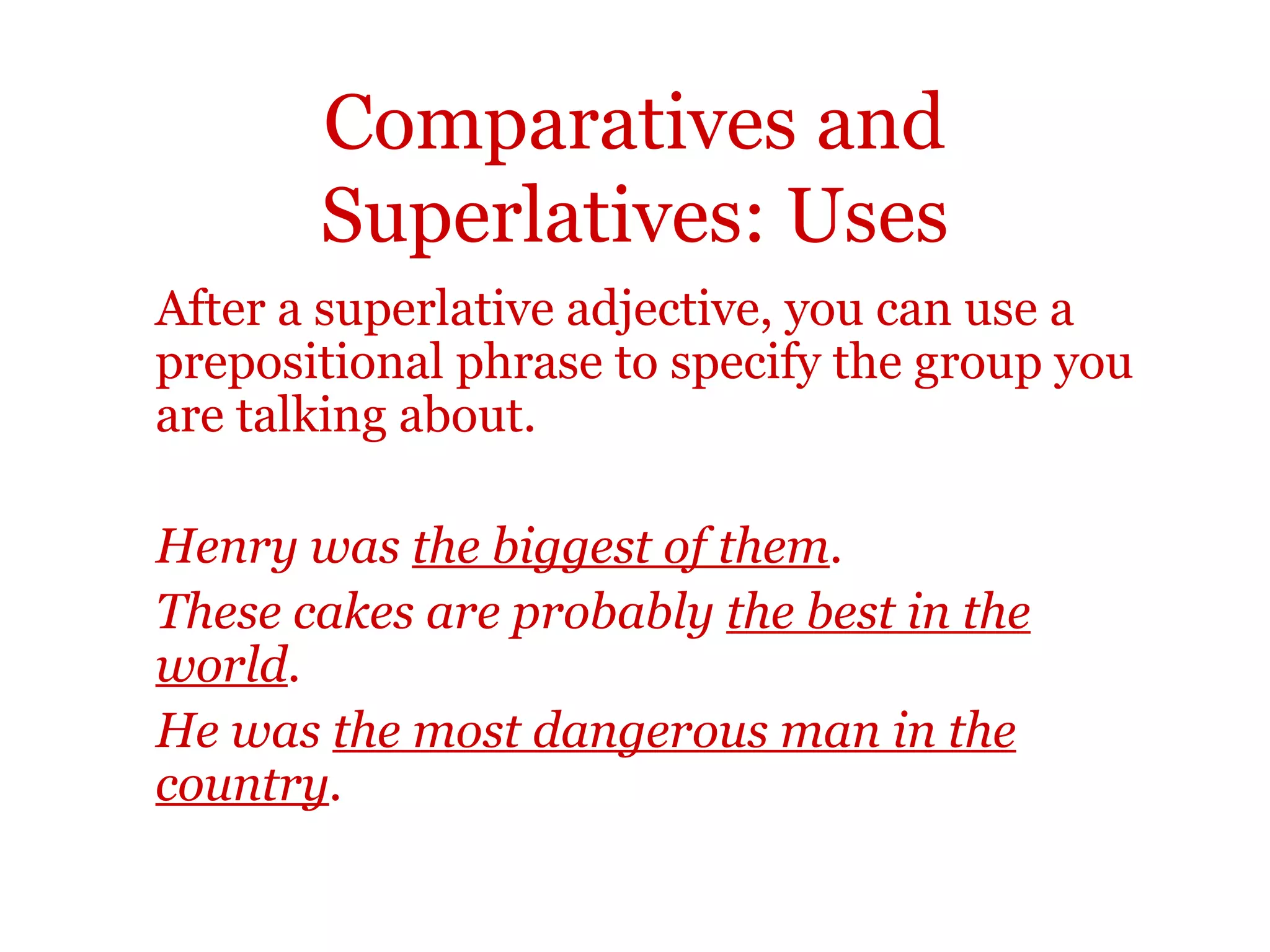
After a superlative adjective, you can use a
prepositional phrase to specify the group you
are talking about.

Henry was the biggest of them.
These cakes are probably the best in the
world.
He was the most dangerous man in the
country.
Comparatives and
         Superlatives: Uses
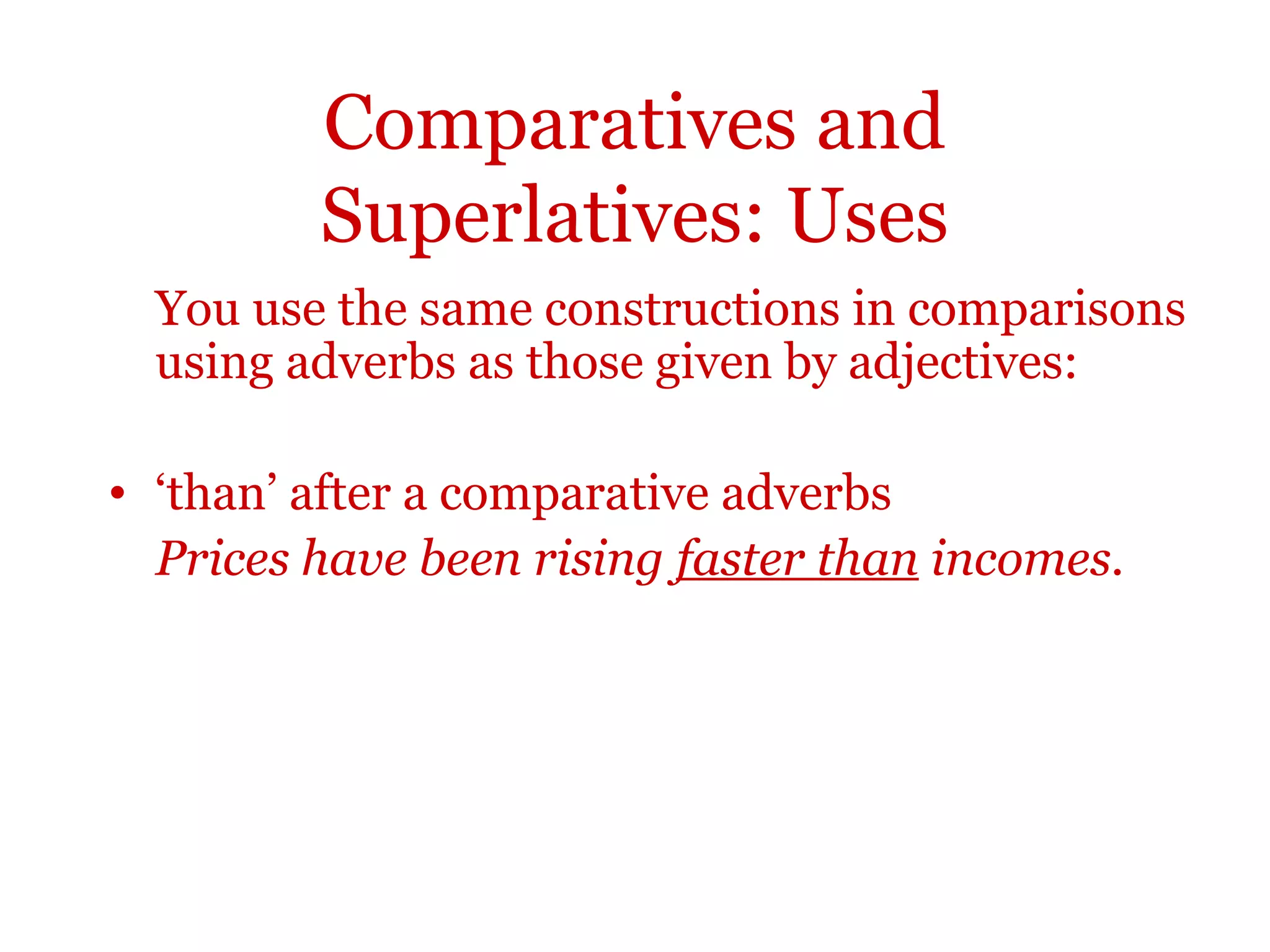
  You use the same constructions in comparisons
  using adverbs as those given by adjectives:

• ‘than’ after a comparative adverbs
  Prices have been rising faster than incomes.
Comparatives and
         Superlatives: Uses
• ‘the’ and a comparative adverb followed by ‘the’
  and a comparative adverb.
  The quicker we finish, the sooner we’ll be
  home.

• two comparative adverbs linked by ‘and’
  He sounded worse and worse.
  He drove faster and faster till we told him to
  stop.

Comparatives and superlatives: uses

  • 1.
  • 2.
    Comparatives and Superlatives: Uses You use comparative adjectives to compare one person or thing with another, or with the same person or thing at another time. After a comparative adjective, you often use ‘than’. She was much older than me. I am happier than I’ve ever been.
  • 3.
    Comparatives and Superlatives: Uses You use a superlative to say that one person or thing has more of a quality than others in a group or others of that kind. Tokyo is Japan’s largest city. He was the tallest person there.
  • 4.
    Comparatives and Superlatives: Uses You can use comparative and superlative adjectives in front of a noun. I was a better writer than he was. He had more important things to do. It was the quickest route from Rome to Naples.
  • 5.
    Comparatives and Superlatives: Uses You can also use comparative and superlative adjectives after link verbs. My brother is younger than me. He feels more content now. The sergeant was the tallest. This book was the most interesting.
  • 6.
    Comparatives and Superlatives: Uses You can use adverbs of degree in front of comparative adjectives. a bit a lot rather far a little much slightly a good deal This car’s a bit more expensive. It’s a rather more complicated story than that.
  • 7.
    Comparatives and Superlatives: Uses You can also use adverbs of degree such as ‘by far’, ‘easily’, ‘much’, or ‘quite’ in front of ‘the’ and superlative adjectives. It was by far the worst hospital I had ever seen. She was easily the most intelligent person in the class.
  • 8.
    Comparatives and Superlatives: Uses Note: You can put ‘very’ between ‘the’ and a superlative adjective ending in ‘-est’. It was of the very highest quality.
  • 9.
    Comparatives and Superlatives: Uses When you want to say that one situation depends on another, you can use ‘the’ and a comparative followed by ‘the’ and another comparative. The smaller it is, the easier it is to post. The larger the organisation is, the greater the problem of administration becomes.
  • 10.
    Comparatives and Superlatives: Uses When you want to say that something increases or decreases, you can use two comparatives linked by ‘and’. It’s getting harder and harder to find a job. Cars are becoming more and more expensive.
  • 11.
    Comparatives and Superlatives: Uses After a superlative adjective, you can use a prepositional phrase to specify the group you are talking about. Henry was the biggest of them. These cakes are probably the best in the world. He was the most dangerous man in the country.
  • 12.
    Comparatives and Superlatives: Uses You use the same constructions in comparisons using adverbs as those given by adjectives: • ‘than’ after a comparative adverbs Prices have been rising faster than incomes.
  • 13.
    Comparatives and Superlatives: Uses • ‘the’ and a comparative adverb followed by ‘the’ and a comparative adverb. The quicker we finish, the sooner we’ll be home. • two comparative adverbs linked by ‘and’ He sounded worse and worse. He drove faster and faster till we told him to stop.