Presented By:-
Abdur Rahman
Lovely Akter
Fahadul Islam
Mohammad Sawrov
MD. Noman Shekh
OUTLINE
• Definition of community pharmacy
• Scope of community pharmacy
• Different level of health care
• Attributes of primary health care
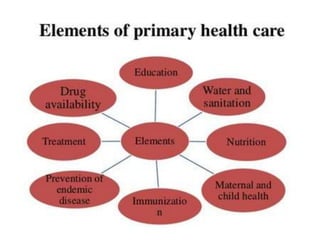
• Elements of primary health care
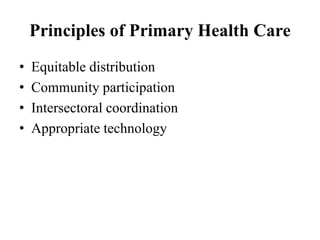
• Principles of primary health care
• Role of pharmacy technician in a community
pharmacy
Community Pharmacy
An independent pharmacy is a community
pharmacy that is privately owned by the
pharmacist.
• May be owned and operated by a group of
pharmacists.
• Most compounding of prescriptions is done in
this type of pharmacy.
Scope of Community Pharmacy
• In processing prescriptions
• Clinical pharmacy
• Patient care
• Drug monitoring
• Alternative medicines
• Checking symptoms of minor aliments
Different Level of Health Care
There are 3 different levels of health care
system which are-
1) Primary level of care
2) Secondary level of care
3) Tertiary level of care
Primary Level of Care
• Devolved to cities and municipalities
• Usually the first contact between the
community members and other levels of health
facility.
• Center physicians, public health nurse, rural
health midwives, brgy. Health workers,
traditional healers.
Secondary Level of Care
• Given by physicians with basic health training.
• Usually given in health facilities either private
owned or government operated.
• Infirmaries, municipal, district hospital, out-
patient departments.
• Rendered by specialists in health facilities.
Tertiary Level of Care
• Referral system for the secondary care
facilities.
• Provided complicated cases and intensive care.
• Medical centers, regional and provincial
hospitals and specialized hospitals.
Attributes of Primary Health Care
• Essential health care
• Universally accessible
• Acceptable
• Community based
• First point of contact
• Affordability
• Coordination
• Adaptability
Principles of Primary Health Care
• Equitable distribution
• Community participation
• Intersectoral coordination
• Appropriate technology
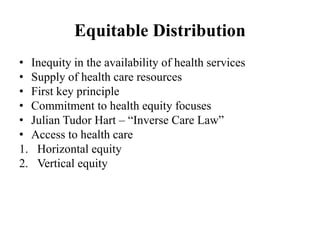
Equitable Distribution
• Inequity in the availability of health services
• Supply of health care resources
• First key principle
• Commitment to health equity focuses
• Julian Tudor Hart – “Inverse Care Law”
• Access to health care
1. Horizontal equity
2. Vertical equity
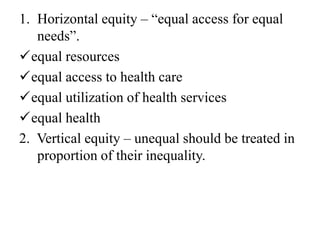
1. Horizontal equity – “equal access for equal
needs”.
equal resources
equal access to health care
equal utilization of health services
equal health
2. Vertical equity – unequal should be treated in
proportion of their inequality.
Community Participation
• Involvement
• Determines
• Important role
• Universal coverage
• Two types: active & passive
 Active: co-operation + resources
 Passive: co-operation only
Advantages of Community Participation
• Increases program acceptance and leadership
• Commitments to the decision is facilitated
• Ensures that the program meets the local needs
• Cost of implementing the program may be reduced
• Uses local organizations
• Key to the sustainability
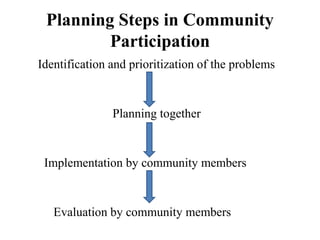
Planning Steps in Community
Participation
Identification and prioritization of the problems
Planning together
Implementation by community members
Evaluation by community members
Intersectoral Co-ordinary
• Primary care involves in addition to the health
sector
• Includes sustainable participation
• Possibly but not necessarily
Pre-requisites for Intersectoral
Coordination
• Proper orientation of policies and programme
• Formation of joint coordination committee at each
level
• Defining role and responsibilities of participatory
agencies
• Participatory decision making
• Sharing of the problems faced in implementation
• Joint evaluation and monitoring
Mechanism of Co-ordination
• List out names of different sectors
• Indentify the NGOs and voluntary organization
• Constitute the district level co-ordination
committee
• Formulate specific task forces
• Jointly decide the objectives and areas
• Decide the role and responsibility
• Development a plan
Appropriate Technology
• Scientifically valid
• Adapted to local needs
• Acceptable to users and recipients
• Maintainable with local resources
Role of Pharmacy Technician in a
Community Pharmacy
• Aid the pharmacist in the filling, labeling, and
recording of prescriptions.
• Operate and responsible for the pharmacy cash
register.
• Stock and inventory prescription and over-the-
counter (OTC) medications.
• Maintain computerized patient records.
• Prepare insurance claim forms.
• Order and maintain parts of the front-end stock.
Community pharmacy

Community pharmacy

  • 1.
    Presented By:- Abdur Rahman LovelyAkter Fahadul Islam Mohammad Sawrov MD. Noman Shekh
  • 2.
    OUTLINE • Definition ofcommunity pharmacy • Scope of community pharmacy • Different level of health care • Attributes of primary health care • Elements of primary health care • Principles of primary health care • Role of pharmacy technician in a community pharmacy
  • 3.
    Community Pharmacy An independentpharmacy is a community pharmacy that is privately owned by the pharmacist. • May be owned and operated by a group of pharmacists. • Most compounding of prescriptions is done in this type of pharmacy.
  • 5.
    Scope of CommunityPharmacy • In processing prescriptions • Clinical pharmacy • Patient care • Drug monitoring • Alternative medicines • Checking symptoms of minor aliments
  • 6.
    Different Level ofHealth Care There are 3 different levels of health care system which are- 1) Primary level of care 2) Secondary level of care 3) Tertiary level of care
  • 7.
    Primary Level ofCare • Devolved to cities and municipalities • Usually the first contact between the community members and other levels of health facility. • Center physicians, public health nurse, rural health midwives, brgy. Health workers, traditional healers.
  • 8.
    Secondary Level ofCare • Given by physicians with basic health training. • Usually given in health facilities either private owned or government operated. • Infirmaries, municipal, district hospital, out- patient departments. • Rendered by specialists in health facilities.
  • 9.
    Tertiary Level ofCare • Referral system for the secondary care facilities. • Provided complicated cases and intensive care. • Medical centers, regional and provincial hospitals and specialized hospitals.
  • 10.
    Attributes of PrimaryHealth Care • Essential health care • Universally accessible • Acceptable • Community based • First point of contact • Affordability • Coordination • Adaptability
  • 12.
    Principles of PrimaryHealth Care • Equitable distribution • Community participation • Intersectoral coordination • Appropriate technology
  • 13.
    Equitable Distribution • Inequityin the availability of health services • Supply of health care resources • First key principle • Commitment to health equity focuses • Julian Tudor Hart – “Inverse Care Law” • Access to health care 1. Horizontal equity 2. Vertical equity
  • 14.
    1. Horizontal equity– “equal access for equal needs”. equal resources equal access to health care equal utilization of health services equal health 2. Vertical equity – unequal should be treated in proportion of their inequality.
  • 15.
    Community Participation • Involvement •Determines • Important role • Universal coverage • Two types: active & passive  Active: co-operation + resources  Passive: co-operation only
  • 16.
    Advantages of CommunityParticipation • Increases program acceptance and leadership • Commitments to the decision is facilitated • Ensures that the program meets the local needs • Cost of implementing the program may be reduced • Uses local organizations • Key to the sustainability
  • 17.
    Planning Steps inCommunity Participation Identification and prioritization of the problems Planning together Implementation by community members Evaluation by community members
  • 18.
    Intersectoral Co-ordinary • Primarycare involves in addition to the health sector • Includes sustainable participation • Possibly but not necessarily
  • 19.
    Pre-requisites for Intersectoral Coordination •Proper orientation of policies and programme • Formation of joint coordination committee at each level • Defining role and responsibilities of participatory agencies • Participatory decision making • Sharing of the problems faced in implementation • Joint evaluation and monitoring
  • 20.
    Mechanism of Co-ordination •List out names of different sectors • Indentify the NGOs and voluntary organization • Constitute the district level co-ordination committee • Formulate specific task forces • Jointly decide the objectives and areas • Decide the role and responsibility • Development a plan
  • 21.
    Appropriate Technology • Scientificallyvalid • Adapted to local needs • Acceptable to users and recipients • Maintainable with local resources
  • 22.
    Role of PharmacyTechnician in a Community Pharmacy • Aid the pharmacist in the filling, labeling, and recording of prescriptions. • Operate and responsible for the pharmacy cash register. • Stock and inventory prescription and over-the- counter (OTC) medications. • Maintain computerized patient records. • Prepare insurance claim forms. • Order and maintain parts of the front-end stock.