Community Needs
Assessment
Dodge, Fillmore & Olmsted (DFO) Counties
Overview
Methods
Dimensions
Stages of Readiness
Results
Methods
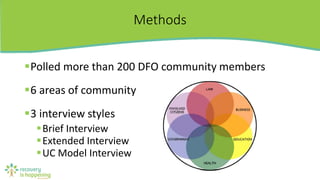
Polled more than 200 DFO community members
6 areas of community
3 interview styles
Brief Interview
Extended Interview
UC Model Interview
Dimensions
Community Knowledge of Efforts
Leadership
Community Climate
Community Knowledge of the Issue
Resources
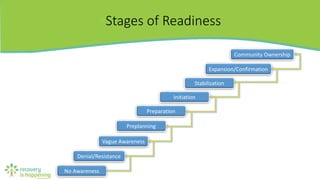
Stages of Readiness
No Awareness
Denial/Resistance
Vague Awareness
Preplanning
Preparation
Initiation
Stabilization
Expansion/Confirmation
Community Ownership
Results
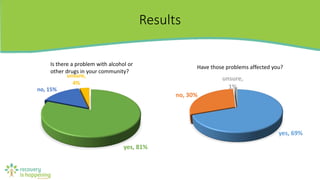
yes, 81%
no, 15%
unsure,
4%
Is there a problem with alcohol or
other drugs in your community?
yes, 69%
no, 30%
unsure,
1%
Have those problems affected you?
More Results
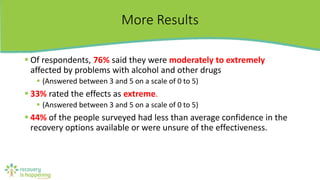
 Of respondents, 76% said they were moderately to extremely
affected by problems with alcohol and other drugs
 (Answered between 3 and 5 on a scale of 0 to 5)
 33% rated the effects as extreme.
 (Answered between 3 and 5 on a scale of 0 to 5)
 44% of the people surveyed had less than average confidence in the
recovery options available or were unsure of the effectiveness.
Scoring
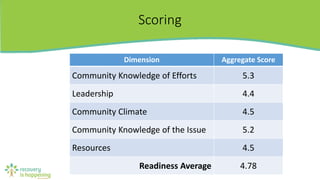
Dimension Aggregate Score
Community Knowledge of Efforts 5.3
Leadership 4.4
Community Climate 4.5
Community Knowledge of the Issue 5.2
Resources 4.5
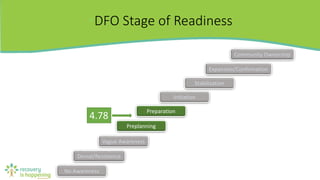
Readiness Average 4.78
DFO Stage of Readiness
No Awareness
Denial/Resistance
Vague Awareness
Preplanning
Preparation
Initiation
Stabilization
Expansion/Confirmation
Community Ownership
4.78
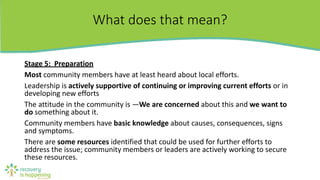
What does that mean?
Stage 5: Preparation
Most community members have at least heard about local efforts.
Leadership is actively supportive of continuing or improving current efforts or in
developing new efforts
The attitude in the community is ―We are concerned about this and we want to
do something about it.
Community members have basic knowledge about causes, consequences, signs
and symptoms.
There are some resources identified that could be used for further efforts to
address the issue; community members or leaders are actively working to secure
these resources.
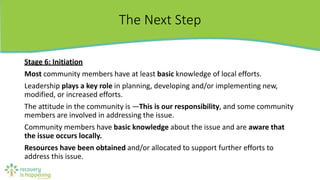
The Next Step
Stage 6: Initiation
Most community members have at least basic knowledge of local efforts.
Leadership plays a key role in planning, developing and/or implementing new,
modified, or increased efforts.
The attitude in the community is ―This is our responsibility, and some community
members are involved in addressing the issue.
Community members have basic knowledge about the issue and are aware that
the issue occurs locally.
Resources have been obtained and/or allocated to support further efforts to
address this issue.
On to the show…
AP Trailer

Community needs assessment

  • 1.
  • 2.
  • 3.
    Methods Polled more than200 DFO community members 6 areas of community 3 interview styles Brief Interview Extended Interview UC Model Interview
  • 4.
    Dimensions Community Knowledge ofEfforts Leadership Community Climate Community Knowledge of the Issue Resources
  • 5.
    Stages of Readiness NoAwareness Denial/Resistance Vague Awareness Preplanning Preparation Initiation Stabilization Expansion/Confirmation Community Ownership
  • 6.
    Results yes, 81% no, 15% unsure, 4% Isthere a problem with alcohol or other drugs in your community? yes, 69% no, 30% unsure, 1% Have those problems affected you?
  • 7.
    More Results  Ofrespondents, 76% said they were moderately to extremely affected by problems with alcohol and other drugs  (Answered between 3 and 5 on a scale of 0 to 5)  33% rated the effects as extreme.  (Answered between 3 and 5 on a scale of 0 to 5)  44% of the people surveyed had less than average confidence in the recovery options available or were unsure of the effectiveness.
  • 8.
    Scoring Dimension Aggregate Score CommunityKnowledge of Efforts 5.3 Leadership 4.4 Community Climate 4.5 Community Knowledge of the Issue 5.2 Resources 4.5 Readiness Average 4.78
  • 9.
    DFO Stage ofReadiness No Awareness Denial/Resistance Vague Awareness Preplanning Preparation Initiation Stabilization Expansion/Confirmation Community Ownership 4.78
  • 10.
    What does thatmean? Stage 5: Preparation Most community members have at least heard about local efforts. Leadership is actively supportive of continuing or improving current efforts or in developing new efforts The attitude in the community is ―We are concerned about this and we want to do something about it. Community members have basic knowledge about causes, consequences, signs and symptoms. There are some resources identified that could be used for further efforts to address the issue; community members or leaders are actively working to secure these resources.
  • 11.
    The Next Step Stage6: Initiation Most community members have at least basic knowledge of local efforts. Leadership plays a key role in planning, developing and/or implementing new, modified, or increased efforts. The attitude in the community is ―This is our responsibility, and some community members are involved in addressing the issue. Community members have basic knowledge about the issue and are aware that the issue occurs locally. Resources have been obtained and/or allocated to support further efforts to address this issue.
  • 12.
    On to theshow… AP Trailer

Editor's Notes

  • #3 3 interview styles Brief Interview Quantitative Shopping malls, grocery stores Extended Interview 2 page qualitative Community Leaders UC Model Interview Extensive 6 page Identified key respondents
  • #5 We looked at community readiness in these 5 areas. Community Knowledge of Efforts How much does the community know about the current programs and activities? Leadership What is leadership’s attitude toward addressing the issue? Community Climate What is the community’s attitude toward addressing the issue? Community Knowledge of the Issue How much does the community know about the issue? Resources What are the resources that are being used or could be used to address the issue?