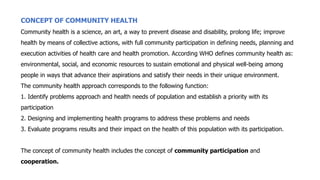
1. It empowers community members by allowing them to have a voice in identifying health priorities and solutions. This gives them a sense of ownership over programs.
2. It incorporates local knowledge and perspectives that outsiders may not be aware of. This leads to interventions that are more appropriate and effective for that specific community.
3. It facilitates buy-in and support for programs from community members. When communities help design and implement programs themselves, they are more likely to participate in and support the initiatives.