 Lifelong learningLifelong learning
 Community responsibilityCommunity responsibility
and inclusionand inclusion
 Shared leadership andShared leadership and
decision-makingdecision-making
 Self-DeterminationSelf-Determination
 Broad-based educationalBroad-based educational
partnerships andpartnerships and
collaborationscollaborations
 Learning to include formal,Learning to include formal,
informal and indigenousinformal and indigenous
experiencesexperiences
 Efficient, varied and cost-Efficient, varied and cost-
effective serviceseffective services
Principles of
Community Education
 Use of community resourcesUse of community resources
including volunteersincluding volunteers
 Democratic processesDemocratic processes
 Leadership developmentLeadership development
 Institutional ResponsivenessInstitutional Responsiveness
 Integrated delivery of servicesIntegrated delivery of services
 Emphasis on specificEmphasis on specific
populationspopulations
 Learning opportunities toLearning opportunities to
impact cross-sectorimpact cross-sector
community issues and needscommunity issues and needs
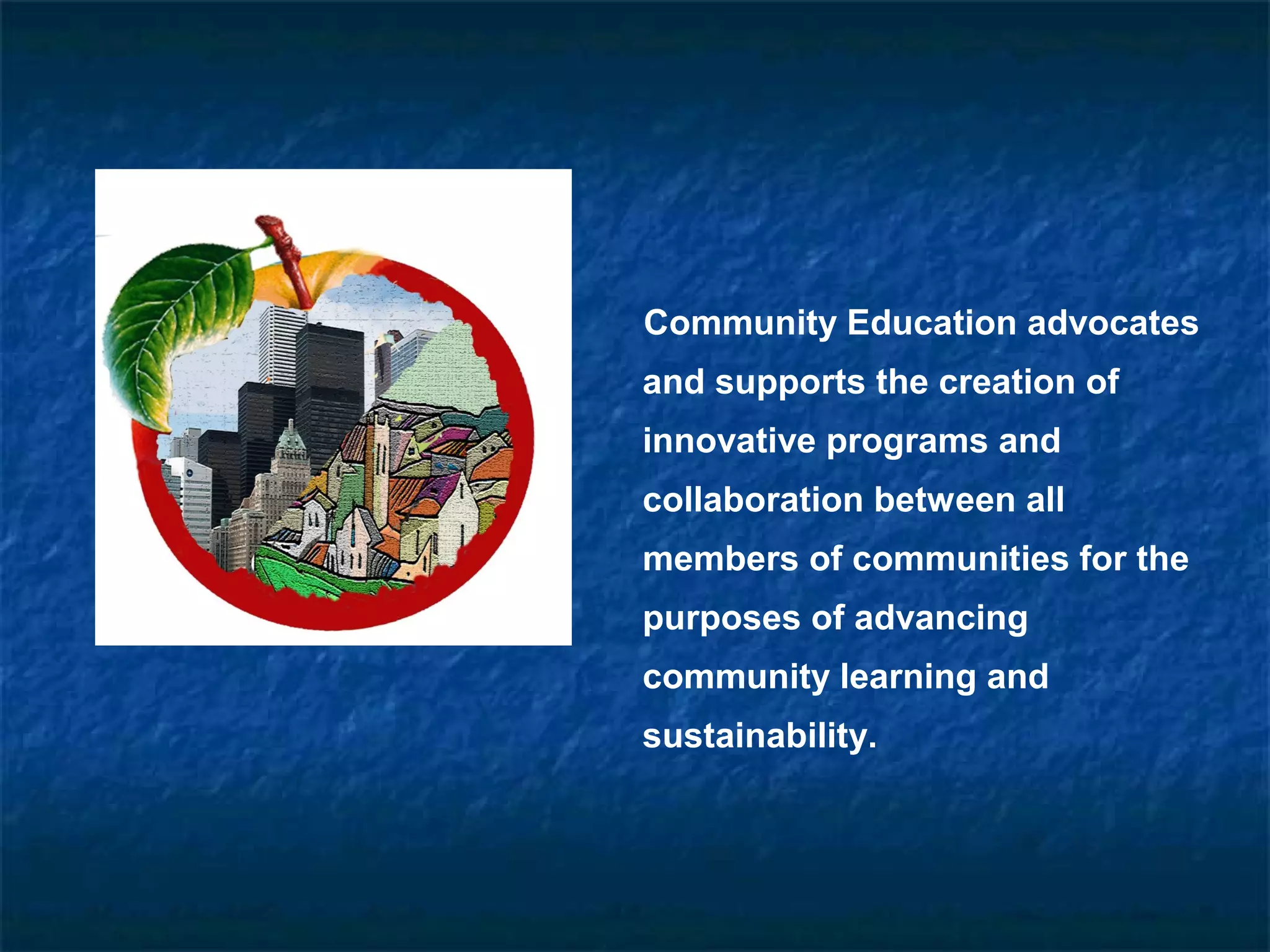
Community Education advocates
and supports the creation of
innovative programs and
collaboration between all
members of communities for the
purposes of advancing
community learning and
sustainability.
The strength of community
education is also its
weakness. Community
education’s strength is that
it deals with many different
and varied components of
education within the
community. It’s weakness is
that this makes it very hard
to describe what we do.
Tony Townsend
The aim of 'Community Education' is to equip
communities with the skills they need to undertake
the activities they wish to undertake; it is essentially
about educating communities or groups, not just
individuals.
EnglandEngland
Defining Community Education
Adult and Community Education (ACE) is a response
to the lifelong learning needs of the community. Key
features are:
 it is learner-centered.
 it is for everyone.
 it covers a wide variety of learning.
 it responds to the community.
AustraliaAustralia
Defining Community Education
 A process whereby learning is used for both
individual and community betterment. It is
characterized by:
 Involvement of people of all ages.
 The use of community learning, resources and
research to bring about community change.
 The recognition that people can learn through,
with and for each other to create a better world.
CanadaCanada
Defining Community Education
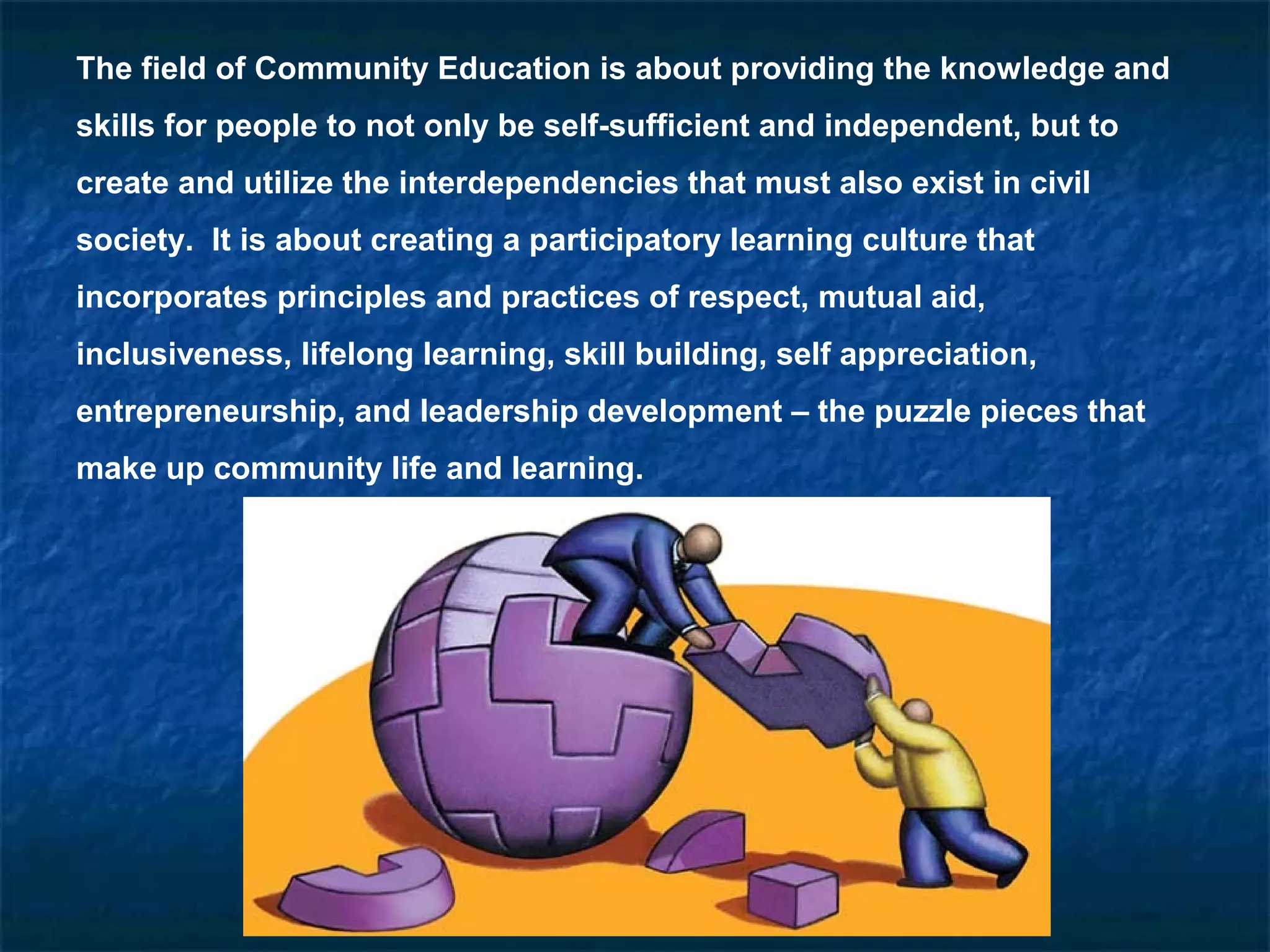
The field of Community Education is about providing the knowledge and
skills for people to not only be self-sufficient and independent, but to
create and utilize the interdependencies that must also exist in civil
society. It is about creating a participatory learning culture that
incorporates principles and practices of respect, mutual aid,
inclusiveness, lifelong learning, skill building, self appreciation,
entrepreneurship, and leadership development – the puzzle pieces that
make up community life and learning.
Who are CommunityWho are Community
Educators?Educators?
We are the learning strands of communities.
We are the youth workers and the youth leaders.
We are the preschool and out-of-school time instructors and
supporters who work with children and their care-givers.
We are the adult education counselors, teachers
and volunteers
in continuing education programs,
in workforce development programs,
in workplaces,
in colleges,
in prisons,
in museums,
in immigrant serving agencies
in family resource centers,
in senior centers,
and in other community-based agencies.
We are those who inform the public about the risks to the environment and
its beauties, and what we need to do to sustain healthy lifestyles.
We are muralists and local media producers that educate and engage
people about local issues.
We are change agents adept at working with community members to
identify needs and resources, and then to meet those needs through
educational services.
We facilitate cooperation and collaboration among those involved in the
participation and delivery of multiple resources.
We provide training in leadership and curriculum development that tie
formal to informal learning.
We offer help in strategic planning, communication development, public
relations, and program evaluation, among other transformational activities.
We are so many people addressing the multiple
needs of individuals, families, organizations, and
communities - providing an array of
academic, recreation, health, social
services, using the common thread of learning, to
prepare people of all ages for active and healthy
community life.
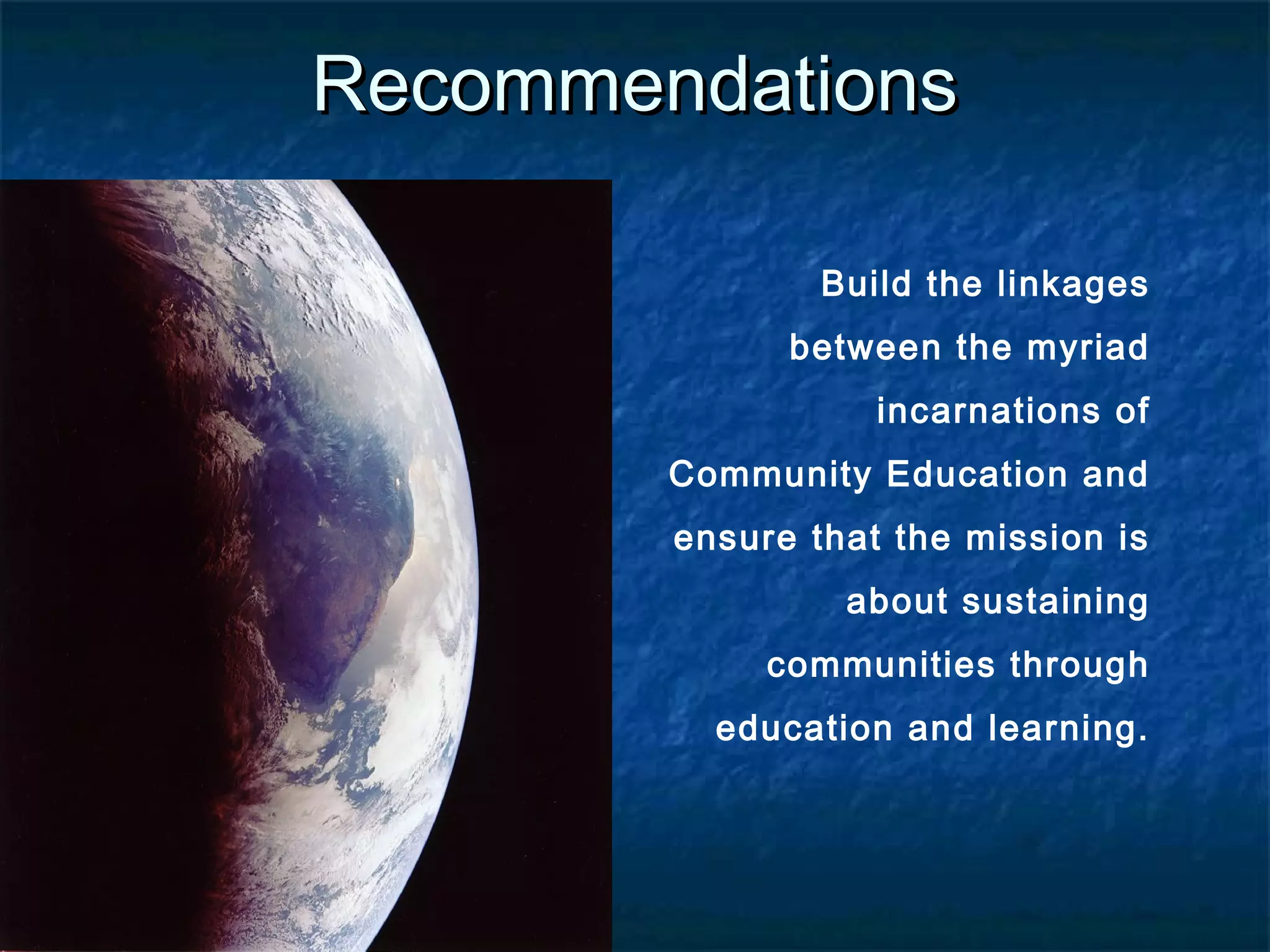
RecommendationsRecommendations
Build the linkages
between the myriad
incarnations of
Community Education and
ensure that the mission is
about sustaining
communities through
education and learning.
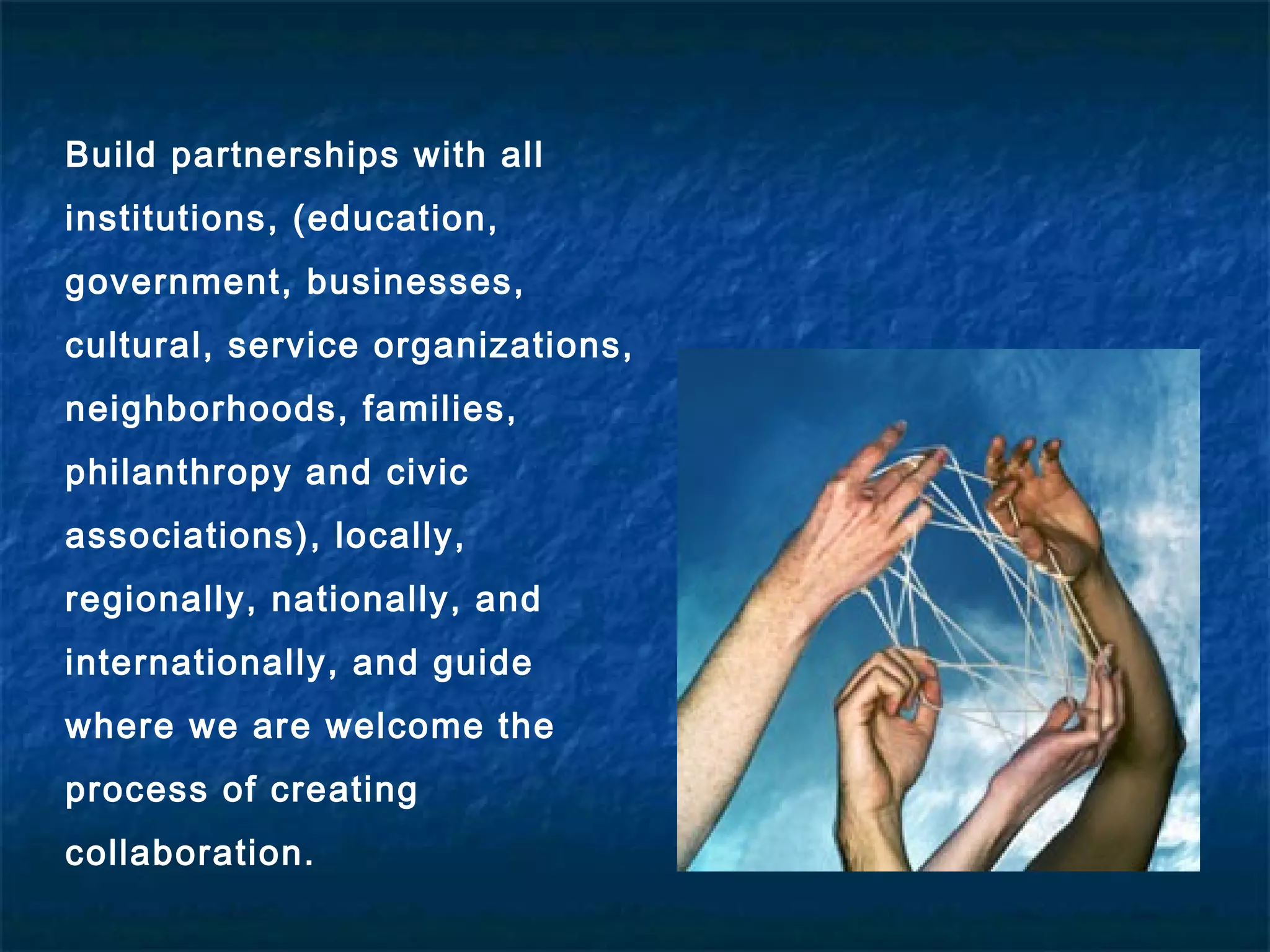
Build partnerships with all
institutions, (education,
government, businesses,
cultural, service organizations,
neighborhoods, families,
philanthropy and civic
associations), locally,
regionally, nationally, and
internationally, and guide
where we are welcome the
process of creating
collaboration.
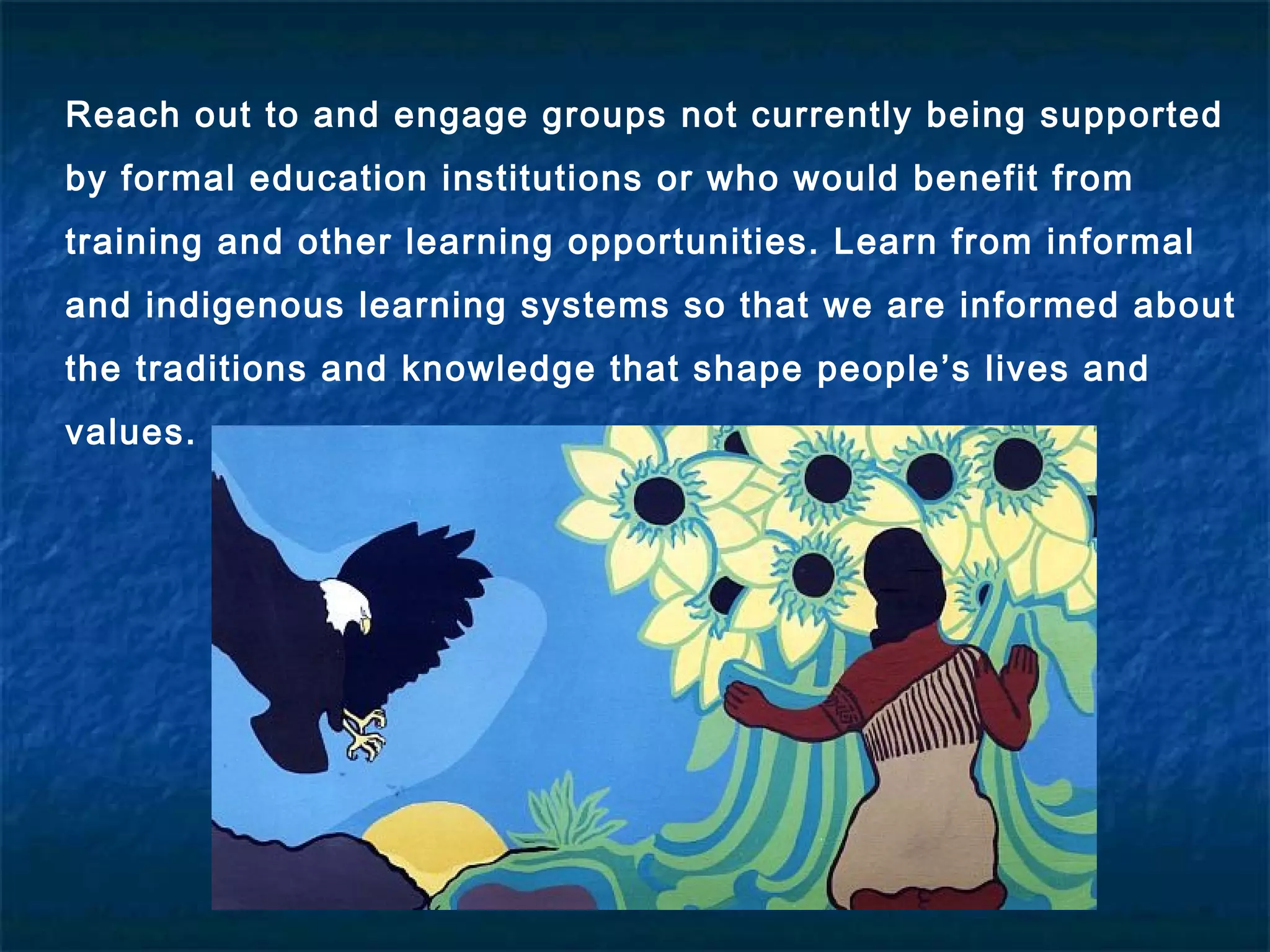
Reach out to and engage groups not currently being supported
by formal education institutions or who would benefit from
training and other learning opportunities. Learn from informal
and indigenous learning systems so that we are informed about
the traditions and knowledge that shape people’s lives and
values.
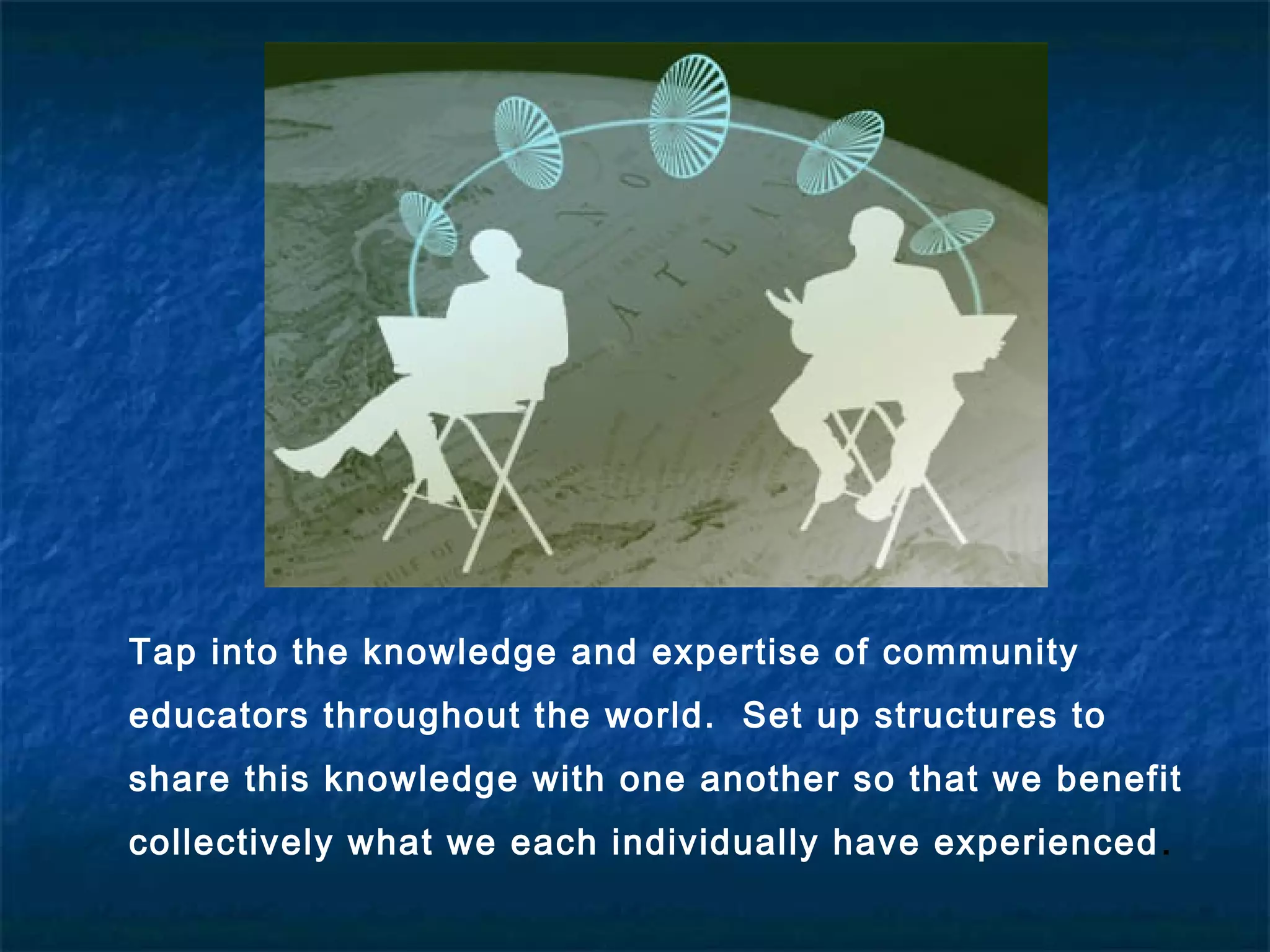
Tap into the knowledge and expertise of community
educators throughout the world. Set up structures to
share this knowledge with one another so that we benefit
collectively what we each individually have experienced.
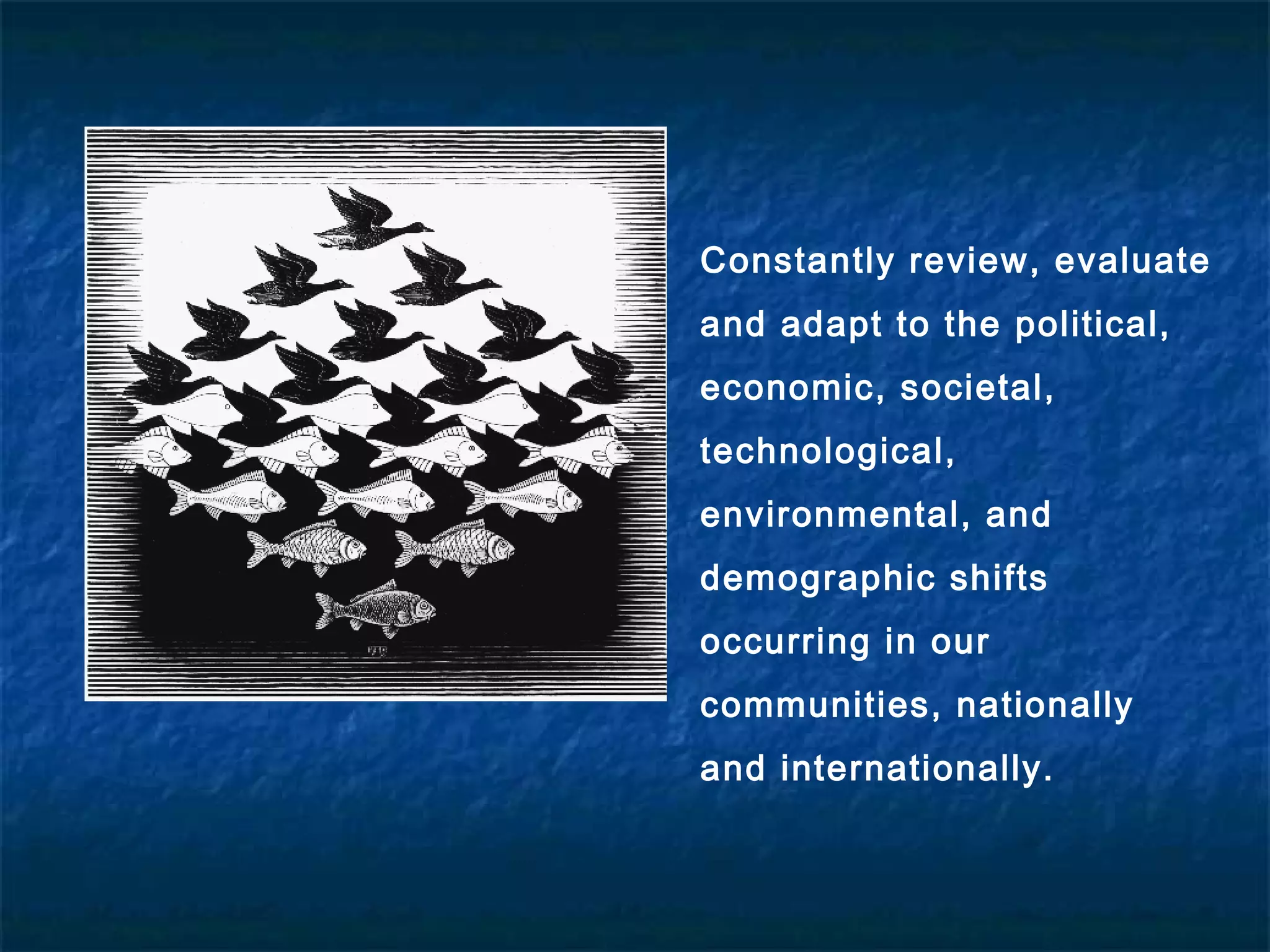
Constantly review, evaluate
and adapt to the political,
economic, societal,
technological,
environmental, and
demographic shifts
occurring in our
communities, nationally
and internationally.
Community Education is a
vibrant and ever changing field,
unique and interdependent,
adapting to the needs of
communities by responding with
programs and/or processes
specific to the local area.

community education defined

  • 1.
     Lifelong learningLifelonglearning  Community responsibilityCommunity responsibility and inclusionand inclusion  Shared leadership andShared leadership and decision-makingdecision-making  Self-DeterminationSelf-Determination  Broad-based educationalBroad-based educational partnerships andpartnerships and collaborationscollaborations  Learning to include formal,Learning to include formal, informal and indigenousinformal and indigenous experiencesexperiences  Efficient, varied and cost-Efficient, varied and cost- effective serviceseffective services Principles of Community Education  Use of community resourcesUse of community resources including volunteersincluding volunteers  Democratic processesDemocratic processes  Leadership developmentLeadership development  Institutional ResponsivenessInstitutional Responsiveness  Integrated delivery of servicesIntegrated delivery of services  Emphasis on specificEmphasis on specific populationspopulations  Learning opportunities toLearning opportunities to impact cross-sectorimpact cross-sector community issues and needscommunity issues and needs
  • 2.
    Community Education advocates andsupports the creation of innovative programs and collaboration between all members of communities for the purposes of advancing community learning and sustainability.
  • 3.
    The strength ofcommunity education is also its weakness. Community education’s strength is that it deals with many different and varied components of education within the community. It’s weakness is that this makes it very hard to describe what we do. Tony Townsend
  • 4.
    The aim of'Community Education' is to equip communities with the skills they need to undertake the activities they wish to undertake; it is essentially about educating communities or groups, not just individuals. EnglandEngland Defining Community Education
  • 5.
    Adult and CommunityEducation (ACE) is a response to the lifelong learning needs of the community. Key features are:  it is learner-centered.  it is for everyone.  it covers a wide variety of learning.  it responds to the community. AustraliaAustralia Defining Community Education
  • 6.
     A processwhereby learning is used for both individual and community betterment. It is characterized by:  Involvement of people of all ages.  The use of community learning, resources and research to bring about community change.  The recognition that people can learn through, with and for each other to create a better world. CanadaCanada Defining Community Education
  • 8.
    The field ofCommunity Education is about providing the knowledge and skills for people to not only be self-sufficient and independent, but to create and utilize the interdependencies that must also exist in civil society. It is about creating a participatory learning culture that incorporates principles and practices of respect, mutual aid, inclusiveness, lifelong learning, skill building, self appreciation, entrepreneurship, and leadership development – the puzzle pieces that make up community life and learning.
  • 9.
    Who are CommunityWhoare Community Educators?Educators?
  • 10.
    We are thelearning strands of communities. We are the youth workers and the youth leaders. We are the preschool and out-of-school time instructors and supporters who work with children and their care-givers. We are the adult education counselors, teachers and volunteers in continuing education programs, in workforce development programs, in workplaces, in colleges, in prisons, in museums, in immigrant serving agencies in family resource centers, in senior centers, and in other community-based agencies.
  • 11.
    We are thosewho inform the public about the risks to the environment and its beauties, and what we need to do to sustain healthy lifestyles. We are muralists and local media producers that educate and engage people about local issues. We are change agents adept at working with community members to identify needs and resources, and then to meet those needs through educational services. We facilitate cooperation and collaboration among those involved in the participation and delivery of multiple resources. We provide training in leadership and curriculum development that tie formal to informal learning. We offer help in strategic planning, communication development, public relations, and program evaluation, among other transformational activities.
  • 12.
    We are somany people addressing the multiple needs of individuals, families, organizations, and communities - providing an array of academic, recreation, health, social services, using the common thread of learning, to prepare people of all ages for active and healthy community life.
  • 13.
    RecommendationsRecommendations Build the linkages betweenthe myriad incarnations of Community Education and ensure that the mission is about sustaining communities through education and learning.
  • 14.
    Build partnerships withall institutions, (education, government, businesses, cultural, service organizations, neighborhoods, families, philanthropy and civic associations), locally, regionally, nationally, and internationally, and guide where we are welcome the process of creating collaboration.
  • 15.
    Reach out toand engage groups not currently being supported by formal education institutions or who would benefit from training and other learning opportunities. Learn from informal and indigenous learning systems so that we are informed about the traditions and knowledge that shape people’s lives and values.
  • 16.
    Tap into theknowledge and expertise of community educators throughout the world. Set up structures to share this knowledge with one another so that we benefit collectively what we each individually have experienced.
  • 17.
    Constantly review, evaluate andadapt to the political, economic, societal, technological, environmental, and demographic shifts occurring in our communities, nationally and internationally.
  • 18.
    Community Education isa vibrant and ever changing field, unique and interdependent, adapting to the needs of communities by responding with programs and/or processes specific to the local area.