Types of Communication
Skills
Skills
GetSetHome
Introduction
Introduction
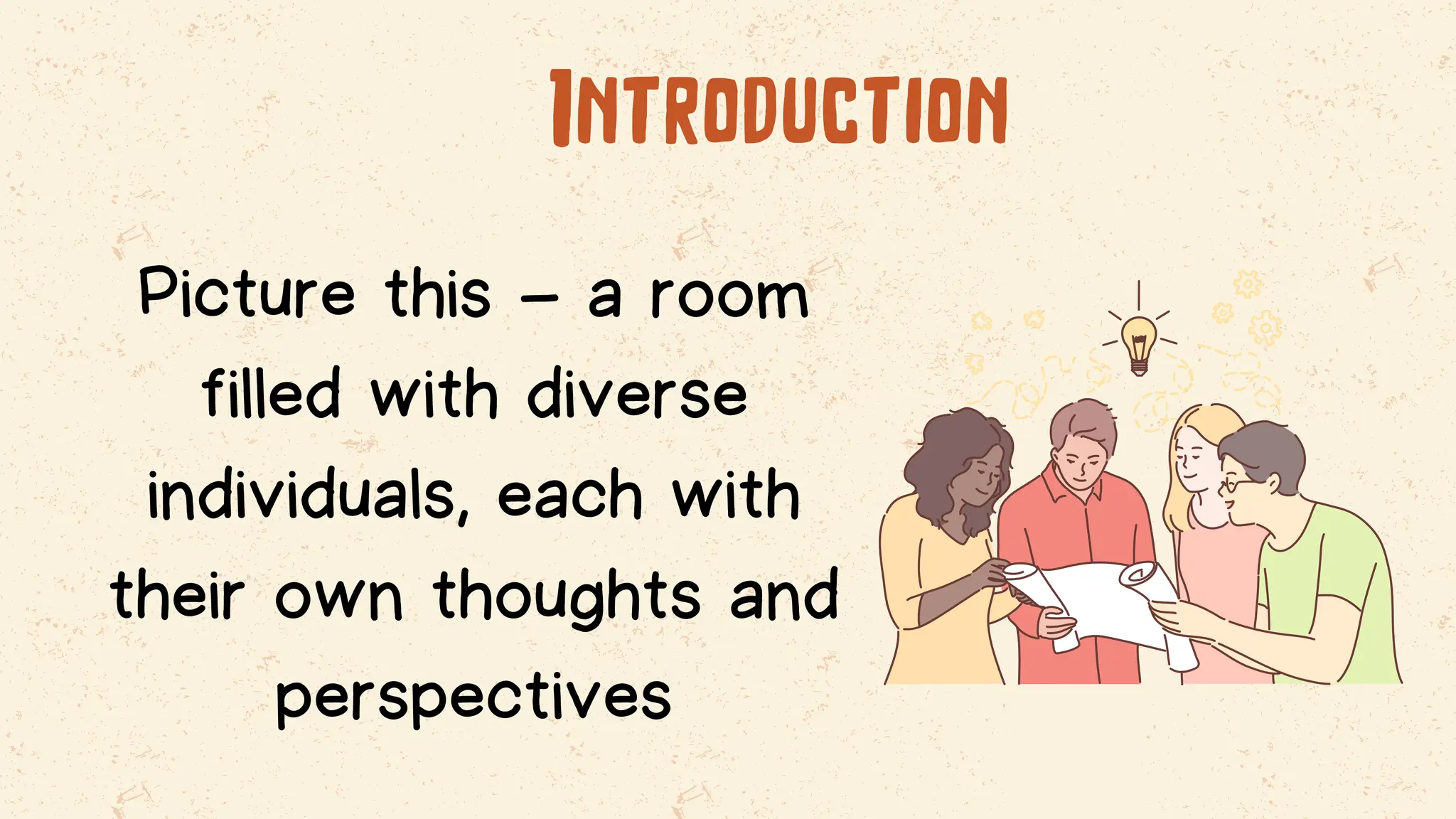
Picture this – a room
filled with diverse
individuals, each with
their own thoughts and
perspectives
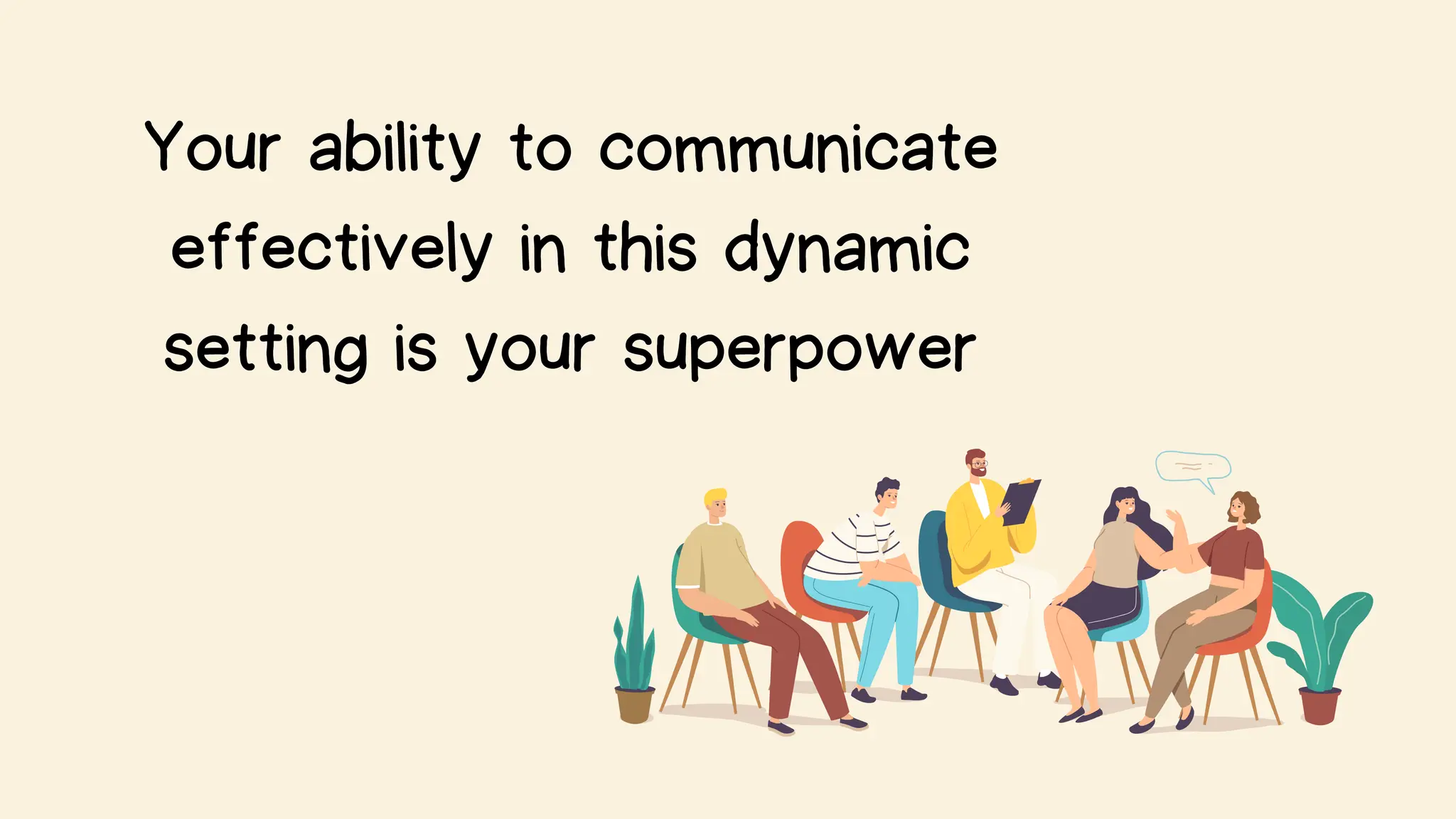
Your ability to communicate
effectively in this dynamic
setting is your superpower
In personal or professional settings,
communication skills will enhance your
ability to convey ideas and navigate
diverse situations
By understanding various communication
types, we unveil the keys to influence,
connection, and impact
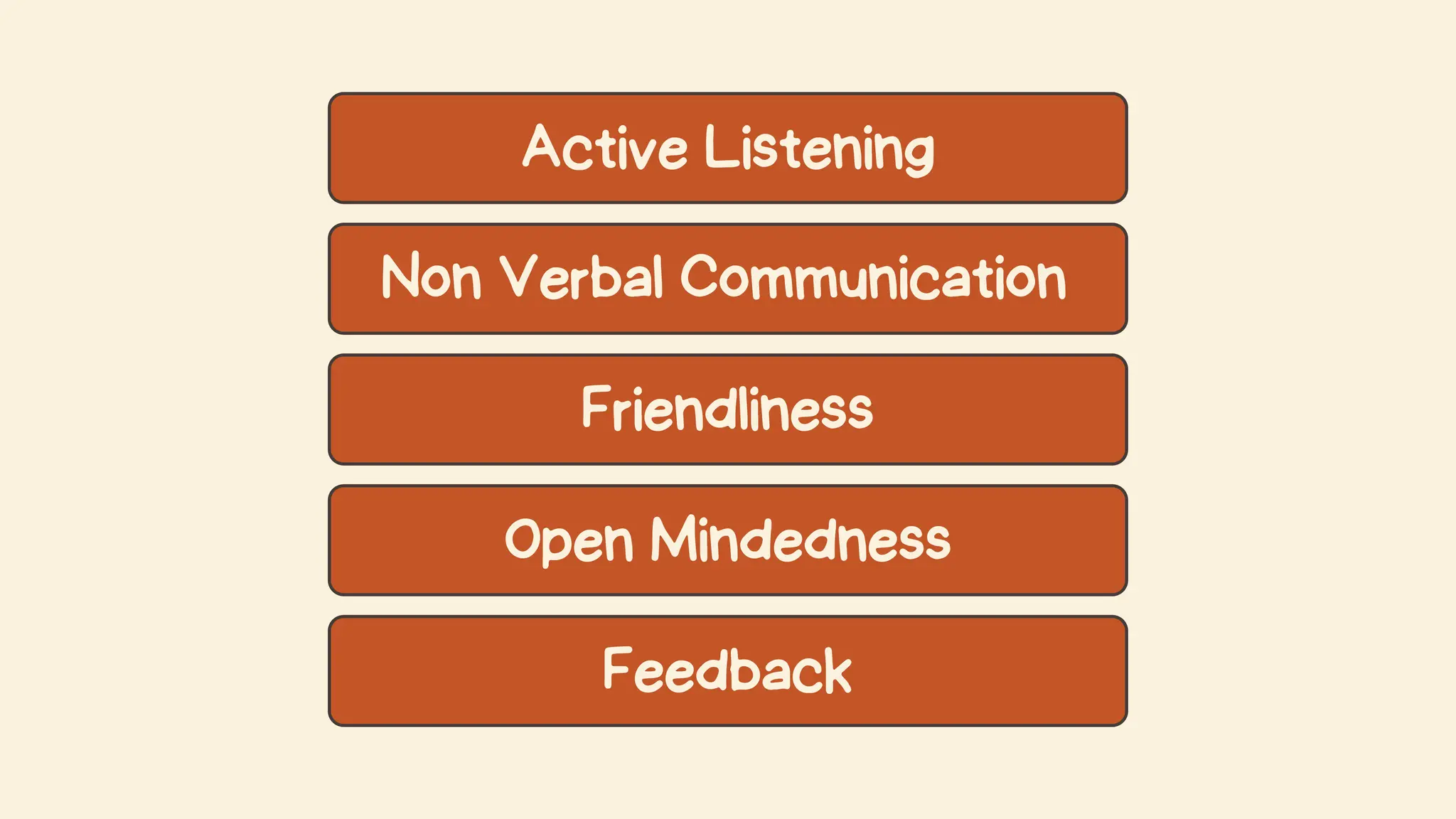
Active Listening
Non Verbal Communication
Friendliness
Open Mindedness
Feedback
01
01
Active
Active
l
listening
istening
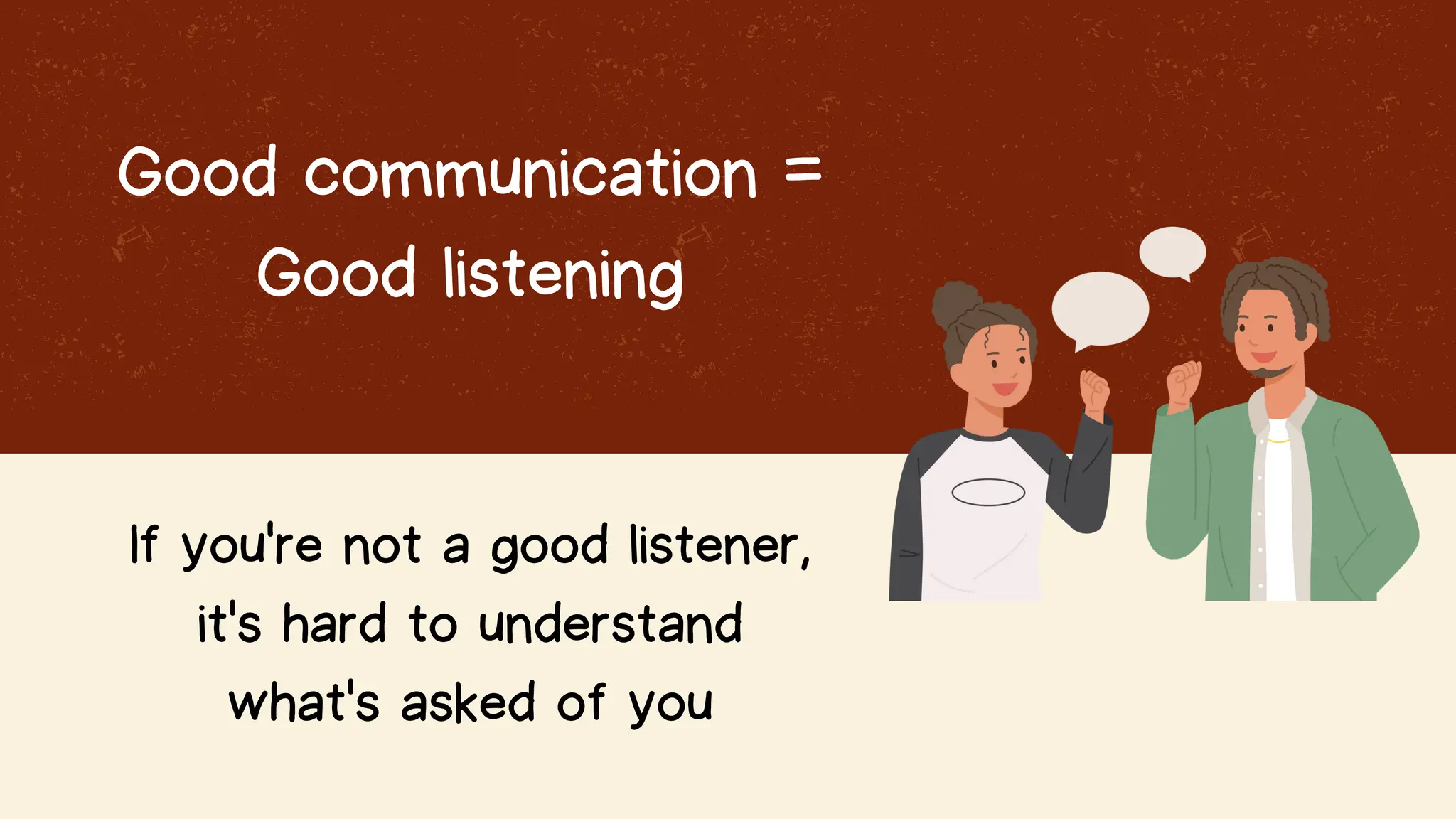
Good communication =
Good listening
If you're not a good listener,
it's hard to understand
what's asked of you
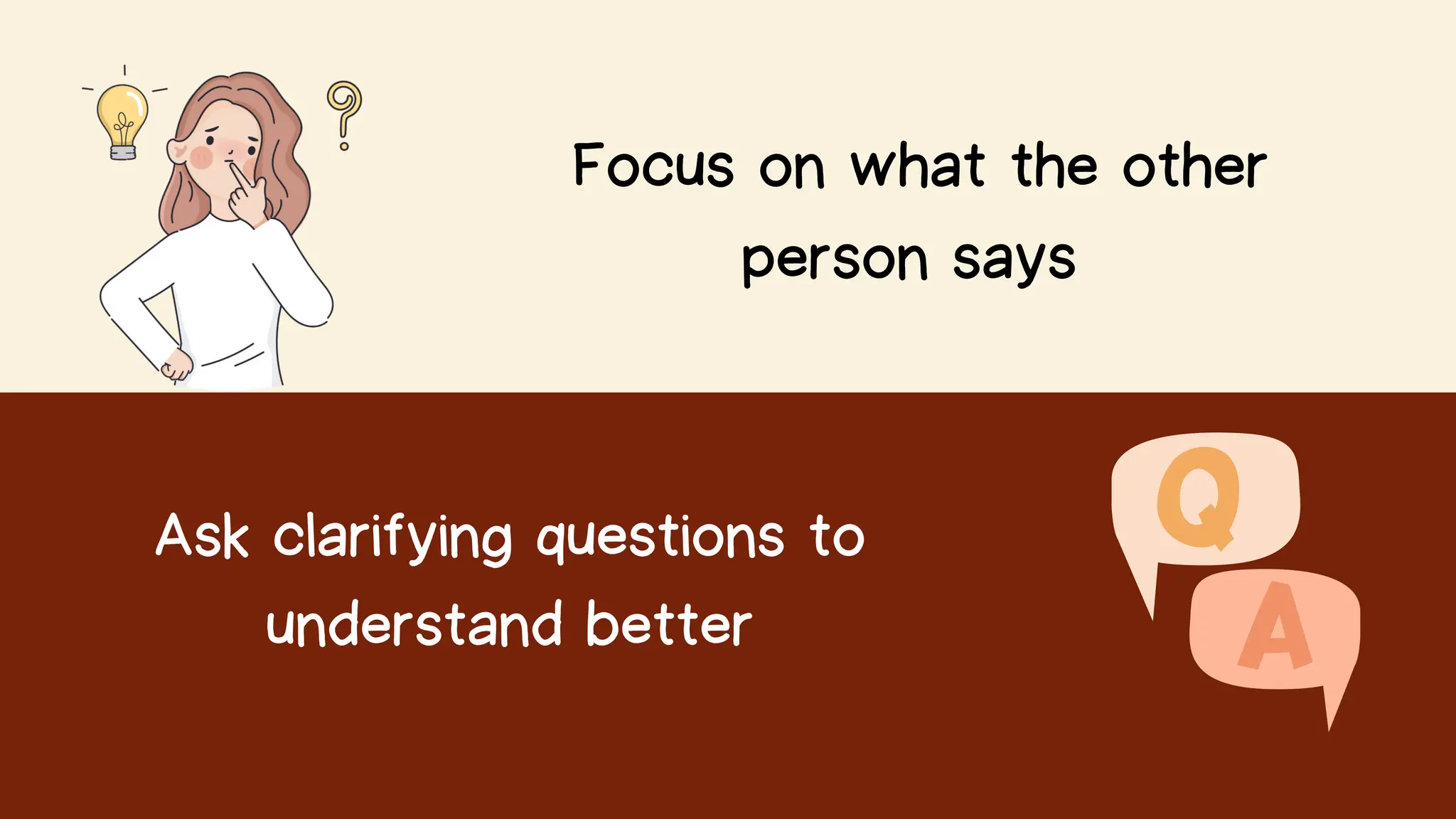
Focus on what the other
person says
Ask clarifying questions to
understand better
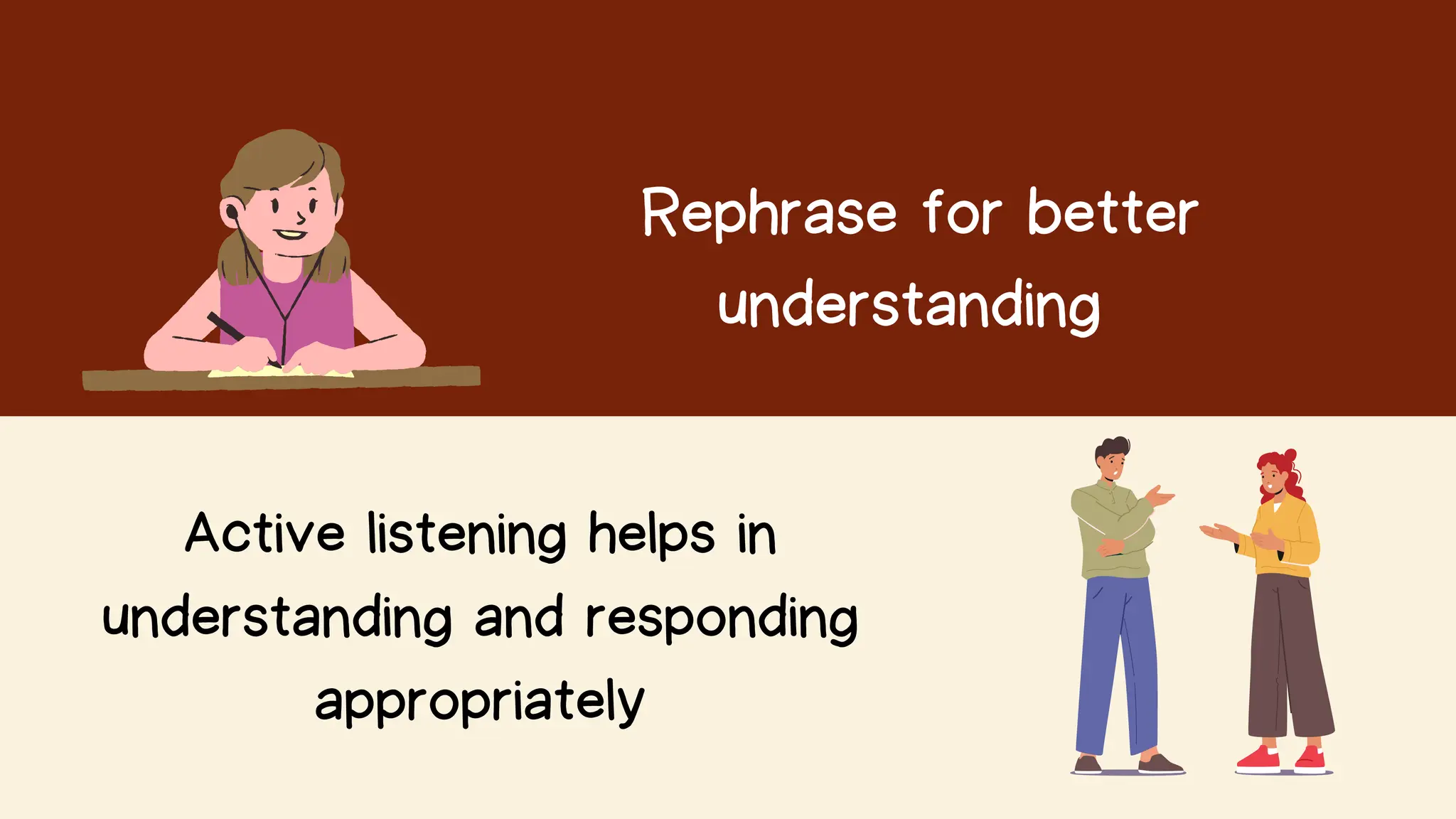
Rephrase for better
understanding
Active listening helps in
understanding and responding
appropriately
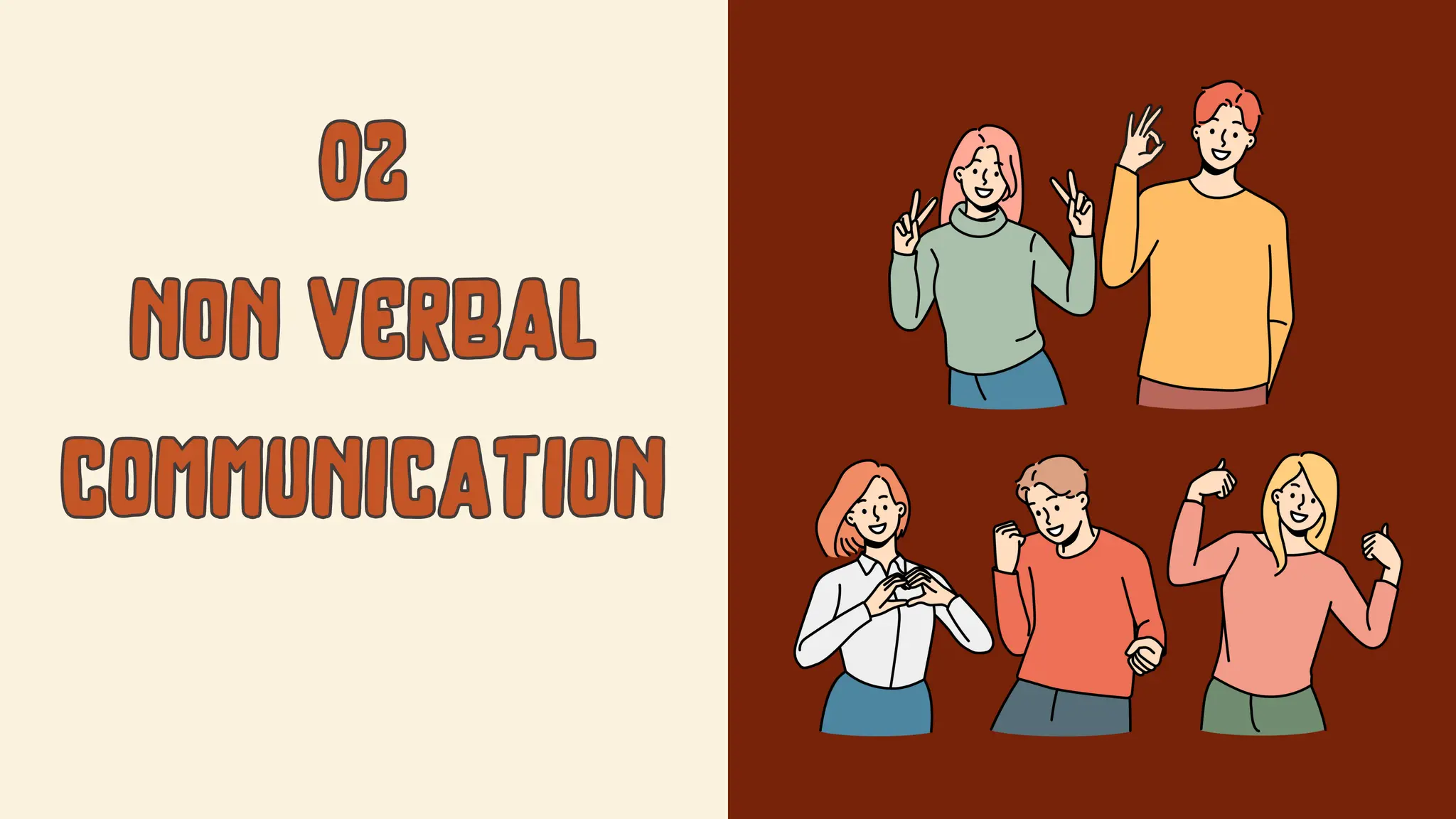
02
02
non verbal
non verbal
communication
communication
Nonverbal communication cues are the way you
listen, look, move, and react
These cues show your interest, if you are being
truthful, and how well you’re listening
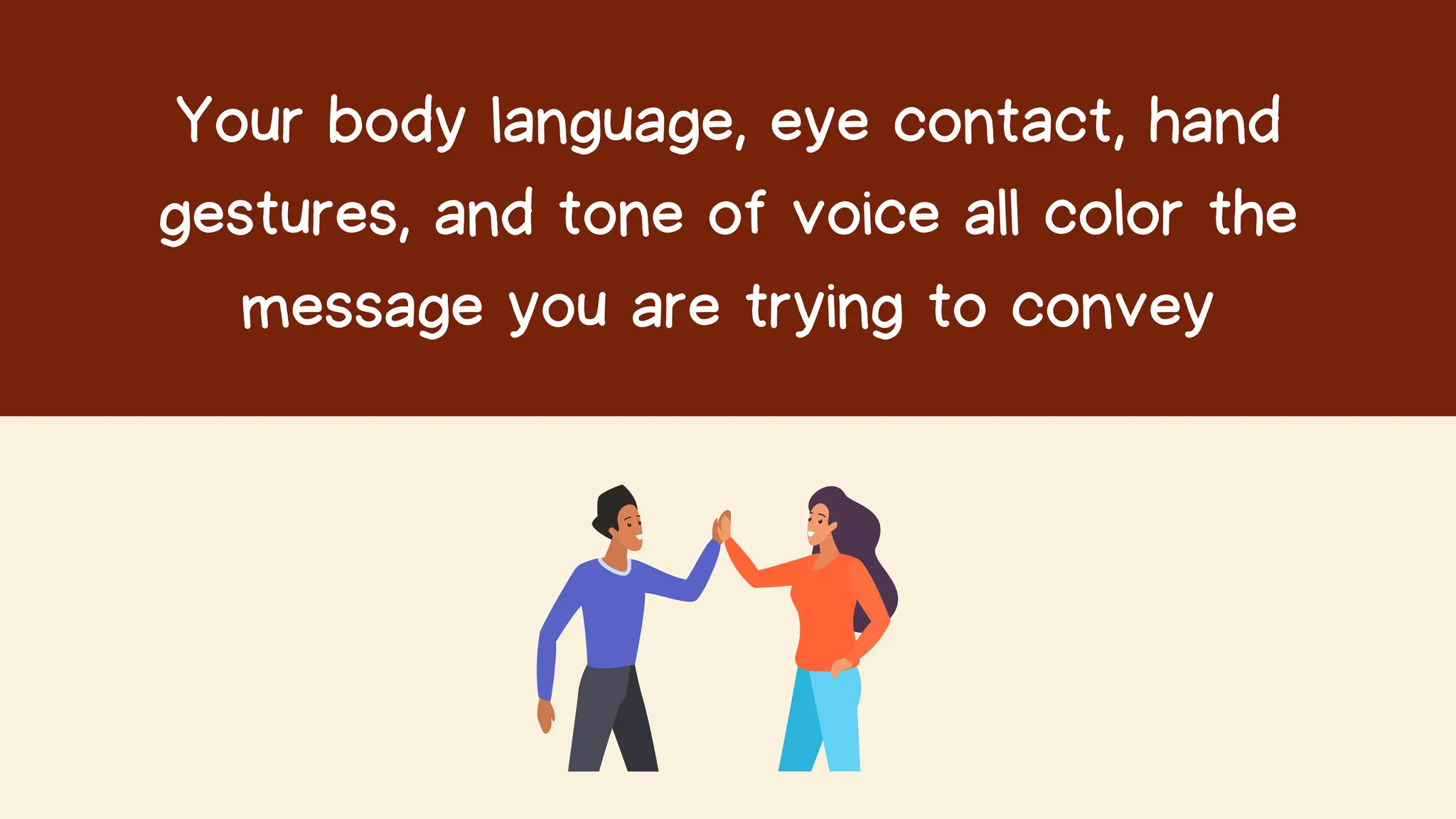
Your body language, eye contact, hand
gestures, and tone of voice all color the
message you are trying to convey
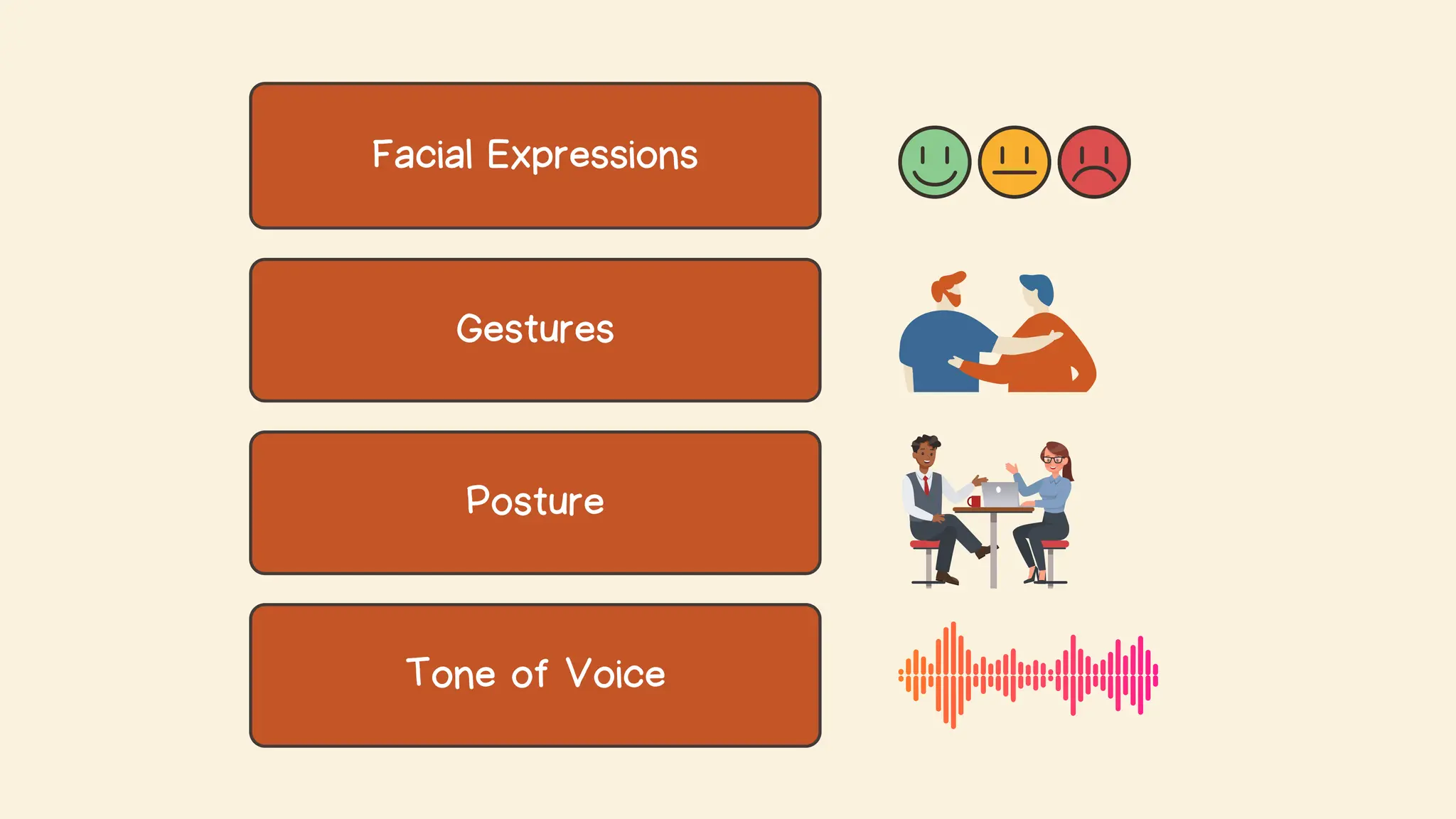
Types Of Non Verbal Communication
Facial Expressions
Gestures
Posture
Tone of Voice
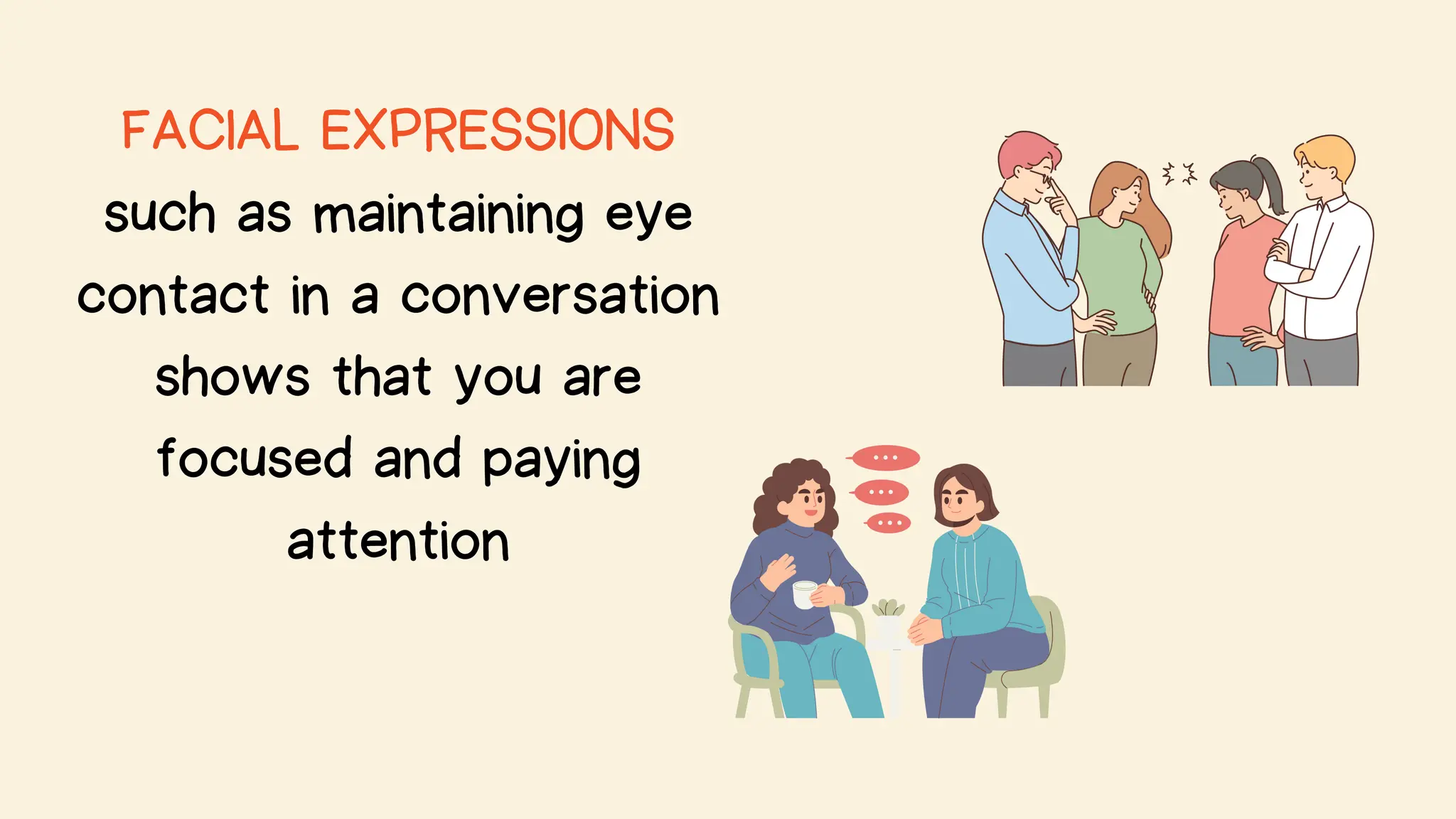
FACIAL EXPRESSIONS
such as maintaining eye
contact in a conversation
shows that you are
focused and paying
attention
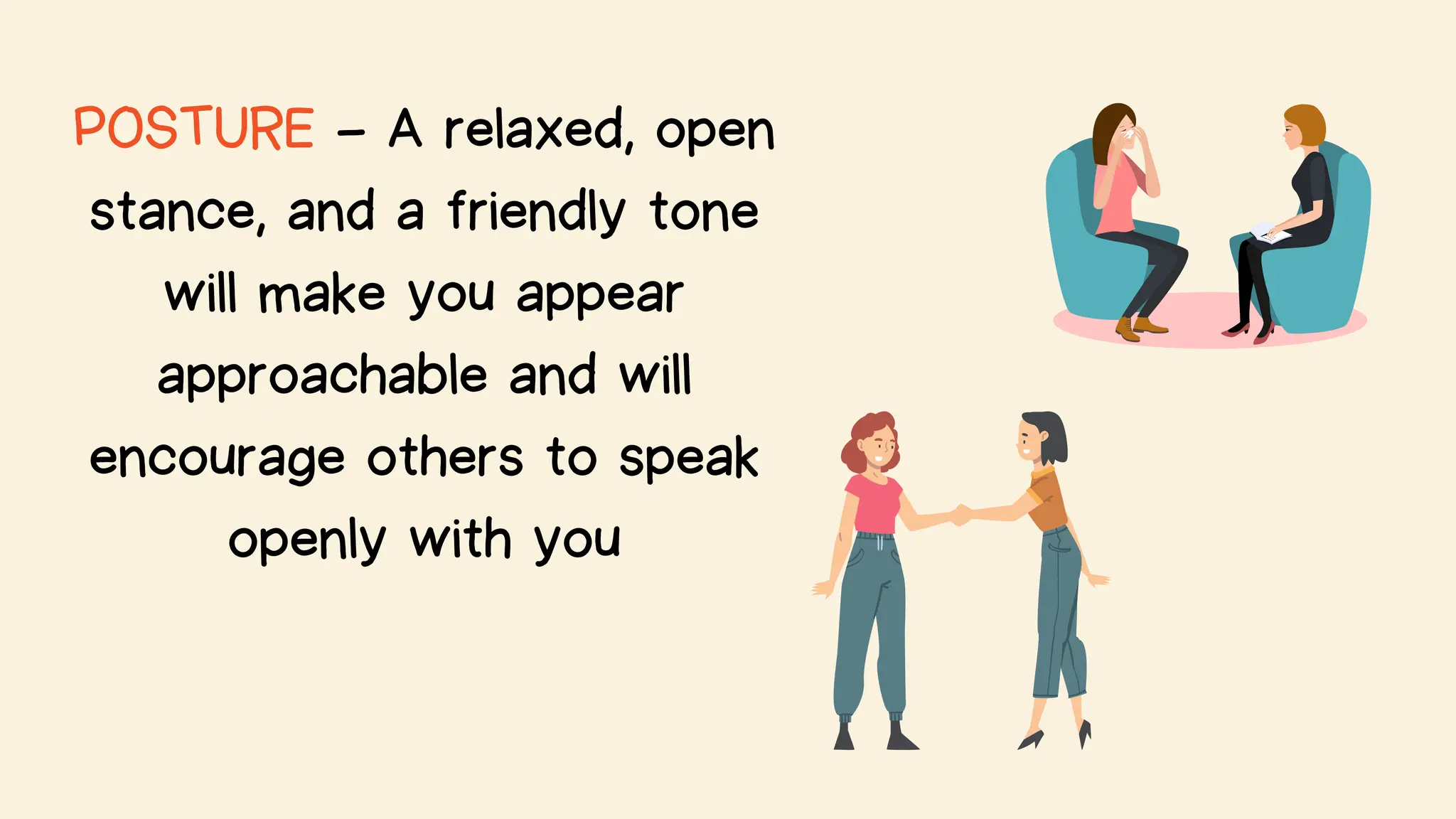
POSTURE - A relaxed, open
stance, and a friendly tone
will make you appear
approachable and will
encourage others to speak
openly with you
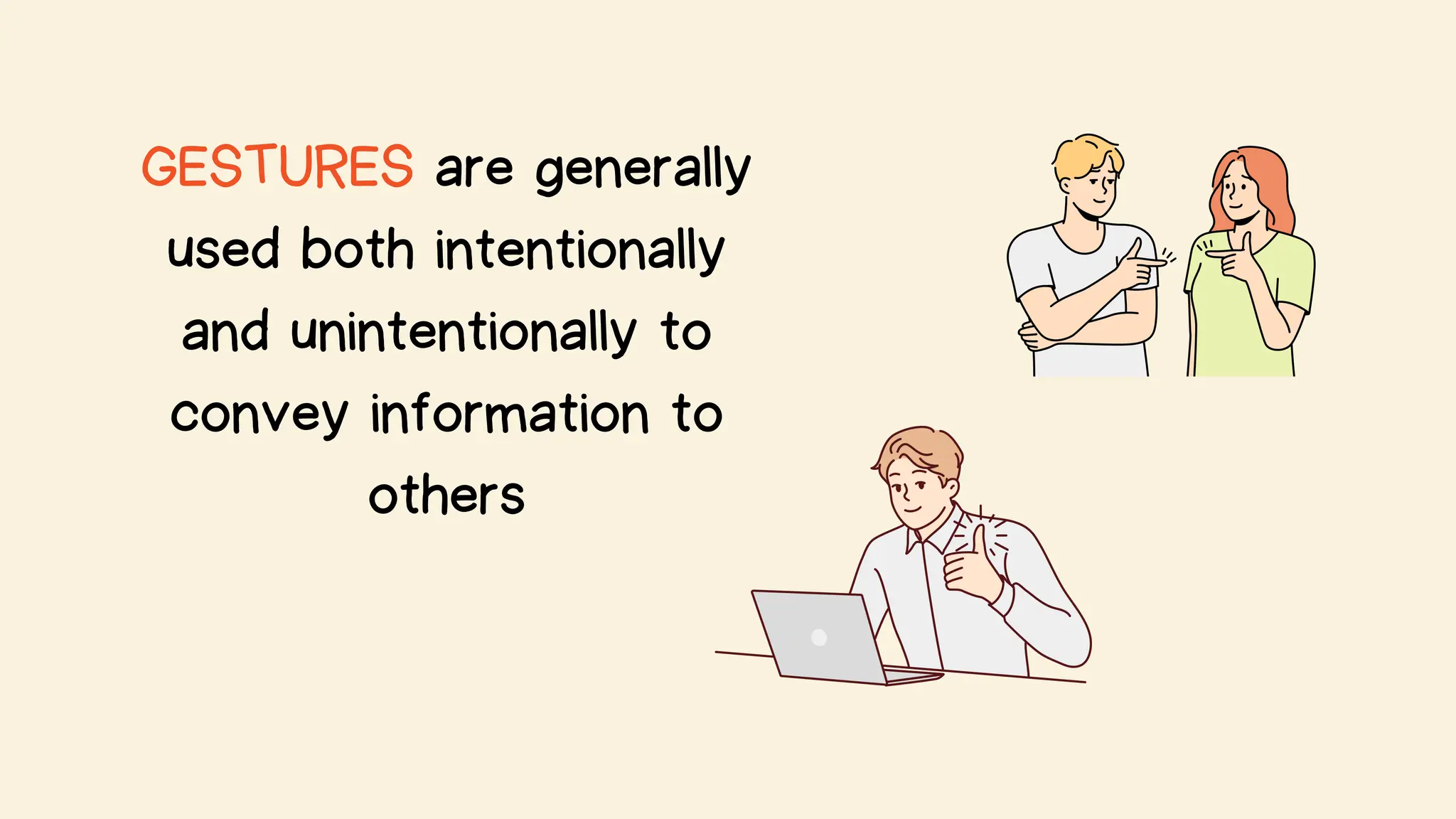
GESTURES are generally
used both intentionally
and unintentionally to
convey information to
others
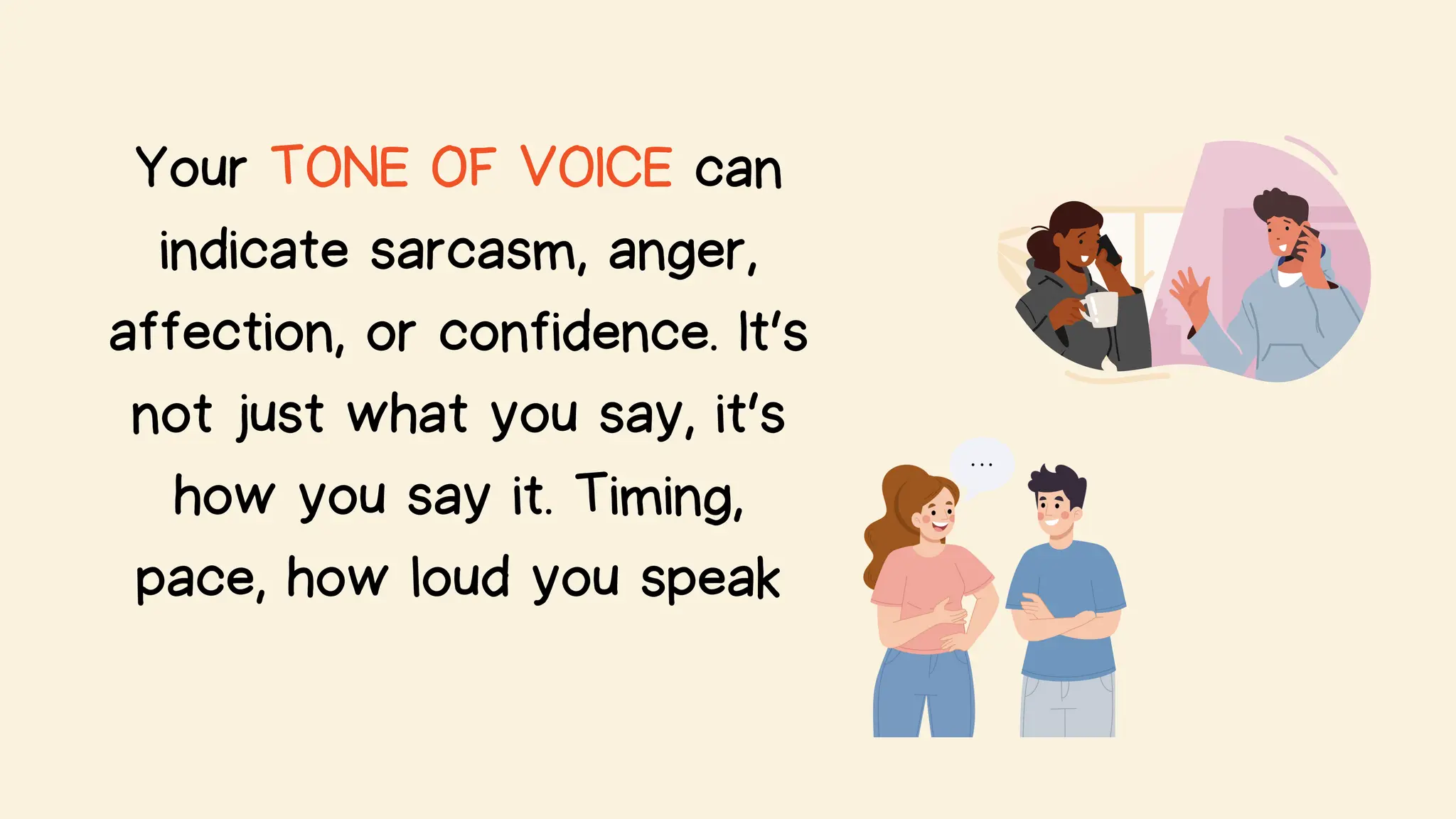
Your TONE OF VOICE can
indicate sarcasm, anger,
affection, or confidence. It’s
not just what you say, it’s
how you say it. Timing,
pace, how loud you speak
03
03
Friendliness
Friendliness
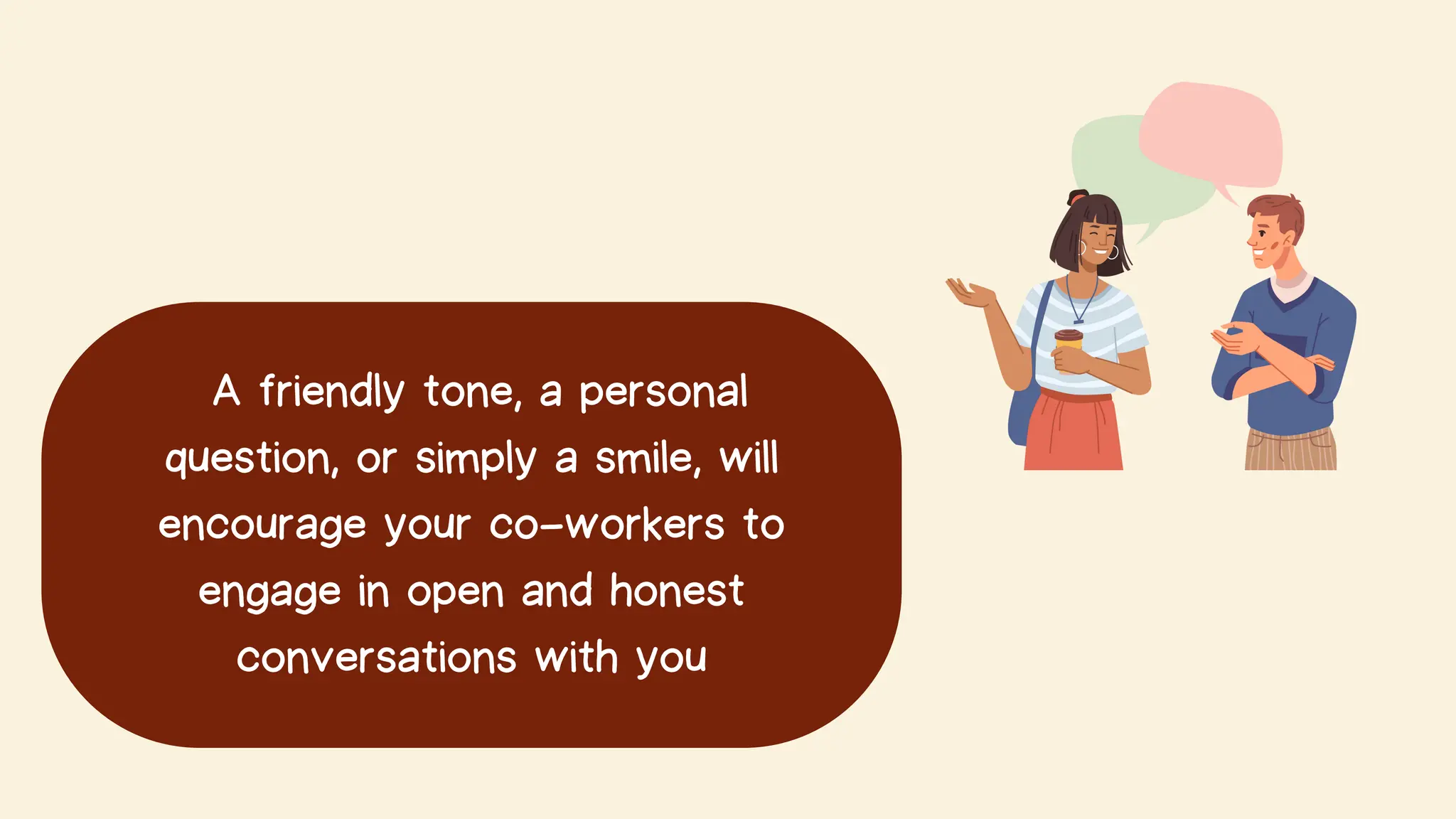
A friendly tone, a personal
question, or simply a smile, will
encourage your co-workers to
engage in open and honest
conversations with you
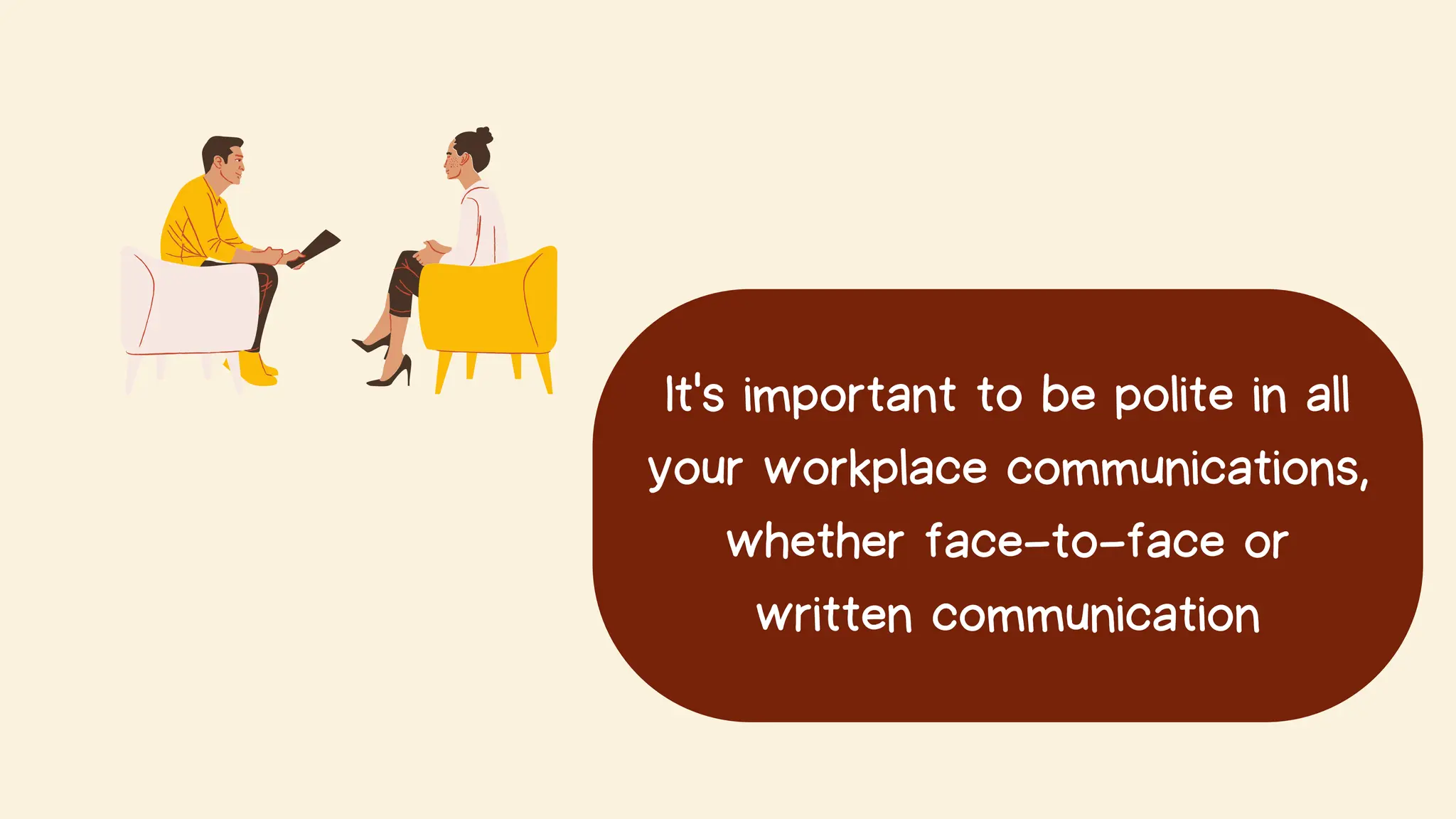
It's important to be polite in all
your workplace communications,
whether face-to-face or
written communication
04
04
Open
Open
Mindedness
Mindedness
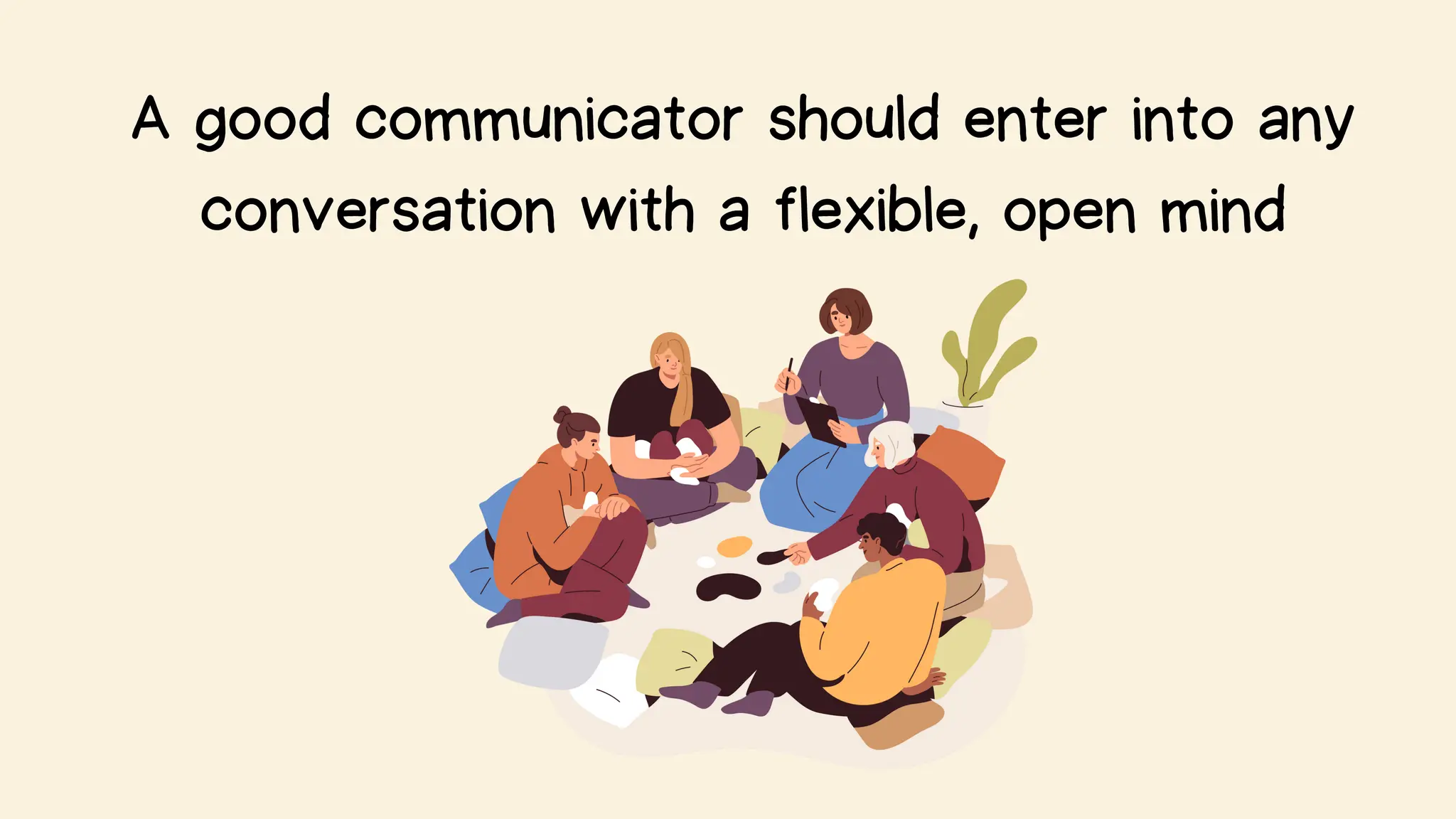
A good communicator should enter into any
conversation with a flexible, open mind
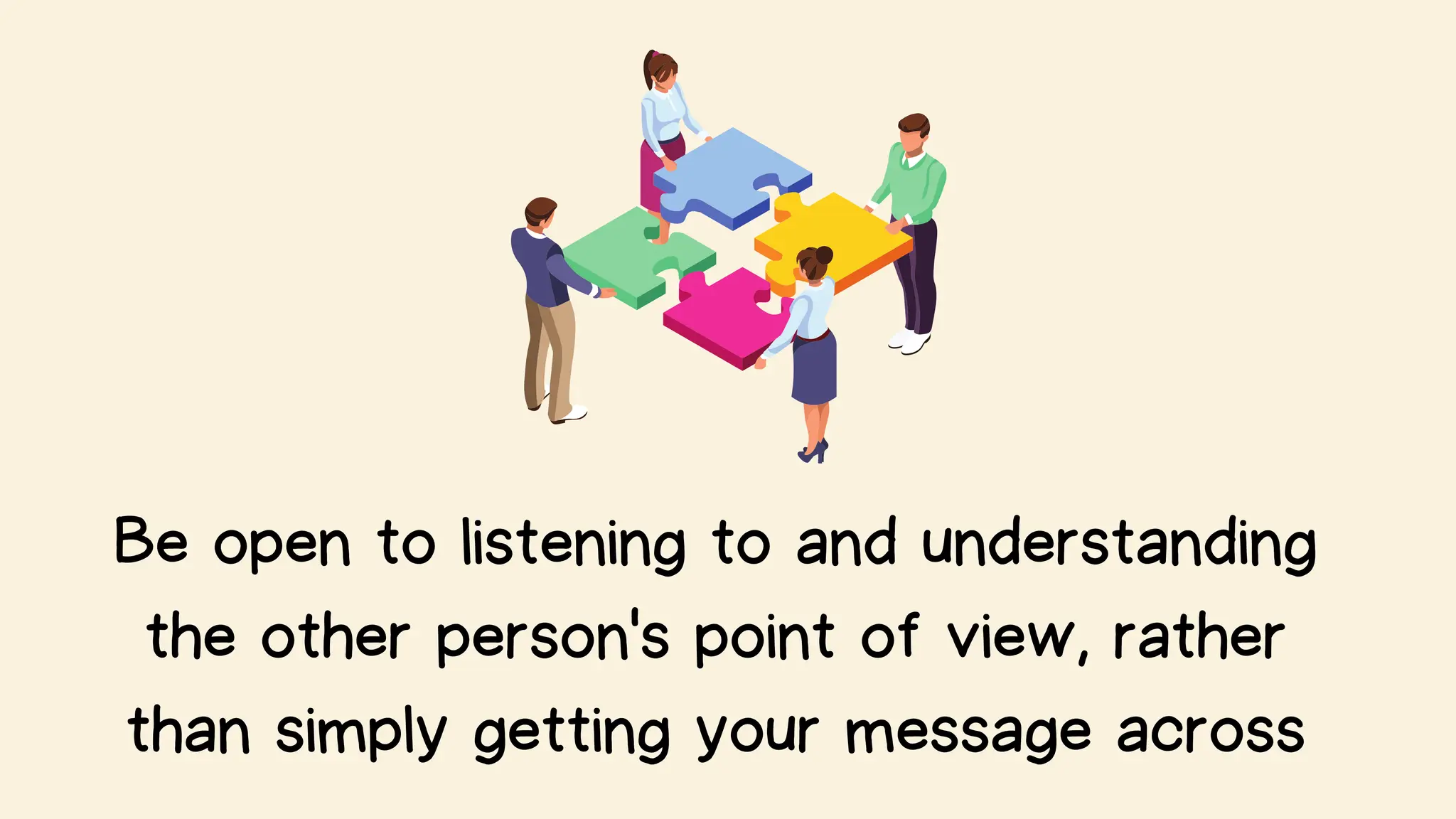
Be open to listening to and understanding
the other person's point of view, rather
than simply getting your message across
By being willing to enter into a
dialogue, even with people with
whom you disagree, you will be able
to have more honest, productive
conversations.
05
05
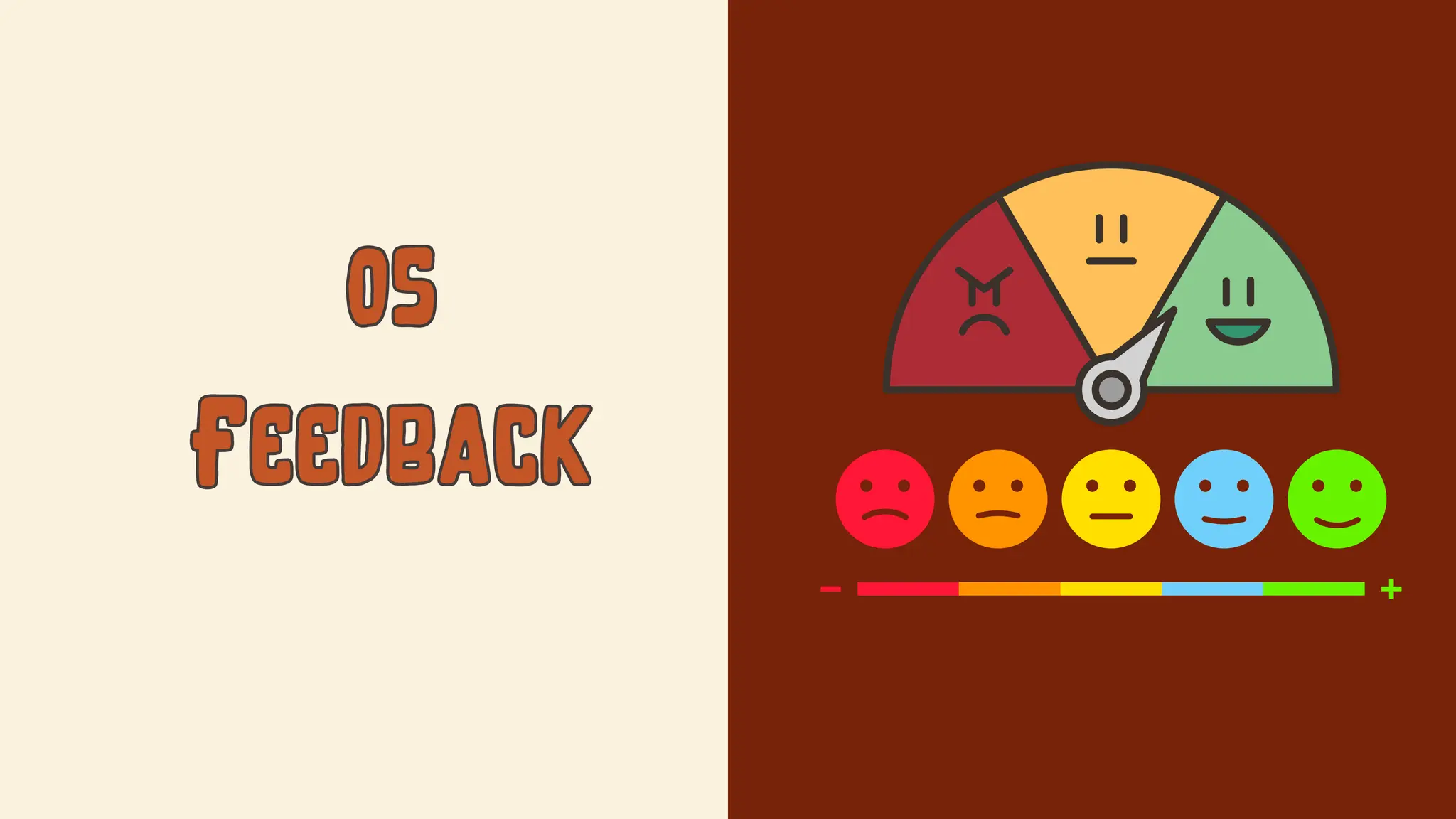
Feedback
Feedback
Being able to give
and receive
feedback
appropriately is an
important
communication skill
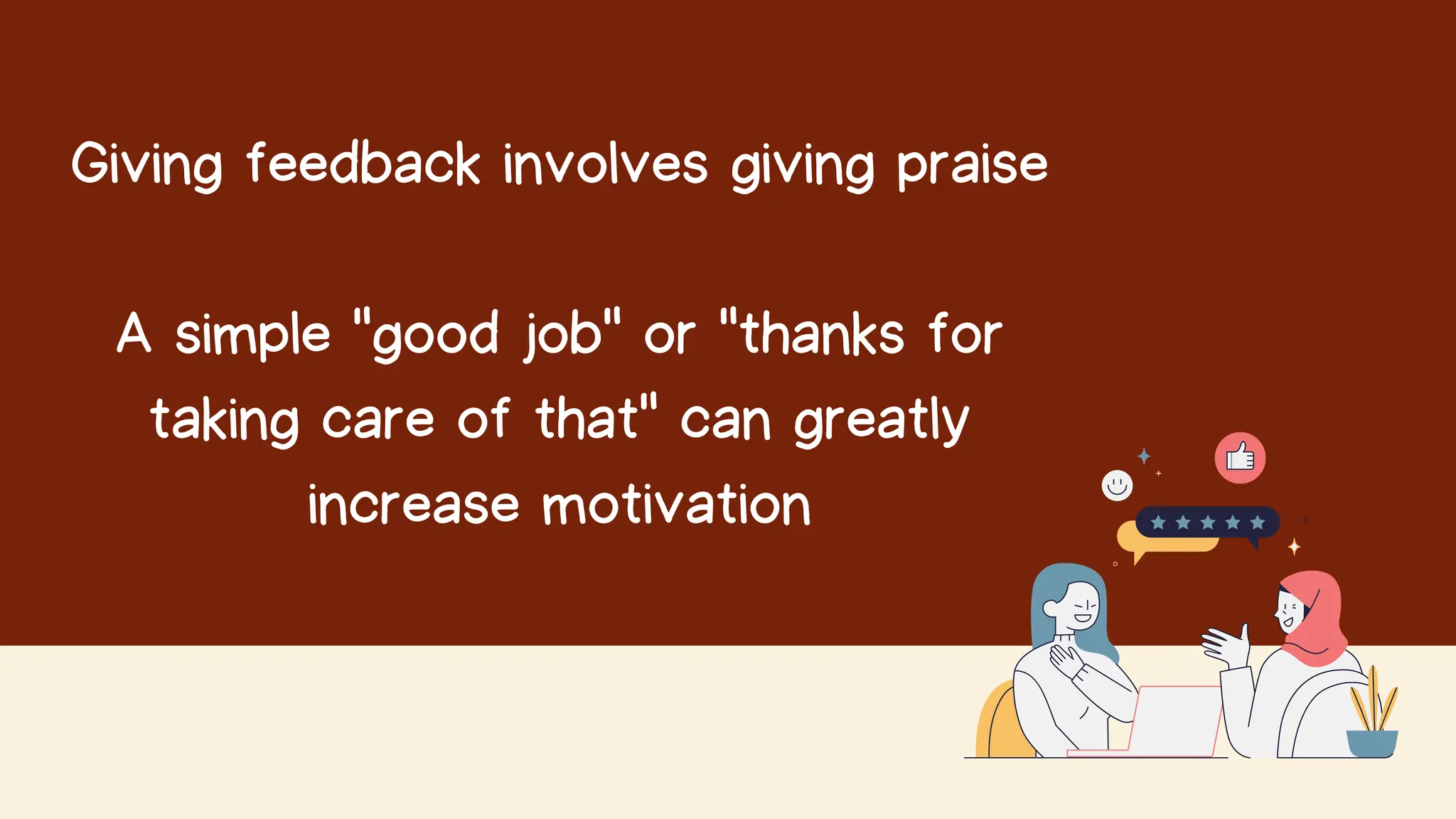
Giving feedback involves giving praise
A simple "good job" or "thanks for
taking care of that" can greatly
increase motivation
Listen to the feedback
you are given, ask
clarifying questions if
you are unsure of the
issue, and make efforts
to implement the
feedback
Thank You for Reading!

Types of Communication Skills For Success