Mohammad Tanvir Islam
“ the process of passing information and
understanding from one person to another it
is essentially a bridge of meaning between
the people by using the bridge a person can
safely cross the river of miss understanding “
Keith Davis
1. Candid
2. Clear
3. Complete
4. Concise
5. Concrete
6. Correct
7. Courteous
 Semantic barriers
 Physical barriers
 Organizational barriers
 Psychological barriers
 Different language
 Different context for words and symbols
 Poor vocabulary
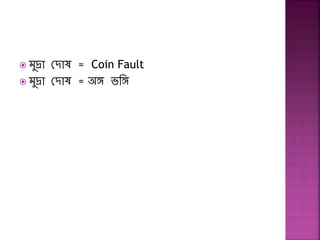
 মুদ্রা দ াষ = Coin Fault
 মুদ্রা দ াষ = অঙ্গ ভঙ্গঙ্গ
1. Noise
2. Improper time
3. Distance
4. Inadequate or overload information
 Organizational barriers occurs in the
organization due to rules ,regulation and
hierarchical relationship .
1. Rules and regulations
2. Hierarchical relationship
1. Selective perceptions
2. Premature evaluation
3. Poor listening
4. Attitude of superiors
5. emotions
 “any information which adversely and seriously
affects an individual's view of his or her future”
What is a bad news??
 Unfavourable diagnosis
 Irreversible, un-treatable, or non-stoppable
diseases (or side effects, or complications)
 disease recurrence
 spread of disease
 revealing positive results of genetic tests
 Stigmatization
 Late (to treat) stage diseases
 End of life decisions
 Death
 Less than 10% patients do not want to know their illness
 90% want to know about their illness
 30% want to know the exact name of their illness
 Almost 100% want to know the “chance of a cure”
 Ethical
 Professional
 Human rights
 Legal
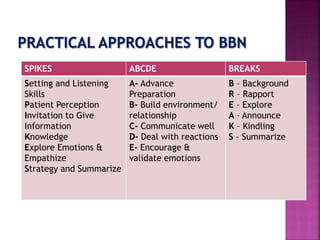
SPIKES ABCDE BREAKS
Setting and Listening
Skills
Patient Perception
Invitation to Give
Information
Knowledge
Explore Emotions &
Empathize
Strategy and Summarize
A- Advance
Preparation
B- Build environment/
relationship
C- Communicate well
D- Deal with reactions
E- Encourage &
validate emotions
B – Background
R – Rapport
E – Explore
A – Announce
K – Kindling
S – Summarize
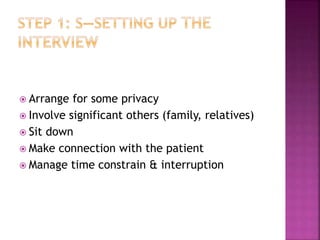
 Arrange for some privacy
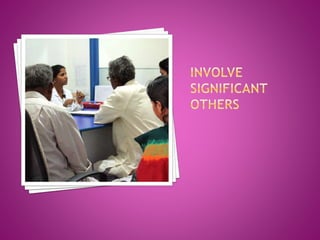
 Involve significant others (family, relatives)
 Sit down
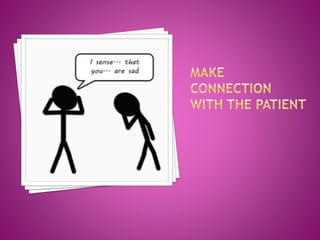
 Make connection with the patient
 Manage time constrain & interruption
 Open-ended questions to create a reasonably
accurate picture of
“how the patient perceives the medical
situation”
 Would you like me to give you all the
information
 Offer to answer any questions they may have
in the future or
 To talk to a relative or friend
 “Unfortunately I’ve got some bad news to
tell you” or “I’m sorry to tell you that…”.
 Start at the level of comprehension and
vocabulary of the patient
 Try to use nontechnical words such as “spread”
instead of “metastasized” and “sample of
tissue” instead of “biopsy”
 Avoid excessive bluntness (e.g., “You have very
bad cancer and unless you get treatment
immediately you are going to die”)
 Give information in small chunks and check
periodically as to the patient’s understanding
 When the prognosis is poor, avoid using phrases
such as “There is nothing more we can do for
you.”
Patients’ emotional reactions may vary from
 silence
 disbelief
 Crying
 denial, or
 anger
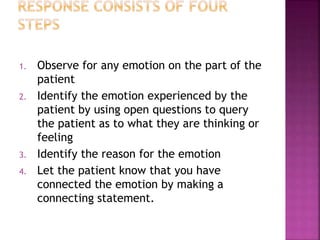
1. Observe for any emotion on the part of the
patient
2. Identify the emotion experienced by the
patient by using open questions to query
the patient as to what they are thinking or
feeling
3. Identify the reason for the emotion
4. Let the patient know that you have
connected the emotion by making a
connecting statement.
If the emotion does not diminish shortly, it is
helpful to continue to make empathic
responses until the patient becomes calm
 Patients who have a clear plan for the future
are less likely to feel anxious and uncertain
 Ask the patients if they are ready for such a
discussion
 Present treatment options
 Share treatment responsibility with patient
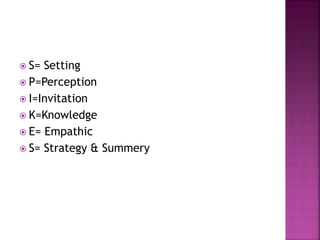
 S= Setting
 P=Perception
 I=Invitation
 K=Knowledge
 E= Empathic
 S= Strategy & Summery
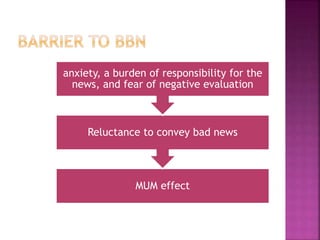
MUM effect
Reluctance to convey bad news
anxiety, a burden of responsibility for the
news, and fear of negative evaluation
 I don’t know how much I could communicate
with you………………
 But
 Thank you for being a good listener
Thank you

Communication skill & Breaking Bad News

  • 2.
  • 3.
    “ the processof passing information and understanding from one person to another it is essentially a bridge of meaning between the people by using the bridge a person can safely cross the river of miss understanding “ Keith Davis
  • 4.
    1. Candid 2. Clear 3.Complete 4. Concise 5. Concrete 6. Correct 7. Courteous
  • 6.
     Semantic barriers Physical barriers  Organizational barriers  Psychological barriers
  • 7.
     Different language Different context for words and symbols  Poor vocabulary
  • 9.
     মুদ্রা দাষ = Coin Fault  মুদ্রা দ াষ = অঙ্গ ভঙ্গঙ্গ
  • 11.
    1. Noise 2. Impropertime 3. Distance 4. Inadequate or overload information
  • 12.
     Organizational barriersoccurs in the organization due to rules ,regulation and hierarchical relationship .
  • 13.
    1. Rules andregulations 2. Hierarchical relationship
  • 15.
    1. Selective perceptions 2.Premature evaluation 3. Poor listening 4. Attitude of superiors 5. emotions
  • 16.
     “any informationwhich adversely and seriously affects an individual's view of his or her future” What is a bad news??
  • 17.
     Unfavourable diagnosis Irreversible, un-treatable, or non-stoppable diseases (or side effects, or complications)  disease recurrence  spread of disease  revealing positive results of genetic tests  Stigmatization  Late (to treat) stage diseases  End of life decisions  Death
  • 18.
     Less than10% patients do not want to know their illness  90% want to know about their illness  30% want to know the exact name of their illness  Almost 100% want to know the “chance of a cure”
  • 19.
     Ethical  Professional Human rights  Legal
  • 20.
    SPIKES ABCDE BREAKS Settingand Listening Skills Patient Perception Invitation to Give Information Knowledge Explore Emotions & Empathize Strategy and Summarize A- Advance Preparation B- Build environment/ relationship C- Communicate well D- Deal with reactions E- Encourage & validate emotions B – Background R – Rapport E – Explore A – Announce K – Kindling S – Summarize
  • 22.
     Arrange forsome privacy  Involve significant others (family, relatives)  Sit down  Make connection with the patient  Manage time constrain & interruption
  • 30.
     Open-ended questionsto create a reasonably accurate picture of “how the patient perceives the medical situation”
  • 31.
     Would youlike me to give you all the information  Offer to answer any questions they may have in the future or  To talk to a relative or friend
  • 32.
     “Unfortunately I’vegot some bad news to tell you” or “I’m sorry to tell you that…”.
  • 34.
     Start atthe level of comprehension and vocabulary of the patient  Try to use nontechnical words such as “spread” instead of “metastasized” and “sample of tissue” instead of “biopsy”  Avoid excessive bluntness (e.g., “You have very bad cancer and unless you get treatment immediately you are going to die”)  Give information in small chunks and check periodically as to the patient’s understanding  When the prognosis is poor, avoid using phrases such as “There is nothing more we can do for you.”
  • 35.
    Patients’ emotional reactionsmay vary from  silence  disbelief  Crying  denial, or  anger
  • 36.
    1. Observe forany emotion on the part of the patient 2. Identify the emotion experienced by the patient by using open questions to query the patient as to what they are thinking or feeling 3. Identify the reason for the emotion 4. Let the patient know that you have connected the emotion by making a connecting statement.
  • 37.
    If the emotiondoes not diminish shortly, it is helpful to continue to make empathic responses until the patient becomes calm
  • 38.
     Patients whohave a clear plan for the future are less likely to feel anxious and uncertain  Ask the patients if they are ready for such a discussion  Present treatment options  Share treatment responsibility with patient
  • 40.
     S= Setting P=Perception  I=Invitation  K=Knowledge  E= Empathic  S= Strategy & Summery
  • 41.
    MUM effect Reluctance toconvey bad news anxiety, a burden of responsibility for the news, and fear of negative evaluation
  • 42.
     I don’tknow how much I could communicate with you………………  But  Thank you for being a good listener
  • 43.

Editor's Notes

  • #9 Semantic is the study of meaning