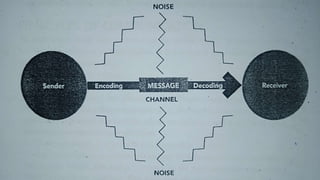
Considered as one of the simplest communication models.
This model is sender-message oriented as the receiver is
viewed as no more than an endpoint rather than a part of
an ongoing process.
It describes communication as a linear, one-way process in
which a message is transmitted from sender to receiver.
The model acknowledges the effect of noise in the process
of communication.
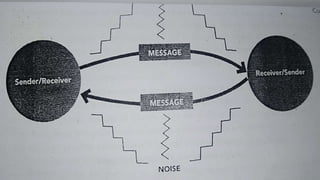
Describes communication as a two-way process.
It shows the alternating role of communicators as sender
and receiver in encoding and decoding messages.
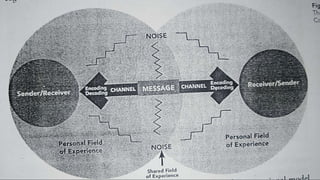
It reflects communication in the real world.
It emphasizes the simultaneous role of communicators as
senders and receivers in the communication process.
It also highlights the continuous negotiation of meanings
in any communication event through event through the
concept of field experience.
Communication is always evolving.
It is affected by the change in each of its elements as well
as the interaction of theses elements to each other.
The way we communicate evolves as we continually define
our relationships, adjust our behavior and patterns of
interaction, and acquire communication experiences.
Every communication encounter is unique. It affects and
changes people. This makes it impossible for
communication encounters to be made in exactly the same
way. This is what also makes communication irreversible –
whatever has been said and done cannot be taken back for
it has already affected the communicators in some way,
whether in the cognitive, affective, or behavioral aspect.
We cannot “not” communicate. While it is true that we
communicate with a purpose, we may also communicate
without any awareness of doing so.
We can never stop communicating because everything
about us, even our silence, sends a message.
Cultural factors such as race, ethnicity, gender, religion
and age influence how we encode and decode messages.
Having the knowledge, sensitivity, and respect for cultural
differences is one key for effective communication.
Since communication has an effect, it requires that the
participants of communication make judgements of what
is right and wrong.
Ethics are the moral principles, values and beliefs that the
members of society use to guide behavior.
A communicative act is considered ethical if it is based on
socially agreed upon standards of behavior.
Communication is a skill that needs to be developed. No
matter what field we wish to pursue, we can all benefit
from developing our communicating skills.
This starts from recognizing our communication strengths
and weaknesses and from committing our self to gaining
knowledge and communication experiences.
Technology has become one of the defining elements in
this generation. As societies continue to evolve, the level of
sophistication in the way we communicate also increases.

Communication process models

  • 4.
    Considered as oneof the simplest communication models. This model is sender-message oriented as the receiver is viewed as no more than an endpoint rather than a part of an ongoing process. It describes communication as a linear, one-way process in which a message is transmitted from sender to receiver. The model acknowledges the effect of noise in the process of communication.
  • 6.
    Describes communication asa two-way process. It shows the alternating role of communicators as sender and receiver in encoding and decoding messages.
  • 8.
    It reflects communicationin the real world. It emphasizes the simultaneous role of communicators as senders and receivers in the communication process. It also highlights the continuous negotiation of meanings in any communication event through event through the concept of field experience.
  • 10.
    Communication is alwaysevolving. It is affected by the change in each of its elements as well as the interaction of theses elements to each other. The way we communicate evolves as we continually define our relationships, adjust our behavior and patterns of interaction, and acquire communication experiences.
  • 11.
    Every communication encounteris unique. It affects and changes people. This makes it impossible for communication encounters to be made in exactly the same way. This is what also makes communication irreversible – whatever has been said and done cannot be taken back for it has already affected the communicators in some way, whether in the cognitive, affective, or behavioral aspect.
  • 12.
    We cannot “not”communicate. While it is true that we communicate with a purpose, we may also communicate without any awareness of doing so. We can never stop communicating because everything about us, even our silence, sends a message.
  • 13.
    Cultural factors suchas race, ethnicity, gender, religion and age influence how we encode and decode messages. Having the knowledge, sensitivity, and respect for cultural differences is one key for effective communication.
  • 14.
    Since communication hasan effect, it requires that the participants of communication make judgements of what is right and wrong. Ethics are the moral principles, values and beliefs that the members of society use to guide behavior. A communicative act is considered ethical if it is based on socially agreed upon standards of behavior.
  • 15.
    Communication is askill that needs to be developed. No matter what field we wish to pursue, we can all benefit from developing our communicating skills. This starts from recognizing our communication strengths and weaknesses and from committing our self to gaining knowledge and communication experiences.
  • 16.
    Technology has becomeone of the defining elements in this generation. As societies continue to evolve, the level of sophistication in the way we communicate also increases.

Editor's Notes

  • #4 TRANSMISSION MODEL/ LINEAR MODEL OF COMMUNICATION
  • #5 EXAMPLE: A STUDENTS RAISING HER HAND IN CLASS TO CALL THE TEACHER’S ATTENTION. LET US SAY THAT THERE WAS NOT MUCH NOISE TO STOP THE TEACHER FROM RECEIVING THE STUDENT’S MESSAGE. USING THE TRANSMISSION MODEL, THERE IS NO WAY OF KNOWING WHAT HAPPENS AFTER THE MESSAGE HAS BEEN SENT BY THE STUDENT. HAS THE TEACHER SUCCESSFULLY RECEIVED AND DECODED THE MESSAGE? HAS COMMUNICATION ACTUALLY TAKEN PLACE BETWEEN THE STUDENT AND THE TEACHER.