FUNCTIONS AND TYPES OF
ADVERTISEMENT
ASNAD P A
IV SEM MBA
FUNCTIONS OF ADVERTISEMENT
• Identifying Brand
• Information
• Persuasion
• Previewing New trends
• Demand
• Customer Base
• Pricing
TYPES OF ADVERTISEMENTS
• Print
– Newspaper
– Magazine
– Directory
– Out door
– Transit
• Media
– Television
– Radio
– Online
– Direct mail
– Mobile
• Territory
– Retail
– Local
– National
– International
Types of advertisements

• Purpose
– Covert
– Brand
– Non Product
– Service
– Celebrities
– Surrogate
– Persuasive
– Competition
– Public Service
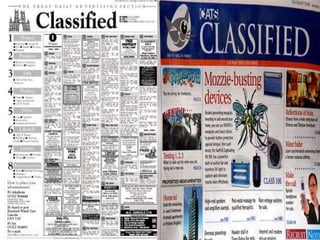
NEWSPAPER ADVERTISEMENT
• Is a product or services advertising that
appears in specific section of newspaper
under the heading classifying the product or
service being offered.
Magazine advertisement
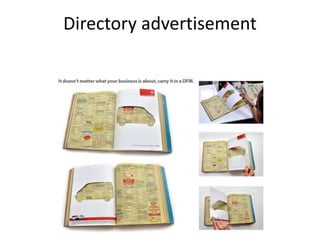
Directory advertisement
Out-Door Advertisement
• Bill-board and message painted on the side of
buildings are common forms of out-door
advertising, which is often used when quick,
simple, ideas are being promoted.
Billboard advertisement
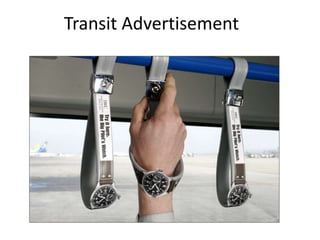
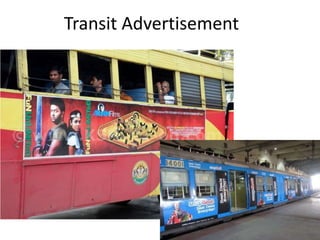
Transit Advertisement
T.V Commercial
• Is a generally considered the most effective
mass-marketing advertising format as is
reflected by the high prices.
• T.V network charge for commercial airtime
during popular events.
Radio Advertisement
• It is a small business advertising.
• Radio advertising can be a very effective
means to attract customer to some business.
Online advertising
• Online advertising is the newest and fastest
growing way to advertise. The Internet now
provides everything from links on sites, to
banner ads on sites, to small ads on sites, to
pay per click advertising.
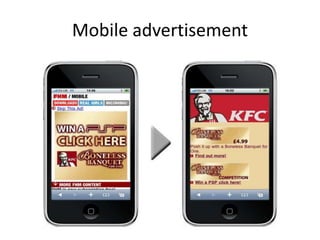
Mobile Advertisement
Mobile advertising is a form of advertising
via mobile (wireless) phones or other
mobile devices. It is a subset of mobile
marketing.
Mobile advertisement
Direct mail advertisement
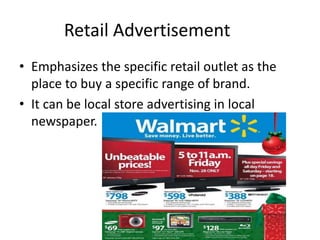
Retail Advertisement
• Emphasizes the specific retail outlet as the
place to buy a specific range of brand.
• It can be local store advertising in local
newspaper.
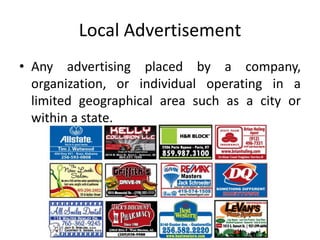
Local Advertisement
• Any advertising placed by a company,
organization, or individual operating in a
limited geographical area such as a city or
within a state.
•
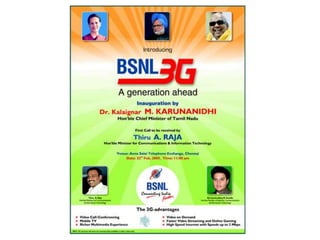
National Advertisement
• Geographically speaking national advertising’s
range is extended to the territorial limits of the
country.
• The advertiser use the national media to inform
the consumer about the product.
• The advertiser use the national local or regional
language but prefers the national language.
• It can be available in everywhere of country and
easily purchased it.
International Advertising
Advertising a product or service in a country other
than where it originates.
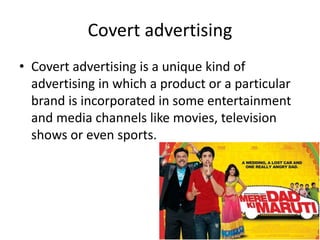
Covert advertising
• Covert advertising is a unique kind of
advertising in which a product or a particular
brand is incorporated in some entertainment
and media channels like movies, television
shows or even sports.
Brand Advertising
• It is advertising with a strong emphasis on the
company brand (logo and/or company name)
also known as integrated marketing
communications (IMC).
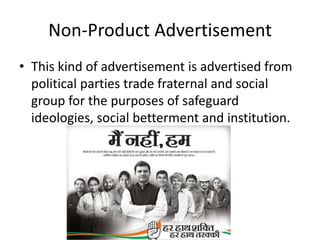
Non-Product Advertisement
• This kind of advertisement is advertised from
political parties trade fraternal and social
group for the purposes of safeguard
ideologies, social betterment and institution.
Service advertisement
Celebrities Advertisement
• Although the audience is getting smarter and
smarter and the modern day consumer
getting immune to the exaggerated claims
made in a majority of advertisements, there
exist a section of advertisers that still bank
upon celebrities and their popularity for
advertising their products.
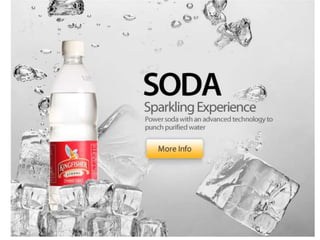
Surrogate Advertising
• Surrogate advertising is prominently seen in cases
where advertising a particular product is banned
by law.
• Advertisement for products like cigarettes or
alcohol which are injurious to heath are
prohibited by law in several countries and hence
these companies have to come up with several
other products that might have the same brand
name and indirectly remind people of the
cigarettes or beer bottles of the same brand.
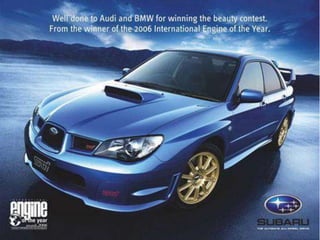
Persuasive advertisement
• A type of product promotion that attempts to
influence a consumer in favor of a purchasing
particular good or service by appealing to
their emotions and general sensibilities.
• A business might engage in informative or
persuasive advertising to encourage first time
customers to try its product, in addition to
reminding customers to purchase a product
they have previously bought.
Competitive advertisement
• Promotional technique in which an advertiser
claims the superiority of its product over
competing product(s) by direct or indirect
comparison.
• If other products are mentioned by their name
(and not as 'brand X,' 'brand Y,' etc.) the owners
of those brands may challenge the fairness of the
comparison in a court.
• Also called comparative advertising or
comparison advertising.
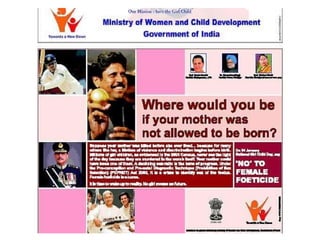
Public Service Advertisement
• The same advertisement techniques use to
promote commercial goods and services can
be used to inform, educate and motivate the
public about non-commercial issues such as
• HIV/AIDS, Political ideology and Energy
consveration
Functions and types of advertisement

Functions and types of advertisement

  • 1.
    FUNCTIONS AND TYPESOF ADVERTISEMENT ASNAD P A IV SEM MBA
  • 2.
    FUNCTIONS OF ADVERTISEMENT •Identifying Brand • Information • Persuasion • Previewing New trends • Demand • Customer Base • Pricing
  • 3.
    TYPES OF ADVERTISEMENTS •Print – Newspaper – Magazine – Directory – Out door – Transit • Media – Television – Radio – Online – Direct mail – Mobile • Territory – Retail – Local – National – International
  • 4.
    Types of advertisements •Purpose – Covert – Brand – Non Product – Service – Celebrities – Surrogate – Persuasive – Competition – Public Service
  • 5.
    NEWSPAPER ADVERTISEMENT • Isa product or services advertising that appears in specific section of newspaper under the heading classifying the product or service being offered.
  • 7.
  • 8.
  • 9.
    Out-Door Advertisement • Bill-boardand message painted on the side of buildings are common forms of out-door advertising, which is often used when quick, simple, ideas are being promoted.
  • 10.
  • 11.
  • 12.
  • 13.
    T.V Commercial • Isa generally considered the most effective mass-marketing advertising format as is reflected by the high prices. • T.V network charge for commercial airtime during popular events.
  • 15.
    Radio Advertisement • Itis a small business advertising. • Radio advertising can be a very effective means to attract customer to some business.
  • 16.
    Online advertising • Onlineadvertising is the newest and fastest growing way to advertise. The Internet now provides everything from links on sites, to banner ads on sites, to small ads on sites, to pay per click advertising.
  • 18.
    Mobile Advertisement Mobile advertisingis a form of advertising via mobile (wireless) phones or other mobile devices. It is a subset of mobile marketing.
  • 19.
  • 20.
  • 21.
    Retail Advertisement • Emphasizesthe specific retail outlet as the place to buy a specific range of brand. • It can be local store advertising in local newspaper.
  • 22.
    Local Advertisement • Anyadvertising placed by a company, organization, or individual operating in a limited geographical area such as a city or within a state. •
  • 23.
    National Advertisement • Geographicallyspeaking national advertising’s range is extended to the territorial limits of the country. • The advertiser use the national media to inform the consumer about the product. • The advertiser use the national local or regional language but prefers the national language. • It can be available in everywhere of country and easily purchased it.
  • 25.
    International Advertising Advertising aproduct or service in a country other than where it originates.
  • 26.
    Covert advertising • Covertadvertising is a unique kind of advertising in which a product or a particular brand is incorporated in some entertainment and media channels like movies, television shows or even sports.
  • 27.
    Brand Advertising • Itis advertising with a strong emphasis on the company brand (logo and/or company name) also known as integrated marketing communications (IMC).
  • 29.
    Non-Product Advertisement • Thiskind of advertisement is advertised from political parties trade fraternal and social group for the purposes of safeguard ideologies, social betterment and institution.
  • 30.
  • 31.
    Celebrities Advertisement • Althoughthe audience is getting smarter and smarter and the modern day consumer getting immune to the exaggerated claims made in a majority of advertisements, there exist a section of advertisers that still bank upon celebrities and their popularity for advertising their products.
  • 33.
    Surrogate Advertising • Surrogateadvertising is prominently seen in cases where advertising a particular product is banned by law. • Advertisement for products like cigarettes or alcohol which are injurious to heath are prohibited by law in several countries and hence these companies have to come up with several other products that might have the same brand name and indirectly remind people of the cigarettes or beer bottles of the same brand.
  • 35.
    Persuasive advertisement • Atype of product promotion that attempts to influence a consumer in favor of a purchasing particular good or service by appealing to their emotions and general sensibilities. • A business might engage in informative or persuasive advertising to encourage first time customers to try its product, in addition to reminding customers to purchase a product they have previously bought.
  • 37.
    Competitive advertisement • Promotionaltechnique in which an advertiser claims the superiority of its product over competing product(s) by direct or indirect comparison. • If other products are mentioned by their name (and not as 'brand X,' 'brand Y,' etc.) the owners of those brands may challenge the fairness of the comparison in a court. • Also called comparative advertising or comparison advertising.
  • 41.
    Public Service Advertisement •The same advertisement techniques use to promote commercial goods and services can be used to inform, educate and motivate the public about non-commercial issues such as • HIV/AIDS, Political ideology and Energy consveration