COMMUNIATION
Prepared by: Dr. Ankita Pathak
10/3/2013 1:41:04 AM 2
Contents
• What is Communication
• Process of Communication
• Types of Communication
• Levels of Communication
• Communication Barriers
• Tools of Effective Communication
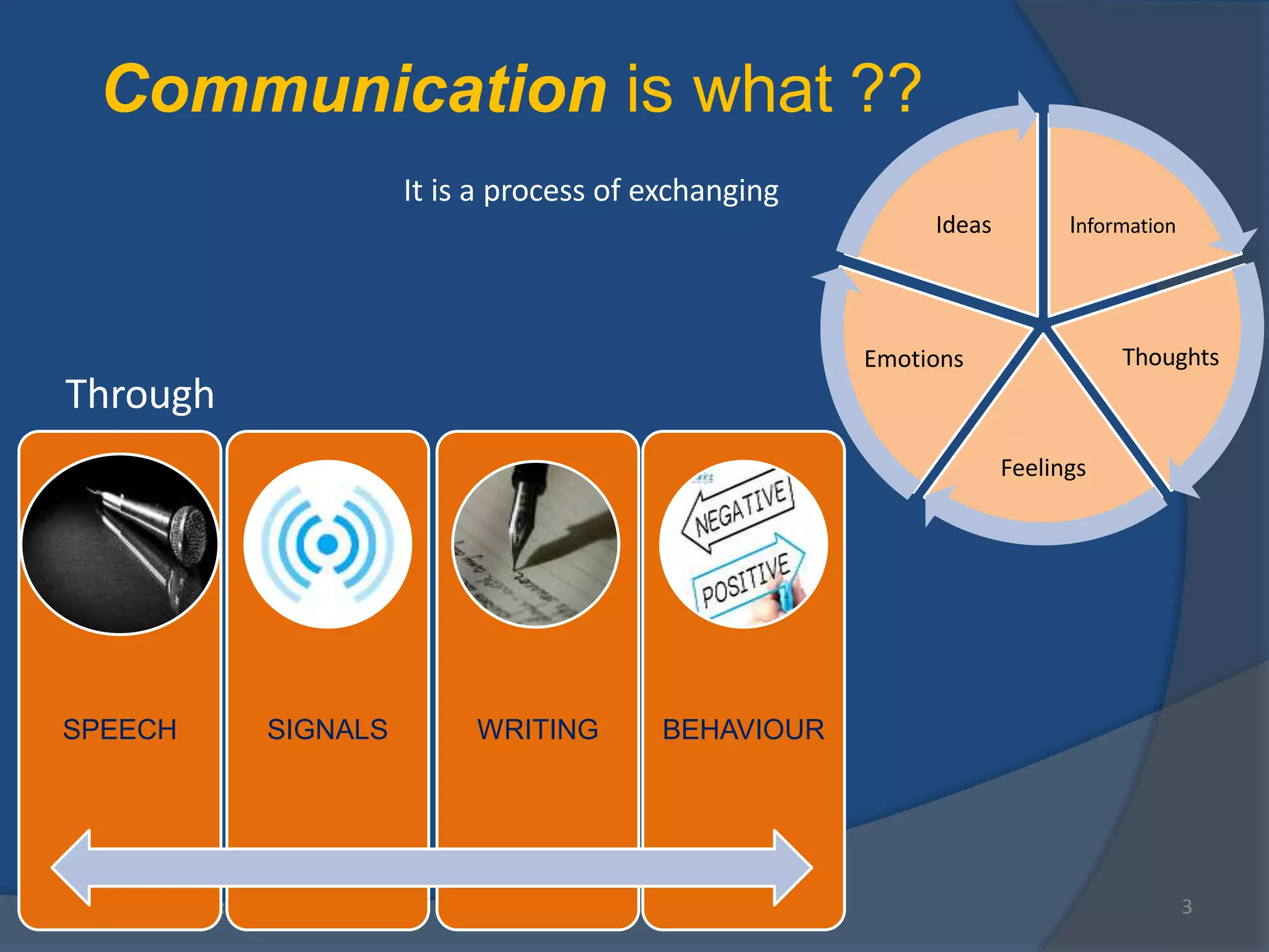
Through
10/3/2013 1:41:04 AM 3
Communication is what ??
Information
Thoughts
Feelings
Emotions
Ideas
It is a process of exchanging
SPEECH SIGNALS WRITING BEHAVIOUR
Sender
Channel
Receiver
Feedback
Channel
Encoding
Decoding
MessageNoise
Barrier
Process of
Communication
10/3/2013 1:41:04 AM 4
Types of Communication
People communicate with each other in a number of ways
that depend upon the message and its context in which it is
being sent.
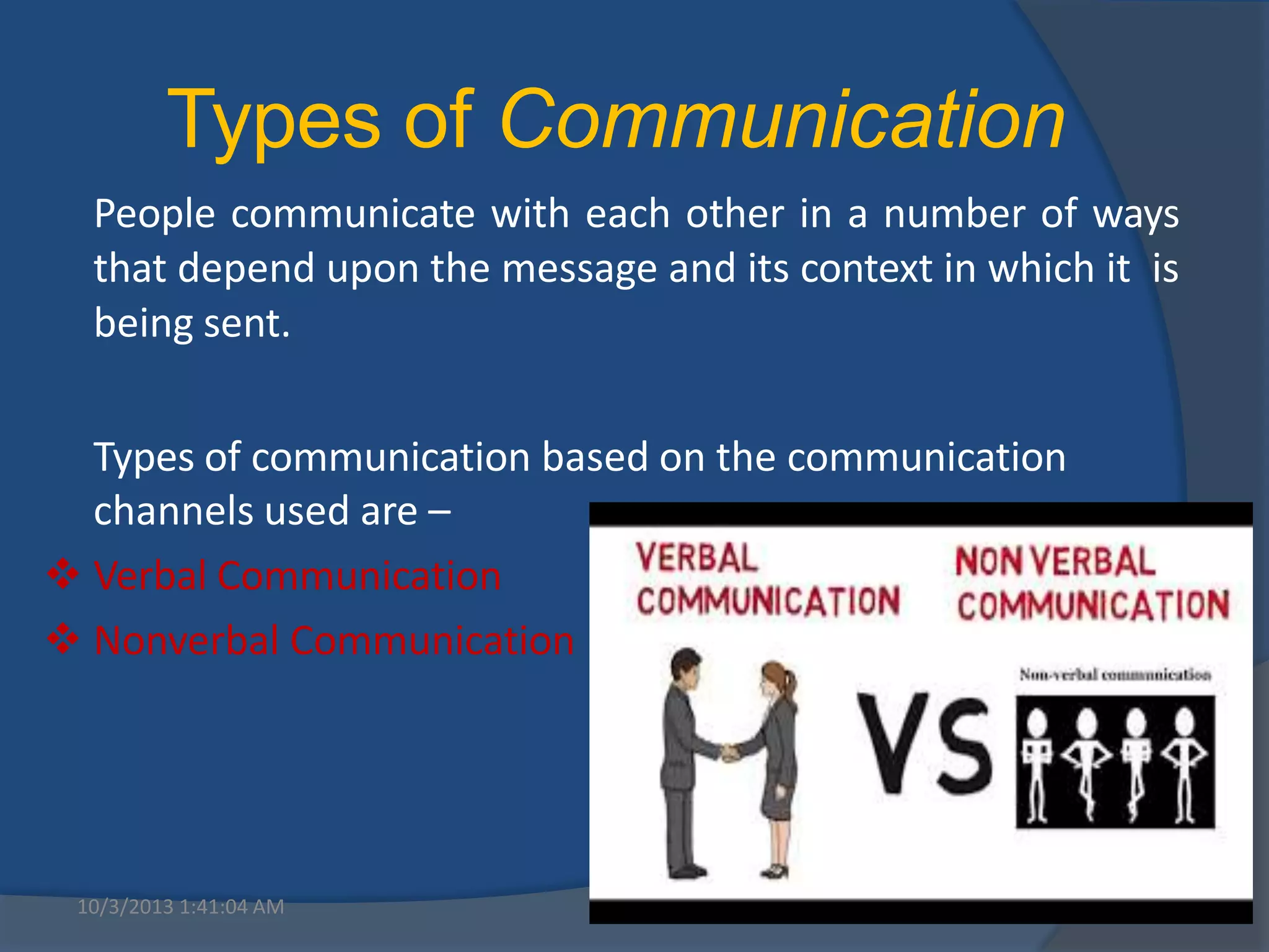
Types of communication based on the communication
channels used are –
 Verbal Communication
 Nonverbal Communication
10/3/2013 1:41:04 AM 5
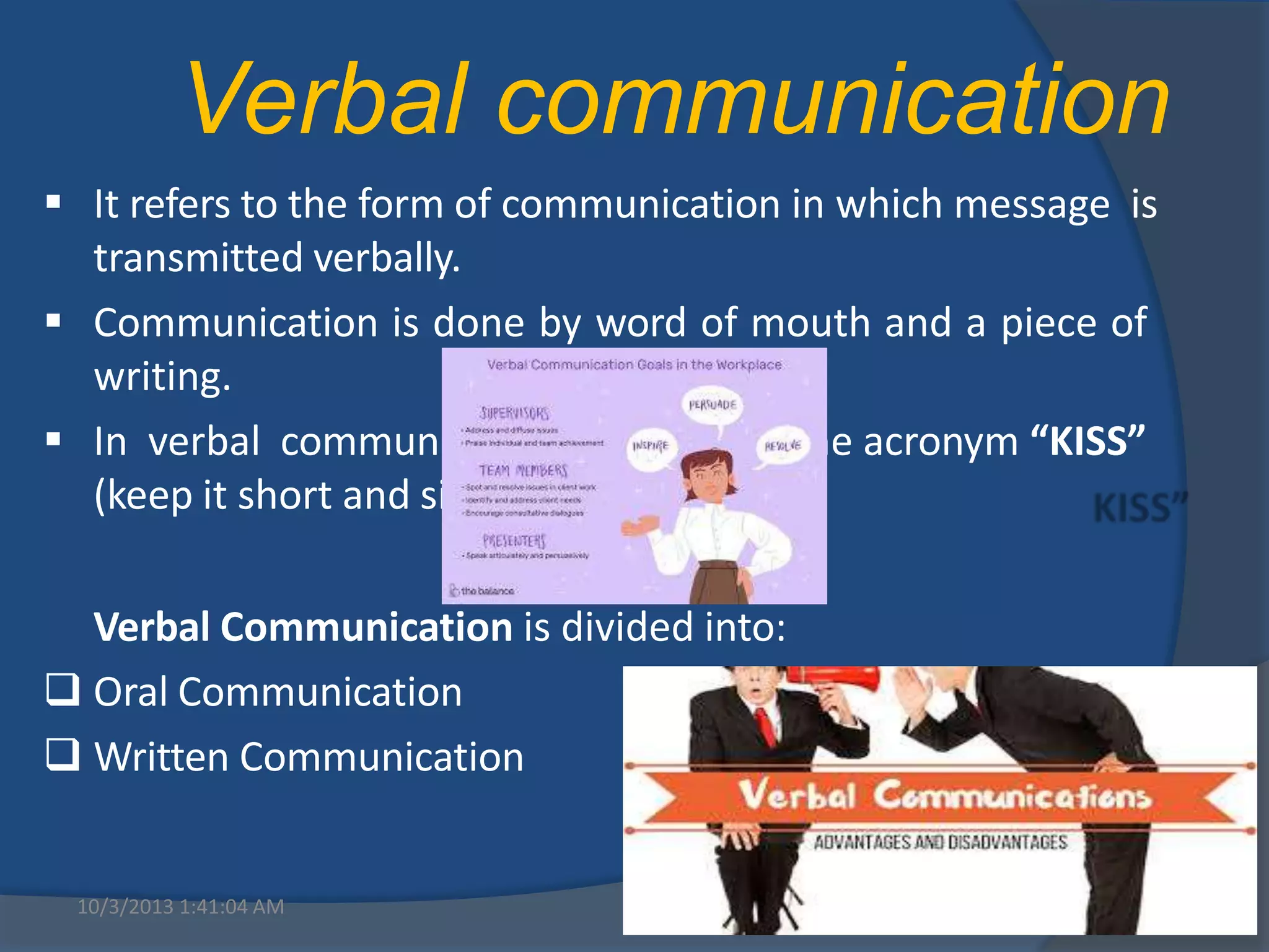
 It refers to the form of communication in which message is
transmitted verbally.
 Communication is done by word of mouth and a piece of
writing.
 In verbal communication remember the acronym “KISS”
(keep it short and simple).
Verbal Communication is divided into:
 Oral Communication
 Written Communication
10/3/2013 1:41:04 AM 6
Verbal communication
 In oral communication, Spoken words are used it includes,
Oral communication
face-to-face conversations,
speech
Telephonic conversation,
video, radio, television, voice over
internet.
Oral communication
 Communication is influence by pitch, volume,
speed and clarity of speaking.
Advantages –
It brings quick feedback.
In a face-to-face conversation, by reading
facial expression and body language one
can guess
whether he/she should trust what’s being
said or not.
Disadvantages –
In face-to-face discussion, user is unable to
deeply think about what he is delivering, so
this can be counted as a fault.
10/3/2013 1:41:04 AM 9
Oral communication
Written communication
 In written communication, written signs or symbols are
used to communicate.
 In written communication message
can be transmitted
 Written Communication is most common
form of communication being used in
Buissness.
Written communication
 Advantages –
 Messages can be edited and revised
 Written communication provide record and backup. A written message enables
receiver to fully understand it and send appropriate feedback.
 Disadvantages –
 Written communication doesn’t bring instant feedback. It take more time in
composing a written message as compared to word-of-mouth and number of
people struggles for writing ability. 8
Nonverbal Communication
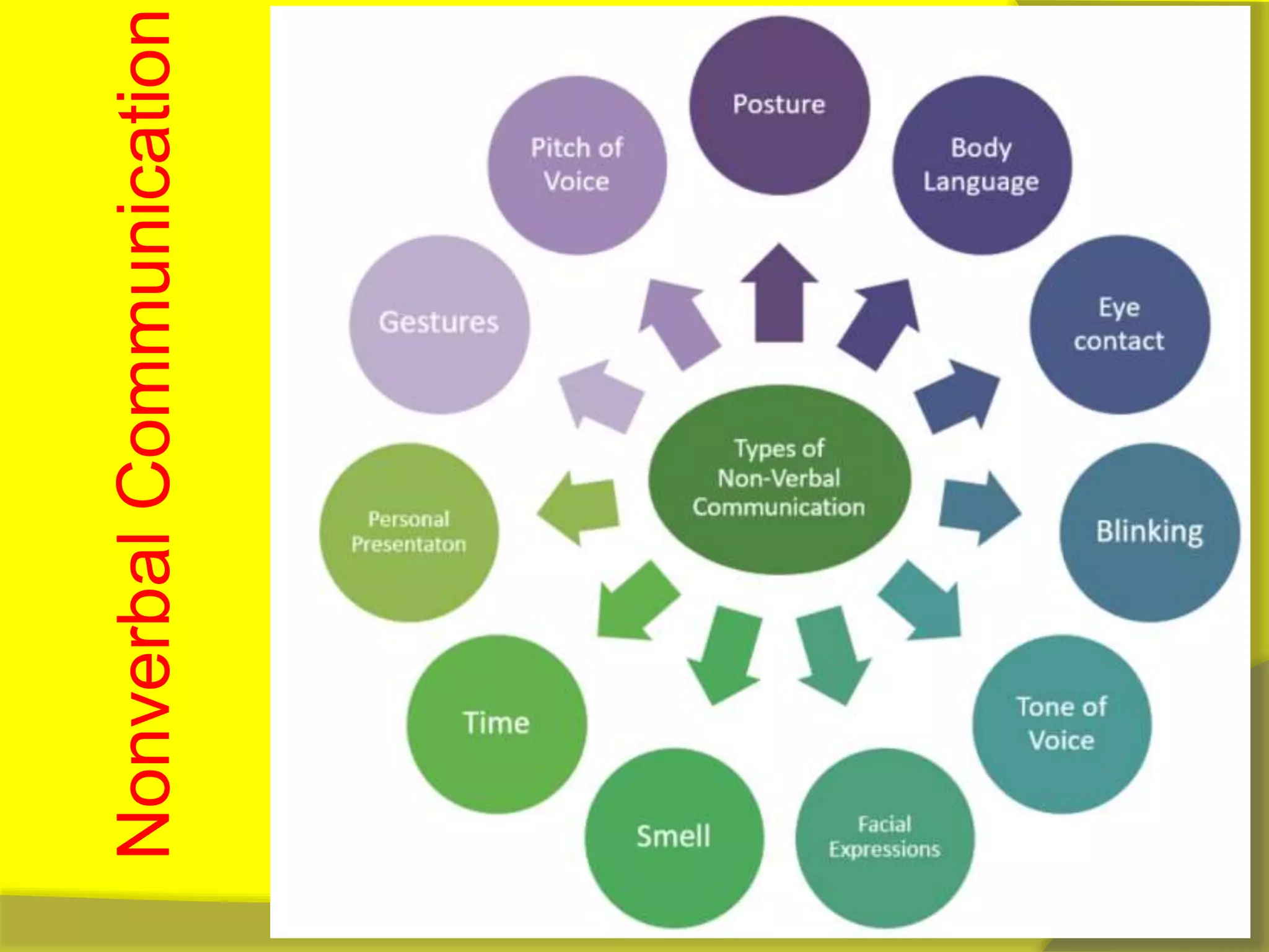
• Nonverbal communication is the sending or receiving of
wordless messages. Such as
• gesture,
• body language,
• posture,
• tone of voice or
• facial expressions,
Nonverbal communication is all about the body
language of speaker.
NonverbalCommunication
 Nonverbal communication have the following three elements –
• Appearance
Speaker –
 clothing, hairstyle, neatness, use of cosmetics
Surrounding – room
 size, lighting, decorations, furnishings
• Body Language
 facial expressions, gestures, postures
• Sounds
 Voice Tone, Volume, Speech rate
Nonverbal Communication
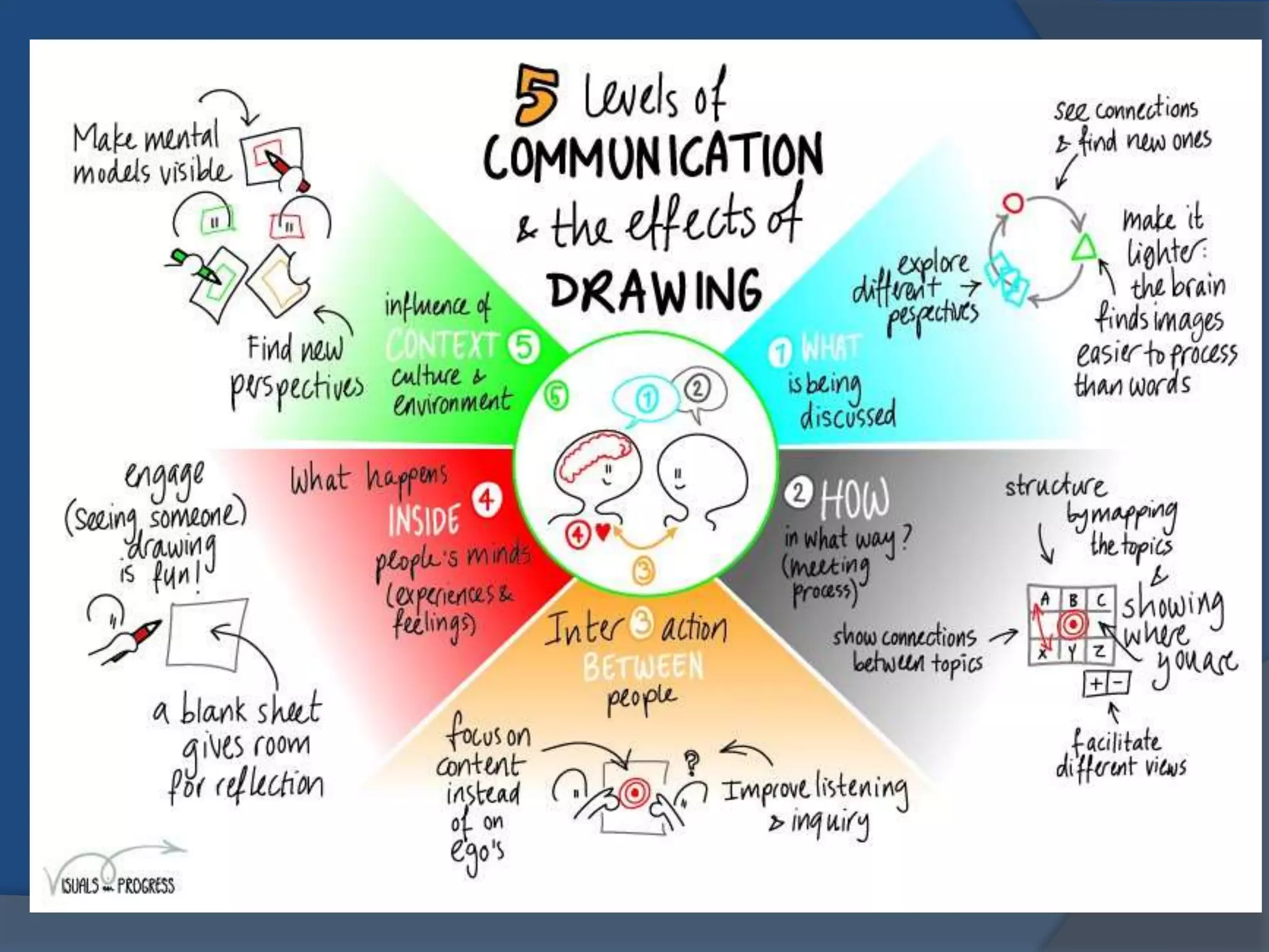
Levels of communication and its
impact
Levels of communication
10/3/2013 1:41:04 AM 18
Intrapersonal Communication
is communication that occurs in your own mind.
It is the basis of yourfeelings, biases, prejudices, and
beliefs.
Examples are when you make any kind of decision – what
to eat or wear. When you think about something –
what you want to do on the weekend or when you
think about another person.
• Interpersonal
communication
is the communication between
two people but can involve
more in informal
conversations.
• Examples are when you are
talking to your friends. A
teacher and student discussing
an assignment. A patient and
a doctor discussing a
treatment. A manager and a
potential employee during an
interview.
• Small Group communication is communication within formal or
informal groups or teams. It is group interaction that results in decision making,
problem solving and discussion within an organization.
– Examples would be a group planning a surprise birthday party for
someone. A team working together on a project.
10/3/2013 1:41:04 AM 20
• One-to-group communication
• involves a speaker who seeks to inform, persuade or motivate
an audience.
– Examples are a teacher and a class of students. A preacher and a
congregation. A speaker and an assembly of people in the auditorium.
• Mass communication is
the electronic or print
transmission of messages to
the general public.
• Outlets called mass media
include things like radio,
television, film, and printed
materials designed to reach
large audiences.
– A television commercial. A
magazine article. Hearing a song on
the radio.
Books, Newspapers, Billboards. The
key is that you are reaching a large
amount of people without it being
face to face. Feedback is generally
delayed with mass communication.
10/3/2013 1:41:04 AM 22
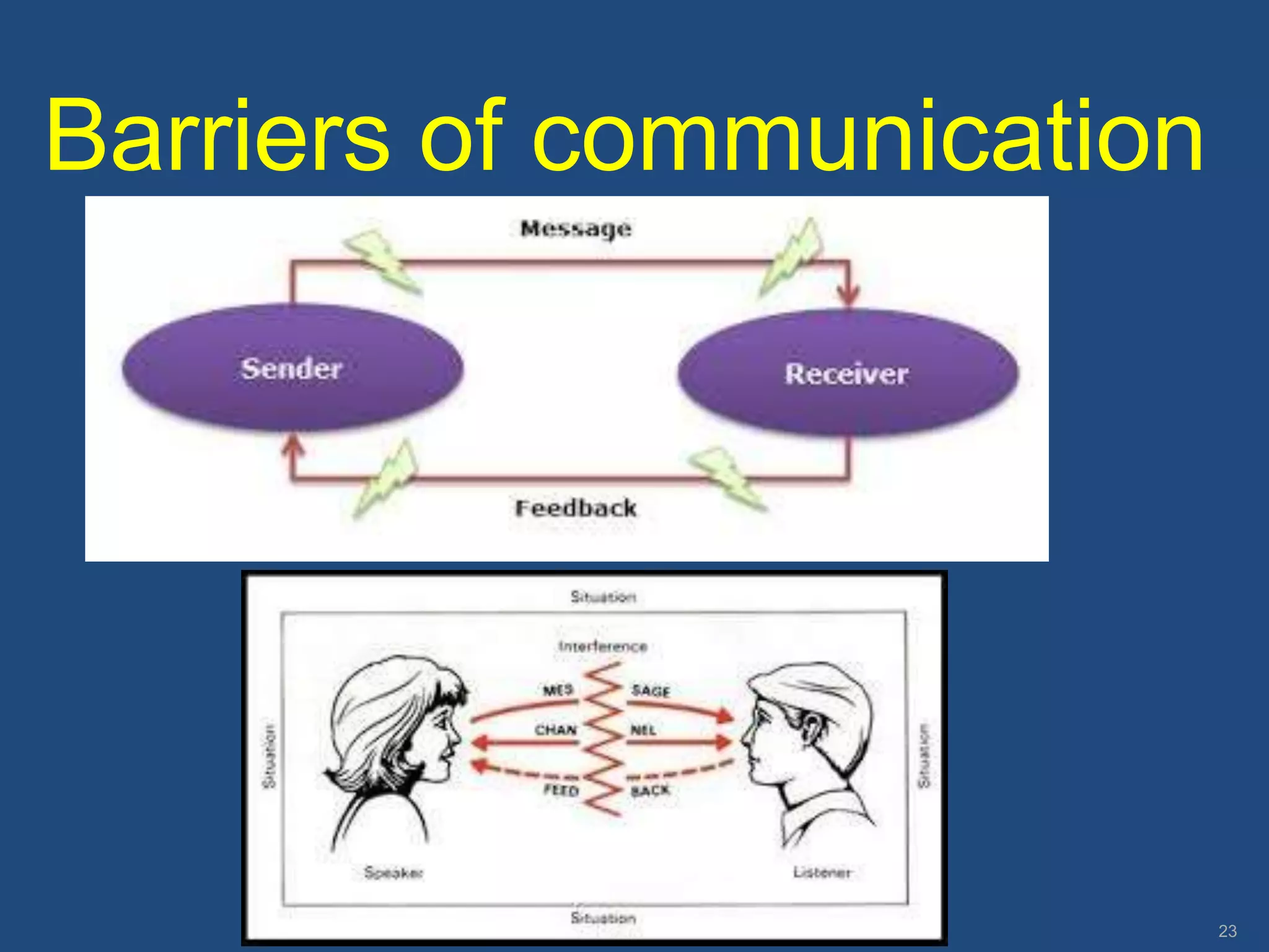
Barriers of communication
2310/3/2013 1:41:04 AM
• .
1. Physical barriers
10/3/2013 1:41:04 AM 24
2. Perceptual barriers
3. Emotional barriers
4. Cultural barriers
10/3/2013 1:41:04 AM 25
5. Language barriers 6. Gender barriers
10/3/2013 1:41:04 AM 26
2710/3/2013 1:41:04 AM
7. Interpersonal barriers
How to Overcome Barriers of
Communication
10/3/2013 1:41:04 AM 28
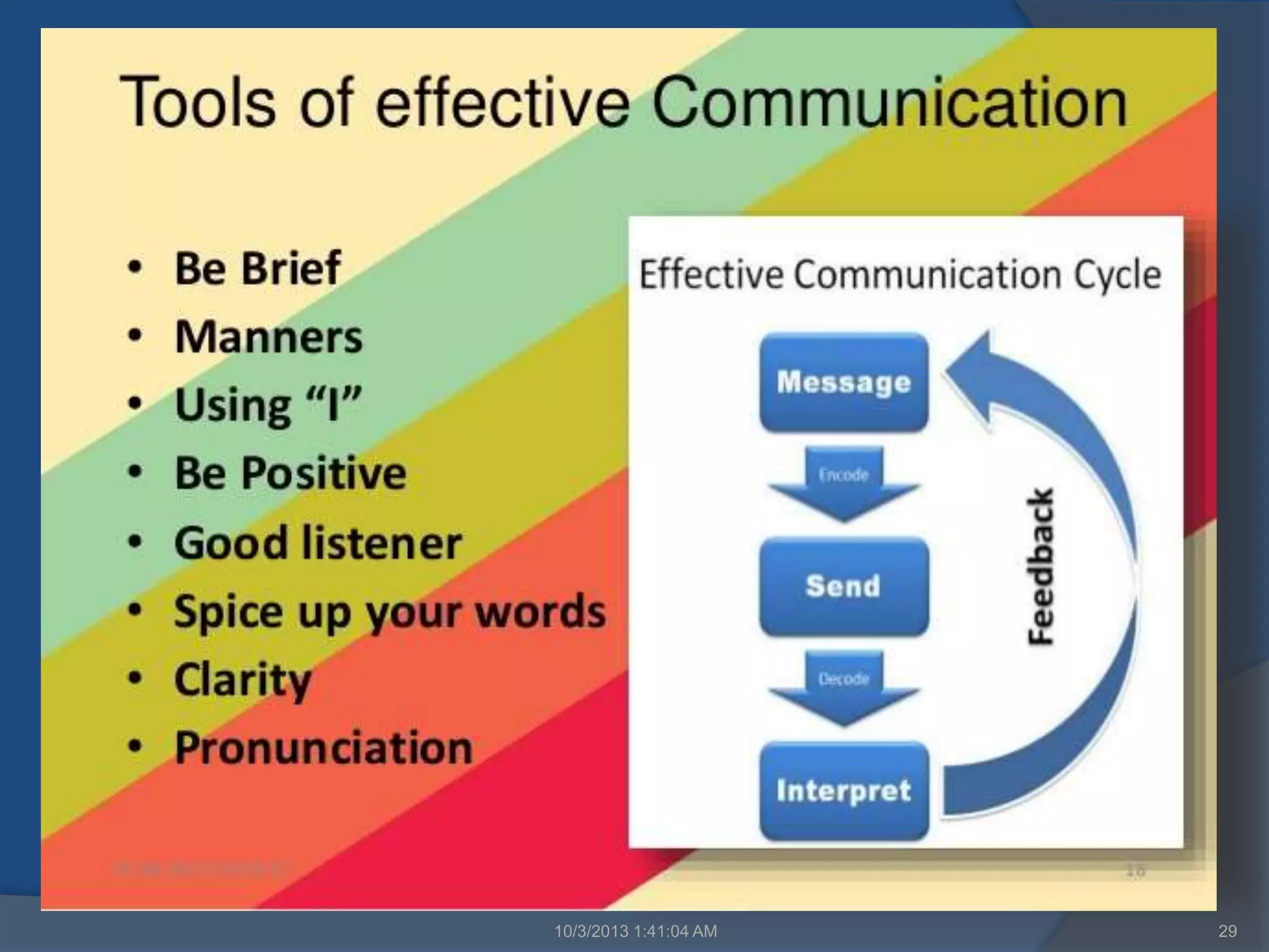
• Taking the receiver more seriously
• Crystal clear message
• Delivering messages skilfully
• Focusing on the receiver
• Using multiple channels to communicate instead of
relying on one channel
• Ensuring appropriate feedback
• Be aware of your own state of mind/emotions/attitude
10/3/2013 1:41:04 AM 29

Communication

  • 1.
  • 2.
    10/3/2013 1:41:04 AM2 Contents • What is Communication • Process of Communication • Types of Communication • Levels of Communication • Communication Barriers • Tools of Effective Communication
  • 3.
    Through 10/3/2013 1:41:04 AM3 Communication is what ?? Information Thoughts Feelings Emotions Ideas It is a process of exchanging SPEECH SIGNALS WRITING BEHAVIOUR
  • 4.
  • 5.
    Types of Communication Peoplecommunicate with each other in a number of ways that depend upon the message and its context in which it is being sent. Types of communication based on the communication channels used are –  Verbal Communication  Nonverbal Communication 10/3/2013 1:41:04 AM 5
  • 6.
     It refersto the form of communication in which message is transmitted verbally.  Communication is done by word of mouth and a piece of writing.  In verbal communication remember the acronym “KISS” (keep it short and simple). Verbal Communication is divided into:  Oral Communication  Written Communication 10/3/2013 1:41:04 AM 6 Verbal communication
  • 7.
     In oralcommunication, Spoken words are used it includes, Oral communication face-to-face conversations, speech Telephonic conversation, video, radio, television, voice over internet.
  • 8.
    Oral communication  Communicationis influence by pitch, volume, speed and clarity of speaking.
  • 9.
    Advantages – It bringsquick feedback. In a face-to-face conversation, by reading facial expression and body language one can guess whether he/she should trust what’s being said or not. Disadvantages – In face-to-face discussion, user is unable to deeply think about what he is delivering, so this can be counted as a fault. 10/3/2013 1:41:04 AM 9 Oral communication
  • 10.
    Written communication  Inwritten communication, written signs or symbols are used to communicate.  In written communication message can be transmitted  Written Communication is most common form of communication being used in Buissness.
  • 11.
    Written communication  Advantages–  Messages can be edited and revised  Written communication provide record and backup. A written message enables receiver to fully understand it and send appropriate feedback.  Disadvantages –  Written communication doesn’t bring instant feedback. It take more time in composing a written message as compared to word-of-mouth and number of people struggles for writing ability. 8
  • 12.
    Nonverbal Communication • Nonverbalcommunication is the sending or receiving of wordless messages. Such as • gesture, • body language, • posture, • tone of voice or • facial expressions, Nonverbal communication is all about the body language of speaker.
  • 13.
  • 14.
     Nonverbal communicationhave the following three elements – • Appearance Speaker –  clothing, hairstyle, neatness, use of cosmetics Surrounding – room  size, lighting, decorations, furnishings • Body Language  facial expressions, gestures, postures • Sounds  Voice Tone, Volume, Speech rate Nonverbal Communication
  • 15.
  • 18.
    Levels of communication 10/3/20131:41:04 AM 18 Intrapersonal Communication is communication that occurs in your own mind. It is the basis of yourfeelings, biases, prejudices, and beliefs. Examples are when you make any kind of decision – what to eat or wear. When you think about something – what you want to do on the weekend or when you think about another person.
  • 19.
    • Interpersonal communication is thecommunication between two people but can involve more in informal conversations. • Examples are when you are talking to your friends. A teacher and student discussing an assignment. A patient and a doctor discussing a treatment. A manager and a potential employee during an interview.
  • 20.
    • Small Groupcommunication is communication within formal or informal groups or teams. It is group interaction that results in decision making, problem solving and discussion within an organization. – Examples would be a group planning a surprise birthday party for someone. A team working together on a project. 10/3/2013 1:41:04 AM 20
  • 21.
    • One-to-group communication •involves a speaker who seeks to inform, persuade or motivate an audience. – Examples are a teacher and a class of students. A preacher and a congregation. A speaker and an assembly of people in the auditorium.
  • 22.
    • Mass communicationis the electronic or print transmission of messages to the general public. • Outlets called mass media include things like radio, television, film, and printed materials designed to reach large audiences. – A television commercial. A magazine article. Hearing a song on the radio. Books, Newspapers, Billboards. The key is that you are reaching a large amount of people without it being face to face. Feedback is generally delayed with mass communication. 10/3/2013 1:41:04 AM 22
  • 23.
  • 24.
    • . 1. Physicalbarriers 10/3/2013 1:41:04 AM 24 2. Perceptual barriers
  • 25.
    3. Emotional barriers 4.Cultural barriers 10/3/2013 1:41:04 AM 25
  • 26.
    5. Language barriers6. Gender barriers 10/3/2013 1:41:04 AM 26
  • 27.
    2710/3/2013 1:41:04 AM 7.Interpersonal barriers
  • 28.
    How to OvercomeBarriers of Communication 10/3/2013 1:41:04 AM 28 • Taking the receiver more seriously • Crystal clear message • Delivering messages skilfully • Focusing on the receiver • Using multiple channels to communicate instead of relying on one channel • Ensuring appropriate feedback • Be aware of your own state of mind/emotions/attitude
  • 29.