Communicating with voters


Dana Chisnell
@danachis
@ChadButterfly
Meet Frank
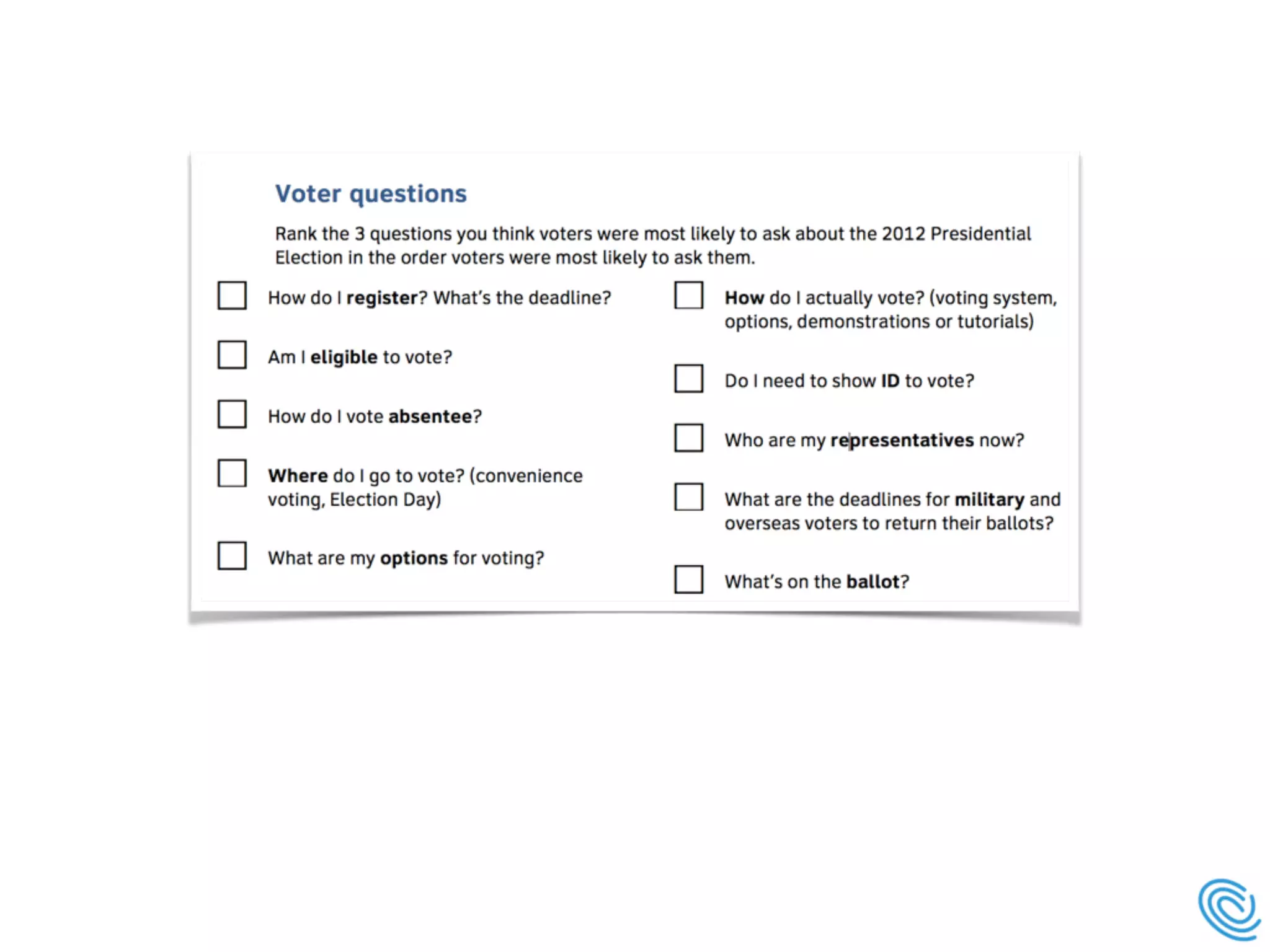
What questions do voters
have about elections?
How do they find answers?
American elections
are all local
The research
The research
Cataloged 147 election websites
The research
Cataloged 147 election websites
Conducted 41 remote moderated
usability tests
Cataloging
94% of the population lives in a county that has an
elections website 

Of 3,057 counties or equivalent, 966 didn’t have
websites (31.5%)

“election department” varied by region
Factoids
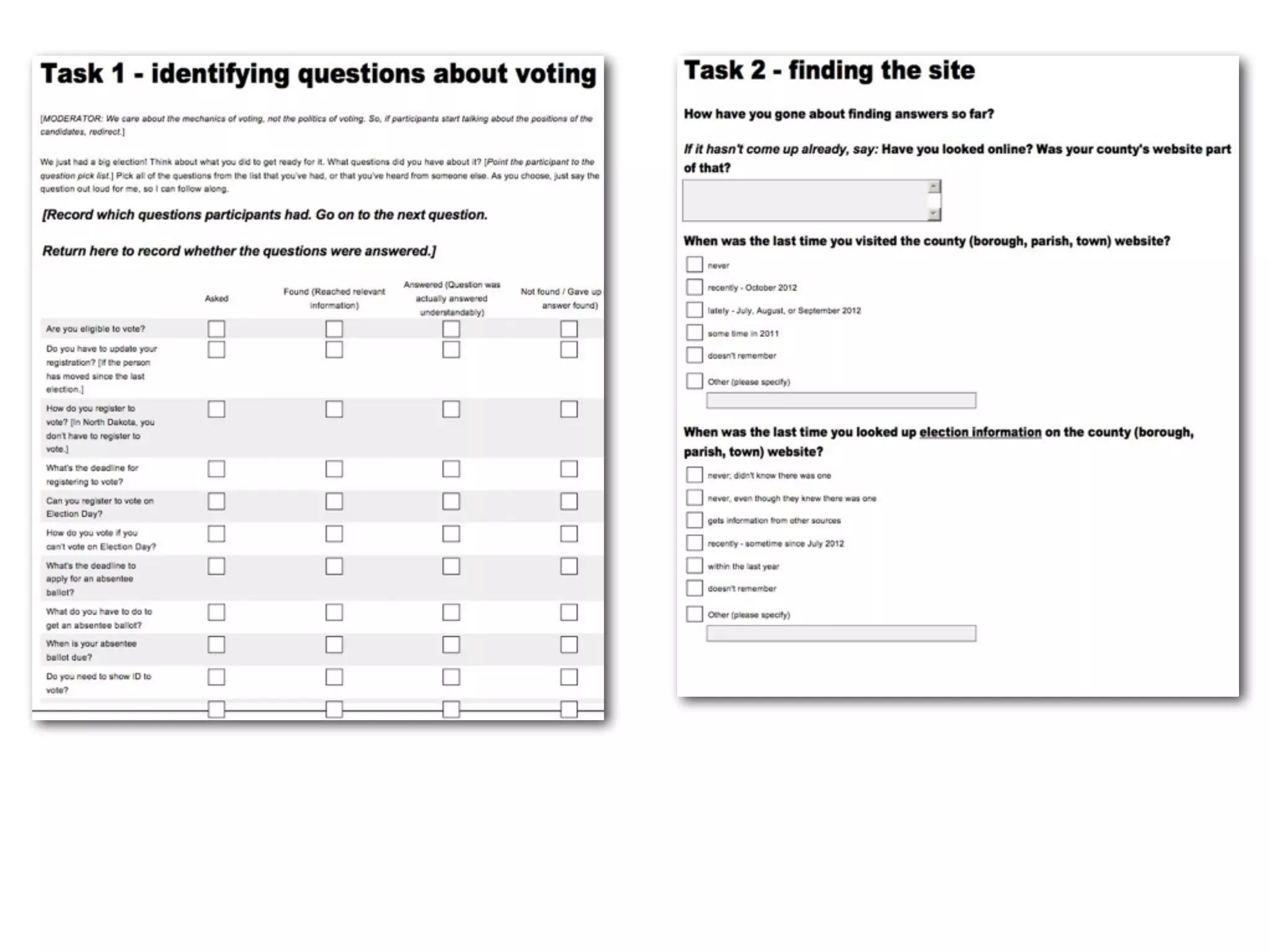
Remote moderated
usability testing
What questions do you have
about the election?
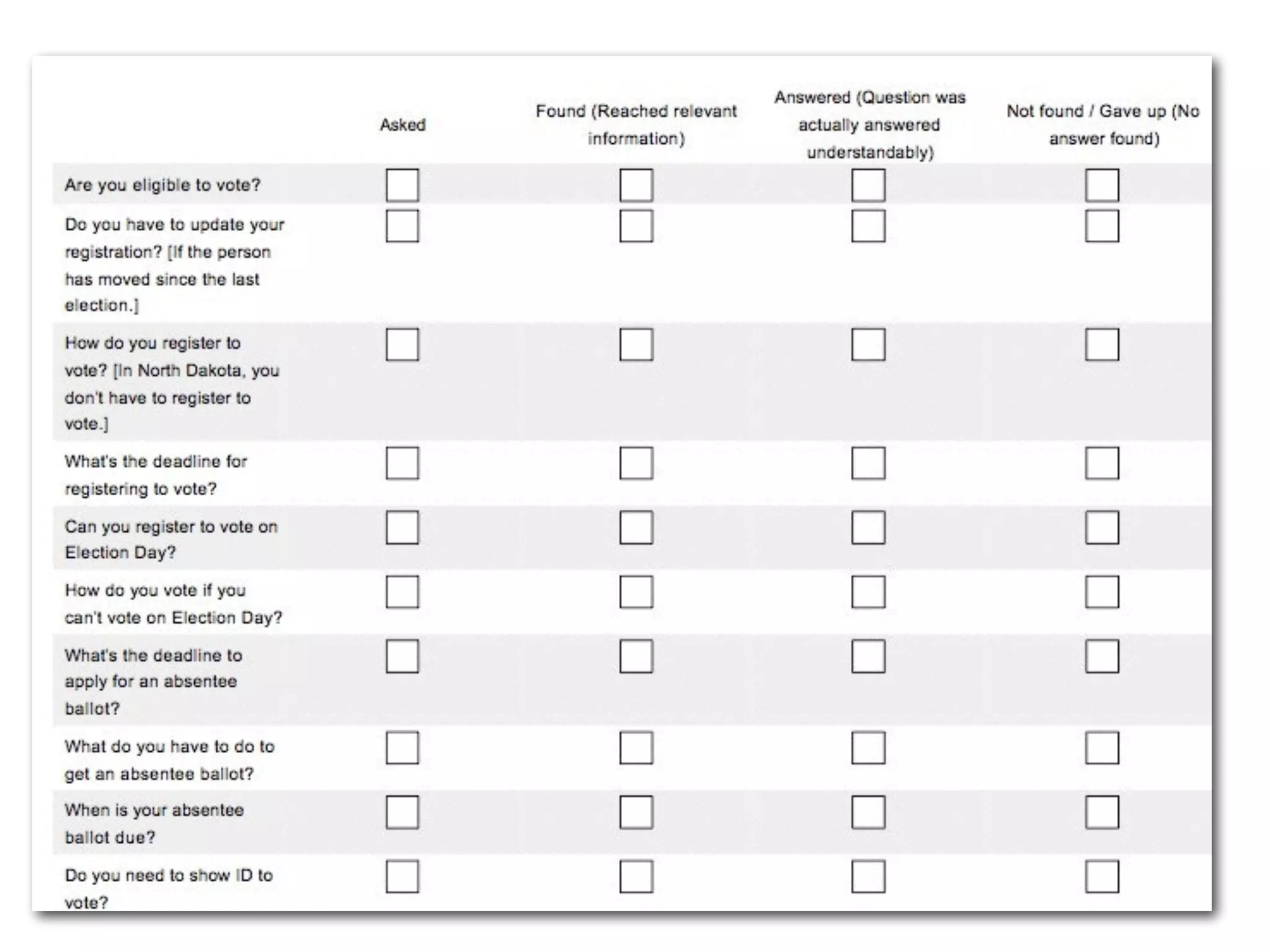
What questions did you have
about the election?
What happened?
What happened?
Where did people look for
answers?
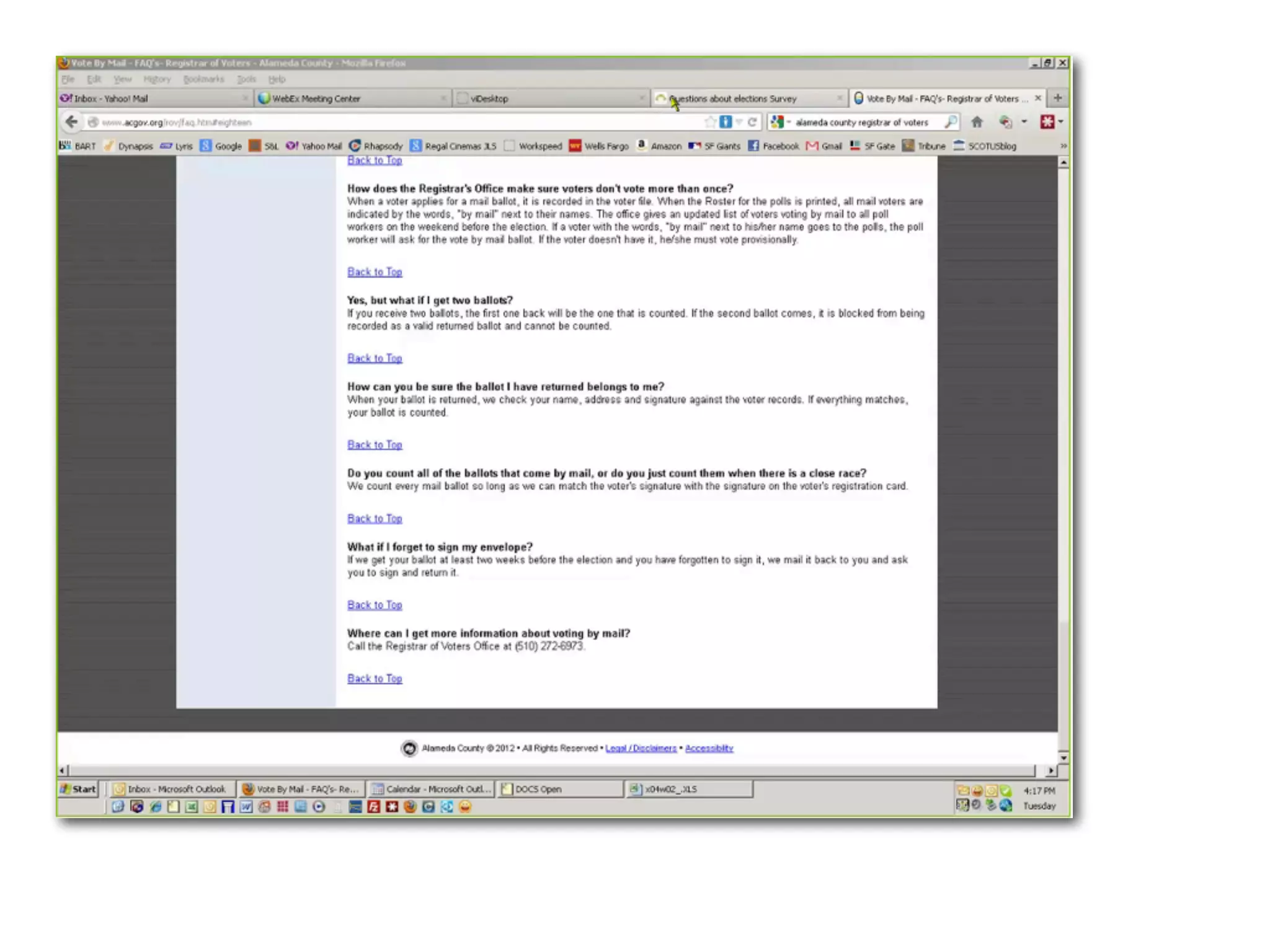
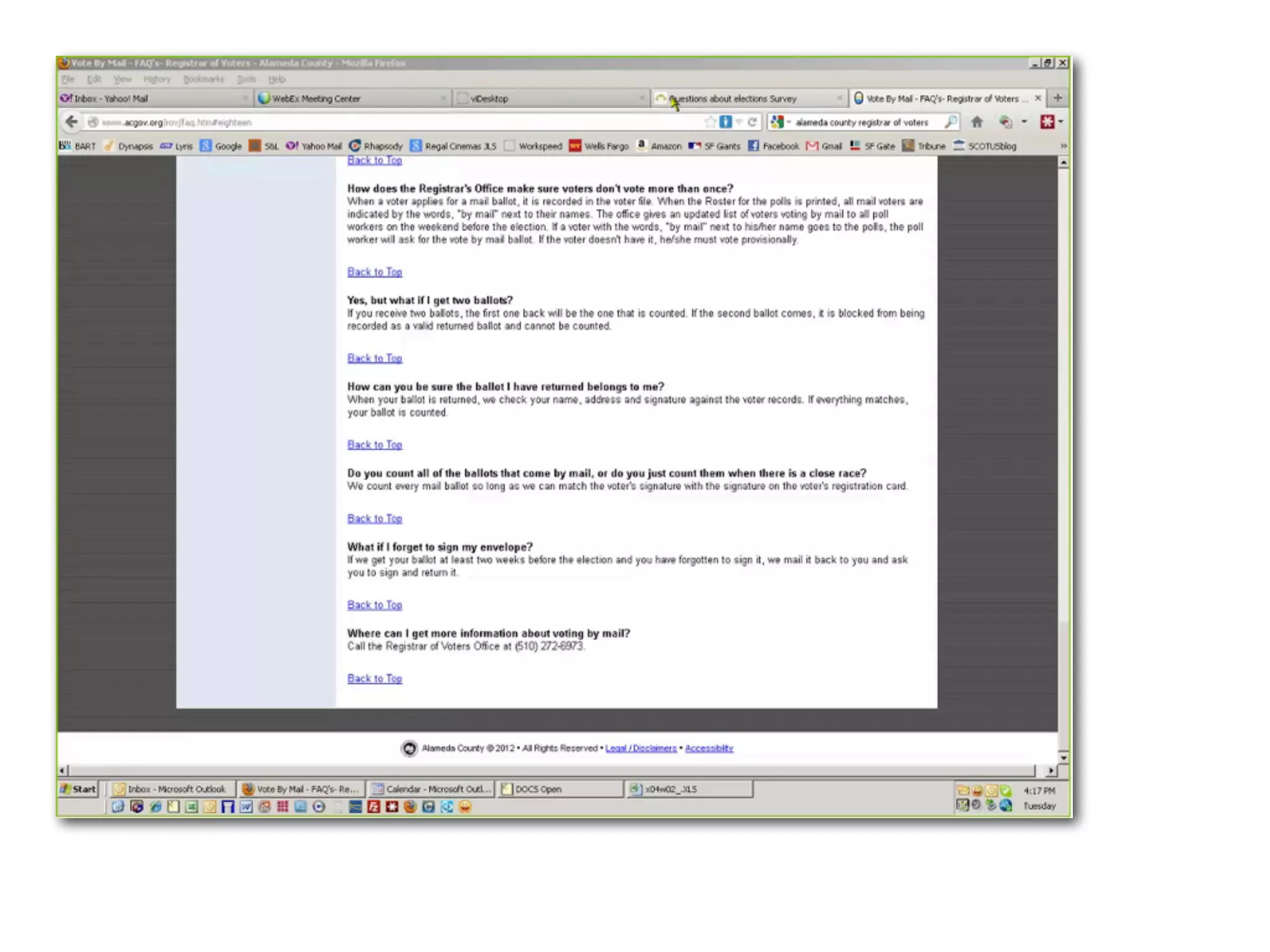
33 of 41 participants looked online for
answers

23 went to county websites

Voting is personal
They’re focused on why.
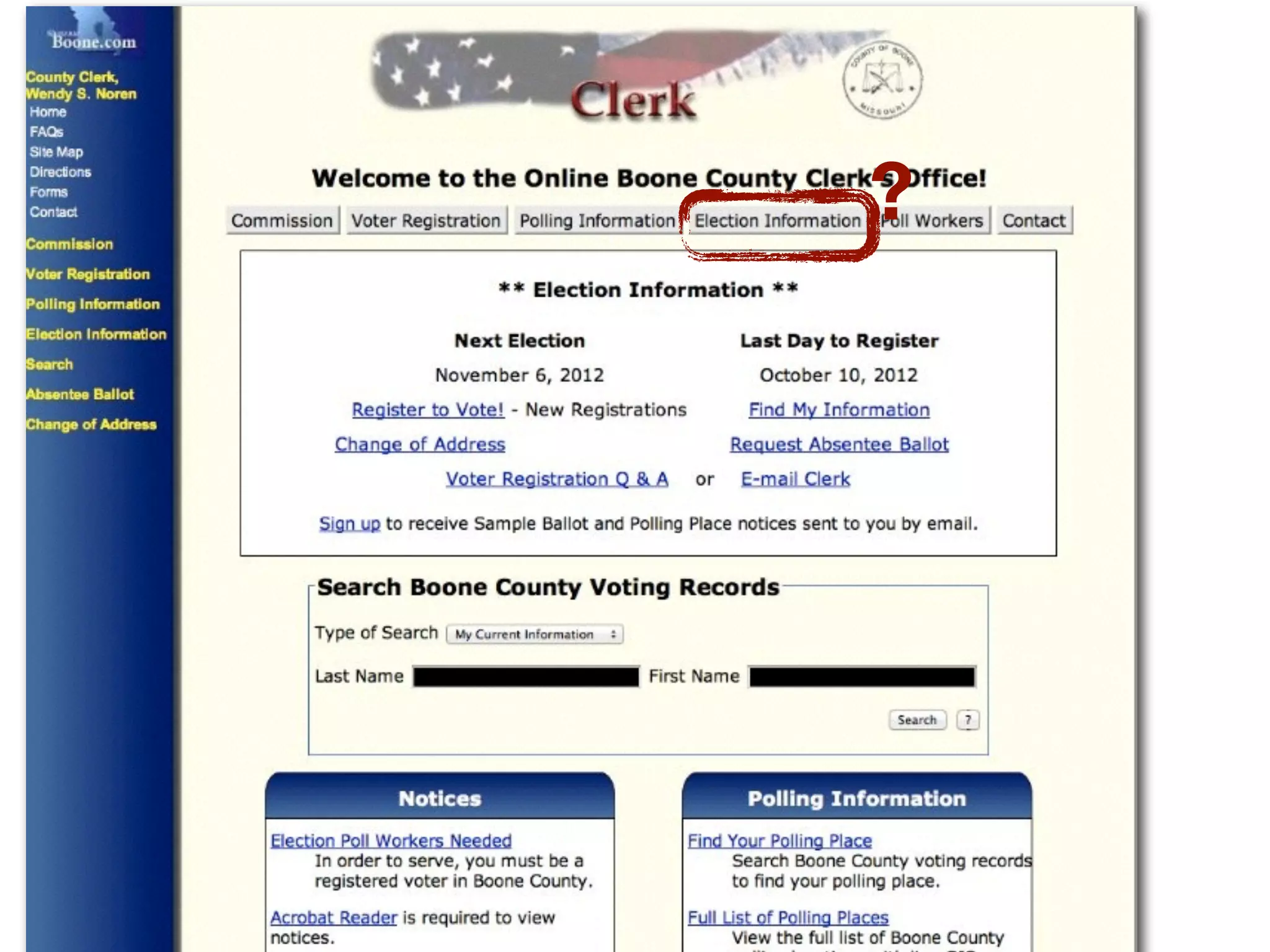
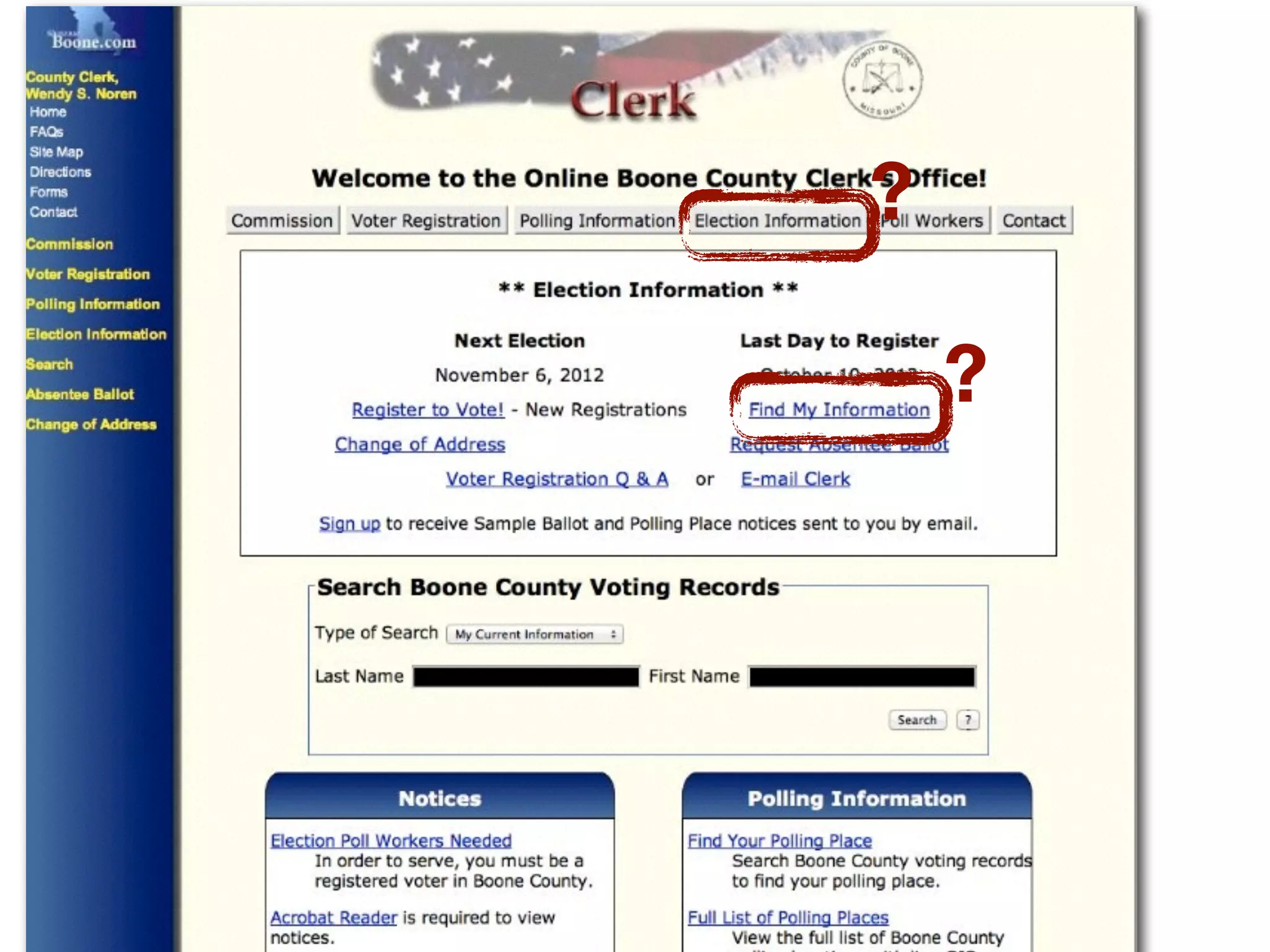
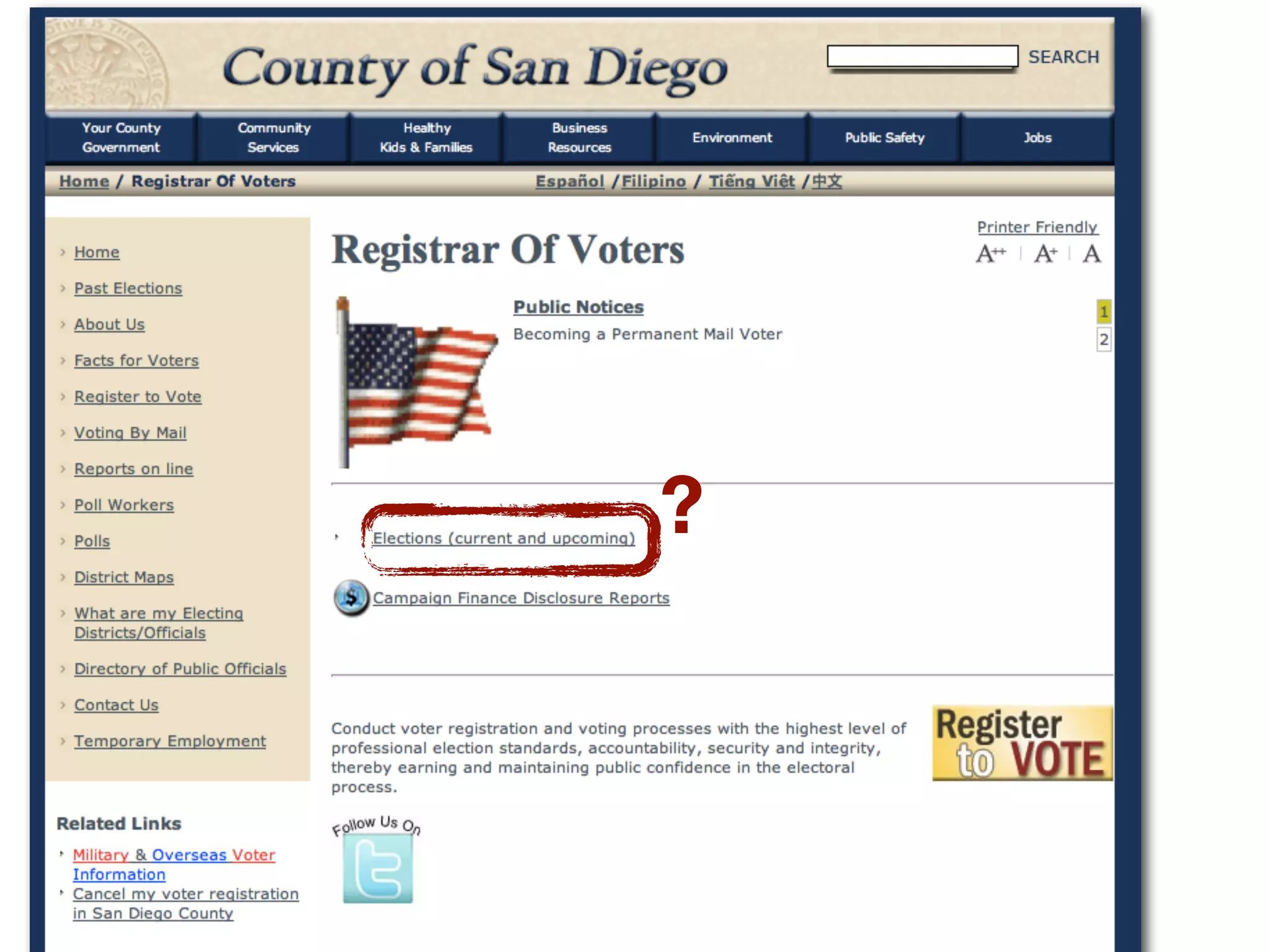
What’s on the ballot?
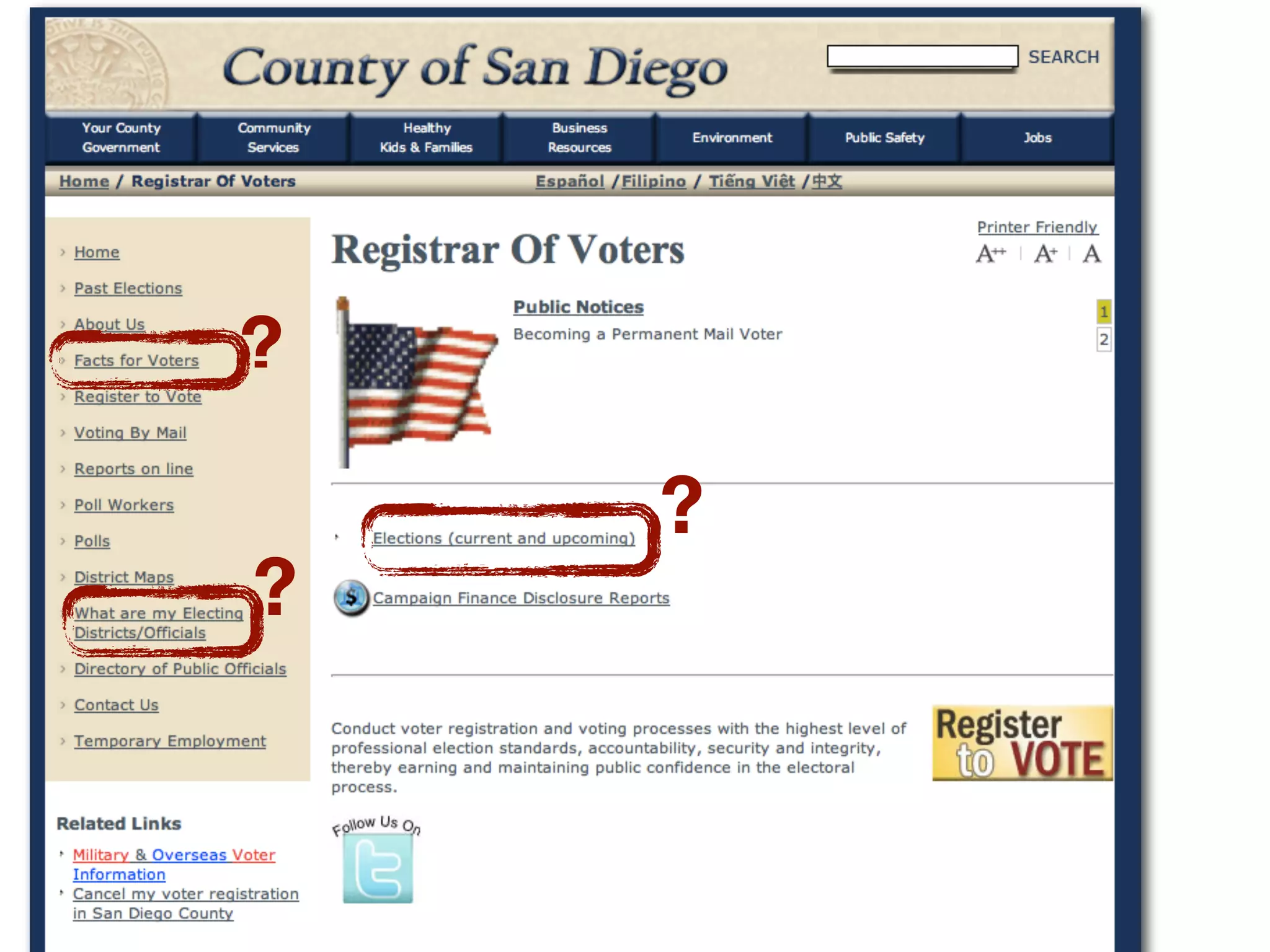
?
?
?
?
?
?
?
?
?
?
?
?
?
!
?
Each step is an opportunity
for dropping out
Jargon
Each step is an opportunity
for dropping out
Jargon
Lack of specificity
Each step is an opportunity
for dropping out
Jargon
Lack of specificity
Voter ID
Each step is an opportunity
for dropping out
Jargon
Lack of specificity
Voter ID
Finding the polling place
Each step is an opportunity
for dropping out
People make rational
decisions about
whether to vote
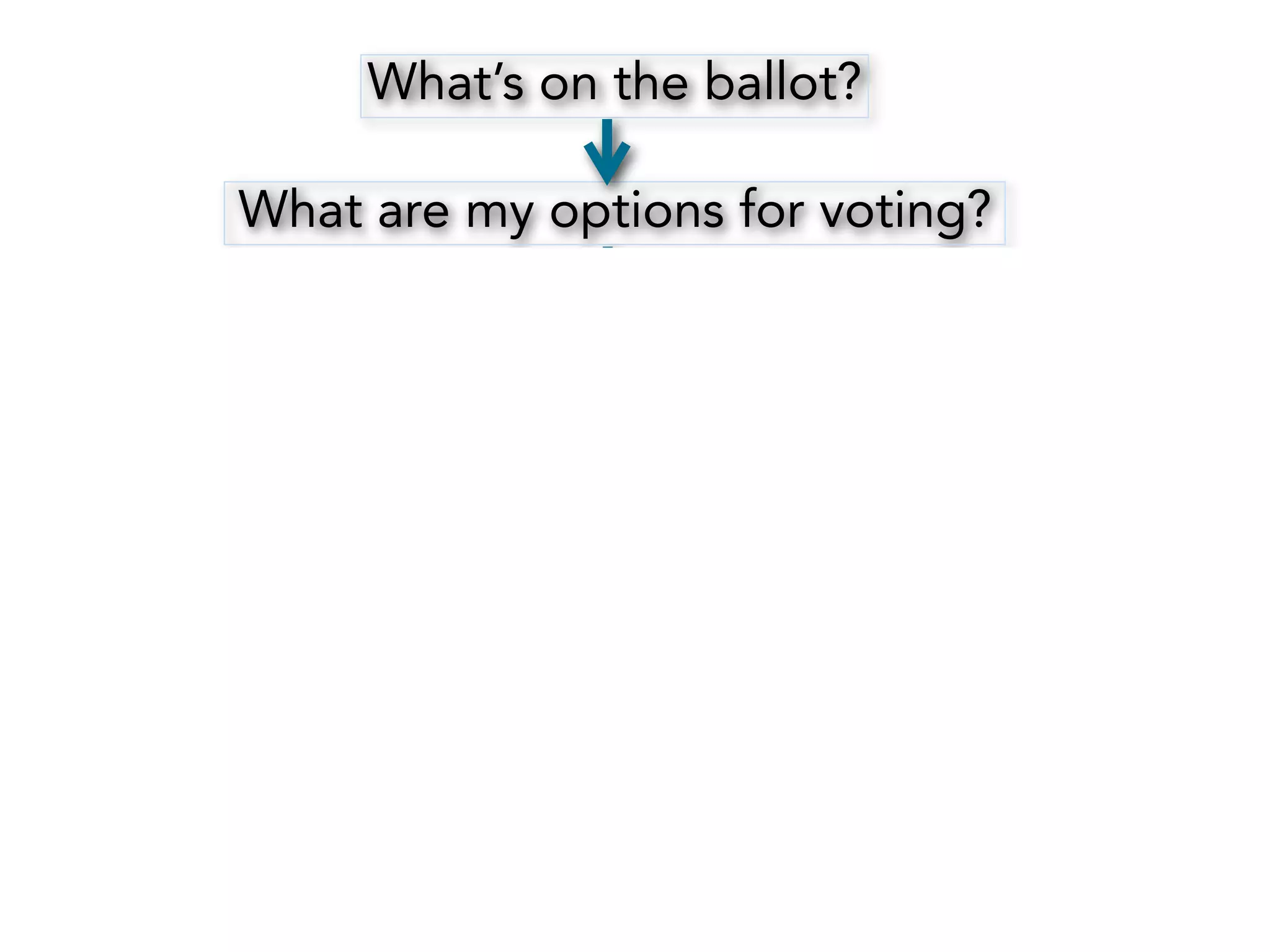
What’s on the ballot?
What are my options for voting?
absentee early voting Election Day
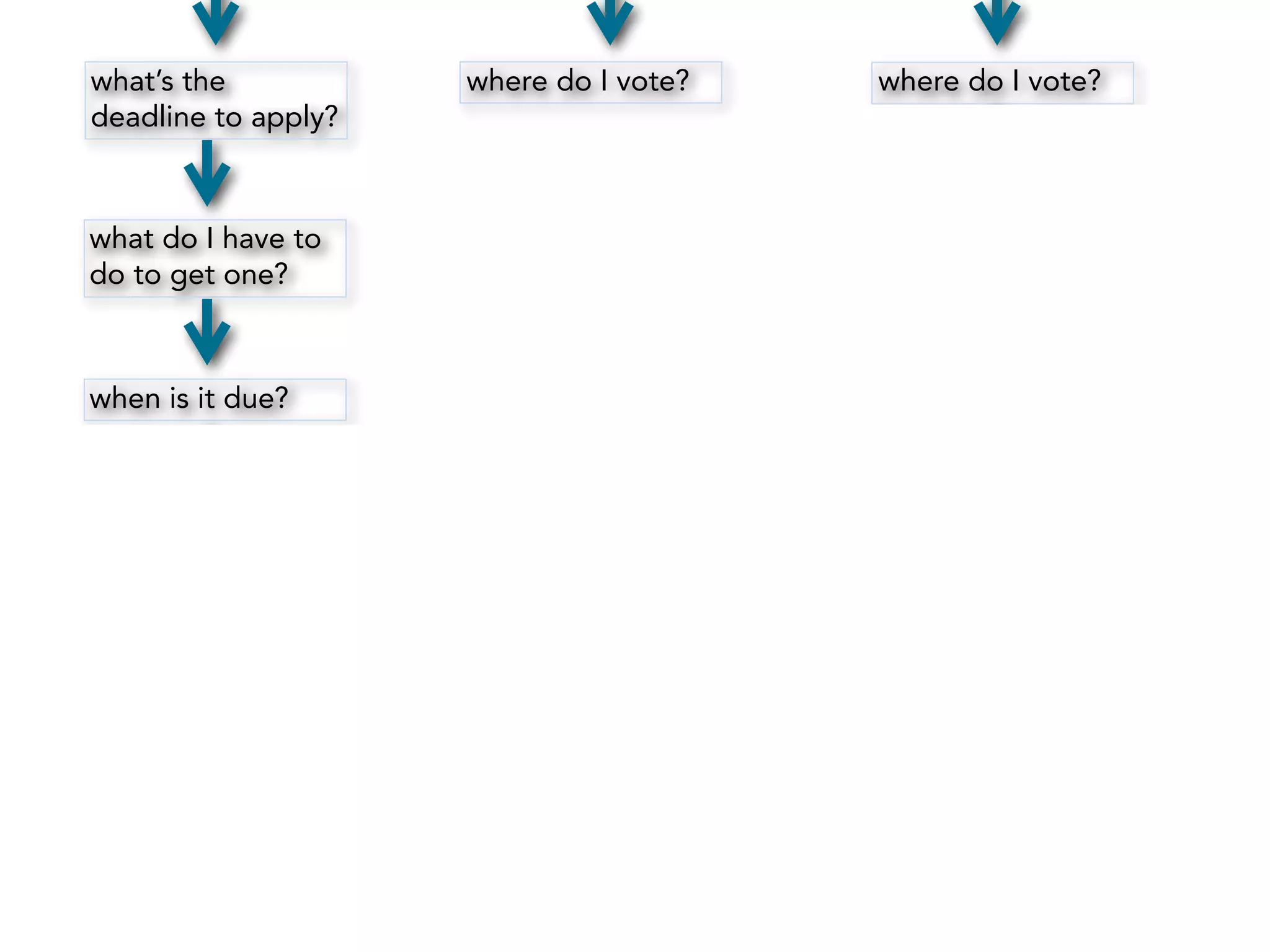
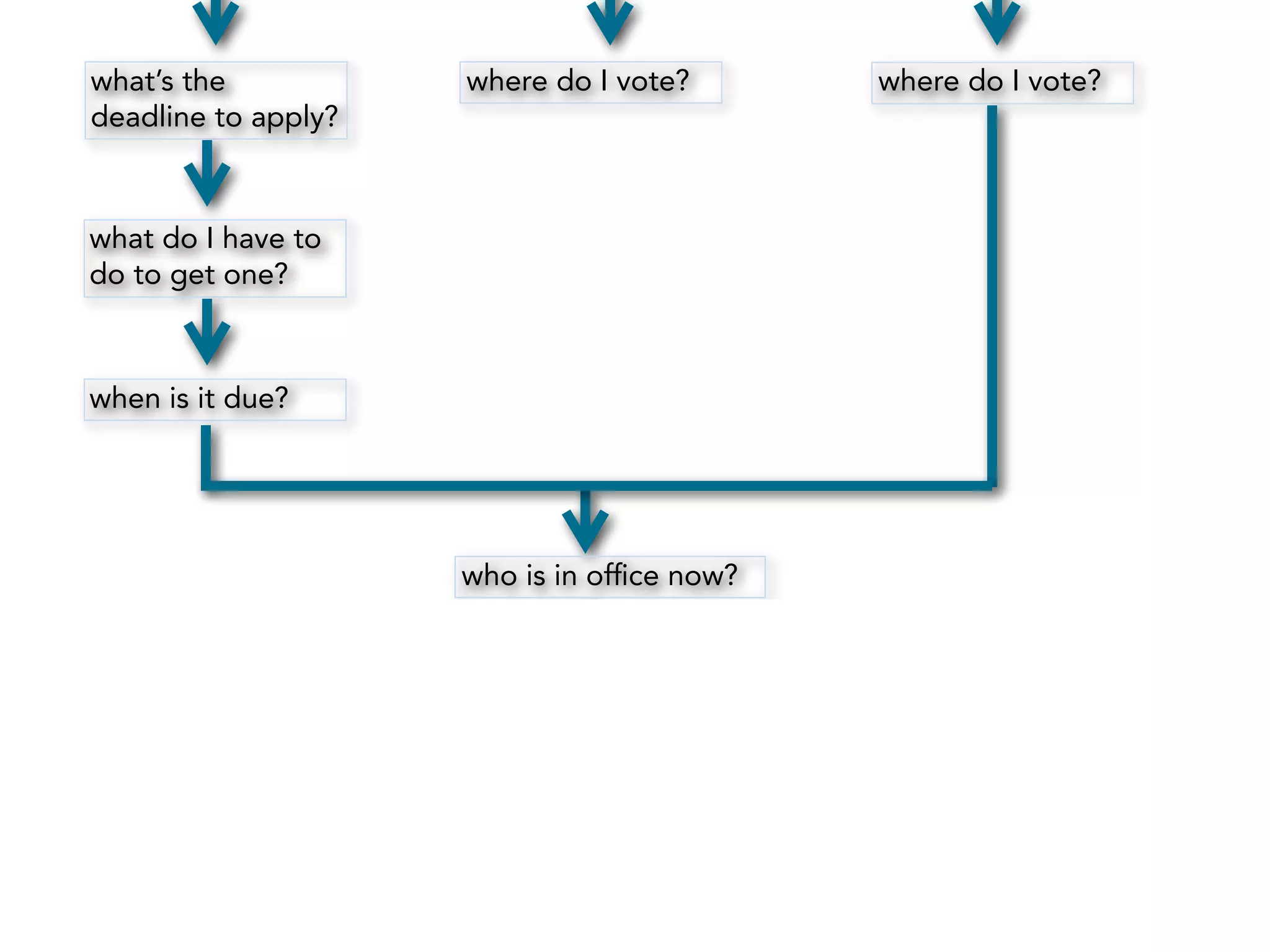
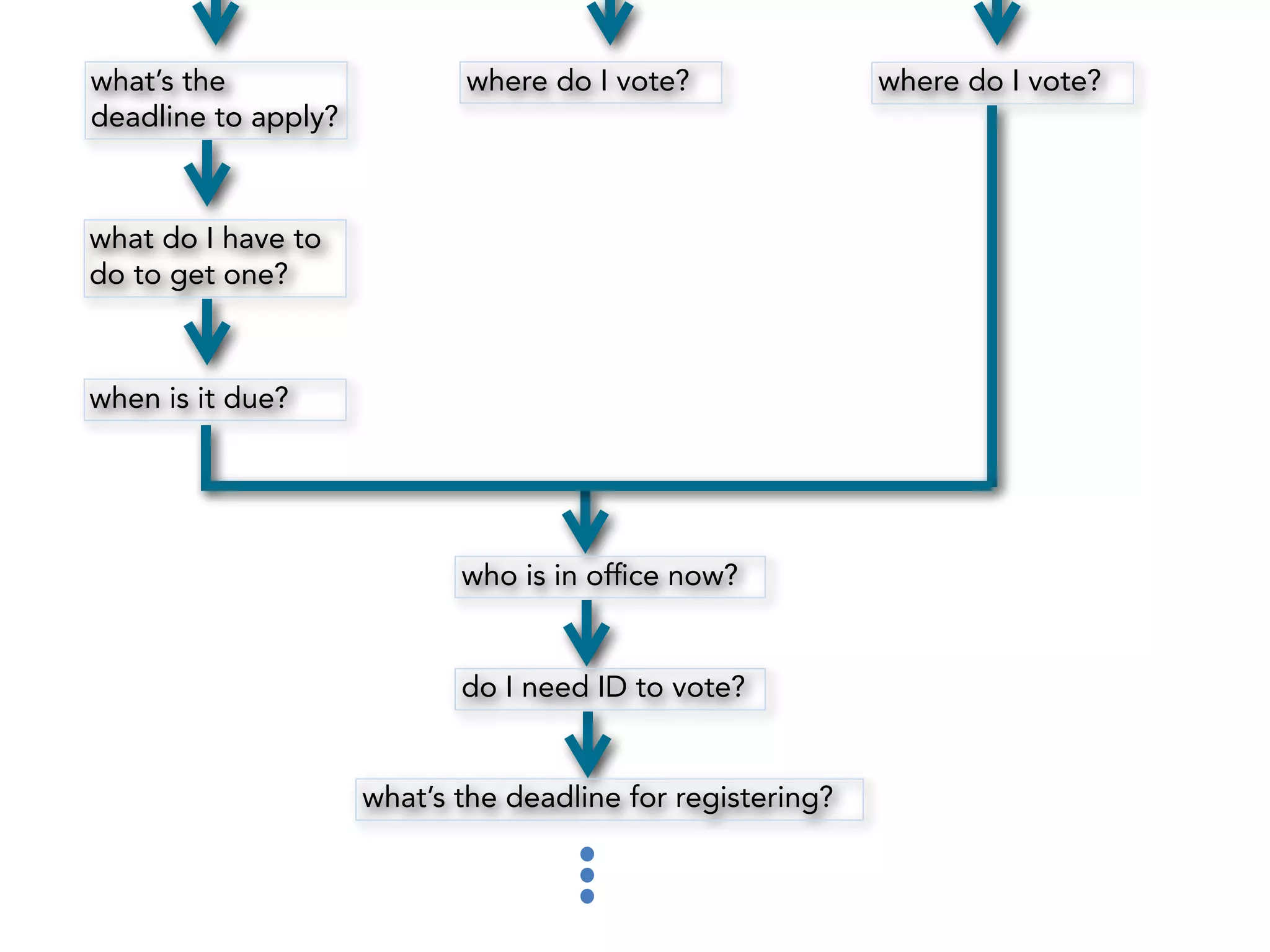
what’s the 

deadline to apply?
what do I have to
do to get one?
when is it due?
where do I vote? where do I vote?
What’s on the ballot?
What are my options for voting?
absentee early voting Election Day
what’s the 

deadline to apply?
what do I have to
do to get one?
when is it due?
where do I vote? where do I vote?
What’s on the ballot?
What are my options for voting?
absentee early voting Election Day
what’s the 

deadline to apply?
what do I have to
do to get one?
when is it due?
where do I vote? where do I vote?
What’s on the ballot?
What are my options for voting?
absentee early voting Election Day
what’s the 

deadline to apply?
what do I have to
do to get one?
when is it due?
where do I vote? where do I vote?
what’s the 

deadline to apply?
what do I have to
do to get one?
when is it due?
where do I vote? where do I vote?
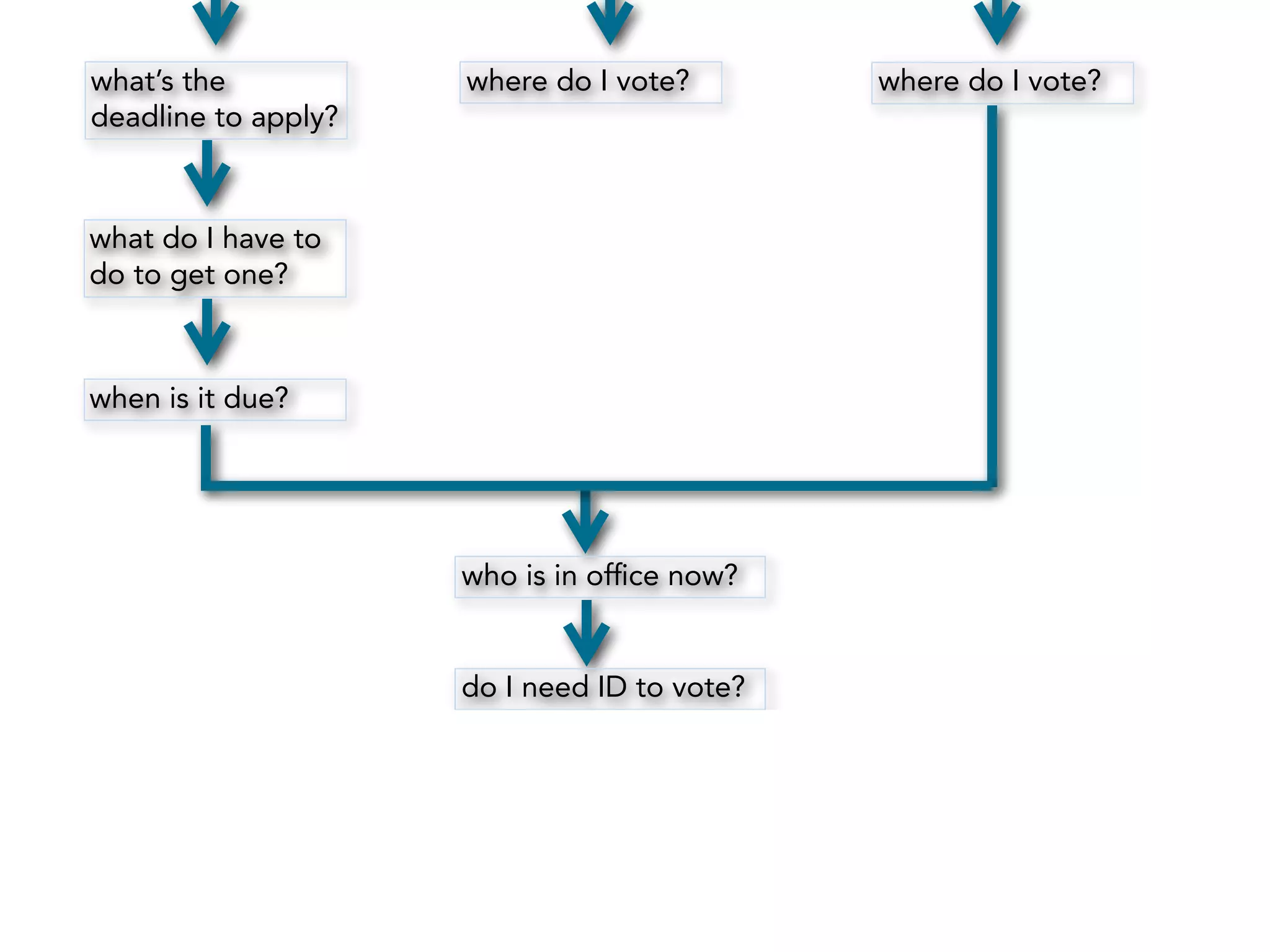
who is in office now?
do I need ID to vote?
what’s the deadline for registering?
what’s the 

deadline to apply?
what do I have to
do to get one?
when is it due?
where do I vote? where do I vote?
who is in office now?
do I need ID to vote?
what’s the deadline for registering?
what’s the 

deadline to apply?
what do I have to
do to get one?
when is it due?
where do I vote? where do I vote?
who is in office now?
do I need ID to vote?
what’s the deadline for registering?
what’s the 

deadline to apply?
what do I have to
do to get one?
when is it due?
where do I vote? where do I vote?
who is in office now?
do I need ID to vote?
what’s the deadline for registering?
what’s the 

deadline to apply?
what do I have to
do to get one?
when is it due?
where do I vote? where do I vote?
who is in office now?
do I need ID to vote?
what’s the deadline for registering?
But sites showed
nearly the opposite
process.
Elections = process
Elections = process
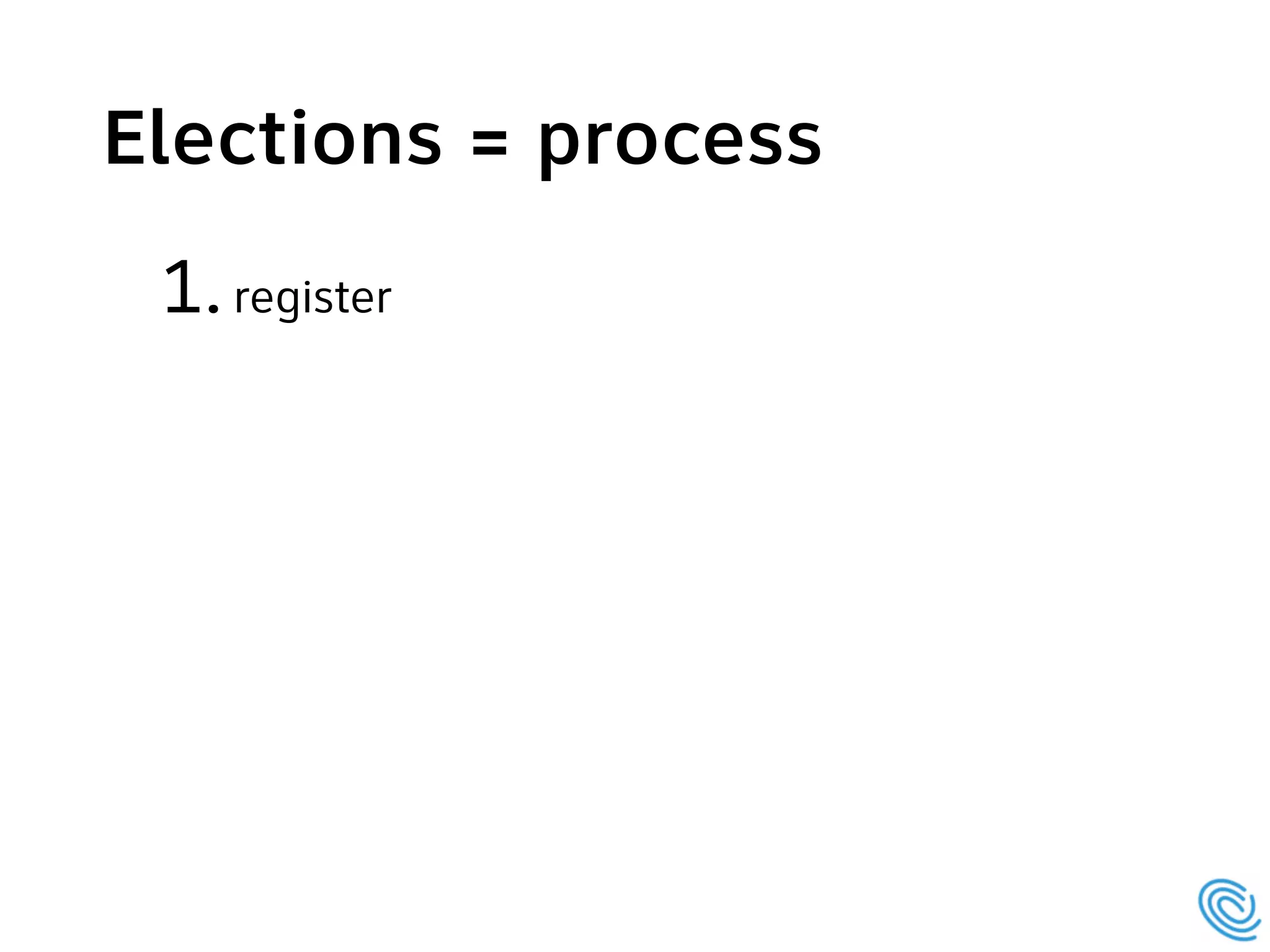
1.register
Elections = process
1.register
2.voting options
Elections = process
1.register
2.voting options
3.polling place location
Elections = process
1.register
2.voting options
3.polling place location
4.voter ID
Elections = process
1.register
2.voting options
3.polling place location
4.voter ID
5.current office holders
Elections = process
1.register
2.voting options
3.polling place location
4.voter ID
5.current office holders
6.military and overseas voters
Elections = process
1.register
2.voting options
3.polling place location
4.voter ID
5.current office holders
6.military and overseas voters
7.sample ballot
What to do
1. Write for your

audience
2. Organize information 

logically for voters’ 

goals
3. Design for reading
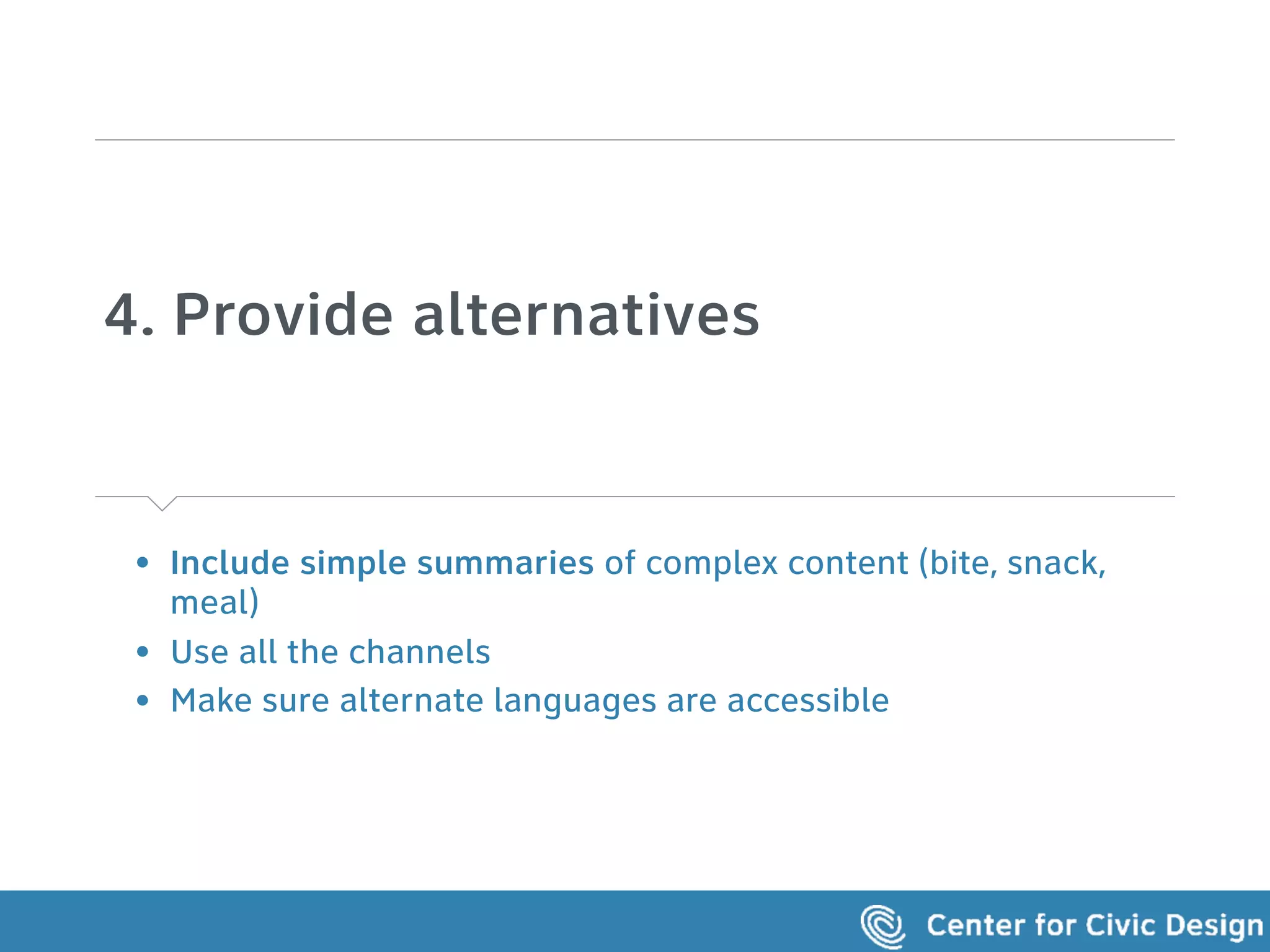
4. Provide alternatives
5. Write for action
• Answer voters’ questions
• Treat communication as a conversation
• Write in active voice, speaking directly to the reader
• Write in plain language, using short, simple, everyday word
1. Write for your audience
• Organize information by activity or task
• Put steps in the order in which they must be completed
2. Organize information logically, to
meet voters’ goals
• Short sentences
• Short paragraphs (so each step or piece of information is clear)
• Separate paragraphs by a space so each paragraph stands out
on the page or screen
3. Design for scanning and
skimming
• Include simple summaries of complex content (bite, snack,
meal)
• Use all the channels
• Make sure alternate languages are accessible
4. Provide alternatives
• Write in the active voice, where the person doing the action
comes before the verb.
• Write in the positive
5. Write for action
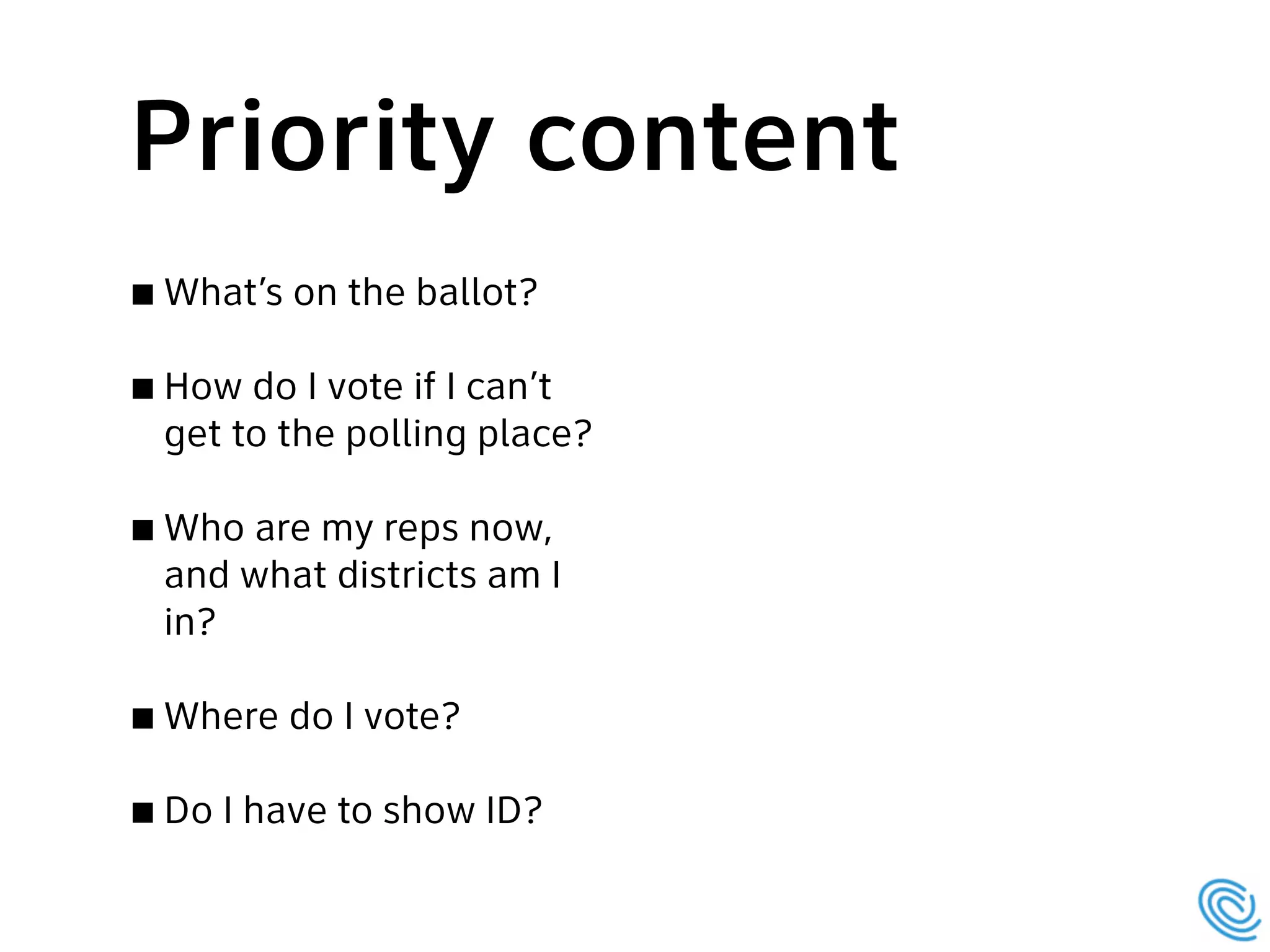
What’s on the ballot?
How do I vote if I can’t
get to the polling place?
Who are my reps now,
and what districts am I
in?
Where do I vote?
Do I have to show ID?
Priority content
Voting is personal
Voters are focused on why.
Plain language helps
voters take action
Meet Bill
Every word choice and design
decision makes a difference.
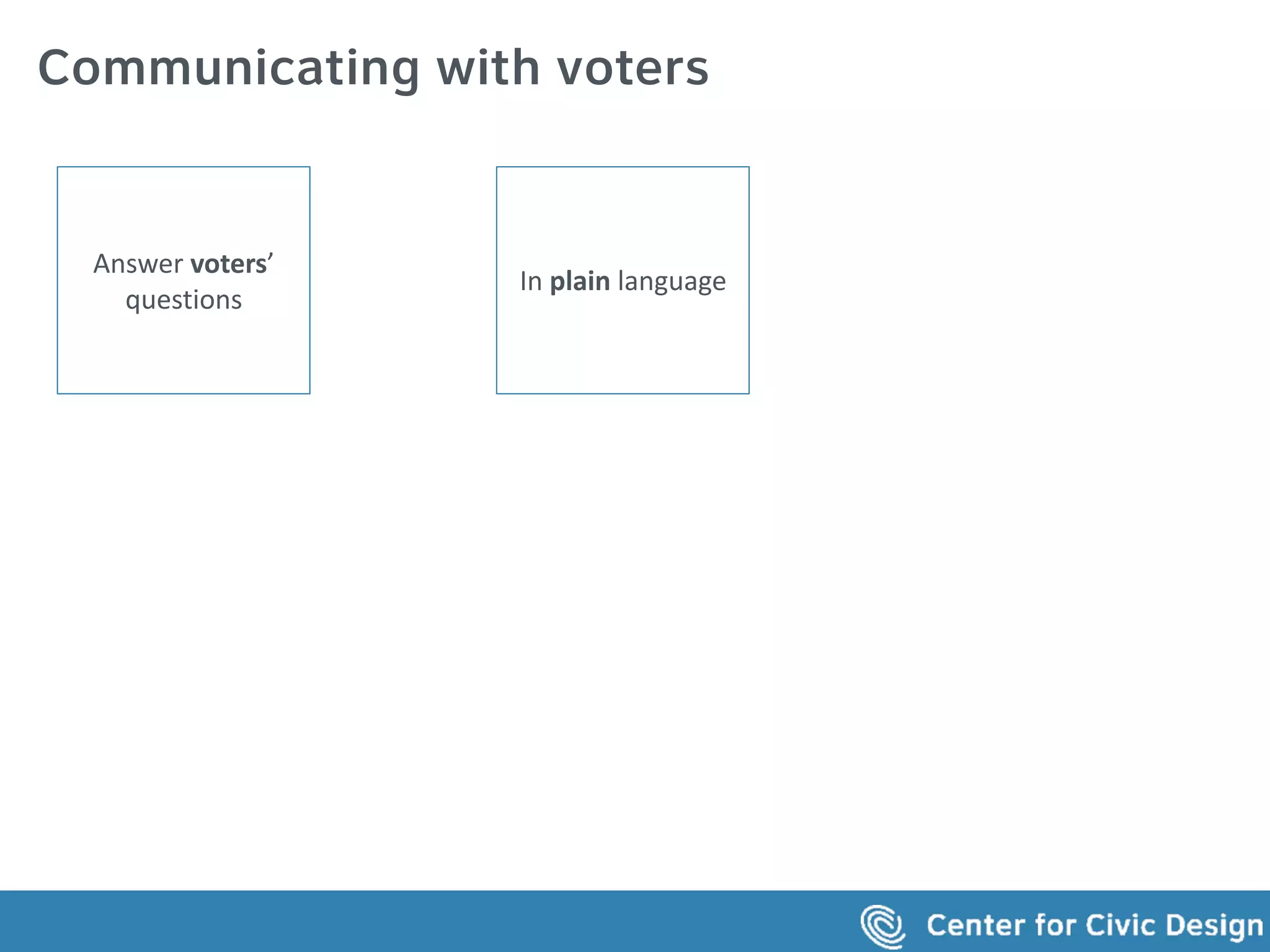
Communicating with voters
Answer	voters’	
questions
Communicating with voters
Answer	voters’	
questions
In	plain	language
Communicating with voters
Answer	voters’	
questions
In	plain	language	
So	they	can	take	
appropriate	action
Thank you.
Dana Chisnell


dana@civicdesign.org
civicdesign.org


@danachis

@ChadButterfly

Communicating with voters