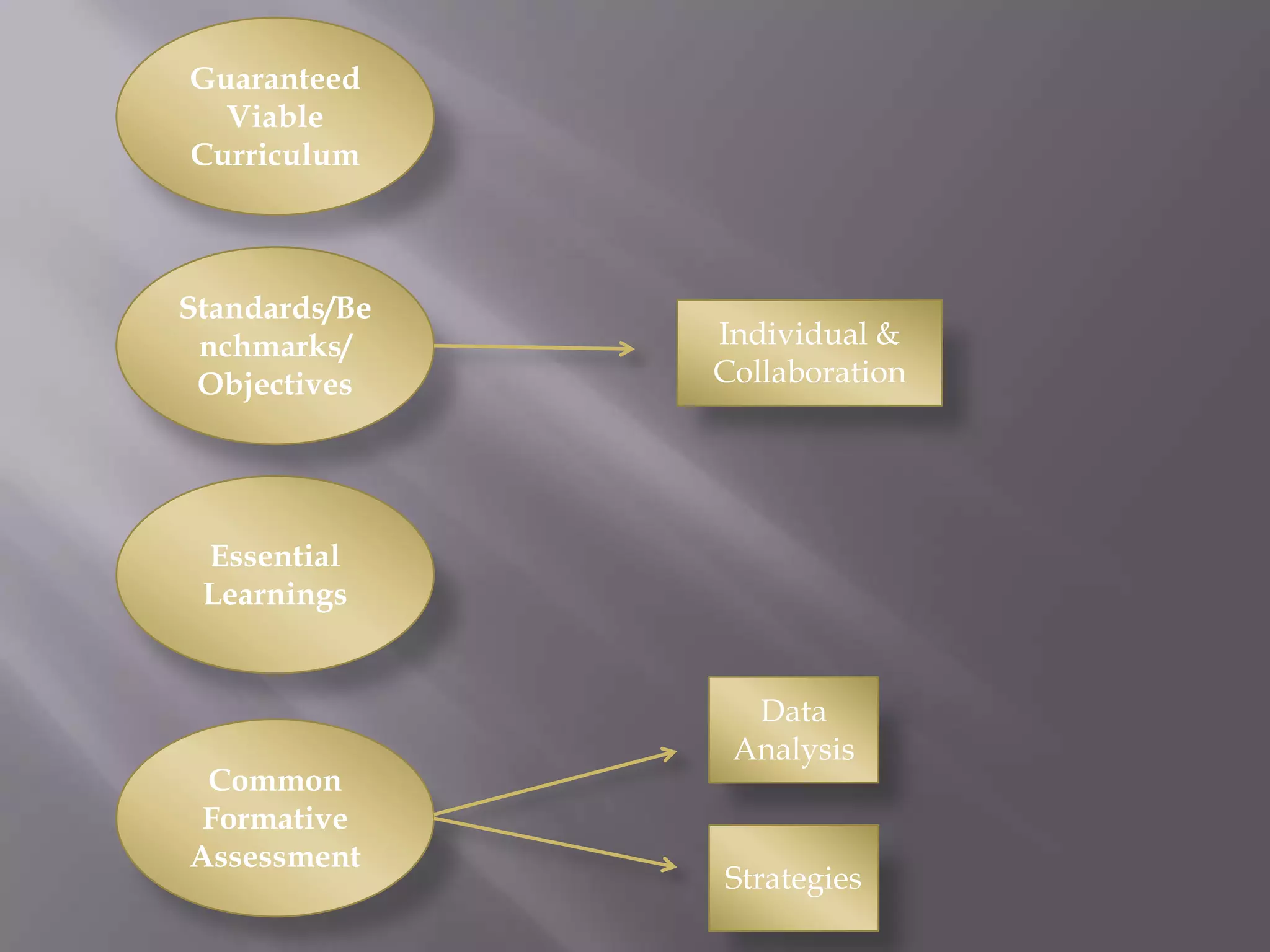
Guaranteed
  Viable
Curriculum


Standards/Be
 nchmarks/     Individual &
 Objectives    Collaboration


 Essential
 Learnings


                 Data
                Analysis
 Common
 Formative
Assessment
               Strategies
THE SEQUEL

A process that teams can use to filter the vast
number of standards to determine which are
                most essential
Identify the Essential Learnings, Target Outcomes or
   Power Standards

From state standards, common core, district
   objectives

The reason is to obtain a collective focus on what
  students must learn, which will lead to what will
  be monitored with common formative assessments

               Based on 3 criteria
Endurance

Standard that students will need to
 know for a longer period of time.
Leverage

Standard is taught and used in
more than one subject
Readiness

For the next level of learning
   Teachers individually review the list of
    standards/objectives for a subject area.

   Check the standards you believe to be power
    standards based on the criteria

     Meet together, but work independently
     Shouldn’t take to long
     Gut reaction
   Teacher teams need to come to agreement and
    build a consensus about which standards are
    essential learnings


   Compare common checks
   Encourage discussion vs voting

     This step might take some time

Note: Important that everyone has a voice
Alignment-

   Check with other teams- grade level or cross-
    curricular

   Look over what will likely be on state tests-
     examine released items
   Montana Analysis and Reporting System
                   Can find:
    CRT release items
    Item Analysis
    Montana Common core field test items
            grade 10-11-12
    Smarter Balance sample test questions

   I will email the link with the user name &
    password for these sites:
   Next Step:
            Unwrap and Analyze Standards
                  ( Interpretation and intent )

    It is important to decide when to teach each standard
       and how long it will take (units)


            Common Formative Assessment

Common core plc part two

  • 1.
    Guaranteed Viable Curriculum Standards/Be nchmarks/ Individual & Objectives Collaboration Essential Learnings Data Analysis Common Formative Assessment Strategies
  • 2.
    THE SEQUEL A processthat teams can use to filter the vast number of standards to determine which are most essential
  • 3.
    Identify the EssentialLearnings, Target Outcomes or Power Standards From state standards, common core, district objectives The reason is to obtain a collective focus on what students must learn, which will lead to what will be monitored with common formative assessments Based on 3 criteria
  • 4.
    Endurance Standard that studentswill need to know for a longer period of time.
  • 5.
    Leverage Standard is taughtand used in more than one subject
  • 6.
    Readiness For the nextlevel of learning
  • 7.
    Teachers individually review the list of standards/objectives for a subject area.  Check the standards you believe to be power standards based on the criteria  Meet together, but work independently  Shouldn’t take to long  Gut reaction
  • 8.
    Teacher teams need to come to agreement and build a consensus about which standards are essential learnings  Compare common checks  Encourage discussion vs voting This step might take some time Note: Important that everyone has a voice
  • 9.
    Alignment-  Check with other teams- grade level or cross- curricular  Look over what will likely be on state tests- examine released items
  • 10.
    Montana Analysis and Reporting System Can find:  CRT release items  Item Analysis  Montana Common core field test items grade 10-11-12  Smarter Balance sample test questions  I will email the link with the user name & password for these sites:
  • 11.
    Next Step: Unwrap and Analyze Standards ( Interpretation and intent ) It is important to decide when to teach each standard and how long it will take (units) Common Formative Assessment

Editor's Notes

  • #2 Common –Arrow out--- what do we do when students haven’t learned it?Essential learnings- how will we know when we learned it?
  • #4 First critical question what do we want students to learn and be able to do when they are done with your unit or course. 3 CRITERIA to determine if a standard /objective is essentialMarzano and Kendall --- examined national standards & how long it would take to teach against the time we have toteach and it would take 23 years to teach the entire list!
  • #5 Beyond test prep used during the future units or over a period of yearsEXAMPLE– context clues for unknown word life-long skill
  • #6 Bang for your buck standard--- EXAMPLE– students taught how to read graphs in Math and apply this skill in ScienceStates sometimes have same or similar standard in two different areas..Domains that Judy and Kate talked about that are common to every subject
  • #7 Some standards are taught because they are a prerequisite skill for future learningEXAMPLE- logarithms are taught in math because students will use and interpret them in Chemistry also Kindergarten
  • #8 One way to do thisFirst bullet--- considering the 3 criteria
  • #9  END OF SLIDE-----Once you have discussed, debated, argued, whatever and have come up with a team decision then this is your DRAFT
  • #10 Double check draft
  • #12 Just distinguishing the standards that are essential from the nice to know standards does not mean every team member will have the same interpretation of those standards, nor will it be easy to align your assessments with the standards as written, because many are written as a conglomeration of skills and knowledge that provide a broad picture of proficiency or they use terms that are difficult to measure…leaves room for interpretation. Talk about group handbook for team notebook and show individual binders