Download to read offline
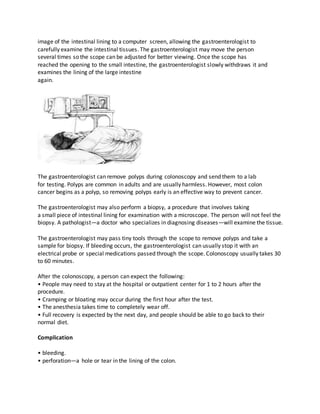


Colonoscopy is a procedure where a gastroenterologist inserts a flexible tube with a camera into the rectum and entire colon to examine the intestinal lining. The colonoscope allows the doctor to detect polyps, ulcers, or other abnormalities. Common reasons for a colonoscopy include changes in bowel habits, abdominal pain, bleeding, or weight loss, as well as screening for colon cancer. Prior to the procedure, patients must follow a clear liquid diet and use laxatives or enemas to cleanse the bowels. During colonoscopy, the doctor may remove polyps, perform biopsies, and treat any bleeding. Possible complications include perforation of the colon, infection, or cardiovascular issues, though death is rare.


