

DR USMAN HAQQANI
RESIDENT NEUROSURGERY B
LADY READING HOSPITAL
PESHAWAR
 History
47 years old gentleman had intermittent
headache and impaired recent memory
from 3 months and gradually his
symptoms accelerated.
 Clinical examination
revealed no focal neurological
signs but loss of recent memory
was present.
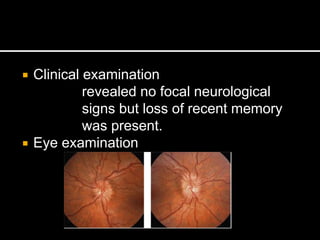
 Eye examination
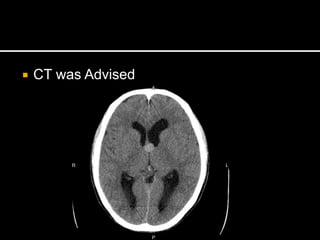
 CT was Advised
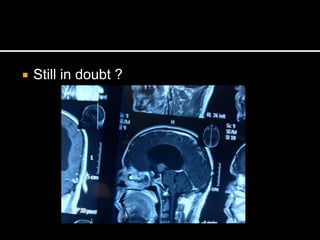
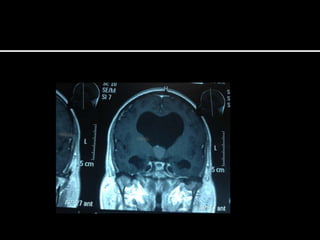
 Still in doubt ?
 Diagnosis ?
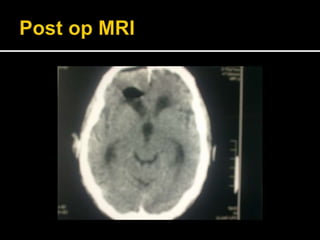
 The patient discharged with good
neurological condition 0n 6th postoperative
day.
 At the 3rd month of follow up, the patient
did not show any focal neurological
deficite and memory disorder was
remitted.
********
 Colloid cysts are benign, congenital
epithelium-lined cysts that almost always
arise in the anterior third ventricle.
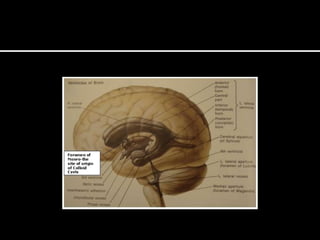
 Colloid cysts of the third ventricle are located
at the level of the foramin of monro.
 Attached to the roof or floor, fornix, or the
choroid plexus.
 Size range from few mm to several cm.
 Small ones may be asymptomatic.
 Histology consists of pseudo stratified
columnar or cuboidal epithelium.
 0.5-1 % of intracranial tumors.
 15 to 20% of Intraventricular mass
 Female= Male
 Incidence:
 General population: 3/100,0000/year
 Age:
 Common in adults
 Range: 20-30 years.
 Colloid cyst
 IST REPORTED.
▪ By Wallman in 1858
 IST OPERATED.
▪ By Dandy in 1921.
▪ In 1983, Pawer et al reported the first
successful endoscopic aspiration of a third
ventricle colloid cyst
 Presentation in childhood is rare. The tumors are
usually symptomatic in patients aged 20-50 years
 Common Symptoms include:
 Intracranial hypertension.
 paroxysmal headache
 progressive headache
 Drop attacks
 severe cases, coma or even death can occur.
 Impaired memory.
 Visual impairment.
 Papilloedema.
 Gait abnormalities.
 Sudden LOC.
 Sudden death.
 Asymptomatic
 seizures
1. Computed tomography.
2. Magnetic resonance imaging.
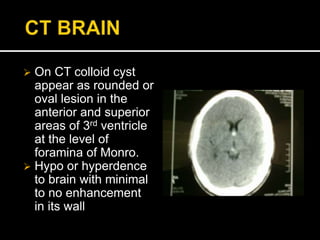
 On CT colloid cyst
appear as rounded or
oval lesion in the
anterior and superior
areas of 3rd ventricle
at the level of
foramina of Monro.
 Hypo or hyperdence
to brain with minimal
to no enhancement
in its wall
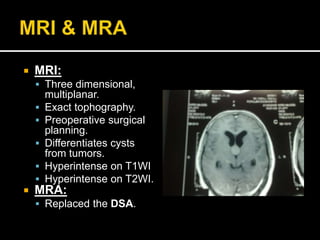
 MRI:
 Three dimensional,
multiplanar.
 Exact tophography.
 Preoperative surgical
planning.
 Differentiates cysts
from tumors.
 Hyperintense on T1WI
 Hyperintense on T2WI.
 MRA:
 Replaced the DSA.
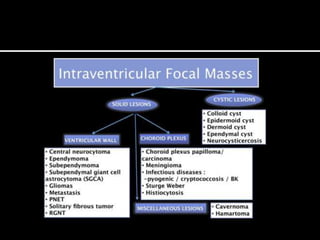
 Intra ventricular meningeoma
 Neurocysticercotic cyst
 Subependymoma
 Choroid plexus papilloma
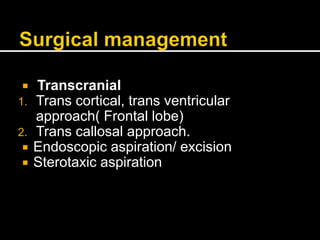
 Transcranial
1. Trans cortical, trans ventricular
approach( Frontal lobe)
2. Trans callosal approach.
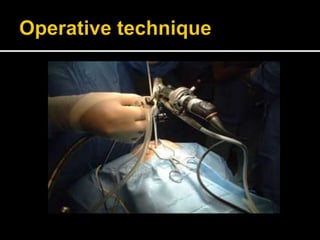
 Endoscopic aspiration/ excision
 Sterotaxic aspiration
 Neurological deterioration occures in a
small number of patients but high risk
patients may not be identified
 Therefore, the mere surveillance is
justified only
 in the elderly
 in those with low life expectancy
 those with increased anesthetic risk
 Recommended for Removal
 Symptomatic patient
 Ventriculomegaly
 Progressive size
 Cyst size >1cm
 is safe and effective for treatment of
colloid cyst of third ventricle
 provides good optical resolution and high
magnification, through which total or near
total resection can be achieved
 Decreased hospital stay, more rapid
return to active life , low direct surgical
morbidity and resolution of symptoms
 Disadvantage
 requires experience.
 Cyst location and degree of distension of the third
ventricle roof may cause problems when using a
rigid endoscope
 Traction on adherent ceiling remains of the
capsule may lead to bleeding
 A major bleeding can blur the image and can be
difficult to stop using the available specific tools.
 not always the colloid cyst can be completely
removed.
 Cyst >2cm may compromise and adhere
to the fornix and maybe more safely
removed using microscopic bimanual
disection
 If imaging predicts consistensy of cyst to
be hard and cheesy
 Transcallosal approach is used especially
in the absence of ventriculomegaly.
 Fornix lesions by the manipulation of
instruments
 thermal damage by excessive
coagulation
 intraoperative bleeding
 aseptic or septic ventriculitis are potential
complications of endoscopic surgery
 Overall morbidity is transient.
THANK YOU

Colloid cyst

  • 2.
    DR USMAN HAQQANI RESIDENTNEUROSURGERY B LADY READING HOSPITAL PESHAWAR
  • 3.
     History 47 yearsold gentleman had intermittent headache and impaired recent memory from 3 months and gradually his symptoms accelerated.
  • 4.
     Clinical examination revealedno focal neurological signs but loss of recent memory was present.  Eye examination
  • 5.
     CT wasAdvised
  • 6.
     Still indoubt ?
  • 8.
  • 11.
     The patientdischarged with good neurological condition 0n 6th postoperative day.  At the 3rd month of follow up, the patient did not show any focal neurological deficite and memory disorder was remitted. ********
  • 12.
     Colloid cystsare benign, congenital epithelium-lined cysts that almost always arise in the anterior third ventricle.  Colloid cysts of the third ventricle are located at the level of the foramin of monro.  Attached to the roof or floor, fornix, or the choroid plexus.  Size range from few mm to several cm.  Small ones may be asymptomatic.  Histology consists of pseudo stratified columnar or cuboidal epithelium.
  • 13.
     0.5-1 %of intracranial tumors.  15 to 20% of Intraventricular mass  Female= Male  Incidence:  General population: 3/100,0000/year  Age:  Common in adults  Range: 20-30 years.
  • 14.
     Colloid cyst IST REPORTED. ▪ By Wallman in 1858  IST OPERATED. ▪ By Dandy in 1921. ▪ In 1983, Pawer et al reported the first successful endoscopic aspiration of a third ventricle colloid cyst
  • 16.
     Presentation inchildhood is rare. The tumors are usually symptomatic in patients aged 20-50 years  Common Symptoms include:  Intracranial hypertension.  paroxysmal headache  progressive headache  Drop attacks  severe cases, coma or even death can occur.
  • 17.
     Impaired memory. Visual impairment.  Papilloedema.  Gait abnormalities.  Sudden LOC.  Sudden death.  Asymptomatic  seizures
  • 18.
    1. Computed tomography. 2.Magnetic resonance imaging.
  • 19.
     On CTcolloid cyst appear as rounded or oval lesion in the anterior and superior areas of 3rd ventricle at the level of foramina of Monro.  Hypo or hyperdence to brain with minimal to no enhancement in its wall
  • 20.
     MRI:  Threedimensional, multiplanar.  Exact tophography.  Preoperative surgical planning.  Differentiates cysts from tumors.  Hyperintense on T1WI  Hyperintense on T2WI.  MRA:  Replaced the DSA.
  • 21.
     Intra ventricularmeningeoma  Neurocysticercotic cyst  Subependymoma  Choroid plexus papilloma
  • 23.
     Transcranial 1. Transcortical, trans ventricular approach( Frontal lobe) 2. Trans callosal approach.  Endoscopic aspiration/ excision  Sterotaxic aspiration
  • 24.
     Neurological deteriorationoccures in a small number of patients but high risk patients may not be identified  Therefore, the mere surveillance is justified only  in the elderly  in those with low life expectancy  those with increased anesthetic risk
  • 25.
     Recommended forRemoval  Symptomatic patient  Ventriculomegaly  Progressive size  Cyst size >1cm
  • 26.
     is safeand effective for treatment of colloid cyst of third ventricle  provides good optical resolution and high magnification, through which total or near total resection can be achieved  Decreased hospital stay, more rapid return to active life , low direct surgical morbidity and resolution of symptoms
  • 27.
     Disadvantage  requiresexperience.  Cyst location and degree of distension of the third ventricle roof may cause problems when using a rigid endoscope  Traction on adherent ceiling remains of the capsule may lead to bleeding  A major bleeding can blur the image and can be difficult to stop using the available specific tools.  not always the colloid cyst can be completely removed.
  • 28.
     Cyst >2cmmay compromise and adhere to the fornix and maybe more safely removed using microscopic bimanual disection  If imaging predicts consistensy of cyst to be hard and cheesy  Transcallosal approach is used especially in the absence of ventriculomegaly.
  • 29.
     Fornix lesionsby the manipulation of instruments  thermal damage by excessive coagulation  intraoperative bleeding  aseptic or septic ventriculitis are potential complications of endoscopic surgery  Overall morbidity is transient.
  • 30.

Editor's Notes

  • #13 The cyst may be pendulous and cause intermittent CSF obstruction with a ballvalve mechanism
  • #17 “drop attacks”: sudden spontaneous falls while standing or walking without loss of consciousness caused by decreased leg muscle tone.